Entrepreneurship
0
Visiting Scholar at APARC, 2022-23
Global Affiliate Visiting Scholar, 2024
Yamauchi-No. 10 Family Office
banjo_yamauchi.jpg

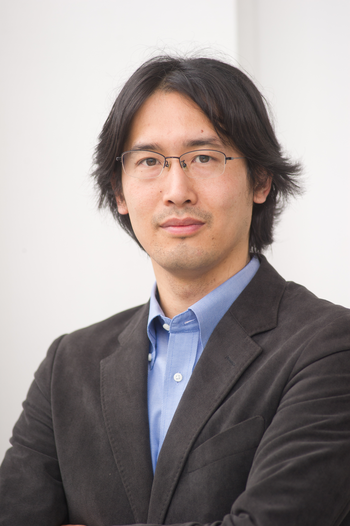
Banjo Yamauchi joined the Walter H. Shorenstein Asia-Pacific Research Center (Shorenstein APARC) as Visiting Scholar for the 2023 calendar year and a Global Affiliate Visiting Scholar for the 2024 calendar year. He serves as the CEO and family representative for the Yamauchi-No.10 Family Office as well as Executive Director of the Yamauchi Foundation in Japan. While at APARC, he will be conducting research with Professor Kiyoteru Tsutsui on investment, incubation, and philanthropy in Silicon Valley and Japan.

Date Label
Paragraphs
Cover of book "Drivers of Innovation"

Innovation and entrepreneurship rank highly on the strategic agenda of most countries today. As global economic competition intensifies, many national policymakers now recognize the central importance of entrepreneurship education and the building of financial institutions to promote long-term innovation, entrepreneurship, and economic growth. Drivers of Innovation brings together scholars from the United States and Asia to explore those education and finance policies that might be conducive to accelerating innovation and developing a more entrepreneurial workforce in East Asia. 

Some of the questions covered include: How do universities in China and Singapore experiment with new types of learning in their quest to promote innovation and entrepreneurship? Is there a need to transform the traditional university into an “entrepreneurial university”? What are the recent developments in and outstanding challenges to financing innovation in China and Japan? What is the government’s role in promoting innovative entrepreneurship under the shadow of big business in South Korea? What can we learn about the capacity of services to drive innovation-led growth in India? 

Drivers of Innovation will serve as a valuable reference for scholars and policymakers working to develop human capital for innovation in Asia.

Contents

  1. Educating Entrepreneurs and Financing Innovation in Asia 
    Fei Yan, Yong Suk Lee, Lin William Cong, Charles Eesley, and Charles Lee
  2. Fostering Entrepreneurship and Innovation: Education, Human Capital, and the Institutional Environment 
    Charles Eesley, Lijie Zhou, and You (Willow) Wu
  3. Entrepreneurial Scaling Strategy: Managerial and Policy Considerations 
    David H. Hsu
  4. Innovation Policy and Star Scientists in Japan 
    Tatsuo Sasaki, Hiromi S. Nagane, Yuta Fukudome, and Kanetaka Maki
  5. Financing Innovation in Japan: Challenges and Recent Progress 
    Takeo Hoshi and Kenji Kushida
  6. Promoting Entrepreneurship under the Shadow of Big Business in Korea: The Role of the Government 
    Hicheon Kim, Dohyeon Kim, and He Soung Ahn
  7. The Creativity and Labor Market Performance of Korean College Graduates: Implications for Human Capital Policy 
    Jin-Yeong Kim
  8. Financing Innovative Enterprises in China: A Public Policy Perspective 
    Lin William Cong, Charles M. C. Lee, Yuanyu Qu, and Tao She
  9. Forging Entrepreneurship in Asia: A Comparative Study of Tsinghua University and the National University of Singapore 
    Zhou Zhong, Fei Yan, and Chao Zhang
  10. Education and Human Capital for Innovation in India’s Service Sector 
    Rafiq Dossani
  11. In Need of a Big Bang: Toward a Merit-Based System for Government-Sponsored Research in India 
    Dinsha Mistree
  12. The Implications of AI for Business and Education, and Singapore’s Policy Response 
    Mohan Kankanhalli and Bernard Yeung


All Publications button
1
Publication Type
Books
Publication Date
Subtitle

Entrepreneurship, Education, and Finance in Asia

Authors
Book Publisher
Shorenstein APARC
-

This event is available through livestream only. Please register in advance for the webinar by using the link below.

REGISTRATION LINKhttps://bit.ly/2ziVGY2


Japan's startup ecosystem has matured dramatically over the past decade, with greater societal legitimacy, business success, and government support than most observers would have expected 20 years ago. Despite the challenging times ahead with the global pandemic, Japan's startup ecosystem is still poised to inject flexibility and innovation in a system often criticized as too rigid. This panel brings together scholars who have studied and participated in the ecosystem, and one of the key government officials pushing policy supporting the startup ecosystem. 

PANELISTS

Image
Headshot of Masahiro Kotosaka
Masahiro Kotosaka, Associate Professor, Keio University
 
Masahiro Kotosaka is an Associate Professor at Keio University and advisor to several global start-up companies. Before moving to Keio, he was a faculty at Ritsumeikan, a junior faculty at University of Oxford, and was a consultant at McKinsey & Company (Frankfurt/Tokyo). As a practitioner, he worked for sixteen client organizations across nine industries and nine countries, and spent four years running three profitable IT/Retail businesses before joining McKinsey. He graduated from University of Oxford with D.Phil. (PhD) in Management Studies and MSc in Management Research with Distinction.

Image
ishii headshot 2

Yoshiaki Ishii, Director of Science, Technology and Innovation, Cabinet Office, Government of Japan

Since getting his start at the government's Small and Middle Enterprise Agency, Dr. Yoshiaki Ishii has shaped his career almost exclusively around supporting young companies and enhancing innovation. Now, he is the director of the Cabinet Office and responsible for determining how to execute the government's mission of supporting deep tech start-ups and creating an innovation ecosystem. Previously, he served as director of the New Business Policy Office, Economic and Industrial Policy Bureau, METI. He has demonstrated expertise in Small and Medium-sized Enterprises (SME), and Venture Business Policy, Industrial Organisation, and Innovation Policy. Dr. Ishii earned his PhD from Waseda University, in 2012, after completing an MBA at Aoyama Gakuin, in 2000.

Image
Portrait of Kenji Kushida
Kenji Kushida, Research Scholar, Shorenstein APARC Japan Program (Moderator)
 
Kenji E. Kushida is a Japan Program Research Scholar at the Walter H. Shorenstein Asia-Pacific Research Center and an affiliated researcher at the Berkeley Roundtable on the International Economy. Kushida’s research interests are in the fields of comparative politics, political economy, and information technology. He has four streams of academic research and publication: political economy issues surrounding information technology such as Cloud Computing; institutional and governance structures of Japan’s Fukushima nuclear disaster; political strategies of foreign multinational corporations in Japan; and Japan’s political economic transformation since the 1990s. Kushida has written two general audience books in Japanese, entitled Biculturalism and the Japanese: Beyond English Linguistic Capabilities (Chuko Shinsho, 2006) and International Schools, an Introduction (Fusosha, 2008). Kushida holds a PhD in political science from the University of California, Berkeley. He received his MA in East Asian studies and BAs in economics and East Asian studies, all from Stanford University.

Virtual Webinar Via Zoom.

Registration Link: https://bit.ly/2ziVGY2

Yoshiaki Ishii, Government of Japan
Masahiro Kotosaka, Keio University
Kenji Kushida, Stanford University
Seminars
-

Many observers, and many investors, believe that young people are especially likely to produce the most successful new firms. Integrating administrative data on​ firms, workers, and owners, we study startups systematically in the U.S. and find​ that successfull entrepreneurs are middle-aged, not young. The mean age at​ founding for the 1-in-1,000 fastest growing new ventures is 45.0. The findings are​ similar when considering high-technology sectors, entrepreneurial hubs, and​ successful firm exits. Prior experience in the specific industry predicts much greater​ rates of entrepreneurial success. These findings strongly reject common hypotheses​ that emphasize youth as a key trait of successful entrepreneurs.

Speaker:

Image
dsc 0355 javier miranda

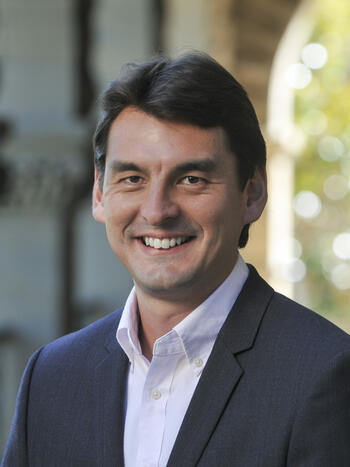
Javier Miranda, Principal Economist, Economy-Wide Statistics Division, US Census Bureau

Bio:

Javier Miranda is Principal Economist at the U.S. Census Bureau where he began his career in 1998. Javier received his Ph.D. in Economics from American University in 2004. Previous to joining the Census Javier was a research consultant at the World Bank and the Urban Institute. Javier has published papers in the areas of industrial organization, technological change, job creation, entrepreneurship and firm financing. Among his publications are articles in the American Economic Review, Journal of Economic Literature, American Economic Journal Macroeconomics, Review of Economic and Statistics, IMF Review, World Bank Economic Review, Journal of Business Valuation and Economic Loss, NBER Macroeconomics Annual, and multiple books and chapters.  Javier received the Director's Award for Innovation (2007) and the U.S. Department of Commerce Bronze Medal (2011). His contributions to data infrastructure are notable. Javier Miranda is responsible for the development of the Longitudinal Business Database and the Business Dynamics Statistics and is the Synthetic Longitudinal Business Database v3. Together with the USPTO Javier has led the development the Business Dynamics Statistics of Innovative Firms a longitudinal database of firms, patents, and inventors. Javier Miranda is also President of the Board of SEM an adult education and job readiness program designed to address the root causes of poverty, illiteracy, and violence in Washington DC.

Advisory on Novel Coronavirus (COVID-19)

In accordance with university guidelines, if you (or a spouse/housemate) have returned from travel to mainland China or South Korea in the last 14 days, we ask that you DO NOT come to campus until 14 days have passed since your return date and you remain symptom-free. For more information and updates, please refer to the Stanford Environmental Health & Safety website: https://ehs.stanford.edu/news/novel-coronavirus-covid-19.


Javier Miranda, Principal Economist, Economy-Wide Statistics Division, US Census Bureau
Seminars
-

This event is part of the Stanford Silicon Valley-New Japan Project Public Forum Series.


Consumption is a major driver of national economies, and scholars often study important differences across consumption patterns across countries, which influence many aspects of their societies and economies. Yet, the underlying business of logistics operations, and how they support countries’ respective retail industries, has as much, if not more impact than simply examining consumer behavior. In this public forum, Ryuichi Kakui, with deep expertise in eCommerce logistics, will explain how logistics are used in retail industries, comparing across the world’s three largest economies: the US, China, and Japan. He will introduce the concept of strategic logistics thinking and the “4C” framework and informs leading strategic logistics thinking. A conversation with Kenji Kushida, who examines how technologies and specific industry dynamics shape varying models of political economies around the world, will then link the area of logistics and retail to important systemic differences and underlying similarities across the world’s leading economies, which are pursuing contrasting models of social, economic, and political organization.


SPEAKERS

Image
kakui headshot

Ryoichi Kakui is the founder of E-Logit, the leading eCommerce logistics company in Japan. He has published 29 books related to logistics, Amazon, and “omnichannel” distribution, which have been published in Japan, the US, China, Taiwan, South Korea, and Vietnam. He is a frequent commentator on television, radio, newspapers, magazines, and other media. Educated in Sophia University in Japan with an MBA from Golden Gate University, he founded UKETORU in 2015, a app addressing the issue of re-delivery, which escalated to a social issue in Japan.

Image
kushida profile 9 2015 cropped

Kenji Kushida is a research scholar at the Japan Program at the Walter H. Shorenstein Asia-Pacific Research Center at Stanford University. One of this research themes examines how IT technologies shape political economies around the world, and how varying national political economic models shape the development trajectories of technologies. He leads the Silicon Valley – New Japan Project, a sustained platform for research and collaboration between Silicon Valley and the new and emerging aspects as Japan transforms itself.


PARKING

Please note there is significant construction taking place on campus, which is greatly affecting parking availability and traffic patterns at the university. Please plan accordingly. Open parking at Stanford University available starting 4:00pm unless otherwise marked. Nearest parking garage is Structure 7, below the Graduate School of Business Knight School of Management.

Seminars
Paragraphs

In recent years, "innovation" has become increasingly important for Japan. Developing innovative businesses that are separate from the traditional Japanese business sphere is becoming increasingly crucial for sustained economic growth. In this report, Asakura focuses on some emerging companies that have the potential to drive innovation, and provide some reflections on the Japanese entrepreneurial environment.

All Publications button
1
Publication Type
Working Papers
Publication Date
Paragraphs

This report provides an overview of the Silicon Valley ecosystem. It draws upon existing scholarship and original insights to derive a picture that is only partially well-known in Japan. Characteristics such as the critical role of large firms for the startup firm ecosystem, the role of Japanese firms in creating the US firms’ “open innovation” paradigm, and the severe lack of local government coordination in providing public transportation creating opportunities for disruptive startups such as Uber, are all aspects of Silicon Valley that are not well-known in Japan. This report also delves into industry-university ties in the crucial research universities of Stanford and University of California Berkeley, highlighting the multifaceted and bidirectional interactions between universities and industry that are often not captured by the common “technology licensing office”-centered view. In the final section, this report briefly reviews a representative set of challenges often cited by large Japanese firms attempting to make use of the Silicon Valley ecosystem, concluding by suggesting areas for further research.

All Publications button
1
Publication Type
Working Papers
Publication Date
Authors
Kenji E. Kushida
-

Since its establishment, DNX Ventures (formerly Draper Nexus Ventures) has acted as a bridge between growing Silicon Valley businesses and large Japanese firms. Since 2011, DNX Ventures has created more than 100 partnerships between its portfolio companies and its over 25 large Japanese corporate LPs. During this seminar, Managing Director of DNX Ventures Hiro Rio Maeda will extrapolate from his over 15 years of experience in both corporate venture capital and venture capital and extensive experience working with both startups and large Japanese corporations to discuss the basics of venture capital, and how Japanese corporations leverage venture capital to push forward open innovation initiatives. From a VC perspective: how are decisions about strategic investments made? How does money flow? What ratio of successful investments to non-successful investments do VCs aim for? From a large Japanese corporate perspective: how do large Japanese firms use VC to achieve open innovation goals? What are some of the obstacles to Japanese large firm-startup partnerships, and what are some of the ways to overcome these challenges? Maeda will answer these questions and more, as well as share examples of successful partnerships and large Japanese firms that are successfully harnessing Silicon Valley to further open innovation efforts.  

SPEAKER:

Hiro Rio Maeda, Managing Director, DNX Ventures (formerly Draper Nexus)

BIO:

Hiro Rio Maeda is a Managing Director at venture capital firm DNX Ventures (formerly Draper Nexus). Rio focuses on investing in innovative companies in Cyber Security, mobile, storage, and retail tech area that could work on a global scale. His portfolio companies include Cylance, SafeBreach, JASK, vArmour, AppDome, Ayasdi, Remotium, Klout, Fyde, JoyMode, and Hom.ma. 

Prior to joining DNX Ventures (formerly Draper Nexus), Rio spent six years at Globespan Capital Partners where he had put his resource on both investment and business development of Japan/US portfolio companies. Palo Alto Networks(NYSE: PANW) was a good example portfolio company that he took a lead on taking them to the Japanese market.

Prior to Globespan, Rio spent seven years at Sumitomo Corporation, a Japanese conglomerate trading company in which he had built expertise his international business skill in IT technologies and consumer web services in Tokyo and his capitalist career at Presidio Ventures (Sumitomo’s corporate venture capital arm) in Santa Clara.Japanese conglomerate trading company in which he had built expertise his international business skill in IT technologies and consumer web services in Tokyo and his capitalist career at Presidio Ventures (Sumitomo’s corporate venture capital arm) in Santa Clara.

AGENDA:

4:15pm: Doors open
4:30pm-5:30pm: Talk and Discussion
5:30pm-6:00pm: Networking

RSVP REQUIRED:

Register to attend at http://www.stanford-svnj.org/22819-public-forum

For more information about the Silicon Valley-New Japan Project please visit: http://www.stanford-svnj.org/


Hiro Rio Maeda, Managing Director, DNX Ventures (formerly Draper Nexus)
Seminars
-

This is part 2 of a talk presenting how innovative large Japanese companies are harnessing Silicon Valley. It is a review of the fireside chats and panels presented at the Silicon Valley – New Japan Summit last November at Stanford, which was in Japanese. The talk adds some historical context, and introduces through many of the company cases from the summit, including Panasonic, Fuji Film, Itochu, Rakuten, Obayashi, Nomura Holdings, Sourcenext, Komatsu, SMBC, and Toyota Research Institute.

The current surge of large Japanese companies into Silicon Valley is focused on firms aiming to identify new opportunities to collaborate with the startup ecosystem in order to understand future technological and industry trajectories, to facilitate new forms of “open” innovation within the company, and in some cases to even redefine how to add value to their core offerings. However, given a vast differently economic context from their core operations in Japan, many of the large Japanese firms’ initial forays tend to fall into patterns of “worst practices” that are ineffective. Yet, a small but growing number of innovative Japanese companies are producing novel and valuable collaborations with a variety of Silicon Valley firms, investors, and ecosystem players. The talk will survey a range of strategic options available to Japanese companies, with implications for how to better adapt companies from Japan to Silicon Valley, and more broadly from different political economic systems.

SPEAKER:

Kenji Kushida, Research Scholar, Shorenstein APARC Japan Program and Stanford Silicon Valley-New Japan Project Leader

BIO:

Kenji E. Kushida is the Japan Program Research Scholar at the Shorenstein Asia-Pacific Research Center at Stanford University (APARC), Project Leader of the Stanford Silicon Valley – New Japan Project (Stanford SV-NJ), research affiliate of the Berkeley Roundtable on the International Economy (BRIE), International Research Fellow at the Canon Institute for Global Studies (CIGS), and Visiting Researcher at National Institute for Research Advancement (NIRA). He holds a PhD in political science from the University of California, Berkeley, an MA in East Asian studies and BAs in economics and East Asian studies, all from Stanford University.

Kushida’s research streams include 1) Information Technology innovation, 2) Silicon Valley’s economic ecosystem, 3) Japan’s political economic transformation since the 1990s, and 4) the Fukushima nuclear disaster. He has published several books and numerous articles in each of these streams, including “The Politics of Commoditization in Global ICT Industries,” “Japan’s Startups Ecosystem,” “Cloud Computing: From Scarcity to Abundance,” and others. His latest business book in Japanese is “The Algorithmic Revolution’s Disruption: a Silicon Valley Vantage on IoT, Fintech, Cloud, and AI” (Asahi Shimbun Shuppan 2016).

He has appeared in media including The New York Times, Washington Post, Nihon Keizai Shimbun, Nikkei Business, NHK, PBS NewsHour, and NPR.

He is also a trustee of the Japan ICU Foundation, a fellow of the US-Japan Leadership Program, an alumni of the Trilateral Commission David Rockefeller Fellows, and a member of the Mansfield Foundation Network for the Future.

AGENDA:

4:15pm: Doors open
4:30pm-5:30pm: Talk and Discussion
5:30pm-6:00pm: Networking

RSVP REQUIRED:

Register to attend at http://www.stanford-svnj.org/12819

For more information about the Silicon Valley-New Japan Project please visit: http://www.stanford-svnj.org/


0
Former Research Scholar, Japan Program
kenji_kushida_2.jpg MA, PhD
Kenji E. Kushida was a research scholar with the Japan Program at the Walter H. Shorenstein Asia-Pacific Research Center from 2014 through January 2022. Prior to that at APARC, he was a Takahashi Research Associate in Japanese Studies (2011-14) and a Shorenstein Postdoctoral Fellow (2010-11).
 
Kushida’s research and projects are focused on the following streams: 1) how politics and regulations shape the development and diffusion of Information Technology such as AI; 2) institutional underpinnings of the Silicon Valley ecosystem, 2) Japan's transforming political economy, 3) Japan's startup ecosystem, 4) the role of foreign multinational firms in Japan, 4) Japan's Fukushima nuclear disaster. He spearheaded the Silicon Valley - New Japan project that brought together large Japanese firms and the Silicon Valley ecosystem.

He has published several books and numerous articles in each of these streams, including “The Politics of Commoditization in Global ICT Industries,” “Japan’s Startup Ecosystem,” "How Politics and Market Dynamics Trapped Innovations in Japan’s Domestic 'Galapagos' Telecommunications Sector," “Cloud Computing: From Scarcity to Abundance,” and others. His latest business book in Japanese is “The Algorithmic Revolution’s Disruption: a Silicon Valley Vantage on IoT, Fintech, Cloud, and AI” (Asahi Shimbun Shuppan 2016).

Kushida has appeared in media including The New York Times, Washington Post, Nihon Keizai Shimbun, Nikkei Business, Diamond Harvard Business Review, NHK, PBS NewsHour, and NPR. He is also a trustee of the Japan ICU Foundation, alumni of the Trilateral Commission David Rockefeller Fellows, and a member of the Mansfield Foundation Network for the Future. Kushida has written two general audience books in Japanese, entitled Biculturalism and the Japanese: Beyond English Linguistic Capabilities (Chuko Shinsho, 2006) and International Schools, an Introduction (Fusosha, 2008).

Kushida holds a PhD in political science from the University of California, Berkeley. He received his MA in East Asian Studies and BAs in economics and East Asian Studies with Honors, all from Stanford University.
-

Hiroaki Yasutake has had a front row seat in the development of Japan’s startup ecosystem for the past 20 years as he joined Rakuten as one of its earliest employees, spending many years at its CTO. In this talk, he will share various insights gained from being an integral part of the rise of Rakuten as it grew rapidly by introducing new services, buying much larger and established companies, and the process by which it made itself a reputable, established company in Japan. He also experienced Rakuten’s famed “English-nization” and the company’s aggressive global push. More broadly, many of his friends, associates and acquaintances fanned out to drive the growth of Japan’s startup ecosystem, which has transformed dramatically in the past two decades, and he will share many of their experiences, along with challenges facing Japan’s stage of the startup ecosystem. Yasutake also co-founded Junify, and he will introduce the business itself, his motivations for moving to Silicon Valley, and his observations of specific efforts by Japanese entrepreneurs in Silicon Valley. 

SPEAKER:

Hiroaki Yasutake, Co-founder and CSO, Junify, and former CTO, Rakuten

BIO:

Hiroaki Yasutake joined Rakuten (founded 1997) in its infancy in 1998 as an engineer after briefly working at NTT. At Rakuten, he was in charge of creating various services and served as CTO before departing in 2016. He moved to Silicon Valley and co-founded a new startup, Junify, and currently also assists various large and small Japanese companies about their technology and innovation strategies as external board member and advisor. He graduated from Waseda University’s Graduate School of science research, mathematical sciences, and in 2015, attended the Stanford Executive Program (SEP) at the Graduate School of Business.

AGENDA:

4:15pm: Doors open
4:30pm-5:30pm: Talk and Discussion
5:30pm-6:00pm: Networking

RSVP REQUIRED:

Register to attend at http://www.stanford-svnj.org/112718-public-forum

For more information about the Silicon Valley-New Japan Project please visit: http://www.stanford-svnj.org/
 

PARKING ON CAMPUS:

Please note there is significant construction taking place on campus, which is greatly affecting parking availability and traffic patterns at the university. Please plan accordingly.

Philippines Conference Room
Encina Hall, 3rd Floor
616 Serra Mall
Stanford, CA 94305

Hiroaki Yasutake, Co-founder and CSO, Junify, and former CTO, Rakuten
Seminars
Subscribe to Entrepreneurship