Governance

FSI's research on the origins, character and consequences of government institutions spans continents and academic disciplines. The institute’s senior fellows and their colleagues across Stanford examine the principles of public administration and implementation. Their work focuses on how maternal health care is delivered in rural China, how public action can create wealth and eliminate poverty, and why U.S. immigration reform keeps stalling. 

FSI’s work includes comparative studies of how institutions help resolve policy and societal issues. Scholars aim to clearly define and make sense of the rule of law, examining how it is invoked and applied around the world. 

FSI researchers also investigate government services – trying to understand and measure how they work, whom they serve and how good they are. They assess energy services aimed at helping the poorest people around the world and explore public opinion on torture policies. The Children in Crisis project addresses how child health interventions interact with political reform. Specific research on governance, organizations and security capitalizes on FSI's longstanding interests and looks at how governance and organizational issues affect a nation’s ability to address security and international cooperation.

Paragraphs

On August 15, Prime Minister Shinzo Abe will publish a short statement to commemorate the seventieth anniversary of the end of World War II.  This follows similar practices of his predecessors.  Prime Minister Tomiichi Murayama started by delivering a short statement on the fiftieth anniversary in 1995.  Prime Minister Junichiro Koizumi followed in 2005 with the statement on the sixtieth anniversary.

Eight scholars at Shorenstein Asia-Pacific Research Center (APARC) and Freeman Spogli Institute for International Studies (FSI) wrote their own version of the statement -- what speech they would deliver if they were the Prime Miniser of Japan.  This book is a compilation of those statements.

Japanese version is also available here.

All Publications button
1
Publication Type
Books
Publication Date
Authors
Takeo Hoshi
Authors
Phillip Lipscy
News Type
News
Date
Paragraphs

When China first proposed creating the Asian Infrastructure Investment Bank (AIIB) in 2013, it generated considerable anxiety in Washington and many other capitals. Many pundits and policymakers view the AIIB as a bid to undermine or replace the international architecture designed by the United States and its allies since the end of World War II. Although several U.S. allies, including Australia, Germany, and the United Kingdom, have declared their intention to join the AIIB, others, including Japan, have expressed ambivalence. For its part, the United States has made it clear that it will seek to influence the institution from the outside. But it would be a mistake to shun or undermine the AIIB. Rather, it should be welcomed. Both the United States and Japan have far more to gain by joining the AIIB and shaping its future than remaining on the sidelines.

The details remain vague, but the AIIB is meant to be a multilateral development institution that will focus on infrastructure needs in Asia. There is no question that this is a deserving cause. Asia’s large population, rapid growth, and integration with the global economy all generate demand for better infrastructure. A report by the Asian Development Bank (ADB) estimates the region needs about $750 billion annually in infrastructure-related financing. Citing historical underinvestment, McKinsey & Company, a global management consulting firm based in New York City, proclaims a “$1 trillion infrastructure opportunity” in Asia. [...]

This article was originally published on Foreign Affairs on May 7, 2015, and an excerpt has been reproduced here with permission. The full article may be viewed on the Foreign Affairs website.

Hero Image
uschina strategicmtg flickr dos
U.S. Secretary of State John Kerry and U.S. Treasury Secretary Jack Lew meet with Chinese Premier Li Keqiang at an economic dialogue between the two nations in July 2014.
Flickr/U.S. Department of State
All News button
1
Paragraphs

This paper aims to understand Japan’s financial regulatory responses after the global financial crisis and recession. Japan’s post-crisis reactions show two seemingly opposing trends: collaboration with international organizations to strengthen the regulation to maintain financial stability, and regulatory forbearance for the banks with troubled small and medium enterprise [SME] borrowers. The paper evaluates the responses by the Japanese financial regulators in five areas (Basel III, stress tests, over-the-counter [OTC] derivatives regulation, recovery and resolution planning and banking policy for SME lending) and concludes that the effectiveness of the new regulations for financial stability critically depends on the willingness of the regulators to use the new tools.


"This article is (c) Emerald Group Publishing and permission has been granted for this version to appear here. Emerald does not grant permission for this article to be further copied/distributed or hosted elsewhere without the express permission from Emerald Group Publishing Limited."

All Publications button
1
Publication Type
Journal Articles
Publication Date
Journal Publisher
Journal of Financial Economic Policy
Authors
Takeo Hoshi
Satoshi Koibuchi
Authors
News Type
News
Date
Paragraphs

Japan must transform its economy in a way that mirrors the innovation ethos in places like Silicon Valley and Stanford University, Japanese Prime Minister Shinzo Abe said Thursday during a speech on campus.

As an example of how to encourage such creativity, Abe hailed a new partnership starting this fall with Stanford that will train the next generation of biomedical experts. In doing so, he urged a "fundamental change" in how Japanese society views the process of innovation, from how ideas originate to competition in the marketplace.

Japan Biodesign will be launched in collaboration with the Stanford Biodesign program and five higher education and research institutions in Japan. Faculty members will work together to create new interdisciplinary systems based on Stanford Biodesign. Stanford leaders will train and mentor their Japanese colleagues.

Abe, who is the first Japanese prime minister to visit Stanford, marveled at how the tech sector in the United States has "consistently evolved at top speed."

He said, "I want the best and brightest Japanese talent" to learn about Silicon Valley.

Image
The Japanese leader also announced more plans to connect Japanese companies, employees and networking events with Silicon Valley and places like Stanford. He said it was important for the participants to emerge "reborn" with a well-honed sense of how to succeed in a highly competitive global marketplace.

Abe shared the Bing Concert Hall stage with Stanford President John Hennessy and George Shultz, the former U.S. Secretary of State and distinguished fellow at the Hoover Institution. Abe's talk, titled "Innovation, Japan and Silicon Valley Symposium," included an introduction and remarks by Hennessy and Shultz. The event drew a full house of invited guests and members of the Stanford community.

"It is a great honor" to be at Stanford, Abe said in beginning his remarks.

He noted that Japan is revisiting its regulatory and tax systems in order to encourage more economic dynamism and competition. "The Japanese people will benefit from innovation," he said.

The challenge, he acknowledged, has been the slow pace of innovation in Japan. Today, however, the Internet economy and big data are creating "enormous changes" in his country's economic approach, he said. "We have to catch up, or otherwise Japan will lose vitality," Abe added.

Cultural connections

In his introduction of Abe, Hennessy chronicled Stanford's long history and friendship with Japan and its people.

Japan, he said, is home to more Stanford alumni than any other Asian country, and when the university's doors first opened in 1891, the pioneer class included a Japanese student. Currently, 139 students from Japan are enrolled at Stanford.

Hennessey described Abe as focused on revitalizing Japan's economy and stewarding it toward a greater global role.

Shultz, who knew Abe's parents, shared recollections of poignant moments between Abe's politically prominent family and his own.

Abe joined a roundtable discussion after his speech with Michael McFaul, director of the Freeman Spogli Institute for International Studies; Stanford Board of Trustees Chair Steve Denning; Stanford School of Medicine Dean Lloyd Minor; Stanford political science Professor Emeritus Daniel Okimoto; Yahoo co-founder Jerry Yang; and Twitter co-founder Jack Dorsey, among other scholars and dignitaries. He also met with Stanford students before leaving campus.

Afterward, McFaul wrote in an email, "I think it is fantastic that Prime Minister Abe came to Stanford and Silicon Valley after his very successful visit to Washington. He demonstrated that deepening U.S.-Japanese relations requires not only strong government-to-government ties, but also deepening ties between our societies, including educational institutions like Stanford."

Abe's state visit to the United States this week included the first address by a Japanese leader to a joint session of Congress. Abe served as prime minister of Japan in 2006-07 and returned to the position in 2012.

'Working together'

On Tuesday, U.S. President Barack Obama said after a meeting with Abe that the two countries had made progress in trade talks on a massive 12-nation trade deal that would open markets around the Pacific Rim to U.S. exports. Both nations face domestic political obstacles to concluding the Trans-Pacific Partnership agreement.

"This agreement would expand the coverage of the free trade agreements for both Japan and the U.S. substantially," said Stanford economist Takeo Hoshi, director of the Japan Program at the Shorenstein Asia-Pacific Research Center, in an interview. "The U.S. and Japan have been working together to maintain peace and sustain economic growth in the Pacific Asia."

Hoshi said that Abe's visit to the Silicon Valley confirms that Japan is serious about transforming its economy from one based on exports to one focused on innovations.

"Going forward, we can learn a lot from Japanese experience and their reform attempts," said Hoshi, who is also a senior fellow at the Freeman Spogli Institute.

Hoshi spoke with The Associated Press just before Abe’s arrival to California, citing Silicon Valley as the ideal place for Japan to learn about innovation. He also joined KQED’s Forum to discuss the current state of the U.S.-Japan alliance. Later, he was interviewed by BBC Business about Abe's visit to Stanford.

Stanford Biodesign

Founded in 2001, Stanford Biodesign has pioneered a new training methodology in which interdisciplinary teams of engineers and physicians go through a rigorous process of carefully characterizing unsolved clinical needs before jumping to technology solutions.

For the Japan Biodesign program, the bulk of the educational activities will take place at the campuses of the partner Japanese universities.

Clifton Parker is a writer for the Stanford News Service.

Hero Image
abe 6364
Japanese Prime Minister Shinzo Abe speaks at Stanford about innovation in Japan and Silicon Valley. He was also joined on stage by Stanford President John Hennessy and George Shultz, the former U.S. Secretary of State and a distinguished fellow at the Hoover Institution (below).
L.A. Cicero
All News button
1
-

Abstract:

Enhancing corporate governance has been an emphasis in Abenomics economic reform.  The Stewardship Code established in 2014 has defined principles that institutional investors should follow to enhance the long-term investment return for their beneficiaries.  The institutional investors are now expected to engage "constructively" with the investee companies to increase the corporate value, including discussion on corporate governance changes.  Another related development in 2014 was the introduction of JPX Nikkei Index 400, which is a new stock price index calculated from the stock prices of 400 companies with "high appeal to investors."  Following this, many Japanese companies started to improve their corporate governance and accounting practices to increase their chances to be among the 400 companies.  Now Corporate Governance Code, which defines principles for effective corporate governance, is being developed, adding another impetus for Japanese companies to change.  We invite two business leaders in Japan who have been leading the change.  Kazuhiko Toyama was a member of the committee that drafted the Corporate Governance Code.  Masaaki Tanaka has been pushing the corporate governance reform at Mitsubishi UFJ Financial Group (MUFG), the largest financial institution in Japan.

Speaker Bios:

Image
hoshi takeo 1

Takeo Hoshi is Henri and Tomoye Takahashi Senior Fellow at the Freeman Spogli Institute for International Studies (FSI), Professor of Finance (by courtesy) at the Graduate School of Business, and Director of the Japan Program at the Walter H. Shorenstein Asia-Pacific Research Center (S-APARC), all at Stanford University. Hoshi is also Visiting Scholar at Federal Reserve Bank of San Francisco, Research Associate at the National Bureau of Economic Research (NBER) and at the Tokyo Center for Economic Research (TCER), and Senior Fellow at the Asian Bureau of Finance and Economic Research (ABFER). His main research interest includes corporate finance, banking, monetary policy and the Japanese economy. He received 2006 Enjoji Jiro Memorial Prize of Nihon Keizai Shimbun-sha, and 2005 Japan Economic Association Nakahara Prize. His book Corporate Financing and Governance in Japan: The Road to the Future co-authored with Anil Kashyap received the Nikkei Award for the Best Economics Books in 2002. B.A., University of Tokyo (1983). Ph.D. (Economics), Massachusetts Institute of Technology (1988).


Image
masa tanaka

Masaaki (Masa) Tanaka is Representative Director and Deputy President of Mitsubishi UFJ Financial Group, Inc. (MUFG), the largest financial group in Japan.  He assumed this position in 2012 after serving as CEO for the Americas for the Bank of Tokyo-Mitsubishi UFJ, (BTMU), one of the wholly owned subsidiaries and the principal revenue-generating entity of MUFG from 2010 to 2012, and President and CEO of Union Bank, BTMU’s West Coast subsidiary, from 2007 to 2010.  Mr. Tanaka also serves on the Board of Morgan Stanley since 2011, and currently serves as Vice Chairman of the Board of Councilors of the U.S. Japan Council. In Mr. Tanaka’s current assignment, he directly reports to CEO with general responsibility to oversee all business groups of MUFG, including overseas business.  His responsibility also includes oversight over corporate functions, including corporate governance, strategic and financial planning, and enterprise risk management.  He oversees highly complex business operation with global reach and is responsible for ensuring compliance with all regulatory requirements.  Mr. Tanaka holds a law degree from the University of Tokyo and a Master of Laws Degree from the University of Michigan Law School.


Image
igpi 0003 gao jie xiang du

Kazuhiko Toyama is CEO of Industrial Growth Platform, Inc.  He has started his career with BCG and later became one of the founding members of Corporate Directions, Inc. (CDI), a Tokyo-based independent management consulting firm, eventually becoming its CEO. In 2003, he was appointed to lead Industrial Revitalization Corporation of Japan (IRCJ), a government-backed restructuring fund, as COO. In 2007, when IRCJ was dissolved, he founded Industrial Growth Platform, Inc. (IGPI), which he currently runs as its CEO. He graduated from Faculty of Law of the University of Tokyo and holds an MBA from Stanford University. He has passed the Japanese National Bar Examination. 
Vice Chairperson of KEIZAI DOYUKAI (Japan Association of Corporate Executives), Expert member of Council on Economic Fiscal Policy (MOF), Member of The Tax Commission (CAO), Member of Committee for National University Corporation Evaluation, Department of Innovation Program (MEXT), Member of the Council of Experts Concerning the Corporate Governance Code (FSA), Outside director of OMRON Corporation and Pia Corporation.

Bechtel Conference Rm
Encina Hall 
616 Serra St.
Stanford, CA 94305-6055

0
Former Henri H. and Tomoye Takahashi Senior Fellow in Japanese Studies at the Freeman Spogli Institute for International Studies
Former Professor, by courtesy, of Finance at the Graduate School of Business
takeo_hoshi_2018.jpg PhD

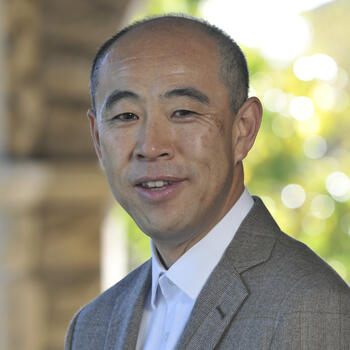
Takeo Hoshi was Henri and Tomoye Takahashi Senior Fellow at the Freeman Spogli Institute for International Studies (FSI), Professor of Finance (by courtesy) at the Graduate School of Business, and Director of the Japan Program at the Shorenstein Asia-Pacific Research Center (APARC), all at Stanford University. He served in these roles until August 2019.

Before he joined Stanford in 2012, he was Pacific Economic Cooperation Professor in International Economic Relations at the Graduate School of International Relations and Pacific Studies (IR/PS) at University of California, San Diego (UCSD), where he conducted research and taught since 1988.

Hoshi is also Visiting Scholar at Federal Reserve Bank of San Francisco, Research Associate at the National Bureau of Economic Research (NBER) and at the Tokyo Center for Economic Research (TCER), and Senior Fellow at the Asian Bureau of Finance and Economic Research (ABFER). His main research interest includes corporate finance, banking, monetary policy and the Japanese economy.

He received 2015 Japanese Bankers Academic Research Promotion Foundation Award, 2011 Reischauer International Education Award of Japan Society of San Diego and Tijuana, 2006 Enjoji Jiro Memorial Prize of Nihon Keizai Shimbun-sha, and 2005 Japan Economic Association-Nakahara Prize.  His book titled Corporate Financing and Governance in Japan: The Road to the Future (MIT Press, 2001) co-authored with Anil Kashyap (Booth School of Business, University of Chicago) received the Nikkei Award for the Best Economics Books in 2002.  Other publications include “Will the U.S. and Europe Avoid a Lost Decade?  Lessons from Japan’s Post Crisis Experience” (Joint with Anil K Kashyap), IMF Economic Review, 2015, “Japan’s Financial Regulatory Responses to the Global Financial Crisis” (Joint with Kimie Harada, Masami Imai, Satoshi Koibuchi, and Ayako Yasuda), Journal of Financial Economic Policy, 2015, “Defying Gravity: Can Japanese sovereign debt continue to increase without a crisis?” (Joint with Takatoshi Ito) Economic Policy, 2014, “Will the U.S. Bank Recapitalization Succeed? Eight Lessons from Japan” (with Anil Kashyap), Journal of Financial Economics, 2010, and “Zombie Lending and Depressed Restructuring in Japan” (Joint with Ricardo Caballero and Anil Kashyap), American Economic Review, December 2008.

Hoshi received his B.A. in Social Sciences from the University of Tokyo in 1983, and a Ph.D. in Economics from the Massachusetts Institute of Technology in 1988.

Former Director of the Japan Program at the Shorenstein Asia-Pacific Research Center
CV
Masaaki Tanaka
Kazuhiko Toyama
Panel Discussions
-

Monday, May 4, 2015

4:30pm – 5:45pm Seminar
5:45pm - 6:15pm Reception


Image
mori ma
Masako Mori (Liberal Democratic Party) is in her second term as a member of House of Councillors of Japan’s Diet (roughly equivalent of U.S. Senate).  She represents Fukushima prefecture.  From December 2012 to September 2014, she served as Minister in charge of Support for Women's Empowerment and Child-Rearing, Minister of State for Consumer Affairs and Food Safety, Minister of State for Declining Birthrate and for Gender Equality in the Cabinet led by Prime Minister Shinzo Abe.  As a central policy maker in Abe Administration’s “womenomics,” she will discuss the progress on women’s empowerment in Japan and the road ahead.


Bechtel Conference Center
Encina Hall
616 Serra St., 1st floor
Stanford University
Stanford, CA 94305

Masako Mori Member of House of Councillors of Japan's Diet
Seminars
Authors
News Type
Commentary
Date
Paragraphs

The Walter H. Shorenstein Asia-Pacific Research Center honored Wall Street Journal reporter Jacob Schlesinger with the Shorenstein Journalism Award last Monday. Schlesinger received the award, which includes a $10,000 cash prize, for his work on Japan that spans nearly three decades.

Since 2002, the annual award has sought to recognize journalists who are outstanding in their field of reporting on the Asia-Pacific, and whose work has helped enhance Western understanding of the region. A jury selects the finalist, which alternates each year between an American and Asian journalist.

At an evening ceremony, Stanford professor Gi-Wook Shin presented Schlesinger with the award surrounded by supporters and friends including Michael Armacost and John Roos '77, (J.D. ‘80), two former U.S. ambassadors to Japan, who both came to know Schlesinger personally during their diplomatic posts.

Earlier in the day, Schlesinger delivered a keynote speech on Japan’s economy and the media. Stanford economist Takeo Hoshi and Shorenstein APARC associate director Daniel Sneider joined him on the panel, along with New York Times deputy executive editor Susan Chira.

Schlesinger was a visiting fellow at Shorenstein APARC at Stanford's Freeman Spogli Institute for International Studies. Under the advisory of then-Shorenstein APARC director Daniel Okimoto, he worked on a book manuscript at Stanford which became Shadow Shoguns: The Rise and Fall of Japan’s Postwar Political Machine.

“No foreign journalist has covered Japan longer, or understood its political economy more deeply, than Jacob M. Schlesinger…” Okimoto said in the award announcement.

Schlesinger is based at the Journal’s Tokyo bureau as Senior Asia Economics Correspondent and Central Banks Editors, Asia, and tweets with the handle @JMSchles.

He answered a few questions for Shorenstein APARC about Japan’s political and economic climate, as well as the changing face of media there.

Image

Schlesinger spoke on a panel with Stanford's Daniel Sneider and Takeo Hoshi, and The New York Times's Susan Chira, followed by a private evening reception.

You’ve covered Japan for the Wall Street Journal for nearly a decade on the ground, in the late 1980s and early 90s and again since 2009. What has changed, or remained the same?

When I first covered Japan in the late ‘80s and early ‘90s, there was huge interest in -- and also a fair amount of mistrust and hostility toward -- Japan. Americans feared that Japan’s economy was going to somehow “defeat” ours (though I don’t think that notion ever really made sense), and constantly accused Japan of unfairly taking advantage of the global free trade system, exporting heavily to us while keeping its market closed to our goods.

After the bubble burst, and, more recently, Japan’s trade surplus disappeared, the anger toward Japan dissipated. But so, in some ways, did the interest. There are far fewer foreign correspondents today in Japan than there were when I was first there 25 years ago.

I think that the rise of Prime Minister of Japan Shinzo Abe, and Abenomics, has revived interest in Japan a bit, but in different ways. People want to know if Japan will rebound, in part as a counterweight to China, which has really surged in economic and political influence in the time since I was last in Japan. That perhaps may be one of the biggest changes -- the fact that so much is now seen through the prism of China. For a time China simply overshadowed Japan but now it has actually, in some ways, revived interest in it. 

What are the greatest challenges you’ve found in explaining the state of the Japanese economy and U.S.-Japan relations?

As I say, one challenge has been in getting people interested, and in explaining to them why it matters. China in particular has become such a big story that Americans sometimes lose sight of Japan's significance as well.

Another challenge is that Japan is a country where change, even big change, often happens in slow, subtle, steady steps. Japanese rhetoric tends to downplay the dramatic and to cast things in indirect terms, which can make it harder to describe statements and developments in ways that are accurate, and will seem interesting to readers.

Can you describe Abenomics and its current status?

Abenomics is Prime Minister Abe's program to try and end Japan's long slump, sometimes branded the “lost decades.” The most concrete and effective action to date has been a much more aggressive policy of monetary stimulus, following Abe's shake-up at the Bank of Japan (the nation’s central bank), where he imposed new leadership. That might be able to lift short-term growth. But Abe’s ambition to raise Japanese growth over the long-run – to a pace near that enjoyed by the United States and other advanced economies – requires extensive structural reforms. Abe has talked a lot about implementing such reforms, but has so far been rather timid in what he has proposed and pursued.

Abenomics also hit a deep pothole in 2014, when Abe decided to proceed with a plan to raise the sales tax, a policy aimed at reducing Japan’s very large outstanding government debt. The depressing impact of the tax basically offset the gains from the Bank of Japan’s stimulus, and Japan last year fell into recession.

It now appears that Japan is slowly pulling out of the recession, and, to ensure that his stimulus polices now work at full force, Abe has delayed plans for a second tax hike that had been scheduled for this year. That may set back long-held goals to reduce government debt, but it should help the chief Abenomics goal of exiting the long deflationary slump.

I'd say overall that Abenomics has a decent chance of lifting Japanese growth a bit higher than it would otherwise have been, but that a dramatic change in Japan’s fortunes would probably require a more dramatic change in policies, something Abe has promised but hasn’t really shown signs of seriously pursuing.

Recently, the United States invited Prime Minister Abe for a state visit (in addition to leaders of other Asian nations). What issues would likely top the agenda?

Both countries are hoping, overall, that the visit will deepen ties between the two governments at a time of great change and challenge in Asia. Whatever one might think of Prime Minister Abe and his agenda, this visit does offer a special opportunity to expand relations, simply because he has now been in office long enough to make multiple trips to Washington as prime minister -- a rare feat over the past quarter century of Japan's notorious carousel politics. The Japanese government is eager for Abe to be able to address a session of the U.S. Congress, which could carry great symbolic significance. He would be the first Japanese leader to do so in more than half a century, since Prime Minister Hayato Ikeda in the early 1960s. That's a pretty long gap, when you consider that Japan has, over that period, long been hailed as one of America's most important allies.

In terms of specific issues, the chief economic agenda item is the Trans-Pacific Partnership free trade pact. It's an ambitious project attempting to set the economic rules for the Pacific economies for the 21st century. And while 12 countries are included, the United States and Japan are by far the biggest, and both sides are hoping that a bilateral agreement by the time Abe meets President Obama could give the broader deal sufficient momentum to be concluded this year.

On the military front, the United States and Japan are updating the terms of their mutual defense pact and hope to do so in ways that will give Japan's military more latitude to participate in joint operations.

While not part of the official agenda, Americans will be eager to hear what Abe has to say about history issues as the world marks the 70th anniversary of the end of World War II.

Abe and his aides have repeatedly challenged some of the established views of Japan and its behavior during the war, including recently directly asking the American publisher McGraw-Hill to change its account of so-called “comfort women,” women forced into prostitution under Japan's war-time military. Such statements and actions have irritated many Americans and stoked anger in China and South Korea. American officials in particular are concerned about deteriorating relations between Japan and South Korea -- the two principle U.S. military allies in Asia -- and are eager for Abe to try and do more to bridge the gap, particularly on history issues. 

Newspapers have played a large role in Japanese society; the nation boasts one of the highest readerships in the world. Where do you see the future of news media in Japan?

Japan, as you say, has one of the most -- perhaps the most -- literate and well-informed populations in the world. News readership and news viewership is extremely high. People are extremely knowledgeable about current events.

Oddly, for a country that is also very tech literate, digital media has been relatively slow to catch on in Japan. Most people still get their main news from print papers, or magazines, and there has not been -- at least not yet -- a real surge in new, credible online-only, or online-originated media sources to challenge the mainstream media, the way platforms like Politico, the Huffington Post, or BuzzFeed have popped up in the United States.

The Japanese media has also suffered from some serious setbacks to its credibility in recent years. There was tremendous soul-searching after the 2011 Fukushima nuclear disaster about whether the Japanese press had done enough, either before the accident, or in the immediate aftermath, to cover aggressively the flaws and mistakes in the country's nuclear energy policies.

More recently, over the past year there have been damaging battles, in varying degrees, over the accuracy, and independence, of three of the country's largest, and most-respected news organizations, the Asahi Shimbun newspaper, the Yomiuri Shimbun newspaper, and the NHK national broadcaster. I worry that the result, fair or not, could prompt further erosion in the credibility of the Japanese media. That's potentially a big problem at a time of great change, great political and policy debate -- and when the political opposition is so weak that the media arguably has a heightened role at this moment as a check on power.

You were a visiting scholar at Shorenstein APARC. How did your time at the Center impact your work?

The Center was a tremendous opportunity for me in so many ways. It is rare for a journalist to be able to break out of the steady deadline pressures of a newsroom, and soak up an academic atmosphere. Being at Shorenstein APARC was a fantastic way to do that. It offered the best elements of an ivory tower, without feeling isolated. It gave me chances to interact with policymakers there as visiting fellows, as well as some of the top experts in the field who were based there.

I have to give particular thanks to Dan Okimoto, who ran Shorenstein APARC at the time and Jim Raphael, who was director of research. When I was at Shorenstein APARC, I was researching and writing a book on Japanese politics. The feedback from Dan, Jim and others made it a much better work. But beyond the book, the depth and perspective that I gained from my immersion at Shorenstein APARC has helped shape my writing since then.

Hero Image
award shot
Stanford professor Gi-Wook Shin (Right) presented the 2014 Shorenstein Journalism Award to Wall Street Journal reporter Jacob Schlesinger (Left).
Rod Searcey
All News button
1
Date Label
-
Publication of the Japanese translation of Thomas Piketty’s “Capital in the 21st Century” last December and his visit to Tokyo in January has rekindled a national debate over a growing economic disparity in Japan. Is income inequality rising in Japan? Does it follow in the footsteps of the U.S. and other Anglo-Saxon countries, as Piketty predicts? Is the rich growing richer, or the poor getting poorer? In this talk, Professor Moriguchi reviews recent trends in income disparity in Japan, using top income shares and other measures, and evaluate their significance from both historical and international perspectives.
 
Image
chiaki moriguchi rsd14 078 0124a
Chiaki Moriguchi
is a Fulbright Visiting Professor at the Walter H. Shorenstein Asia-Pacific Research Center (Shorenstein APARC) during the 2014–15 academic year. She joins APARC from Hitotsubashi University’s Institute of Economic Research in Tokyo, where she serves as a professor. She was an assistant professor at Harvard Business School and Northwestern University prior to joining Hitotsubashi University.
 
Her main research fields are economic history and comparative institutional analysis. Her research interests include comparative analysis of child adoption in the U.S. Japan, and Korea; comparative analysis of state capacity in Qing China and Tokugawa Japan; the long-run evolution of income inequality in Japan; the economic impacts of the Great East Japan Earthquake; and the comparative historical analysis of employment systems in the U.S. and Japan. During her visit at APARC, she will conduct research on educational outcomes of adopted children in the U.S. and on income and wealth inequality in Japan.
 
Chiaki received a PhD in economics from Stanford University and an MA in economics from Osaka University, Japan.


Philippines Conference Room
Encina Hall, 3rd Floor, Central

SIEPR

Stanford University

366 Galvez Street

Stanford, CA 93205


(650) 724-3376 (650) 723-6530
0
Fulbright Visiting Professor
chiaki_moriguchi.jpg Ph.D.
Chiaki Moriguchi is a Fulbright Visiting Professor at the Walter H. Shorenstein Asia-Pacific Research Center (Shorenstein APARC) during the 2014–15 academic year. She joins APARC from Hitotsubashi University’s Institute of Economic Research in Tokyo, where she serves as a professor. She was an assistant professor at Harvard Business School and Northwestern University prior to joining Hitotsubashi University. Her main research fields are economic history and comparative institutional analysis. Her research interests include comparative analysis of child adoption in the U.S. Japan, and Korea; comparative analysis of state capacity in Qing China and Tokugawa Japan; the long-run evolution of income inequality in Japan; the economic impacts of the Great East Japan Earthquake; and the comparative historical analysis of employment systems in the U.S. and Japan. During her visit at APARC, she will conduct research on educational outcomes of adopted children in the U.S. and on income and wealth inequality in Japan. Chiaki has published her work in the Journal of Economic Growth, Review of Economics and Statistics, Industrial and Labor Relations Review, Journal of Economic History, and other academic journals. She is on the editorial board of the Journal of Economic History. She received the 2011 Japan Society for the Promotion of Science Prize. She is also a commentator and contributor to the Japanese media, including NHK, Nikkei, Asahi, and Mainichi. Chiaki received a PhD in economics from Stanford University and an MA in economics from Osaka University, Japan.
Seminars
Paragraphs

Cloud computing is a revolution in computing architecture, transforming not only the “where” (location) of computing, but also the “how” (the manner in which software is produced and the tools available for the automation of business processes). Cloud computing emerged as we transitioned from an era in which underlying computing resources were both scarce and expensive to an era in which the same resources were cheap and abundant. There are many ways to implement cloud architectures, and most people are familiar with public cloud services such as Gmail or Facebook. However, much of the impact of cloud computing on the economy will be driven by how large enterprises implement cloud architectures. Cloud is also poised to disrupt the Information Technology (IT) industry, broadly conceived, with a new wave of commoditization. Offerings optimized for high performance in an era of computing resource scarcity are giving way to loosely coupled, elastically managed architectures making use of cheap, abundant computing resources today.

All Publications button
1
Publication Type
Journal Articles
Publication Date
Journal Publisher
Journal of Industry, Competition and Trade
Authors
Kenji E. Kushida
Paragraphs

The global Information and Communications Technologies (ICT) industry has experienced a rapid, radical reorganization of industry leaders and business models—most recently in mobile. New players Apple and Google abruptly redefined the industry, bringing a wave of commoditization to carriers and equipment manufacturers. Technologies, corporate strategies, and industry structures are usually the first places to look when explaining these industry disruptions, but this paper argues that it was actually a set of political bargains during initial phases of telecommunications liberalization, which differed across countries, that set the trajectories of development in motion. This paper shows how different sets of winners and losers of domestic and regional commoditization battles emerged in various ICT industries around the world. Carriers won in Japan, equipment manufacturers in Europe, and eventually, computer services industry actors rather than communications firms emerged as winners in the United States. These differences in industry winner outcomes was shaped by the relative political strength of incumbent communications monopolies and their will to remain industry leaders, given the political system and political dynamics they faced during initial liberalization. The U.S. computer services industry, which developed independently of its telecommunications sector due to antitrust and government policy, eventually commoditized all others, both domestically and abroad. This paper contends that a political economy approach, tracing how politics and regulatory processes shaped industry structures, allows for a better understanding of the underlying path dependent processes that shape rapidly changing global technological and industry outcomes, with implications beyond ICT.

All Publications button
1
Publication Type
Journal Articles
Publication Date
Journal Publisher
Journal of Industry, Competition and Trade
Authors
Kenji E. Kushida
Subscribe to Governance