Governance

FSI's research on the origins, character and consequences of government institutions spans continents and academic disciplines. The institute’s senior fellows and their colleagues across Stanford examine the principles of public administration and implementation. Their work focuses on how maternal health care is delivered in rural China, how public action can create wealth and eliminate poverty, and why U.S. immigration reform keeps stalling. 

FSI’s work includes comparative studies of how institutions help resolve policy and societal issues. Scholars aim to clearly define and make sense of the rule of law, examining how it is invoked and applied around the world. 

FSI researchers also investigate government services – trying to understand and measure how they work, whom they serve and how good they are. They assess energy services aimed at helping the poorest people around the world and explore public opinion on torture policies. The Children in Crisis project addresses how child health interventions interact with political reform. Specific research on governance, organizations and security capitalizes on FSI's longstanding interests and looks at how governance and organizational issues affect a nation’s ability to address security and international cooperation.

-

The Shorenstein Asia-Pacific Research Center (APARC) Japan Program with the Freeman Spogli Institute of International Studies (FSI) as well as the Stanford Graduate School of Business, the Stanford Institute for Economic Policy Research (SIEPR), and the Stanford Department of Economics will be hosting a memorial conference and service on December 4th and 5th in honor of the late Masahiko Aoki. December 4th will be a full day conference featuring topics within Masa's extensive field of study and research including theoretical and applied economics, theory of institutions, corporate architecture and governance, and the Japanese and Chinese economies. The day will culminate with a cocktail reception. The Celebration of Life on December 5th will be a gathering for family and friends in remembrance of Masa with a light lunch reception to follow.

December 4, 2015

Memorial Conference

Bechtel Conference Center, 616 Serra Street
Stanford University

Agenda

8:30am - 8:50am            Breakfast & Registration

8:50am - 9:00am            Welcome Remarks: Takeo Hoshi (Stanford University)

9:00am - 9:30am            Kenneth Arrow (Stanford University), “The Role of Organizational Structure in the Economy”

9:30am - 10:00am          Paul Milgrom (Stanford University), "Designing the US Incentive Auction"

10:00am - 10:30am        Break

10:30am - 11:00am        Koichi Hamada, Yale University, “Masahiko Aoki: A Social Scientist"

11:00am - 11:30am        Kotaro Suzumura (Hitotsubashi University), “Masahiko Aoki (1938-2015): Recollections of his Pilgrimage and Legacy in Japan”

11:30am - 12:00pm       Yingyi Qian (Tsinghua University), "Masahiko Aoki and China"

12:00pm - 1:15pm          Lunch

1:15pm - 1:45pm            Jiahua Che (Chinese University of Hong Kong) presenting Masahiko Aoki's

                                            "Three-person game of institutional resilience vc transition: A model and

                                              China-Japan comparative history"

1:45pm - 2:15pm           Miguel Angel Garcia Cestona (Universitat Autonoma de Barcelona), "Corporate Governance and Employee Participation: some lessons from Mondragon"

2:15pm - 2:45pm           Herbert Gintis (Santa Fe Institute), "General Social Equilibrium and its Dynamics"

2:45pm - 3:15pm           Break

3:15pm - 3:45pm           Dale Jorgenson (Harvard University), "

"

3:45pm - 4:15pm           Avner Greif (Stanford University), "Comparative Institutional Analysis: China and Europe Compared"

4:15pm - 4:45pm           Francis Fukuyama (Stanford University), "Asian Kinship, Industrial Structure, and Trust in Government"

4:45pm - 5:00pm           Closing, Takeo Hoshi (Stanford University)

5:00pm - 6:00pm           Cocktail Reception

*Agenda is subject to change and will be updated as speakers are confirmed


December 5, 2015

Celebration of Life

Bechtel Conference Center, 616 Serra Street
Stanford University

Agenda

10:30am - 11:00am          Registration

11:00am - 12:00pm          Celebration of Life

12:00pm - 1:30pm            Lunch Reception


Bechtel Conference Center616 Serra StreetStanford UniversityStanford, CA 94305
Conferences
-

While Prime Minister Abe Shinzo has emerged as the strongest Japanese leader in a decade, the dark underside of his administration has been widespread accusations of heavy-handed intimidation of the press. Especially in the last year, there have been numerous high-profile cases in which major media organizations have appeared to capitulate to such pressure, often engaging in a preemptive self-censorship known in Japan as jishuku, or “self-restraint.” A close examination of some of these cases reveals that the Abe administration has indeed engaged in an aggressive effort to shape press coverage using both the carrot of access, and the stick of political pressure and unbridled nationalist intimidation. However, much of the blame also belongs in the media organizations themselves, which have appeared unable, at least initially, to resist the administration’s pressure tactics. Indeed, the Abe government has appeared adept at exploiting weaknesses in Japan’s major media that include a competitive obsession with scoops, a heavy dependence on government sources seen in the so-called press club system and the lack of a shared sense of professional ethics and identity. The collapse of political opposition parties, and the strengthening of state secrecy laws during the second Abe administration also play roles. Deeper historical trends will also be considered, including weak notions of civil society and a moral centrality of the state that has its roots in the crash nation-building of the Meiji period.

Martin Fackler is currently Journalist-in-Residence at the Rebuild Japan Initiative Foundation, a Tokyo-based think tank. From 2009 to 2015, he covered Japan and the Korean peninsula as Tokyo bureau chief for the New York Times. In 2012, he was a finalist for the Pulitzer Prize in international reporting for his and his colleagues' investigative stories on the Fukushima Daiichi nuclear meltdown that the prize committee said offered a "powerful exploration of serious mistakes concealed by authorities in Japan." Martin is also the author (in Japanese) of the bestseller “Credibility Lost: The Crisis in Japanese Newspaper Journalism after Fukushima,” a critical look at Japanese media coverage of the 2011 earthquake and nuclear disaster. In total, he spent a decade in the Tokyo bureau of the New York Times, where he also served as economics correspondent. Before joining the Times in 2005, he worked in Tokyo for the Wall Street Journal, the Far Eastern Economic Review, the Associated Press and Bloomberg News, and in Beijing and Shanghai for AP. He has Masters degrees in journalism from the University of Illinois at Urbana and in East Asian history from the University of California, Berkeley.
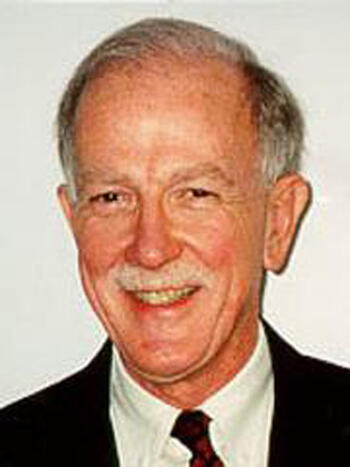
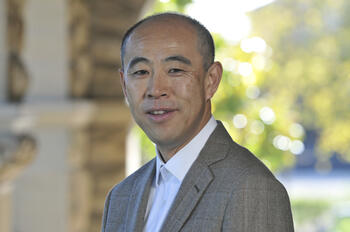
Martin Fackler Journalist-in-Residence at the Rebuild Japan Initiative Foundation
Seminars
Date Label
Paragraphs

Writing for the National Bureau of Asian Research, Daniel Sneider examines Prime Minister Shinzo Abe’s recent attempts to revise Japan’s defense guidelines. He considers how these attempts may affect the Japanese domestic political landscape and the implications that Abe’s actions may have for key issues in the U.S.-Japan alliance, including the Trans-Pacific Partnership and U.S. military interests in Okinawa.

All Publications button
1
Publication Type
Policy Briefs
Publication Date
Journal Publisher
The National Bureau of Asian Research
Authors
Authors
News Type
News
Date
Paragraphs

Marking seventy years since the end of World War II, Japanese Prime Minister Shinzo Abe expressed “profound grief” on Friday for his country’s actions. While pointing to short comings in the statement, the Stanford scholars said the prime minister’s words represented a genuine effort to reflect on the past and provided opportunities to improve relations in the region.

The highly anticipated statement, issued on behalf of the Japanese cabinet, was closely followed by its East Asian neighbors who have raised concerns over Japan’s views of the wartime era.

Leaders of South Korea and China have said Japan has not apologized fully for crimes committed during WWII and each dispute historical narratives seen in the others’ textbooks, popular culture and other domains.

Advancing historical reconciliation in East Asia is a key research area of the Walter H. Shorenstein Asia-Pacific Research Center. The center leads a research project, Divided Memories and Reconciliation, which has produced numerous articles and books, including a ground breaking comparative study of high school history textbooks in China, Japan, South Korea, Taiwan and the United States.

In May 2014, the center convened an international conference “Pathways to Reconciliation” on historical issues, co-sponsored by the Trilateral Cooperation Secretariat, the governmental organization promoting Japan-China-South Korea trilateral cooperation.

Earlier this year, the Japan Program asked Stanford scholars to write their own version of the 70th anniversary statement as if they were the prime minister of Japan. The scholars’ statements were compiled into a report, published in May 2015.

Eight scholars contributed to the exercise in an effort “to understand the diversity of reasonable views on the issue of Japan’s responsibility for the cruel and violent war and Japan’s role in building a peaceful and prosperous world,” the introduction stated.

Themes that emerged in the report included a need for Abe to show heartfelt remorse about Japan’s actions during WWII and its desire to work toward a peaceful future.

Three noted Japan experts who contributed to that report offered their analysis of the prime minister’s statement issued yesterday in Tokyo.


Below are brief summaries of their analysis, you may click on each link to expand in full.


Image
Response by Peter Duus

Duus recognizes that Abe’s statement offers a reiteration of the statements made by Prime Ministers Murayama and Koizumi by including four key words – aggression, colonial rule, apology and remorse. Unlike past statements, however, Abe’s begins by putting war in the historical context and offers a more explicit statement of the victims of the war, not only the three million Japanese but also citizens of China, Southeast Asia and the Pacific islands. The statement can be viewed as “a small but important step toward a truce in the history wars that have raged in East Asia for the last three decades,” he says. However, Abe's attempt at reconciliation will have little effect if he does not rein in contrary actions by neo-nationalists in his own party.

Peter Duus is the William H. Bonsall Professor of Japanese History, emeritus; and a senior fellow, by courtesy, Hoover Institution, Stanford University.


Image

Response by Takeo Hoshi

Hoshi notes that Abe’s statement mentions past apologies expressed by the Japanese government, but has no explicit apology from the current administration. He says there are two surprising elements about the statement. The first is the length – it is much larger than predecessors Murayama and Koizumi at 1,664 words in English and 3,970 characters in Japanese. The second is the emphasis on history rather than on forward-looking components. He says it is commendable that Abe provided an expanded view of history. Hoshi notes that it is nearly impossible to satisfy everyone’s views in such a statement, as scholars witnessed firsthand when working on the Japan Program project.

Takeo Hoshi is the Henri H. and Tomoye Takahashi Senior Fellow in Japanese Studies in the Freeman Spogli Institute for International Studies; a professor (by courtesy) of finance at the Graduate School of Business; and director of the Japan Program at the Shorenstein Asia-Pacific Research Center, Stanford University.


Image
Response by Daniel Sneider

Sneider says Abe’s statement must be judged on following criteria: that it is a valid effort to draw lessons from Japan’s wartime past and that it contributes to the improvement of relations in Northeast Asia. He says the statement advances these goals, but there remain a few caveats. Sneider says the version of history communicated “will not satisfy many people, including many historians,” but that it does move away from the idea that revisionist Japan was in a war of self-defense not aggression. To move Japan, China and South Korea toward reconciliation, the prime minister and his cabinet must embrace the spirit of the statement in full and open the door to convening a long-delayed trilateral summit.

A version of this essay was also published by Nippon in Japanese and English.

Daniel Sneider is the associate director for research at the Shorenstein Asia-Pacific Research Center, Stanford University.

Hero Image
abe flickr csis
Shinzo Abe, Prime Minister of Japan.
Flickr/CSIS
All News button
1
Authors
News Type
News
Date
Paragraphs

The United States and European countries can take steps to avoid making the same economic mistakes that Japan committed during the latter's "lost decade," a Stanford economist wrote in a new paper.

The study, published in the IMF Economic Review, describes the reasons Japan was not able to pull out of its long recession in the 1990s, offering some lessons for U.S. and European leaders in the wake of the 2007-09 meltdown.

In particular, the delay in bank recapitalization and the lack of structural reforms in the economic sphere kept Japan from realizing a full recovery, wrote Takeo Hoshi, the Henri and Tomoye Takahashi senior fellow at Stanford's Freeman Spogli Institute for International Studies.

"Bank recapitalization" refers to a governmental reorganization of failing banks, often involving the use of public money to keep them solvent. "Structural reforms" describes how a government might overhaul its economic structures to increase business competition – such as deregulation to cut costs for firms.

The shortcomings in these two policy areas "retarded Japan's recovery from the crisis and were responsible for its stagnant post-crisis growth," said Hoshi, whose co-author was Anil K. Kashyap, an economics professor at the University of Chicago Booth School of Business.

Risky bank lending

Japan's "lost decade" originally referred to the 1990s, though the country has still not regained the economic power it enjoyed in the 1970s and 1980s. Some say Japan has actually experienced two lost decades if the 2000s are counted as well.

Faced with a huge financial crisis at the dawn of its lost decade, Japan had to navigate challenges that other advanced economies had not confronted since the Great Depression, Hoshi and Kashyap wrote.

However, government leaders made mistakes, Hoshi said. One was failure to rehabilitate the banks and another was to misunderstand the nature of the problems afflicting the Japanese economy. For example, much like the United States in 2007-09, the Japanese banks had made many dubious loans to risky customers.

"Instead of recognizing that major structural adjustments were needed, much of the policy response was calibrated under the assumption that Japan faced a simple cyclical problem that could be addressed with indiscriminate fiscal stimulus," wrote Hoshi, the director of the Japan Program at the Walter H. Shorenstein Asia-Pacific Research Center.

For example, on the demand side, monetary policy was not as expansionary as it could have been, he said. Deflation persisted for a long time. And fiscal stimulus packages – such as tax cuts – were inconsistent. Meanwhile, much of Japan's fiscal spending took the form of public works projects that had low productivity.

As for structural reforms, the Japanese government lacked a sense of urgency. For example, even in the reform-minded administration of former Prime Minister Junichiro Koizumi, only eight of the proposed 35 reform initiatives would have directly boosted growth. Of the others, 16 might have indirectly supported growth and 11 would have had no effect on growth, Hoshi said.

Drastic change needed

Unfortunately, some European nations seem to be following Japan's lead, Hoshi said.

"In France, Italy and Spain, bank recapitalization has been delayed and the structural reforms have been slow. Without drastic changes, they are likely to follow Japan's path to long economic stagnation," Hoshi and Kashyap wrote.

The problems that held back Japan seem to be less serious in the U.S., Hoshi said: "Employment protection is low in the United States and the labor market shows high mobility. The regulatory advantage for incumbent firms is smaller than in Europe or Japan and starting new business is relatively easy."

As the researchers noted, the United States and Germany are in a bit better economic shape, partly due to the fact that they did undertake structural reforms sooner rather than later. The U.S. was able to recapitalize its banks more quickly, for example.

Still, five years after the failure of the Lehman Brothers investment bank left the world's financial markets in chaos, the U.S. and Europe are not yet back to what had looked normal before the crisis, according to the research. For instance, employment levels have not reached the levels seen before the 2007-09 crash.

"The U.S. recovery has been tepid despite a number of extraordinary macroeconomic policies (at least in the traditional sense). This suggests that the U.S. economy also has problems, but they are just different from those in Japan and in Europe," Hoshi said.

In the years leading up to the financial crisis, the researchers wrote, U.S. growth was fueled by a consumption boom from rapid housing price increases and rising debt levels.

"In a broad sense, the U.S. economy before the crisis was similar to the Japanese or Spanish economies," noted Hoshi, adding that in Japan, the speculative investment boom in the late 1980s masked structural problems.

Clifton Parker is a writer for the Stanford News Service.

Hero Image
flickr stock board tokyo
An onlooker examines a stock board, Tokyo, Japan.
Flickr/Kondo Atsushi
All News button
1
Authors
News Type
News
Date
Paragraphs

The United Nations has thus far fulfilled its charter to prevent a third world war, but with 60 million refugees, continued bloodshed with unresolved civil conflicts and terrorism spreading like cancer, the world's leading peacekeeping organization must spearhead global action, U.N. Secretary-General Ban Ki-moon said Friday at Stanford on the 70th anniversary of the international organization.

Ban, the U.N.'s eighth secretary-general, did not rest on any laurels during his speech at a public event sponsored by the Walter H. Shorenstein Asia-Pacific Research Center (APARC). "I humbly accept criticism that the U.N. is not doing enough," he said. 

However, the situation could have been worse if not for the United Nations, he continued. "Without peacekeepers, or without the U.N.'s continued humanitarian assistance and advocacy of human rights, I'm afraid to tell you that this world would have been poorer, more dangerous and even bloodier without the United Nations."

Ban's visit to Stanford – his second to the university in less than three years – was part of a trip to the Bay Area to commemorate the signing of the U.N. charter. In 1945, representatives from 50 nations gathered in San Francisco to create the United Nations – an international organization aimed at saving future generations from the "scourge of war."

Today, the United Nations has grown to 193 member nations. Its challenges – from climate change and poverty to civil wars and terrorism – have never been greater, Ban said.

"This is a critical year; 2015 is a year of global action," he said. "The U.N. cannot do it alone. We need strong solidarity among government, business communities and civil societies, from each and every citizen."

The fact that so many young people around the globe are drawn to violent narratives is worrisome, Ban said. "Violent terrorism is spreading like cancer around the world."

The rise in terrorist activities stems from "a failure of leadership," he said. That's why the United Nations needs to develop a comprehensive plan of action to address extremism, he maintained.

The U.N.'s 70th anniversary coincidentally fell on a momentous day of tragedy and celebration around the world. Dozens were killed when terrorists launched horrific attacks across three continents – in France, Tunisia and Kuwait – fueling anger, sadness and fear of more violence.

But in the United States, celebrations rang out in response to a landmark U.S. Supreme Court ruling that legalizes same-sex marriages nationwide.

Ban, who has long advocated for equality and last year pushed the United Nations to recognize same-sex marriages of its staff, drew a round of applause when he heralded the court ruling as "a great step forward for human rights."

The June 26 event was co-sponsored by Shorenstein APARC and the Freeman Spogli Institute for International Studies at Stanford University, with promotional co-sponsors Asia Society, Asia Foundation and the World Affairs Council of Northern California

May Wong is a freelance writer for the Stanford News Service.

Coverage and related multimedia links:

Remarks at Stanford University by Ban Ki-moon (U.N. News Centre, 6/26/15)

Photos of Ban Ki-moon at Stanford University (U.N. Photo, 6/26/15)

At Stanford University, Ban says U.N. ready to build a better future for all (U.N. News Centre, 6/27/2015)

U.N. Secretary-General Ban Ki-moon welcomes growing engagement of India, China (NDTV, 6/27/2015)

U.N. Secretary-General Ban Ki-moon speaks at Stanford, celebrates U.N.'s 70th anniversary (Stanford Daily, 6/29/15)

Hoover archival photographs featured at lecture delivered by U.N. Secretary-General Ban Ki-moon (Hoover Institution, 6/29/2015)

Hero Image
636086
Ban Ki-moon, the eighth secretary-general of the United Nations, urged the audience to see 2015 as a year of global action.
UN/Mark Garten
All News button
1
Authors
News Type
News
Date
Paragraphs

Stanford scholars are urging Japan to take advantage of an upcoming opportunity to show clear, heartfelt remorse for its actions surrounding World War II.

Making such amends will give Japan credibility as it seeks to assume a global leadership role well into the future, they say.

On Aug. 15, Prime Minister Shinzo Abe will publish a short statement to commemorate the 70th anniversary of the end of World War II, which follows similar practices of his predecessors.

Stanford's Walter H. Shorenstein Asia-Pacific Research Center (APARC), which has long advocated wartime reconciliation in Asia, recently issued a 15-page report in English and Japanese featuring eight hypothetical statements suggesting what the Japanese prime minister might say in his August address. The report, which is available in both English and Japanese, was recently made available to academics, media and the general public and has already received interest from the Japanese media.

The wording of Abe's statement will be scrutinized by governments and experts in Asia and around the world, the Stanford scholars say. During WWII, China and Korea, as well as other Asian nations, endured brutal Japanese military occupations.

"Many have been speculating what the (Abe) statement will be like," wrote Takeo Hoshi, director of the Japan Program at the Shorenstein Center, and APARC associate director for research Daniel Sneider in the report.

For example, Hoshi and Sneider asked, will Abe follow the direction set by prior Japanese prime ministers by expressing remorse for the suffering of Japan's Asian neighbors while apologizing for past aggression and colonization? Future collaboration in world affairs is also important, they added.

"We asked our colleagues what they would say in the 70th anniversary statement if they were the prime minister of Japan, and to write their own version of the statement," Hoshi and Sneider wrote.

"Our goal is to understand the diversity of reasonable views on the issue of Japan's responsibility for the cruel and violent war and Japan's role in building a peaceful and prosperous world," Hoshi and Sneider said.

The Stanford experts who wrote the statements included Hoshi and Sneider as well as Alberto Diaz-Cayeros, a senior fellow at the Freeman Spogli Institute for International Studies; Peter Duus, a professor emeritus of Japanese history; Thomas Fingar, a distinguished fellow at the Freeman Spogli Institute; David Holloway, a professor of international history and of political science; Yong Suk Lee, the SK Center Fellow at the Freeman Spogli Institute; and Harry Rowen, a professor emeritus of public policy and management.

For example, Fingar said in his version, "Let us also resolve to make the 80th anniversary of World War II the 10th anniversary of a more cooperative, more inclusive, and more secure region," and Hoshi wrote in his version, "To avoid any potential misunderstandings, Japan needs to recall past failures, remember the suffering of neighboring Asian peoples, and reaffirm the commitment to world peace more than ever."

On the subject of women, Lee's version noted, "The war and Japan's colonial rule created much suffering, but I would like to especially ask forgiveness to the women from many nations who suffered under colonial rule."

In August 2014, the Shorenstein Asia-Pacific Research Center issued a report on a Stanford-hosted dialogue on World War II memories in northeast Asia. Heightened tensions the last few years among the governments of China, Japan and South Korea have revolved around territorial disputes and the way WWII is portrayed in speeches and educational materials.

"Each nation in northeast Asia and even the U.S. has selective or divided memories of the past, and does not really understand the views of the other side," said Stanford's Gi-Wook Shin, director of the Shorenstein center, in a 2014 Stanford news release.

Clifton Parker is a writer for the Stanford News Service.

Responses to the project

Toyo Keizai, a leading Japanese business weekly, published all eight verisons in English and Japanese stating, "we hope this will provide an opportunity to bring about a wide range of discussion."

University of Tokyo professor Tetsuji Okazaki wrote about the project in the Asahi Shimbun (the article is in Japanese and also attached as a PDF below).

Hero Image
nauru flickr hadi zaher
A sunrise in Nauru, an island in the Central Pacific.
Flickr/Hadi Zaher
All News button
1
Paragraphs

8月15日、安倍首相は第2次大戦終結70周年を記念する談話を発表する。戦後50周年(1995年)の村山談話、そして60周年(2005年)の小泉談話に続くものだ。

ショーレンスタイン・アジア太平洋研究センター (APARC) とフリーマン・スポグリ国際研究所 (FSI) に所属する8人の学者が、自分が日本の首相だったら発表するであろう談話を書き上げた。

英語版はこちらをご覧ください。

All Publications button
1
Publication Type
Books
Publication Date
Authors
Takeo Hoshi
Subscribe to Governance