Business
Paragraphs

This volume collects 22 articles by Masahiko Aoki, selected from writings published over the course of his 45-year academic career. These fascinating essays cover a range of issues, including mechanism design, comparative governance, corporate governance, institutions and institutional change, but are tied together by a focus on East Asia and a comparative institutional framework.

Specific topics include the early stages of mechanism design theory, comparative analysis of vertical, horizontal and modular industrial coordination and its applications, cooperative game-theoretic approaches to the diversity of corporate government structure, the endogenous nature of institutions, and comparative and historical analysis of institutions in Japan, China and Korea.

Students, professors and scholars with an interest in comparative institutional studies and East Asian studies will find this book a useful and illuminating resource.

All Publications button
1
Publication Type
Books
Publication Date
Journal Publisher
Edward Elgar Pub
Authors
Masahiko Aoki
Number
978 1 78254 839 3
Paragraphs

This paper contributes to the discussion of how Public Private Interplay (PPI) can be used to foster Next Generation Access (NGA) buildouts in Europe by introducing the experience of Japan. Japan, which succeeded in both promoting nationwide network buildouts and fostering competitive dynamics that led to the world's fastest and cheapest broadband services and deploying them nationwide. The process entailed deregulation, which unleashed new entrepreneurial private actors, and re-regulation that protected them from incumbent carriers. The resulting market dynamics lowered Digital Subscriber Line (DSL) prices, influencing the market price for Fiber-To-The-Home (FTTH), for which the government had heavily subsidized carriers. Central government initiatives, combined with local incentives, led to an almost 100% broadband accessibility within a few years. However, Japan quickly discovered that taking advantage of the broadband environment to produce innovation, productivity growth, and economic dynamism, was far more difficult than facilitating its creation. It discovered regulatory barriers for the use of Information and Communications Technology (ICT) in various areas of the economy. Like Europe, Japan was not home to the ICT lead-user enterprises and industries that drove the ICT revolution, producing innovation and productivity gains. Moreover, the advent of US-centered cloud computing services potentially decreases the minimum bandwidth requirement to access global-scale computing power. The development of wireless technologies far cheaper than Japan's nationwide FTTH also merits serious consideration for European policy discussions.

All Publications button
1
Publication Type
Journal Articles
Publication Date
Journal Publisher
Communications & Strategies
Authors
Kenji E. Kushida
-

Historically, in Japan, out-of-court corporate restructurings have played a significant role in disciplining managers in the near-absence of hostile takeover activity and shareholder activism. This paper analyzes management turnover in a large sample of Japanese firms that underwent restructurings between 1981 and 2010. I find that restructurings that happen in later stages of financial distress, and those that are not initiated by the firm itself, are more likely to involve management turnover, as are restructurings in which the firm's main business operations are left intact. Furthermore, in restructurings after the reforms around the year 2000, management turnover is more likely to occur if the local potential managerial labor market is substantial. After controlling for firm characteristics and the firm's initial financial condition, it does not appear that management turnover is associated with an improvement in post-restructuring operating performance--in fact, the effect is significantly negative by estimates that address the non-random nature of management turnover. However, for restructurings led by equity funds, management turnover is associated with a more successful turnaround of the firm's performance. These results suggest that equity funds possess the ability to locate and recruit talented outside managers in a thin market for experienced managers.


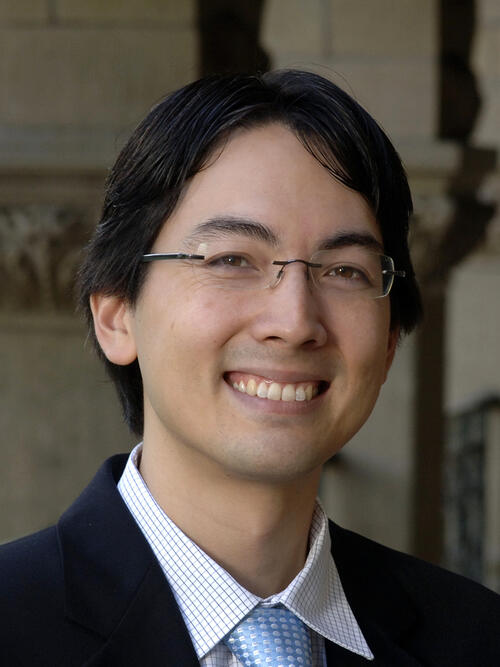
Michael Furchtgott is an economist interested in corporate finance and governance. His current research investigates Japanese corporate restructurings and the behavior of firms and lenders when financial distress arises.

Furchtgott has completed his PhD in economics at the University of California, San Diego, where his research on corporate financial restatements has demonstrated that firms frequently circumvent laws designed to protect investors.

He holds a BA in economics and mathematics from Columbia University.

Daniel and Nancy Okimoto Conference Room

Shorenstein APARC
Encina Hall C331
616 Serra Street
Stanford, CA 94304-6055

(650) 724-9747 (650) 723-6530
0
Shorenstein Postdoctoral Fellow in Contemporary Asia
FURGHOTT,_Michael_3x4.jpg PhD

Michael Furchtgott is an economist interested in corporate finance and governance. His current research investigates Japanese corporate restructurings and the behavior of firms and lenders when financial distress arises.

Furchtgott has completed his PhD in economics at the University of California, San Diego, where his research on corporate financial restatements has demonstrated that firms frequently circumvent laws designed to protect investors.

He holds a BA in economics and mathematics from Columbia University.

Michael Furchtgott Postdoctoral Fellow in Contemporary Asia Speaker Shorenstein APARC
Seminars
-

One of the most important developments in the modern global economy is financial globalization. This has raised threats to the stability of political regimes in two ways: (1) by enhancing the possibility of a financial crisis that could cause political turmoil; and (2) by easing access to foreign sources of financing for opposition political groups. I argue that state capitalism – defined as state-owned publicly listed corporations -- has risen disproportionately among single party regimes as a way to address these dual threats. Single party regimes have both the motivation and a greater institutional capacity for addressing these threats in comparison to other regimes. Tests are conducted on 607 firms in 1996 and 856 firms in 2008 across seven East Asian economies, and are supplemented with case studies of Malaysia and South Korea.  The evidence suggests that financial globalization is contributing to the rise of the state as a counter reaction.

Richard W. Carney is a Fellow in the Department of International Relations located in the College of Asia and the Pacific at the Australian National University. His research and teaching are in the areas of international and comparative political economy with a focus on corporate governance and finance in East Asia. He has published articles in many academic journals including the Journal of Financial Economics, the Journal of East Asian Studies, and Business and Politics. He is also the author of the book Contested Capitalism: The Political Origins of Financial Institutions, and editor of the book Lessons from the Asian Financial Crisis. He was a Jean Monnet Fellow at the European University Institute in Fiesole, Italy (2003-04), and has held visiting positions at INSEAD. He holds a Ph.D. in Political Science (UCSD 2003). Before joining the ANU in 2011, he was an Assistant Professor in Singapore.

Daniel and Nancy Okimoto Conference Room

Richard W. Carney Fellow, Department of International Relations Speaker Australian National University
Seminars
-

Prime Minister Abe's economic policy, called Abenomics, places policies to open up Japan as a key component.  The government argues that reducing the barriers for international trade and capital flows will revitalize the Japanese economy and restore the growth in Japan.  At the core of the opening up policy are efforts to establish free trade agreements (FTAs) with major trading partners.  Japan joined the negotiation for TPP (Trans-Pacific Partnership), which includes the U.S., Japan's second largest trading partner, in July this year.  Japan has also started negotiation for RCEP (Regional Comprehensive Economic Partnership), which includes China, Japan's largest trading partner.  Will these efforts really succeed in making the Japanese economy more open?  Do they lead to the recovery of Japan from two decades of stagnation?  Experts from both sides of the Pacific discuss these issues.


Participants:

Glen S.

Image
Fukushima is Senior Fellow at the Center for American Progress, a prominent public policy think tank headquartered in Washington, D.C.  From 1990 to 2012, Mr. Fukushima was based in Tokyo as a senior executive with one European and four American multinational corporations: Vice President, AT&T Japan Ltd.; President, Arthur D. Little Japan; President & CEO, Cadence Design Systems Japan; President & CEO, NCR Japan; and President & CEO, Airbus Japan.  Before embarking on his business career in 1990, he was based in Washington, D.C. as Director for Japanese Affairs (1985-1988) and Deputy Assistant United States Trade Representative for Japan and China (1988-1990) at the Office of the United States Trade Representative (USTR), Executive Office of the President.  Mr. Fukushima served two terms as President of the American Chamber of Commerce in Japan, 1998-1999, and Vice President, 1993-1997.  A native of California, Mr. Fukushima was educated at Deep Springs College, Stanford University, Harvard University Graduate School of Arts and Sciences, Harvard Business School, and Harvard Law School. At Harvard, he was awarded a National Science Foundation Fellowship. He has studied and worked in Japan for over 25 years, including at Keio University, a daily newspaper, an international law firm, and as a Fulbright Fellow and a Japan Foundation Fellow at the Faculty of Law, University of Tokyo.


Image
Hideichi Okada joins the Walter H. Shorenstein Asia-Pacific Research Center (Shorenstein APARC) from September, 2013 until March, 2014 as Sasakawa Peace Fellow with the Japan Studies Program (JSP).  His research interests encompass energy policies and trade policies in the context of possible cooperation between Japan and the U.S. During his time at Shorenstein APARC, Okada will be working to launch New Dialogue Program for future cooperation on various areas between Japan and the U.S., and other Asia Pacific countries.  Okada served as Vice Minister for International Affairs, Ministry of Economy, Trade and Industry (METI) from 2010 to 2012, where he promoted international trade and investment, and expanded industrial cooperation with various countries. He also served as Director General of Trade Policy Bureau (2008-2010) and Director General of Commerce and Information Policy Bureau of METI (2007-2008). He worked for Prime Minister Junichiro Koizumi as his executive assistant, where he dealt with policies on economy, industry, energy, science and technology, and environment, and with public relations (2001-2006). He was a professor at GRIPS (2006-2007) and a visiting scholar at Harvard Law School and IR/PS, University of California, San Diego in 2007.  Okada was born in Tokyo in 1951. He received LL.M. degree from Harvard Law School (1981) and graduated from the University of Tokyo with a LL.B. (1976). Currently, he is Senior Advisor, NTT Data Institute of Management and Consulting.


Image
Phillip Lipscy is a center fellow at the Freeman Spogli Institute for International Studies and an assistant professor of political science at Stanford University. His fields of research include Japanese politics, U.S.-Japan relations, international and comparative political economy, international security, and regional cooperation in East and Southeast Asia.  Lipscy is an expert on bargaining over unbalanced representation in international organizations such as the United Nations Security Council, International Monetary Fund, and World Bank. His existing work addresses a wide range of topics such as the use of secrecy in international policy making, the effect of domestic politics on trade, and Japanese responses to the Asian Financial Crisis. His most recent research examines the political and economic factors that facilitate energy-efficient policymaking.  Lipscy obtained his PhD in political science at Harvard University. He received his MA in international policy studies and BA in economics and political science at Stanford University.  Lipscy has been affiliated with the Reischauer Institute of Japanese Studies and Weatherhead Center for International Affairs at Harvard University, the Institute for Global and International Studies at George Washington University, the RAND Corporation, and the Institute for International Policy Studies in Tokyo.


Image
Takeo Hoshi is the Henri and Tomoye Takahashi Senior Fellow at the Walter H. Shorenstein Asia-Pacific Research Center at Stanford University, and professor of finance (by courtesy), Stanford Graduate School of Business. Prior to joining S/APARC, he was Pacific Economic Cooperation Professor in International Economic Relations at the Graduate School of International Relations and Pacific Studies (IR/PS) at the University of California, San Diego (UCSD). Hoshi also serves on the Board of Directors at Union BanCal Corporation. He is also a research associate at the National Bureau of Economic Research (NBER) and at the Tokyo Center for Economic Research (TCER). His main research interests include the study of the financial aspects of the Japanese economy, especially corporate finance, banking, and monetary policy. He received numerous awards for his publications including Corporate Financing and Governance in Japan: The Road to the Future (MIT Press, 2001), co-authored with Anil Kashyap (Graduate School of Business, University of Chicago), and his other publications include, “Japanese Government Debt and Sustainability of Fiscal Policy” (with Takero Doi and Tatsuyoshi Okimoto), Journal of the Japanese and International Economies,2011; “Corporate Restructuring in Japan during the Lost Decade” (with Satoshi Koibuchi and Ulrike Schaede), Japan’s Bubble, Deflation, and Long-term Stagnation, MIT Press, 2011 (Koichi Hamada, Anil K Kashyap, and David E. Weinstein, eds.) He has been the editor-in-chief of the Journal of the Japanese and International Economies since 1999. Hoshi received his BA in social sciences from the University of Tokyo in 1983, and a PhD in economics from the Massachusetts Institute of Technology in 1988.

Philippines Conference Room

Glen S. Fukushima Senior Fellow, Center for American Progress; Former President, American Chamber of Commerce in Japan and Former Deputy Assistant U.S. Trade Representative for Japan and China Panelist

Shorenstein APARC
Encina Hall E317
616 Serra Street
Stanford, CA 94305-6055

(650) 725-2375 (650) 213-6374 (650) 723-6530
0
Sasakawa Peace Fellow
OKADA,_Hideichi_1_3x4.jpg

Hideichi Okada joins the Walter H. Shorenstein Asia-Pacific Research Center (Shorenstein APARC) from September, 2013 until March, 2014 as Sasakawa Peace Fellow with the Japan Studies Program (JSP).

His research interests encompass energy policies and trade policies in the context of possible cooperation between Japan and the U.S. During his time at Shorenstein APARC, Okada will be working to launch New Dialogue Program for future cooperation on various areas between Japan and the U.S., and other Asia Pacific countries.

Okada served as Vice Minister for International Affairs, Ministry of Economy, Trade and Industry (METI) from 2010 to 2012, where he promoted international trade and investment, and expanded industrial cooperation with various countries. He also served as Director General of Trade Policy Bureau (2008-2010) and Director General of Commerce and Information Policy Bureau of METI (2007-2008). He worked for Prime Minister Junichiro Koizumi as his executive assistant, where he dealt with policies on economy, industry, energy, science and technology, and environment, and with public relations (2001-2006). He was a professor at GRIPS (2006-2007) and a visiting scholar at Harvard Law School and IR/PS, University of California, San Diego in 2007.

Okada was born in Tokyo in 1951. He received LL.M. degree from Harvard Law School (1981) and graduated from the University of Tokyo with a LL.B. (1976). Currently, he is Senior Adviser, NTT Data Institute of Management and Consulting.

Hideichi Okada The Sasakawa Peace Fellow, Shorenstein APARC Panelist Stanford University
0
Former Thomas Rohlen Center Fellow at the Freeman Spogli Institute for International Studies
Former Assistant Professor of Political Science
phillip_lipscy_2018.jpg PhD

Phillip Y. Lipscy was the Thomas Rohlen Center Fellow at the Freeman Spogli Institute for International Studies and Assistant Professor of Political Science at Stanford University until August 2019. His fields of research include international and comparative political economy, international security, and the politics of East Asia, particularly Japan.

Lipscy’s book from Cambridge University Press, Renegotiating the World Order: Institutional Change in International Relations, examines how countries seek greater international influence by reforming or creating international organizations. His research addresses a wide range of substantive topics such as international cooperation, the politics of energy, the politics of financial crises, the use of secrecy in international policy making, and the effect of domestic politics on trade. He has also published extensively on Japanese politics and foreign policy.

Lipscy obtained his PhD in political science at Harvard University. He received his MA in international policy studies and BA in economics and political science at Stanford University. Lipscy has been affiliated with the Reischauer Institute of Japanese Studies and Weatherhead Center for International Affairs at Harvard University, the Institute of Social Science at the University of Tokyo, the Institute for Global and International Studies at George Washington University, the RAND Corporation, and the Institute for International Policy Studies.

For additional information such as C.V., publications, and working papers, please visit Phillip Lipscy's homepage.


Phillip Lipscy The Thomas Rohlen Center Fellow, FSI and Assistant Professor, Department of Political Science Panelist Stanford University
0
Former Henri H. and Tomoye Takahashi Senior Fellow in Japanese Studies at the Freeman Spogli Institute for International Studies
Former Professor, by courtesy, of Finance at the Graduate School of Business
takeo_hoshi_2018.jpg PhD

Takeo Hoshi was Henri and Tomoye Takahashi Senior Fellow at the Freeman Spogli Institute for International Studies (FSI), Professor of Finance (by courtesy) at the Graduate School of Business, and Director of the Japan Program at the Shorenstein Asia-Pacific Research Center (APARC), all at Stanford University. He served in these roles until August 2019.

Before he joined Stanford in 2012, he was Pacific Economic Cooperation Professor in International Economic Relations at the Graduate School of International Relations and Pacific Studies (IR/PS) at University of California, San Diego (UCSD), where he conducted research and taught since 1988.

Hoshi is also Visiting Scholar at Federal Reserve Bank of San Francisco, Research Associate at the National Bureau of Economic Research (NBER) and at the Tokyo Center for Economic Research (TCER), and Senior Fellow at the Asian Bureau of Finance and Economic Research (ABFER). His main research interest includes corporate finance, banking, monetary policy and the Japanese economy.

He received 2015 Japanese Bankers Academic Research Promotion Foundation Award, 2011 Reischauer International Education Award of Japan Society of San Diego and Tijuana, 2006 Enjoji Jiro Memorial Prize of Nihon Keizai Shimbun-sha, and 2005 Japan Economic Association-Nakahara Prize.  His book titled Corporate Financing and Governance in Japan: The Road to the Future (MIT Press, 2001) co-authored with Anil Kashyap (Booth School of Business, University of Chicago) received the Nikkei Award for the Best Economics Books in 2002.  Other publications include “Will the U.S. and Europe Avoid a Lost Decade?  Lessons from Japan’s Post Crisis Experience” (Joint with Anil K Kashyap), IMF Economic Review, 2015, “Japan’s Financial Regulatory Responses to the Global Financial Crisis” (Joint with Kimie Harada, Masami Imai, Satoshi Koibuchi, and Ayako Yasuda), Journal of Financial Economic Policy, 2015, “Defying Gravity: Can Japanese sovereign debt continue to increase without a crisis?” (Joint with Takatoshi Ito) Economic Policy, 2014, “Will the U.S. Bank Recapitalization Succeed? Eight Lessons from Japan” (with Anil Kashyap), Journal of Financial Economics, 2010, and “Zombie Lending and Depressed Restructuring in Japan” (Joint with Ricardo Caballero and Anil Kashyap), American Economic Review, December 2008.

Hoshi received his B.A. in Social Sciences from the University of Tokyo in 1983, and a Ph.D. in Economics from the Massachusetts Institute of Technology in 1988.

Former Director of the Japan Program at the Shorenstein Asia-Pacific Research Center
CV
Takeo Hoshi Henri H. and Tomoye Takahashi Senior Fellow in Japanese Studies at FSI; Professor, by courtesy, of Finance, Graduate School of Business and Director, Japan Studies Program, Shorenstein APARC Moderator Stanford University
Panel Discussions
-

The digital Information Technology (IT) revolution currently underway is profoundly reshaping economic activity, influencing politics, and transforming societies around the world. It is also forcing a reconceptualization of the global and local; many of the technologies, platforms, and fundamental disruptions are global in nature, but national or local contexts critically influence the uses and effects of IT.

Digital media— broadly conceived as digital platforms for information creation, transmission, and consumption—is a core driver of the IT revolution. Information is the very essence of civilization itself, and the advent of digital media fundamentally transforms our relationship to information. We have already seen: 1)  the Internet maturing as a platform for posting, disseminating, and consuming information, such as online news startups, video such as Youtube, microblogs to evade censorship, and a global marketplace for selling software, advertising and even personal information; 2) the diffusion of mobile communications, making information available across  geographic and socio-economic boundaries, and 3) the widespread adoption of social networking services that represent exploration into the next stage of relationships between people, groups, firms, and other entities.

Digital media is also at the crux of the “global meets local” dynamic, since digital media is by nature global, but differences in economic, political, and social conditions across countries lead to wide variation in its impact. For example, digital media is argued to have been a catalyst in the Arab Spring demonstrations that led to regime shifts in Tunesia, Egypt, and then Syria, but digital media in itself may not lead directly to a regime shift in China— due to government success in sophisticated censorship and physical network design.

The Asia-Pacific provides a fascinating array of countries for examination of the political, economic, and socio-cultural effects of digital media on the modern world. Economies range from developing to advanced. Governments include varied democracies as well as one party regimes. The press enjoys relative freedom in some countries, undergoes limited constraints in others, and is tightly controlled in a few. Populations range from dense to sparse, and from diverse to relatively homogenous.

The panels were divided to discuss four major themes:

Digital Media versus Traditional Media
Around the world, digital media is disrupting traditional media such as newspapers and television. Traditional business models are undermined, new entrants proliferate, and experimentation abounds with no end-game in sight. Questions for countries with well-established traditional media include: what are the patterns for the emergence of new players? To what degree do they threaten the traditional? In countries with less diffused traditional media, what are the opportunities enjoyed by digital media? 

Beyond business models, the social and political functions of digital media may differ from those of traditional media—particularly where traditional media is subject to close governmental control. Who are the new entrants, and what new functions do they provide?  Have traditional media failed as sources of information? What shifts have occurred in how people get information, and how does this differ across countries?

Digital Media and Political Change in Asia
Digital media opens up vast new information flows that can influence political change. From the perspective of grass-roots movements and civil society, digital media provides new tools to congregate, coordinate, and demonstrate. Governments that strongly control civil society, such as China and Vietnam, were alert to the role digital media played in the Arab Spring. What is the potential for digital media in civil society and democratization? In democratic countries such as Japan, South Korea, or India, how is digital media transforming civil society? For example, Japan’s peaceful anti-nuclear demonstrations, coordinated through digital media, displayed an entirely new pattern.

From the perspective of governments, digital media presents not only challenges, but new opportunities to monitor, gather information, and respond to the public. In strong state countries, control of information flows to the people, and gathering of information about people are the cornerstones of state control. How are these states adapting their attempts at controlling media in the face of pervasive digital media? In democratic systems, deciding what information to channel to which voters at what point in election cycles is a critical part of any electoral strategy. How are governments and parties using digital media to reach their constituencies, and what is their effectiveness?

Social Change and Economic Transformation
As a core part of the IT revolution, digital media has opened up new domains of innovation that transforms industries and economies. For advanced countries, it raises serious questions about how best to profit from digital platforms whose underlying technology is increasingly controlled by American multinational firms. For developing countries, the question is how to best take advantage of the world-class computing resources, global markets, and extensive reach enabled by the technological platforms underlying digital media. Instruments such as smartphones and the digital content conveyed on those devices are altering interpersonal relations and even the struggle against poverty in societies such as India.

The advent of social network services is also altering how we conceive of social connections. How do these networks affect groups such as the Korean or Filipino diasporas, and what are the implications for identity, “imagined communities,” and group identification. In what ways is the cohesiveness of groups enhanced by connections such as Facebook or Twitter, and in what ways are groups fragmented along interest cleavages, with people exposed to only ideas and groups of their choice. How does digital media impact social change and how does that impact lead to economic transformation in both developed and developing countries?

Digital Media and International Relations
The growth of digital media produces a powerful and sometimes troubling impact on international relations in the Asia-Pacific region. It can provide greater cultural understanding and regional integration but also aggravate tensions.  Cultural phenomenon such as the wildly popular Korean pop star Psy (of “Gangnam Style” fame) arise from the availability of digital media allowing a video to ‘go viral’ on a global scale in weeks. Conversely, tensions over territorial and historical issues in Northeast and Southeast Asia gain credence and momentum from discussion on digital media platforms, often pushing governments to act in ways detrimental to peace and stability. How does digital media influence international relations in the region? Is it a force for positive change or a source of instability? Finally, the rules governing critical parts of the physical infrastructure upon which digital media depend, such as governance of the Internet are increasingly contested in the international domain.

The fifth Stanford Kyoto Trans-Asian Dialogue focused on these issues surrounding the impact of digital media. The Dialogue brought together scholars, policy experts, and practitioners from the media, from Stanford University and from throughout Asia. Selected participants will start each session of the Dialogue with stimulating, brief presentations. Participants from around the region engaged in off-the-record discussion and exchange of views. The final report from the Dialogue will be published on this page as soon as it has been completed.

The Walter H. Shorenstein Asia-Pacific Research Center (Shorenstein APARC) established the Stanford Kyoto Trans-Asian Dialogue in 2009 to facilitate conversation about current Asia-Pacific issues with far-reaching global implications. Scholars from Stanford University and various Asian countries start each session of the two-day event with stimulating, brief presentations, which are followed by engaging, off-the-record discussion. Each Dialogue closes with a public symposium and reception, and a final report is published on the Shorenstein APARC website.

Previous Dialogues have brought together a diverse range of experts and opinion leaders from Japan, South Korea, China, Vietnam, Thailand, Indonesia, Singapore, India, Australia, and the United States. Participants have explored issues such as the global environmental and economic impacts of energy usage in Asia and the United States; the question of building an East Asian regional organization; and addressing the dramatic demographic shift that is taking place in Asia.

The annual Stanford Kyoto Trans-Asian Dialogue is made possible through the generosity of the City of Kyoto, the Freeman Spogli Institute for International Studies at Stanford University, and Yumi and Yasunori Kaneko.

Kyoto International Community House Event Hall
2-1 Torii-cho, Awataguchi,
Sakyo-ku Kyoto, 606-8536
JAPAN

Seminars
Paragraphs

In our current era, the advent of digital technologies and accelerating globalization is driving ever-faster commoditization of firms and products.  With rapidly improving Information and Communications Technology (ICT) tools, manufacturing is decomposed with finer granularity, and corporate functions can be outsourced and offshored more than ever before.  Services can be unbundled into activities that can be taken apart, reconfigured, and transformed with the application of algorithms.  Overall, firms are experiencing accelerating shifts in the sweet-spot for markets and business models in their search for sustainable advantage.

As firms struggle to adjust in this global, digital world, governments are also under pressure to examine their options to retain value in their national contexts; wealthy nations face the challenge of how to remain wealthy.

Japan is no exception, and from this vantage it is worth reconsidering the potential role that industrial policy can play in its growth strategy.  We will proceed in three sections, each of which builds from our previous research (indicated below the title), towards a set of recommendations for thinking about industrial policy in this digital, global era.  Each point contributes something new to Japan’s discourse about a new growth strategy.

All Publications button
1
Publication Type
Journal Articles
Publication Date
Journal Publisher
Japan Spotlight
Authors
Kenji E. Kushida
-

Cloud Computing is rapidly transforming not only computing, but the very fundamentals of how we process, store, and use information—and information is the very basis of civilization.  Cloud Computing is historically unique by simultaneously being an innovation ecosystem, production platform, and global marketplace. While the technology and business models are almost inherently global in scale, national politics and regulations will powerfully influence how Cloud Computing unfolds across the world. Critical issues such as information privacy (who gets to see and use information), security (how to protect information from unauthorized access), and communications network policy (the political economy of broadband and wireless networks) will be settled at the national or regional level. There are powerful tensions as US-based multinational firms are rapidly taking over the global Cloud Computing industry. What are the appropriate frameworks to understand how the competitive dynamics are unfolding? What are the options for national-level players? How should we understand the policy issues as they unfold? What is the role of Japan and Asia as this transformation unfolds?

Kenji Kushida is the Takahashi Research Associate in Japanese Studies at the Walter H. Shorenstein Asia-Pacific Research Center. He holds a PhD in political science from the University of California, Berkeley, and was a graduate research associate at the Berkeley Roundtable on the International Economy. Kushida has an MA in East Asian studies and BAs in economics and East Asian studies, all from Stanford University.

Philippines Conference Room

0
Former Research Scholar, Japan Program
kenji_kushida_2.jpg MA, PhD
Kenji E. Kushida was a research scholar with the Japan Program at the Walter H. Shorenstein Asia-Pacific Research Center from 2014 through January 2022. Prior to that at APARC, he was a Takahashi Research Associate in Japanese Studies (2011-14) and a Shorenstein Postdoctoral Fellow (2010-11).
 
Kushida’s research and projects are focused on the following streams: 1) how politics and regulations shape the development and diffusion of Information Technology such as AI; 2) institutional underpinnings of the Silicon Valley ecosystem, 2) Japan's transforming political economy, 3) Japan's startup ecosystem, 4) the role of foreign multinational firms in Japan, 4) Japan's Fukushima nuclear disaster. He spearheaded the Silicon Valley - New Japan project that brought together large Japanese firms and the Silicon Valley ecosystem.

He has published several books and numerous articles in each of these streams, including “The Politics of Commoditization in Global ICT Industries,” “Japan’s Startup Ecosystem,” "How Politics and Market Dynamics Trapped Innovations in Japan’s Domestic 'Galapagos' Telecommunications Sector," “Cloud Computing: From Scarcity to Abundance,” and others. His latest business book in Japanese is “The Algorithmic Revolution’s Disruption: a Silicon Valley Vantage on IoT, Fintech, Cloud, and AI” (Asahi Shimbun Shuppan 2016).

Kushida has appeared in media including The New York Times, Washington Post, Nihon Keizai Shimbun, Nikkei Business, Diamond Harvard Business Review, NHK, PBS NewsHour, and NPR. He is also a trustee of the Japan ICU Foundation, alumni of the Trilateral Commission David Rockefeller Fellows, and a member of the Mansfield Foundation Network for the Future. Kushida has written two general audience books in Japanese, entitled Biculturalism and the Japanese: Beyond English Linguistic Capabilities (Chuko Shinsho, 2006) and International Schools, an Introduction (Fusosha, 2008).

Kushida holds a PhD in political science from the University of California, Berkeley. He received his MA in East Asian Studies and BAs in economics and East Asian Studies with Honors, all from Stanford University.
Kenji E. Kushida Takahashi Research Associate in Japanese Studies Speaker Shorenstein Asia-Pacific Research Center, Stanford University
Seminars
Subscribe to Business