Governance

FSI's research on the origins, character and consequences of government institutions spans continents and academic disciplines. The institute’s senior fellows and their colleagues across Stanford examine the principles of public administration and implementation. Their work focuses on how maternal health care is delivered in rural China, how public action can create wealth and eliminate poverty, and why U.S. immigration reform keeps stalling. 

FSI’s work includes comparative studies of how institutions help resolve policy and societal issues. Scholars aim to clearly define and make sense of the rule of law, examining how it is invoked and applied around the world. 

FSI researchers also investigate government services – trying to understand and measure how they work, whom they serve and how good they are. They assess energy services aimed at helping the poorest people around the world and explore public opinion on torture policies. The Children in Crisis project addresses how child health interventions interact with political reform. Specific research on governance, organizations and security capitalizes on FSI's longstanding interests and looks at how governance and organizational issues affect a nation’s ability to address security and international cooperation.

Authors
News Type
News
Date
Paragraphs

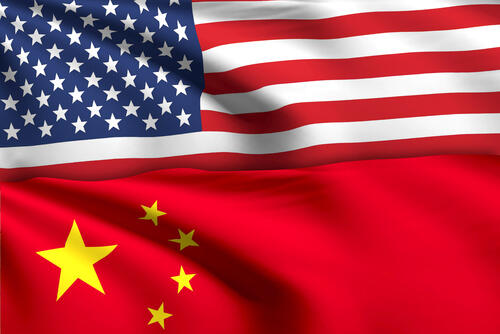
On November 10th, the APARC China Program convened an expert panel focused on the Decision of the fifth plenary session of the 19th Central Committee of the Chinese Communist Party, which took place on October 26-29.  The Fifth Plenum Decision outlines not only China’s 14th Five Year Plan (2021-2025), but also Beijing’s economic blueprint through 2035 and the “goal of fully building a modern socialist country."  The CCP leadership recently articulated its “dual circulation” policy – viz., a drastic reduction in China’s dependence on U.S. technologies and increased reliance on domestic consumption while maintaining exports and attracting foreign direct investments.  At this critical juncture when the coronavirus pandemic has shrunk global trade and tensions between the U.S. and China continue to intensify, panel members were asked to examine what the Fifth Plenum Decision might signify.  Does it mark a significant shift in Beijing’s strategic economic orientation?  What are the short- and long-term implications of the Decision for China’s economic development strategy, U.S.-China relations, as well as the world’s economic and technology ecosystems?  

Guests heard from experts James Green, Damien Ma, and Xiaomeng Lu.  James Green, Senior Research Fellow at Georgeton University's Initiative for U.S.-China Dialogue on Global Issues, has worked for over two decades on U.S.-Asia relations.  He has held several positions in government, including Minister Counselor for Trade Affairs at the U.S. Embassy in Beijing and China Director of the White House’s National Security Council.  Damien Ma is the Director and co-founder of MacroPolo, the Think Tank of the Paulson Institute, which focuses on China's economics, technology, and politics.  He is also adjunct faculty at the Kellogg School of Management at Northwestern University.  Finally, Xiaomeng Lu is a senior analyst in Eurasia Group's geo-technology practice.  She focuses on many of the most important issues related to China right now, including cybersecurity, data protection, artificial intelligence, internet governance, 5G, and trade.  The panel concluded with a discussion of audience questions. Watch:

Read More

Concept of U,S.-China technology competition: brain-shaped boxing gloves covered in U.S. and China flags facing against each other on a background of a motherboard
News

Caught in the Crossfire: The Future Of U.S.-China Science Collaboration and Its Impact on University Education

Caught in the Crossfire: The Future Of U.S.-China Science Collaboration and Its Impact on University Education
Min Ye speaking
News

Domestic or International? The Belt and Road Initiative Is More Internally Focused Than We Think, Says Expert Min Ye

Domestic or International? The Belt and Road Initiative Is More Internally Focused Than We Think, Says Expert Min Ye
Photograph of the UN building in Geneva, Switzerland
News

Rebuilding International Institutions Will be Tough but Necessary, Say Stanford Experts Thomas Fingar and Stephen Stedman

Fingar and Stedman spoke as part of the APARC program “Rebuilding International Institutions,” which examined the future of international institutions such as the United Nations (UN), World Trade Organization (WTO), and World Health Organization (WHO) in our evolving global political landscape.
Rebuilding International Institutions Will be Tough but Necessary, Say Stanford Experts Thomas Fingar and Stephen Stedman
Hero Image
Photo of the Forbidden City entrance with Mao Zedong's portrait Markus Winkler on Unsplash
All News button
1
Authors
Callista Wells
News Type
News
Date
Paragraphs

The China Program at Shorenstein APARC had the pleasure of hosting Professor Min Ye of Boston University’s Pardee School of Global Studies on October 14, 2020. Her program, moderated by China Program Director Jean Oi, focused on the much-discussed but poorly-understood Belt and Road Initiative (BRI), announced in 2013 by President Xi Jinping. While it is not widely known exactly what the BRI is or what Beijing hopes it will accomplish, it has been described as something of a modern silk road, connecting China to dozens of other countries through trade and extensive infrastructure projects. Based on research conducted for her recently published book, The Belt Road and Beyond: State-Mobilized Globalization in China: 1998-2018, Professor Ye enlightened the audience on a surprisingly critical element of this global program: the domestic component.

While Ye began her research with the assumption that many hold about the BRI—that it is primarily a global, internationally-focused initiative—as she continued her research, she found that many, if not most, BRI projects are either entirely domestic or have strong ties to domestic programs. To this end, she posed three questions during her program: Why did Chinese leadership launch the BRI in 2013? How did the Chinese state and businesses implement the BRI? and, What are the internal and external outcomes of the BRI?

To answer these questions, Ye explained the theoretical frameworks she used to understand both the BRI and China's "state-mobilized globalization." Firstly, Ye's "Chinese-State Framework" breaks the Chinese governmental system into three parts: Party Leadership, State Bureaucracy, and Subnational Actors. Each of these elements affect the others, as well as policy surrounding the BRI. However, this division also creates fragmentation in authority and ideology. Secondly, her “State-Mobilized Globalization” framework explains the process surrounding Chinese national strategy. Ye posits that national strategies are generally prompted by crises faced at lower levels of government, particularly when a lack of efficiency or communication is causing “state paralysis.” Once the strategy is announced in order to coordinate efforts and solve the crisis, it enters a feedback loop in which plans are adjusted and changed according to ground-level conditions. These frameworks informed the empirical studies used to answer Ye’s research questions.

The drivers of the BRI, argues Ye, were threefold: strategic, diplomatic, and economic. It was believed by interested parties within China that such an international initiative could ease tensions related to the United States and maritime Asia, as well as generally improve diplomatic relations for the country. China’s industries were also facing problems related to overcapacity, and economic and financial groups wished to use their excess capital to invest abroad. Actors from several different levels in China, including national agencies, local governments, and private entrepreneurs, were involved in executing BRI projects intended to alleviate these tensions. Different cities saw different sides of this implementation: Chongqing, one of China’s largest cities, is heavily dominated by state capital, with its main BRI actors being State-Owned Enterprises (SOEs). Wenzhou, a port city in Zhejiang province, is by contrast dominated by private entrepreneurs.

With diverse implementation comes diverse outcomes. Ye argues that some BRI projects have been helpful in reforming cities’ structural economy, while others have helped upgrade industry. The BRI has managed to alleviate some of the tensions listed above, but at the same time, it has created its own problems. While there has been a massive internal mobilization effort for BRI projects, there exists a disconnect between the domestic situation and demands for transparency from outside actors.

Ye concluded her talk by tying her research to current developments related to COVID-19. While one might imagine that a global pandemic would be a significant inhibitor to an international trade and infrastructure project, Ye finds just the opposite. Because the BRI is, in fact, quite domestically focused, many BRI projects are continuing at a rapid pace, albeit with digital adjustments. Some projects, such as the New Infrastructure Plan, were actually fast-tracked in the wake of the pandemic outbreak. Ye predicts that as COVID-19 restrictions ease and the world returns to “normal,” these domestic and digital elements will be combined with the BRI’s original projects.

An audio recording of this program is available at the link below, and a video recording is available upon request. Please contact Callista Wells, China Program Coordinator at cvwells@stanford.edu with any inquiries.

Read More

Concept of U,S.-China technology competition: brain-shaped boxing gloves covered in U.S. and China flags facing against each other on a background of a motherboard
News

Caught in the Crossfire: The Future Of U.S.-China Science Collaboration and Its Impact on University Education

Caught in the Crossfire: The Future Of U.S.-China Science Collaboration and Its Impact on University Education
Photograph of the UN building in Geneva, Switzerland
News

Rebuilding International Institutions Will be Tough but Necessary, Say Stanford Experts Thomas Fingar and Stephen Stedman

Fingar and Stedman spoke as part of the APARC program “Rebuilding International Institutions,” which examined the future of international institutions such as the United Nations (UN), World Trade Organization (WTO), and World Health Organization (WHO) in our evolving global political landscape.
Rebuilding International Institutions Will be Tough but Necessary, Say Stanford Experts Thomas Fingar and Stephen Stedman
Cover of the book Fateful Decisions: Choices That Will Shape China's Future
News

Thomas Fingar and Jean Oi Analyze the Choices and Challenges Facing China’s Leaders

Fingar and Oi joined the National Committee on U.S.-China Relations to discuss their edited volume, ‘Fateful Decisions: Choices that Will Shape China’s Future.’
Thomas Fingar and Jean Oi Analyze the Choices and Challenges Facing China’s Leaders
Hero Image
Min Ye speaking
All News button
1
Authors
News Type
News
Date
Paragraphs

On September 29, the APARC China Program hosted Thomas Fingar and Stephen Stedman for the program “Rebuilding International Institutions.” The program, which was moderated by China Program Director Jean Oi, examined the future of international institutions such as the United Nations (UN), World Trade Organization (WTO), and World Health Organization (WHO) in our evolving global political landscape. While Fingar and Stedman acknowledged that such institutions facilitated attainment of unprecedented peace and prosperity after WWII, they also asked difficult questions: Are these institutions still adequate? And if not, how will we change them?

Shorenstein APARC Fellow Thomas Fingar kicked off the session by asking whether or not US-China tensions would impede cooperation on major global challenges, or if those challenges were so serious as to render such rivalries immaterial. Perhaps the most obvious example of such a crisis is the current COVID-19 pandemic. The efforts to curb the virus’ spread not only by individual countries, but also by international organizations like the WHO, have proven largely inadequate. According to Fingar, our existing institutions need to be reformed or supplemented to deal with these types of threats. However, such an overhaul of our international systems will be difficult, he says.

How, then, will we go about such a massive project? Stephen Stedman, Deputy Director at Stanford’s Center on Democracy, Development, and the Rule of Law (CDDRL), responded by explaining that the current failure of international cooperation makes such undertakings tough. Globalization has been a double-edged sword: On one hand, more contact, perhaps inherently, leads to increased tension. The resurgence of traditional notions of sovereignty in 2010, kickstarted by the opposition of countries like Russia and China to what was seen as UN overreaching, has led to a reduction of international cooperation overall. On the other hand, Fingar posits that our interconnectedness may force us toward cooperation despite rivalries as we face more and more transnational threats. International institutions create rules to organize and manage our many interconnected relationships so that we can deal with our problems effectively and reduce friction.

Stedman also pointed to the upcoming US elections and the major impact their outcome will have on how these problems are addressed—or not. In the last four year, the United States has pulled back significantly from international institutions and agreements, leaving a gap that China has started to fill. Furthermore, despite the US’s retreat from international responsibility, the country still remains a critical actor in global initiatives. China’s embrace of a global leadership role is not inherently negative, but its future relationship with the US will need to be “managed in a way that you get greater cooperation and not just paralysis.” Stedman says that it is likely that progress will need to be made on a bilateral front in order to have productive conversations about international issues with China.

Concluding on an optimistic note, Fingar voiced his hope that the current tensions and negative perceptions between rivals might ultimately “be mitigated by success in dealing with a common problem,” because “experience does shape perceptions.”

A video recording of this program is available upon request. Please contact Callista Wells, China Program Coordinator at cvwells@stanford.edu with any inquiries.

Read More

View of building roof in the Forbidden City complex and the Beijing skyline in the background
News

New Fellowship on China Policy Seeks to Strengthen U.S.-China Relations

Stanford University’s Shorenstein Asia-Pacific Center invites applications for the inaugural 2021-22 China Policy Fellowship from experts with research experience on issues vital to the U.S. China policy agenda and influence in the policymaking process.
New Fellowship on China Policy Seeks to Strengthen U.S.-China Relations
Cover of the book Fateful Decisions: Choices That Will Shape China's Future
News

Thomas Fingar and Jean Oi Analyze the Choices and Challenges Facing China’s Leaders

Fingar and Oi joined the National Committee on U.S.-China Relations to discuss their edited volume, ‘Fateful Decisions: Choices that Will Shape China’s Future.’
Thomas Fingar and Jean Oi Analyze the Choices and Challenges Facing China’s Leaders
Woman in a face mask looking at a stock market board
News

Pressing “Re-start”: Business Operations in China after COVID-19 – Highlights of Survey Results and Conversation with Prominent China CxOs

“[T]he biggest challenge for us is really how to . . . navigate through all the unknowns. I mean, at that time [of COVID-19], at every stage we were facing different challenges . . . different phases” stated Zhiqiang (ZZ) Zhang, President of ABB (China).
Pressing “Re-start”: Business Operations in China after COVID-19 – Highlights of Survey Results and Conversation with Prominent China CxOs
Hero Image
Photograph of the UN building in Geneva, Switzerland Image by Mat Reding on Unsplash
All News button
1
Subtitle

Fingar and Stedman spoke as part of the APARC program “Rebuilding International Institutions,” which examined the future of international institutions such as the United Nations (UN), World Trade Organization (WTO), and World Health Organization (WHO) in our evolving global political landscape.

Date Label
-

This is a virtual event. Please click here to register and generate a link to the talk. 
The link will be unique to you; please save it and do not share with others.


The Stanford China Program convenes an expert panel focused on the Decision of the fifth plenary session of the 19th Central Committee of the Chinese Communist Party, which took place on October 26-29.  The Fifth Plenum Decision outlines not only China’s 14th Five Year Plan (2021-2025), but also Beijing’s economic blueprint through 2035 and the “goal of fully building a modern socialist country."  The CCP leadership recently articulated its “dual circulation” policy – viz., a drastic reduction in China’s dependence on U.S. technologies and increased reliance on domestic consumption while maintaining exports and attracting foreign direct investments.  At this critical juncture when the coronavirus pandemic has shrunk global trade and tensions between the U.S. and China continue to intensify, our panel members will be asked to examine what the Fifth Plenum Decision might signify.  Does it mark a significant shift in Beijing’s strategic economic orientation?  What are the short- and long-term implications of the Decision for China’s economic development strategy, U.S.-China relations, as well as the world’s economic and technology ecosystems?  
 

Speakers

Portrait of James GreenJames Green has worked for over two decades on U.S.-Asia relations. For five years, Green was the Minister Counselor for Trade Affairs at the U.S. Embassy in Beijing (2013-2018).  As the senior official in China from the Office of the United States Trade Representative (USTR), Green was deeply involved in all aspects of trade negotiations, trade enforcement, and in reducing market access barriers for American entities.  In prior government service, Green worked on the Secretary of State’s Policy Planning Staff and at the State Department’s China Desk on bilateral affairs. He also served as the China Director of the White House’s National Security Council.  In the private sector, Green was a senior vice president at the global strategy firm founded by former Secretary of State Madeleine Albright and was the founding government relations manager at the American Chamber of Commerce in Shanghai, Asia’s largest AmCham.  Currently, Green is a Senior Research Fellow at Georgetown University's Initiative for U.S.-China Dialogue on Global Issues and hosts a U.S.-China Dialogue Podcast.   

Image
Portrait of Xiaomeng Lu
Xiaomeng Lu is a senior analyst in Eurasia Group's geo-technology practice. She focuses on the interactions of emerging technologies with geopolitics, market dynamics, and regulatory norms. Lu provides in-depth analysis on key policy issues such as cybersecurity, data protection, artificial intelligence, internet governance, 5G, and trade.

Before joining Eurasia Group, Lu was the China practice lead at the consulting firm Access Partnership. In this capacity, she helped top financial and cloud service providers of the US enter China's market amid the trade war between the two countries. She also played a key role in establishing and expanding the company's first office in Asia, which generated over $1 million in revenue in three years. Previously, Lu worked as a global policy director at the Information Technology Industry Council, where she conducted successful advocacy campaigns that led to the suspension of onerous regulatory regimes, helping global electronics manufacturers save billions in potential losses. Lu has a master's degree in international trade policy from the Middlebury Institute of International Studies at Monterey and a bachelor's degree in economics from Renmin University of China.

Image
Photo of Damien Ma
Damien Ma is Director and co-founder of MacroPolo, the Think Tank of the Paulson Institute. He is also adjunct faculty at the Kellogg School of Management at Northwestern University. Previously, Ma was a Senior Analyst at Eurasia Group, the political risk research and advisory firm. At Eurasia Group, he mainly focused on the China and East Asian markets, covering areas that spanned energy and commodities and industrial policy to elite politics and US-China relations. Prior to joining Eurasia Group, he was a manager of publications at the US-China Business Council in Washington, DC, where he was also an adjunct instructor at Johns Hopkins SAIS. 

In addition, Ma has published widely, including in The AtlanticNew York TimesForeign AffairsThe New RepublicForeign Policy, and Bloomberg, among others. He has also appeared in a range of broadcast media such as the Charlie Rose Show, BBC, NPR, and CNBC. He is the author or editor of the books, In Line Behind a Billion People: How Scarcity Will Define China’s Ascent in the Next DecadeThe Economics of Air Pollution in China (by Ma Jun), and China’s Economic Arrival: Decoding a Disruptive Rise, published by Palgrave Macmillan. Ma was named a “99 under 33” foreign policy leader by the Young Professionals in Foreign Policy. 


This event is part of the 2020 Fall Colloquia series, Shifting Geopolitics and U.S.-Asia Relations​, sponsored by Shorenstein APARC.

Via Zoom. Register at: https://bit.ly/2T8a3VV

James Green <br><i>Senior Research Fellow, Initiative for U.S.-China Dialogue on Global Issues, Georgetown University</i><br><br>
Xiaomeng Lu <br><i>Senior Analyst, Geo-Technology, Eurasia Group</i><br><br>
Damien Ma <br><i>Director and co-founder, MacroPolo, Paulson Institute</i><br><br>
Panel Discussions
Authors
News Type
News
Date
Paragraphs

The Walter H. Shorenstein Asia-Pacific Research Center (APARC) is pleased to announce its new China Policy Fellowship, which will bring to Stanford mid-career to senior-level experts with extensive research experience on issues vital to U.S. China policy and influence in the policymaking process. With this new offering, APARC seeks to apply cutting-edge academic analysis to pressing challenges affecting U.S. policy toward China and to strengthen U.S.-China relations.

The fellowship will be awarded annually to one expert. While at Stanford, the China Policy Fellow will undertake original research in his/her area of expertise and will play a lead role in organizing a major conference on a topic central to the U.S.-China policy agenda. Each fellow’s work and annual conference will result in a publication that will help advance a deeper understanding of China and its aims.

The fellowship will be hosted by APARC’s China Program, whose mission is to facilitate multidisciplinary, social science-oriented research on contemporary China, with a dual emphasis on basic and policy-relevant research. The appointment of the inaugural 2021-22 China Policy Fellow will begin in the fall quarter of 2021. The new fellowship is made possible thanks to the generosity of an APARC supporter.

“The need to enhance understanding within the United States about China has never been more critical,” says China Program Director Jean Oi, a senior fellow at the Freeman Spogli Institute for International Studies and the William Haas Professor of Chinese Politics. “In these times when divergent claims and bellicose propositions are regularly made by politicians and policymakers in the United States and in China, the China Policy Fellowship will help us promote dialogue between the two nations and empirically-driven research relevant to U.S. China relations. I am delighted that we are able to offer this new fellowship opportunity.”

The application deadline for the 2021-22 China Policy Fellowship is February 15, 2021.

Read More

A missile display in the Military Museum in Beijing, China.
Commentary

The United States Must Avoid a Nuclear Arms Race with China

Oriana Skylar Mastro explains why U.S. nuclear policy needs to minimize the role of nuclear weapons in the U.S.-China great power competition and pave the way for arms control.
The United States Must Avoid a Nuclear Arms Race with China
Encina Hall
News

APARC Announces 2021-22 Postdoctoral Fellowships for Emerging Scholars in Contemporary Asia, Japan, and Korea Studies

The Center’s commitment to supporting young Asia scholars remains strong during the COVID-19 crisis.
APARC Announces 2021-22 Postdoctoral Fellowships for Emerging Scholars in Contemporary Asia, Japan, and Korea Studies
(Left) Yuen Yuen Ang; (Right) Congratulations Yuen Yuen Ang, Winner of the Theda Skocpol Prize from the American Political Science Association
News

Dr. Yuen Yuen Ang Awarded Theda Skocpol Prize for Emerging Scholars

Former China Program postdoc and Stanford Ph.D alumna Yuen Yuen Ang has received the Theda Skocpol Prize for Emerging Scholars from the American Political Science Association for her scholarship on China’s transformation into a global superpower.
Dr. Yuen Yuen Ang Awarded Theda Skocpol Prize for Emerging Scholars
Hero Image
View of building roof in the Forbidden City complex and the Beijing skyline in the background Image by 可欣 任 from Pixabay
All News button
1
Subtitle

Stanford University’s Shorenstein Asia-Pacific Center invites applications for the inaugural 2021-22 China Policy Fellowship from experts with research experience on issues vital to the U.S. China policy agenda and influence in the policymaking process.

-

This is a virtual event. Please click here to register and generate a link to the talk. 
The link will be unique to you; please save it and do not share with others.

Most people attribute the Belt and Road Initiative (BRI) to Beijing’s imperialist ambitions. In her talk, Professor Min Ye will go beyond top-level rhetoric, however, and investigate BRI’s origins, its implementation, and its on-the-ground effects inside China. She will unpack different local governments' approaches to the BRI by discussing how subnational entities have leveraged Beijing’s grand strategy and how the implementation of projects and programs related to the BRI facilitate local economic agendas. China’s local developmentalism, which has undergirded not only the BRI but also other national-level strategies (like the Western Development Program and China Goes Global policy), has propelled the Chinese economy from a middle power in 1998 to a superpower in 2018. The talk will conclude with a discussion of COVID-19’s impact on China’s BRI as well as preliminary findings from Professor Ye’s current research into other state-mobilized development initiatives in China.
 

Image
Portrait of Professor Min Ye
Min Ye is an Associate Professor at the Pardee School of Global Studies, Boston University. Her research lies in the nexus between domestic and global politics and economics and security, focusing on China, India, and regional relations. Her publications include The Belt, Road, and Beyond: State-Mobilized Globalization in China 1998 -- 2018 (Cambridge University Press, 2020), Diasporas and Foreign Direct Investment in China and India (Cambridge University Press, 2014), and The Making of Northeast Asia (with Kent Calder, Stanford University Press, 2010). She has received a Smith Richardson Foundation grant (2016-2018), the East Asia Peace, Prosperity, and Governance Fellowship (2013), Princeton-Harvard China and the World Program post-doctoral fellowship (2009-2010), and Millennium Education Scholarship in Japan (2006). In 2014-2016, Min Ye was an NCUSCR Public Intellectual Program fellow. Ye is currently the 2020 Rosenberg Scholar of East Asian Studies at Suffolk University.

Via Zoom Webinar. Register at: https://bit.ly/3kJlhM9

Min Ye Associate Professor, Pardee School of Global Studies, Boston University
Seminars
Authors
News Type
News
Date
Paragraphs

The Walter H. Shorenstein Asia-Pacific Research Center (APARC) invites applications for three types of postdoctoral fellowship in contemporary Asia studies for the 2021-22 academic year. Appointments for all three fellowship offerings are for one year beginning in fall quarter 2021.

APARC is committed to supporting junior scholars in the field of Asia studies to the greatest extent possible and that has become even more important during COVID-19, as graduate students are especially vulnerable to the adverse impacts of the pandemic, facing the loss of funding opportunities and access to field research.

The Center offers postdoctoral fellowships that promote multidisciplinary research on contemporary Japan, contemporary Korea, and contemporary Asia broadly defined. Learn more about each fellowship and its eligibility and specific application requirements:

Postdoctoral Fellowship on Contemporary Japan

The fellowship supports multidisciplinary research on contemporary Japan in a broad range of disciplines including political science, economics, sociology, law, policy studies, and international relations. The application deadline is January 4, 2021.

Korea Foundation-APARC Korea Program Postdoctoral Fellowship

The fellowship supports rising Korea scholars in the humanities and social sciences. The application deadline is January 20, 2021.

Shorenstein Postdoctoral Fellowship on Contemporary Asia

APARC offers two postdoctoral fellowship positions to junior scholars for research and writing on contemporary Asia. The primary research areas focus on political, economic, or social change in the Asia-Pacific region (including Northeast, Southeast, and South Asia), or international relations and international political economy in the region. The application deadline is January 4, 2021.

Read More

(Left) Yuen Yuen Ang; (Right) Congratulations Yuen Yuen Ang, Winner of the Theda Skocpol Prize from the American Political Science Association
News

Dr. Yuen Yuen Ang Awarded Theda Skocpol Prize for Emerging Scholars

Former China Program postdoc and Stanford Ph.D alumna Yuen Yuen Ang has received the Theda Skocpol Prize for Emerging Scholars from the American Political Science Association for her scholarship on China’s transformation into a global superpower.
Dr. Yuen Yuen Ang Awarded Theda Skocpol Prize for Emerging Scholars
Portrait of Oriana Skylar Mastro and a 3D cover of her book, 'The Costs of Conversation: Obstacles to Peace Talks in Wartime'
News

FSI Center Fellow Wins Best Book in Security Studies Award

The American Political Science Association recognizes Oriana Skylar Mastro for her work on military strategy and mediation.
FSI Center Fellow Wins Best Book in Security Studies Award
Hero Image
Encina Hall
All News button
1
Subtitle

The Center’s commitment to supporting young Asia scholars remains strong during the COVID-19 crisis.

News Type
News
Date
Paragraphs

China's future will be determined by how its leaders manage its myriad interconnected challenges. In Fateful Decisions (Stanford University Press, May 2020), editors Thomas Fingar, a center fellow at APARC, and Jean Oi, the director of APARC’s China Program, join other experts across multiple disciplines in providing close analyses of the most critical demographic, economic, social, political, and foreign policy challenges China’s leaders face today. They outline the options and opportunity costs entailed, providing an analytic framework for understanding the decisions that will determine China's trajectory.

Fingar and Oi discussed the main arguments in their edited volume at a virtual program of the National Committee on U.S.-China Relations. Watch here:

Read More

Quote from Thomas Fingar and Jean Oi from, "China's Challeges: Now It Gets Much Harder"
Commentary

Now It Gets Much Harder: Thomas Fingar and Jean Oi Discuss China’s Challenges in The Washington Quarterly

Now It Gets Much Harder: Thomas Fingar and Jean Oi Discuss China’s Challenges in The Washington Quarterly
BEIJING, CHINA - Workers sit near a CRH (China Railway High-speed) "bullet train" at the Beijing South Railway Station under reconstruction.
News

High-Speed Rail Holds Promise and Problems for China, Explains David M. Lampton

In a new audio interview, Lampton discusses some of the challenges, uncertainties, and decisions that loom ahead of China's Belt and Road Initiative.
High-Speed Rail Holds Promise and Problems for China, Explains David M. Lampton
Elderly Chinese citizens sit together on a park bench.
Q&As

Karen Eggleston Examines China’s Looming Demographic Crisis, in Fateful Decisions

Karen Eggleston Examines China’s Looming Demographic Crisis, in Fateful Decisions
Hero Image
Cover of the book Fateful Decisions: Choices That Will Shape China's Future
All News button
1
Subtitle

Fingar and Oi joined the National Committee on U.S.-China Relations to discuss their edited volume, ‘Fateful Decisions: Choices that Will Shape China’s Future.’

Subscribe to Governance