International Development

FSI researchers consider international development from a variety of angles. They analyze ideas such as how public action and good governance are cornerstones of economic prosperity in Mexico and how investments in high school education will improve China’s economy.

They are looking at novel technological interventions to improve rural livelihoods, like the development implications of solar power-generated crop growing in Northern Benin.

FSI academics also assess which political processes yield better access to public services, particularly in developing countries. With a focus on health care, researchers have studied the political incentives to embrace UNICEF’s child survival efforts and how a well-run anti-alcohol policy in Russia affected mortality rates.

FSI’s work on international development also includes training the next generation of leaders through pre- and post-doctoral fellowships as well as the Draper Hills Summer Fellows Program.

-

Early returns suggest that it may not be business as usual in state-society relations, with the Party-state being compelled to respond to an increasingly discontented and vocal society, and that a partial loosening of the tight censorship in media and culture may also be forthcoming. Indicators include changes in CCTV programming—e.g., a more interesting evening news report and the broadcast of the previously banned film V for Vendetta—media coverage of sensitive issues ranging from air pollution to the work of rights lawyers, and the relatively “enlightened” resolution of the Southern Weekend crisis, among other recent developments. What are we to make of these changes and, more importantly, how have these changes been received within China, for example on the ubiquitous and increasingly important Chinese microblogs?

---

Stanley Rosen is a professor of political science at USC specializing in Chinese politics and society and was the director of the East Asian Studies Center at USC’s Dornsife College of Letters, Arts and Sciences from 2005–2011. He studied Chinese in Taiwan and Hong Kong and has traveled to mainland China over 40 times over the last 30 years. His courses range from Chinese politics and Chinese film to political change in Asia, East Asian societies, comparative politics theory, and politics and film in comparative perspective. The author or editor of eight books and many articles, he has written on such topics as the Cultural Revolution, the Chinese legal system, public opinion, youth, gender, human rights, and film and the media. He is the co-editor of Chinese Education and Society and a frequent guest editor of other translation journals. His most recent books include Chinese Politics: State, Society and the Market [Routledge, 2010 (co-edited with Peter Hays Gries)] and Art, Politics and Commerce in Chinese Cinema [Hong Kong University Press, 2010 (co-edited with Ying Zhu)]. Other ongoing projects include a study of the changing attitudes and behavior of Chinese youth, and a study of Hollywood films in China and the prospects for Chinese films on the international market, particularly in the United States.

In addition to his academic activities at USC, Professor Rosen has escorted eleven delegations to China for the National Committee on U.S.-China Relations (including American university presidents, professional associations, and Fulbright groups), and consulted for the World Bank, the Ford Foundation, the United States Information Agency, the Los Angeles Public Defenders Office and a number of private corporations, film companies, law firms and U.S. government agencies.

Philippines Conference Room

Stanley Rosen Professor, Department of Political Science Speaker University of Southern California
Seminars
-

The road to the 18th Party Congress was contentious, leading to its delayed convocation. Nevertheless, the processes of generational turnover in China’s leadership at the Chinese Communist Party’s 18th National Congress extended patterns of formal politics that trace their roots to Deng Xiaoping’s political reforms of the 1980s, that advanced in the Jiang Zemin era in the 1990s, and that matured under outgoing General Secretary Hu Jintao in the 2000s.  As such, the transition in the party leadership at the 18th Congress marked another step forward in the institutionalization of Chinese leadership politics.

---

Alice Lyman Miller is a research fellow at the Hoover Institution and teaches in the Departments of History and Political Science at Stanford. She is also a senior lecturer in the Department of National Security Affairs at the U.S. Naval Postgraduate School in Monterey, California.

Prior to coming to Stanford in 1999, Miller taught at the School of Advanced International Studies (SAIS) at Johns Hopkins University in Washington, D.C. from 1980–2000. From 1974–90, Miller worked in the Central Intelligence Agency as a senior analyst in Chinese foreign policy and domestic politics, and branch and division chief, supervising analysis on China, North Korea, Indochina, and Soviet policy in East Asia. Miller has lived and worked in Taiwan, Japan, and the PRC, and she speaks Mandarin Chinese.

Miller's research focuses on foreign policy and domestic politics issues in China and on the international relations of East Asia. She is editor and contributor to the Hoover Institution’s China Leadership Monitor, which has since 2001 offered online authoritative assessments of trends in Chinese leadership politics to American policymakers and the general public. Miller has published extensively on policy issues dealing with China, including several articles and book chapters, as well as two books: Science and Dissent in Post-Mao China: The Politics of Knowledge (University of Washington Press, 1996), and, with Richard Wich, Becoming Asia: Change and Continuity in Asian International Relations Since World War II (Stanford University Press, 2011). She is currently working on a new book, tentatively entitled The Evolution of Chinese Grand Strategy, 1550–Present, that brings a historical perspective to bear on China's rise in the contemporary international order.

Miller graduated from Princeton University in 1966, receiving a B.A. in Oriental Studies. She earned an M.A. and a Ph.D. in history from George Washington University in 1969 and 1974.  Formerly H. Lyman Miller, she transitioned in 2006.

Philippines Conference Room

Alice Miller Research Fellow Speaker Hoover Institution
Seminars
-

We offer the first large scale, multiple source analysis of the outcome of what may be the most extensive effort to selectively censor human expression ever implemented. To do this, we have devised a system to locate, download, and analyze the content of millions of social media posts originating from nearly 1,400 different social media services all over China before the Chinese government is able to find, evaluate, and censor (i.e., remove from the Internet) the large subset they deem objectionable. Using modern computer-assisted text analytic methods that we adapt and validate in the Chinese language, we compare the substantive content of posts censored to those not censored over time in each of 95 issue areas. Contrary to previous understandings, posts with negative, even vitriolic, criticism of the state, its leaders, and its policies are not more likely to be censored. Instead, we show that the censorship program is aimed at curtailing collective action by silencing comments that represent, reinforce, or spur social mobilization, regardless of content. Censorship is oriented toward attempting to forestall collective activities that are occurring now or may occur in the future -- and, as such, seem to clearly expose government intent, such as examples we offer where sharp increases in censorship presage government action outside the Internet. This is joint work with Jennifer Pan and Molly Roberts.

Gary King is the Albert J. Weatherhead III University Professor at Harvard University -- one of 24 with the title of University Professor, Harvard's most distinguished faculty position. He is based in the Department of Government (in the Faculty of Arts and Sciences) and serves as director of the Institute for Quantitative Social Science. King develops and applies empirical methods in many areas of social science research, focusing on innovations that span the range from statistical theory to practical application.

King received a B.A. from SUNY New Paltz (1980) and a Ph.D. from the University of Wisconsin-Madison (1984). His research has been supported by the National Science Foundation, the Centers for Disease Control and Prevention, the World Health Organization, the National Institute of Aging, the Global Forum for Health Research, and centers, corporations, foundations, and other federal agencies.

Philippines Conference Room

Gary King Albert J. Weatherhead III University Professor Speaker Department of Government, Harvard University
Seminars
Authors
News Type
Q&As
Date
Paragraphs

China’s demographic landscape is rapidly changing, and the government has responded by launching ambitious social and health service reforms to meet the changing needs of the country’s 1.3 billion people. This week, officials approved a five-year plan to develop a comprehensive nationwide social security network.

Karen Eggleston, the Asia Health Policy Program (AHPP) director and a Stanford Health Policy fellow, discusses the success of China’s health care reforms—including its recently established universal health care system—and the long road still ahead.

Why is the overall health and wellbeing of China’s population important globally?

There are many reasons why the health of China’s citizens matters within a larger global context. On the most basic level, China represents almost 20 percent of humanity. But it is also a major player in the world economy and it depends on having a healthy workforce, especially now that its population is aging more. The government’s ability to meet the needs of its underserved citizens contributes to a more productive and stable China, and works towards closing the huge gaps we see in human wellbeing across the world.

China also potentially offers a model for other developing countries, such as India, that may want to figure out how to make universal health coverage work at a tenth of the income of most of the countries that have put it into place before.

What are some of the biggest changes in China’s health care system since 1949?

One of the most significant changes is that China has achieved very basic universal health insurance coverage in a relatively short period of time.  

Throughout the Mao period (1949–1978) there was a health care system linked to the centrally planned economy, which provided a basic level of coverage via government providers with a lot of regional variation. When economic reform came in 1980, large parts of the system—particularly financing for insurance—collapsed. The majority of China’s citizens were uninsured during the past few decades of very rapid social and economic development.

China’s overall population is changing quite dramatically, which means it has different health care needs, such as treating chronic disease and caring for an increasingly elderly population. The central government is trying to establish a system of accessible primary care—a concept that China’s barefoot doctors helped to pioneer but that fell into disarray—and health services that fit these new needs. 

How does China’s basic health care system work? Are there segments of the population still not receiving adequate coverage and care?

China has had a system where people can select their own doctors. Patients usually want to go to clinics attached to the highest-reputation hospitals, but of course, when you are not insured you almost always by default go to where you can afford the care. “It is difficult to see the doctor, and it is expensive” has been the lament of patients in China, so an explicit goal of the health care reforms has been to address this.

The term “universal coverage” has different definitions. China initially put in place a form of insurance that only covers 20 or 30 percent of medical costs for the previously uninsured population, especially in rural areas. Benefits have expanded, but remain limited. As with the previous system, disparities in coverage still exist across the population. China not only has a huge population with huge economic differences, but within that there is a large migrant worker population. It is a challenge to figure out how to cover these citizens and how to provide them with access to better care. The government is quite aware there are segments of the population not receiving equal coverage, and it continues to strive to resolve the issue.  

What are the greatest innovations in China’s health care system in recent years?

One of the most remarkable things China has achieved is really its new health insurance system. Even if the current coverage is not particularly generous it is nearly universal, and mechanisms are put in place each year to provide more generous coverage. China is also working on strengthening its primary care and population health services, infusing a huge sum of government money into these efforts. It is the only developing country of its per-capita income that has achieved such results so far.

Interestingly, a lot of people assume China achieved its universal coverage by mandate, while in fact the central government did so by subsidizing the cost for local governments and individuals. This reduces the burden, for example, on poorer rural governments and residents, and is one innovative way China is trying to eliminate the disparity in access to care.

Eggleston has recently published a working paper on China’s health care reforms since the Mao era on the AHPP website, as well as an article in the Milken Institute Review.

Gordon Liu, a Chinese government advisor on health care and the executive director of Peking University’s Health Economics and Management Institute, spoke at Stanford on May 29 on the future of China’s health care system.

Hero Image
ShanghaiHealthImperative LOGO
A disabled woman from Henan writes a poetic plea for money explaining the circumstances of her disability, her family's difficulties in paying for treatment, and their subsequent debt, Shanghai, August 2009.
Flickr/Santo Chino; http://bit.ly/IGKsL1
All News button
1
-

Abstract:

The Chinese bureaucracy presents a set of anomalies that need to be explained: In the presence of a strong central authority, why do we observe widespread collusive behaviors at the local level? Why are violations and problems uncovered in the inspection processes are left unaddressed? Why is performance evaluation conducted by the higher authorities is subsequently ignored by the local authorities? We develop a theoretical model on authority relationships in the Chinese bureaucracy by conceptualizing the allocation of control rights in goal setting, inspection and incentive provision among the principal, supervisor and agent. Variations in the allocation of control rights give rise to different modes of governance and entail distinct behavioral implications among the parties involved. The proposed model provides a unified framework and a set of analytical concepts to examine different governance structures, varying authority relationships, and behavioral patterns in the Chinese bureaucracy. We illustrate the proposed model in a case study of authority relationships and the ensuing behavioral patterns in the environmental protection arena over a 5-year policy cycle.


About the speaker:

Xueguang Zhou is the Kwoh-Ting Li Professor in Economic Development, a professor of sociology, and a Freeman Spogli Institute for International Studies senior fellow. His main area of research is on institutional changes in contemporary Chinese society, focusing on Chinese organizations and management, social inequality, and state-society relationships. Zhou's research topics are related to the making of markets, village elections, and local government behaviors. His recent publications examine the role of bureaucracy in public goods provision in rural China (Modern China, 2011); interactions among peasants, markets, and capital (China Quarterly, 2011); access to financial resources in Chinese enterprises (Chinese Sociological Review, 2011, with Lulu Li); multiple logics in village elections (Social Sciences in China, 2010, with Ai Yun); and collusion among local governments in policy implementation (Research in the Sociology of Organizations, 2011, with Ai Yun and Lian Hong; and Modern China, 2010) .

Philippines Conference Room

Shorenstein APARC
Stanford University
Encina Hall, E301
Stanford, CA 94305-6055

(650) 725-6392 (650) 723-6530
0
Senior Fellow at the Freeman Spogli Institute for International Studies
Kwoh-Ting Li Professor in Economic Development
Professor of Sociology
Graduate Seminar Professor at the Stanford Center at Peking University, June and July of 2014
Faculty Affiliate at the Stanford Center on China's Economy and Institutions
Xueguang Zhou_0.jpg PhD

Xueguang Zhou is the Kwoh-Ting Li Professor in Economic Development, a professor of sociology, and a Freeman Spogli Institute for International Studies senior fellow. His main area of research is on institutional changes in contemporary Chinese society, focusing on Chinese organizations and management, social inequality, and state-society relationships.

One of Zhou's current research projects is a study of the rise of the bureaucratic state in China. He works with students and colleagues to conduct participatory observations of government behaviors in the areas of environmental regulation enforcement, in policy implementation, in bureaucratic bargaining, and in incentive designs. He also studies patterns of career mobility and personnel flow among different government offices to understand intra-organizational relationships in the Chinese bureaucracy.

Another ongoing project is an ethnographic study of rural governance in China. Zhou adopts a microscopic approach to understand how peasants, village cadres, and local governments encounter and search for solutions to emerging problems and challenges in their everyday lives, and how institutions are created, reinforced, altered, and recombined in response to these problems. Research topics are related to the making of markets, village elections, and local government behaviors.

His recent publications examine the role of bureaucracy in public goods provision in rural China (Modern China, 2011); interactions among peasants, markets, and capital (China Quarterly, 2011); access to financial resources in Chinese enterprises (Chinese Sociological Review, 2011, with Lulu Li); multiple logics in village elections (Social Sciences in China, 2010, with Ai Yun); and collusion among local governments in policy implementation (Research in the Sociology of Organizations, 2011, with Ai Yun and Lian Hong; and Modern China, 2010).

Before joining Stanford in 2006, Zhou taught at Cornell University, Duke University, and Hong Kong University of Science and Technology. He is a guest professor at Peking University, Tsinghua University, and the People's University of China. Zhou received his Ph.D. in sociology from Stanford University in 1991.

CV
Date Label
Xueguang Zhou Kwoh-Ting Li Professor in Economic Development; Professor of Sociology; FSI Senior Fellow Speaker
Francis Fukuyama Olivier Nomellini Senior Fellow Moderator Stanford University
Seminars
Authors
News Type
News
Date
Paragraphs

Newly printed “no smoking” signs went up across China when the government rolled out a nationwide public indoor smoking ban in May 2011. A sticky gray layer of smoke residue now coats many signs, representing the challenges China’s growing tobacco-control movement faces against a multibillion-dollar government-run industry and deeply embedded social practices.

How has the cigarette become so integrated into the fabric of everyday life across the People’s Republic of China (PRC)?

To get to the heart of this question, historians, health policy specialists, sociologists, anthropologists, business scholars, and other experts met Mar. 26 and 27 in Beijing for a conference organized by Stanford’s Asia Health Policy Program. They examined connections intricately woven over the past 60 years between marketing and cigarette gifting, production and consumer demand, government policy and economic profit, and many other dimensions of China’s cigarette culture.

Anthropologist Matthew Kohrman, a specialist on tobacco in China, led the conference, which was held at the new Stanford Center at Peking University. In an interview, he spoke about the history of China’s cigarette industry, cigarettes and society, and the tobacco-control movement.

The early years

Tobacco first entered China through missionary contact in the 1600s, says Kohrman, but it was not until the early 20th century when cigarettes began gaining popularity. The first cigarette advertising was a “confused tapestry” of messages as marketers figured out what spoke to the public. “There were just as many images of neo-Confucian filial piety as there were of cosmopolitan ‘modern women,’” says Kohrman.

Through improved marketing and aggressive factory building, British American Tobacco and Nanyang Brothers, China’s two largest pre-war firms, helped increase the demand for cigarettes. The Sino-Japanese War (1937–1945) disrupted the cigarette supply, but their popularity had taken hold. Some cigarette firms shifted during the war to the relative safety of southwest China, where tobacco production has remained concentrated ever since.

Post-1949

After the founding of the PRC in 1949, the tobacco industry was nationalized and strong relationships between the central government and cigarette manufacturers in the provinces were formed. Cigarettes also began to be viewed as a part of everyday life. “Ration coupons for cigarettes were issued alongside grain, sugar, and bicycle coupons,” says Kohman. “The Maoist regime legitimized cigarettes as the right of every citizen."

During the Deng Xiaoping era (1978–1997), China’s cigarette industry really took off as manufacturers competed with one another for foreign currency to purchase cutting-edge European equipment and newer varieties of tobacco seed stock. Increased production and the return of full-scale advertising fueled greater consumer demand, and manufacturers began producing more and more varieties of cigarette. Vendors displayed glass cases filled with a colorful patchwork of cigarette packs bearing names like Panda, Double Happiness, and Red Pagoda.

The tobacco industry remained under government control as other industries privatized in the 1980s and 1990s. Party-state management of the cigarette became even more centralized in the early 1980s with the creation of the China Tobacco Monopoly Administration and its parallel external counterpart, the China Tobacco Corporation.

Since 1949, provincial protectionism has marked the cigarette market. It is now possible to purchase Beijing cigarettes in Kunming, Chengdu brands in Shanghai, and so on, but to distribute cigarettes in another province, a manufacturer must cut a deal with provincial government officials. Provincial administrations are loath to cut such deals because central government policy dictates that the portion of cigarette sales tax which does not go to the central government always is channeled to the finance bureau of the province of original production. China’s 2001 entry into the World Trade Organization opened the market ever so slightly to international brands like Marlboro and Kent, but domestic brands continue to dominate because of fierce protectionism.

...If it chooses to do so, China is in a position to lead and change the landscape in a very profound way.
-Matthew Kohrman, Professor of Anthropology, Stanford

A new era

In 2003, the World Health Organization established the first global health treaty, the Framework Convention on Tobacco Control (FCTC). Although the United States still has not yet ratified the FCTC, China signed the treaty in 2003 and ratified it in 2005. Kohrman says China’s tobacco industry giants fear competition from international cigarette brands more than they worry about tobacco-control measures related to the FCTC.

Nonetheless, the FCTC ushered in a new era of public health research about tobacco and has helped increase public awareness about the dangers of smoking. New restrictions have been imposed on print and television advertising for cigarettes, and international organizations, such as the Bloomberg Family Foundation, have begun funding anti-tobacco work in China.

A big challenge to tobacco-control campaigns, says Kohrman, is the sheer amount of money that tobacco companies have available for marketing. “In 2010, China’s tobacco industry posted profits in excess of U.S. $90 billion—that’s huge. Tobacco control research and advocacy now annually receive a few million dollars, and much of that is coming through outside funders, which have very specific projects in mind.”

China’s tobacco advertisers have adapted to the new restrictions that prevent them from openly promoting cigarettes in the media. They have instead moved to point-of-sale and soft-marketing tactics, including misinformation campaigns about the “dangers” of quitting smoking. “The actual expenditure on marketing probably hasn’t dropped very much,” says Kohrman.

Cigarettes and society

Strong marketing and the legitimization of cigarettes as a part of everyday life have led to the deep integration of cigarettes into Chinese society. While only 3 to 4 percent of women in China smoke, cigarettes are an important part of male identity and social mobility. The wide range of cigarette brands has led to the growth of high-end varieties favored by businessmen and politicians, with some brands costing as much as $50 a pack. The custom of cigarette gifting has existed in China for decades, and it is difficult for a young man to turn down a package of cigarettes from a senior colleague or supervisor.

There is also the fact that nicotine is highly addictive, and quitting is difficult in an environment where smoking cigarettes is socially sanctioned. Kohrman says, “When you take an incredibly addictive substance like nicotine and throw it into the mix of all of these norms and customs, it creates a pretty toxic brew.”

The future?

Tobacco control presents a formidable challenge in China, one that requires understanding the historical context and complex dimensions of the cigarette industry. “Cigarettes have been insinuated into so many aspects of daily life across China, and the market for this product has now become so closely enmeshed with matters of government finance and operations,” says Kohrman.

What happens in China could have implications for the entire world. “There’s a tobacco-induced human annihilation unfolding right now in almost every country and questions about how society and Big Tobacco are enmeshed, and how cigarette culture and government finance have become mutually supportive are pivotal,” says Kohrman. “Every country except Bhutan has legalized cigarette sales and is subject to many of the same general issues as China—only in China they’re on a much larger scale. But if it chooses to do so, China is in a position to lead and change the landscape in a very profound way.”   

Hero Image
PandaCigarettes NEWSFEED
Premium Chinese cigarette brand Panda for sale in a duty-free shop at Dubai's airport.
Flickr/Bernard Oh
All News button
1
Authors
News Type
Q&As
Date
Paragraphs

Since opening its doors to the world in 1978, China has pursued a sometimes erratic but reasonably steady course leading to increasing global economic and political interaction. Its interests now extend from Pyongyang to New York and Sydney to Riyadh. U.S. President Barack Obama’s announcement of a new “pivot” toward Asia, recent events on the Korean Peninsula, and China’s upcoming leadership transition provide additional reasons to seek greater understanding of China’s goals and interactions with other nations.

Thomas Fingar, Stanford’s Oksenberg-Rohlen Distinguished Fellow, is leading a new multiphase Shorenstein Asia-Pacific Research Center (Shorenstein APARC) initiative to explore the nuances and complexity of China’s foreign relations and domestic issues. The China and the World research project aims to contextualize and better understand China’s regional and global interactions, both from the perspective of China itself and from that of other countries. Beginning with Northeast Asia, the project will analyze China’s relations region-by-region throughout the world, and will involve experts from Stanford, China, and the regions studied. It kicks off with a Shorenstein APARC-organized workshop held Mar. 19 and 20 at the new Stanford Center at Peking University.

Fingar discusses the development of China’s foreign relations since 1978, and describes the project and workshop’s background.

In the three decades since Deng Xiaoping enacted his 1978 Open Door reforms, what have been the main trends in China’s global engagement?

The general trend since 1978 has been for China to become increasingly active and engaged in a growing number of places around the world. There have been a number of phases to this.

The “honeymoon period” of U.S.-China relations (1979–1989) was a period of essentially no competition to China’s interaction within the U.S.-led world economic system. China concentrated on the OECD countries—especially the United States, Japan, and Western Europe—that had money to invest and willingness to trade.

After the 1989 Tiananmen Square Incident, China’s international options became more constrained as its relations with the developed world plateaued. It began to reach out to the places that would deal with it: Southeast Asia and particularly Africa. This was in part diplomatically motivated, and in part a search for new markets for the low-end goods it was beginning to produce. It was also the beginning of its search for energy.

Around 2000, China transitioned from building a more modern economy towards being one—beginning the era of its “rise.” China’s demand for resources went up, as did its capacity to supply more markets and its ability to invest more of its growing foreign exchange earnings. It became globally active, proclaiming that it had a new, less exploitative model than what the United States and Europe offered.

What Northeast Asia issues do you think China will focus on this year, especially as it plans for a major leadership transition?

North Korea’s stability and China’s growing investments in the DPRK. Beijing is acutely interested in whether Kim Jong Un will prove a viable leader and whether the regime will be able to manage its new challenges. China is concerned about possible North Korean provocations that might trigger responses by South Korea and/or the United States, putting at risk the peaceful regional and international situation China needs for its political and economic development.

The second issue is answering the question: what does the U.S. pivot toward Asia mean? What does it mean in terms of security, economics, and relations with Japan and Korea? China is the largest trading partner for each of these countries. They value it as a market, and as a source of resources. Yet they also worry about being excessively dependent on China. They appear not to have worried about this quite so much when their dependence on the U.S. market was comparable.

Two full workshop sessions will be devoted to Japan and South Korea, both countries with close U.S. ties. What are the most important factors with regard to China’s rise for these two countries? What about for Southeast Asia?

One of the reasons for our upcoming Beijing workshop is to develop a general template of questions we can ask for each region. We want to avoid focusing the questions too narrowly on Northeast Asia.

For Japan and Korea, one factor has to do with economic opportunities and with their own vulnerabilities. The other has to do with the security challenges of China’s rise, and the uncertainty of its military aspirations. Japan and Korea do not want to be drawn into U.S.-led activities, but they still value the United States for protection. They are concerned about managing the decoupling of economic and security dependence, about no longer being dependent on the same country for both.

Many regional issues are interrelated, such as maritime territorial claims and naval expansion. China is an economic player in Southeast Asia, and the Philippines and Thailand have an alliance with the United States. Indonesia is a rising county in Southeast Asia, and India is an outside player in the region. The U.S. 7th Fleet currently defends the shipping lanes to Northeast Asia that go through Southeast Asia, which probably is not the long-term solution.  

Russia played an important role in shaping the political ideology in the early days of the People’s Republic of China, and the politics of both countries—especially Russia—have changed so much. What is their relationship like now?

Correct and limited. The West imposed a military hardware embargo on China after Tiananmen, so Russia is a limited alternative for that, and it is also a source of energy and other resources. It is fair to say China has something close to disdain for Russia, for what it sees as political confusion and economic mismanagement. The idea of a strategic triangle—using Russia to balance U.S. influence—is something China sees as unviable.

As you move forward with this project, what is the ultimate goal?

The goal is to understand the dynamics of interaction—to understand the bigger picture. Other countries have objectives and concerns with regard to China, while China has objectives and concerns of its own. It is about identifying things such as where they see the same and different kinds of opportunities; what concerns they have about third country interests or involvement; and how they evaluate the success of policies to date.  

Hero Image
DXP Billboard NEWSFEED
"Focus straight ahead on the development of Pudong [Shanghai commercial district]," says Deng Xiaoping on a poster at the 2010 Shanghai World Expo.
Flickr/sbszine
All News button
1
Authors
Thomas Fingar
News Type
News
Date
Paragraphs
For the past two decades China has been a poster child of successful globalization. But its integration into the world economy and global trends drive and constrain Beijing's ability to manage growing social, economic and political challenges. In a YaleGlobal Online series article, Thomas Fingar looks at the global implications of China’s development challenges.
Hero Image
YaoOlympics NEWSFEED
Chinese basketball superstar Yao Ming carries China's flag during the 2008 Summer Olympics opening ceremonies. Beijing's hosting of the Olympics marked a major symbolic milestone in China's development.
Flickr/U.S. Army
All News button
1
News Type
News
Date
Paragraphs
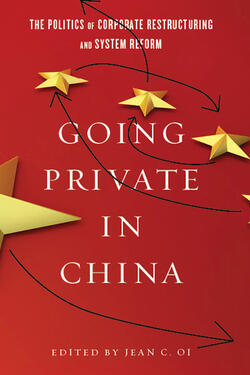
After 10 years of rapid growth, China will undergo a major leadership transition later this year. Two recent Shorenstein Asia-Pacific Research Center edited volumes -- Going Private in China and Growing Pains -- put China’s development into context as the country prepares for the next decade of its future.
Hero Image
ShanghaiEscalator NEWSFEED
Escalator to lower observation deck at the Shanghai World Financial Center, Aug. 2008.
Flickr/Remko Tanis
All News button
1

Walter. H. Shorenstein
Asia-Pacific Research Center
616 Serra St C332
Stanford University
Stanford, CA 94305-6055

(650) 725-0938 (650) 723-6530
0
Visiting Associate Professor
YuanFangchen_WEB.jpg MA, PhD

Fangcheng Yuan joins the Walter H. Shorenstein Asia-Pacific Research Center (Shorenstein APARC) during the 2011–12 academic year from the Institute of Political Science at Central China Normal University where he serves as an associate professor.

His research interests encompass Sino-foreign local governance; current reforms and innovations in contemporary rural China; and a comparative study of rural governance in Mainland China and Taiwan. During his time at Shorenstein APARC, Yuan will conduct research on community reconstruction: current reforms and innovations in China’s rural primary-level management system. He will contribute to a forthcoming research report on the subject.

Yuan is an editor of the Journal of Socialist Research, and contributes articles regularly to publications including CASS Journal of Political Science and Journal of Public Administration. He is also the author of Making Service Work (2008); Breakthrough: Xian’an Reform and the Transformation of China's Rural Grass-roots Governance (2009); and Working in Grass-Roots: A Close Observation of the Reforming of Rural China (2011).

Yuan holds a PhD and an MA in Chinese and foreign political systems from the Institute of Political Science at Central China Normal University, and a BA in political science from Wuhan University.

Subscribe to International Development