International Development

FSI researchers consider international development from a variety of angles. They analyze ideas such as how public action and good governance are cornerstones of economic prosperity in Mexico and how investments in high school education will improve China’s economy.

They are looking at novel technological interventions to improve rural livelihoods, like the development implications of solar power-generated crop growing in Northern Benin.

FSI academics also assess which political processes yield better access to public services, particularly in developing countries. With a focus on health care, researchers have studied the political incentives to embrace UNICEF’s child survival efforts and how a well-run anti-alcohol policy in Russia affected mortality rates.

FSI’s work on international development also includes training the next generation of leaders through pre- and post-doctoral fellowships as well as the Draper Hills Summer Fellows Program.

Authors
News Type
News
Date
Paragraphs

Countries are in a high-stakes competition to develop AI talent and respond to the technology's transformative impact on labor markets and economic growth. As the race intensifies, a critical question looms large: What talent development strategies deliver proven outcomes?

In a recent book published by Stanford University Press, The Four Talent Giants, Stanford sociologist Gi-Wook Shin, a senior fellow at the Freeman Spogli Institute for International Studies, examines how countries attract, develop, and retain talent in a globalized world. Shin, who is also the William J. Perry Professor of Contemporary Korea and director of the Korea Program at the Shorenstein Asia-Pacific Research Center (APARC), explores how four vastly different Asia-Pacific nations – Japan, Australia, China, and India – rose to economic prominence by pursuing distinct human resource development strategies, encompassing different approaches to education, migration, and transnational talent mobility.

The study provides a framework that extends beyond the four cases, offering policy lessons for other economies, particularly less developed nations. Below are four insights from the book on the evolution of talent strategies and why countries need to construct multiple forms of talent – domestic, foreign, and diasporic – to address new risks and capitalize on emerging opportunities.

Two-image collage: Gi-Wook Shin delivers a talk (left); stacks of Shin's book, The Four Talent Giants, on a desk.
Gi-Wook Shin presents findings from his book at a talk hosted by APARC, January 28, 2026. | Michael Breger

1. Look for variation in mobilizing human resources for development


Several Asia-Pacific countries now rank among the world’s largest economies – a marked shift from the 1980s, when Japan was the only regional economy near the top. Shin cautions against interpreting this rise of Asia-Pacific nations as evidence of a single developmental regional “recipe.” Instead, his work shows that similar economic outcomes emerged from different national paths, shaped by distinct histories of colonial rule, nationalism, state-building, and higher education policy.

Rather than isolating one driver of growth, the analysis highlights how states structured education systems, migration pathways, and global connections to talent in ways that reflected domestic priorities and constraints.

2. Talent includes social capital, not just skills or credentials


Shin defines talent broadly as both human capital and social capital. In a transnational era, the value of talent lies not only in technical expertise but also in the networks, relationships, and institutional ties that connect individuals across borders.

This insight underpins a four-part framework for national talent strategies: brain train (developing domestic talent), brain gain (attracting foreign talent), brain linkage (maintaining ties with citizens and students abroad), and brain circulation (sending talent out and facilitating return). Successful countries rarely rely on a single approach; instead, they combine these strategies in different proportions over time.

3. Talent strategies must be diversified and rebalanced over time


A central contribution of Shin’s book is a framework he calls Talent Portfolio Theory, which likens national talent strategies to investment portfolios. Just as investors diversify assets and rebalance them as conditions change, states must continually adjust how they train, attract, and retain talent in response to economic shifts.

Japan’s experience illustrates both the strengths and limits of a concentrated strategy. Its post-WWII success rested on a robust domestic training system spanning universities, vocational schools, and workplace education. Nevertheless, as the global knowledge economy evolved in the 1990s, Japan struggled to adapt, facing demographic decline and hampered by institutional introspection. Only in the 2010s did Japanese policymakers begin to diversify talent development through study-abroad programs, attracting international students, and implementing limited immigration reforms.

Australia followed a contrasting path, relying heavily on foreign talent through skilled migration and international education. Its system emphasized work-migration pathways and relatively easy naturalization for international students, while more recent policies have focused on sustaining global alumni and diaspora networks. Each model carries risks, but together they demonstrate why diversification and timely rebalancing matter.

4. Political leadership and state policy shape talent outcomes


Across cases, Shin argues that talent strategies are not purely organic market outcomes. Political leadership and state capacity play decisive roles in shaping higher education systems and migration policy. China’s post-reform experience demonstrates how state-led overseas training and return programs helped address the loss of scientific expertise after the Cultural Revolution. Over time, China shifted from emphasizing the return of Chinese nationals to the country toward building broader transnational linkage and circulation mechanisms.

India offers a different model, where long-standing patterns of outward migration produced a global diaspora that functions as a form of “brain deposit.” Alumni of Indian Institutes of Technology and other elite institutions now serve as transnational bridges connecting India to Silicon Valley and other innovation hubs.

For developing countries, Shin offers a counterintuitive lesson: initial brain drain is often unavoidable and can be productive if governments invest in long-term linkage and circulation rather than restricting mobility. To the United States and other nations grappling with anti-immigration politics, Shin’s message is that erecting barriers to attracting and retaining global talent could undermine their long-term economic competitiveness.

Read More

Hero Image
Illustration conveying the concept of social network connections, with connected avatars of anonymous people. Getty Images
All News button
1
Subtitle

From the practices of higher education institutions to diaspora networks, talent return programs, and immigration policies of central governments, a comparative analysis by Stanford sociologist Gi-Wook Shin shows how different national human resource strategies shape economic success.

Date Label
Display Hero Image Wide (1320px)
Yes
Paragraphs
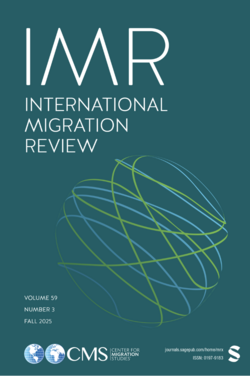
Cover of the journal International Migration Review, vol. 59 no. 3.

Countries that face brain drain have adopted various approaches to address its adverse impacts on development. However, the extant literature grounded in the return migration paradigm stresses regaining “lost” human capital through the repatriation of skilled migrants (brain circulation), neglecting the contributions skilled diasporic talent can make through transnational social capital (brain linkage) without permanent return. Building on recent theoretical advancements that reconsider return-centric accounts of migration and talent policies, the authors propose a framework that treats circulation and linkage as distinctive yet intertwined phenomena, accounting for both the human and social capital offered by skilled diaspora members. The utility of the revised framework is illustrated through a comparative analysis of India and China, two countries that have experienced the largest magnitudes of skilled emigration worldwide but adopted divergent strategies to mitigate brain drain, reflecting different resources, needs, and capacities. China has focused on circulating back its overseas talent, while India has cultivated transnational linkages that do not center on the permanent repatriation of its overseas talent. Additionally, circulation has facilitated linkage in China, whereas linkage has fostered circulation in India. The authors conclude by discussing the framework's theoretical contributions to the skilled migration literature and policy implications for countries of different sizes, levels of development, and geographic regions.

All Publications button
1
Publication Type
Journal Articles
Publication Date
Journal Publisher
International Migration Review
Authors
Number
3
Authors
News Type
News
Date
Paragraphs

The Walter H. Shorenstein Asia-Pacific Research Center (APARC) is pleased to invite applications for a suite of fellowships in contemporary Asia studies to begin in fall quarter 2026.

The Center offers postdoctoral fellowships that promote multidisciplinary research on Asia health policy, contemporary Japan, and contemporary Asia broadly defined, as well as postdoctoral fellowships and visiting scholar positions with the Stanford Next Asia Policy Lab and a visiting fellow position on contemporary Taiwan. Learn more about each opportunity and its specific application requirements:

2026-27 Asia Health Policy Program Postdoctoral Fellowship


Hosted by the Asia Health Policy Program at APARC, the fellowship is awarded to one recent PhD recipient undertaking original research on contemporary health or healthcare policy of high relevance to countries in the Asia-Pacific region, especially developing countries. Appointments are for one year beginning in fall quarter 2026. The application deadline is December 1, 2025.

2026-27 Japan Program Postdoctoral Fellowship


Hosted by the Japan Program at APARC, the fellowship supports research on contemporary Japan in a broad range of disciplines, including political science, economics, sociology, law, policy studies, and international relations. Appointments are for one year beginning in fall quarter 2026. The application deadline is December 1, 2025.  

2026-27 Shorenstein Postdoctoral Fellowship on Contemporary Asia


APARC offers two postdoctoral fellowship positions to junior scholars for research and writing on contemporary Asia. The primary research areas focus on political, economic, or social change in the Asia-Pacific region (including Northeast, Southeast, and South Asia), or international relations and international political economy in the region. Appointments are for one year beginning in fall quarter 2026. The application deadline is December 1, 2025. 
 

2026-27 Taiwan Program Visiting Fellowship


Hosted by the Taiwan Program at APARC, the fellowship is awarded to one mid-career to senior-level expert with extensive experience studying contemporary Taiwan. The fellowship research focus is on issues related to how Taiwan can meet the challenges and opportunities of economic, social, technological, environmental, and institutional adaptation in the coming decades, using a variety of disciplines, including the social sciences, public policy, and business. The application deadline is March 1, 2026.  
 

Read More

Stanford Next Asia Policy Lab team members and invited discussants during a roundtable discussion in a conference room.
News

Stanford Next Asia Policy Lab Probes Political Messaging and Public Attitudes in U.S.-China Rivalry

At a recent conference, lab members presented data-driven, policy-relevant insights into rival-making in U.S.-China relations.
Stanford Next Asia Policy Lab Probes Political Messaging and Public Attitudes in U.S.-China Rivalry
Hero Image
Colonade at Stanford Main Quad with text: call for applications for APARC's 2026-28 fellowships.
All News button
1
Subtitle

The center offers multiple fellowships in Asian studies to begin in fall quarter 2026. These include a postdoctoral fellowship on political, economic, or social change in the Asia-Pacific region, postdoctoral fellowships focused on Asia health policy and contemporary Japan, postdoctoral fellowships and visiting fellow positions with the Stanford Next Asia Policy Lab, and a visiting fellow position on contemporary Taiwan.

Date Label
0
Visiting Scholar at APARC, 2024-2026
matthew_dolbow1_2024_headshot.jpg

Matthew Dolbow joins the Walter H. Shorenstein Asia-Pacific Research Center (APARC) as visiting scholar from 2024 to 2026 from the U.S. Department of State.  Before coming to APARC, Mr. Dolbow strengthened U.S. military deterrence capabilities in Asia as the U.S. Consul General in Okinawa, Japan.  As Chief of Staff in the U.S. National Security Council’s international economics office during the first Trump administration, Mr. Dolbow helped compile the 2017 U.S. National Security Strategy, which declared for the first time that "economic security is national security," and thus helped to establish a new bipartisan U.S. consensus on innovative trade, investment screening, and energy policies that increased U.S. competitiveness and secured the U.S. defense industrial base. As head of economic strategy at the U.S. Embassy in Beijing from 2013 to 2016, Mr. Dolbow created a Department of State-wide training program that taught colleagues to track and assess China's Belt and Road Initiative projects.  While at APARC, he will be conducting research on competition with China related to technology, innovation, human capital, and national security.

Date Label
Authors
News Type
News
Date
Paragraphs

The Walter H. Shorenstein Asia-Pacific Research Center (APARC) is pleased to invite applications for a host of fellowships in contemporary Asia studies to begin in Autumn quarter 2025.

The Center offers postdoctoral fellowships that promote multidisciplinary research on Asia-focused health policy, contemporary Japan, and contemporary Asia broadly defined, postdoctoral fellowships and visiting scholar positions with the Stanford Next Asia Policy Lab, and a fellowship for experts on Southeast Asia. Learn more about each opportunity and its eligibility and specific application requirements:

Asia Health Policy Program Postdoctoral Fellowship

Hosted by the Asia Health Policy Program at APARC, the fellowship is awarded to one recent PhD undertaking original research on contemporary health or healthcare policy of high relevance to countries in the Asia-Pacific region, especially developing countries. Appointments are for one year beginning in Autumn quarter 2025. The application deadline is December 1, 2024.

Japan Program Postdoctoral Fellowship

Hosted by the Japan Program at APARC, the fellowship supports research on contemporary Japan in a broad range of disciplines including political science, economics, sociology, law, policy studies, and international relations. Appointments are for one year beginning in Autumn quarter 2025. The application deadline is December 1, 2024.  

Shorenstein Postdoctoral Fellowship on Contemporary Asia

APARC offers two postdoctoral fellowship positions to junior scholars for research and writing on contemporary Asia. The primary research areas focus on political, economic, or social change in the Asia-Pacific region (including Northeast, Southeast, and South Asia), or international relations and international political economy in the region. Appointments are for one year beginning in Autumn quarter 2025. The application deadline is December 1, 2024. 
 

Read More

Hero Image
Stanford building with palm trees and architectural details on the foreground and text "Call for Applications: Fall 2025 Fellowships" and APARC logo.
All News button
1
Subtitle

The Center offers multiple fellowships for Asia researchers to begin in Autumn quarter 2025. These include postdoctoral fellowships on Asia-focused health policy, contemporary Japan, and the Asia-Pacific region, postdoctoral fellowships and visiting scholar positions with the Stanford Next Asia Policy Lab, a visiting scholar position on contemporary Taiwan, and fellowships for experts on Southeast Asia.

Date Label
-
Flyer for the seminar "Debt Trap Diplomacy: BRI’s Ultimate Aim? Or an Unfortunate Media Fabrication?"

Within the discourse surrounding the Belt and Road Initiative (BRI), the concept of debt trap diplomacy has garnered significant attention. Critics argue that the BRI is a cunning strategy to ensnare nations in debt and exert control, while proponents maintain that such claims are distorted by media sensationalism. In this session, we dissect the origins, evidence, and consequences of debt trap diplomacy allegations, aiming to uncover whether they reflect a genuine strategy or an exaggerated narrative. Join us for a nuanced exploration of this pivotal aspect of the BRI conversation.


Dr. Deborah Brautigam is the Bernard L. Schwartz Professor of Political Economy and Director of the China Africa Research Initiative at Johns Hopkins University’s School of Advanced International Studies (SAIS). Her most recent books include The Dragon’s Gift: The Real Story of China in Africa (OUP, 2010) and Will Africa Feed China? (OUP, 2015). Before joining SAIS in 2012, she taught at Columbia University and American University. Dr. Bräutigam’s teaching and research focus on international development strategies, governance, and foreign aid. She has twice won the Fulbright research award and is a recipient of fellowships from the Council on Foreign Relations, the Woodrow Wilson International Center for Scholars, and research grants from the UK Economic and Social Research Council (ESRC) and the UK Centre for Economic Policy and Research (CEPR). She has served as a consultant for Transparency International, the United Nations, the World Bank, DFID, GIZ, DANIDA, the African Development Bank, and USAID, and has provided commentary to the Financial Times, the New York Times, the Guardian, CNN, NPR, Al-Jazeera, VOA, CCTV, and MSNBC. Dr. Bräutigam has been a visiting scholar at the World Bank, a senior research fellow at the International Food Policy Research Institute (IFPRI), and advised more than a dozen governments on China-Africa relations. Her PhD is from the Fletcher School of Law and Diplomacy, Tufts University.

Francis Fukuyama is the Olivier Nomellini Senior Fellow at Stanford University's Freeman Spogli Institute for International Studies (FSI), and a faculty member of FSI's Center on Democracy, Development and the Rule of Law (CDDRL). He is also Director of Stanford's Ford Dorsey Master's in International Policy, and a professor (by courtesy) of Political Science. Dr. Fukuyama has written widely on issues in development and international politics. His 1992 book, The End of History and the Last Man, has appeared in over twenty foreign editions. His most recent book, Identity: The Demand for Dignity and the Politics of Resentment, was published in Sept. 2018. His latest book, Liberalism and Its Discontents, was published in May 2022. Francis Fukuyama received his B.A. from Cornell University in classics, and his Ph.D. from Harvard in Political Science. He was a member of the Political Science Department of the RAND Corporation, and of the Policy Planning Staff of the US Department of State. From 1996-2000 he was Omer L. and Nancy Hirst Professor of Public Policy at the School of Public Policy at George Mason University, and from 2001-2010 he was Bernard L. Schwartz Professor of International Political Economy at the Paul H. Nitze School of Advanced International Studies, Johns Hopkins University. He served as a member of the President’s Council on Bioethics from 2001-2004. Dr. Fukuyama holds honorary doctorates from Connecticut College, Doane College, Doshisha University (Japan), Kansai University (Japan), Aarhus University (Denmark), and the Pardee Rand Graduate School. He is a non-resident fellow at the Carnegie Endowment for International Peace and at the Center for Global Development. He is also a member of the Board of Trustees of the Rand Corporation, the Board of Governors of the Pardee Rand Graduate School and the Volcker Alliance, and a member of the American Political Science Association and the Council on Foreign Relations. Dr. Fukuyama is married to Laura Holmgren and has three children.

Michael Bennon is a Research Scholar at CDDRL for the Global Infrastructure Policy Research Initiative. Michael's research interests include infrastructure policy, project finance, public-private partnerships and institutional design in the infrastructure sector. Michael also teaches Global Project Finance to graduate students at Stanford. Prior to Stanford, Michael served as a Captain in the US Army and US Army Corps of Engineers for five years, leading Engineer units, managing projects, and planning for infrastructure development in the United States, Iraq, Afghanistan and Thailand.
 

Moderator:

Jean C. Oi is the William Haas Professor of Chinese Politics in the Department of Political Science and a Senior Fellow of the Freeman Spogli Institute for International Studies (FSI) at Stanford University. A Ph.D. in Political Science from the University of Michigan, she directs the China Program at the Shorenstein Asia-Pacific Research Center and is the Lee Shau Kee Director of the Stanford Center at Peking University. She also is the current President of the Association for Asian Studies.

Jean Oi, William Haas Professor of Chinese Politics at Stanford University

Philippines Room, Encina Hall 3rd floor, Room C330
616 Jane Stanford Way, Stanford, CA 94305

Dr. Deborah Brautigam, Bernard L. Schwartz Professor of Political Economy and Director of the China Africa Research Initiative at Johns Hopkins University’s School of Advanced International Studies (SAIS)
Francis Fukuyama, Olivier Nomellini Senior Fellow, FSI; Director, Ford Dorsey Master’s in International Policy
Michael Bennon, Research Scholar & Program Manager, Global Infrastructure Policy Research Initiative (CDDRL)
Panel Discussions
-
AIIB's Place in the BRI: Myths and Realities

As the Belt and Road Initiative (BRI) continues to shape global connectivity, the role of the Asian Infrastructure Investment Bank (AIIB) within this expansive framework often sparks debate. In this session, we delve into a comprehensive analysis of the AIIB's actual contributions, dispelling myths and shedding light on its genuine impact within the context of the BRI.

Speakers:

Maria Adele Carrai is an Assistant Professor of Global China Studies at NYU Shanghai. Her research explores the history of international law in East Asia and investigates how China’s rise as a global power shapes norms and redefines the international distribution of power. She co-leads the Research Initiative 'Mapping Global China,' and is the author of Sovereignty in China: A Geneology of a Concept since 1840 (CUP 2019) and co-editor of The China Questions 2 - Critical Insights into US-China Relations (HUP 2022). Before joining NYU-Shanghai, she was a recipient of a three-year Marie-Curie fellowship at KU Leuven. She was also a Fellow at the Italian Academy of Columbia University, Princeton-Harvard China and the World Program, Max Weber Program of the European University Institute of Florence, and New York University Law School.

Rodrigo Salvado is a Director General at the Asian Infrastructure Investment Bank. Salvado manages the Operational Partnership Department, which administers AIIB’s Special Funds resources. He also manages AIIB’s engagement with global and regional coordination mechanisms and partners to build relationships and mobilize additional resources for the Bank’s investment operations. Before joining AIIB in August 2022, he was Deputy Director, International Development Finance for the Bill & Melinda Gates Foundation, where he was in charge of building strategic partnerships and setting up innovative financing mechanisms to mobilize public and private resources toward the Sustainable Development Goals. Previously, he worked for the African Development Bank Group where he was in charge of the Performance Based Allocation System of the African Development Fund and the coordination of the Annual Country Policy and Institutional Assessment. He also worked as a policy analyst for the Center for International Development at Harvard University and as a senior financial officer at the Central American Bank for Economic Integration in Honduras. Rodrigo holds a master’s degree in public administration in International Development from Harvard Kennedy School of Government, a master’s degree in economics from the Centro de Estudios Monetarios y Financieros in Madrid, and a bachelor’s degree of Science in Economics from the Universidad Torcuato Di Tella in Argentina. He is from Italy and Argentina.

Moderator:

Jean C. Oi is the William Haas Professor of Chinese Politics in the Department of Political Science and a Senior Fellow of the Freeman Spogli Institute for International Studies (FSI) at Stanford University. A Ph.D. in Political Science from the University of Michigan, she directs the China Program at the Shorenstein Asia-Pacific Research Center and is the Lee Shau Kee Director of the Stanford Center at Peking University. She also is the current President of the Association for Asian Studies.

Jean Oi, William Haas Professor of Chinese Politics at Stanford University

Philippines Room, Encina Hall 3rd floor, Room C330
616 Jane Stanford Way, Stanford, CA 94305

Maria Adele Carrai, Assistant Professor of Global China Studies, New York University - Shanghai
Rodrigo Salvado, Director General, Operational Partnership Department, Asian Infrastructure Investment Bank
Panel Discussions
-
China Progam Oct 11 event

This panel brings together experts, policymakers, and academics to critically examine the impact and realities of China's ambitious infrastructure project in the Southeast Asian region. Panelists will delve into the actual projects implemented under the BRI, analyzing their successes and challenges, while also addressing the misconceptions and myths surrounding the initiative. Key topics of discussion will include the economic benefits and potential risks for Southeast Asian countries, the extent of China's influence and involvement in regional affairs, and the overall implications for regional connectivity and cooperation. By providing evidence-based insights and unbiased analysis, the panel will bring a clearer understanding of China's BRI in Southeast Asia.

David Gordon provides direction and leadership to the IISS multi-year project on China’s Belt and Road Initiative. He also supports the Institute’s program on Geo-economics and Strategy. He writes extensively on global political and economic risks, great-power rivalry and US foreign and national security policy. Prior to joining IISS, David had a long career in both government and the private sector. He served as director of policy planning in the US State Department and as vice-chair of the US National Intelligence Council. After leaving government service, he was chairman and head of research for the global political risk advisory firm Eurasia Group. David received his bachelor's degree from Bowdoin College, and his master's and PhD from the University of Michigan. He has taught at Michigan, Michigan State, the University of Nairobi and Georgetown.

Jean C. Oi is the William Haas Professor of Chinese Politics in the Department of Political Science and a Senior Fellow of the Freeman Spogli Institute for International Studies (FSI) at Stanford University. A Ph.D. in Political Science from the University of Michigan, she directs the China Program at the Shorenstein Asia-Pacific Research Center and is the Lee Shau Kee Director of the Stanford Center at Peking University. She also is the current President of the Association for Asian Studies.

Gita Wirjawan is an educator and host of the podcast “Endgame.” He is a visiting scholar at the Walter Shorenstein Asia Pacific Research Center, Freeman Spogli Institute, Stanford University. He is also the founder and chairman of Ancora Group, a partner of Ikhlas Capital, a Southeast Asia focus private equity fund, and advisor to a number of Southeast Asia based venture capital firms. Previously, he served as Minister of Trade and Chairman of Investment Coordinating Board in the Indonesian government from 2009-2014.

Min Ye is a Professor of International Relations at the Pardee School of Global Studies at Boston University.  Her research situates in the nexus between domestic and global politics and the intersection of economics and security, with a focus on China, India, and regional relations. Professor Ye’s areas of expertise include Chinese political economy, China and India comparison, East Asian international relations, and globalization with focuses on transnational immigration and foreign investment.

Jean Oi, William Haas Professor of Chinese Politics at Stanford University

Philippines Room, Encina Hall 3rd floor, Room C330
616 Jane Stanford Way, Stanford, CA 94305

Min Ye, Professor of International Relations at Boston University
Gita Wirjawan, former Minister of Trade of the Republic of Indonesia
David Gordon, Senior Adviser for Geo-economics and Strategy at the International Institute for Strategic Studies
Panel Discussions
News Feed Image
cp_10_11_3.png
Authors
News Type
News
Date
Paragraphs

This announcement was updated on October 6, 2023, to reflect the addition of two new fellowship offerings focused on contemporary Taiwan.


The Walter H. Shorenstein Asia-Pacific Research Center (APARC) is pleased to invite applications for a suite of fellowships in contemporary Asia studies to begin fall quarter 2024.

The Center offers postdoctoral fellowships that promote multidisciplinary research on Asia-focused health policy; contemporary Japan; contemporary Asia broadly defined; postdoctoral fellowships and visiting scholar positions as part of the new Stanford Next Asia Policy Lab; and a fellowship for experts on Southeast Asia. Learn more about each opportunity and its eligibility and specific application requirements:

Asia Health Policy Postdoctoral Fellowship

Hosted by the Asia Health Policy Program at APARC, the fellowship is awarded annually to one recent PhD undertaking original research on contemporary health or healthcare policy of high relevance to countries in the Asia-Pacific region, especially developing countries. Appointments are for one year beginning in fall quarter 2024. The application deadline is December 1, 2023.

Postdoctoral Fellowship on Contemporary Japan

Hosted by the Japan Program at APARC, the fellowship supports research on contemporary Japan in a broad range of disciplines including political science, economics, sociology, law, policy studies, and international relations. Appointments are for one year beginning in fall quarter 2024. The application deadline is December 1, 2023.  
 

Shorenstein Postdoctoral Fellowship on Contemporary Asia

APARC offers two postdoctoral fellowship positions to junior scholars for research and writing on contemporary Asia. The primary research areas focus on political, economic, or social change in the Asia-Pacific region (including Northeast, Southeast, and South Asia), or international relations and international political economy in the region. Appointments are for one year beginning in fall quarter 2024. The application deadline is December 1, 2023.  
 

Read More

Hero Image
Stanford architectural columns with text "Call for Applications: Fall 2024 Fellowships" and APARC logo.
All News button
1
Subtitle

The Center offers a suite of fellowships for Asia researchers to begin in fall quarter 2024. These include postdoctoral fellowships on Asia-focused health policy, contemporary Japan, and the Asia-Pacific region, postdoctoral fellowships and visiting scholar positions with the Stanford Next Asia Policy Lab, and fellowships for experts on Southeast Asia.

Authors
News Type
News
Date
Paragraphs

The Walter H. Shorenstein Asia-Pacific Research Center (APARC) is pleased to announce a suite of training, fellowship, and funding opportunities to support Stanford students interested in the area of contemporary Asia. APARC invites highly motivated and dedicated undergraduate- and graduate-level students to apply for these offerings:

APARC Summer 2023 Research Assistant Internships

APARC seeks current Stanford students to join our team as paid research assistant interns for the duration of the summer 2023 quarter. Research assistants work with assigned APARC faculty members on varied issues related to the politics, economies, populations, security, foreign policies, and international relations of the countries of the Asia-Pacific region. This summer's projects include:

  • The Biopolitics of Cigarette Smoking and Production
  • The Bureaucratic State: A Personnel Management Lens
  • China’s Largest Corporations
  • Healthy Aging in Asia
  • Hiding in Plain Sight: How China Became A Great Power
  • Nationalism and Racism in Asia
  • U.S. Rivals: Construct or Reality?  
     

All summer research assistant positions will be on campus for eight weeks. The hourly pay rate is $17.25 for undergraduate students, $25 for graduate students.

The deadline for submitting applications and letters of recommendation is March 1, 2023.

Please follow these application guidelines:

I. Prepare the following materials:


II. Fill out the online application form for summer 2023, including the above two attachments, and submit the complete form.

III. Arrange for a letter of recommendation from a faculty to be sent directly to Shorenstein APARC. Please note: the faculty members should email their letters directly to Kristen Lee at kllee@stanford.edu. We will consider only applications that include all supporting documents.

For more information and details about each summer research project, visit the Summer Research Assistant Internships Page >


APARC 2023-24 Predoctoral Fellowship

APARC supports Stanford Ph.D. candidates who specialize in contemporary Asia topics. The Center offers a stipend of $37,230 for the 2023-24 academic year, plus Stanford's Terminal Graduate Registration (TGR) fee for three quarters. We expect fellows to remain in residence at the Center throughout the year and to participate in Center activities.

Applications for the 2023-24 fellowship cycle of the APARC Predoctoral Fellowship are due March 1, 2023.

Please follow these application guidelines:

I. Prepare the following materials:

  • A current CV;
  • A cover letter including a brief description of your dissertation (up to 5 double-spaced pages);
  • A copy of your transcripts. Transcripts should cover all graduate work and include evidence of recently-completed work.

II. Fill out the following online application form, including the above three attachments, and submit the complete application form.

III. Arrange for two (2) letters of recommendation from members of your dissertation committee to be sent directly to Shorenstein APARC.  
Please note: the faculty/advisors should email their letters directly to Kristen Lee at kllee@stanford.edu.

We will consider only applications that include all supporting documents. The Center will give priority to candidates who are prepared to finish their degree by the end of the 2023-24 academic year.

For more information, visit the APARC Predoctoral Fellowship Page >


APARC Diversity Grant

APARC's diversity grant supports Stanford undergraduate and graduate students from underrepresented minorities who are interested in contemporary Asia. The Center will award a maximum of $10,000 per grant to support a wide range of research expenses.

The Center is reviewing grant applications on a rolling basis.  
To be considered for the grant, please follow these application guidelines:

I. Prepare the following materials:

  • A statement describing the proposed research activity or project (no more than three pages);
  • A current CV;
  • An itemized budget request explaining research expense needs.

II. Fill out the following online application form, including the above three attachments, and submit the complete application form.

III. Arrange for a letter of recommendation from a faculty to be sent directly to APARC.  

Please note: the faculty members should email their letters directly to Kristen Lee at kllee@stanford.edu.

For more information, visit the APARC Diversity Grant page >

Read More

Tongtong Zhang
Q&As

Predoctoral Fellow Spotlight: Tongtong Zhang Examines Channels for Public Deliberation in China

Political Scientist and APARC Predoctoral Fellow Tongtong Zhang explores how the Chinese Communist Party maintains control through various forms of political communication.
Predoctoral Fellow Spotlight: Tongtong Zhang Examines Channels for Public Deliberation in China
Stanford main quad at night and text calling for nominations for APARC's 2023 Shorenstein Journalism Award.
News

Nominations Open for 2023 Shorenstein Journalism Award

Sponsored by Stanford University’s Shorenstein Asia-Pacific Research Center, the annual award recognizes outstanding journalists and journalism organizations for excellence in coverage of the Asia-Pacific region. News editors, publishers, scholars, and organizations focused on Asia research and analysis are invited to submit nominations for the 2023 award through February 15.
Nominations Open for 2023 Shorenstein Journalism Award
Hero Image
Student Opportunities: Summer RAs, Predoc Fellows, Diversity Grant Funding
All News button
1
Subtitle

To support Stanford students working in the area of contemporary Asia, the Shorenstein Asia-Pacific Center is offering research assistant positions for the duration of the 2023 summer quarter, a predoctoral fellowship for the duration of the 2023-24 academic year, and a Diversity Grant that funds research activities by students from underrepresented minorities.

Subscribe to International Development