International Relations

FSI researchers strive to understand how countries relate to one another, and what policies are needed to achieve global stability and prosperity. International relations experts focus on the challenging U.S.-Russian relationship, the alliance between the U.S. and Japan and the limitations of America’s counterinsurgency strategy in Afghanistan.

Foreign aid is also examined by scholars trying to understand whether money earmarked for health improvements reaches those who need it most. And FSI’s Walter H. Shorenstein Asia-Pacific Research Center has published on the need for strong South Korean leadership in dealing with its northern neighbor.

FSI researchers also look at the citizens who drive international relations, studying the effects of migration and how borders shape people’s lives. Meanwhile FSI students are very much involved in this area, working with the United Nations in Ethiopia to rethink refugee communities.

Trade is also a key component of international relations, with FSI approaching the topic from a slew of angles and states. The economy of trade is rife for study, with an APARC event on the implications of more open trade policies in Japan, and FSI researchers making sense of who would benefit from a free trade zone between the European Union and the United States.

News Type
News
Date
Paragraphs

China's future will be determined by how its leaders manage its myriad interconnected challenges. In Fateful Decisions (Stanford University Press, May 2020), editors Thomas Fingar, a center fellow at APARC, and Jean Oi, the director of APARC’s China Program, join other experts across multiple disciplines in providing close analyses of the most critical demographic, economic, social, political, and foreign policy challenges China’s leaders face today. They outline the options and opportunity costs entailed, providing an analytic framework for understanding the decisions that will determine China's trajectory.

Fingar and Oi discussed the main arguments in their edited volume at a virtual program of the National Committee on U.S.-China Relations. Watch here:

Read More

Quote from Thomas Fingar and Jean Oi from, "China's Challeges: Now It Gets Much Harder"
Commentary

Now It Gets Much Harder: Thomas Fingar and Jean Oi Discuss China’s Challenges in The Washington Quarterly

Now It Gets Much Harder: Thomas Fingar and Jean Oi Discuss China’s Challenges in The Washington Quarterly
BEIJING, CHINA - Workers sit near a CRH (China Railway High-speed) "bullet train" at the Beijing South Railway Station under reconstruction.
News

High-Speed Rail Holds Promise and Problems for China, Explains David M. Lampton

In a new audio interview, Lampton discusses some of the challenges, uncertainties, and decisions that loom ahead of China's Belt and Road Initiative.
High-Speed Rail Holds Promise and Problems for China, Explains David M. Lampton
Elderly Chinese citizens sit together on a park bench.
Q&As

Karen Eggleston Examines China’s Looming Demographic Crisis, in Fateful Decisions

Karen Eggleston Examines China’s Looming Demographic Crisis, in Fateful Decisions
Hero Image
Cover of the book Fateful Decisions: Choices That Will Shape China's Future
All News button
1
Subtitle

Fingar and Oi joined the National Committee on U.S.-China Relations to discuss their edited volume, ‘Fateful Decisions: Choices that Will Shape China’s Future.’

Authors
News Type
Q&As
Date
Paragraphs

This interview was originally conducted and published by Melissa De Witte on behalf of the Stanford News Service.


September 2, 1945, is recognized in many American history books as the day World War II formally ended in Asia. But according to Stanford sociologist Gi-Wook Shin, the conflict was never fully resolved in the region, leading to strains in diplomatic relations today.

On the 75th anniversary of this historic milestone, Shin discusses the legacy of World War II in the Asia-Pacific, specifically the failure among nations to fully address past wrongdoings and reach a mutual understanding of the conflict.

As a result, there is a “mismatch” in how Koreans, Chinese, Japanese and also Americans memorialize the war: China celebrates its victory against Japan while Korea commemorates its liberation from Japanese oppression. Meanwhile, Japan honors the victims of the atomic bombings in Hiroshima and Nagasaki – an atrocity many Americans still feel uncomfortable talking about today, Shin points out.

Here, Shin discusses how these diverging perspectives of World War II have led to misgivings today and how, some 75 years later, relations can still be improved in the region.

Shin is a professor of sociology in the School of Humanities and Sciences, the director of the Walter H. Shorenstein Asia-Pacific Research Center, the William J. Perry Professor of Contemporary Korea, director of the Korea Program and a senior fellow at the Freeman Spogli Institute for International Studies. He has led a decade-long study on historical memory in wartime period in Asia called 'Divided Memories and Reconciliation.'

[Subscribe to our newsletters to get the latest updates from our scholars.]


As the world remembers 75 years of the war ending in Asia, what legacies from this period persist today?

War has not really ended in Asia. Even before war settlements were signed, another war broke out on the Korean peninsula and technically never ended. Furthermore, “history wars” that began in the 1980s have intensified in recent years, as Japan and its neighbors continue to fight over the unfortunate past and dispute over territories. Despite increased economic, cultural, and educational exchanges and interactions, war legacies persist to strain regional relations.

Is there anything in this history that you think has been largely forgotten, overlooked or misunderstood?

While U.S. Army Gen. Douglas MacArthur formally accepted Japan’s surrender to allied forces aboard the USS Missouri in Tokyo Bay some 75 years ago, legacies from the war have persisted, straining regional relations to this very day, according to Shin. (Image credit: United States Navy/Wikimedia Commons)

America celebrates World War II victory in Europe (Victory in Europe Day) but remains relatively quiet on its victory in the Asia-Pacific war. In contrast to the moral clarity and nobility of purpose associated with the war in Europe and the defeat of Nazi Germany, the path to war with Japan and its conclusion is far less clear and many Americans still feel uncomfortable talking about the use of atomic weapons – even if it was militarily necessary but morally questionable. Also, it was during the war that about 120,000 people in the U.S. of Japanese ancestry (62 percent being U.S. citizens) were incarcerated in concentration camps.

Compared to Europe, U.S.-led post-war settlements in Asia such as the Tokyo War Crimes Tribunal and San Francisco Peace Treaty were insufficient in addressing atrocities committed by Japan during wartime and the colonial period, sowing the seeds of current disputes and tensions between Japan and its neighbors. The Tokyo tribunal focused on Japanese actions that had most directly affected Western allies (the attack on Pearl Harbor and the mistreatment of Allied prisoners of war) and thus failed to address the massive suffering of the Chinese and the Koreans. The 1951 Peace Treaty expunged Japan’s obligations to pay reparations for its wartime acts but neither the Republic of Korea nor the People’s Republic of China was party to the treaty.

You have written extensively about the repeated failure among Koreans, Chinese and Japanese to produce a shared, historical view of World War II. Can you briefly describe what are these conflicting, historical memories? 

For Koreans and Chinese, Japanese atrocities such as the Nanjing massacre, sexual slavery and forced labor are key events that shape their historical memories. For Japanese, on the other hand, actions related to the U.S. such as the Japanese attack on the Pearl Harbor and American bombings (fire and atomic) on Japanese cities are most important to the formation of their memories of war, which led to a widely held view that they were also victims of American aggression and that post-war settlements were “victor’s justice.” These divergent memories are reflected in the ways that they commemorate the end of the war. China celebrates its victory against Japan in the war, while Korea commemorates its liberation from Japanese oppression. Japan holds its annual ceremony to honor victims of atomic bombings.

According to your scholarship, what explains these divergent perspectives?

The divergence comes from the different weight each country places on historical events in their respective memory formation. Japanese actions figure prominently for Chinese and Korean, but China and Korea are not as significant to Japanese war memories as much as the U.S. is. This mismatch creates perception gaps and misgivings, hindering historical reconciliation.

How has this tension affected relations in the region? Do you think, some 75 years later, these tensions persist today?

Yes, they are very much alive. Look at the current Japanese-South Korean relations. They are two leading economies with liberal democracies in Asia and also key U.S. allies. They are important trade partners and are facing the same demographic crisis. They share strategic interests in the face of a rising China and North Korean aggression. Nonetheless, the resurfacing of the unresolved historical issues has continued to strain the bilateral relationship. For example, the relationship deteriorated since late 2018 when the South Korea supreme court ruled that Japanese companies should compensate Koreans who were conscripted as forced laborers during the war. In response to the ruling, the Japanese government removed Korea from a list of favored trade partners and the Korean government followed suit. These governmental actions are now fueled by populist nationalism (the rightist in Japan and the leftist in Korea), which has proven to be very effective in the politics of both nations.

Can the U.S. play any role to help achieve historical reconciliation?

The U.S. can take a more proactive role in encouraging Japan to work toward achieving regional reconciliation. As noted above, Japan does not seem to be taking its Asian neighbors as seriously as it should be when it comes to historical matters, but is rather predominantly focused on reconciling with the U.S. For example, Japan had been calling for the U.S. president to visit the sites of atomic bombings as a way of “removing a historical thorn” in the relationship and President Obama did make a historic visit to Hiroshima in 2016. Japanese Prime Minister Shinzo Abe followed suit soon after by visiting Pearl Harbor to pay respects to the victims of the 1941 attack. But the reconciliation efforts stopped there and did not expand to other victim countries of the war.

When you teach this history of World War II, what do you remind students about this period? How might the past shape students’ understanding of Northeast Asia or the U.S. in the present day?

To avoid repeating the unfortunate past (colonialism and war), I ask, what and how we can learn from history? For example, was the war with Japan necessary, or was it the result of a series of accidents and miscalculations or lack of political leadership? How does the war help us to understand the current tensions between the U.S. and China? What can we learn from the experience of the Japanese internment during the war? Even though President Reagan made an official apology of the internment in 1988, why do we still see similar racialist politics in American society? Addressing these questions requires a critical reflection of the history.

<< The original interview is available via Stanford News >>

Read More

Encina Courtyard
News

Call for Stanford Student Applications: APARC Hiring 2020-21 Research Assistants

To support Stanford students working in the area of contemporary Asia, the Shorenstein Asia-Pacific Center is offering research assistant positions for the fall, winter, and spring quarters of the 2020-21 academic year.
Call for Stanford Student Applications: APARC Hiring 2020-21 Research Assistants
Hero Image
The Japanese delegation onboard the USS Missouri during the surrender ceremony on September 2, 1945.
Wikimedia Commons
All News button
1
Subtitle

In an interview with Stanford News, Gi-Wook Shin, the director of APARC and the Korea Program, describes how divergent perspectives on the legacies of WWII continue to shape different understandings of history and impact inter-Asia and U.S.-Asia relations.

-

This is a virtual event. Please click here to register and generate a link to the talk. 
The link will be unique to you; please save it and do not share with others.


Sponsored by the Stanford China Program and the Stanford Center at Peking University.
 

International institutions established after WWII and shaped by the Cold War facilitated attainment of unprecedented peace and prosperity.  But what worked well in the past may no longer be adequate to address the challenges and opportunities in the world these institutions helped to create.  Should legacy institutions be reformed, replaced, or supplemented by new mechanisms to manage new global challenges?  This program will examine whether existing institutions of global governance are adequate, and if not, why changing them will be difficult.


Image
Dr. Thomas Fingar
Thomas Fingar is a Shorenstein APARC Fellow in the Freeman Spogli Institute for International Studies at Stanford University. He was the inaugural Oksenberg-Rohlen Distinguished Fellow from 2010 through 2015 and the Payne Distinguished Lecturer at Stanford in 2009. From 2005 through 2008, he served as the first deputy director of national intelligence for analysis and, concurrently, as chairman of the National Intelligence Council. Fingar served previously as assistant secretary of the State Department’s Bureau of Intelligence and Research (2000-01 and 2004-05), principal deputy assistant secretary (2001-03), deputy assistant secretary for analysis (1994-2000), director of the Office of Analysis for East Asia and the Pacific (1989-94), and chief of the China Division (1986-89). Between 1975 and 1986 he held a number of positions at Stanford University, including senior research associate in the Center for International Security and Arms Control.

Fingar's most recent books are The New Great Game: China and South and Central Asia in the Era of Reform, editor (Stanford, 2016), Uneasy Partnerships: China and Japan, the Koreas, and Russia in the Era of Reform (Stanford, 2017), and Fateful Decisions: Choices that will Shape China’s Future, co-edited with Jean Oi (Stanford, 2020).


Dr. Stephen J. StedmanStephen Stedman is a Freeman Spogli senior fellow at the Center on Democracy, Development, and the Rule of Law and FSI, an affiliated faculty member at CISAC, and professor of political science (by courtesy) at Stanford University. 

In 2011-12 Professor Stedman served as the Director for the Global Commission on Elections, Democracy, and Security, a body of eminent persons tasked with developing recommendations on promoting and protecting the integrity of elections and international electoral assistance. The Commission is a joint project of the Kofi Annan Foundation and International IDEA, an intergovernmental organization that works on international democracy and electoral assistance. In 2003-04 Professor Stedman was Research Director of the United Nations High-level Panel on Threats, Challenges and Change and was a principal drafter of the Panel’s report, A More Secure World: Our Shared Responsibility. In 2005 he served as Assistant Secretary-General and Special Advisor to the Secretary- General of the United Nations, with responsibility for working with governments to adopt the Panel’s recommendations for strengthening collective security and for implementing changes within the United Nations Secretariat, including the creation of a Peacebuilding Support Office, a Counter Terrorism Task Force, and a Policy Committee to act as a cabinet to the Secretary-General.  His most recent book, with Bruce Jones and Carlos Pascual, is Power and Responsibility: Creating International Order in an Era of Transnational Threats (Washington DC: Brookings Institution, 2009).

Via Zoom Webinar. Register at: https://bit.ly/3b6qmKT

Thomas Fingar Shorenstein APARC Fellow, Stanford University
Stephen Stedman Deputy Director, Center on Democracy, Development and Rule of Law, Stanford University
Seminars
News Type
News
Date
Paragraphs

As the COVID-19 pandemic continues to take massive tolls on lives and livelihoods at home and abroad, students have been thrown into turmoil and are facing uncertainties about funding, graduation, research opportunities, and career choices. At Shorenstein APARC, we are committed to supporting Stanford students as best we can. We are therefore announcing today new quarter-long research assistantships for current undergraduate and graduate students working in the area of contemporary Asia. These opportunities are in addition to our recent internship and fellowship offerings.

Guidelines

Shorenstein APARC is seeking to hire motivated and dedicated undergraduate and graduate students as paid research assistants who will work with assigned APARC faculty members on projects focused on contemporary Asia, studying varied issues related to the politics, economies, populations, security, foreign policies, and international relations of the countries of the Asia-Pacific region.

2020-21 research assistant positions will be offered in the fall, winter, spring, and summer quarters. We expect to hire up to 10 research assistants per quarter.

Application Cycles
Students should submit their applications by the following deadlines:

  • Applications for fall 2020 by September 1, 2020;
  • Applications for winter 2020 by December 1, 2020;
  • Applications for spring 2021 by March 1, 2021.
     

The positions are open to current Stanford students only. Undergraduate- and graduate-level students are eligible to apply.

All positions will be up to 15 hours per week for undergraduate students and up to 20 hours per week for graduate students (minimum of 10 hours per week). The hourly pay rate is $17 for undergraduate students, $25 for graduate students.

Hiring is contingent upon verification of employment eligibility documentation.

The fall-quarter employment start date is September 16, 2020.

Successful candidates may request appointment renewal for a consecutive quarter.

Apply Now

  • Complete the application form and submit it along with these 3 required attachments:
  • Arrange for a letter of recommendation from a faculty to be sent directly to APARC. Please note: the faculty members should email their letters directly to Kristen Lee at kllee@stanford.edu.
     

We will consider only applications that include all supporting documents.

Read More

Portrait of Oriana Mastro with text: "Q&A with Oriana Skylar Mastro"
Q&As

FSI’s Incoming Center Fellow Oriana Skylar Mastro Discusses Chinese Ambitions, Deteriorating U.S.-China Relations

Mastro, whose appointment as a Center Fellow at Shorenstein APARC begins on August 1, considers the worsening relations between the world’s two largest economies, analyzes Chinese maritime ambitions, and talks about her military career and new research projects.
FSI’s Incoming Center Fellow Oriana Skylar Mastro Discusses Chinese Ambitions, Deteriorating U.S.-China Relations
Shiran Shen (left) and Lizhi Liu (right)
News

Former Doctoral Students Win Prestigious Dissertation Awards

Interdisciplinary environmental scholar Shiran Victoria Shen is the recipient of the Harold D. Lasswell Award and political economist Lizhi Liu is the recipient of the Ronald H. Coase Award in recognition of their outstanding doctoral dissertations.
Former Doctoral Students Win Prestigious Dissertation Awards
Hero Image
Encina Courtyard Rod Searcey
All News button
1
Subtitle

To support Stanford students working in the area of contemporary Asia, the Shorenstein Asia-Pacific Center is offering research assistant positions for the fall, winter, and spring quarters of the 2020-21 academic year.

Stanford CISAC
Stanford University
Encina Hall
Stanford,  CA  94305-6055

0
Center Fellow at the Freeman Spogli Institute for International Studies
Courtesy Assistant Professor of Political Science
Faculty Affiliate at the Walter H. Shorenstein Asia-Pacific Research Center
OrianaSkylarMastro_2023_Headshot.jpg PhD

Oriana Skylar Mastro is a Center Fellow at the Freeman Spogli Institute for International Studies and Courtesy Assistant Professor of Political Science at Stanford University, where her research focuses on Chinese military and security policy, Asia-Pacific security issues, war termination, and coercive diplomacy. She is also a nonresident scholar at the Carnegie Endowment for International Peace and a member of the Council on Foreign Relations. She was previously an assistant professor of security studies at Georgetown University. Mastro continues to serve in the United States Air Force Reserve, for which she currently works at the Pentagon as Deputy Director of Reserve Global China Strategy. For her contributions to U.S. strategy in Asia, she won the Individual Reservist of the Year Award in 2016 and 2022 (FGO).

She has published widely, including in International Security, Security Studies, Foreign Affairs, the Journal of Strategic Studies, The Washington Quarterly, the Economist, and the New York Times. Her most recent book, Upstart: How China Became a Great Power (Oxford University Press, 2024), evaluates China’s approach to competition. Her book, The Costs of Conversation: Obstacles to Peace Talks in Wartime (Cornell University Press, 2019), won the 2020 American Political Science Association International Security Section Best Book by an Untenured Faculty Member.

She holds a B.A. in East Asian Studies from Stanford University and an M.A. and Ph.D. in Politics from Princeton University.

Her publications and commentary can be found at orianaskylarmastro.com and on Twitter @osmastro.

Selected Multimedia

CV
Date Label
Authors
News Type
Q&As
Date
Paragraphs

U.S.-China relations have been deteriorating at an alarming speed, and as distrust grows on both sides, it is unclear how to stop the downward spiral. What does China want and how can we best assess Chinese intentions?

This is a key question on the research agenda of East Asian security expert Oriana Skylar Mastro, FSI’s newest Center Fellow. Mastro, an assistant professor of security studies at Georgetown University’s Edmund A. Walsh School of Foreign Service, will begin her appointment at FSI on August 1 and be based at the Shorenstein Asia-Pacific Research Center (APARC), where she will continue her research on Chinese military and security policy, Asia-Pacific security issues, war termination, and coercive diplomacy. She will also work with the Center for International Security and Cooperation (CISAC), and teach students in both the CISAC Honors program and the Ford Dorsey Master’s in International Policy program.

Here, Mastro discusses Chinese ambitions and the rapidly increasing tensions in U.S.-China relations; talks about her military career and new research projects; shares how she first became interested in East Asian security issues as a Stanford undergraduate student; and even reveals some things we don’t know about her.

[To receive stories like this directly in your inbox sign up for APARC’s newsletters]


You have argued in your writings that although China does not want to usurp the United States’ position as the leader of the global order, its strategic goal in the Indo-Pacific region is nearly as consequential. Why is it so? What do you foresee for Chinese aims and the U.S.-China rivalry as we near the U.S. presidential election?

Mastro: My claim is that China doesn't want to replace the United States but rather displace the United States. It’s an important distinction because it’s become popular to assume that China wants to have everything that we, the United States, have and that its view of power is the same as ours. But if you look throughout history, every time a country rises, it exercises its power differently. The United States, for example, didn't build colonies because Great Britain had had colonies. It is equally unlikely to assume that China is going to build a global military and engage in foreign military interventions.

We make assumptions about what China wants and how it will get there based on our own experiences, and those tend to be incorrect.
Oriana Skylar Mastro

Therefore, I argue that China doesn't want to dominate the world. This doesn’t mean that its ambitions are limited, but rather that it thinks that the U.S. in-depth global involvement is an ineffective and costly way of doing business. Outside of Asia, China relies mainly on political and economic influence to ensure that no one goes against its interests. It is only in Asia where China’s military goals are problematic for the United States and where it wants to dominate and see the U.S. military less active. Again, this isn't due to lack of ambition: from China’s viewpoint, whoever dominates Asia, the world’s most dynamic and economically important region, is a superpower, just like whoever dominated Europe during the Cold War would have been a superpower. In short, I think we make assumptions about what China wants and how it will get there based on our own experiences, and those tend to be incorrect.

As for what’s ahead for the U.S.-China relationship and the coming presidential election, I think it’s a misconception to interpret the frictions between the two countries as stemming from the Trump administration. There are aspects of Chinese behavior that both the Republican and Democratic parties find problematic and I believe we will see a tougher policy towards China, regardless of who wins the election. A Democratic president might be less willing to risk confrontation with the Chinese the way the Trump administration is, but either way, I see increased tensions between the two sides as the norm for the next several years.

In your recent testimony on China’s maritime ambitions before the House Committee on Foreign Affairs, you distinguish between China's aims in its near seas and far seas. How do these intentions differ and why is it important to make the distinction between them?

Mastro: In the near seas — the South China Sea (SCS) and the East China Sea (ECS) — China is concerned with sovereignty, which is absolute control of these waters, and with regional hegemony. In the far seas — the Indian Ocean and beyond — China aims to operate, but it doesn’t aspire to exclude others from doing so. In these waters, China's ambitions are driven primarily by the desire to protect its strategic lines of communication and its economic and political interests.

While China's objectives in the South China Sea and East China Sea are detrimental to U.S. interests, some aspects of its objectives in the Indian Ocean and beyond are legitimate and do not necessarily threaten U.S. interests, although they are not without risks.
Oriana Skylar Mastro

It’s important to make this distinction for strategy reasons, which goes right to my previous point. There’s a growing sense now that “whatever China does is bad and the United States needs to counter everything China does,” but that's not quite true. While China's objectives in the SCS and ECS are detrimental to U.S. interests, some aspects of its objectives in the Indian Ocean and beyond are legitimate and do not necessarily threaten U.S. interests, although they are not without risks.

U.S. policy needs to consider these differences in the degree of threat because prioritization is crucial for strategy. If we are to prioritize our strategies, then we should prioritize countering China’s ambitions in its near seas and try to shape its objectives in the far seas, perhaps through more cooperative policies. Perceiving everything that China does as bad isn’t the right approach to competing with it.

In addition to your academic career, you have an extensive military portfolio: for over ten years, you have served in the United States Air Force Reserve. You have just been awarded the Meritorious Service Medal. Tell us more about this award, how your academic and military careers influence each other, and what it’s like to balance the two.

Mastro: I'm a special type of reservist called Individual Mobilization Augmentee (IMA), which means that I have a custom duty schedule and work with my active-duty supervisors to help meet mission requirements of whatever the priority is at the time. The award I just received, the Meritorious Service Medal, which is a recognition of commendable noncombatant service, is for my last role as a senior China analyst at the Pentagon. My main duties in that role were to prepare intel products and brief the senior leadership of Headquarters Air Force at the Pentagon.

I think that the mix of my two careers makes me a better military officer and a better scholar. My experiences in the military inspire a lot of my research projects, oftentimes regarding questions that I don't have good answers for. As an officer, I need the power of argumentation on my side if I am to make a difference. After I engage in the good academic practice of spending a year or more researching something in-depth, I can then go back and provide inputs into the Department of Defense. There is a synergy between the two careers in terms of topics.

Moreover, my experiences in the military have taught me leadership and teamwork skills that we don’t necessarily learn from being professors. There’s a vast difference in leadership and teamwork dynamics between the military and academia. When I’m on active duty, I'm there as Major Mastro to provide my expertise but also be a strong part of a team with a chain of command.

Of course, managing both civilian and military careers demands considerable planning and balancing. I schedule my deployments around my teaching schedule, but sometimes there are urgent assignments given current world events. For example, last semester, I was on duty one day a week while teaching full time. So that requires planning and flexibility on the part of my family, as well as support from the people who employ me.

How did you first become interested in China and East Asian security issues, and what made you pursue a military career?

Mastro: This is a fun topic to talk about at Stanford because it's all thanks to my experiences as an undergraduate student on The Farm. As a freshman, I began learning Chinese, and in the following years, being humanities- and arts-focused, I mainly studied ancient China and Chinese literature. When I returned to campus after a year of intensive study in China, I was looking for a research opportunity and heard about the CISAC Honors Program in International Security Studies. So it was only in my senior year that I took my first course in political science and was exposed to international security studies. I discovered a passion for this topic like nothing else I had studied before. I wanted to learn more and got my first job, at the Carnegie Endowment, researching security issues, and then decided to continue with graduate studies.

During my Ph.D. at Princeton, I met a General in the Air Force who told me I should join the military. At that point, I'd never met anyone in the military. I thought, “I’m not very tough; what could I possibly contribute?” But I took up on his suggestion to do an internship with the U.S. Indo-Pacific Command and realized that my Chinese language skills and knowledge about China could be useful. I wanted to serve and planned to do my duty for four years and be done, yet here we are, nearly 11 years later. It’s been a blessing to make a whole career out of this and it’s truly all thanks to many memorable experiences at Stanford and the CISAC Honors Program. I’m thrilled to be back and looking forward to teaching and mentoring students in the Honors program and the Ford Dorsey Master’s in International Policy program.

What are some of your current research projects and what do you plan to work on at APARC and Stanford at large?

Mastro: My main project is researching a book about what China wants – a framework for understanding how to assess Chinese intentions. This is a policy-relevant book that engages with international relations theory and literature, where understanding state intentions plays a key role. The framework I’m developing assesses information to answer what China’s intentions are in several areas and regarding several cases. There will be chapters on China’s regional ambitions, global ambitions, approach to international institutions, and intentions towards the economic and technological order. As part of this project, you may see me currently publishing works on the South China Sea or the Indian Ocean.

China doesn't have any alliances, but that doesn't mean it isn’t aligned or working with other countries.
Oriana Skylar Mastro

Another project, in its beginning stages, focuses on the China-Russia relationship. Here the overarching framework is an attempt to understand state cooperation. This relates to alliances, though the notion of alliances is rather outdated. China doesn't have any alliances, but that doesn't mean it isn’t aligned or working with other countries. The question is what types of cooperation between China and Russia are problematic for the United States and what types are not. Again, we need to prioritize: is it so bad if China and Russia back each other in the UN, or is it worse that they exercise together? I don't know yet, but I think that international relations theory can shed some light on these questions.

Tell us something we don’t know about you.

Mastro: It may seem that I constantly work because I have a military career in addition to being very involved in the policy and academic worlds, but many people don't realize that I'm a big fan of leisure. I spend plenty of time with my children and have multiple hobbies that I engage in daily: I read novels, do yoga and CrossFit, play the piano, and manage to sleep! I was a very serious pianist and still take Skype lessons with my old teacher back in Chicago. Now with the move to California, I’ll finally be able to enjoy the grand piano my parents bought me for my 16th birthday, which I never had room for. I'm a firm believer in work-life balance. It's just that my work, too, is a passion and a hobby of mine.

Read More

Hero Image
Portrait of Oriana Mastro with text: "Q&A with Oriana Skylar Mastro"
All News button
1
Subtitle

Mastro, whose appointment as a Center Fellow at Shorenstein APARC begins on August 1, considers the worsening relations between the world’s two largest economies, analyzes Chinese maritime ambitions, and talks about her military career and new research projects.

Authors
Callista Wells
News Type
News
Date
Paragraphs

To celebrate its May Release, the Stanford China Program hosted a virtual book launch event for Fateful Decisions: Choices That Will Shape China’s Future (Stanford University Press) on June 2nd. Joining co-authors Thomas Fingar (Shorenstein APARC Fellow, Stanford University) and Jean C. Oi (Director, Stanford China Program; William Haas Professor of Chinese Politics, Stanford University) were contributors Karen Eggleston (Senior Fellow at FSI; Director of the Asia Health Policy Program, Shorenstein APARC, Stanford University), Barry Naughton (Sokwanlok Chair of Chinese International Affairs, School of Global Policy and Strategy, UC San Diego), and Andrew Walder (Senior Fellow at FSI; Denise O'Leary and Kent Thiry Professor, Stanford University). As Fingar and Oi point out in their volume, despite China’s extraordinary growth over the past 40 years, the country’s future is uncertain. China has enjoyed optimal conditions for development since the 1980s, but new hurdles including an aging populace, the loss of comparative economic advantage, a politically entrenched elite, and a population with rising expectations will test the country’s leaders. With each focusing on a different facet of China’s challenges, the panelists gathered to share their expertise and provide the audience with a glimpse into what the future might hold for this important country.

Following an introduction from Professor Jean Oi, the program kicked off with Professor Barry Naughton of University of California, San Diego, who discussed his chapter entitled “Grand Steerage.” Professor Naughton argued that, as it plans for the future, China’s policymaking is becoming increasingly technology-focused, particularly in the realm of economic policy. Naughton further notes that China’s economy is becoming simultaneously more state-guided and more centered around technology. This decision is a gamble, though: China is investing heavily in high-tech industries, advancing massive, centrally steered projects like the Greater Bay Area initiative and the Xiong’an New District. If they are successful, says Naughton, this will indeed be an incredible success. But, if they are not, China’s losses will be major: “There’s not really a middle ground.”

After Professor Naughton was Professor Karen Eggleston, an expert on health policy in Asia. Professor Eggleston’s chapter, “Demographic and Healthcare Challenges,” deals with emerging obstacles for China’s healthcare system, including population aging and the problems that come with it, like chronic diseases and elder care. Although China’s healthcare system has improved dramatically in recent decades, it has done so unevenly, notes Eggleston: life expectancy has greatly increased, but with disparities according to income, region, and urban vs. rural status; universal healthcare is available, but the benefit level is low, effectively limiting the standard of care many can receive. The ratio of health spending to GDP is also increasing, yet it is still modest compared to high-income countries. The COVID-19 crisis has, of course, introduced even more challenges: Will China be able to distribute future vaccines equitably? Will this crisis negatively affect young people’s decisions to choose healthcare as a career? Will telemedicine, which has seen a surge under the pandemic, improve or exacerbate existing disparities? China faces a multitude of constraints and choices going forward if it hopes to meet its population’s healthcare needs.

The audience then had a chance to hear from co-editor Thomas Fingar, speaking on his chapter, “Sources and Shapers of China’s Foreign Policy.” Fingar noted three key takeaways from both his chapter and his talk: Firstly, China’s foreign policy is a fundamental part of its national policy. Secondly, the global political environment plays an important role in shaping both foreign and domestic policy which, thirdly, plays an important role in shaping foreign policy. The conditions that allowed China to flourish over the past 40 years, emphasized Fingar, are very different from those of the present. In the 1970s and 80s, China was able to take advantage of Cold War bipolarity, globalization was in its infancy, and “China was the only significant developing country willing to embark, at that time, on the export-led path of development.” In recent years, though, China’s behavior internationally has alienated other countries; there are many competitors pursuing its style of development; and its needs and aspirations have changed, requiring more raw materials and depending upon multi-national economic agreements. Fingar suggests two potential foreign policy options: China could continue with its wolf warrior diplomacy, which has “alienated essentially all China’s neighbors to some degree,” or it could return to a style more similar to that of the 1980s and 90s Reform and Opening era. It remains to be seen which style will win out.

Finally, Professor Andrew Walder concluded the program with his discussion of China’s political future at large. His chapter, “China’s National Trajectory,” follows China’s remarkable advancement in recent years and “tr[ies] to divine what a lower growth era will mean for China’s political future.” The last 40 years of rapid growth have generated support for China’s political system, more patriotism, the near eradication of democracy movements, and an elite unity not seen in the 1970s and 80s. However, low growth rates could mean a reversal for many of these trends, says Walder. While the aforementioned support for and stability of the Chinese government was maintained by ever-improving living standards and upward mobility, a low growth period (coupled with an aging population) means the government will no longer be able to rely on these trends for popular support. Rather, it will need to improve its provision of public services to address present-day challenges. Regardless, argues Walder, the low growth era will undoubtedly lead to “dynamic changes underneath the façade of stability of Chinese politics….”

For more insights on the modern obstacles China faces and what they mean for the country’s future, check out Fateful Decisions: Choices That Will Shape China's Future, available for purchase now.

Read More

Elderly Chinese citizens sit together on a park bench.
Q&As

Karen Eggleston Examines China’s Looming Demographic Crisis, in Fateful Decisions

Karen Eggleston Examines China’s Looming Demographic Crisis, in Fateful Decisions
Quote from Thomas Fingar and Jean Oi from, "China's Challeges: Now It Gets Much Harder"
Commentary

Now It Gets Much Harder: Thomas Fingar and Jean Oi Discuss China’s Challenges in The Washington Quarterly

Now It Gets Much Harder: Thomas Fingar and Jean Oi Discuss China’s Challenges in The Washington Quarterly
Hero Image
Fateful Decisions book cover
All News button
1
Authors
News Type
News
Date
Paragraphs

The Walter H. Shorenstein Asia-Pacific Research Center (APARC) condemns the systemic nature and brutal expression of racism in the United States, and we stand in full support of protestors and civil rights organizations in their calls for social justice, equal access to basic rights, and accountability. Beyond reaffirming our commitment to these values, we recognize the imperative to do better as an institution and the urgent need to take concrete action to build a more inclusive community here at our Stanford home. We have joined our colleagues at the Freeman Spogli Institute for International Studies in developing specific steps towards that goal. But we also want to take initial, immediate action in moving from protest to progress.

That’s why we are announcing today a new diversity grant to support Stanford students from underrepresented minorities with an interest in studying issues related to contemporary Asia. The field of Asian studies suffers from an extreme paucity of students, scholars, and experts who self-identify as Black/African American or as affiliated with other underrepresented minority groups. “The path towards a more diverse and inclusive field isn’t easy or straightforward, but we must get on it,” says APARC Director and FSI Senior Fellow Gi-Wook Shin. “We believe that we can tackle the existing disparity if relevant stakeholders across institutes of higher learning all work together. APARC is looking to start this change at Stanford.”

Lowering Barriers to Diversity in Asian Studies

The purpose of the APARC Diversity Grant is to encourage Stanford students from underrepresented minorities (URM) to engage in study and research of topics related to contemporary Asia and U.S.-Asia relations, including economic, health, foreign policy, social, political, and security issues. We follow the University’s definition of the URM category as encompassing “all U.S. citizens and permanent residents who have self-identified as American Indian/Alaska Native, Black/African American, Hispanic/Latino, Native Hawaiian/Other Pacific Islander.” This grant opportunity is open to current Stanford undergraduate and graduate students in the URM category from any major or discipline. “This is just a small step to start lowering disciplinary, cultural, and funding barriers that hinder broader student participation in Asian studies,” notes Shin.

APARC will award a maximum of $10,000 per grant to support a wide range of research expenses such as travel to/from research sites, academic conferences, and workshops (dependent on COVID-19 restrictions); conference registration fees; professional development training programs; purchase of physical and digital books or other required materials; and access to relevant online resources. APARC will review grant applications for projects taking place in winter/spring 2021 on a rolling basis starting on September 1, 2020. Reviews of the second round of applications, for projects taking place in summer/fall 2021, will begin on April 1, 2021.

Examples of research topics, in addition to those that Asia scholars typically study, could include China’s growing activities in Africa; understanding the evolving relations between Asian Americans and African Americans in the United States; and comparative examinations of issues such as the treatment of minorities in Asia and the United States or policies that promote anti-discriminatory practices in schools, the workplace, and other settings in Asian countries and the United States.

Application Guidelines

  • Complete the application form and submit it along with these three (3) attachments:
    • A statement (no more than three pages) describing the proposed research activity or project;
    • A current CV;
    • An itemized budget request explaining research expense needs.
  • Arrange for a letter of recommendation from a faculty to be sent directly to APARC. Please note: the faculty members should email their letters directly to Kristen Lee at kllee@stanford.edu.

We will consider only applications that include all supporting documents.

Read More

Hero Image
A look at the front of Encina Hall, Stanford
All News button
1
Subtitle

To encourage Stanford students from underrepresented minorities to engage in study and research of topics related to contemporary Asia, the Shorenstein Asia-Pacific Research Center is offering a new Diversity Grant opportunity. Application reviews begin on September 1, 2020.

-

看微信网页:https://bit.ly/3gRDy8Q
View this page on WeChat: https://bit.ly/3gRDy8Q


This is a virtual event. Please click here to register and generate a link to the talk. 
The link will be unique to you; please save it and do not share with others.


Sponsored by the Stanford China Program and the Stanford Center at Peking University.

The ravages of COVID-19 are now global. But the pandemic first struck in China, and the nation suffered a 6.8% decline in its first-quarter GDP. China is also the first country to move towards a recovery, however, rolling out government measures, re-opening businesses, and re-starting its economy. In this key moment, the Stanford China Program, in collaboration with alumni members of the Stanford Graduate School of Business, surveyed senior executives in China as their companies reboot their operations. In this two-part program, we first unveil potential trends and key takeaways from the survey. In the second half, we host a panel of prominent CxOs from China who give their insights and experiences rebooting their businesses. What are short-term challenges that companies in China currently face? What are some long-term implications of COVID-19 for their operational model, supply chain strategies, technology, and business digitization? What might they also mean, if any, for global trade relations and the future of globalization?

Agenda (in Pacific Time)

5:00-5:30 PM   Survey Presentation: Key Takeaways
5:30-6:15 PM   China CxO Panel: Discussion
6:15-6:45 PM   Audience Q&A

Agenda (in China)

8:00-8:30 AM   Survey Presentation: Key Takeaways
8:30-9:15 AM   China CxO Panel: Discussion
9:15-9:45 AM   Audience Q&A


PANEL SPEAKERS

Portrait of Shiqi WangAlvin Shiqi Wang (王世琪) has served as CEO and President of 21Vianet Group, Inc. since February 2018. Currently, Mr. Wang serves as Vice President of TUS Digital Group, a subsidiary of TUS Holdings, and serves on the board of directors of Beijing CIC Technology Co., Ltd. and Guangzhou Tuwei Technology Co., Ltd. . Mr. Wang has nearly 20 years of experience in the telecommunications industry, working at various renowned international companies, including 11 years with Ericsson, focusing primarily on strategy development and execution, corporate management, and equity investments. Mr. Wang received a bachelor's degree from Tsinghua University and an MBA from Peking University-Vlerick MBA Programme (BiMBA).


Portrait of Xiang WangXiang Wang (王翔) is President and Acting CFO of Xiaomi Corporation, responsible for platform functions and for assisting the CEO with Group operations. Mr. Wang joined Xiaomi Corporation in July 2015 served as its Senior Vice President and President for International Business, responsible for global expansion, IP strategy, and strategic partner relationship management. Mr. Wang has more than 20 years of experience in the semiconductor and communications fields, with great vision and comprehensive understanding of next-generation wireless communications. He has played an integral role in shaping Xiaomi’s international business operations including with respect to its intellectual property compliance, management and strategy throughout the world. In 2016, Mr. Wang put together an international team of sales and marketing teams to expand into more markets outside of China. Within just 3 years, he led his teams into over 90 markets. As of Q3 2019, Xiaomi’s international revenue accounted for 48.7% of its total revenue. Today, Xiaomi is ranked among top 5 smartphone brands in over 40 markets. Mr. Wang previously served as the Senior Vice President of Qualcomm and President of Qualcomm Greater China, leading the company’s business and operations in Greater China. Prior to that role, he was Vice President of Qualcomm CDMA Technology, responsible for Qualcomm chipset business and customer service in China. Under his leadership, Qualcomm rapidly extended and strengthened its partnerships with increasing numbers of Chinese manufacturing customers. Before joining Qualcomm, Mr. Wang held key positions in sales and marketing at internationally leading companies, including Motorola and Lucent/Agere. Mr. Wang earned his BSEE from Beijing Polytechnic University.
 

Image
Portrait of Simon Yang
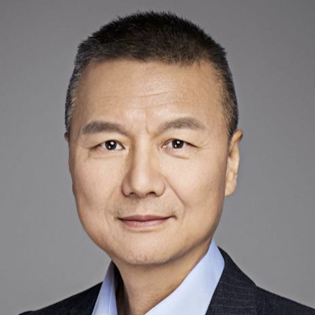
Simon Yang (杨士宁) is the CEO of Yangtze Memory Technologies Co., Ltd. (YMTC), who brings YMTC to a new height in 3D NAND industry. As an experienced executive in the semiconductor industry for over 30 years, Dr. Yang served as the CEO of XMC, COO/CTO of SMIC, and CTO/SVP of Chartered Semiconductor (Now GlobalFoundries), in charge of fab operation and technical R&D. Before that, he was in the Portland Technology Development sector of Intel for more than 10 years, in which he led a series of technical R&D projects. Dr. Yang obtained a Bachelor’s Degree from Shanghai University of Science & Technology, and a Master’s Degree and a Doctoral Degree from Rensselaer Polytechnic Institute.


Portrait of Zhiqiang (ZZ) ZhangZhiqiang (ZZ) Zhang (张志强) is President of ABB in China since October 2018. He has extensive management experience and a deep understanding of the Chinese market, developed during his career at several large global companies over the past three decades. He joined ABB from Sandvik where he was Asia- Pacific Regional Holding Officer and President of Sandvik China, and Member of Sandvik Group Executive Committee. Prior to that, he held leadership positions at several other companies, including Nokia Siemens Networks, where he was President of the Greater China Region, and Siemens VDO Automotive, China, where he was President and CEO. Mr. Zhang is Non-Executive Board member of Georg Fischer AG (Switzerland) and Daetwyler Holding AG (Switzerland). He holds a bachelor’s degree in electronic engineering from Beijing Jiaotong University, China, and a master’s degree in business administration from the Smith School of Business at Queen’s University in Canada.


SURVEY PRESENTERS

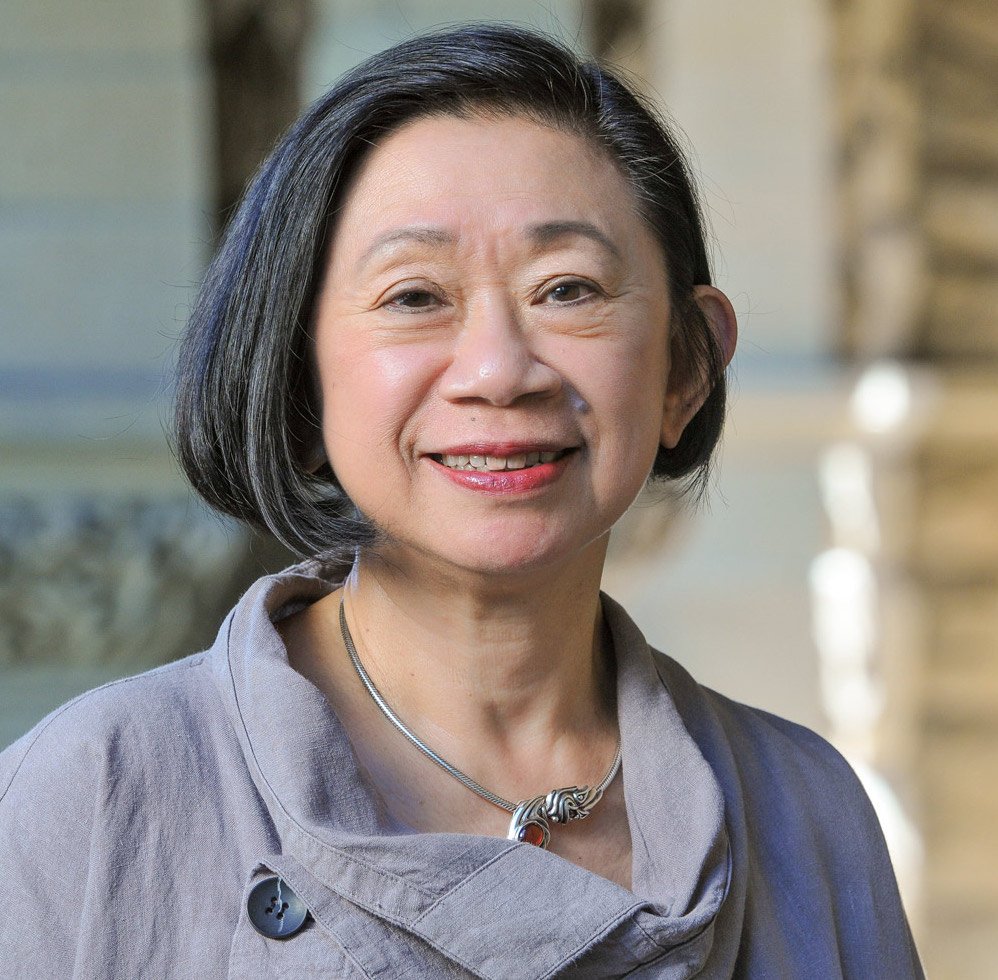
Jean C. OiJean C. Oi is the William Haas Professor of Chinese Politics in the Department of Political Science and a senior fellow in the Freeman Spogli Institute for International Studies at Stanford University. She directs the China Program at the Walter H. Shorenstein Asia-Pacific Research Center and is the Lee Shau Kee Director of the Stanford Center at Peking University. Professor Oi has published extensively on China’s reforms. Recent books include Zouping Revisited: Adaptive Governance in a Chinese County, coedited with Steven Goldstein (Stanford University Press, 2018), and Challenges in the Process of China’s Urbanization, coedited with Karen Eggleston and Yiming Wang (2017). Current research is on fiscal reform and local government debt, continuing SOE reforms, and the Belt and Road Initiative.


Photo of Christopher ThomasChristopher Thomas was most recently a partner with McKinsey & Company. He served as co-Managing Partner for the Firm’s Global Digital Strategy service line as well as its Global IoT service line; and as the leader of its Asia Semiconductor Practice. Prior to McKinsey, Mr. Thomas spent ten years at Intel. He was the General Manager of Intel China, with joint ownership for the region’s $5 billion-plus P&L. In this role, he grew revenues by more than 50% and oversaw China’s successful elevation from a sales unit to an independent regional P&L business reporting directly into headquarters. Mr. Thomas began his career as a private equity investor at The Blackstone Group in New York City. He is currently a Visiting Professor at Tsinghua University, China’s leading educational institution. He received an MBA from Stanford Business School, where he was an Arjay Miller scholar; a Master of Arts in Political Science from Stanford University; and a Bachelor of Science in Economics, summa cum laude, from the Wharton School.
 

Image
Portrait of Xander Wu
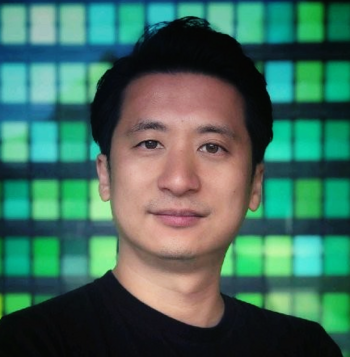
Xander Wu (吴雪) oversees industry development and builds partnerships with the world’s top cloud computing companies for China Mobile International (USA). He helps clients expand their global footprint and advises companies on best practices for digital transformation. Mr. Wu has 13 years' experience in the global 4G and 5G industry, with a track record of achieving a number of the world’s first milestones in 5G and several de-facto standards for 4G and data networks. Mr. Wu graduated from Stanford Graduate School of Business, where he researched digital transformation and advised startups in the energy sector. He serves as a mentor at several incubators such as Plug and Play, helping startups find the right product/market fit and tailor go-to-market strategy.


Via Zoom Webinar.
Register at: https://bit.ly/2U2r30q

Alvin Shiqi Wang (王世琪) <br>CEO, President of 21Vianet Group, Inc.<br><br>
Xiang Wang (王翔) <br>President of Xiaomi Corporation<br><br>
Simon Yang (杨士宁) <br>CEO of Yangtze Memory Technologies Co., Ltd. (YMTC)<br><br>
Zhiqiang (ZZ) Zhang (张志强) <br>President, ABB (China)<br><br>
Jean C. Oi <br>Director of Shorenstein APARC China Program; William Haas Professor of Chinese Politics, Stanford University<br><br>
Christopher Thomas <br>Visiting Professor, Tsinghua University<br><br>
Xander Wu (吴雪) <br>China Mobile International (USA)<br><br>
Panel Discussions
-

This is a virtual event. Please click here to register and generate a link to the talk. 
The link will be unique to you; please save it and do not share with others.


To celebrate its May release, contributors Karen Eggleston, Barry Naughton, and Andrew Walder will join editors Thomas Fingar and Jean Oi for a panel discussion of their volume Fateful Decisions: Choices That Will Shape China’s Future (Stanford University Press).  China has enjoyed an extraordinary run of rapid growth and development over the last 40 years.  Yet, as Fingar and Oi point out, China’s future is hardly set in stone.  Sustained economic growth, social welfare and stability will depend upon tough policy decisions confronting Beijing’s leaders today in what is a watershed moment.  Casting doubt on Beijing’s aversion to major reforms and its return to certain Mao-era policy tools, Oi and Fingar argue that China’s challenges are not only complex, but high-stakes – challenges that have become even more daunting in the aftermath of COVID-19.  As China battles the difficulties caused by an aging population, the loss of comparative economic advantage, a politically entrenched elite, and a population with rising expectations, today’s policy decisions will weigh heavily on its future. Topics explored in the volume include China's healthcare challenges in a slowing economy, its global ambitions and track record, economic aims and realities, the country’s mounting governance pressures, and more. 


Fateful Decisions is available for purchase here.


Fore more information on Fateful Decisions, check out these articles:

Karen Eggleston Examines China’s Looming Demographic Crisis, in Fateful Decisions

Now It Gets Much Harder: Thomas Fingar and Jean Oi Discuss China’s Challenges in The Washington Quarterly

China’s Challenges: Now It Gets Much Harder


Portrait of Karen EgglestonKaren Eggleston is a senior fellow at the Freeman Spogli Institute for International Studies (FSI) at Stanford University, director of the Stanford Asia Health Policy Program, and deputy director of the Walter H. Shorenstein Asia-Pacific Research Center at FSI. She is also a fellow with the Stanford Center for Innovation in Global Health and a faculty research fellow of the National Bureau of Economic Research (NBER). Eggleston earned her PhD in public policy from Harvard University, studied in China for two years, and was a Fulbright scholar in South Korea. Her research focuses on comparative health systems and health reform in Asia, especially China; government and market roles in the health sector; supply-side incentives; healthcare productivity; and economic aspects of demographic change.


Portrait of Thomas FingarThomas Fingar is a Shorenstein Distinguished Fellow in the Shorenstein Asia-Pacific Research Center at Stanford University. From May 2005 through December 2008, he served as the first deputy director of national intelligence for analysis and, concurrently, as chairman of the National Intelligence Council. Previous positions include assistant secretary of state for Intelligence and Research (2000-2001, 2004–2005), principal deputy assistant secretary (2001–2003), deputy assistant secretary for analysis (1994–2000), director of the Office of Analysis for East Asia and the Pacific, and chief of the China Division. Fingar is a graduate of Cornell University (AB in government and history) and Stanford University (MA and PhD, both in political science). His most recent books are Uneasy Partnerships: China’s Engagement with Japan, the Koreas, and Russia in the Era of Reform (editor) (Stanford University Press, 2017); The New Great Game: China’s Relations with South and Central Asia in the Era of Reform (editor) (Stanford University Press, 2016); and Reducing Uncertainty: Intelligence Analysis and National Security (Stanford University Press, 2011).


Image
Photo of Barry Naughton
Barry Naughton is the So Kwanlok Professor at the School of Global Policy and Strategy, University of California–San Diego. Naughton’s work on the Chinese economy focuses on market transition; industry and technology; foreign trade; and political economy. His first book, Growing Out of the Plan, won the Ohira Prize in 1996, and a new edition of his popular survey and textbook, The Chinese Economy: Adaptation and Growth, appeared in 2018. Naughton did his dissertation research in China in 1982 and received his PhD in economics from Yale University.


Jean C. OiJean C. Oi is the William Haas Professor of Chinese Politics in the Department of Political Science and a senior fellow in the Freeman Spogli Institute for International Studies at Stanford University. She directs the China Program at the Walter H. Shorenstein Asia-Pacific Research Center and is the Lee Shau Kee Director of the Stanford Center at Peking University. Oi has published extensively on China’s reforms. Recent books include Zouping Revisited: Adaptive Governance in a Chinese County, coedited with Steven Goldstein (Stanford University Press, 2018), and Challenges in the Process of China’s Urbanization, coedited with Karen Eggleston and Yiming Wang (2017). Current research is on fiscal reform and local government debt, continuing SOE reforms, and the Belt and Road Initiative.


Portrait of Andrew WalderAndrew G. Walder is the Denise O’Leary and Kent Thiry Professor of Sociology in the School of Humanities and Sciences, and a senior fellow in the Freeman Spogli Institute for International Studies at Stanford University. A political sociologist, Walder has long specialized in the study of contemporary Chinese society and political economy. After receiving his PhD at the University of Michigan, he taught at Columbia, Harvard, and the Hong Kong University of Science and Technology. At Stanford he has served as chair of the Department of Sociology, director of the Asia-Pacific Research Center, and director of the Division of International, Comparative, and Area Studies in the School of Humanities and Sciences. His most recent books are Fractured Rebellion: The Beijing Red Guard Movement (2009), China under Mao: A Revolution Derailed (2015), and Agents of Disorder: Inside China’s Cultural Revolution (2019).

Via Zoom Webinar.
Register at: https://bit.ly/2WiwPvm

Karen Eggleston <br> Senior Fellow at FSI; Director of the Asia Health Policy Program, Shorenstein APARC, Stanford University <br><br>
Thomas Fingar <br> Shorenstein APARC Fellow, Stanford University <br><br>
Barry Naughton <br> Sokwanlok Chair of Chinese International Affairs, School of Global Policy and Strategy, UC San Diego <br><br>
Jean C. Oi <br> Director, Stanford China Program; William Haas Professor of Chinese Politics, Stanford University <br><br>
Andrew Walder <br> Senior Fellow at FSI; Denise O'Leary and Kent Thiry Professor, Stanford University <br><br>
Panel Discussions
Subscribe to International Relations