FSI researchers work to understand continuity and change in societies as they confront their problems and opportunities. This includes the implications of
How WWII Continues to Shape Regional and International Relations in Asia
This interview was originally conducted and published by Melissa De Witte on behalf of the Stanford News Service.
September 2, 1945, is recognized in many American history books as the day World War II formally ended in Asia. But according to Stanford sociologist Gi-Wook Shin, the conflict was never fully resolved in the region, leading to strains in diplomatic relations today.
On the 75th anniversary of this historic milestone, Shin discusses the legacy of World War II in the Asia-Pacific, specifically the failure among nations to fully address past wrongdoings and reach a mutual understanding of the conflict.
As a result, there is a “mismatch” in how Koreans, Chinese, Japanese and also Americans memorialize the war: China celebrates its victory against Japan while Korea commemorates its liberation from Japanese oppression. Meanwhile, Japan honors the victims of the atomic bombings in Hiroshima and Nagasaki – an atrocity many Americans still feel uncomfortable talking about today, Shin points out.
Here, Shin discusses how these diverging perspectives of World War II have led to misgivings today and how, some 75 years later, relations can still be improved in the region.
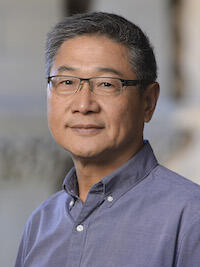
Shin is a professor of sociology in the School of Humanities and Sciences, the director of the Walter H. Shorenstein Asia-Pacific Research Center, the William J. Perry Professor of Contemporary Korea, director of the Korea Program and a senior fellow at the Freeman Spogli Institute for International Studies. He has led a decade-long study on historical memory in wartime period in Asia called 'Divided Memories and Reconciliation.'
[Subscribe to our newsletters to get the latest updates from our scholars.]
As the world remembers 75 years of the war ending in Asia, what legacies from this period persist today?
War has not really ended in Asia. Even before war settlements were signed, another war broke out on the Korean peninsula and technically never ended. Furthermore, “history wars” that began in the 1980s have intensified in recent years, as Japan and its neighbors continue to fight over the unfortunate past and dispute over territories. Despite increased economic, cultural, and educational exchanges and interactions, war legacies persist to strain regional relations.
Is there anything in this history that you think has been largely forgotten, overlooked or misunderstood?
While U.S. Army Gen. Douglas MacArthur formally accepted Japan’s surrender to allied forces aboard the USS Missouri in Tokyo Bay some 75 years ago, legacies from the war have persisted, straining regional relations to this very day, according to Shin. (Image credit: United States Navy/Wikimedia Commons)
America celebrates World War II victory in Europe (Victory in Europe Day) but remains relatively quiet on its victory in the Asia-Pacific war. In contrast to the moral clarity and nobility of purpose associated with the war in Europe and the defeat of Nazi Germany, the path to war with Japan and its conclusion is far less clear and many Americans still feel uncomfortable talking about the use of atomic weapons – even if it was militarily necessary but morally questionable. Also, it was during the war that about 120,000 people in the U.S. of Japanese ancestry (62 percent being U.S. citizens) were incarcerated in concentration camps.
Compared to Europe, U.S.-led post-war settlements in Asia such as the Tokyo War Crimes Tribunal and San Francisco Peace Treaty were insufficient in addressing atrocities committed by Japan during wartime and the colonial period, sowing the seeds of current disputes and tensions between Japan and its neighbors. The Tokyo tribunal focused on Japanese actions that had most directly affected Western allies (the attack on Pearl Harbor and the mistreatment of Allied prisoners of war) and thus failed to address the massive suffering of the Chinese and the Koreans. The 1951 Peace Treaty expunged Japan’s obligations to pay reparations for its wartime acts but neither the Republic of Korea nor the People’s Republic of China was party to the treaty.
You have written extensively about the repeated failure among Koreans, Chinese and Japanese to produce a shared, historical view of World War II. Can you briefly describe what are these conflicting, historical memories?
For Koreans and Chinese, Japanese atrocities such as the Nanjing massacre, sexual slavery and forced labor are key events that shape their historical memories. For Japanese, on the other hand, actions related to the U.S. such as the Japanese attack on the Pearl Harbor and American bombings (fire and atomic) on Japanese cities are most important to the formation of their memories of war, which led to a widely held view that they were also victims of American aggression and that post-war settlements were “victor’s justice.” These divergent memories are reflected in the ways that they commemorate the end of the war. China celebrates its victory against Japan in the war, while Korea commemorates its liberation from Japanese oppression. Japan holds its annual ceremony to honor victims of atomic bombings.
According to your scholarship, what explains these divergent perspectives?
The divergence comes from the different weight each country places on historical events in their respective memory formation. Japanese actions figure prominently for Chinese and Korean, but China and Korea are not as significant to Japanese war memories as much as the U.S. is. This mismatch creates perception gaps and misgivings, hindering historical reconciliation.
How has this tension affected relations in the region? Do you think, some 75 years later, these tensions persist today?
Yes, they are very much alive. Look at the current Japanese-South Korean relations. They are two leading economies with liberal democracies in Asia and also key U.S. allies. They are important trade partners and are facing the same demographic crisis. They share strategic interests in the face of a rising China and North Korean aggression. Nonetheless, the resurfacing of the unresolved historical issues has continued to strain the bilateral relationship. For example, the relationship deteriorated since late 2018 when the South Korea supreme court ruled that Japanese companies should compensate Koreans who were conscripted as forced laborers during the war. In response to the ruling, the Japanese government removed Korea from a list of favored trade partners and the Korean government followed suit. These governmental actions are now fueled by populist nationalism (the rightist in Japan and the leftist in Korea), which has proven to be very effective in the politics of both nations.
Can the U.S. play any role to help achieve historical reconciliation?
The U.S. can take a more proactive role in encouraging Japan to work toward achieving regional reconciliation. As noted above, Japan does not seem to be taking its Asian neighbors as seriously as it should be when it comes to historical matters, but is rather predominantly focused on reconciling with the U.S. For example, Japan had been calling for the U.S. president to visit the sites of atomic bombings as a way of “removing a historical thorn” in the relationship and President Obama did make a historic visit to Hiroshima in 2016. Japanese Prime Minister Shinzo Abe followed suit soon after by visiting Pearl Harbor to pay respects to the victims of the 1941 attack. But the reconciliation efforts stopped there and did not expand to other victim countries of the war.
When you teach this history of World War II, what do you remind students about this period? How might the past shape students’ understanding of Northeast Asia or the U.S. in the present day?
To avoid repeating the unfortunate past (colonialism and war), I ask, what and how we can learn from history? For example, was the war with Japan necessary, or was it the result of a series of accidents and miscalculations or lack of political leadership? How does the war help us to understand the current tensions between the U.S. and China? What can we learn from the experience of the Japanese internment during the war? Even though President Reagan made an official apology of the internment in 1988, why do we still see similar racialist politics in American society? Addressing these questions requires a critical reflection of the history.
Read More


In an interview with Stanford News, Gi-Wook Shin, the director of APARC and the Korea Program, describes how divergent perspectives on the legacies of WWII continue to shape different understandings of history and impact inter-Asia and U.S.-Asia relations.


 Alvin Shiqi Wang (王世琪) has served as CEO and President of 21Vianet Group, Inc. since February 2018. Currently, Mr. Wang serves as Vice President of TUS Digital Group, a subsidiary of TUS Holdings, and serves on the board of directors of Beijing CIC Technology Co., Ltd. and Guangzhou Tuwei Technology Co., Ltd. . Mr. Wang has nearly 20 years of experience in the telecommunications industry, working at various renowned international companies, including 11 years with Ericsson, focusing primarily on strategy development and execution, corporate management, and equity investments. Mr. Wang received a bachelor's degree from Tsinghua University and an MBA from Peking University-Vlerick MBA Programme (BiMBA).
 Xiang Wang (王翔) is President and Acting CFO of Xiaomi Corporation, responsible for platform functions and for assisting the CEO with Group operations. Mr. Wang joined Xiaomi Corporation in July 2015 served as its Senior Vice President and President for International Business, responsible for global expansion, IP strategy, and strategic partner relationship management. Mr. Wang has more than 20 years of experience in the semiconductor and communications fields, with great vision and comprehensive understanding of next-generation wireless communications. He has played an integral role in shaping Xiaomi’s international business operations including with respect to its intellectual property compliance, management and strategy throughout the world. In 2016, Mr. Wang put together an international team of sales and marketing teams to expand into more markets outside of China. Within just 3 years, he led his teams into over 90 markets. As of Q3 2019, Xiaomi’s international revenue accounted for 48.7% of its total revenue. Today, Xiaomi is ranked among top 5 smartphone brands in over 40 markets. Mr. Wang previously served as the Senior Vice President of Qualcomm and President of Qualcomm Greater China, leading the company’s business and operations in Greater China. Prior to that role, he was Vice President of Qualcomm CDMA Technology, responsible for Qualcomm chipset business and customer service in China. Under his leadership, Qualcomm rapidly extended and strengthened its partnerships with increasing numbers of Chinese manufacturing customers. Before joining Qualcomm, Mr. Wang held key positions in sales and marketing at internationally leading companies, including Motorola and Lucent/Agere. Mr. Wang earned his BSEE from Beijing Polytechnic University.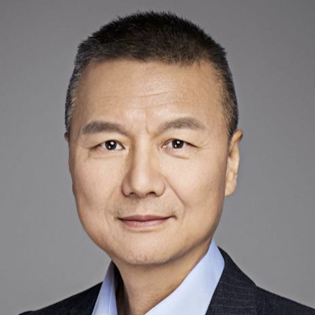
 Zhiqiang (ZZ) Zhang (张志强) is President of ABB in China since October 2018. He has extensive management experience and a deep understanding of the Chinese market, developed during his career at several large global companies over the past three decades. He joined ABB from Sandvik where he was Asia- Pacific Regional Holding Officer and President of Sandvik China, and Member of Sandvik Group Executive Committee. Prior to that, he held leadership positions at several other companies, including Nokia Siemens Networks, where he was President of the Greater China Region, and Siemens VDO Automotive, China, where he was President and CEO. Mr. Zhang is Non-Executive Board member of Georg Fischer AG (Switzerland) and Daetwyler Holding AG (Switzerland). He holds a bachelor’s degree in electronic engineering from Beijing Jiaotong University, China, and a master’s degree in business administration from the Smith School of Business at Queen’s University in Canada.
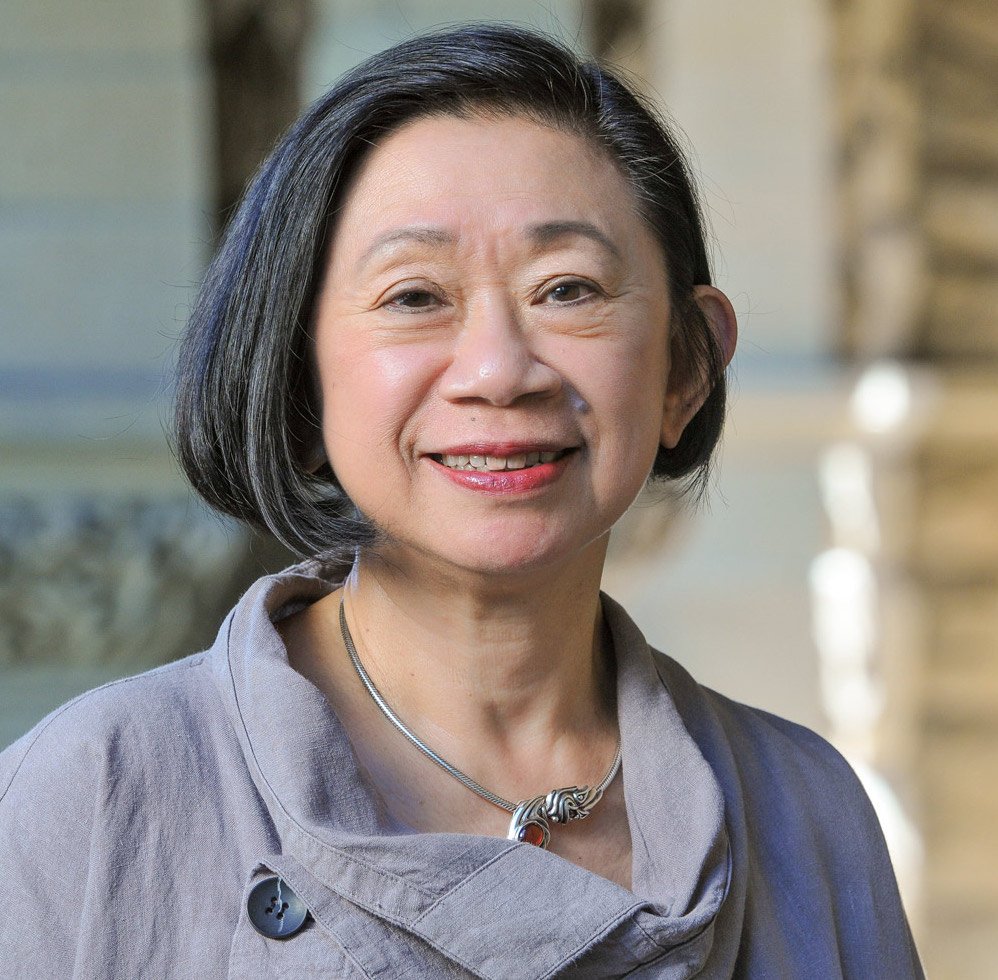 Jean C. Oi is the William Haas Professor of Chinese Politics in the Department of Political Science and a senior fellow in the Freeman Spogli Institute for International Studies at Stanford University. She directs the China Program at the Walter H. Shorenstein Asia-Pacific Research Center and is the Lee Shau Kee Director of the Stanford Center at Peking University. Professor Oi has published extensively on China’s reforms. Recent books include Zouping Revisited: Adaptive Governance in a Chinese County, coedited with Steven Goldstein (Stanford University Press, 2018), and Challenges in the Process of China’s Urbanization, coedited with Karen Eggleston and Yiming Wang (2017). Current research is on fiscal reform and local government debt, continuing SOE reforms, and the Belt and Road Initiative.
 Christopher Thomas was most recently a partner with McKinsey & Company. He served as co-Managing Partner for the Firm’s Global Digital Strategy service line as well as its Global IoT service line; and as the leader of its Asia Semiconductor Practice. Prior to McKinsey, Mr. Thomas spent ten years at Intel. He was the General Manager of Intel China, with joint ownership for the region’s $5 billion-plus P&L. In this role, he grew revenues by more than 50% and oversaw China’s successful elevation from a sales unit to an independent regional P&L business reporting directly into headquarters. Mr. Thomas began his career as a private equity investor at The Blackstone Group in New York City. He is currently a Visiting Professor at Tsinghua University, China’s leading educational institution. He received an MBA from Stanford Business School, where he was an Arjay Miller scholar; a Master of Arts in Political Science from Stanford University; and a Bachelor of Science in Economics, summa cum laude, from the Wharton School.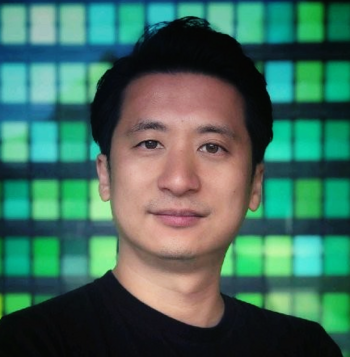
 Karen Eggleston is a senior fellow at the Freeman Spogli Institute for International Studies (FSI) at Stanford University, director of the Stanford Asia Health Policy Program, and deputy director of the Walter H. Shorenstein Asia-Pacific Research Center at FSI. She is also a fellow with the Stanford Center for Innovation in Global Health and a faculty research fellow of the National Bureau of Economic Research (NBER). Eggleston earned her PhD in public policy from Harvard University, studied in China for two years, and was a Fulbright scholar in South Korea. Her research focuses on comparative health systems and health reform in Asia, especially China; government and market roles in the health sector; supply-side incentives; healthcare productivity; and economic aspects of demographic change.
 Thomas Fingar is a Shorenstein Distinguished Fellow in the Shorenstein Asia-Pacific Research Center at Stanford University. From May 2005 through December 2008, he served as the first deputy director of national intelligence for analysis and, concurrently, as chairman of the National Intelligence Council. Previous positions include assistant secretary of state for Intelligence and Research (2000-2001, 2004–2005), principal deputy assistant secretary (2001–2003), deputy assistant secretary for analysis (1994–2000), director of the Office of Analysis for East Asia and the Pacific, and chief of the China Division. Fingar is a graduate of Cornell University (AB in government and history) and Stanford University (MA and PhD, both in political science). His most recent books are Uneasy Partnerships: China’s Engagement with Japan, the Koreas, and Russia in the Era of Reform (editor) (Stanford University Press, 2017); The New Great Game: China’s Relations with South and Central Asia in the Era of Reform (editor) (Stanford University Press, 2016); and Reducing Uncertainty: Intelligence Analysis and National Security (Stanford University Press, 2011).
 Andrew G. Walder is the Denise O’Leary and Kent Thiry Professor of Sociology in the School of Humanities and Sciences, and a senior fellow in the Freeman Spogli Institute for International Studies at Stanford University. A political sociologist, Walder has long specialized in the study of contemporary Chinese society and political economy. After receiving his PhD at the University of Michigan, he taught at Columbia, Harvard, and the Hong Kong University of Science and Technology. At Stanford he has served as chair of the Department of Sociology, director of the Asia-Pacific Research Center, and director of the Division of International, Comparative, and Area Studies in the School of Humanities and Sciences. His most recent books are Fractured Rebellion: The Beijing Red Guard Movement (2009), China under Mao: A Revolution Derailed (2015), and Agents of Disorder: Inside China’s Cultural Revolution (2019).