Society

FSI researchers work to understand continuity and change in societies as they confront their problems and opportunities. This includes the implications of migration and human trafficking. What happens to a society when young girls exit the sex trade? How do groups moving between locations impact societies, economies, self-identity and citizenship? What are the ethnic challenges faced by an increasingly diverse European Union? From a policy perspective, scholars also work to investigate the consequences of security-related measures for society and its values.
The Europe Center reflects much of FSI’s agenda of investigating societies, serving as a forum for experts to research the cultures, religions and people of Europe. The Center sponsors several seminars and lectures, as well as visiting scholars.

Societal research also addresses issues of demography and aging, such as the social and economic challenges of providing health care for an aging population. How do older adults make decisions, and what societal tools need to be in place to ensure the resulting decisions are well-informed? FSI regularly brings in international scholars to look at these issues. They discuss how adults care for their older parents in rural China as well as the economic aspects of aging populations in China and India.

-

This is a virtual event. Please click here to register and generate a link to the talk. 
The link will be unique to you; please save it and do not share with others.


Peter Martin joins us to discuss his recent book, China's Civilian Army: The Making of Wolf Warrior Diplomacy. Chinese diplomacy in the past several years has become more assertive and its diplomats have used sharper language, earning them the title "wolf warriors." The book traces the roots of China's approach to diplomacy back to the communist revolution of 1949 and tells the story of how it's evolved through social upheaval, famine, capitalist reforms and China's rise to superpower status. It draws on dozens of interviews and -- for the first time -- on the memoirs of more than 100 retired Chinese diplomats.


Image
Portrait of Peter Martin
Peter Martin is a political reporter for Bloomberg News. He has written extensively on escalating tensions in the US-China relationship and reported from China's border with North Korea and its far-western region of Xinjiang. He previously worked for the consultancy APCO Worldwide in Beijing, New Delhi, and Washington, where he analyzed politics for multinational companies. In Washington, he served as chief of staff to the company's global CEO. His writing has been published by outlets including Foreign Affairs, the National Interest, the Guardian, the Jamestown China Brief, the Diplomat and the Christian Science Monitor. He holds degrees from the University of Oxford, Peking University and the London School of Economics.

Via Zoom Webinar. Register at: https://bit.ly/3zDZ3D0

Peter Martin Defense Policy and Intelligence Reporter, Bloomberg News
Seminars
Authors
News Type
Q&As
Date
Paragraphs

Vietnam and China are frequently referred to as 'authoritarian regimes,' but in history, political practice, and social governance these two countries are starkly different. This is particularly true of how each government responds to social pressure and civil unrest. Nhu Truong, one of APARC's 2020-21 Shorenstein Postdoctoral Fellows, is researching the root causes of these differences, what they reveal about the specific contexts of each nation's political trajectory, and how they can inform academic discussions of authoritarianism.

Nhu Truong’s dissertation explains how and why the two most similar communist, authoritarian regimes of China and Vietnam differ in their responsiveness to mounting unrest caused by government land seizures. Despite their many similarities, Vietnam has exhibited greater institutionalized responsiveness, whereas China has been relatively more reactive. While at APARC, Nhu has been refining 16 months of fieldwork into a book manuscript. Following her tenure as a Shorenstein Fellow at APARC, she will join the Council for Southeast Asian Studies and the Council for East Asian Studies at Yale University as a postdoctoral associate and has accepted a position as an assistant professor at Denison University starting in 2022.

Nhu sat down to talk more about her research and how the ongoing pandemic has heightened the need to better understand the ways in which different governments implement policy and address social issues. She also shares how she's stayed grounded and positive during an unusual year of change and being a long-distance fellow.

1. Can you give us an overview of your research and the topics you’re investigating?

My research addresses the following question: Why are some authoritarian regimes more responsive to social unrest than others? While it might seem counterintuitive to think of authoritarian regimes in this light, repression and responsiveness often occur in tandem under authoritarian rule. Centered on a comparison between Vietnam and China, I document the steps that each has taken to address social discontent fueled by pervasive government seizures of rural land. In response to societal input between 2003 and 2017, Vietnam enacted comprehensive and programmatic reforms to reduce the permissible scope for government land expropriation whereas those enacted by China were relatively marginal and piecemeal. At the subnational level, this difference has had important implications for land rights and the security of villagers in both countries. In summary, despite their many similarities, the manner and degree of their responsiveness have varied. My research then traces the historical origins that undergird the political development and institutional character of Vietnam and China’s divergent responsiveness to social unrest. 

2. How did you first become interested in these topics?

My interest in the repressive-responsive character of authoritarian regimes stems from my preoccupation with questions of political legitimacy, societal resistance, and institutional dynamics in authoritarian contexts. One particular experience that stoked my interest was my visit to Wukan, Guangdong in 2016. Wukan was once hailed as an emblematic case of grassroots democracy and accommodation by the Chinese state, when villagers’ outcries against the local government’s seizure of their land resulted in the re-election of the village committee in 2012. Yet, when I visited in 2016, villagers expressed that nothing had changed, and that “everything that could be done has already been done.” This experience led me to question what responsiveness means in authoritarian contexts.

3. During the last year, the world has changed significantly because of the pandemic and fluctuating politics in many nations. Have these changing global situations given you any new insights into your research?

The pandemic has underscored the need for a nuanced and contextual understanding of democracies and non-democracies. For instance, the variation in state responses to COVID-19 suggests that there is no clear correlation between responsiveness or the effectiveness of government responses to COVID-19 and regime types. Consider Vietnam’s proactive approach and success at containing the pandemic as opposed to the US. Other recent developments such as the crackdowns on pro-democracy protests in Thailand and mass protests against the recent military coup in Myanmar showcase how quickly state responsiveness to social demands can erode, even in multi-party states.

4. What has your experience as one of our Shorenstein Fellows been like during this unusual period of time when we haven’t physically been together at APARC?

My fellowship has been remote, and I have therefore needed to be much more proactive to stay as engaged as possible. I have consulted with my mentor often over Zoom, and reached out to other scholars for their feedback and advice on my research. I have also especially appreciated the chance to participate in the China Social Science Workshop, where I've shared my work and learned from other presenters. Other postdoctoral fellows at APARC and I have also gotten together virtually to exchange stories and to share our experiences from this unusual year.  

5. What are some of the things you've done during this past year to give yourself a break from work and have some fun?

Due to the pandemic, I have been living back home to Austin, Texas, since March of last year. The last time that I was home for this long must have been after I graduated from college. So, for the first time in a long time, I've planted tomatoes, eggplants, and sunflowers in our garden, and I've really enjoyed watching them bloom and ripen. With everything growing, it feels like I've spent most of my break in our backyard defending our flowers, fruits, and vegetables from squirrels and bunnies! But luckily I also have our two dogs, Wishie and Sushi, to help me!

6. As the state of the pandemic changes and things in academia and our communities, what are some things you are looking forward to both professionally and personally?

I'm certainly looking forward to having conferences in person again! I'm also still not sure when it will be possible and safe for me to visit Asia again, especially Vietnam and China, but I have missed these places. I'm also learning Khmer this summer, and I'm excited to eventually visit Cambodia to pursue my research there.

Read More

[Left] Postdoc Spotlight, Jeffrey Weng, Shorenstein Postdoctoral Fellow in Contemporary Asia, [Right] Jeffrey Weng
Q&As

Postdoc Spotlight: Jeffrey Weng on Language and Society

Shorenstein Postdoctoral Fellow in Contemporary Asia Jeffrey Weng shares insights from his research into how language and society shape one another, particularly how the historical use of Mandarin affects contemporary Chinese society and linguistics.
Postdoc Spotlight: Jeffrey Weng on Language and Society
Hero Image
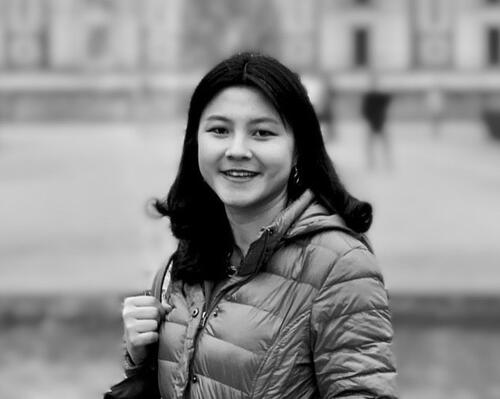
Postdoc Spotlight on Nhu Truong, 2020-21 Shorenstein Fellow
All News button
1
Subtitle

2020-21 Shorenstein Postdoctoral Fellow Nhu Truong, who studies how authoritarian regimes like China and Vietnam respond to social pressure, explains why understanding differences in governance is crucial in an era of fluctuating politics and pandemic.

-

This is a virtual event. Please click here to register and generate a link to the talk. 
The link will be unique to you; please save it and do not share with others.


Corrupt countries are usually poor, yet China is an exception. President Xi Jinping acknowledges that corruption in the country has reached crisis proportions. If this is true, why has China nevertheless sustained 40 years of economic growth and deep transformation?

In this talk, Professor Yuen Yuen Ang will analyze how different types of corruption exert different effects on the economy.  Reminiscent of America’s Gilded Age during the 19th century, reform-era China has steadily evolved toward a particular type of corruption: access money (elite exchanges of power and wealth).  Starting in the 2000s, the central government effectively curbed directly growth-damaging types of corruption such as embezzlement and bureaucratic extortion. But access money fueled commerce by rewarding politicians for aggressively promoting growth and connected capitalists for taking on increasingly risky ventures. Such corruption has also produced systemic risks, distortions, and inequality, however—problems that define China's Gilded Age under Xi Jinping’s leadership. As a result, China today is a high-growth but risky and imbalanced economy. 

Despite popular perceptions that China and the United States are two polar opposites, therefore, contemporary China and 19th century America share some striking commonalities.


Image
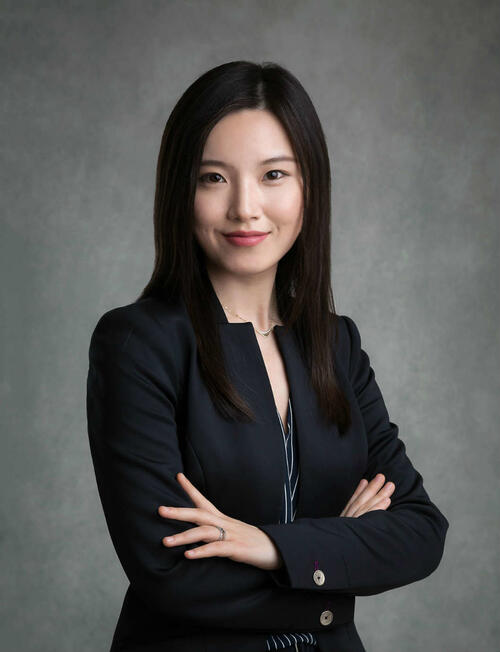
Portrait of Yuen Yuen Ang
Yuen Yuen Ang is a PhD graduate of Stanford University, where she studied comparative political economy with a focus on China. She is the inaugural recipient of the Theda Skocpol Prize, awarded by the American Political Science Association for “impactful empirical, theoretical and/or methodological contributions to the study of comparative politics.” She was also named an Andrew Carnegie Fellow for “high-caliber scholarship that applies fresh perspectives to the most pressing issues of our times.” Her first, award-winning book, How China Escaped the Poverty Trap (2016), is acclaimed as “game changing” and “field shifting.” It received the Peter Katzenstein Prize in Political Economy, the Viviana Zelizer Prize in Economic Sociology, and was named “Best of Books 2017″ by Foreign Affairs. The sequel to this book, China’s Gilded Age: the Paradox of Economic Boom & Vast Corruption, is released in 2020. It was featured in The DiplomatThe Economist, and The Wire China. She is an associate professor in political science at the University of Michigan and previously a faculty member at Columbia University SIPA.

Image
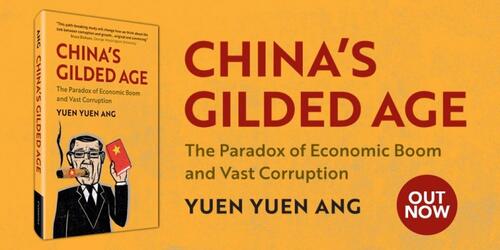
Cover of "China's Gilded Age" by Yuen Yuen Ang


Image
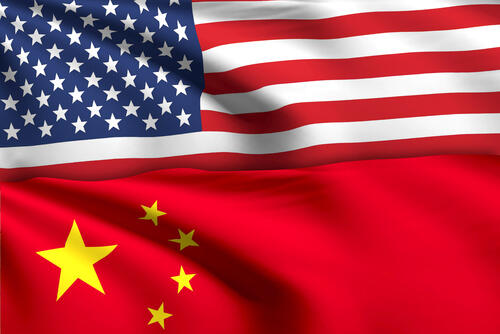
American and Chinese flags
This event is part of the 2021 Winter/Spring Colloquia series, Biden’s America, Xi’s China: What’s Now & What’s Next?, sponsored by APARC's China Program.


Via Zoom Webinar. Register at: https://bit.ly/3cEtX5f

Yuen Yuen Ang Associate Professor of Political Science, University of Michigan
Seminars
-

This is a virtual event. Please click here to register and generate a link to the talk. 
The link will be unique to you; please save it and do not share with others.


This event is co-sponsored by the Center on Democracy, Development, and the Rule of Law.

How does autocratic lobbying affect political outcomes and media coverage in democracies? This talk focuses on a dataset drawn from the public records of the US Foreign Agents Registration Act. It includes over 10,000 lobbying activities undertaken by the Chinese government between 2005 and 2019. The evidence suggests that Chinese government lobbying makes legislators at least twice as likely to sponsor legislation that is favorable to Chinese interests. Moreover, US media outlets that participated in Chinese-government sponsored trips subsequently covered China as less threatening. Coverage pivoted away from US-China military rivalry and the CCP’s persecution of religious minorities and toward US-China economic cooperation. These results suggest that autocratic lobbying poses an important challenge to democratic integrity.


Portrait of Erin Baggott CarterErin Baggott Carter is an Assistant Professor at the Department of Political Science and International Relations at the University of Southern California. There, she is also a Co-PI at the Lab on Non-Democratic Politics. She received a Ph.D. in Government from Harvard University, is currently a visiting scholar at the Stanford Center on Democracy, Development and the Rule of Law, and was previously a Fellow at the Stanford Center for International Security and Cooperation.

Dr. Carter's research focuses on Chinese politics and propaganda. She recently completed a book on autocratic propaganda based on an original dataset of eight million articles in Arabic, Chinese, English, French, Russian, and Spanish drawn from state-run newspapers in nearly 70 countries. She is currently working on a book on how domestic politics influence US-China relations. Her other work has appeared or is forthcoming in the British Journal of Political ScienceJournal of Conflict Resolution, and International Interactions. Her work has been featured by the New York Times, the Brookings Institution, and the Washington Post Monkeycage Blog.


Image
American and Chinese flags
This event is part of the 2021 Winter/Spring Colloquia series, Biden’s America, Xi’s China: What’s Now & What’s Next?, sponsored by APARC's China Program.


Via Zoom Webinar. Register at: https://bit.ly/3beG7Qz

Erin Baggott Carter Assistant Professor, Department of Political Science and International Relations, University of Southern California; Visiting Scholar, Center on Democracy, Development and the Rule of Law, Stanford University
Seminars
Authors
News Type
News
Date
Paragraphs

The Walter H. Shorenstein Asia-Pacific Research Center (APARC) has broadened its fellowship and funding opportunities to support Stanford students working in the area of contemporary Asia. The Center introduced these expanded offerings in response to the harsh impacts of the COVID-19 pandemic on student’s academic careers and their access to future jobs and valuable work experience, and in recognition of the critical need to make the field of Asian Studies more diverse and inclusive.

APARC’s diversity grant aims to encourage Stanford students from underrepresented minorities (URM) to engage in the study and research of topics related to contemporary Asia and U.S.-Asia relations, including economic, health, foreign policy, social, political, and security issues. The grant, which was first announced in June 2020, is now an ongoing offering. APARC will award a maximum of $10,000 per grant. Current  Stanford undergraduate and graduate students in the URM category from any major or discipline are eligible and encourage to apply.

APARC also invites Stanford Ph.D. candidates specializing in topics related to contemporary Asia to apply for its 2021-22 predoctoral fellowship. Up to three fellowships are available and the application deadline is May 1, 2021.

In addition, APARC continues to offer an expanded array of research assistant internships. The Center is currently seeking highly motivated Stanford undergraduate- and graduate-level students to join our team as paid research assistant interns for the spring and summer quarters of 2021. Applications for spring 2021 research assistant assignments are due on February 22, for summer 2021 assignments on March 8.

Read More

President Biden walks past a row of Chinese and American flags.
News

APARC Experts on the Outlook for U.S.-Asia Policy Under the Biden Administration

Ahead of President-elect Biden’s inauguration and on the heels of the attack on the U.S. Capitol by a pro-Trump mob that has left America shaken, an APARC-wide expert panel provides a region-by-region analysis of what’s next for U.S. policy towards Asia and recommendations for the new administration.
APARC Experts on the Outlook for U.S.-Asia Policy Under the Biden Administration
View of building roof in the Forbidden City complex and the Beijing skyline in the background
News

New Fellowship on China Policy Seeks to Strengthen U.S.-China Relations

Stanford University’s Shorenstein Asia-Pacific Center invites applications for the inaugural 2021-22 China Policy Fellowship from experts with research experience on issues vital to the U.S. China policy agenda and influence in the policymaking process.
New Fellowship on China Policy Seeks to Strengthen U.S.-China Relations
Hero Image
Stanford campus, main quad with cloudy sky
All News button
1
Subtitle

The Center has launched a suite of offerings including a predoctoral fellowship, a diversity grant, and research assistant internships to support Stanford students interested in the area of contemporary Asia.

-

This is a virtual event. Please click here to register and generate a link to the talk. 
The link will be unique to you; please save it and do not share with others.

The past decade has witnessed a great digital transformation in China. In 2006, China’s online retail sales were merely 3% of U.S. sales. China now hosts the world’s largest e-commerce retail market with a 40% share of global sales. Mobile pay has taken the country by storm so that even beggars are accepting alms through QR codes. What accounts for the leapfrog development in China’s e-commerce market? What are the larger implications of the rise of this 700-million-user online market? This talk will discuss the institutional foundation of China's giant e-commerce market, as well as its political and economic effects.

This event is part of Shorenstein APARC's winter webinar series "Asian Politics and Policy in a Time of Uncertainty."


Image
Portrait of Lizhi Liu
Lizhi Liu is an Assistant Professor in the McDonough School of Business and a faculty affiliate of the Department of Government. Her research specializes in the politics of trade, technology and innovation, and the political economy of China. Her work has been published by American Economic Review: Insights and Minnesota Law Review, and has been funded by numerous institutions, including the Bill and Melinda Gates Foundation, Weiss Family Program Fund, and the Stanford Institute for Innovation in Developing Economies. She received the 2020 Ronald H. Coase Best Dissertation Award from the Society for Institutional and Organizational Economics (SIOE), and the 2019 Best Dissertation Award in the area of Information Technology and Politics by American Political Science Association (APSA). 

Via Zoom Webinar. Register at: https://bit.ly/38yUFdn

Lizhi Liu Assistant Professor, McDonough School of Business, Georgetown University
Seminars
Authors
News Type
News
Date
Paragraphs

The Walter H. Shorenstein Asia-Pacific Research Center (APARC) invites applications for three types of postdoctoral fellowship in contemporary Asia studies for the 2021-22 academic year. Appointments for all three fellowship offerings are for one year beginning in fall quarter 2021.

APARC is committed to supporting junior scholars in the field of Asia studies to the greatest extent possible and that has become even more important during COVID-19, as graduate students are especially vulnerable to the adverse impacts of the pandemic, facing the loss of funding opportunities and access to field research.

The Center offers postdoctoral fellowships that promote multidisciplinary research on contemporary Japan, contemporary Korea, and contemporary Asia broadly defined. Learn more about each fellowship and its eligibility and specific application requirements:

Postdoctoral Fellowship on Contemporary Japan

The fellowship supports multidisciplinary research on contemporary Japan in a broad range of disciplines including political science, economics, sociology, law, policy studies, and international relations. The application deadline is January 4, 2021.

Korea Foundation-APARC Korea Program Postdoctoral Fellowship

The fellowship supports rising Korea scholars in the humanities and social sciences. The application deadline is January 20, 2021.

Shorenstein Postdoctoral Fellowship on Contemporary Asia

APARC offers two postdoctoral fellowship positions to junior scholars for research and writing on contemporary Asia. The primary research areas focus on political, economic, or social change in the Asia-Pacific region (including Northeast, Southeast, and South Asia), or international relations and international political economy in the region. The application deadline is January 4, 2021.

Read More

(Left) Yuen Yuen Ang; (Right) Congratulations Yuen Yuen Ang, Winner of the Theda Skocpol Prize from the American Political Science Association
News

Dr. Yuen Yuen Ang Awarded Theda Skocpol Prize for Emerging Scholars

Former China Program postdoc and Stanford Ph.D alumna Yuen Yuen Ang has received the Theda Skocpol Prize for Emerging Scholars from the American Political Science Association for her scholarship on China’s transformation into a global superpower.
Dr. Yuen Yuen Ang Awarded Theda Skocpol Prize for Emerging Scholars
Portrait of Oriana Skylar Mastro and a 3D cover of her book, 'The Costs of Conversation: Obstacles to Peace Talks in Wartime'
News

FSI Center Fellow Wins Best Book in Security Studies Award

The American Political Science Association recognizes Oriana Skylar Mastro for her work on military strategy and mediation.
FSI Center Fellow Wins Best Book in Security Studies Award
Hero Image
Encina Hall
All News button
1
Subtitle

The Center’s commitment to supporting young Asia scholars remains strong during the COVID-19 crisis.

News Type
News
Date
Paragraphs

China's future will be determined by how its leaders manage its myriad interconnected challenges. In Fateful Decisions (Stanford University Press, May 2020), editors Thomas Fingar, a center fellow at APARC, and Jean Oi, the director of APARC’s China Program, join other experts across multiple disciplines in providing close analyses of the most critical demographic, economic, social, political, and foreign policy challenges China’s leaders face today. They outline the options and opportunity costs entailed, providing an analytic framework for understanding the decisions that will determine China's trajectory.

Fingar and Oi discussed the main arguments in their edited volume at a virtual program of the National Committee on U.S.-China Relations. Watch here:

Read More

Quote from Thomas Fingar and Jean Oi from, "China's Challeges: Now It Gets Much Harder"
Commentary

Now It Gets Much Harder: Thomas Fingar and Jean Oi Discuss China’s Challenges in The Washington Quarterly

Now It Gets Much Harder: Thomas Fingar and Jean Oi Discuss China’s Challenges in The Washington Quarterly
BEIJING, CHINA - Workers sit near a CRH (China Railway High-speed) "bullet train" at the Beijing South Railway Station under reconstruction.
News

High-Speed Rail Holds Promise and Problems for China, Explains David M. Lampton

In a new audio interview, Lampton discusses some of the challenges, uncertainties, and decisions that loom ahead of China's Belt and Road Initiative.
High-Speed Rail Holds Promise and Problems for China, Explains David M. Lampton
Elderly Chinese citizens sit together on a park bench.
Q&As

Karen Eggleston Examines China’s Looming Demographic Crisis, in Fateful Decisions

Karen Eggleston Examines China’s Looming Demographic Crisis, in Fateful Decisions
Hero Image
Cover of the book Fateful Decisions: Choices That Will Shape China's Future
All News button
1
Subtitle

Fingar and Oi joined the National Committee on U.S.-China Relations to discuss their edited volume, ‘Fateful Decisions: Choices that Will Shape China’s Future.’

Authors
News Type
Q&As
Date
Paragraphs

This interview was originally conducted and published by Melissa De Witte on behalf of the Stanford News Service.


September 2, 1945, is recognized in many American history books as the day World War II formally ended in Asia. But according to Stanford sociologist Gi-Wook Shin, the conflict was never fully resolved in the region, leading to strains in diplomatic relations today.

On the 75th anniversary of this historic milestone, Shin discusses the legacy of World War II in the Asia-Pacific, specifically the failure among nations to fully address past wrongdoings and reach a mutual understanding of the conflict.

As a result, there is a “mismatch” in how Koreans, Chinese, Japanese and also Americans memorialize the war: China celebrates its victory against Japan while Korea commemorates its liberation from Japanese oppression. Meanwhile, Japan honors the victims of the atomic bombings in Hiroshima and Nagasaki – an atrocity many Americans still feel uncomfortable talking about today, Shin points out.

Here, Shin discusses how these diverging perspectives of World War II have led to misgivings today and how, some 75 years later, relations can still be improved in the region.

Shin is a professor of sociology in the School of Humanities and Sciences, the director of the Walter H. Shorenstein Asia-Pacific Research Center, the William J. Perry Professor of Contemporary Korea, director of the Korea Program and a senior fellow at the Freeman Spogli Institute for International Studies. He has led a decade-long study on historical memory in wartime period in Asia called 'Divided Memories and Reconciliation.'

[Subscribe to our newsletters to get the latest updates from our scholars.]


As the world remembers 75 years of the war ending in Asia, what legacies from this period persist today?

War has not really ended in Asia. Even before war settlements were signed, another war broke out on the Korean peninsula and technically never ended. Furthermore, “history wars” that began in the 1980s have intensified in recent years, as Japan and its neighbors continue to fight over the unfortunate past and dispute over territories. Despite increased economic, cultural, and educational exchanges and interactions, war legacies persist to strain regional relations.

Is there anything in this history that you think has been largely forgotten, overlooked or misunderstood?

While U.S. Army Gen. Douglas MacArthur formally accepted Japan’s surrender to allied forces aboard the USS Missouri in Tokyo Bay some 75 years ago, legacies from the war have persisted, straining regional relations to this very day, according to Shin. (Image credit: United States Navy/Wikimedia Commons)

America celebrates World War II victory in Europe (Victory in Europe Day) but remains relatively quiet on its victory in the Asia-Pacific war. In contrast to the moral clarity and nobility of purpose associated with the war in Europe and the defeat of Nazi Germany, the path to war with Japan and its conclusion is far less clear and many Americans still feel uncomfortable talking about the use of atomic weapons – even if it was militarily necessary but morally questionable. Also, it was during the war that about 120,000 people in the U.S. of Japanese ancestry (62 percent being U.S. citizens) were incarcerated in concentration camps.

Compared to Europe, U.S.-led post-war settlements in Asia such as the Tokyo War Crimes Tribunal and San Francisco Peace Treaty were insufficient in addressing atrocities committed by Japan during wartime and the colonial period, sowing the seeds of current disputes and tensions between Japan and its neighbors. The Tokyo tribunal focused on Japanese actions that had most directly affected Western allies (the attack on Pearl Harbor and the mistreatment of Allied prisoners of war) and thus failed to address the massive suffering of the Chinese and the Koreans. The 1951 Peace Treaty expunged Japan’s obligations to pay reparations for its wartime acts but neither the Republic of Korea nor the People’s Republic of China was party to the treaty.

You have written extensively about the repeated failure among Koreans, Chinese and Japanese to produce a shared, historical view of World War II. Can you briefly describe what are these conflicting, historical memories? 

For Koreans and Chinese, Japanese atrocities such as the Nanjing massacre, sexual slavery and forced labor are key events that shape their historical memories. For Japanese, on the other hand, actions related to the U.S. such as the Japanese attack on the Pearl Harbor and American bombings (fire and atomic) on Japanese cities are most important to the formation of their memories of war, which led to a widely held view that they were also victims of American aggression and that post-war settlements were “victor’s justice.” These divergent memories are reflected in the ways that they commemorate the end of the war. China celebrates its victory against Japan in the war, while Korea commemorates its liberation from Japanese oppression. Japan holds its annual ceremony to honor victims of atomic bombings.

According to your scholarship, what explains these divergent perspectives?

The divergence comes from the different weight each country places on historical events in their respective memory formation. Japanese actions figure prominently for Chinese and Korean, but China and Korea are not as significant to Japanese war memories as much as the U.S. is. This mismatch creates perception gaps and misgivings, hindering historical reconciliation.

How has this tension affected relations in the region? Do you think, some 75 years later, these tensions persist today?

Yes, they are very much alive. Look at the current Japanese-South Korean relations. They are two leading economies with liberal democracies in Asia and also key U.S. allies. They are important trade partners and are facing the same demographic crisis. They share strategic interests in the face of a rising China and North Korean aggression. Nonetheless, the resurfacing of the unresolved historical issues has continued to strain the bilateral relationship. For example, the relationship deteriorated since late 2018 when the South Korea supreme court ruled that Japanese companies should compensate Koreans who were conscripted as forced laborers during the war. In response to the ruling, the Japanese government removed Korea from a list of favored trade partners and the Korean government followed suit. These governmental actions are now fueled by populist nationalism (the rightist in Japan and the leftist in Korea), which has proven to be very effective in the politics of both nations.

Can the U.S. play any role to help achieve historical reconciliation?

The U.S. can take a more proactive role in encouraging Japan to work toward achieving regional reconciliation. As noted above, Japan does not seem to be taking its Asian neighbors as seriously as it should be when it comes to historical matters, but is rather predominantly focused on reconciling with the U.S. For example, Japan had been calling for the U.S. president to visit the sites of atomic bombings as a way of “removing a historical thorn” in the relationship and President Obama did make a historic visit to Hiroshima in 2016. Japanese Prime Minister Shinzo Abe followed suit soon after by visiting Pearl Harbor to pay respects to the victims of the 1941 attack. But the reconciliation efforts stopped there and did not expand to other victim countries of the war.

When you teach this history of World War II, what do you remind students about this period? How might the past shape students’ understanding of Northeast Asia or the U.S. in the present day?

To avoid repeating the unfortunate past (colonialism and war), I ask, what and how we can learn from history? For example, was the war with Japan necessary, or was it the result of a series of accidents and miscalculations or lack of political leadership? How does the war help us to understand the current tensions between the U.S. and China? What can we learn from the experience of the Japanese internment during the war? Even though President Reagan made an official apology of the internment in 1988, why do we still see similar racialist politics in American society? Addressing these questions requires a critical reflection of the history.

<< The original interview is available via Stanford News >>

Read More

Encina Courtyard
News

Call for Stanford Student Applications: APARC Hiring 2020-21 Research Assistants

To support Stanford students working in the area of contemporary Asia, the Shorenstein Asia-Pacific Center is offering research assistant positions for the fall, winter, and spring quarters of the 2020-21 academic year.
Call for Stanford Student Applications: APARC Hiring 2020-21 Research Assistants
Hero Image
The Japanese delegation onboard the USS Missouri during the surrender ceremony on September 2, 1945.
Wikimedia Commons
All News button
1
Subtitle

In an interview with Stanford News, Gi-Wook Shin, the director of APARC and the Korea Program, describes how divergent perspectives on the legacies of WWII continue to shape different understandings of history and impact inter-Asia and U.S.-Asia relations.

News Type
News
Date
Paragraphs

As the COVID-19 pandemic continues to take massive tolls on lives and livelihoods at home and abroad, students have been thrown into turmoil and are facing uncertainties about funding, graduation, research opportunities, and career choices. At Shorenstein APARC, we are committed to supporting Stanford students as best we can. We are therefore announcing today new quarter-long research assistantships for current undergraduate and graduate students working in the area of contemporary Asia. These opportunities are in addition to our recent internship and fellowship offerings.

Guidelines

Shorenstein APARC is seeking to hire motivated and dedicated undergraduate and graduate students as paid research assistants who will work with assigned APARC faculty members on projects focused on contemporary Asia, studying varied issues related to the politics, economies, populations, security, foreign policies, and international relations of the countries of the Asia-Pacific region.

2020-21 research assistant positions will be offered in the fall, winter, spring, and summer quarters. We expect to hire up to 10 research assistants per quarter.

Application Cycles
Students should submit their applications by the following deadlines:

  • Applications for fall 2020 by September 1, 2020;
  • Applications for winter 2020 by December 1, 2020;
  • Applications for spring 2021 by March 1, 2021.
     

The positions are open to current Stanford students only. Undergraduate- and graduate-level students are eligible to apply.

All positions will be up to 15 hours per week for undergraduate students and up to 20 hours per week for graduate students (minimum of 10 hours per week). The hourly pay rate is $17 for undergraduate students, $25 for graduate students.

Hiring is contingent upon verification of employment eligibility documentation.

The fall-quarter employment start date is September 16, 2020.

Successful candidates may request appointment renewal for a consecutive quarter.

Apply Now

  • Complete the application form and submit it along with these 3 required attachments:
  • Arrange for a letter of recommendation from a faculty to be sent directly to APARC. Please note: the faculty members should email their letters directly to Kristen Lee at kllee@stanford.edu.
     

We will consider only applications that include all supporting documents.

Read More

Portrait of Oriana Mastro with text: "Q&A with Oriana Skylar Mastro"
Q&As

FSI’s Incoming Center Fellow Oriana Skylar Mastro Discusses Chinese Ambitions, Deteriorating U.S.-China Relations

Mastro, whose appointment as a Center Fellow at Shorenstein APARC begins on August 1, considers the worsening relations between the world’s two largest economies, analyzes Chinese maritime ambitions, and talks about her military career and new research projects.
FSI’s Incoming Center Fellow Oriana Skylar Mastro Discusses Chinese Ambitions, Deteriorating U.S.-China Relations
Shiran Shen (left) and Lizhi Liu (right)
News

Former Doctoral Students Win Prestigious Dissertation Awards

Interdisciplinary environmental scholar Shiran Victoria Shen is the recipient of the Harold D. Lasswell Award and political economist Lizhi Liu is the recipient of the Ronald H. Coase Award in recognition of their outstanding doctoral dissertations.
Former Doctoral Students Win Prestigious Dissertation Awards
Hero Image
Encina Courtyard Rod Searcey
All News button
1
Subtitle

To support Stanford students working in the area of contemporary Asia, the Shorenstein Asia-Pacific Center is offering research assistant positions for the fall, winter, and spring quarters of the 2020-21 academic year.

Subscribe to Society