Environment

FSI scholars approach their research on the environment from regulatory, economic and societal angles. The Center on Food Security and the Environment weighs the connection between climate change and agriculture; the impact of biofuel expansion on land and food supply; how to increase crop yields without expanding agricultural lands; and the trends in aquaculture. FSE’s research spans the globe – from the potential of smallholder irrigation to reduce hunger and improve development in sub-Saharan Africa to the devastation of drought on Iowa farms. David Lobell, a senior fellow at FSI and a recipient of a MacArthur “genius” grant, has looked at the impacts of increasing wheat and corn crops in Africa, South Asia, Mexico and the United States; and has studied the effects of extreme heat on the world’s staple crops.

-

More than 80% of cardiovascular diseases (CVD) and diabetes mellitus (DM) burden now lies in low and middle-income countries. Thus, there is an urgent need to identify and implement the most cost-effective interventions, particularly in the resource-constraint South Asian settings. A 2018 systematic review evaluated the cost-effectiveness of individual-level, group-level and population-level interventions to control CVD and DM in South Asia. Of the 2949 identified studies through a search of 14 electronic databases up to 2016, 42 met full inclusion criteria. Critical appraisal of studies revealed 15 excellent, 18 good and 9 poor quality studies. Most studies were from India (n=37), followed by Bangladesh (n=3), Pakistan (n=2) and Bhutan (n=1). The economic evaluations were based on observational studies (n=9), randomised trials (n=12) and decision models (n=21). Together, these studies evaluated 301 policy or clinical interventions or combination of both. We found a large number of interventions were cost-effective aimed at primordial prevention (tobacco taxation, salt reduction legislation, food labelling and food advertising regulation), and primary and secondary prevention (multidrug therapy for CVD in high-risk group, lifestyle modification and metformin treatment for diabetes prevention, and screening for diabetes complications every 2–5 years). Significant heterogeneity in analytical framework and outcome measures used in these studies restricted meta-analysis and direct ranking of the interventions by their degree of cost-effectiveness. The cost-effectiveness evidence for CVD and DM interventions in South Asia is growing, but most evidence is from India and limited to decision modelled outcomes. There is an urgent need for formal health technology assessment and policy evaluations in South Asia and other low- and middle- income countries using local research data.

Image
kavita
I am Dr. Kavita Singh, interested in global cardiometabolic disease epidemiology and economic evaluations of interventions for prevention and control of chronic diseases in low- and middle- income countries. I am an Epidemiologist by training, and work as a research scientist at the Public Health Foundation of India. My research work has primarily focused on evaluating the long-term effectiveness and cost-effectiveness of a multicomponent quality improvement intervention (consisting of decision-support electronic health records to enhance physician’s responsiveness and care coordinators to improve patient’s adherence to therapy) in 1,146 patients with type 2 diabetes attending 10 tertiary care clinics in India and Pakistan as part of the National Heart Lung Blood Institute funded CARRS Trial. Recently, I have been awarded the Emerging Global Leader Award (K43 grant, 2019-2024), funded by the National Institutes of Health, Fogarty International Centre to conduct a research project that aims to develop and test the feasibility of a multicomponent cardiovascular quality improvement strategy for patients with established cardiovascular diseases (CVD) in India.

Kavita Singh 2019-2020 Walter H. Shorenstein Asia-Pacific Research Center Visiting Scholar
Seminars
Authors
News Type
News
Date
Paragraphs

Southeast Asia, home to over 640 million people across 10 countries, is one of the world’s most dynamic and fastest growing regions. APARC just concluded the year 2019 with a Center delegation visit to two Southeast Asian capital cities, Hanoi and Bangkok, where we spent an engaging week with stakeholders in the academic, policy, business, and Stanford alumni communities.

Led by APARC Director Gi-Wook Shin, the delegation included APARC Deputy Director and Asia Health Policy Program Director Karen Eggleston, Southeast Asia Program Director Donald Emmerson, and APARC Associate Director for Communications and External Relations Noa Ronkin. Visiting Scholar Andrew Kim joined the delegation in Bangkok.

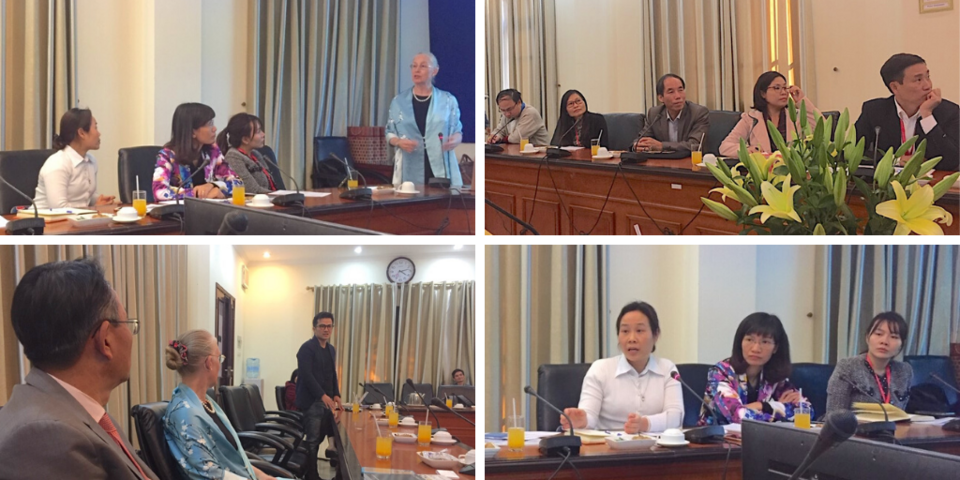
With a focus on health policy, our first day in Hanoi included a visit to Thai Nguyen University, a meeting with government representatives at the Vietnam Ministry of Health, and a seminar on healthy aging and innovation jointly with Hanoi Medical University.
Image
Collage of four images showing participants at a roundtable held at Hanoi Medical University with APARC delegation members

Karen Eggleston and participants at the roundtable held at Hanoi Medical University, December 9, 2019.

Throughout the day, Eggleston presented some of her collaborative research that is part of two projects involving international research teams: one that assesses public-private roles and institutional innovation for healthy aging and another that examines the economics of caring for patients with chronic diseases across diverse health systems in Asia and other parts of the world. We appreciated learning from our counterparts about the health care system and health care delivery in Vietnam.

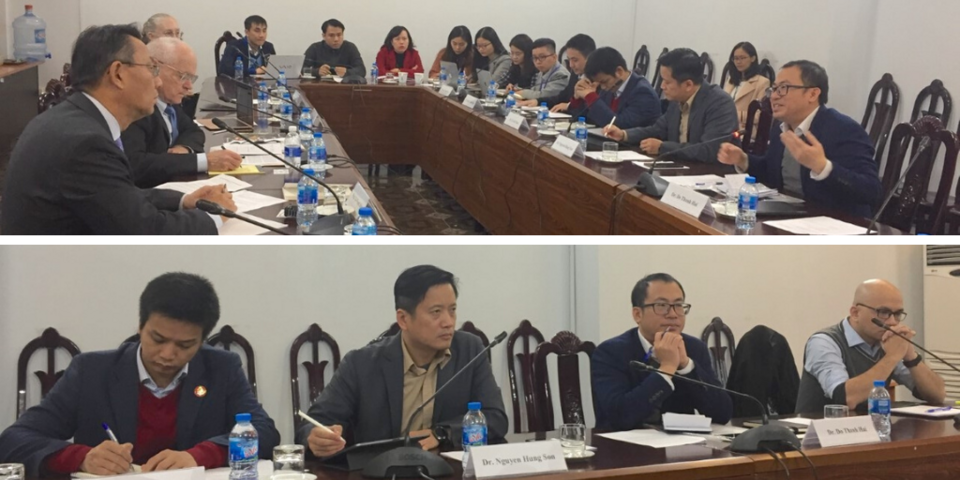
Shifting focus to international relations and regional security, day 2 in Hanoi opened with a roundtable, “The Rise of the Indo-Pacific and Vietnam-U.S. Relations,” held jointly with the East Sea Institute (ESI) of the Diplomatic Academy of Vietnam (DAV). Following a welcome by ESI Director General Nguyen Hung Son, the program continued with remarks by Shin, Emmerson, ESI Deputy Director General To Anh Tuan, and Assistant Director General Do Thanh Hai.
Image
Participants at a roundtable held at the Diplomatic Academy of Vietnam with APARC delegation members

Roundtable at the Diplomatic Academy of Vietnam, December 10, 2019.

The long-ranging conversation with DAV members included issues such as the future of the international order in Asia; the U.S. withdrawal from multilateralism; the concern about a lack of U.S. engagement in Southeast Asia, sparked by President Trump’s absence from the November 2019 summit of the Association of Southeast Asian Nations (ASEAN) at a time when China is bolstering its influence in the region and when ASEAN hopes to set a code of conduct with China regarding disputed waters in the South China Sea; the priorities for Vietnam as it assumes the role of ASEAN chair in 2020; and the challenges for the Vietnam-U.S. bilateral relationship amid the changing strategic environment in Southeast Asia.

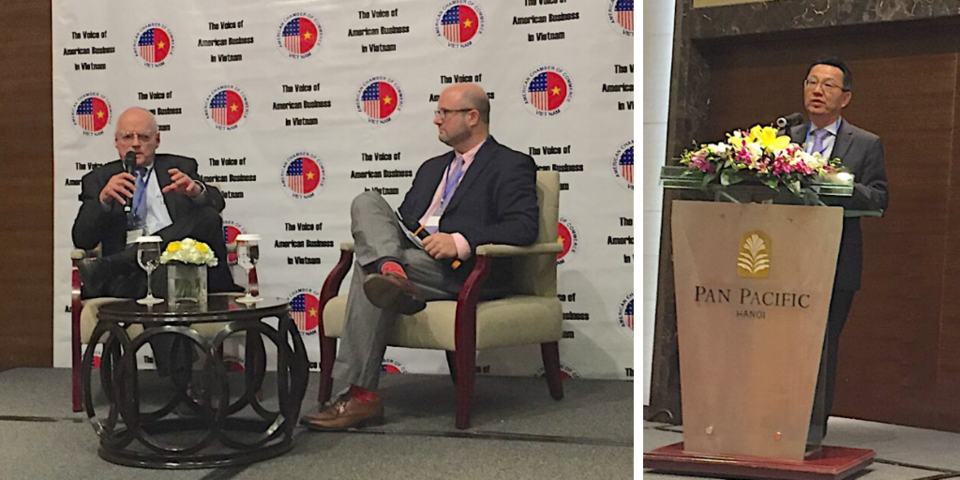
In the afternoon we were joined by members of the American Chamber of Commerce in Hanoi at an AmCham-hosted Lunch ‘n’ Learn session on Vietnam's challenges and opportunities amid the U.S.-China rivalry. The event featured Emmerson in conversation with AmCham Hanoi Executive Director Adam Sitkoff.
Image
Two men in conversation seated on stage and a man speaking at a podium

(Left) Donald Emmerson in conversation with Adam Sitkoff; (right) Gi-Wook Shin welcomes AmCham Hanoi members; December 10, 2019. 

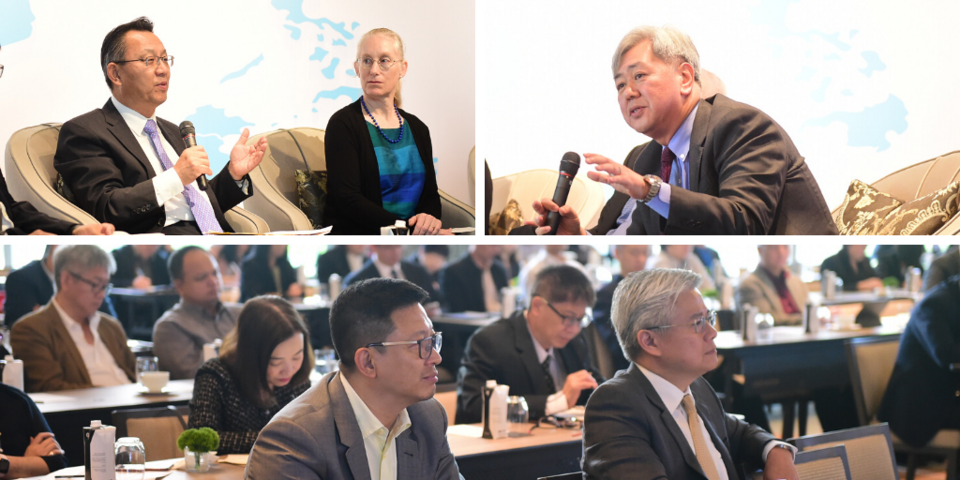
Moving to Bangkok, delegation members Shin, Eggleston, Emmerson, and Kim spoke on a panel for executives of the Charoen Pokphand Group (C.P. Group), one of Thailand’s largest private conglomerates, addressing some of the core issues that lie ahead for Southeast Asia in 2020 and beyond in the areas of geopolitics, innovation, and health.
Image
Participants at a panel discussion with APARC delegation hosted by the C.P. Group, Thailand

Top, from left to right: Gi-Wook Shin, Karen Eggleston, Andrew Kim; bottom: C.P. Group executive listening to the panel, December 12, 2019.

We also enjoyed a tour at True Digital Park, Thailand’s first startup and tech entrepreneur’s campus. Developed by the C.P. Group, True Digital Park aspires to be an open startup ecosystem that powers Thailand to become a global hub for digital innovation.

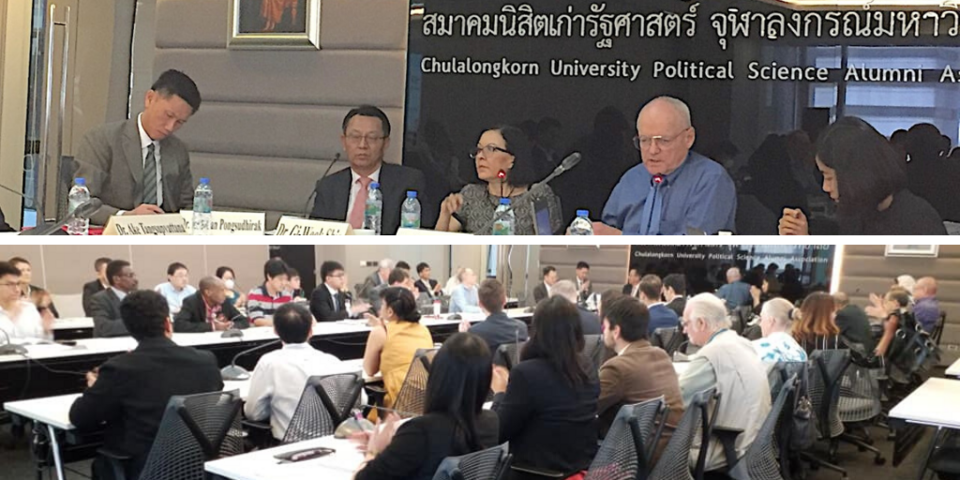
The following day, Shin and Emmerson participated in a public forum hosted by Chulalongkorn University’s Institute of Security and International Studies (ISIS Thailand), "Where Northeast Asia Meets Southeast Asia: The Great Powers, Global Disorder and Asia’s Future.” They were joined by ISIS Thailand Director Thitinan Pongsudhirak and Chulalongkorn University Faculty of Political Science Associate Dean for International Affairs and Graduate Studies Kasira Cheeppensook. The panel was moderated by Ms. Gwen Robinson, ISIS Thailand senior fellow and editor-at-large of the Nikkei Asian Review.
Image
Panelists and participants at a public forum held at Chulalongkorn University

ISIS Thailand forum participants and panelists, from left: Pngsukdhirak, Shin, Robinson, Emmerson, Cheeppensook; December 13, 2019.

As part of that discussion, Emmerson speculated that – driven by deepening Chinese economic and migrational involvement in Southeast Asia’s northern tier – Cambodia and Laos, less conceivably Myanmar, and still less conceivably Thailand could become incorporated de facto into an economically integrated “greater China” that could eventually reduce ASEAN to a more-or-less maritime membership in the region’s southern tier. Emmerson’s speculation was made in the context of his critique of ASEAN’s emphasis on its own “centrality” to the neglect of its lack of the proactivity that would serve as evidence of centrality and of a desire not to be rendered peripheral by the growing centrality-cum-proactivity of China. The event was covered by the Bangkok Post (although that report’s headline and quote of Emmerson are inaccurate, as neither the panel nor Emmerson predicted the “break-up of ASEAN.”)

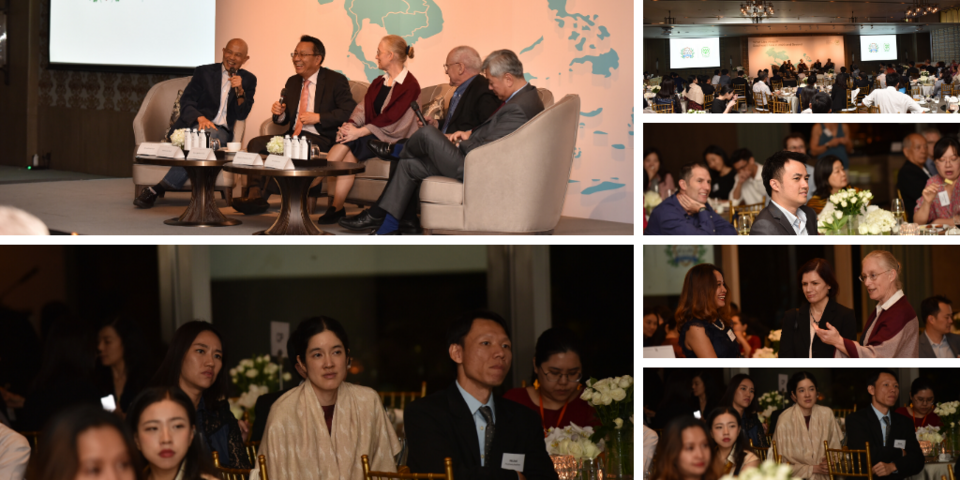
Our delegation visit in Bangkok concluded with a buffet dinner reception and panel discussion jointly with the Stanford Club of Thailand.
Image
alumni event

Stanford and IvyPlus alumni listening to the panel, December 13, 2019.

Moderated by Mr. Suthichai Yoon, a veteran journalist and founder of digital media outlet Kafedam Group, the conversation focused on the changing geopolitics of Southeast Asia, innovation and health in the region, and the opportunities and challenges facing Thailand-U.S. relations. It was a pleasure to meet many new and old friends from the Stanford and IvyPlus alumni communities.

APARC would like to thank our partners and hosts in Hanoi and Bangkok for their hospitality, collaboration, and the stimulating discussions throughout our visit. We look forward to keeping in touch!

Hero Image
APARC delegation speaking to Stanford and IvyPlus alumni, Bangkok
All News button
1
-

This seminar will present empirical evidence about policies to promote healthy lifestyles in China from a professor and a policymaker from the PRC.

As a result of economic growth, urbanization, lifestyle change, and population aging, Noncommunicable Diseases (NCDs) have become China’s leading cause of death, accounting for 86.6% of annual deaths. Almost two-thirds of NCDs can be prevented by reducing unhealthy lifestyle choices such as tobacco use, physical inactivity, harmful use of alcohol, and unhealthy diets. In particular, dietary risk factors and insufficient physical activity increasingly contribute to the surging burden of obesity in China and globally.

In 2016, President Xi Jinping announced the “Healthy China 2030” Blueprint. Three years later, a corresponding action plan was released and encompassed 15 goals, including reducing obesity, increasing overall physical activity, and preventing NCDs. The presenters will discuss results of research on the determinants of healthy diet, physical activity, obesity, and noncommunicable diseases, and provide evidence for implementation of Healthy China 2030. Their research includes aspects on (1) unhealthy food and beverage marketing to children; (2) the link between green space, physical activity, and health outcomes; (3) a strategy to involve government and non-health sectors in the prevention and control of NCDs in China; and (4) preventive vaccinations and primary care management for individuals living with NCDs like diabetes.

Image
bai di
Juan Zhang is Associate Professor at School of Public Health, Peking Union Medical College (PUMC) & China Academy of Medical Science (CAMS). She conducts research on risk factors of noncommunicable disease (NCD), such as obesity, hypertension, diabetes, nutrition, physical activity, using policy, socio-ecological, and behavioral approaches. She currently is principal investigators to (1) assessing mass media (mainly television) food advertisement, (2) investigate underlying family environment, school policy and environment of preschool children overweight and obesity, (3) evaluate the implementation and impact of government-led programs to prevent and control NCD. Prior to joining PUMC, Dr. Zhang has had diverse working experience over 10 years across national government agency, WHO, academic institutions, and multinational pharmaceutical company.

Dr. Juan ZHANG holds a Ph.D. in Health Behavior from the Indiana University Bloomington. She has published in the areas of chronic disease epidemiology, economic cost and behavioral determinants of obesity, and public health program evaluation. She serves as members of several professional societies, like Committee of Diabetes Prevention and Control of Chinese Preventive Medicine Association (CPMA), Committee of NCD Disease Prevention and Control of CPMA, Committee of Health Communication of China Health Education Association, and Committee of Student Nutrition and Health, Chinese Student Nutrition and Health Promotion Federation.

Image
photo of xiangyuchen 4x6
Xiangyu Chen is a working staff from Non-communicable Disease (NCDs) Control and Prevention Department in Zhejiang Provincial Center for Disease Control and Prevention. He is a public health physician and his ongoing areas of research include development of risk prediction models using health check-up data, and cost-effectiveness evaluation for flu shots among the diabetes. He completed his MS in Epidemiology and BA in Preventive Medicine at Soochow University.

Juan Zhang Associate Professor, School of Public Health, Peking Union Medical College (PUMC) & China Academy of Medical Science (CAMS)
Xiangyu Chen Non-communicable Disease (NCDs) Control and Prevention Department, Zhejiang Provincial Center for Disease Control and Prevention
Seminars
-

Improvements in medical treatment have clearly contributed to significant increases in medical spending, yet there is relatively little quantitative evidence on whether the rise in expenditure is “worth it” in the sense of producing health outcomes of commensurate value. This seminar will focus on empirical research assessing the net value of health care for patients with chronic disease, using the case of type 2 diabetes mellitus. Based on analysis of detailed longitudinal, patient-level data, the collaborating researchers from Hong Kong, Japan, Taiwan, the Netherlands, and the US describe patterns in resource use and quality outcomes as measured by clinical markers and predicted risk of complications and death. In most of the studied cases, increases in spending were accompanied with improvements in outcomes of commensurate or greater value, given a range of values for a quality-adjusted life year. The authors conclude with a discussion of what the results imply about productivity of medical care, quality adjustment of price indices for healthcare, and policies for healthy aging in Asia (based on a forthcoming book).

Philippines Conference Room Encina Hall, 3rd Floor 616 Serra Mall, Stanford, CA 94305
Jianchao Quan Hong Kong University
616 Serra StreetEncina Hall E301Stanford, CA94305-6055
0
toshiaki_iizuka.jpg Ph.D.

Toshiaki Iizuka is Professor at Graduate School of Public Policy and Graduate School of Economics, the University of Tokyo. Before joining the University of Tokyo in 2010, he taught at Vanderbilt University (2001-2005), Aoyama Gakuin University (2005-2009), and Keio University (2009-2010). He served as Dean of Graduate School of Public Policy, the University of Tokyo, between 2016 and 2018. He is a recipient of Abe Fellowship (2018-2019). 

His research interests are in the field of health economics and health policy. He has written a number of articles on incentive and information in the health care markets. His research articles have appeared in leading professional journals, including American Economic Review, RAND Journal of Economics, Journal of Health Economics, and Health Affairs, among others. Dr. Iizuka holds a PhD in Economics from the University of California, Los Angeles, an MIA from Columbia University, and an ME and BE from the University of Tokyo.
Visiting Scholar, Asia Health Policy Program at APARC
University of Tokyo

Shorenstein APARC
Stanford University
Encina Hall E301
Stanford, CA 94305-6055

(650) 723-9072 (650) 723-6530
0
Senior Fellow at the Freeman Spogli Institute for International Studies
Center Fellow at the Center for Health Policy and the Center for Primary Care and Outcomes Research
Faculty Research Fellow of the National Bureau of Economic Research
Faculty Affiliate at the Stanford Center on China's Economy and Institutions
karen-0320_cropprd.jpg PhD

Karen Eggleston is a Senior Fellow at the Freeman Spogli Institute for International Studies (FSI) at Stanford University and Director of the Stanford Asia Health Policy Program at the Shorenstein Asia-Pacific Research Center at FSI. She is also a Fellow with the Center for Innovation in Global Health at Stanford University School of Medicine, and a Faculty Research Fellow of the National Bureau of Economic Research (NBER). Her research focuses on government and market roles in the health sector and Asia health policy, especially in China, India, Japan, and Korea; healthcare productivity; and the economics of the demographic transition.

Eggleston earned her PhD in public policy from Harvard University and has MA degrees in economics and Asian studies from the University of Hawaii and a BA in Asian studies summa cum laude (valedictorian) from Dartmouth College. Eggleston studied in China for two years and was a Fulbright scholar in Korea. She served on the Strategic Technical Advisory Committee for the Asia Pacific Observatory on Health Systems and Policies and has been a consultant to the World Bank, the Asian Development Bank, and the WHO regarding health system reforms in the PRC.

Director of the Asia Health Policy Program, Shorenstein Asia-Pacific Research Center
Stanford Health Policy Associate
Faculty Fellow at the Stanford Center at Peking University, June and August of 2016
CV
Date Label
Stanford University and NBER
Seminars
-

China and the United States both have public needs that far outstrip the abilities of their governments alone to deliver.  Zeckhauser and Donahue will discuss their book (joint with Karen Eggleston) exploring an important, and perhaps surprising, shared feature of efforts by policymakers in China and the United States to forge prosperous, stable futures for their citizens:  public-private collaboration to accomplish some of each society’s most vital collective purposes. Collaborative governance entails private engagement in public tasks on terms of shared discretion. Zeckhauser and Donahue will discuss the two countries’ collaborative approaches to health policy and elder care, comparing and contrasting with approaches to other activities ranging from education and infrastructure to hosting the Olympics.

Image
zeckhauser richard

Richard Zeckhauser is the Frank P. Ramsey Professor of Political Economy, Kennedy School, Harvard University. He graduated from Harvard College (summa cum laude) and received his Ph.D. there. He is an elected fellow of the Econometric Society, the Institute of Medicine (National Academy of Sciences), and the American Academy of Arts and Sciences. In 2014, he was named a Distinguished Fellow of the American Economic Association. His contributions to decision theory and behavioral economics include the concepts of quality-adjusted life years (QALYs), status quo bias, betrayal aversion, and ignorance (states of the world unknown) as a complement to the categories of risk and uncertainty. Many of his policy investigations explore ways to promote the health of human beings, to help markets work more effectively, and to foster informed and appropriate choices by individuals and government agencies. Zeckhauser has published over 300 articles and several books.

Image
faculty donahue jack ms18 800x800

John D. Donahue is the Raymond Vernon Senior Lecturer in Public Policy, Kennedy School, Harvard University. He is also Faculty Chair of the Master in Public Policy (MPP) Program and the SLATE Curriculum Initiative Co-Chair for Cases and Curriculum. His teaching, writing, and research mostly deal with public sector reform and with the distribution of public responsibilities across levels of government and sectors of the economy, including extensive work with the HKS-HBS joint degree program. He has written or edited twelve books, most recently Collaborative Governance (with Richard J. Zeckhauser, 2011) and Ports in a Storm (with Mark H. Moore, 2012). He served in the first Clinton Administration as an Assistant Secretary and then as Counselor to the Secretary of Labor. Donahue has consulted for business and governmental organizations, including the National Economic Council, the World Bank, and the RAND Corporation, and serves as a trustee or advisor to several nonprofits. A native of Indiana, he holds a BA from Indiana University and an MPP and PhD from Harvard.

Philippines Conference Room Encina Hall, 3rd Floor 616 Serra Mall, Stanford, CA 94305
Richard Zeckhauser Frank Plumpton Ramsey Professor of Political Economy, Kennedy School, Harvard University
John Donahue Raymond Vernon Senior Lecturer in Public Policy, Kennedy School, Harvard University
Seminars
-

The major objectives of this paper are: 1) to investigate how local nutritional availability in early childhood and in adolescence affected health and human capital development; 2) to explore if improved nutrition in adolescence could mitigate the negative effects of early-life exposure to negative health shocks generated by the Korean War; and 3) to understand how increased nutritional supply contributed to the improvement in health in South Korea from 1946 to 1977.

Image
chulhee lee photo4x6
Chulhee Lee is professor of economics at Seoul National University. After receiving his doctoral degree from University of Chicago in 1996, he taught at SUNY Binghamton before he returned to Seoul in 1998. His major research topics are economic status and labor-market behaviors of older persons; and interactions of ecological environment, socioeconomic status, and health over the life course. Lee has been involved with the management of the NIH-funded Early Indicators project since 2001 as project leader and senior investigator, which constructed and analyzed longitudinal data on Union Army soldiers. He has also participated in various projects of creating and studying new data in Korea, such as the Korea Longitudinal Study of Aging (KLOSA), the panel data on the Korean Health Insurance, and the sample of military records in Korea. Lee’s research on the health and retirement of US Civil War soldiers has been published in American Economic Review (1998), Journal of Economic History (1998, 2002, 2005, 2008), Explorations in Economic History (1997, 1998, 2007, 2012), and Social Science History (1999, 2005, 2009, 2015). He has also published paper on retirement of Koreans in Economic Development and Cultural Change (2007) and Journal of Population Ageing (2013). His recent work on the effects of in-utero exposure to the Korean War, recessions, and the 1980 Kwangju uprising appeared in Journal of Health Economics (2014), Social Science and Medicine (2014), Health Economics (2017), and Asian Population Studies (2017).

Chulhee Lee Department of Economics, Seoul National University
Seminars
-

Co-sponsored by the Center for East Asian Studies and the Asia Health Policy Program

With rapid economic development, changes in lifestyle, epidemiologic transition and the ageing of the population, China’s primary health challenge has become Non-Communicable Diseases (NCDs). Zhejiang province—one of the wealthiest and longest-lived—illustrates how China is responding to this challenge. In Zhejiang, NCDs account for 85% of deaths; the prevalence of hypertension and diabetes are 26.7 % and 7.4%, respectively; and the age of onset of diabetes is getting progressively younger. This seminar will focus on two inter-related strategies: strengthening primary care management of chronic disease, and leveraging newly created regional “big data” platforms to improve policy. Drawing on collaborative research with Stanford’s Asia Health Policy Program, Dr. Zhong will discuss management of hypertension and diabetes patients in community health centers, as well as how Ningbo City of Zhejiang exemplifies the experience of many local governments (municipalities or counties) in building their own regional health information platforms. By gradually collecting all administrative data and other health-related information for their residents from birth to death, including medical claims, vaccination records, lifestyle behaviors, environmental and meteorological factors, and so on, more and more local policymakers seek to analyze big data to explore potential risk factors, pilot targeted interventions, and support evidence-based health policies.

Image
zhong jieming
Zhong, Jieming graduated from the school of public health of Zhejiang University and received his master's degree in public health (MPH) from the Chinese Center for Disease Control and Prevention. He is the director of the Department of Non-communicable Disease (NCD) Control and Prevention in the Zhejiang CDC. He served as deputy director of the Department of Tuberculosis Control and Prevention in Zhejiang CDC during 2008-2014. He is a member of the Zhejiang Preventive Medicine Association and has engaged in and chaired several international cooperation and local research projects. He has in-depth research on NCDs and TB control and prevention, and has published over 30 scientific papers in related fields.

Zhong Jieming Director of the Department of NCD Control and Prevention, Zhejiang CDC, China.
Seminars
News Type
News
Date
Paragraphs

The Shorenstein Asia-Pacific Research Center (APARC) at Stanford is now accepting applications for the Shorenstein Postdoctoral Fellowship in Contemporary Asia, an opportunity made available to two junior scholars for research and writing on Asia.

Fellows conduct research on contemporary political, economic or social change in the Asia-Pacific region, and contribute to Shorenstein APARC’s publications, conferences and related activities. To read about this year’s fellows, please click here.

The fellowship is a 10-mo. appointment during the 2018-19 academic year, and carries a salary rate of $52,000 plus $2,000 for research expenses.

For further information and to apply, please click here. The application deadline is Dec. 20, 2017.

Hero Image
sb background encina
All News button
1
-
The "Workshop of young leaders in Asia health policy" will take place at SCPKU on June 21, 2017, just prior to the annual primary care Forum. This special event convened in honor of the Stanford Asia Health Policy Program's 10th anniversary. It will feature short research panels by a dozen young health policy experts from Cambodia, China, Indonesia, Korea, Mongolia, Myanmar, Nepal, the Philippines, Thailand, the United States, and Vietnam. The luncheon colloquium will feature comparative perspectives on the major health policy challenges facing Asia as well as specific examples of how evidence-based policymaking can improve lives throughout the Asia-Pacific region.


Stanford Center at Peking University

Encina Hall E301616 Serra StreetStanford, CA94305-6055
(650) 724-5321 (650) 723-6530
0
darika_saingam.jpg Ph.D.

Darika Saingam joins the Walter H. Shorenstein Asia-Pacific Research Center as the Developing Asia Health Policy Postdoctoral Fellow for the 2015-16 year.  Saingam’s research interests are public health, substance abuse, drug policy and Southeast Asia. While at Shorenstein APARC, she will research the evolution of substance-abuse control measures and related policy in Thailand.  Saingam seeks to identify potentially effective policy directions suitable for Thailand, and other developing countries in Southeast and East Asia.

Saingam completed her doctorate in epidemiology at the Prince of Songkla University in 2012, and has served as a researcher at the University’s epidemiology unit since, as well as a researcher at the Thailand Substance Abuse Academic Network since 2014.

2015-16 Developing Asia Health Policy Postdoctoral Fellow
Faculty of Medicine Prince of Songkla University, Thailand
Ngoc Minh Pham Visiting research fellow at Curtin University, Australia
0
2011-12 Developing Asia Health Policy Fellow
YiSiyan_Profile.jpg MD, PhD

Dr. Siyan Yi joined the Walter H. Shorenstein Asia-Pacific Research Center (Shorenstein APARC) as a 2011-12 Developing Asia Health Policy Postdoctoral Fellow from the National Center of Global Health and Medicine and the University of Tokyo, Japan, where he jointly served as a research fellow and lecturer. He also served as an adjunct faculty member at Cambodia’s School of Public Health, the National Institute of Public Health, and the School of International Studies at the Royal University of Phnom Penh. He is currently an Associate Professor and UHS-SPH Integrated Research Programme Leader at NUS Saw Swee Hock School of Public Health (profile page here).

Yi’s research has centered largely on epidemiological methods. This has included, for example, work on surveys in Cambodia on adolescent risky sexual behaviors, substance abuse, and depression; a health promotion project in primary schools; sexual behaviors among people living with HIV/AIDS; and HIV risky behaviors among tuberculosis patients. Currently, he is involved in hospital- and community-based research projects in several developing countries as well as in Japan. He has published several papers in these research areas in international journals. His selected publications include:

  • Siyan Yi, Akiko Nanri, Kalpana Poudel, Daisuke Nonaka, Hori Ai, Tetsuya Mizoue. “Association between serum ferritin and depressive symptoms in Japanese municipal employees.” Psychiatry Research, 2011. 189: 368-372.
  • Siyan Yi, Daisuke Nonaka, Marino Nomoto, Jun Kobayashi, and Tetsuya Mizoue. “Predictors of the uptake of A (H1N1) influenza vaccine: Findings from a population-based longitudinal study in Tokyo.” PLoS One, 2011. 6: e18893.
  • Siyan Yi, Krishna C. Poudel, Junko Yasuoka, Paula H. Palmer, Songky Yi, and Masamine Jimba. “Risk vs. protective factors for substance use among adolescent students in Cambodia.” Journal of Substance Use, 2011. 16:14-26.
  • Siyan Yi, Krishna C. Poudel, Junko Yasuoka, Paula H. Palmer, Songky Yi, and Masamine Jimba. “Role of risk and protective factors for risky sexual behaviors among high school students in Cambodia.” BMC Public Health, 2010. 10: 477.
  • Siyan Yi, Krishna C. Poudel, Junko Yasuoka, Masao Ichikawa, Vutha Tan, and Masamine Jimba. “Influencing factors for seeking HIV voluntary counseling and testing among tuberculosis patients in Cambodia.” AIDS Care, 2009. 21: 529-534.

Yi holds an MHSc (2007) and a PhD (2010) in international health sciences from the School of International Health at the University of Tokyo’s Graduate School of Medicine. He also earned an MD in general medicine from the University of Health Sciences, Cambodia (2001). Yi has won research awards, including: the Young Investigator Award from the Asia Pacific Academic Consortium for Public Health (2008), the Montreux Prize from the Swiss Association for Adolescent Health and the International Association for Adolescent Health (2009), and the Scientific Research Award from the University of Tokyo (2009).

Date Label
Director of KHANA Center for Population Health Research, Cambodia

Shorenstein APARC
Encina Hall E332
616 Serra Street
Stanford, CA 94305-6055

(650) 724-5710 (510) 705-2049 (650) 723-6530
0
Developing Asia Health Policy Fellow
IMG_4537.jpg MD

Gendengarjaa Baigalimaa joins the Walter H. Shorenstein Asia-Pacific Research Center (Shorenstein APARC) during the 2013-2014 acedemic year as the Asia Health Policy Program Fellow. She joins APARC from the Mongolian National Cancer Center, where she serves as a Gynecological Oncologist.

During her appointment as Health Policy Fellow, she will conduct a comparative study of how knowledge of cervical cancer risk factors has influenced behavior changes in Mongolia before and after the introduction of the National Cervical Cancer Program.

Baigalimaa is the Executive Director of Mongolian Society of Gynecological Oncologists and is also a member of the International Gynecological Cancer Society (IGCS) in Mongolia, Russia, and France.

Baigalimaa holds a MD from Minsk Belarussia Medical University. She also received a Masters in Health Science from Mongolian Medical University. She is fluent in both Russian and English.

Gynecological Oncologist at ''Mungun Guur'' hospital, Mongolia

Shorenstein APARC
Encina Hall C331
616 Serra Street
Stanford, CA 94305-6055

(650) 724-5656 (650) 723-6530
0
2013-2014 Asia Health Policy Postdoctoral Fellow
triyana_photo.jpg PhD

Margaret (Maggie) Triyana’s main research interests are inequality and human capital investments in developing countries. In particular, she is interested in the effects social policy changes on children’s health outcomes. As a Postdoctoral Fellow, she will analyze the effects of rural-urban migration in Indonesia and China, as well as the impact of health insurance expansion in Indonesia and Vietnam.

Triyana received a PhD in Public Policy from the University of Chicago in 2013.


Working Papers

“Do Health Care Providers Respond to Demand-Side Incentives? Evidence from Indonesia“

“The Effects of Community and Household Interventions on Birth Outcomes: Evidence from Indonesia”

“The Longer Term Effects of the ‘Midwife in the Village’ Program in Indonesia”

“The Sources of Wage Growth in a Developing Country” (with Ioana Marinescu)

2016-17 Kellogg visiting fellow; Assistant Professor of Economics at Nanyang Technological University, Singapore
1
Visiting Scholar at APARC, 2026
Asia Health Policy Postdoctoral Fellow in Developing Asia, 2012-2013
PajaronMarjorie_WEB.jpg Ph.D.

Marjorie Pajaron joins the Walter H. Shorenstein Asia-Pacific Research Center as Visiting Scholar for the spring quarter of 2026 from the University of the Philippines Diliman (UPSE), where she serves as Associate Professor in the School of Economics. She was previously at APARC as Asia Health Policy Postdoctoral Fellow during the 2012–13 academic year.

While at APARC, she will be conducting research on the migration of healthcare workers from the Philippines and the nexus with climate change.

Pajaron received a PhD in economics from the University of Hawai’i at Manoa.

Working Papers:

 “Remittances, Informal Loans, and Assets as Risk-Coping Mechanisms: Evidence from Agricultural Households in Rural Philippines.” October 2012. Revise and Resubmit, Journal of Development Economics.

“The Roles of Gender and Education on the Intra-household Allocations of Remittances of Filipino Migrant Workers.” June 2012.

“Are Motivations to Remit Altruism, Exchange, or Insurance? Evidence from the Philippines.” December 2011.

Date Label
Assistant Professor at the School of Economics, University of the Philippines, Diliman

Walter H. Shorenstein
Asia-Pacific Research Center
616 Serra St C335
Stanford University
Stanford, CA 94305-6055

(650) 724-5668 (650) 723-6530
0
2011-12 Asia Health Policy Fellow
SunAng_Profile.jpg MA, PhD

Ang Sun joins the Walter H. Shorenstein Asia-Pacific Research Center (Shorenstein APARC) from Brown University’s department of economics where she recently received her PhD.

Sun’s research interests encompass development economics, labor and demographic economics, and health economics. She focuses on intra-household allocations, gender differences, and household formation. In particular, she studies how a combination of different forces in China—including traditional values, rapid growth, and the population structure—is affecting Chinese families. During her time at Shorenstein APARC, Sun will participate in an interdisciplinary study of the impact of the aging process in Asia on economic growth.

Sun holds a PhD and an MA in economics from Brown University, and an MA from the China Center of Economic Research. She also received a BA in economics and a BS in information and computer science from Beijing University.

Central University of Finance and Economics, Beijing, China

Shorenstein APARC
Stanford University
Encina Hall, Room C335
Stanford, CA 94305-6055

(650) 736-0771 (650) 723-6530
0
2011 Shorenstein-Spolgi Fellow in Comparative Health Policy
Qiulin_Chen3x4.jpg MA, PhD

Qiulin Chen is a postdoctoral fellow of Shorenstein APARC and a member of the center's Asia Health Policy Program. His main interest of research is health economics and public finance, focusing on policy and outcome comparison of health care systems and Chinese health reform. His dissertation focused on performance comparison between public (or governmental) and private health care financing, between local and central government responsibility on health care, between contracted and integrated health care system. In particular, his dissertation examined under Chinese-style decentralization, known as fiscal decentralization with political centralization, how economic competition affect local government's behaviour on health investment, and why public contracted system obstructs health performance and provides one channel of such effects in terms of preventive care and public health. He is currently involved in a comparative research project on demographic change in East Asia based on the National Transfer Accounts data and analysis.

Chen's recent publication is "The changing pattern of China's public services" (with Ling Li and Yu Jiang) in Population Aging and the Generational Economy: A Global Perspective (Ronald Lee and Andrew Mason, editors), forthcoming 2011. Before studying in Stanford, he has published more than 10 papers in academic journals in Chinese, such as Jing Ji Yan Jiu (Economic Research) and Zhong Guo Wei Sheng Jing Ji (Chinese Health Economics), and 5 book chapters. He has participated in about 20 research projects, such as A Design of Framework for Healthcare Reform in China which is commissioned by the State Council Working Party on Health Reform, Strategy Planning Study of "Healthy China 2020" which is commissioned by the Minister of Health, and Health Challenge in the Aging Society and It's Policy Implication funded by Chinese National Natural Science Foundation.

Chen earned his Ph.D. in Economics from Peking University in 2010, and earned a B.A. in Business Administration from Nanjing University in 2001. From 2004 through 2008, he was Executive Assistant of the Director of the China Centre for Economic Research at Peking University (CCER). He is also a postdoctoral fellow of National School of Development at Peking University (Its predecessor is CCER).

CV
China Academy of Social Sciences, China
0
Postdoctoral Fellow in Asia Health Policy Program, 2008-09
Do.JPG MD, PhD

Young Kyung Do is the inaugural Postdoctoral Fellow in the Asia Health Policy Program at the Walter H. Shorenstein Asia-Pacific Research Center. He completed his Ph.D. in health policy and administration at the University of North Carolina at Chapel Hill School of Public Health in August 2008. He has also earned M.D. and Master of Public Health degrees from Seoul National University (in 1997 and 2003, respectively). He earned board certification in preventive medicine from the Korean Medical Association in 2004. His research interests include population aging and health care, comparative health policy, health and development, quality of care, program evaluation, and quantitative methods in health research.

He received the First Prize Award in the Graduate Student Paper Competition in the Korea Labor and Income Panel Study Conference in 2007. He also is the recipient of the Harry T. Phillips Award for Outstanding Teaching by a Doctoral Student from the UNC Department of Health Policy and Administration in 2007. In May 2008, he was selected as a New Investigator in Global Health by the Global Health Council.

Date Label
Associate Professor in the Department of Health Policy and Management at Seoul National University College of Medicine, Seoul, South Korea
Seminars
News Type
News
Date
Paragraphs

The Shorenstein Asia-Pacific Research Center (APARC), in pursuit of training the next generation of scholars on contemporary Asia, has selected two postdoctoral fellows for the 2017-18 academic year. The fellows will begin their year of academic study and research at Stanford this fall.

Shorenstein APARC has for more than a decade sponsored numerous junior scholars who come to the university to work closely with Stanford faculty, develop their dissertations for publication, participate in workshops and seminars, and present their research to the broader community.

The 2017-18 cohort includes two Shorenstein Postdoctoral Fellows; they carry a broad range of interests from labor migration policy in China to regional institutions in East Asia. Their bios and research plans are listed below:


Image
hyun seung cho
H. Seung Cho is completing his doctorate at Columbia University’s Department of Political Science. He researches U.S. and Chinese foreign policy toward East Asia’s regional institutions with a broader interest in U.S.-China relations, the political economy of East Asia and qualitative research methods. His dissertation probes the popular narrative that United States and China are competing over East Asia’s regional architecture, arguing that mutual misperception and security dilemma dynamics also play out in the politics of regional institution building. To explore this phenomenon, Seung has conducted extensive fieldwork in Beijing, Jakarta, Seoul and Washington, D.C. At Shorenstein APARC, Seung will be developing his dissertation into a book manuscript while looking to further examine the relationship between the politics of East Asia’s multilateral security institutions and their perceived lack of effectiveness. Previously, Seung was a predoctoral fellow at Peking University’s School of International Studies from 2014-16. Prior to starting his doctoral studies, he also served in South Korean military intelligence as part of the two-year national service. Seung holds a Bachelor of Science in government and economics and Master of Science in international relations from the London School of Economics and Political Science (LSE).


Image
samantha vortherms
Samantha Vortherms is a doctoral candidate in the University of Wisconsin – Madison Department of Political Science. Her research focuses on comparative political economy, development, social welfare and research methodology. Her dissertation examines subnational variation in access to citizenship rights in China through the household registration system. Her research has been supported by the National Science Foundation, the U.S. Department of Education through the Fulbright-Hays Doctoral Dissertation Research Abroad and the Social Science Research Council's Dissertation Proposal Development Fellowship, among others. At Shorenstein APARC, Sam will work on converting her dissertation to a book manuscript and advance her post-dissertation project on the role of the firm in labor migration policies. Before going to Wisconsin, Sam received her Master of Arts in international relations at the University of Chicago, Artium Magister in public policy from University of Chicago's Harris School of Public Policy, and a Bachelor of Arts from the University of Richmond. From 2014-16, she was a visiting research fellow at the National School of Development's China Center for Health Economics Research at Peking University.

Hero Image
encina hall
All News button
1
Subscribe to Environment