Education
Paragraphs

China’s unprecedented expansion of higher education in 1999 increased annual college enrollment from 1 million to 9.6 million by 2020. We trace the global ripple effects of that expansion by examining its impact on US graduate education and local economies surrounding college towns. Combining administrative data from China’s college admissions system and US visa data, we leverage the centralized quota system governing Chinese college admissions for identification and present three key findings.

First, the expansion of Chinese undergraduate education drove graduate student flows to the US: every additional 100 college graduates in China led to 3.6 Chinese graduate students in the US. Second, Chinese master’s students generated positive spillovers, driving the birth of new master’s programs and increasing the number of other international and American master’s students, particularly in STEM fields. And third, the influx of international students supported local economies around college towns, raising job creation rates outside the universities, as well. Our findings highlight how domestic education policy in one country can reshape the academic and economic landscape of another through student migration and its broader spillovers.

All Publications button
1
Publication Type
Working Papers
Publication Date
Journal Publisher
National Bureau of Economic Research (NBER)
Authors
Yuli Xu
Number
w34391
0
Asia Health Policy Postdoctoral Fellow, 2025-2026
yuli_xu.jpg Ph.D.

Yuli Xu joins the Walter H. Shorenstein Asia-Pacific Research Center (APARC) as Asia Health Policy Postdoctoral Fellow for the 2025-2026 academic year. She recently obtained her Ph.D. in Economics at the University of California, San Diego. Her research focuses on Labor and Health Economics, with particular interests in how female labor force participation and fertility decisions are influenced by labor market institutions and past birth experiences.

In her thesis, "Gendered Impacts of Privatization: A Life Cycle Perspective from China," she demonstrates that the reduction in public sector employment has widened the gender gap in the labor market while narrowing the gender gap in educational attainment. She also finds that this structural shift has delayed marriage among younger generations.

In another line of research, Yuli examines the effects of maternity ward overcrowding. She finds that overcrowding reduces the use of medical procedures during childbirth without negatively impacting maternal or infant health. While it has no direct effect on subsequent fertility, she shows that mothers, especially those with a college degree, are more likely to switch to another hospital for subsequent births after experiencing overcrowding.

During her time at APARC, Yuli will further investigate patient-physician relationships in the Chinese healthcare system, where patients have considerable flexibility in choosing their doctors at each visit. She will explore the persistence of these relationships and examine how patients respond when their regular doctors are temporarily unavailable.

Yuli also holds a B.A. in Economics from the University of International Business and Economics in China.

Date Label
News Type
News
Date
Paragraphs

Stanford University’s Walter H. Shorenstein Asia-Pacific Research Center (APARC) is delighted to welcome a new cohort of fellows joining us starting in summer 2025.

APARC offers multiple prestigious fellowship opportunities for Stanford doctoral students, emerging scholars of exceptional promise, and accomplished faculty and mid-career experts researching contemporary Asia topics. Supported by these fellowships, our incoming fellows will complete dissertation research, work on book manuscripts, undertake new research projects, and engage with the center's scholarly community.


Meet the Fellows

Minyoung An

Minyoung An

Korea Program Postdoctoral Fellow

Minyoung An is a doctoral candidate in sociology at the University of Arizona. Her research lies at the intersection of gender, transnational migration, and knowledge production, combining statistical modeling, computational methods, and in-depth interviews.

Her dissertation analyzes gendered migration patterns in South Korea and among international PhD students in the U.S., revealing how gender inequality in countries of origin produces distinct selection effects and return migration dynamics. She also studies academic career trajectories and prestige hierarchies, exploring how gender and national origin affect integration into global academia.

At the Stanford Next Asia Policy Lab, she will pursue two projects that extend this research agenda: one using computational analysis of social media data to examine gendered migration intent, and another investigating the academic trajectories and institutional reception of international scholars from East Asia. Through these projects, she aims to advance understanding of how transnational inequalities shape global mobility, opportunity, and inclusion. 

Gaea Morales

Gaea Morales

Shorenstein Postdoctoral Fellow

Gaea Morales is a political scientist specializing in global environmental governance, with a focus on the intersection of global and local climate politics in Southeast Asia. Gaea’s dissertation and book project, “Agents of Mass Construction: How Cities Localize through the Sustainable Development Goals,” asks why and how cities choose to translate global agreements to shape local policy, a process known as “localization.”

The project explains the motivations and mechanisms by which cities localize environmental norms using case studies of three climate-vulnerable coastal capitals: Jakarta, Indonesia; Metro Manila, Philippines; and Bangkok, Thailand. Drawing from a global dataset of Sustainable Development Goal localization and a year of fieldwork across Southeast Asia, the project illuminates how cities engage in a dynamic process of policy implementation that is locally driven and globally informed.

At APARC, Gaea will revise her book project and adapt her dissertation into an article manuscript. She will also pursue further projects that cross-cut issues in local and global governance, the political economy of climate and the environment, and human rights. She is especially interested in urban disaster resilience, inclusive climate finance, and environmental migration and security within and beyond the Asia-Pacific region.

Gaea completed her master's degree and doctorate in political science and international relations at the University of Southern California. She holds a bachelor's degree in diplomacy and world affairs and in French studies from Occidental College.


Isabel Salovaara

Isabel Salovaara

APARC Predoctoral Fellow

Isabel Salovaara is a doctoral student in Stanford's Department of Anthropology. Her dissertation, “Engendering the State: Aspiration, Government Jobs, and the Coaching Industry in Bihar, India,” analyzes the effects of organized exam preparation systems on urban life, gender and kin relations, and the politics of (un)employment. Through ethnographic engagement with young people preparing for government recruitment examinations in India, Isabel's work investigates the social life of "shadow education" – a burgeoning industry across much of Asia. Her research complicates the common framing of shadow education as a social ill by showing how young women and members of disprivileged caste groups harness India's coaching institutes to pursue forms of security and independence for themselves and their families.

Isabel received a bachelor's degree in history from Harvard University and a master's degree in social anthropology from the University of Cambridge. 

Teren Sevea

Teren Sevea

Lee Kong Chian NUS-Stanford Fellow on Contemporary Southeast Asia

Teren Sevea is the Prince Alwaleed Bin Talal Associate Professor of Islamic Studies at Harvard Divinity School. He is a historian of Islam in Southeast Asia, with research focusing on Islamic texts, oral traditions, and devotional practices across the Malay-Indonesian world and the broader Indian Ocean. His first book, Miracles and Material Life: Rice, Ore, Traps and Guns in Islamic Malaya (Cambridge University Press, 2020), was awarded the 2022 Harry J. Benda Prize by the Association for Asian Studies.

While at the National University of Singapore and Stanford as a Lee Kong Chian Fellow, Sevea is completing his second monograph, Singapore Islam: The Prophets’ Ports and Sufism Across the Oceans. The book explores the Sufi networks that connected Singapore to religious communities across Asia and Africa, highlighting the roles of miracle workers, reformist scholars, royals, and lay believers. Drawing on multilingual texts and oral histories, the project examines how sacred sites, including ruins and relocated graves, serve as living archives of an Islamic past often overlooked by official narratives. The work combines historical and ethnographic approaches to reveal how Singapore’s devotional communities preserve and reimagine Islamic memory across generations.

Gavin Shatkin

Gavin Shatkin

Lee Kong Chian NUS-Stanford Fellow on Contemporary Southeast Asia

Gavin Shatkin is a professor of public policy and architecture at Northeastern University. He is an urban planner who works on the political economy of urbanization and urban planning and policy in Southeast Asia. His recent research has addressed the role of state actors in the emergence across Asia of very large, developer-built "urban real estate megaprojects," the implications of climate change-induced flood risk for questions of property rights in coastal cities, and the geopolitical dynamics shaping the "infrastructure turn" in urban policy in large Southeast Asian cities. His articles have been published in the International Journal of Urban and Regional Research, Urban Studies, Annals of the Association of American Geographers, and numerous other journals in urban studies, planning, geography, and Asian studies. His most recent book is Cities for Profit: The Real Estate Turn in Asia’s Urban Politics (Cornell, 2017). 

While at APARC, Gavin will primarily focus on a book manuscript examining the implications of Cold War political legacies for contemporary urban development and planning in Southeast Asia. The book focuses on three megalopolises – Jakarta, Bangkok, and Metro Manila – that were the capitals of nations that saw the consolidation (with American support) of authoritarian regimes during Southeast Asia’s "hot Cold War" in the 1960s and 1970s. The book examines the legacies of Cold War-era law, policy, and political discourse in three areas: property rights and land management, the production of knowledge about urbanization, and definitions of urban citizenship and belonging.

Theara Thun

Theara Thun

Lee Kong Chian NUS-Stanford Fellow on Contemporary Southeast Asia

Dr. Theara Thun is a postdoctoral research fellow at the Faculty of Education, University of Hong Kong, funded by Hong Kong’s Research Grants Council. His research interests include intellectual history, ethnic politics, and post-war education, with a particular focus on Cambodia and Southeast Asia.

He holds a doctorate in history from the National University of Singapore through a joint doctoral program with the Harvard-Yenching Institute (Harvard University). He was the recipient of the 2019 Wang Gungwu Medal and Prize for the Best PhD Thesis in the Social Sciences/Humanities.

His first book, Epistemology of the Past: Texts, History, and Intellectuals of Cambodia, 1855-1970 (University of Hawaii Press, 2024), critically explores scholarly debates of Cambodian, Thai, and French intellectuals. The book presents one of the largest original indigenous manuscript collections ever assembled in Southeast Asian Studies scholarship. It argues that precolonial historical scholarship persisted alongside Western historical writings, leading to the development of a unique body of knowledge with its distinct epistemology.

At APARC, Dr. Thun will work on his second book project, which explores post-war intellectual and higher education development in Cambodia. The project seeks to understand how Cambodia’s universities have transformed following the destruction of the entire educational system and the massacre of most teaching personnel during the Khmer Rouge regime between 1975 and 1979.

Yuli Xu

Yuli Xu

Asia Health Policy Postdoctoral Fellow

Yuli Xu is a doctoral student in economics at the University of California, San Diego. Her research focuses on labor and health economics, with particular interests in how female labor force participation and fertility decisions are influenced by labor market institutions and past birth experiences. In her thesis, "Gendered Impacts of Privatization: A Life Cycle Perspective from China," she demonstrates that the reduction in public sector employment has widened the gender gap in the labor market while narrowing the gender gap in educational attainment. She also finds that this structural shift has delayed marriage among younger generations. In another line of research, Yuli examines the effects of maternity ward overcrowding. She finds that overcrowding reduces the use of medical procedures during childbirth without negatively impacting maternal or infant health. While it has no direct effect on subsequent fertility, she shows that mothers, especially those with a college degree, are more likely to switch to another hospital for subsequent births after experiencing overcrowding.

During her time at APARC, Yuli will further investigate patient-physician relationships in the Chinese healthcare system, where patients have considerable flexibility in choosing their doctors at each visit. She will explore the persistence of these relationships and examine how patients respond when their regular doctors are temporarily unavailable.

Yuli holds a bachelor's degree in economics from the University of International Business and Economics in China.

Read More

Two young scholars in conversation on a background of Encina Hall arcade.
News

Rethinking Health and Innovation in Aging Societies: Mai Nguyen and Jinseok Kim Explore Asia’s Health Policy Crossroads

As Asian economies grapple with aging populations, rising healthcare demands, and rapid technological change, APARC’s 2024-25 Asia Health Policy Program Postdoctoral Fellows Mai Nguyen and Jinseok Kim study large-scale health care structural and policy challenges from the lens of individual decision-making.
Rethinking Health and Innovation in Aging Societies: Mai Nguyen and Jinseok Kim Explore Asia’s Health Policy Crossroads
Hero Image
2025 Incoming Fellows
All News button
1
Subtitle

The Center’s new cohort of seven scholars pursues research spanning diverse topics across contemporary Asian studies.

Image
2025 Incoming Fellows
Date Label
Paragraphs
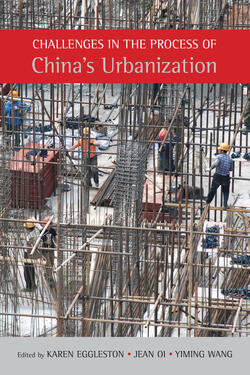
urbanization cover

The same institutions that enabled China’s massive urbanization and spurred its economic growth now require further reform and innovation.

To address the issues facing the next phase of the nation’s transformation, the National New Urbanization Plan (2014–20) set ambitious targets for sustainable, human-centered, and environmentally friendly urbanization. This volume explores the key institutional and governance challenges China will face in reaching those goals. Its policy-focused contributions from leading social scientists in the United States and China explore aspects of urbanization ranging from migration and labor markets to agglomeration economies, land finance, affordable housing, and education policy. Subjects covered in the eleven chapters include:

  • Institutional problems leading to fiscal pressures on local governments and unequal provision of social services to migrant families
  • The history of land financing and threats to its sustainability
  • The difficulty of sorting out property rights in rural China
  • How administrative redistricting has allowed the urbanization of geographical administrative places to outpace the urbanization of populations within those areas
  • How the hukou system may not be the sole, or even primary, mechanism restricting migrants from public goods, such as their childrens’ education
  • Whether the nation’s food security is threatened by its ongoing urbanization
  • The current state of the provision of low-income housing, and future challenges
 
Karen Eggleston is the director of the Asia Health Policy Program at the Shorenstein Asia-Pacific Research Center (Shorenstein APARC). She is a fellow at Stanford's Center for Health Policy/Primary Care and Outcomes Research and a faculty research fellow of the National Bureau of Economic Research.
Jean C. Oi is the William Haas Professor in Chinese Politics in the department of political science and a senior fellow of the Freeman Spogli Institute for International Studies at Stanford University. Oi is the founding director of the China Program at Shorenstein APARC and the Lee Shau Kee Director of the Stanford Center at Peking University.
Wang Yiming is vice president and senior research fellow at the Development Research Center of the State Council, People’s Republic of China. Previously he was with the National Development and Reform Commission (NDRC), where he served for many years as executive vice president of the Academy of Macroeconomics Research and deputy secretary general of the NDRC.
 

Examination copies: Shorenstein APARC books are distributed by Stanford University Press. You can obtain information on obtaining an examination copy at their website.


All Publications button
1
Publication Type
Books
Publication Date
Authors
Karen Eggleston
Book Publisher
Shorenstein APARC
Paragraphs
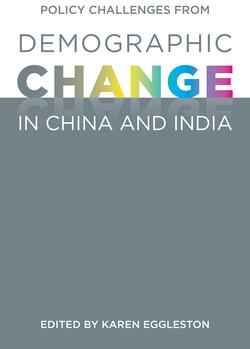
Abstract cover image for book Policy Challenges from Demographic Change in China and India

The world’s two most populous countries face numerous policy challenges from rapid demographic change. Drawing on social science expertise from China, India, and the United States, the contributors examine the social and economic challenges for policies across a range of domains, from China’s changed family planning policies and India’s efforts to address gender imbalance, to both countries’ policies regarding old-age support, human capital investment, poverty alleviation, and broader issues of governance.

Sections focus on:

  • Policy Challenges and Economic Impact
  • Fertility and Sex Imbalance
  • Human Capital and Urbanization
  • Population Aging

Desk or examination copies can be ordered from Stanford University Press.

All Publications button
1
Publication Type
Books
Publication Date
Authors
Karen Eggleston
Book Publisher
Shorenstein APARC
-

Keynote Speakers

WANG YIMING, Deputy Secretary General, National Development and Reform Commission (NDRC)

The Institutional Problems in China’s Urbanization Process

CAI FANG, Director, Institute of Population Studies, China Academy of Social Sciences

Urbanization and Labor Markets in China

LI SHUZHUO, Director, Institute for Population and Development Studies, School of Public Policy and Administration, Xi’an Jiaotong University

Fertility, Sex Ratio, and Family Planning Policies in China

Stanford Center at Peking University

Conferences
-
Little empirical evidence exists on the health costs of air pollution in China, one of the most polluted countries in the world. Unsurprisingly, the lack of reliable data on pollution levels and health outcomes impede research. Because the pollution-health relationship is likely non-linear, it is difficult to extrapolate from existing high quality studies in developed countries to ascertain health costs. We address this deficiency by obtaining new data on Beijing’s daily mortality April 2008-April 2013 from the Chinese Center for Disease Control and Prevention. We combine these data with daily pollution measures from the US Embassy in Beijing, which records particulate matter of 2.5 microns or less in width (PM 2.5). We find that after controlling for weather conditions, year, month, and day of week fixed effects, daily PM2.5 indeed predicts daily mortality, particularly deaths from cardiovaslular disease. A 100 μg/m3 increase in daily PM2.5 is associated with 7 deaths daily, among them 4 cardiovascular deaths, and 0.8 respiratory deaths. Furthermore, deaths among less-educated and outdoor workers show a stronger relationship to PM2.5 levels. Notably, the relationship is robust to controlling for the official measure of Beijing’s air pollution, the average daily air pollution index (API), despite the fact that PM2.5 is measured by 1 monitor at the US embassy whereas API (and mortality) combine data from across the Beijing metropolitan area. Indeed, Beijing’s API does not have a significant relationship to mortality once AQI at the Embassy is accounted for. Our finding supports previous research arguing for measuring PM 2.5 and reporting it promptly to the public. 
 
Shuang Zhang is an assistant professor in the Department of Economics at University of Colorado Boulder. She works on various topics in development, including health, education, environment, political economy, etc,. with a focus on China. She holds a PhD in Economics from Cornell University and was a postdoctoral fellow in SIEPR of Stanford University in 2012-13.

Philippines Conference Room

Shuang Zhang assistant professor in the Department of Economics Speaker University of Colorado Boulder
Seminars
Paragraphs

June 2020 Update:
Dr. Do wins the 2020 Rothman Epidemiology Prize for this article that has been selected as the best paper published in the journal Epidemiology in 2019.
View the announcement of the editors and editorial board of Epidemiology and our news post.

November 2019 Update: 
Paper published: Do, Young Kyung. "Causal Effect of Sleep Duration on Body Weight in Adolescents: A Population-based Study Using a Natural Experiment." Epidemiology 30, no. 6 (2019): 876-884.


Despite a large number of observational studies consistently reporting the association between shorter sleep duration and higher body weight, causality has yet to be established at a population level. This study aims to estimate the population-level causal effect of sleep duration on adolescent body weight, using an instrumental variable (IV) approach that exploits a unique natural experiment in the context of South Korea’s highly competitive secondary education. In March 2011, amid growing concerns over the negative consequences of late-night tuition at private tutoring institutes (hagwon), authorities in 3 of the 16 administrative regions in South Korea decreed adjusting the closing hours of hagwon to 10 p.m. This policy change caused a substantial and plausibly exogenous variation in the sleep duration of the “marginal student,” whose sleep duration is most likely to be affected by the policy. The IV estimation results on a sample of general high school 10th- and 11th-graders in the 2009−2012 Korea Youth Risk Behavior Web-based Survey show that a 1-hour increase in sleep duration led to a 0.56 kg/m2 reduction in body mass index, or a 4.3 percentage-point decrease in overweight/obesity. Short sleep duration among adolescents may be an important contributor to increased body weight at the population level.

 
All Publications button
1
Publication Type
Working Papers
Publication Date
Journal Publisher
Asia Health Policy Program working paper # 38
Authors
Young Kyung Do
-

We use retrospectively reported data on smoking behavior of residents of Mainland China and Taiwan to compare and contrast patterns in smoking behavior over the life-course of individuals in these two regions. Because we construct the life-history of smoking for all survey respondents, our data cover an exceptionally long period of time – up to fifty years in both samples. During this period, both societies experienced substantial social and economic changes. The two regions developed at much different rates and the political systems of the two areas evolved in very different ways. More importantly, governments in the two areas set policies that caused the flow of information about the health risks of smoking to differ across the regions and over time. We exploit these differences, using counts of articles in newspapers from 1951 to present, to explore whether and how the arrival of information affected life-course smoking decisions of residents in the two areas. We also present evidence that suggests how prices/taxes and key historical events might have affected decisions to smoke.

Dean Lillard received his PhD in economics from the University of Chicago in 1991. From 1991 to 2012, he was a faculty member and senior research associate in the Department of Policy Analysis and Management at Cornell University. In August 2012 he joined the Department Human Sciences at Ohio State University as an Associate Professor. He is Director and Project Manager of the Cross-National Equivalent File study that produces cross-national data. He is a member of the American Economics Association, the Population Association of America, the International Association for Research on Income and Wealth, the International Health Economics Association, the American Society for Health Economics, a Research Associate at the German Institute for Economic Research in Berlin, Germany, and a Research Associate of the National Bureau of Economic Research. He serves on the advisory board of the Danish National Institute for Social Research in Copenhagen, Denmark and the Cross-National Studies: Interdisciplinary Research and Training Program – a collaborative program run by the Polish Academy of Sciences (PAN), and together with the Mershon Centre at OSU.

Dean Lillard's current research focuses on health economics, the economics of schooling, and international comparisons of economic behavior. His research in health economics is primarily focused on the economics of the marketing and consumption of cigarettes and alcohol. His research on the economics of schooling includes studies of direct effects of policy on educational outcomes and on the role that education plays in other economic behaviors such as smoking, production of health, and earnings. His cross-national research ranges widely from comparisons of the role that obesity plays in determining labor market outcomes to comparisons of smoking behavior cross-nationally.

Philippines Conference Room

Dean R. Lillard Associate Professor, Department Human Sciences Speaker Ohio State University
Seminars
Subscribe to Education