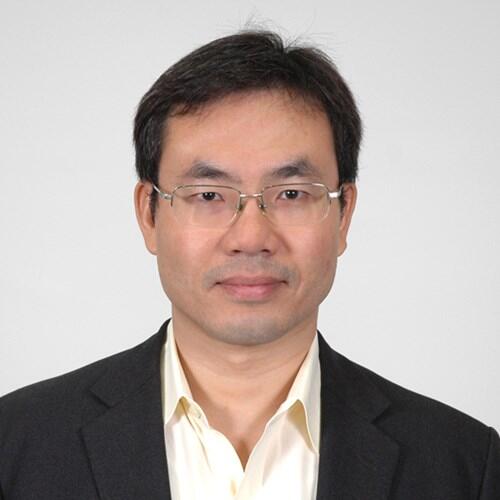
International Relations

FSI researchers strive to understand how countries relate to one another, and what policies are needed to achieve global stability and prosperity. International relations experts focus on the challenging U.S.-Russian relationship, the alliance between the U.S. and Japan and the limitations of America’s counterinsurgency strategy in Afghanistan.

Foreign aid is also examined by scholars trying to understand whether money earmarked for health improvements reaches those who need it most. And FSI’s Walter H. Shorenstein Asia-Pacific Research Center has published on the need for strong South Korean leadership in dealing with its northern neighbor.

FSI researchers also look at the citizens who drive international relations, studying the effects of migration and how borders shape people’s lives. Meanwhile FSI students are very much involved in this area, working with the United Nations in Ethiopia to rethink refugee communities.

Trade is also a key component of international relations, with FSI approaching the topic from a slew of angles and states. The economy of trade is rife for study, with an APARC event on the implications of more open trade policies in Japan, and FSI researchers making sense of who would benefit from a free trade zone between the European Union and the United States.

-

How has the May 2014 coup in Thailand affected the country’s foreign policy? Has the junta realigned Thailand toward China and away from the US?  Some Western governments reacted to the coup by criticizing the military government of prime minister cum army general General Prayuth Chan-o-cha and subjecting it to downgrades and penalties. Washington bluntly called on the junta to return power to the Thai people. In reply, hoping to lessen the effects of Western pressure, Prayuth tried to diversify Thailand’s links and options in foreign affairs, including strengthening relations with nearby China, and with Myanmar, Cambodia, and Japan.

A January 2015 visit to Bangkok by US assistant secretary for East Asian and Pacific affairs Daniel R. Russel did not improve US-Thai relations. When Russel called on the junta to lift marshal law, the junta told him to mind his own business. Yet president Obama has not revoked Thailand’s status as Washington’s “major non-NATO treaty ally” nor has Prayuth aligned his country fully with Beijing. Pavin will sketch the changing contours of these among other relationships and relate their tenor and prospects to the political crisis that continues to unfold in Thailand.

Image
pavin4x6
Pavin Chachavalpongpun is an associate professor at the Center for Southeast Asian Studies in Kyoto University. His many publications include Reinventing Thailand: Thaksin and His Foreign Policy (2010) and A Plastic Nation: The Curse of Thainess in Thai-Burmese Relations (2005). He is chief editor of the multilingual on-line Kyoto Review of Southeast Asia. His PhD is from the University of London School of Oriental and African Studies. Following his fierce criticism of the 2014 coup in his country, the junta twice summoned him to Bangkok. Rather than comply, he reaffirmed his opposition to the coup. A warrant was eventually issued for his arrest, his Thai passport was revoked, and he was obliged to apply for refugee status in Japan.

Pavin Chachavalpongpun 2015-16 Lee Kong Chian National University of Singapore-Stanford University Distinguished Fellow on Southeast Asia
Seminars
-

Co-sponsored by the Japan Program

Prof. Booth will assess the socioeconomic consequences of Japanese colonialism in Taiwan, Korea, and Manchuria from 1910 to 1945. She will compare Japan’s policies with those implemented by other colonial powers in South and Southeast Asia. In particular she will address the writings of what has been termed the “Stanford School”—an influential group of scholars who published widely on Japanese colonial policies over the last fifty years. Their work has been used to support the argument that Japanese rule was more developmental than that of other colonial powers, and that it laid the foundations for the stellar economic performance of Taiwan and the Republic of Korea in the decades after 1950. She will challenge these conclusions by comparing economic and social indicators for Korea, Taiwan, and Manchuria with those from other Asian colonies and also from Thailand. While Japan’s colonies, especially Taiwan, do score well on some indicators, they do less well on others. The notion that Japanese rule was exceptionally “developmental” does not merit support.

Image
anne booth
Anne Booth has been an Asia-focused professor of economics in the School of Oriental and African Studies, University of London, since 1991. She studies the modern economic history of Southeast Asia with emphasis on the 20th century. Her many writings in this field include Colonial Legacies: Economic and Social Development in East and Southeast Asia. Her latest book, Economic Change in Modern Indonesia, is due from Cambridge University Press in April. Before coming to SOAS, she held research and teaching positions in Singapore and Australia. Her degrees are from Victoria University of Wellington (BA) and the Australian National University (PhD). Before 1991 she held research and teaching positions in Singapore and Australia. She grew up in New Zealand.

Anne Booth 2015-16 NUS-Stanford Lee Kong Chian Distinguished Fellow on Southeast Asia, Stanford University 2015-16 NUS-Stanford Lee Kong Chian Distinguished Fellow on Southeast Asia, Stanford University
Seminars
-

Last Tuesday in the hotly contested South China Sea (SCS), ignoring fierce objections coming from China, the American guided-missile destroyer USS Lassen cruised within 12 nautical miles of Subi and Mischief Reefs.   One day later, in The Hague, the Permanent Court of Arbitration ruled unanimously that it does have jurisdiction over a “suit” brought by the Philippines against China regarding China’s claims in the SCS.  The court must now approve or reject Manila’s position that Beijing’s (in)famous “nine-dash line” (actually now a ten-dash line) is incompatible with the UN Convention on the Law of the Sea—that the line is, in effect, illegal under international law.  The court must also adjudicate Manila’s additional request for rulings on the status of certain land features in the SCS that are controlled by Beijing.  Beijing’s efforts to prevent the maritime penetration and the judicial judgment have failed.

Will these events be remembered as having marked the start of a Sino-American Cold War II?  What do they imply for China’s relations with the five other parties that claim land features and/or sea space there, i.e. Brunei, Malaysia, Philippines, Taiwan, and Vietnam?  Was the US wrong to have breached China’s red lines and the court also wrong to have accepted jurisdiction?  Why?  Why not?  And how will these events impact the imminent Association of Southeast Asian Nations Summit and Related Summits, as well as the Asia Pacific Economic Cooperation Leaders Meeting—gatherings to be held, respectively, in Kuala Lumpur and Manila between 18 and 22 November?

Image
don photo
Donald K. Emmerson is a Senior Fellow Emeritus in the Freeman Spogli Institute for International Studies (FSI).  At Stanford he also works with the Center on Democracy, Development, and the Rule of Law and the Abbasi Program in Islamic Studies.  His latest writing on the SCS is “Reading between the Lines: China & the South China Sea,” CSIS cogitASIA [Washington, DC], 21 July 2015, http://cogitasia.com/reading-between-the-lines-china-the-south-china-sea/.  Before coming to Stanford, he taught at the University of Wisconsin-Madison.  His degrees are from Yale (Phd) and Princeton (BA).

0
Senior Fellow Emeritus at the Freeman Spogli Institute for International Studies
Affiliated Faculty, CDDRL
Affiliated Scholar, Abbasi Program in Islamic Studies
aparc_dke.jpg PhD

At Stanford, in addition to his work for the Southeast Asia Program and his affiliations with CDDRL and the Abbasi Program in Islamic Studies, Donald Emmerson has taught courses on Southeast Asia in East Asian Studies, International Policy Studies, and Political Science. He is active as an analyst of current policy issues involving Asia. In 2010 the National Bureau of Asian Research and the Woodrow Wilson International Center for Scholars awarded him a two-year Research Associateship given to “top scholars from across the United States” who “have successfully bridged the gap between the academy and policy.”

Emmerson’s research interests include Southeast Asia-China-US relations, the South China Sea, and the future of ASEAN. His publications, authored or edited, span more than a dozen books and monographs and some 200 articles, chapters, and shorter pieces.  Recent writings include The Deer and the Dragon: Southeast Asia and China in the 21st Century (ed., 2020); “‘No Sole Control’ in the South China Sea,” in Asia Policy  (2019); ASEAN @ 50, Southeast Asia @ Risk: What Should Be Done? (ed., 2018); “Singapore and Goliath?,” in Journal of Democracy (2018); “Mapping ASEAN’s Futures,” in Contemporary Southeast Asia (2017); and “ASEAN Between China and America: Is It Time to Try Horsing the Cow?,” in Trans-Regional and –National Studies of Southeast Asia (2017).

Earlier work includes “Sunnylands or Rancho Mirage? ASEAN and the South China Sea,” in YaleGlobal (2016); “The Spectrum of Comparisons: A Discussion,” in Pacific Affairs (2014); “Facts, Minds, and Formats: Scholarship and Political Change in Indonesia” in Indonesian Studies: The State of the Field (2013); “Is Indonesia Rising? It Depends” in Indonesia Rising (2012); “Southeast Asia: Minding the Gap between Democracy and Governance,” in Journal of Democracy (April 2012); “The Problem and Promise of Focality in World Affairs,” in Strategic Review (August 2011); An American Place at an Asian Table? Regionalism and Its Reasons (2011); Asian Regionalism and US Policy: The Case for Creative Adaptation (2010); “The Useful Diversity of ‘Islamism’” and “Islamism: Pros, Cons, and Contexts” in Islamism: Conflicting Perspectives on Political Islam (2009); “Crisis and Consensus: America and ASEAN in a New Global Context” in Refreshing U.S.-Thai Relations (2009); and Hard Choices: Security, Democracy, and Regionalism in Southeast Asia (edited, 2008).

Prior to moving to Stanford in 1999, Emmerson was a professor of political science at the University of Wisconsin-Madison, where he won a campus-wide teaching award. That same year he helped monitor voting in Indonesia and East Timor for the National Democratic Institute and the Carter Center. In the course of his career, he has taken part in numerous policy-related working groups focused on topics related to Southeast Asia; has testified before House and Senate committees on Asian affairs; and been a regular at gatherings such as the Asia Pacific Roundtable (Kuala Lumpur), the Bali Democracy Forum (Nusa Dua), and the Shangri-La Dialogue (Singapore). Places where he has held various visiting fellowships, including the Institute for Advanced Study and the Woodrow Wilson International Center for Scholars. 


Emmerson has a Ph.D. in political science from Yale and a BA in international affairs from Princeton. He is fluent in Indonesian, was fluent in French, and has lectured and written in both languages. He has lesser competence in Dutch, Javanese, and Russian. A former slam poet in English, he enjoys the spoken word and reads occasionally under a nom de plume with the Not Yet Dead Poets Society in Redwood City, CA. He and his wife Carolyn met in high school in Lebanon. They have two children. He was born in Tokyo, the son of U.S. Foreign Service Officer John K. Emmerson, who wrote the Japanese Thread among other books.

Selected Multimedia

Date Label
Director, Southeast Asia Program, Shorenstein APARC
Seminars
-

Co-sponsored by the Stanford Center for International Development

In 1986 then-Stanford professor Moses Abramovitz argued in a seminal article that all countries that are relatively backward in their levels of productivity had the potential for rapid advance, and indeed could quickly catch up with the leading economies if they could realize that potential. Their ability to catch up was to a large extent determined by their “social capability.” Although a number of European economies and Japan had narrowed the productivity gap with the USA in the post-1950 era, few low or middle income economies had managed to do this. Prof. Booth will examine the record inside Southeast Asia, where the gap in per capita GDP between Singapore and Malaysia compared with the region’s other economies has not narrowed much since 1960, and compared with some of them has actually widened. A particular puzzle concerns the Philippines, which was well ahead on most economic and social indicators in 1960 compared with Thailand and Indonesia, but fell behind over the ensuing 50+ years. Prof. Booth will explore the reasons for this.

Image
anne booth
Anne Booth has been an Asia-focused professor of economics in the School of Oriental and African Studies, University of London, since 1991. She studies the modern economic history of Southeast Asia with emphasis on the 20th century. Her many writings in this field include Colonial Legacies: Economic and Social Development in East and Southeast Asia. Her latest book, Economic Change in Modern Indonesia, is due from Cambridge University Press in April. Before coming to SOAS, she held research and teaching positions in Singapore and Australia. Her degrees are from Victoria University of Wellington (BA) and the Australian National University (PhD). Before 1991 she held research and teaching positions in Singapore and Australia. She grew up in New Zealand.

Anne Booth 2015-16 NUS-Stanford Lee Kong Chian Distinguished Fellow on Southeast Asia, Stanford University
Seminars
-

For more than two decades the Association of Southeast Asian Nations has been at the center of multilateral arrangements for security in the Asia-Pacific. That keystone role has gained global support. In 2010 Secretary of State Clinton called ASEAN “the fulcrum of regional architecture”; in 2014 her successor said, “We must continue to support ASEAN’s centrality.” The governments of China, Japan, India, and Australia, among many others, have joined the chorus of support for ASEAN’s linchpin role. What explains ASEAN’s success?

Prof. Vuving’s answer is threefold: In the first place, ASEAN’s hard power weakness is a diplomatic strength, captured in the legitimacy of cooperative norms such as “open regionalism” and the “ASEAN Way.” Second, ASEAN’s location and character as an autonomous but inoffensive actor between Northeast and South Asia, between China and the United States, and between the Pacific and Indian Oceans allows it to play a “bridging” role between different geopolitical zones and potentially rival players.  Third, this bridging position has proven useful in managing changes in the relative power and status of major Asian-Pacific states. Prof. Vuving will also suggest that the unity of ASEAN’s own member states is less critical to ASEAN centrality than commonly thought.

Image
alex vuving
Alexander L. Vuving’s teaching, research, and consulting encompass topics such as Asian security, the rise of China, Chinese strategy, Vietnamese politics and foreign policy, Southeast Asia’s international relations, the South China Sea dispute, and the concept of soft power. He has published widely on these subjects and is a frequent media interviewee. He is a member of the editorial boards of the journals Asian Politics and Policy and Global Discourse. He received his PhD in political science from the Johannes Gutenberg University in Germany and has been a post-doctorate fellow and research associate at Harvard University.

Alexander L. Vuving Professor, Daniel K. Inouye Asia-Pacific Center for Security Studies, Honolulu
Seminars
-

Taiwan’s claims in the South China Sea are often regarded as virtually indistinguishable from China’s. On paper, Taiwan and China appear to be making substantially the same claims and the controversial U-shaped dashed line may be found on ROC and PRC maps alike. Neither government has officially clarified the dashed line’s meaning or assigned its coordinates.

Dr Kuok, however, argues that Taiwan has in the past year taken small but significant steps toward clarifying its claims. It has also adopted a more conciliatory approach best illustrated by President Ma’s official launch of a South China Sea Peace Initiative in May 2015. These moves imply possible daylight between Taiwan and China regarding the South China Sea. Dr. Kuok will examine these developments, as well as the costs, benefits, and chances of widening or narrowing that daylight in the larger context of Taipei-Beijing relations, domestic considerations including the January 2016 election in Taiwan, and the responses of other actors in the region.

Image
kuokl 1x1
Lynn Kuok’s latest publication is Tides of Change: Taiwan’s Evolving Position in the South China Sea (2015). She was recently a senior visiting fellow at the Centre for International Law (Singapore), and has held fellowships at the Harvard Kennedy School and the Center for Strategic and International Studies. Her research interests include ethnic and religious relations and nationalism in Southeast Asia and the politics and security of the Asia-Pacific region. She has served as editor-in-chief of the Cambridge Review of International Affairs and the Singapore Law Review. She holds degrees from the University of Cambridge (PhD), the Fletcher School of Law and Diplomacy (MALD), and the National University of Singapore (LLB).

Lynn Kuok Center for East Asia Policy Studies, Brookings Institution
Seminars
News Type
News
Date
Paragraphs

The Walter H. Shorenstein Asia-Pacific Research Center (APARC) at Stanford University is now accepting applications for the Shorenstein Postdoctoral Fellowship in Contemporary Asia, an opportunity made available to two junior scholars for research and writing on Asia.

Fellows conduct research on contemporary political, economic or social change in the Asia-Pacific region, and contribute to Shorenstein APARC’s publications, conferences and related activities. To read about this year’s fellows, please click this link.

The fellowship is a 10-mo. appointment during the 2016-17 academic year, and carries a salary rate of $52,000 plus $2,000 for research expenses.

For further information and to apply, please click this link. The application deadline is Dec. 15, 2015.

Hero Image
Encina Hall arches
All News button
1
-

Prof. Pavin will explain the concept of “neo-royalism” that Thai royalists have promoted; relate it to the present twilight of King Bhumibol Adulyadej’s long reign; and use it to forecast the future of the royal institution in Thailand. Pavin will assess the prospects of the king-in-waiting, Vajiralongkorn, and imagine the position of a new monarch in a new political environment. He will portray “neo-royalism” as a dangerous entrapment for Bhumibol’s successor and for the monarchy itself. The undemocratic nature of royal power is incompatible with the country’s changing political landscape. If Vajiralongkorn inherits the throne, he may try to consolidate top-down power, risking failure and rejection. Alternatively, he could reform the monarchy by placing it clearly within constitutional bounds. Recent evidence suggests that he may play an activist role.

Image
pavin4x6
Pavin Chachavalpongpun is an associate professor at the Center for Southeast Asian Studies in Kyoto University. His many publications include Reinventing Thailand: Thaksin and His Foreign Policy (2010) and A Plastic Nation: The Curse of Thainess in Thai-Burmese Relations (2005), and he is chief editor of the multilingual on-line Kyoto Review of Southeast Asia.  His PhD is from the University of London School of Oriental and African Studies.

Following Pavin’s fierce criticism of the May 2014 military coup in Thailand, the junta twice summoned him to Bangkok. He did not comply; instead, he reaffirmed his opposition to the coup. A warrant was eventually issued for his arrest, his Thai passport was revoked, and he was obliged to apply for refugee status in Japan.

Philippines Conference Room

Encina Hall, 3rd Floor central

616 Serra Street

Stanford, CA 94305

Pavin Chachavalpongpun 2015-16 Lee Kong Chian National University of Singapore-Stanford University Distinguished Fellow on Southeast Asia
Seminars
Encina Hall E301616 Serra StreetStanford, CA94305-6055
(650) 724-5595 (650) 723-6530
0
Pavin_Chachavalpongpun.png Ph.D.

Pavin Chachavalpongpun joins the Walter H. Shorenstein Asia-Pacific Research Center (Shorenstein APARC) during the 2015-2016 academic year from the Center for Southeast Asian Studies at Kyoto University, where he serves as associate professor.

His research interests include Thailand's domestic political and international relations, particularly the role of the Thai monarchy in the political domain in the past decades; politics of Myanmar and Indochinese states; politics of ASEAN; and the concept of nationalism and its relevance to domestic and foreign policy. During his time at Shorenstein APARC, Pavin will work on the concept of neo-royalism and the future of the Thai monarchy--an issue which is important at this critical juncture of the royal succession in Thailand.  Pavin is the author of two books: "A Plastic Nation: The Curse of Thainess in Thai-Burmese Relations" and "Reinventing Thailand: Thaksin and His Foreign Policy". He is also a chief editor of the online journal Kyoto Review of Southeast Asia. After the coup of 2014, Pavin was twice summoned by the Thai military for his critical comments on its political intervention. Denying the legitimacy of the coup, Pavin rejected the summons. Shortly afterwards, a warrant was issued for his arrest and his passport was revoked. This situation forced him to apply for a refugee status with Japan. Pavin received his PhD from the School of Oriental and African Studies, University of London. He earned his BA from the Department of Political Science, Chulalongkorn University, Thailand.
2015-16 Lee Kong Chian NUS-Stanford Distinguished Fellow on Contemporary Southeast Asia
Subscribe to International Relations