
 FSI researchers strive to understand how countries relate to one another, and what policies are needed to achieve global stability and prosperity. International relations experts focus on the challenging U.S.-Russian relationship, the alliance between the U.S. and Japan and the limitations of America’s counterinsurgency strategy in Afghanistan.
Foreign aid is also examined by scholars trying to understand whether money earmarked for health improvements reaches those who need it most. And FSI’s Walter H. Shorenstein Asia-Pacific Research Center has published on the need for strong South Korean leadership in dealing with its northern neighbor.
FSI researchers also look at the citizens who drive international relations, studying the effects of migration and how borders shape people’s lives. Meanwhile FSI students are very much involved in this area, working with the United Nations in Ethiopia to rethink refugee communities.
Trade is also a key component of international relations, with FSI approaching the topic from a slew of angles and states. The economy of trade is rife for study, with an APARC event on the implications of more open trade policies in Japan, and FSI researchers making sense of who would benefit from a free trade zone between the European Union and the United States.


Thailand’s China Policy: Succumbing to Soft Power or Bending with the Wind?
-
Please note event's venue has changed to the Philippines conference room
Conditions of Entry:
Valid photo ID required all of attendees
No posters are allowed
No noise makers are allowed
On the surface, Thai-China relations have never been better, as the two countries work to raise their ties to a higher and broader plane. A five-year plan for strategic cooperation now under negotiation covers political, military, and security affairs; multi-sectoral trade and investment; health, education, information, technology, and culture; and regional and multilateral foreign policy. China is comfortable working with the military government that has ruled Thailand since 2014, and vice versa.
Beijing credits the exercise of Chinese “soft power” in Southeast Asia with having improved Thai views of China. Analysts characterize the warming as a new version of Thailand’s old habit of adapting to powerful outsiders by “bending with the wind.” Prof. Pavin will argue that, although the application of soft power has helped China’s cause in Thailand, it is not the main reason for the present warming of ties between the two countries. Indeed, in the long run, Chinese soft power could prove disastrous for Thailand.
Pavin Chachavalpongpun is currently a visiting scholar at the University of California-Berkeley’s Center for Southeast Asia Studies. He was recently at Stanford as a Lee Kong Chian NUS-Stanford Distinguished Fellow on Contemporary Southeast Asia (2015-16). His many publications include Good Coup Gone Bad: Thailand’s Political Development since Thaksin’s Downfall (edited, 2014); Reinventing Thailand: Thaksin and His Foreign Policy (2010); and A Plastic Nation: The Curse of Thainess in Thai-Burmese Relations (2005). He is the editor of the Kyoto Review of Southeast Asia. His PhD is from the University of London’s School of Oriental and African Studies (2003).Image

Pavin Chachavalpongpun
Associate Professor, Center for Southeast Asian Studies, Kyoto University
Seminars
The Arbitral Court’s Ruling on the South China Sea: Pros and Cons, Contexts and Consequences
-
Conflicting views of international law versus national interest are churning the South China Sea. In The Hague on 12 July 2016, an Arbitral Tribunal ruled in favor of the Republic of the Philippines and against the People’s Republic of China regarding the latter’s claims and behavior in the South China Sea. Beijing has denounced the decision and refuses to abide by it. The Philippines’ new and outspoken president has refused to press China toward compliance, seemingly preferring to seek economic benefits from China instead. The US and Japan, among other countries, have supported the ruling, but in a muted fashion, as if to avoid antagonizing China.
Did the Arbitral Court do the right or the wrong thing? Did the judges (in)correctly interpret the UN Convention on the Law of the Sea (UNCLOS)? Has the unwillingness of Manila and Washington to champion the court’s decision made the prospect of Beijing’s eventual dominance in Southeast Asia more likely? Has China’s self-assigned and so far successful impunity undermined global compliance with UNCLOS? Or does Beijing’s pragmatic emphasis on realpolitik over moralpolitik point the way toward a practical alleviation of tensions that global jurisprudence cannot achieve? And what if the court’s ruling were applied to other sweeping maritime claims to land features in the Pacific, including the exclusive economic zones drawn by Tokyo around Okinotorishima or by Washington around its mid-ocean “Minor Outlying Islands”? Would the US comply? And lastly: What next?
Image
 Jay L. Batongbacal and Yann-huei Song are internationally regarded experts on the Law of the Sea with extensive knowledge of and experience in maritime affairs. Prof. Batongbacal’s many publications include a recent chapter in Power, Law, and Maritime Order in the South China Sea (2015). His doctorate in Jurisprudential Science is from Dalhousie University (2010). Prof. Song’s many publications include a recent volume, The United States and Maritime Disputes in the South China Sea (2016). His doctorate in the Science of Law is from the University of California-Berkeley (2000).Image

Jay L. Batongbacal
Associate Professor, College of Law, and Director, Institute for Maritime Affairs and Law of the Sea, University of the Philippines, Manila, Philippines
Yann-huei Song
Research Fellow, Institute of European and American Studies, Academia Sinica, and Adjunct Professor, School of Law, Soochow University, Taipei, Taiwan
Seminars


Message from Shorenstein APARC Director Gi-Wook Shin
News Type
News
Date
Paragraphs
This past July, I returned from my sabbatical. During my eight months away from the Stanford campus, I was based in Korea at the Graduate School of International Studies of Seoul National University and traveled through many other parts of Asia. It allowed me to take a step back and reflect—it was the longest time I had spent in Korea since leaving for the United States as a graduate student in 1983.

While I have visited Korea many times on business and other matters, living there for an extended period of time was quite a different experience. Korea is certainly a place with lots of excitement and convenience but also concerns and worries.
What struck me most during my conversations with many colleagues and friends in Asia was a realization that they were all grappling with how to address and find breakthrough solutions to current societal challenges. They referred to numerous, interrelated problems arising from low birth rate, aging population, brain drain, pollution, political corruption and low cultural tolerance, to mention a few examples. Based on those conversations and my overall experience living in Korea, I am now preparing a book manuscript Korea seen from Inside and Outside.
Next Monday, we begin the new academic year at Stanford. And with that occasion, I extend my sincere thanks to colleagues who stepped in during my leave last year, in particular, to Takeo Hoshi who served as acting director.
Reengaging with academic writing and my duties as director has been invigorating. I remain convinced that Shorenstein APARC continues to play an important role in developing new knowledge and encouraging dialogue on policy-relevant challenges in contemporary Asia.
The Center will soon be launching a new multiyear research project, the New Asia Project, which aims to offer insight on the question: “what’s next for Asia?” Our faculty, fellows and researchers will delve into social, cultural and educational areas that could push Asia ahead. We will have completed our Divided Memories and Reconciliation Project after a decade of scholarly work on historical narratives of World War II in Asia. The Center will continue to convene seminars, workshops and conferences that bring together scholars, policymakers and regional experts from around the world and strive to make the multimedia available to all online.
Three postdoctoral scholars and four emerging and mid-career professionals are joining us this year as fellows. They carry a broad range of research interests—from hospital reform in Vietnam to the economic consequences of elite politics in China. The Center remains committed to nurturing a new generation of scholars and professionals working on Asia-Pacific issues. We also welcome a diverse cohort of Corporate Affiliate Visiting Fellows, who will work on ambitious research endeavors under the mentorship of our faculty.
Through our partnerships with Brookings Institution Press and Stanford University Press, we continue to publish our work. We have published 9 books in the past year and expect 4 books in the coming months. They include Divergent Memories, Challenges in the Process of China’s Urbanization and a translation from Korean of Peace on a Knife’s Edge, among other publications in leading journals and presses around the world.
The Center has changed quite a bit since I first began my directorship in 2005. We now have five vibrant research programs, one initiative and one corporate affiliate program. They are integral parts of the Center but also have emerged as robust entities in their own right. This year we will be celebrating the 10th anniversary of our China Program and Asia Health Policy Program.
For readers in Asia, a number of our faculty and fellows will be coming to Seoul and Tokyo for a public seminar series following the U.S. presidential election this November. A special alumni gathering will also be hosted in Seoul (Nov. 15) and Tokyo (Nov. 17). There will also be a conference on world-class universities on Nov. 4-5 at Stanford Center at Peking University. Stay tuned for an official announcement.
As I resume my duties as Center director, I look forward to another engaging year.
Gi-Wook Shin
Director
Hero Image

All News button
1
U.S.-Vietnam Relations Today and Tomorrow
-
Ambassador Osius will make remarks on U.S.-Vietnam relations in the wake of President Obama’s May 2016 visit. He will focus on the unfinished task of reconciliation. Relations were normalized in 1995. Yet many in Vietnam’s diaspora community, especially those most affected by the legacies of the war, oppose rapprochement and engagement. Overseas communities can play important and constructive roles in relations between their countries of origin and the rest of the world. Ambassador Osius will argue that a fully engaged Vietnamese-American community could and would contribute a lot toward growing the U.S. partnership with Vietnam, including helping to shape a beneficial future of greater trade, improved regional stability, and an expanded role for civil society.
Ted Osius is the sixth U.S. ambassador to Vietnam (December 2014-Present). Previously he was an associate professor and a senior fellow, respectively, at the National War College and the Center for Strategic and International Studies; deputy chief of mission at the U.S. Embassy in Jakarta; and political minister-counselor at the U.S. Embassy in New Delhi. His earlier career included service as regional environment officer for Southeast Asia and the Pacific in the U.S. State Department and as senior advisor on international affairs in the Office of the Vice President. Image

This event is co-sponsored by the U.S. - Asia Security Initiative and the Southeast Asia Program
Ted Osius
U.S. Ambassador to Vietnam
Seminars
Call for applications: Postdoctoral fellowship in contemporary Asia
News Type
News
Date
Paragraphs
The Shorenstein Asia-Pacific Research Center (APARC) at Stanford is now accepting applications for the Shorenstein Postdoctoral Fellowship in Contemporary Asia, an opportunity made available to two junior scholars for research and writing on Asia.
Fellows conduct research on contemporary political, economic or social change in the Asia-Pacific region, and contribute to Shorenstein APARC’s publications, conferences and related activities. To read about this year’s fellows, please click here.
The fellowship is a 10-mo. appointment during the 2017-18 academic year, and carries a salary rate of $52,000 plus $2,000 for research expenses.
For further information and to apply, please click here. The application deadline is Dec. 16, 2016.
Hero Image

All News button
1
Indonesia in the World Today: Seizing Opportunities, Tackling Challenges
-
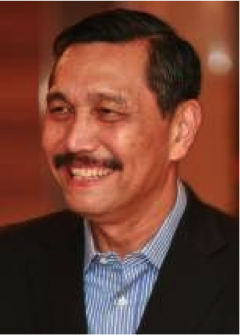
Since its formation in 2014, the administration of Indonesian President Joko Widodo (“Jokowi”) has faced opportunities and challenges in many sectors and on many issues: security and economy, terrorism and radicalism, maritime resources and incursions, not to mention foreign-policy dynamics with the US, China, and the rest of Southeast Asia. How has Indonesia responded to these chances and concerns? How will it manage them going forward? Few Indonesians are better equipped to address these questions than retired Brig. Gen. Pandjaitan, who has dealt with them daily since joining Jokowi’s administration in 2014 as the president’s chief of staff and in subsequent cabinet positions.
Image
Presentation slides
Luhut B. Pandjaitan
Coordinating Minister for Maritime Affairs, Republic of Indonesia
Seminars
Why does China want to control the South China Sea?
News Type
Commentary
Date
Paragraphs
The disputes over the South China Sea are complex, and they overlap and collide in complex ways. At stake are questions of ownership, demarcation, rights of passage, and access to resources—fish, oil, and gas. The resulting imbroglio implicates all six claimants, not only China but Brunei, Malaysia, the Philippines, Taiwan, and Vietnam as well. It is wrong to blame China alone for all that has happened in the South China Sea—nationalist moves, stalemated diplomacy, and the potential for escalation.
That said, no other claimant has come even close to matching the speed and scale of China’s efforts. In just two years, unannounced and unilateral acts of dredging and reclamation have created more than 3,200 acres of usable hard surface on the seven features that China occupies in the Spratlys. Ports, runways, buildings, and barracks have been built to accommodate military or civilian ships, planes, and personnel. Radar systems have been installed. Floating nuclear-energy platforms are envisioned.
Seen from Beijing, these are not matters of Chinese foreign policy. Under Chinese law, most of the South China Sea is part of Hainan province—in effect, a Chinese lake. In Beijing’s eyes, these vast waters and their bits of natural and artificial land are already in China’s possession and under its administration—a conviction embodied in the ban on foreigners who fish in them without China’s prior permission.
Without prior notification, surface-to-air missiles have been placed on Woody Island in the Chinese-controlled Paracels. Beijing may build Scarborough Reef into a third platform, completing a strategic triangle with the Spratlys and the Paracels. The resulting network of bases could undergird the declaration of an air defense identification zone designed to subject foreign aircraft to Chinese rules. These prospects cause anxiety not only far away in the United States, but also and especially nearby in Southeast Asia.
Malaysia, the Philippines, Taiwan, and Vietnam have also built on land features they control, including laying down runways. Southeast Asian claimants, too, have “legalized” their claims, as has Taiwan. Malaysia has turned an atoll in the Spratlys into a tourist resort. But these efforts have been dwarfed in quantity and quality by the massive and military dimensions of China’s campaign to push its southern boundary farther south and to augment and repurpose the rocks and reefs that it occupies or surrounds inside that new if officially still inexact national limit.
What does Beijing want in the South China Sea? The answer is: control. That answer raises additional questions: Will China actually gain control over the South China Sea? If not, why not, and if so, how? How much and what kind of control? Among varieties of dominance from the least to the most oppressive, many qualifying adjectives are possible. Minimal, superficial, selective, extractive, patronizing, censoring, demanding, suppressive, and despotic are but a few that come to mind, and fluctuations over time are possible across this spectrum from smiles to frowns in either direction.
For Asia and the wider world, the relevance of these uncertainties is clear. But the original, primary question—what China wants—can be retired, at least for now. It has been answered by China’s behavior. The notion that the government of China does not know what it wants in the South China Sea is no longer tenable. Its actual behavior says what it wants. It wants to control the South China Sea.
Obviously that body of water and its land features are not coterminous with Southeast Asia, nor with East Asia, Asia, Eurasia, or the Asia-Pacific, let alone the world. One can only speculate whether and how far the goal of control applies across any, some, or all of these concentric arenas of conceivable ambition. In those zones, why China wants control is still a fatally prejudicial—presumptive—question.
Not so in the South China Sea. In that setting, knowing the subjective motivations, objective causes, and announced reasons for Beijing’s already evident pursuit of control could help lower the risk of future actions and outcomes damaging to some or all of the parties concerned, not least among them China itself.
Three Fears and a Project
One answer to this “why control?” question runs thus:
Chinese historians who reflect on what China calls “the century of humiliation” know that the Western powers—British, French, American—entered China in ships across the South China Sea. It makes sense that China today, with that memory in mind, would want to protect its underbelly from maritime assault. Ignoring whether 19th and 21st century conditions are alike—they are not—one can then argue that China has been busy installing itself in the South China Sea for defensive rather than expansive reasons. Why not develop a forward position to discourage an American invasion? That is a generous interpretation of Beijing’s intent.
Less generously: The United States is not about to attack China, by sea, land, or air, and Beijing knows it. It is precisely that knowledge that has allowed China to entrench itself so successfully, acre by acre, runway by runway, missile by missile, without triggering a truly kinetic American response. Americans are still significantly involved in violent conflicts in Afghanistan and the Middle East. Americans are tired of war. Washington knows that it needs to cooperate with Beijing. Among the surviving would-be presidents, Hillary Clinton regrets voting for the Iraq War; ex-conscientious objector Bernie Sanders opposes war; and Donald Trump says he makes deals not wars. If Sino-American bloodshed is so unlikely, why would China want to militarize the South China Sea to defend itself against the U.S.?
Perhaps Beijing is trying to deter a threat that falls short of war, namely, containment. But Sino-American interactions are too many and too vital for an American president to want to quarantine the world’s most populous country and second-largest economy, even if that were possible, which it is not. The Obama administration wants China to be constructively engaged with others inside the existing global political economy. A cooperative, responsible China is in the interest of the United States and the planet.
Alongside war and containment is a third possible fear in Beijing: jingoism from within. China’s rulers have for years claimed nearly all of the South China Sea. They may now feel domestically pressured to deliver on that promise of possession, lest patriotic-populist nationalists in Chinese society fault them for not pushing the U.S. Seventh Fleet back toward Guam, if not beyond. Unrequited hyper-nationalism could doom the regime. But just how widespread in society is such a viscerally expansive view?
An April 2013 survey of Chinese public opinion by Andrew Chubb yielded surprisingly peaceable majorities of 61 and 57 percent who favored, respectively, “submitting [the South China Sea dispute] to UN arbitration” and “negotiating [the dispute] to reach a compromise.” In the same poll, however, a plurality of 46 percent did advocate “directly dispatching troops and not hesitating to fight a war.” There is also a chicken-or-egg question of causation: To what extent are adamantly nationalistic public opinions the officially fostered products of the government’s own inflexible—“indisputable”—positions? When Beijing builds ramparts in the South China Sea and challenges American ships and planes, is it hoping to replace destabilizing local grievances—air and water pollution, unsafe food, land seizures and evictions—with supportive pride in China’s maritime clout?
The patrolled opacity of China’s political system makes it hard to assess these hypothetical explanations of Beijing’s campaign to control the South China Sea. One, two, or all three of these rulers’ fears may variously feed Chinese bellicosity. But why should anxieties alone motivate Beijing? A fourth hypothesis sources Chinese behavior less in preemptive trepidation than in an optimistically proactive and renovating desire to establish a new Middle Kingdom that will enjoy primacy in Asia, parity with the United States, and eventual centrality throughout the world. Off-shore dominance in an area ringed by smaller, weaker states may be viewed by Beijing as a requisite step forward toward those more ambitious and longer-run versions and extensions of control. Among China’s regional inventions, the 21st Century Maritime Silk Road, the Asian Infrastructure Investment Bank, and the Xiangshan Forum may point in that direction.
Summary and Interpretation
Three fears and a project hardly exhaust the possible answers to the motivational question, nor are they mutually exclusive, and they do not conveniently sort themselves by order of importance. But they can be characterized and compared. The fear of re-humiliation harks backward; the fear of containment looks outward; the fear of disaffection turns inward. The project of renewal alone gazes forward. The fears may be necessary, but none is sufficient. If the Opium Wars had never been fought and lost, the autocratic leaders of China today would still have reasons to worry about the United States and their own people. If Obama’s “rebalance” to Asia had never occurred, China’s rulers would still remember history and fear disorder. In the absence of social unrest, temptations to avenge the imperialist past and challenge American supremacy would not disappear.
At the neuralgic core of each fear is a loss of control. What they collectively lack is a positive undertaking to establish control. In this sense, the fears rely on the project to achieve their satisfaction, just as the project needs the fears to motivate its execution. But the project is more than the sum of the fears. The positive vision of a Sinocentric order that overcomes the fears is itself also a motivation. If the fears push, the project pulls. Agree or not with this interpretation, it may merit preliminary attention when facing a less intellectual, more existential, and more prescriptive question posed by China’s maritime resolve. Aptly in view of China’s past, it is Lenin’s question: What is to be done?
Donald Emmerson is director of the Southeast Asia Program at the Shorenstein Asia-Pacific Research Center and a senior fellow emeritus in the Freeman Spogli Institute for International Studies.
This editorial was originally carried by The Diplomat on May 24, 2016, and reposted with permission.
Hero Image

All News button
1
China's strategy in the South China Sea
News Type
Commentary
Date
Paragraphs
In an editorial for The Asan Forum, Stanford scholar Donald Emmerson portrays China’s building of infrastructure on land features in the South China Sea as a strategy to gain control over the area incrementally, without triggering actual war. He says the strategy has, so far, succeeded in large part due to Beijing’s effective use of ambiguity and because fears of unwanted escalation have tended to outweigh fears of Chinese expansion. He argues in this context that a recent incident in Indonesian waters involving China’s coast guard is unlikely to cause a significant hardening of Jakarta’s posture toward Beijing.
The full editorial may be viewed by clicking here.
Hero Image

All News button
1