Governance

FSI's research on the origins, character and consequences of government institutions spans continents and academic disciplines. The institute’s senior fellows and their colleagues across Stanford examine the principles of public administration and implementation. Their work focuses on how maternal health care is delivered in rural China, how public action can create wealth and eliminate poverty, and why U.S. immigration reform keeps stalling. 

FSI’s work includes comparative studies of how institutions help resolve policy and societal issues. Scholars aim to clearly define and make sense of the rule of law, examining how it is invoked and applied around the world. 

FSI researchers also investigate government services – trying to understand and measure how they work, whom they serve and how good they are. They assess energy services aimed at helping the poorest people around the world and explore public opinion on torture policies. The Children in Crisis project addresses how child health interventions interact with political reform. Specific research on governance, organizations and security capitalizes on FSI's longstanding interests and looks at how governance and organizational issues affect a nation’s ability to address security and international cooperation.

Authors
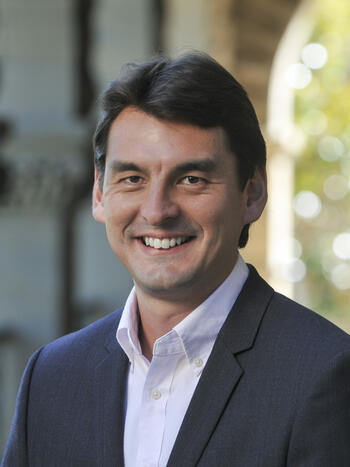
Kiyoteru Tsutsui
News Type
Commentary
Date
Paragraphs

On August 28, Japan’s Prime Minister Shinzo Abe announced that he will step down from the position, citing serious health concerns. What is his legacy and what lies ahead? Below, I list his three major accomplishments (hits) and disappointments (misses) and consider who is likely to succeed him.

Hit: Abe’s greatest accomplishment is that he kept winning elections and stayed in power, becoming the longest-serving prime minister in Japanese history. In a country where only one prime minister (Koizumi) lasted more than two years in the last three decades, this is a significant achievement. He started his (second) term in 2012 when Japan was still reeling from the triple disaster of 2011 and the mismanagement by the then-ruling Democratic Party of Japan (DPJ). He initially restored confidence in Japan, energized the economy with bold policies, and brought stability to Japanese politics. The weakening and eventual disintegration of the DPJ facilitated his streak of electoral victories, but he deserves credit for launching several policy initiatives to revitalize the stagnant and aging economic giant and for incorporating social welfare policies – many of which were proposed by opposition parties – to stave off dissatisfaction among voters. He raised the consumption tax rate twice and still won six straight elections, an amazing feat considering how past prime ministers faired after a tax hike.

Miss: Despite this long period as prime minister, it is not entirely clear that he accomplished major policy goals. Abenomics – Abe’s signature economic policy – reinvigorated the Japanese economy, shooting stocks up to great heights, but the economy as a whole did not grow any faster under his watch and per capita GDP shrank, exacerbating economic inequality. Revising the Constitution, widely seen as his ultimate goal as prime minister, did not come close to being a reality, even though he launched a number of trial balloons. Abe also proposed many new policy initiatives with catchy phrases – womanomics, work-life balance reform, reviving rural Japan, etc. – but was often criticized for producing only an impression that he is doing something (yatterukan) rather than actually getting things done.


Sign up for APARC newsletters to receive our experts' commentary and analysis.


Hit: Foreign policy was Abe’s strong suit. Having outserved most G7 leaders, his stature at international meetings rose to a height few Japanese prime ministers reached before. Overcoming the initial perception as a hawkish nationalist ideologue, he demonstrated savvy pragmatism in foreign affairs, developing strong relationships with the United States, particularly with President Trump, and recovering from the rocky start with President Xi to forge a practical partnership with China. His administration also passed a series of legislation that advanced realist security policies and popularized a vision of Free and Open Indo-Pacific, which other countries including the United States bought into. Furthermore, despite the U.S. withdrawal from the Trans-Pacific Partnership (TPP), Abe marched on and led the charge toward the Comprehensive and Progressive Agreement for Trans-Pacific Partnership (CPTPP), a rare example of Japan leading a multilateral agreement without support from the United States.

Miss: Yet, Abe failed to achieve some key foreign policy goals. The issue of abduction of Japanese by North Korea, which prompted him to national prominence when he was a young cabinet member under Prime Minister Koizumi, did not see any progress, nor did territorial negotiations with Russia – another foreign policy issue he expended a good deal of capital on. South Korea was another thorn on his side: the “comfort women” agreement could have been Abe’s major accomplishment, but domestic political turmoil in South Korea led to President Moon’s scuttling of the agreement, which sent the Japan-South Korea relations into a downward spiral. This development had more to do with South Korean politics than Abe, but he still could have tried to repair the damage. Instead, he threw in a towel on Moon and escalated tensions with South Korea, when the two countries should be close allies collaborating to cope with China’s assertiveness and the North Korean nuclear threat.

Hit: Abe’s cabinet accumulated enormous power over bureaucrats by holding authority on personnel decisions, which is critical in controlling them. This shift of power from bureaucrats to politicians was what the DPJ advocated when it became the ruling party. Abe nearly perfected this transfer of power and established a system under which the prime minister can take the initiative for new policies, going over opposition from career bureaucrats, and seek voters’ judgment about the merits of the policy in subsequent elections. This departs from decades of political practice in Japan, whereby bureaucrats set major policies, and most politicians merely parrot policy goals, which is unconducive to major policy changes needed to energize the stagnant economy and society. Abe leaves in place the cabinet apparatus that could empower the next prime minister to launch major policy initiatives.

Miss: The downside of the concentration of power is corruption. A series of scandals that revealed excessively cozy relationships between Abe and his supporters threatened Abe’s hold on power in the last few years. As is often the case, the coverup was worse than the initial infraction in the major financial scandals, and other transgressions challenged the public’s sense of fairness as Abe’s supporters – politicians, government officials, business leaders, journalists, or celebrities – allegedly received special treatment. The lack of accountability undermined Abe’s credibility toward the end, and the weakened administration struggled to handle the coronavirus crisis. Despite the relatively low numbers of coronavirus cases and victims in Japan, Abe received few applauses for his handling of the crisis. Even though his health was the main reason for his resignation, all these recent developments sapped the energy out of his cabinet, setting the stage for his resignation.

Who’s Next?

Abe’s abrupt departure prompted a number of party leaders to jockey for the successor position. As of this writing, Chief Cabinet Secretary Yoshihide Suga has all but secured the position, having picked up support from key factions within the ruling LDP. Fumio Kishida and Shigeru Ishiba will remain on the ballot but other major candidates such as Defense Minister Taro Kono have decided not to run this time.

Suga has been the most important partner for Abe in the cabinet along with Deputy Prime Minister Aso, contributing to the consolidation of power in the cabinet and executing various policy initiatives and legislative successes. Suga would likely carry forward many of Abe’s key policies, and with his tactical savvy and the potent cabinet apparatus that he helped create, has the potential to become a powerful prime minister. On the other hand, he would only have a year before the next election for LDP presidency (because he would be filling Abe’s remaining term) and he would have to account for Abe’s negative legacies, in some of which he is seen as complicit. These factors lead many observers to predict a short stint for him, but Suga is a scrappy self-made man who rose from a modest background, and his political instincts and already strong hold on power are not to be underestimated.

Read More

Shinzo Abe speaking from a lectern
Commentary

Reflections on the Assassination of Former Prime Minister of Japan Shinzo Abe

Abe was one of the most transformative political leaders in modern Japanese history, and his passing will change Japanese politics in a number of ways, most immediately shaking up internal politics within the ruling Liberal Democratic Party. To honor Abe’s legacy, we all need to reassert our resolve to protect our democracy in Japan, the United States, and all over the world.
Reflections on the Assassination of Former Prime Minister of Japan Shinzo Abe
The Japanese delegation onboard the USS Missouri during the surrender ceremony on September 2, 1945.
Q&As

How WWII Continues to Shape Regional and International Relations in Asia

In an interview with Stanford News, Gi-Wook Shin, the director of APARC and the Korea Program, describes how divergent perspectives on the legacies of WWII continue to shape different understandings of history and impact inter-Asia and U.S.-Asia relations.
How WWII Continues to Shape Regional and International Relations in Asia
A young boy prays after releasing a floating lantern onto the Motoyasu River in front of the Atomic Bomb Dome in Hiroshima, Japan.
Commentary

Why the US-Japan Partnership Prospered Despite Hiroshima and Nagasaki

There has been little diplomatic conflict between the United States and Japan over the atomic bombings of Hiroshima and Nagasaki during WWII, but that stability could change in the future, writes Japan Program Director Kiyoteru Tsutsui in an op-ed for The Hill.
Why the US-Japan Partnership Prospered Despite Hiroshima and Nagasaki
Hero Image
Japanese Prime Minister Shinzo Abe speaks at a podium with audience seen at the front
TOKYO, JAPAN - AUGUST 28: Japanese Prime Minister Shinzo Abe speaks during a press conference at the prime minister official residence on August 28, 2020 in Tokyo, Japan. Prime Minister Shinzo Abe announced his resignation due to health concerns.
Franck Robichon - Pool/Getty Images
All News button
1
Subtitle

Despite this long period as prime minister, it is not entirely clear that Abe accomplished major policy goals.

News Type
News
Date
Paragraphs

As the COVID-19 pandemic continues to take massive tolls on lives and livelihoods at home and abroad, students have been thrown into turmoil and are facing uncertainties about funding, graduation, research opportunities, and career choices. At Shorenstein APARC, we are committed to supporting Stanford students as best we can. We are therefore announcing today new quarter-long research assistantships for current undergraduate and graduate students working in the area of contemporary Asia. These opportunities are in addition to our recent internship and fellowship offerings.

Guidelines

Shorenstein APARC is seeking to hire motivated and dedicated undergraduate and graduate students as paid research assistants who will work with assigned APARC faculty members on projects focused on contemporary Asia, studying varied issues related to the politics, economies, populations, security, foreign policies, and international relations of the countries of the Asia-Pacific region.

2020-21 research assistant positions will be offered in the fall, winter, spring, and summer quarters. We expect to hire up to 10 research assistants per quarter.

Application Cycles
Students should submit their applications by the following deadlines:

  • Applications for fall 2020 by September 1, 2020;
  • Applications for winter 2020 by December 1, 2020;
  • Applications for spring 2021 by March 1, 2021.
     

The positions are open to current Stanford students only. Undergraduate- and graduate-level students are eligible to apply.

All positions will be up to 15 hours per week for undergraduate students and up to 20 hours per week for graduate students (minimum of 10 hours per week). The hourly pay rate is $17 for undergraduate students, $25 for graduate students.

Hiring is contingent upon verification of employment eligibility documentation.

The fall-quarter employment start date is September 16, 2020.

Successful candidates may request appointment renewal for a consecutive quarter.

Apply Now

  • Complete the application form and submit it along with these 3 required attachments:
  • Arrange for a letter of recommendation from a faculty to be sent directly to APARC. Please note: the faculty members should email their letters directly to Kristen Lee at kllee@stanford.edu.
     

We will consider only applications that include all supporting documents.

Read More

A young boy prays after releasing a floating lantern onto the Motoyasu River in front of the Atomic Bomb Dome in Hiroshima, Japan.
Commentary

Why the US-Japan Partnership Prospered Despite Hiroshima and Nagasaki

There has been little diplomatic conflict between the United States and Japan over the atomic bombings of Hiroshima and Nagasaki during WWII, but that stability could change in the future, writes Japan Program Director Kiyoteru Tsutsui in an op-ed for The Hill.
Why the US-Japan Partnership Prospered Despite Hiroshima and Nagasaki
Hero Image
Encina Courtyard Rod Searcey
All News button
1
Subtitle

To support Stanford students working in the area of contemporary Asia, the Shorenstein Asia-Pacific Center is offering research assistant positions for the fall, winter, and spring quarters of the 2020-21 academic year.

Shorenstein APARC
Encina Hall
616 Jane Stanford way
Stanford, CA 94305-6055

(650) 723-2408
0
Senior Fellow at the Freeman Spogli Institute for International Studies
Professor of Sociology
Henri H. and Tomoye Takahashi Professor and Senior Fellow in Japanese Studies at the Shorenstein Asia-Pacific Research Center
Kiyo Tsutsui1_0.jpg PhD

Kiyoteru Tsutsui is the Henri H. and Tomoye Takahashi Professor and Senior Fellow in Japanese Studies at the Walter H. Shorenstein Asia-Pacific Research Center (APARC), the director of APARC and of the Japan Program at APARC, co-director of the Southeast Asia Program at APARC, executive director of the Inter-University Center for Japanese Language Studies, co-director of the Center for Human Rights and International Justice, senior fellow at the Freeman Spogli Institute for International Studies, and professor of sociology, all at Stanford University.

Prior to his appointment at Stanford in July 2020, Tsutsui was professor of sociology, director of the Center for Japanese Studies, and director of the Donia Human Rights Center at the University of Michigan, Ann Arbor.

Tsutsui’s research interests lie in political/comparative sociology, social movements, globalization, human rights, and Japanese society. More specifically, he has conducted (1) cross-national quantitative analyses on how human rights ideas and instruments have expanded globally and impacted local politics and (2) qualitative case studies of the impact of global human rights on Japanese politics. His current projects examine (a) changing conceptions of nationhood and minority rights in national constitutions and in practice, (b) populism and the future of democracy, (c) experimental surveys on public understanding about human rights, (d) campus policies and practices around human rights, (e) global expansion of corporate social responsibility and its impact on corporate behavior, and (f) Japan’s public diplomacy and perceptions about Japan in the world.

His research on the globalization of human rights and its impact on local politics has appeared in American Sociological Review, American Journal of Sociology, Social Forces, Social Problems, Journal of Peace Research, Journal of Conflict Resolution, and other social science journals. His book publications include Rights Make Might: Global Human Rights and Minority Social Movements in Japan (Oxford University Press 2018), and two co-edited volumes Corporate Social Responsibility in a Globalizing World (with Alwyn Lim, Cambridge University Press 2015) and The Courteous Power: Japan and Southeast Asia in the Indo-Pacific Era (with John Ciorciari, University of Michigan Press forthcoming). He has been a recipient of National Endowment for the Humanities Fellowship, National Science Foundation grants, the SSRC/CGP Abe Fellowship, Stanford Japan Studies Postdoctoral Fellowship, and other grants as well as awards from American Sociological Association sections on Global and Transnational Sociology (2010, 2013, 2019), Human Rights (2017, 2019), Asia and Asian America (2018, 2019), Collective Behavior and Social Movements (2018), and Political Sociology (2019). 

Tsutsui received his bachelor’s and master’s degrees from Kyoto University and earned an additional master’s degree and Ph.D. from Stanford’s sociology department in 2002.

Director, Shorenstein Asia-Pacific Research Center (APARC)
Director, Japan Program at Shorenstein APARC
Co-Director, Southeast Asia Program at Shorenstein APARC
Executive Director, Inter-University Center for Japanese Language Studies
Co-Director, Center for Human Rights and International Justice
CV
Date Label
Authors
News Type
News
Date
Paragraphs

The Walter H. Shorenstein Asia-Pacific Research Center (APARC) condemns the systemic nature and brutal expression of racism in the United States, and we stand in full support of protestors and civil rights organizations in their calls for social justice, equal access to basic rights, and accountability. Beyond reaffirming our commitment to these values, we recognize the imperative to do better as an institution and the urgent need to take concrete action to build a more inclusive community here at our Stanford home. We have joined our colleagues at the Freeman Spogli Institute for International Studies in developing specific steps towards that goal. But we also want to take initial, immediate action in moving from protest to progress.

That’s why we are announcing today a new diversity grant to support Stanford students from underrepresented minorities with an interest in studying issues related to contemporary Asia. The field of Asian studies suffers from an extreme paucity of students, scholars, and experts who self-identify as Black/African American or as affiliated with other underrepresented minority groups. “The path towards a more diverse and inclusive field isn’t easy or straightforward, but we must get on it,” says APARC Director and FSI Senior Fellow Gi-Wook Shin. “We believe that we can tackle the existing disparity if relevant stakeholders across institutes of higher learning all work together. APARC is looking to start this change at Stanford.”

Lowering Barriers to Diversity in Asian Studies

The purpose of the APARC Diversity Grant is to encourage Stanford students from underrepresented minorities (URM) to engage in study and research of topics related to contemporary Asia and U.S.-Asia relations, including economic, health, foreign policy, social, political, and security issues. We follow the University’s definition of the URM category as encompassing “all U.S. citizens and permanent residents who have self-identified as American Indian/Alaska Native, Black/African American, Hispanic/Latino, Native Hawaiian/Other Pacific Islander.” This grant opportunity is open to current Stanford undergraduate and graduate students in the URM category from any major or discipline. “This is just a small step to start lowering disciplinary, cultural, and funding barriers that hinder broader student participation in Asian studies,” notes Shin.

APARC will award a maximum of $10,000 per grant to support a wide range of research expenses such as travel to/from research sites, academic conferences, and workshops (dependent on COVID-19 restrictions); conference registration fees; professional development training programs; purchase of physical and digital books or other required materials; and access to relevant online resources. APARC will review grant applications for projects taking place in winter/spring 2021 on a rolling basis starting on September 1, 2020. Reviews of the second round of applications, for projects taking place in summer/fall 2021, will begin on April 1, 2021.

Examples of research topics, in addition to those that Asia scholars typically study, could include China’s growing activities in Africa; understanding the evolving relations between Asian Americans and African Americans in the United States; and comparative examinations of issues such as the treatment of minorities in Asia and the United States or policies that promote anti-discriminatory practices in schools, the workplace, and other settings in Asian countries and the United States.

Application Guidelines

  • Complete the application form and submit it along with these three (3) attachments:
    • A statement (no more than three pages) describing the proposed research activity or project;
    • A current CV;
    • An itemized budget request explaining research expense needs.
  • Arrange for a letter of recommendation from a faculty to be sent directly to APARC. Please note: the faculty members should email their letters directly to Kristen Lee at kllee@stanford.edu.

We will consider only applications that include all supporting documents.

Read More

Hero Image
A look at the front of Encina Hall, Stanford
All News button
1
Subtitle

To encourage Stanford students from underrepresented minorities to engage in study and research of topics related to contemporary Asia, the Shorenstein Asia-Pacific Research Center is offering a new Diversity Grant opportunity. Application reviews begin on September 1, 2020.

-

This event is available through livestream only. Please register in advance for the webinar by using the link below.

REGISTRATION LINKhttps://bit.ly/2WSJxRx


As the complex and multi-layered US-China relationship has become increasingly strained with the global pandemic led by the US political leadership, Japan-China relations appears to have taken a different path. Despite continued security tensions in the East China Sea, Japan and China seem to have moved closer in crucial ways, according to some important popular opinion surveys and diplomatic cooperation. At the same time, the relationship is complex with Japanese manufacturers rushing to diversify production networks and supply chains to other parts of Asia and with security issues in the oceans surrounding China continuing. 

This panel brings together deep, balanced expertise on Japan-China relations and will examine an array of areas with a focus on moving forward constructively. Panelists will cover diplomatic, security, and public opinion dimensions as well as introducing China's advanced digital technology used for medical care, education, e-commence and the rapid recovery of Japanese companies supported by China's central and local governments.

PANELISTS

Image
tiberghien headshot

Yves Tiberghien, Professor, Political Science and Co-Director, Center for Japanese Research, University of British Columbia

Yves Tiberghien (Ph.D. Stanford University, 2002 and Harvard Academy Scholar 2006) is a Professor of Political Science, Faculty Associate in the School of Public Policy and Global Affairs, Director Emeritus of the Institute of Asian Research, Co-Director of the Center for Japanese Research, and Executive Director of the China Council at the University of British Columbia (UBC). Yves is currently a visiting professor at Tokyo University and at Sciences Po Paris.

Yves is also a Distinguished Fellow at the Asia-Pacific Foundation of Canada. He serves as the International Steering Committee Member representing Canada at Pacific Trade and Development Conference (PAFTAD). In November 2017, he was made a Chevalier de l’ordre national du mérite by the French President.

Yves' research specializes in East Asian comparative political economy, international political economy, and global economic and environmental governance, with an empirical focus on Japan, as well as China and Korea. His published books include Entrepreneurial States: Reforming Corporate Governance in France, Japan, and Korea. 2007. Cornell University Press in the Political Economy Series directed by Peter Katzenstein and Leadership in Global Institution-Building: Minerva’s Rule, edited volume, Palgrave McMillan, 2013. He is currently working on articles related to Japan’s role in the Liberal and International Order and a book, titled Up for Grabs: Disruption, Competition and the Remaking of the Global Economic Order."

Image
seguchi headshot updated

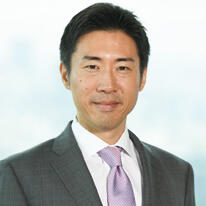
Kiyoyuki Seguchi, Research Director, Canon Institute for Global Studies
 
Kiyoyuki Seguchi is the Research Director at the Canon Institute for Global Studies. His research focuses on the Chinese economy and the U.S.-China-Japan trilateral relationship. Mr. Seguchi worked for the Bank of Japan from 1982 to 2009. During this time, he was Chief Representative of the Representative Office at BOJ in Beijing from 2006 to 2008. Mr. Seguchi was also the international visiting Fellow at RAND Corporation (Los Angeles, CA) from 2004 to 2005. Mr. Seguchi received his bachelor’s degree in economics from the University of Tokyo.

Image
Portrait of Kenji Kushida

Kenji Kushida, Research Scholar, Shorenstein APARC Japan Program (Moderator)

Kenji E. Kushida is a Japan Program Research Scholar at the Walter H. Shorenstein Asia-Pacific Research Center and an affiliated researcher at the Berkeley Roundtable on the International Economy. Kushida’s research interests are in the fields of comparative politics, political economy, and information technology. He has four streams of academic research and publication: political economy issues surrounding information technology such as Cloud Computing; institutional and governance structures of Japan’s Fukushima nuclear disaster; political strategies of foreign multinational corporations in Japan; and Japan’s political economic transformation since the 1990s. Kushida has written two general audience books in Japanese, entitled Biculturalism and the Japanese: Beyond English Linguistic Capabilities (Chuko Shinsho, 2006) and International Schools, an Introduction (Fusosha, 2008). Kushida holds a PhD in political science from the University of California, Berkeley. He received his MA in East Asian studies and BAs in economics and East Asian studies, all from Stanford University.

Virtually via Zoom.

Registration Link: https://bit.ly/2WSJxRx

Yves Tiberghien, University of British Columbia
Kiyoyuki Seguchi, Canon Institute for Global Studies
Kenji Kushida, Stanford University
Seminars
-

In keeping with the State of California's shelter-in-place orders, this event is available through livestream only. Please register in advance for the webinar by using the link below.

REGISTRATION LINKhttps://bit.ly/3e1r7FZ

The time of this event has changed to 4:30pm-5:30pm PDT.


As the COVID-19 pandemic continues to spread throughout the world, Japan is experiencing its second wave of coronavirus outbreak, following a first wave early on, just as it had become clear that the virus was spreading rapidly from Wuhan. In late February, travel restrictions were followed by Prime Minister Abe’s call for school closures. But as the pandemic raged through parts of Europe and then the United States, and as a growing number of countries issued shelter-in-place orders and lockdowns, Japan seemed relatively unscathed. Concerns then escalated and calls for voluntarily restricting peoples’ movement started in earnest following the decision to postpone the 2020 Olympics. On April 6, Prime Minister Abe declared a state of emergency for seven prefectures.

This panel brings together expertise on Japan’s political leadership with experience in Japan’s crisis management. Professor Harukata Takenaka has long studied how Japan’s political leadership has evolved, while Mr. Akihisa Shiozaki, an expert on crisis management, was a core member of Japan’s first private-sector investigative report after the Fukushima nuclear crisis.

This is the first in an APARC-wide series of virtual seminars that explore Asian countries’ responses to the COVID-19 pandemic. Held throughout the spring quarter, each event is led by one of APARC’s programs.

PANELISTS

Image
Aki Shiozaki Headshot

Akihisa Shiozaki, Partner, Nagashima Ohno & Tsunematsu

Akihisa Shiozaki is widely recognized for his expertise in corporate crisis management, including regulatory investigations, white collar defense, product recall, labor/employment disputes, import/export control, cyber security, media interaction and various corporate governance issues, especially those with multi-jurisdictional or parallel civil and criminal components. In recent years, he has advised both domestic and foreign clients in resolving a number of the most high profile corporate crises cases relating to Japan, including the LIBOR/TIBOR manipulation investigation, FX manipulation investigation, global product recall by a Japan auto-parts manufacturer, international trade secret theft in the semiconductor industry, government investigations against a global pharmaceutical corporation operating in Japan, and his representation of the former CEO of Olympus Corporation who brought light to the company's recent accounting scandal. He is recognized by Legal 500 as a Leading Individual in the field of Risk Management and Investigations. In 2017, Akihisa was awarded the Compliance / Investigations Lawyer of the Year at the Asian Legal Awards hosted by The American Lawyer, in association with The Asian Lawyer, China Law & Practice and Legal Week.

Akihisa worked in the Prime Minister’s office as senior policy advisor from 2006 to 2007 and is knowledgeable in Japanese regulations /rules and governmental procedures, as well as having rich experience dealing with the media. He also serves as the vice-chairman of the Anti-Yakuza Committee at the Daiichi Tokyo Bar Association and has authored many related publications. He graduated from the University of Tokyo (LL.B.), holds an M.A. in international policy from Stanford University, and completed his MBA at the Wharton School of the University of Pennsylvania where he served as class president.

Image
Harukata Takenaka Headshot

Harukata Takenka, Professor of Political Science, National Graduate Institute for Policy Studies (GRIPS)

Harukata Takenaka is a professor of political science at the National Graduate Institute for Policy Studies in Tokyo.  He specializes in comparative politics and international political economy, with a particular focus on Japanese political economy. His research interests include democracy in Japan, and Japan's political and economic stagnation since the 1990s.  He received a B.A. from the Faculty of Law of the University of Tokyo and an M.A. and Ph.D. in political science from Stanford University.  He is the author of Failed Democratization in Prewar Japan: Breakdown of a Hybrid Regime, (Stanford University Press, 2014), and Sangiin to ha [What is House of Councillors], (Chuokoron Shinsha, 2010).

Image
Portrait of Kenji Kushida

Kenji Kushida, Research Scholar, Shorenstein APARC Japan Program (Moderator)

Kenji E. Kushida is a Japan Program Research Scholar at the Walter H. Shorenstein Asia-Pacific Research Center and an affiliated researcher at the Berkeley Roundtable on the International Economy. Kushida’s research interests are in the fields of comparative politics, political economy, and information technology. He has four streams of academic research and publication: political economy issues surrounding information technology such as Cloud Computing; institutional and governance structures of Japan’s Fukushima nuclear disaster; political strategies of foreign multinational corporations in Japan; and Japan’s political economic transformation since the 1990s. Kushida has written two general audience books in Japanese, entitled Biculturalism and the Japanese: Beyond English Linguistic Capabilities (Chuko Shinsho, 2006) and International Schools, an Introduction (Fusosha, 2008). Kushida holds a PhD in political science from the University of California, Berkeley. He received his MA in East Asian studies and BAs in economics and East Asian studies, all from Stanford University.

Via Zoom Webinar. Register at https://bit.ly/3e1r7FZ

Akihisa Shiozaki, Nagashima Ohno & Tsunematsu
Harukata Takenka, National Graduate Institute for Policy Studies
Kenji Kushida, Shorenstein APARC Japan Program
Panel Discussions
News Type
News
Date
Paragraphs

To support Stanford students working in the area of contemporary Asia, the Shorenstein Asia-Pacific Research Center is offering up to ten research assistant internships for summer 2020 and up to three predoctoral fellowships for the 2020-21 academic year. The Center will review applications starting April 15 and expects to fill the positions by April 30, 2020. 

Amid the fallout of the COVID-19 pandemic, students are facing summer internship cancelations and hiring freezes. They are left wondering about the long-term implications of the current crisis for their academic careers and their access to future jobs and valuable work experience.

At Shorenstein APARC, we want to do all we can to support Stanford students. That’s why we are announcing new internship and fellowship opportunities for current students working in the area of contemporary Asia: research assistant internships for the summer quarter of 2020 and predoctoral fellowships for the 2020-21 academic year.

The summer internships are all remote: research assistants will work as telecommuters. Regarding the predoctoral fellowships, we hope we can all have a normal 2020-21 academic year, in which case we expect the fellows to be in residence, but we will reassess the evolving COVID-19 situation closer to the appointment start dates and shift to flexible, online options as needed.

APARC will review applications for both opportunities on a rolling basis starting April 15, 2020. The Center will select up to ten research assistants and up to three predoctoral fellows by April 30, 2020.

Read on to learn more about these offerings and the application requirements, and follow the guidelines below to submit your candidacy.

Summer 2020 APARC Research Assistant Internships

Shorenstein APARC is seeking highly motivated and dedicated undergraduate and graduate students to join our team as paid research assistant interns for the summer quarter of 2020. Research assistants will work with assigned APARC faculty members on projects focused on contemporary Asia, studying varied issues related to the politics, economies, populations, security, foreign policies, and international relations of the countries of the Asia-Pacific region.

All positions will be for eight weeks starting late June or early July 2020. The hourly pay rate is $17 for undergraduate students, $25 for graduate students.

Research assistant positions are open to current Stanford students only. Undergraduate- and graduate-level students are eligible to apply.

Apply Now

  • Complete the application form and submit it along with these two (2) required attachments:
    • CV;
    • A cover letter (up to 1 page).
  • Arrange for a letter of recommendation from a faculty to be sent directly to APARC. Please note: the faculty members should email their letters directly to Kristen Lee at kllee@stanford.edu.

We will consider only complete applications that include all the abovementioned supporting documents.  

2020-21 Shorenstein APARC Predoctoral Fellowships

APARC is inviting applications from current Stanford students for the 2020-21 Shorenstein APARC Predoctoral Fellowship. The fellowship supports predoctoral students working within a broad range of topics related to contemporary Asia. 

Up to three fellowships are available to Ph.D. candidates who have completed all fieldwork and are nearing the completion of their dissertation. The Center will give priority to candidates who are prepared to finish their degree by the end of the 2020-21 academic year.

Shorenstein APARC offers a stipend of $36,075 for the 2020-21 academic year, plus Stanford's Terminal Graduate Registration (TGR) fee for three quarters. We expect fellows to remain in residence at the Center throughout the year and to participate in Center activities.

Apply Now

  • Complete the application form and submit it along with these three (3) required attachments:
    • CV;
    • A cover letter including a brief description of your dissertation (up to 5 double-spaced pages);
    • A copy of your transcripts. Transcripts should cover all graduate work and include evidence of recently-completed work.
  • Arrange for two (2) letters of recommendation from members of your dissertation committee to be sent directly to Shorenstein APARC. Please note: the faculty/advisors should email their letters directly to Kristen Lee at kllee@stanford.edu.

We will consider only complete applications that include all the abovementioned supporting documents. 

Hero Image
Architectural detail on Stanford colonnade with palm trees in the background L.A. Cicero
All News button
1
-

Second Conference on "The Political Economy of Japan under the Abe Government"

March 1 - 2, 2019

Philippines Conference Room

Sponsored by: Japan Society for Promotion of Science, Japan Foundation Center for Global Partnership, and Freeman Spogli Institute for International Studies (Stanford University)

Organizers: Takeo Hoshi and Phillip Lipscy


Program

3/1/2019

8:45am   Breakfast

9:05am    Welcome Remark     Toru Tamiya (JSPS San Francisco Office)
                                                   Osamu Honda (Japan Foundation Center for Global Partnership)

9:15am  "Abenomics and Japan's Entrepreneurship and Innovation: Is the Third Arrow Pointed in the Right Direction for Global Competition in the Silicon Valley Era?", Kenji Kushida (Stanford University)

Discussant:
Yong Suk Lee (Stanford University)

10:15am  Break

10:30am  "Abe’s Womanomics Policy: Did it have Effect on the closing of Gender Gap in Managers?", Nobuko Nagase (Ochanomizu University)

Discussant:
Curtis Milhaupt (Stanford University)

11:30am  Move to SIEPR Building for Lunch and Keynote Speech

11:45am  Lunch to conference participants

12:15pm  Lunch and Panel Discussion on Abenomics at SIEPR Building

Moderator: Takeo Hoshi
Panelists: Joshua Hausman
                   Takatoshi Ito
                  Nobuko Nagase
                  Steve Vogel

1:45pm   Panel ends and walk back to Encina Hall

2:00pm    "Abenomics, the Exchange Rate, and Markup Dynamics in Japanese Industries", Kyoji Fukao (Hitotsubashi University) and Shuichiro Nishioka (West Virginia University)

Discussant:
Yuhei Miyauchi (Stanford University and Boston University)

3:00pm  Break

3:30pm   "Abe's Reverse Course: How a Labor Shortage Transformed Labor Politics and Policy", Steven Vogel (University of California, Berkeley)

Discussant:
Kenji Kushida (Stanford University)


4:30pm   "The Crisis that Wasn’t: How Japan Has Avoided a Bond Market Panic", Mark T. Bamba and David E. Weinstein (Columbia University)

Discussant:
Johannes Wieland (University of California, San Diego)

5:30pm     Adjourn


3/2/2019

8:30am   Breakfast

9:00am   Welcome Remark
                 Moto Ono (Japan Foundation Center for Global Partnership)

9:10am   "The Enduring Challenges of History Issues", Mary McCarthy (Drake Univesity)

Discussant:
Phillip Lipscy (Stanford University)

10:10am  Break

10:25am "Expansion of the Prime Minister's Power in the Japanese Parliamentary System", Harukata Takenaka (National Graduate Institute for Policy Studies)

Discussants:
Patricia Maclachlan (University of Texas)

11:25pm  "Abenomics: Est. in 2013, or 2007?", Takatoshi Ito (Columbia University)

                   Discussants:
                  Takeo Hoshi (Stanford University)

12:25pm  Lunch

1:30pm  "Abenomics, Monetary Policy, and Consumption", Joshua Hausman (University of Michigan), Takashi Unayama (Hitotsubashi University), and Johannes Wieland (University of California, San Diego)

Discussant:
Thuy Lan Nguyen (Santa Clara University)

2:30pm   "The Great Disconnect: The Decoupling of Wage and Price Inflation in Japan", Takeo Hoshi (Stanford University) and Anil Kashyap (University of Chicago)

Discussant:
Takashi Unayama (Hitotsubashi University)

3:30pm  Break

4:00pm   "Introduction", Takeo Hoshi (Stanford University) and Phillip Lipscy (Stanford University)

5:30pm  Adjourn


Conferences
-

The 3rd Asia-Pacific Geo-Economic Strategy Forum
 

May 2, 2019

Hauck Auditorium, Hoover Institution, Stanford University

Sponsored and organized by Nikkei Inc., The Hoover Institution, and the Freeman Spogli Institue of International Studies (FSI)


RSVP REQUIRED: https://www.global-nikkei.com/19apgeo/
(RSVP starts from April 10)


Agenda

1:00pm - 1:05pm
Welcome Remark:
Adm. Gary Roughead, Hoover Institution, Stanford University


1:005pm - 1:25pm
Keynote Speech:
Itsunori Onodera, Former Minister of Defense, Japan
 

1:30pm - 2:20pm
Panel I: Indo-Pacific Strategy vs Belt & Road Initiative

Chair: Akihiko Tanaka, President, National Graduate Institute for Policy Studies

Panelists:
Masahisa Sato, State Minister for Foreign Affairs of Japan
Akio Takahara,  Tokyo University
Donald Emmerson, Freeman Spogli Institue for International Studies, Stanford University
 

2:20pm - 2:30pm
Coffee Break


2:30pm - 2:50pm
Special Speech
:
Gen. H.R. McMaster,
Hoover Institution


2:55pm - 3:50pm
Panel Discussion II: US-Japan Strategic Collaboration: Technology, Trade and Economics

Chair: Satoru Mori, Hosei University

Panelists:
Kenji Wakamiya, Former State Minister of Defense, Japan
Hideaki Watanabe, Former Commissioner of Acquisition, Technology & Logistics Agency (ATLA)
Janis Pamiljans, President, Northrop Grumman Aerospace Systems
Nelson Pedeiro, Vice President, Advanced Technology Center, Lockheed Martin
 

3:50pm - 4:00pm
Coffee Break


4:05pm - 4:55pm
Panel Discussion III: Japan`s Defense/Security Strategy

Chair: Satoshi Morimoto, Former Minister of Defense of Japan

Panelists:
Gen Nakatani, Former Minister of Defense, Japan
Itsunori Onodera, Former Minister of Defense, Japan
James Fearon, Freeman Spogli Institute for International Studies, Stanford University
 

4:55pm - 5:00pm
Closing Remark:

Adm. Gary Roughead, Hoover Institution, Stanford University


Everett and Jane Hauck Auditorium
David and Joan Traitel Building of Hoover Institution
435 Lasuen Mall, Stanford, CA 94305
Stanford University


Symposiums
-
Image
Stanford University landscape with Memorial Church and the Main Quad at the center.

The JIIA-Stanford Symposium

"The Past, Present, and Future International Order in East Asia"

May 10, 2019

Bechtel Conference Center, Encina Hall, Stanford University

Sponsored and organized by the Japan Institute for International Affairs (JIIA) and Japan Program and the US-Asia Security Initiative of the Walter H. Shorenstein Asia-Pacific Research Center (APARC) of the Freeman Spogli Institue of International Studies (FSI) at Stanford University 
 

Interstate relations in East Asia are at a critical juncture.  The post-World War II regional order, shaped by the San Francisco Treaty of 1951, underpinned by a common commitment to a liberal trade system, and led by the United States, is under stress.  The end of the Cold War, rise of China, and recent changes in America’s foreign policy orientation have transformed the environment that sustained “the San Francisco System.”  It is unclear if this system will be maintained, and if not, what will replace it.  The lineage of the San Francisco System itself reaches back to the post-World War I Versailles-Washington System.  An examination of the success and shortcomings of each of these systems can offer insights on the rise and fall of international systems, especially in an Asian context.  In this symposium, we explore the circumstances that shaped the establishment and evolution of the East Asian political, economic, and security architectures from post-WWI to present; discuss the forces that built and undermined the past and existing architecture; and debate possible regional futures.  We will emphasize the perspectives and roles of the U.S., Japan, and China, and focus on major influencing factors including historical legacies, the changing distribution of global power, alliance structures, and political ideologies.


Agenda

9:00am - 9:30am 
Registration and Breakfast 
 

9:30am - 9:45am 
Welcome Remarks: 
Gi-Wook Shin, Director, APARC, Stanford University 
Kenichiro Sasae, President, JIIA 
Takeo Hoshi, Director, Japan Program, APARC, Stanford Univeristy 
 

9:45am - 11:30am 
Panel I: Comparing “the Versailles-Washington System” and “San Francisco System”: Lessons from the Rise and Fall of International Orders in East Asia

Chair: Daniel Sneider, FSI, Stanford University

Panelists: 
Shin Kawashima, University of Tokyo 
Masaya Inoue,  Seikei University 
Lin Hsiao-ting, Hoover Institution, Stanford University 
David Kennedy, Center for International Security and Cooperation (CISAC), FSI, Stanford University 
 

11:30am - 1:15pm 
Lunch 

Keynote Speaker: Ambassador Michael Armacost


1:15pm - 3:00pm 
Panel Discussion II: Japanese, U.S. and Chinese Interests and Security

Chair: Kenichiro Sasae, JIIA 

Panelists: 
Ken Jimbo, Keio University 
Tetsuo Kotani, JIIA 
Mike Lampton, APARC, Stanford University 
Jim Schoff, Carnegie Endowment for International Peace (CEIP) 
 

3:00pm - 3:30pm 
Coffee Break 
 

3:30pm - 5:15pm 
Panel Discussion III: Alternative Future East Asia Systems

Chair: Phillip Lipscy, FSI, Stanford University 

Panelists: 
Jim Fearon, FSI, Stanford University 
Ryo Sahashi, University of Tokyo 
Kenichiro Sasae, President, JIIA 
Tom Christensen, Columbia University 
 

5:15pm - 5:35pm 
Rapporteurs' review of symposium discusisons 
 

5:35pm - 5:45pm 
Closing Remarks: 
Karl Eikenberry, Director, US-Asia Security Initiative, APARC, Stanford University 
Kenichiro Sasae, President, JIIA 
 

5:45pm - 6:30pm 
Reception (Encina Lobby)

Bechtel Conference Center
616 Serra Mall
Encina Hall, Central, 1st Floor
Stanford, CA 94305

Symposiums
Subscribe to Governance