Governance

FSI's research on the origins, character and consequences of government institutions spans continents and academic disciplines. The institute’s senior fellows and their colleagues across Stanford examine the principles of public administration and implementation. Their work focuses on how maternal health care is delivered in rural China, how public action can create wealth and eliminate poverty, and why U.S. immigration reform keeps stalling. 

FSI’s work includes comparative studies of how institutions help resolve policy and societal issues. Scholars aim to clearly define and make sense of the rule of law, examining how it is invoked and applied around the world. 

FSI researchers also investigate government services – trying to understand and measure how they work, whom they serve and how good they are. They assess energy services aimed at helping the poorest people around the world and explore public opinion on torture policies. The Children in Crisis project addresses how child health interventions interact with political reform. Specific research on governance, organizations and security capitalizes on FSI's longstanding interests and looks at how governance and organizational issues affect a nation’s ability to address security and international cooperation.

Paragraphs

Improving the environment for business is an important part of the growth strategy of Abenomics. As the goal for this effort, the Abe Administration aims to improve Japan’s rank in the World Bank Doing Business Ranking to one of the top three among OECD. This paper clarifies what it takes for Japan to achieve the goal. By looking at details of the World Bank Doing Business ranking, we identify various reforms that Japan could implement to improve the ranking. Then, we classify the reforms into six groups depending on whether the reform requires legal changes and on political resistance that the reform is likely to face. By just doing the reforms that do not require legal changes and are not likely to face strong political opposition, Japan can improve the ranking to 13th. To be in the top 3, Japan would need to implement all the reforms that are not likely to face strong political resistance. The conclusions, however, are based on the assumption that the conditions in the other countries do not change, which is unrealistic. Thus, Japan would need to carry out all the reforms including those with high political resistance to be among the top three.

All Publications button
1
Publication Type
Working Papers
Publication Date
Authors
Takeo Hoshi
-

WE ARE AT FULL CAPACITY - PLEASE ARRIVE EARLY FOR A SEAT

Image
The US-Japan alliance is the longest, most stable, and most indispensable alliance in the modern history of East Asia.  It has served as the foundation for the region's security structure for well over a half-century.  However, with China's emergence as a rising economic and military power, and given territorial disputes involving China, Japan, and South Korea, and with escalating nationalistic rhetoric and fundamental disagreements over historical interpretations of the Pacific War, the United States and Japan are now facing worrisome tensions and strains that could undermine the solidarity of the US-Japan alliance.  Is the time-tested US-Japan alliance capable of managing both the shifts in the regional balance of power, and the threat of conflict over disputed territories, and the rising thermometer of nationalistic sentiments?   

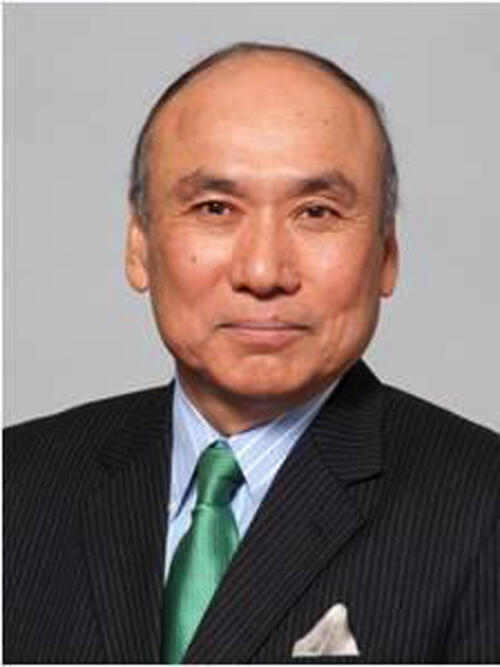
Ambassador Ryozo Kato, former Ambassador of Japan to the United States from 2001 - 08, the longest tenure of any Japanese Ambassador to the United States, and former Commissioner of Nippon Professional Baseball from 2008 - 2013, has had a long and distinguished career in the Ministry of Foreign Affairs of the Japanese Government. A graduate of Tokyo University Faculty of Law and Yale Law School, he served his country in Australia, Egypt, and the United States, in addition to multiple global assignments within the Ministry in Tokyo.

Positions which Ambassador Kato served in the United States include the Third Secretary in the Embassy (1967–1969), Minister in the Embassy (1987–1990), and Consul-General in San Francisco (1992–1994). He returned to Japan to serve as the Director-General of the Asian Affairs Bureau (1995–1997) and the Deputy-General of the Foreign Policy Bureau (1997–1999). After serving as the Deputy Minister for Foreign Affairs (1999–2001), he was appointed the Ambassador of Japan to the United States of America from 2001 to 2008. He has been recognized and respected on both sides of the Pacific for his outstanding understanding of the issues and his clarity in direction to resolve them.

Philippines Conference Room

Ryozo Kato former Ambassador of Japan to the United States Speaker
Seminars
-

A year has passed since the Japanese government embarked on the new economic policy package called “Abenomics” with three “arrows”: aggressive monetary easing, flexible fiscal policy, and a growth strategy. The package is designed to bring the Japanese economy out of 20 years of stagnation and 15 years of deflation, and put it on a sustainable growth path. How effective has the policy package been during the first year of the Abe administration?  Will it succeed in bringing sustainable growth to Japan?  Professor Takatoshi Ito, a prominent expert on the Japanese economy, tackles these questions.

Takatoshi Ito, Professor at Faculty of Economics and Dean of Graduate School of Public
Policy, University of Tokyo, has taught extensively both in the United States and Japan,
including at University of Minnesota, Hitotsubashi University, and Harvard University.
He held visiting professor positions at Harvard University (1986-87 and 1992-94), Stanford
University (as National Fellow; 1984-85); Columbia Business School (fall semester, 2009),
and Tun Ismail Ali Chair Professor at University of Malaya (summer semester, 2008). His
public sector experiences include Senior Advisor in the Research Department, IMF
(1994-97); Deputy Vice Minister for International Affaires at Ministry of Finance
(1999-2001); and a member of the Prime Minister’s Council of Economic and Fiscal
Policy (2006-08). He is an author of many books including The Japanese Economy (MIT
Press), The Political Economy of the Japanese Monetary Policy (MIT Press), and
Financial Policy and Central Banking in Japan (MIT Press), and more than 50
refereed academic journal articles on international finance and the Japanese economy,
including ones in American Economic Review and Econometrica. He has distinguished
academic and research appointments such as President of the Japanese Economic
Association in 2004; Fellow of Econometric Society, since 1992; Research Associate at
National Bureau of Economic Research since 1985; and Faculty Fellow, Centre for
Economic Policy Research, since 2006. His research interest includes capital flows and
currency crises, microstructures of the foreign exchange rates, and inflation targeting. He
contributes frequently op-ed columns and articles to Financial Times, Nihon Keizai Shinbun,
Mainichi Shinbun, and Toyo Keizai Weekly.

Philippines Conference Room

Takatoshi Ito Speaker University of Tokyo
Seminars
-

Stanford-Sasakawa Peace Foundation New Channels Dialogue 2014

Energy Challenge and Opportunities for the United States and Japan


February 13, 2014

Bechtel Conference Center, Encina Hall, Stanford University

Sponsored and Organized by Sasakawa Peace Foundation (SPF) and Shorenstein Asia-Pacific Research Center (S-APARC) in Association with U.S.-Japan Council


Japan Studies Program at Shorenstein APARC, Stanford University has launched a three-year project from 2013 to create new channels of dialogue between experts and leaders of younger generations from the United States, mostly from the West Coast, and Japan under a name of "New Channels: Reinvigorating U.S.-Japan Relations," with the goal of reinvigorating the bilateral relationship through the dialogue on 21st century challenges faced by both nations, with a grant received from the Sasakawa Peace Foundation.

The dialogue would be structured to examine the new challenges of the 21st century, in particular, economic growth and employment creation; innovation and entrepreneurship; energy; and East Asian regionalism, including regional security issues, with the aim of developing mutual understanding and constructing a new relationship for cooperation in dealing with 21st century challenges through the dialogue between scholars, entrepreneurs, and policy makers from the two countries. We are hoping that this multi-year initiative will generate a network of trans-Pacific expertise as a vital supplement to existing avenue of communications.

Given the recent dramatic changes in energy environments in both countries, such as shale gas developments in the U.S, and after Fukushima challenges in Japan, this year, as an inaugural year, we will be examining energy issues. Panel discussions open to the public, with the title of "Energy Challenges and Opportunities for the U.S. and Japan," will be held on February 13th, followed by a dialogue among invited participants on 14th, at Stanford University with the participation of policy makers, business leaders, scholars, and experts from both countries.

In the panel discussions we will examine following issues:

  1. Discovery of shale gas deposits in various parts of the world has drastically changed the geopolitics of energy.
  2. New technologies for energy production have been creating various challenges to the existing system of energy supply.
  3. As emerging economies grow rapidly, they will demand increasing amount of energy. They face a challenge of creating a sustainable and secure energy supply system.
  4. After the Fukushima Daiichi nuclear disaster, the call for enhancing safety of nuclear power plants has intensified. While public’s trust in nuclear technology wanes, increasing number of nuclear power plants are built in emerging countries. Nuclear energy policy has become politically contentious.
  5. Use of information technology, such as smart grid, is likely to change the ways energy is supplied and distributed.
  6. The world has not found an effective international framework for slowing the global warming and securing reliable energy supply to support economic growth.

We are very pleased that we were able to invite quite impressive participants, policy makers, business leaders, scholars and experts from the two countries, who would appear as panelists in the panel discussions on February 13th.

We expect that through this panel discussion we would be able to define the challenges we are facing, indicate the pathways we should proceed to, and identify the areas for cooperation.

On the following day, February 14th, we will have the dialogue closed to the public discussing issues and possible cooperation between the U.S. and Japan on energy among invited participants.

We hope to publish a summary of conference presentations and the dialogue discussion after the conference.

Bechtel Conference Center

Conferences
Paragraphs

This volume collects 22 articles by Masahiko Aoki, selected from writings published over the course of his 45-year academic career. These fascinating essays cover a range of issues, including mechanism design, comparative governance, corporate governance, institutions and institutional change, but are tied together by a focus on East Asia and a comparative institutional framework.

Specific topics include the early stages of mechanism design theory, comparative analysis of vertical, horizontal and modular industrial coordination and its applications, cooperative game-theoretic approaches to the diversity of corporate government structure, the endogenous nature of institutions, and comparative and historical analysis of institutions in Japan, China and Korea.

Students, professors and scholars with an interest in comparative institutional studies and East Asian studies will find this book a useful and illuminating resource.

All Publications button
1
Publication Type
Books
Publication Date
Journal Publisher
Edward Elgar Pub
Authors
Masahiko Aoki
Number
978 1 78254 839 3
Paragraphs

This paper contributes to the discussion of how Public Private Interplay (PPI) can be used to foster Next Generation Access (NGA) buildouts in Europe by introducing the experience of Japan. Japan, which succeeded in both promoting nationwide network buildouts and fostering competitive dynamics that led to the world's fastest and cheapest broadband services and deploying them nationwide. The process entailed deregulation, which unleashed new entrepreneurial private actors, and re-regulation that protected them from incumbent carriers. The resulting market dynamics lowered Digital Subscriber Line (DSL) prices, influencing the market price for Fiber-To-The-Home (FTTH), for which the government had heavily subsidized carriers. Central government initiatives, combined with local incentives, led to an almost 100% broadband accessibility within a few years. However, Japan quickly discovered that taking advantage of the broadband environment to produce innovation, productivity growth, and economic dynamism, was far more difficult than facilitating its creation. It discovered regulatory barriers for the use of Information and Communications Technology (ICT) in various areas of the economy. Like Europe, Japan was not home to the ICT lead-user enterprises and industries that drove the ICT revolution, producing innovation and productivity gains. Moreover, the advent of US-centered cloud computing services potentially decreases the minimum bandwidth requirement to access global-scale computing power. The development of wireless technologies far cheaper than Japan's nationwide FTTH also merits serious consideration for European policy discussions.

All Publications button
1
Publication Type
Journal Articles
Publication Date
Journal Publisher
Communications & Strategies
Authors
Kenji E. Kushida
News Type
News
Date
Paragraphs

Comparative Institutional Analysis: Theory, Corporations and East Asia. Selected Papers of Masahiko Aoki collects 22 articles by Masahiko Aoki (Senior Fellow of the Stanford Institute of Economic Policy Research and the Freeman Spogli Institute for International Studies at Stanford University), selected from writings published over the course of his 45-year academic career.  These fascinating essays cover a range of issues, including mechanism design, comparative governance, corporate governance, institutions and institutional change, but are tied together by a focus on East Asia and a comparative institutional framework.


Comparative Institutional Analysis is available for purchase now from Edward Elgar Publishing.

Hero Image
masa book headline
All News button
1
Paragraphs

The digital information technology (IT) revolution currently underway is profoundly reshap- ing economic activity, influencing politics, and transforming societies around the world. It is also forcing a reconceptualization of the global and local: many of the technologies, platforms, and fundamental disruptions are global in nature, but national or local contexts critically influence the uses and effects of IT.

The Asia-Pacific region provides a fascinating array of countries for examination of the political, economic, and sociocultural effects of digital media on the modern world. Economies range from developing to advanced. Governments include varied democracies as well as one-party regimes. The press enjoys relative freedom in some countries, undergoes limited constraints in others, and is tightly controlled in a few. Populations range from dense to sparse, and from diverse to relatively homogenous.

Held September 12–13, 2013, in Kyoto, Japan, the fifth Stanford Kyoto Trans-Asian Dialogue focused on the catalyzing effects of digital media for change in the Asia-Pacific. Four major themes were addressed:

  1. Digital Media versus Traditional Media
  2. Digital Media and Political Change in Asia
  3. Social Change and Economic Transformation
  4. Digital Media and International Relations
All Publications button
1
Publication Type
Policy Briefs
Publication Date
Journal Publisher
Shorenstein Asia-Pacific Research Center
-

Historically, in Japan, out-of-court corporate restructurings have played a significant role in disciplining managers in the near-absence of hostile takeover activity and shareholder activism. This paper analyzes management turnover in a large sample of Japanese firms that underwent restructurings between 1981 and 2010. I find that restructurings that happen in later stages of financial distress, and those that are not initiated by the firm itself, are more likely to involve management turnover, as are restructurings in which the firm's main business operations are left intact. Furthermore, in restructurings after the reforms around the year 2000, management turnover is more likely to occur if the local potential managerial labor market is substantial. After controlling for firm characteristics and the firm's initial financial condition, it does not appear that management turnover is associated with an improvement in post-restructuring operating performance--in fact, the effect is significantly negative by estimates that address the non-random nature of management turnover. However, for restructurings led by equity funds, management turnover is associated with a more successful turnaround of the firm's performance. These results suggest that equity funds possess the ability to locate and recruit talented outside managers in a thin market for experienced managers.


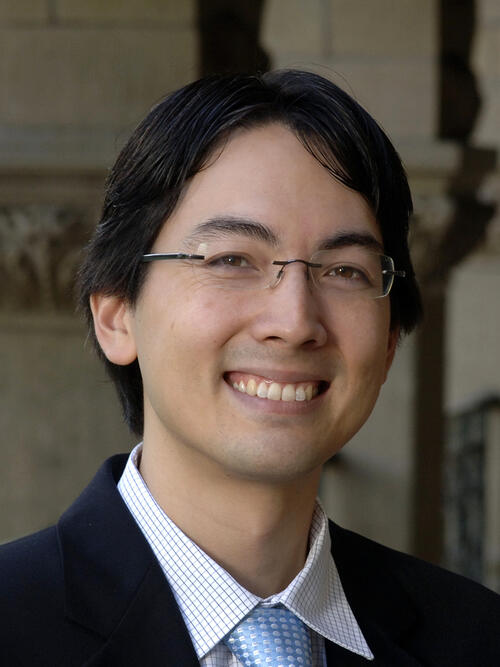
Michael Furchtgott is an economist interested in corporate finance and governance. His current research investigates Japanese corporate restructurings and the behavior of firms and lenders when financial distress arises.

Furchtgott has completed his PhD in economics at the University of California, San Diego, where his research on corporate financial restatements has demonstrated that firms frequently circumvent laws designed to protect investors.

He holds a BA in economics and mathematics from Columbia University.

Daniel and Nancy Okimoto Conference Room

Shorenstein APARC
Encina Hall C331
616 Serra Street
Stanford, CA 94304-6055

(650) 724-9747 (650) 723-6530
0
Shorenstein Postdoctoral Fellow in Contemporary Asia
FURGHOTT,_Michael_3x4.jpg PhD

Michael Furchtgott is an economist interested in corporate finance and governance. His current research investigates Japanese corporate restructurings and the behavior of firms and lenders when financial distress arises.

Furchtgott has completed his PhD in economics at the University of California, San Diego, where his research on corporate financial restatements has demonstrated that firms frequently circumvent laws designed to protect investors.

He holds a BA in economics and mathematics from Columbia University.

Michael Furchtgott Postdoctoral Fellow in Contemporary Asia Speaker Shorenstein APARC
Seminars
-

One of the most important developments in the modern global economy is financial globalization. This has raised threats to the stability of political regimes in two ways: (1) by enhancing the possibility of a financial crisis that could cause political turmoil; and (2) by easing access to foreign sources of financing for opposition political groups. I argue that state capitalism – defined as state-owned publicly listed corporations -- has risen disproportionately among single party regimes as a way to address these dual threats. Single party regimes have both the motivation and a greater institutional capacity for addressing these threats in comparison to other regimes. Tests are conducted on 607 firms in 1996 and 856 firms in 2008 across seven East Asian economies, and are supplemented with case studies of Malaysia and South Korea.  The evidence suggests that financial globalization is contributing to the rise of the state as a counter reaction.

Richard W. Carney is a Fellow in the Department of International Relations located in the College of Asia and the Pacific at the Australian National University. His research and teaching are in the areas of international and comparative political economy with a focus on corporate governance and finance in East Asia. He has published articles in many academic journals including the Journal of Financial Economics, the Journal of East Asian Studies, and Business and Politics. He is also the author of the book Contested Capitalism: The Political Origins of Financial Institutions, and editor of the book Lessons from the Asian Financial Crisis. He was a Jean Monnet Fellow at the European University Institute in Fiesole, Italy (2003-04), and has held visiting positions at INSEAD. He holds a Ph.D. in Political Science (UCSD 2003). Before joining the ANU in 2011, he was an Assistant Professor in Singapore.

Daniel and Nancy Okimoto Conference Room

Richard W. Carney Fellow, Department of International Relations Speaker Australian National University
Seminars
Subscribe to Governance