Business
-

Modern-day markets do not arise spontaneously or evolve naturally. Rather they are crafted by individuals, firms, and most of all, by governments. Thus "marketcraft" represents a core function of government comparable to statecraft and requires considerable artistry to govern markets effectively. Just as real-world statecraft can be masterful or muddled, so it is with marketcraft. 

In his new book, Steven Vogel builds his argument upon the recognition that all markets are crafted then systematically explores the implications for analysis and policy. In modern societies, there is no such thing as a free market. Markets are institutions, and contemporary markets are all heavily regulated. The "free market revolution" that began in the 1980s did not see a deregulation of markets, but rather a re-regulation. Vogel looks at a wide range of policy issues to support this concept, focusing in particular on the US and Japan. He examines how the US, the "freest" market economy, is actually among the most heavily regulated advanced economies, while Japan's effort to liberalize its economy counterintuitively expanded the government's role in practice. 

Marketcraft demonstrates that market institutions need government to function, and in increasingly complex economies, governance itself must feature equally complex policy tools if it is to meet the task. In our era-and despite what anti-government ideologues contend-governmental officials, regardless of party affiliation, should be trained in marketcraft just as much as in statecraft.

SPEAKER

Image
42

Steven K. Vogel, Il Han New Professor of Asian Studies and a Professor of Political Science at the University of California, Berkeley

BIO

Steven K. Vogel is the Il Han New Professor of Asian Studies and a Professor of Political Science at the University of California, Berkeley. He specializes in the political economy of the advanced industrialized nations, especially Japan. He recently completed a book, entitled Marketcraft: How Governments Make Markets Work (Oxford, 2018), which argues that markets do not arise spontaneously but rather are crafted by individuals, firms, and most of all by governments.  Thus “marketcraft” represents a core function of government comparable to statecraft.  The book systematically reviews the implications of this argument, critiquing prevalent schools of thought and presenting lessons for policy.  Vogel is also the author of Japan Remodeled: How Government and Industry Are Reforming Japanese Capitalism (Cornell, 2006) and co-editor (with Naazneen Barma) of The Political Economy Reader: Markets as Institutions (Routledge, 2008). His first book, Freer Markets, More Rules: Regulatory Reform in Advanced Industrial Countries  (Cornell, 1996), won the Masayoshi Ohira Memorial Prize. He edited his mother’s book, Suzanne Hall Vogel, The Japanese Family in Transition: From the Professional Housewife Ideal to the Dilemmas of Choice(Rowman & Littlefield, 2013), and a volume on U.S.-Japan Relations in a Changing World(Brookings, 2002).  He won the Northern California Association of Phi Beta Kappa Teaching Excellence Award in 2002, and the UC Berkeley Faculty Award for Outstanding Mentorship of Graduate Student Instructors in 2005.  He has been a columnist for Newsweek-Japan and the Asahi Shimbun, and he has written extensively for the popular press.  He has worked as a reporter for the Japan Times in Tokyo and as a freelance journalist in France. He has taught previously at the University of California, Irvine and Harvard University. He has a B.A. from Princeton University and a Ph.D. in Political Science from the University of California, Berkeley.
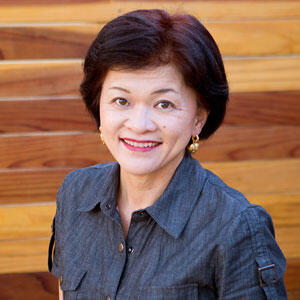
Steven K. Vogel, Il Han New Professor of Asian Studies and a Professor of Political Science at the University of California, Berkeley
Seminars
-

The rise of Nokia as a global ICT leader in the 1990s and early 2000s was dramatic, as a company from the small Nordic country of Finland became a global titan. The lack of Japanese presence in global ICT industries in the 1990s and 2000s was unexpected, as it was a technological and platform leader in its domestic market but without followers in global markets. The advent of the iPhone and Android from Silicon Valley companies in the late 2000s thoroughly disrupted both Nokia and the Japanese companies. What happened? Why did it happen, and what were the lessons learned? Now, with the dominance and concentration of Silicon Valley companies and the rise of China in new areas such as AI and digital services, how do we understand the dynamics of competition unfolding? What general conclusions can we draw about the possibilities and risks of national strategies from  the past experiences?

This panel brings expertise from China, Europe, Japan, and Silicon Valley to discuss these questions. 

This event is brought to you by Shorenstein APARC Japan Program's Stanford Silicon Valley-New Japan Project in collaboration with the Berkeley Roundtable on the International Economy (BRIE)

AGENDA

Moderator and panelistJohn Zysman, Co-founder, Berkeley Roundtable on the International Economy. Author of “The Third Globalization: Can Wealth Countries Stay Rich.”

3:00pm-3:05pm         Introduction & Opening Remarks

3:05pm-3:35pm         The rise and fall of Nokia as a global mobile leader, a management perspective

Presenter: Yves Doz, Solvay Chaired Professor of Technological Innovation, INSEAD. Author of “Ringtone: Exploring the Rise and Fall of Nokia in Mobile Phones” (2018)

3:35pm-4:05pm         How Silicon Valley commoditized the global ICT industry. Japan: leading without followers, then disrupted, a political economy perspective

Presenter: Kenji Kushida, Research Scholar, Stanford University. Author of “The politics of commoditization in global ICT industries: a political economy explanation of the rise of Apple, Google, and industry disruptors” (2015)

4:05pm-4:35pm        AI and Global Dynamic Capabilities: The Implications for China and the United States. 

· The Chinese Case:  Can China avoid the Finnish and Japanese fate?   Will the scale of the Chinese market permit it to develop global standards?   Will the geo-political rivalry change the dynamic of the market rivalries.

· The American case: Will the American platform strengths hold in in the face of Chinese challenges? Will Europe?

PresentersAmy Shuen, Visiting Professor, Hong Kong University (formerly at UC Berkeley, Wharton, CEIBS). Co-author, Dynamic Capabilities and Strategic Management (SMJ, Best Paper Award, 2003) Author, “Web 2.0:  A Strategy Guide” (OReilly, 2008) HKU Talk (2017) https://www.ecom-icom.hku.hk/Contents/Item/Display/1962

John Zysman, Co-founder, Berkeley Roundtable on the International Economy. Author of “The Third Globalization:Can Wealth Countries Stay Rich.”

4:35pm-5:00pm         Open Discussion, Q&A


RSVP REQUIRED: http://www.stanford-svnj.org/44-panel-discussion

Panel Discussions
616 Serra StreetEncina Hall E301Stanford, CA94305-6055
0
hitoshi_sato.jpg Ph.D.
Dr. Hitoshi Sato joins the Walter H. Shorenstein Asia-Pacific Research Center (APARC) for the 2018 year from the Institute of Developing Economies (IDE-JETRO) in Japan, where he serves as Senior Chief Research Fellow.  He will be working on the internationalization of firms, management practices, and development.  Dr. Sato received his Ph.D. from the University of Wisconsin, Madison. 
Visiting Scholar at APARC
-

Voice4u is a revolutionary AAC (Augmentative and Alternative Communication) system that helps individuals express their feelings, thoughts, actions, and needs. It is the equivalent of wheelchairs for people who cannot walk. Voice4u is the perfect solution for learning and communication for individuals with autism spectrum disorders (ASD) and the people around them. In the United States, CDC estimates that 1 in 68 children has been identified with autism spectrum disorders as of 2017. The application has been downloaded in 100+ countries and more than 150K units. The product has proven to be commercially viable and has been used by people suffering from other types of developmental disorders including Down syndrome and Asperger’s syndrome, people with other kinds of communication disorders caused by stroke or brain injuries and deafness, seniors who have difficulties with verbal communication, as well as Speech Language Pathologists (SLP) for medical professionals, teachers, or parents. This presentation will focus on how and why Yumi Kubo and Sei Higuchi founded Spectrum Visions, the development of Voice4u, and their future plans.

SPEAKERS:

Yumi Kubo, co-founder and CEO of Spectrum Visions Global, Inc. 

Sei Higuchi, Ph.D., co-founder and CTO of Spectrum Visions Global Inc. 

BIOS:

Image
Yumi is the co-founder and CEO of Spectrum Visions and has a son with autism. Before founding the company, she was engaged in numerous activities in non-profit organizations such as Parents Helping Parents (PHP). She has given lectures in Japan and the U.S on special education, IFSP (Individual Family Service Plan), IEP (Individual Educational Program) and IET (Individual Educational Transition). Yumi also started several social groups to support children with development delays. Her story was featured in San Jose Mercury News, “Autism Mystery – Family Finds Hope Silicon Valley”. As a part-time instructor at Osaka University, she has been teaching young students entrepreneurship with her unique story

Image
Sei is co-founder and CTO of Spectrum Visions and is leading product development. He received his Ph.D. in Aeronautics & Astronautics from Stanford University in 2009. At Stanford, he developed the adaptive model predictive control algorithm for microkelvin thermal control system. While he was a Ph.D. student, he also supported the autism community in the Bay Area. After completing his Ph.D., he started developing Voice4u. Sei received a BS in Mechanical Engineering from Waseda University, Japan, MS in Aeronautics & Astronautics, and Ph.D. minor in Mechanical Engineering from Stanford University.

AGENDA:

4:15pm: Doors open
4:30pm-5:30pm: Talk and Discussion
5:30pm-6:00pm: Networking

RSVP REQUIRED:

Register to attend at http://www.stanford-svnj.org/svnj-public-forum-13018/2018/1/10/voice4u

For more information about the Silicon Valley-New Japan Project please visit: http://www.stanford-svnj.org/


Seminars
-

GSVlabs is a startup and corporate innovation accelerator located in the heart of Silicon Valley in Redwood City. It houses more than 180 startups and supports corporate innovation programs for more than 25 corporations. During the past few years, GSVlabs has welcomed numerous startups from foreign countries such as Brazil, Mexico, Thailand, China, Korea, Germany, Austria just to name a few. In many cases, these foreign startup acceleration programs are funded by large corporations and governments that see long-term economic benefits of supporting such activities in Silicon Valley. In this public forum, Atsuko Jenks will discuss examples of such corporate and government funded accelerator programs and implications for the efforts by Japanese corporations and Japanese government organizations to accelerate corporate innovation and economic growth of Japan.

SPEAKER:

Atsuko Jenks, Managing Director, Japan, GSVlabs

BIO:

Image
Atsuko oversees development and implementation of corporate innovation and new business development accelerator programs for Japanese corporations at GSVlabs in Redwood City. She is also an advisor for two Silicon Valley technology startups, Grabit and Viewpoint Systems. For nearly 20 years, Atsuko has advised and worked with both US and Japanese companies, assisting them with their cross-Pacific alliance and partnership strategies as well as technology licensing and various commercial agreements. Atsuko is also active in non-profit work as a Board Member of Stanford Business School Alumni Association, an Executive Committee Member of The Tech Museum of Innovation, the San Francisco Chapter President of Tsuda University Alumnae Association, and a member of Stanford Business School Alumni Consulting Team. She was previously Director of Japan Division with Williams-Sonoma in San Francisco, and Consultant at Bain in Tokyo Office.  Atsuko holds BA from Tsuda University in International Relations and Global Studies, and MBA from Stanford Graduate School of Business.

AGENDA:

4:15pm: Doors open
4:30pm-5:30pm: Talk and Discussion
5:30pm-6:00pm: Networking

RSVP REQUIRED:


Atsuko Jenks Managing Director, Japan GSVlabs
Seminars
-

GROW is an automated solution to evaluate job candidates, developed by Tokyo-based people analytics startup, Institution for a Global Society (IGS). GROW was developed with the idea that the hiring process is often a missed opportunity to collect, utilize and exchange feedback that could change people’s behaviors for the better. The solution has developed into a tool that both helps students to understand their strengths and weaknesses, while at the same time assists HR in hiring based on competencies and personality traits. GROW uses artificial intelligence learning algorithms to analyze assessment data from both candidates and evaluators, looking for patterns to improve its ability to accurately screen candidates over time. In place of human intuition, GROW uses big data to develop a scientific, objective, and constantly-improving engine to recruit, screen, and develop human capital. In his presentation, Founder and CEO of IGS, Masahiro Fukuhara will speak about founding IGS, developing GROW, and the opportunities and challenges that its widespread interest has presented. 

Bio

Image

Masahiro Fukuhara is founder and CEO of Tokyo-based people analytics startup Institution for a Global Society (IGS), which he started in 2010. Prior to founding IGS, Fukuhara was managing director at asset management firm Barclays Global Investors (BGI) where he made investment decisions based on computer-driven models. Fukuhara earned his Bachelor’s degree in Economics from Keio University and MBA from INSEAD. He holds Master’s degree (with Honors) in International Finance from Grandes Ecoles HEC and Ph.D. from Tsukuba University Graduate School of Business Sciences (Ph.D. in Business Administration). He is currently a Visiting Professor at the center for FinTEK (Finance, Technology, and Economy) at Keio University as well as adjunct professor at Hitotsubashi University’s Graduate School of International Corporate Strategy.

Agenda

4:15pm: Doors open 
4:30pm-5:30pm: Talk and Discussion 
5:30pm-6:00pm: Networking

RSVP Required

 
For more information about the Silicon Valley-New Japan Project please visit: http://www.stanford-svnj.org/
 

NOTE: This event takes place during Stanford’s Homecoming Weekend. The parking slots in front of Encina Hall will not be available that day, and there may be higher demand than usual for parking on campus. Please take that into consideration when planning your travel.

Masahiro Fukuhara, Founder and CEO, Institution for a Global Society
Seminars
-

The conference is brought to you by the Shorenstein Asia-Pacific Research Center Japan Program's Stanford Silicon Valley-New Japan Project and Mistletoe, Inc.

This event is at full capacity. Please contact Amanda Stoeckicht at amst@stanford.edu if you have any questions.

As we enter the coming age of universal automation, this conference seeks to spark a discussion among thought leaders, technologists, and social entrepreneurs about the replacement of human labor by artificial intelligence and robotics and what that might mean for the future of human welfare and labor opportunities. There is increasing debate regarding the possibility of a new underclass of 'zero economic citizens.' How shall we address these challenges? Does the answer lie in lowering the cost of living? Is it the Universal Basic Income? Or something else? What might be the role of technologies for geographic mobility, sustainability, and community platforms.

Along with keynote presentations and panel discussions, the conference will also feature a startup showcase and participatory world-building exercise.

*The below program is subject to change.

Conference Program

8:30-9:00                  Registration and Breakfast

9:00-9:05                  Welcome

9:05-10:45                Keynote Presentations

Taizo Son (Mistletoe)

Marina Gorbis (Institute for the future)

Sam Altman (Y Combinator)

10:45-11:00              Coffee Break

11:00-12:15                Startup Showcase

Afero

Alesca Life

AstroScale

Binded

Cocoa Motors

Homma

Leomo

ModuleQ

Vivita

Wota

12:15-12:30              Break

12:30-13:00              Mistletoe Fellows Program Announcement

13:00-14:00              Lunch

14:00-15:15              Panel & Debate Sessions: Technology and Social Change in 2045                          

Panel 1: 

Cities of the Future: Removing Barriers to New Ideas with Innovation Districts and Regulatory Sandboxes

Moderator: Ashkan Soltani

Panelists:   Neal Gorenflo (Sheareable)

Taizo Son (Mistletoe)

           Joe Quirk (Seasteading Institute)

           Kaidi Ruusalepp (Funderbeam)           

Panel 2:

The Autonomous Lifestyle: Can Tech-Enabled Mobility Improve Welfare and Opportunity?

Moderator: Kenji Kushida (Stanford University)

Panelists:   Frances Colon (Cenadores Puerto Rico)

Steve Cousins (Savioke)

            Toshi Hoo (IFTF)        


Panel 3:

Reimagining Social Entrepreneurship: Designing Collaboration and Community

                                       Moderator:     Ernestine Fu (Alsop Louie Partners)

Panelists:    Anh Bui (Benetech)

  Chuck Eesley (Stanford University)   

  Daniel Goldman (Ignition Angels)

             Luan Niu (Enviu)


15:15-15:30             Break

15:30-17:30             Zero Economic Citizen in 2045: A World Building Exercise                  

Joshua McVeigh-Schultz (University of Southern California)

Karl Baumann (Univeristy of Southern California)

Elena Marquez Segura (UC Santa Cruz)                         

17:30-17:35             Closing Remarks

17:35-18:35             Cocktail Reception


Conferences
616 Serra StreetEncina Hall E301Stanford, CA94305-6055
0
hirofumi_uchida Ph.D.

Hirofumi Uchida joins the Walter H. Shorenstein Asia-Pacific Research Center (Shorenstein APARC) during the 2017-2018 academic year from the Kobe University’s Graduate School of Business Administration where he serves as a professor of Banking and Finance.

Uchida’s research interests focus on banking, financial institutions, and financial system architecture. During his stay at Shorenstein APARC, Uchida will conduct research on startup finance in the U.S. from the perspective of an international comparison with Japan. For this research, he receives Abe Fellowship (Social Science Research Council).

Uchida's research has been published in International Economic Review, Journal of Money, Credit and Banking, Journal of Financial Intermediation, Economica, and Journal of Banking and Finance, among others. He is also an associate editor of Journal of Money, Credit, and Banking, and a member of the Study Group for Earthquake and Enterprise Dynamics (SEEDs) and the Money & Finance Research Group (MoFiR). 

Uchida received his M.A. in Economics in 1995 and his Ph.D. in Economics in 1999, both from Osaka University. Prior to joining Kobe University in 2009, Uchida was with the Kyoto Institute for Economic Research at Kyoto University, and the Faculty of Economics at Wakayama University. He was also a visiting scholar at the Kelley School of Business, Indiana University as a 2003 Fulbright Scholar.

Visiting Scholar
-

Through the 1980s, Japan was significant in global competition largely by shaping global technological trajectories, transforming major global industries, and contributing to fundamental innovations in industrial production processes, creating enough wealth along the way to propel Japan to the world’s second largest economy. After the economic bubble burst in the early 1990s, however, Silicon Valley moved to the forefront of transforming technology, industries, and production, creating vast wealth along the way. While Japan's role in global competition seemingly declined after the 1990s, careful analyses reveal that Japan was in fact transforming--quietly and gradually, but significantly. In a pattern of “syncretism,” Japan’s economic transformation was characterized by the coexistence of new, traditional, and hybrid forms of strategy and organization. Japan’s new startup ecosystem, though small compared to Silicon Valley, has dramatically transformed over the past twenty years through a combination of regulatory shifts, corporate transformations, and technological breakthroughs that have opened up vast new opportunities. Some large corporations such as Komatsu, Honda, Toyota, and Yamaha are undertaking innovative efforts of sorts unseen in Japan’s recent history to harness Silicon Valley and other startup ecosystems into their core business areas. 

SPEAKER BIO

Kenji E. Kushida is the Japan Program Research Scholar at the Shorenstein Asia-Pacific Research Center at Stanford University (APARC), Project Leader of the Stanford Silicon Valley – New Japan Project (Stanford SV-NJ), research affiliate of the Berkeley Roundtable on the International Economy (BRIE), and International Research Fellow at the Canon Institute for Global Studies (CIGS). He holds a PhD in political science is from the University of California, Berkeley, an MA in East Asian studies and BAs in economics and East Asian studies, all from Stanford University.

Kushida’s research streams include Information Technology innovation, Silicon Valley’s economic ecosystem, Japan’s political economic transformation since the 1990s, and the Fukushima nuclear disaster. He has published several books and numerous articles in each of these streams, including “The Politics of Commoditization in Global ICT Industries,” “Japan’s Startups Ecosystem,” “Cloud Computing: From Scarcity to Abundance,” and others. His latest business book in Japanese is “The Algorithmic Revolution’s Disruption: a Silicon Valley Vantage on IoT, Fintech, Cloud, and AI” (Asahi Shimbun Shuppan 2016).

He has appeared in media including The New York Times, Washington Post, Nihon Keizai Shimbun, Nikkei Business, NHK, PBS NewsHour, and NPR.

AGENDA

4:30pm: Doors open
4:45pm-5:45pm: Talk and Discussion
5:45pm-6:15pm: Networking

RSVP REQUIRED

 
For more information about the Silicon Valley-New Japan Project please visit: http://www.stanford-svnj.org/


Paragraphs

President Donald Trump ascended to office with an estimated $3.5 billion of personal wealth tied up in his global real estate empire. This has raised a variety of concerns about conflicts of interest, particularly the potential for cronyism and corruption. But the greatest danger is that U.S. foreign policy will be fundamentally distorted by the president’s business interests. We face what might be dubbed a “nepotist peace”: The United States will avoid any conflict that puts a Trump Tower, the embodiment of his familial business empire, at risk.

All Publications button
1
Publication Type
Commentary
Publication Date
Journal Publisher
Foreign Policy
Authors
Phillip Lipscy
Subscribe to Business