International Development

FSI researchers consider international development from a variety of angles. They analyze ideas such as how public action and good governance are cornerstones of economic prosperity in Mexico and how investments in high school education will improve China’s economy.

They are looking at novel technological interventions to improve rural livelihoods, like the development implications of solar power-generated crop growing in Northern Benin.

FSI academics also assess which political processes yield better access to public services, particularly in developing countries. With a focus on health care, researchers have studied the political incentives to embrace UNICEF’s child survival efforts and how a well-run anti-alcohol policy in Russia affected mortality rates.

FSI’s work on international development also includes training the next generation of leaders through pre- and post-doctoral fellowships as well as the Draper Hills Summer Fellows Program.

Authors
News Type
News
Date
Paragraphs

Innovation is a vital component of economic development, and the United States and Japan provide clear examples of how a knowledge-based economy can lead to sustainable growth. But Japan has sometimes encountered obstacles in bringing its wealth of ideas into the global market. A conference at Stanford seeks to help shift that reality.

“Japan is changing,” said panelist Gen Isayama, founder of the World Innovation Lab. “We’re seeing entrepreneurs…but we need a new role model – new stars emerging in Japan to excite younger people.”

For two days, 21 experts from Japan and the United States gathered at the Stanford-Sasakawa Peace Foundation New Channels Dialogue to discuss innovation, promote exchange of best practices, and enhance connections between the two countries.

The conference was sponsored by the Sasakawa Peace Foundation (SPF) and organized by the Japan Program at the Walter H. Shorenstein Asia-Pacific Research Center (APARC), in association with the U.S.-Japan Council.

“The New Channels project is intended to open a new arena of dialogue between new voices, and a new generation of experts and policymakers on both sides of the Pacific. And to tie them back into the existing structure of alliance governance,” said SPF President Yuji Takagi, in his opening remarks.

“The complex challenges of today’s world provide even greater momentum to work together across sectors,” Shorenstein APARC Director Gi-Wook Shin added.

In its second year, the conference hosted more than 100 attendees from the San Francisco Bay Area, drawing students, scholars and industry and government people to Encina Hall for the daylong public forum on Jan. 22. The first and second panels focused on the state of innovations in Silicon Valley and Japan, the third and fourth panels examined how the two countries could better work together toward innovation-driven growth.

The first set of panelists started by discussing characteristics of Silicon Valley, and how it defined itself during the tech boom of the 1980s/90s, and led to the rise of the Internet and telecomm industries that rapidly spread around the world.

Silicon Valley is often identified for its innovative ideas, and its ability to convert those ideas into market-ready goods and services. Panelists said that networks and open access to venture capital drive that ability to push ideas through quickly, an essential characteristic in today’s real-time world.

“It’s never been easier to start a company,” said Patrick Scaglia, a consultant at Startup Ventures and former senior executive at Hewlett Packard.

Silicon Valley continues to attract entrepreneurs and potential investors, and is positioned to continue to do so. Scaglia noted that 47.3 million dollars was invested in startups last year alone, the highest seen since 2009.

Areas currently being pioneered by Silicon Valley entrepreneurs include medical and mobile technologies. Norman Winarsky, president of SRI Ventures, pointed to breakthroughs in robotics and wearable devices, showing a clip from a TED talk on bionic prosthetics. Additional predicted trends include a return to hardware and possibly greater entrepreneurism coming directly out of universities, particularly from students.

Image
stanfordspf dashboard

(Left photo) Tak Miyata (left), a general partner at Scrum Ventures, talks with Ryuichiro Takeshita (right), a corporate affiliate visiting fellow at Shorenstein APARC. (Right photo) Japan Program Research Associate Kenji Kushida leads a discussion on Japan's innovation ecosystem. A gallery of photos from the public forums can be viewed here.

Japan has historically produced successful entrepreneurs such as Konosuke Matsushita (founder of Panasonic Corporation), Akio Morita (founder of Sony Corporation), and Soichiro Honda (founder of Honda Motor Company), but large firms have come to dominate the economy. Recently, however, the country has been producing a cadre of successful startups, some of which have already grown to become quite large. For example, Japanese companies Rakuten and DeNA have commanded the e-commerce space, and similarly, Mixi in the social media space.

Panelists noted that more Japanese startups are going global compared to a decade ago. Yusuke Asakura, a visiting scholar at Stanford’s U.S.-Asia Tech Management Center, pointed to companies that produced applications like Metaps, an Android monetization app, and Gumi, a social networking gaming app.

But Japan hasn’t reached its greatest potential due to various barriers – market, institutional, and cultural. Mr. Isayama said, at the moment, there aren’t enough ventures and risk capital in Japan. Greater accessibility to both could propel startups more fully into the global market.

C. Jeffrey Char, president of J-Seed Ventures, said another obstacle was the quantity of mergers & acquisitions (M&A).

“If there was more M&A, it would actually improve the ecosystem a lot more – it would turbocharge it,” he said. “Because when investors get their money back quicker and when entrepreneurs get paid off quicker, a lot of times they will go and start another company.”

If greater M&A existed in Japan it would create a “benevolent cycle” of funding and inject the momentum necessary to support an environment for entrepreneurial success.

Networking, labor mobility, and a highly skilled workforce are additional components that aided in Silicon Valley’s success, and areas that Japan could learn from. Government support for entrepreneurs is rising; the third arrow of ‘Abenomics’ policy aims to jumpstart growth based on a number of measures, including diversification of its workforce through increased immigration and female participation.

Offering an additional point, Professor Kazuyuki Motohashi, the Sasakawa Peace Fellow at Shorenstein APARC, suggested that cultural differences might pose one of the biggest challenges to U.S.-Japan collaboration.

Americans are more likely to embrace failure as an essential part of the creative process; Japanese typically don’t celebrate failure as much nor valorize the entrepreneur to the same degree.

“We don’t have to change the culture,” Motohashi said. “The important [thing] is to overcome these differences and develop a mutual understanding.”

Teaching younger generations about the entrepreneurial mindset could also improve societal attitudes toward risk-taking. Former U.S. Ambassador to Japan John Roos said celebrating the entrepreneur was the most important factor in creating a vibrant innovation ecosystem in Japan. “In the end, if you have the proper mindset, you can overcome everything else."

A detailed summary report of the New Channels Dialogue will be released in the coming months on the Shorenstein APARC website.

Image
stanfordspf group

Panelists pose for a group shot outside Encina Hall. A conference agenda, final report and listing of the panelists can be viewed here.

Hero Image
rsd15 004 0148a
A Stanford conference brings together 21 experts on innovation in Japan and Silicon Valley.
Rod Searcey
All News button
1
-

Japanese Prime Minister Shinzo Abe has just won another landslide victory from snap election last December. After two years of governance, his cabinet is still popular and powerful. There are high chances for him to accomplish tax reform and win the LDP presidential election this fall. The current political situation is often reported as “Prime Minister’s Office’s dominance” or “Abe dominates.” This Abe cabinet is becoming a sharp contrast to past six cabinets, including his own first cabinet. All six cabinets were short tenured, serving just for around a year, and prime ministers’ leadership were weak. Before these six prime minister, however, Junichiro Koizumi commanded strong power and leadership, succeeding in a series of reforms. Why do we witness two totally different outcomes of Japanese prime ministers’ power in the last decade?

In this presentation, Professor Takenaka gives an institutionalist explanation to this puzzle by examining the Japanese parliamentary system. To highlight its nature, he will make a brief comparison with the British system.


Image
dsc 7211
Harukata Takenaka is a professor of political science at the National Graduate Institute for Policy Studies in Tokyo.  He specializes in comparative politics and international political economy, with a particular focus on Japanese political economy. His research interests include democracy in Japan, and Japan's political and economic stagnation since the 1990s. 

He received a B.A. from the Faculty of Law of the University of Tokyo and an M.A. and Ph.D. in political science from Stanford University.  He is the author of Failed Democratization in Prewar Japan: Breakdown of a Hybrid Regime, (Stanford University Press, 2014), and Sangiin to ha [What is House of Councillors], (Chuokoron Shinsha, 2010).

Philippines Conference Room
Encina Hall, 3rd Floor, Central


Harukata Takenaka Professor, the National Graduate Institute for Policy Studies
Seminars
Authors
News Type
News
Date
Paragraphs

Tokyo-based reporter Jacob Schlesinger will receive award for his journalistic work and achievements spanning three decades

Stanford University’s Walter H. Shorenstein Asia-Pacific Research Center (APARC) is pleased to announce Wall Street Journal reporter Jacob Schlesinger as the 2014 recipient of the Shorenstein Journalism Award.

Schlesinger has been selected for his excellence in reporting on Japan’s economy, trade and politics, over a more than three-decade career in journalism. A Japan watcher since the late 1980s, Schlesinger incisively covered the nation at its economic height, the ‘boom’ period, through its ‘bust,’ as the financial system collapsed in the 1990s, and now, into an era that has seen signs of economic revival.

Commenting on the selection of Schlesinger for the award, Professor Daniel Okimoto, one of the leading American experts on Japanese political economy and a former director of Shorenstein APARC, said:

 “Through the years, followers of Japan have had the benefit of being kept informed by a succession of first-rate journalists based in Tokyo, such as Bill Emmott (The Economist), author of “The Sun Also Sets,” and Gillian Tett (Financial Times), author of “Saving the Sun.” No foreign journalist has covered Japan longer, or understood its political economy more deeply, than Jacob M. Schlesinger (Wall Street Journal), author of “Shadow Shoguns.”

The Shorenstein Journalism Award, launched in 2002, is given to journalists who are outstanding in their reporting on Asia, and who have contributed significantly to Western understanding of the region. The award was originally designed to honor distinguished American journalists for their work on Asia, but since 2011, Shorenstein APARC re-envisioned the award to encompass Asian journalists who pave the way for press freedom, and have aided in the growth of mutual understanding between Asia and the United States. The award alternates between Western and Asian journalists.

The most recent award recipients were Aung Zaw, the founder of Burmese publication the Irrawaddy, and a pioneer of press freedom in that country, and Barbara Demick, the Los Angeles Times correspondent in Beijing and the author of ground-breaking studies of life in North Korea.

Schlesinger has covered Japan for the Wall Street Journal for nearly a decade. He is currently the Senior Asia Economics Correspondent and Central Banks Editor – Asia for the Journal, based in Tokyo. He came first to Japan as a reporter in the late 1980s, covering tech, trade and politics, and then reporting on Japan’s stock market crash and financial crisis, and the fallout that carried on through the mid-1990s, a period known as “the lost decade.”

Schlesinger then worked for 13 years in the Journal’s bureau in Washington DC, covering politics and the U.S. economy. He was part of the Journal’s team that was awarded a Pulitzer Prize in 2003 for the “What’s Wrong” series about the causes and consequences of the late-1990s financial bubble.

Schlesinger returned to Japan as the Japan editor/Tokyo bureau chief in 2009, overseeing the coverage of the historic transfer of power to the Democratic Party of Japan, and the triple disaster of the massive earthquake of March 2011 and the tsunami and Fukushima nuclear disaster that resulted. He has since closely followed the return to power of the conservative Liberal Democratic Party, and its leader Shinzo Abe, and his administration’s economic stimulus policy, known as ‘Abenomics,’ as well as growing tensions within the region.

Schlesinger is the author of the book, “Shadow Shoguns: The Rise and Fall of Japan’s Postwar Political Machine,” widely recognized as one of the most important works on Japan’s politicians, parties and the dramatic changes in its political order. Published in 1997, the book was hailed by Foreign Affairs as “a fascinating and penetrating tale.” He wrote the book while a visiting fellow at Shorenstein APARC.

Schlesinger will receive the award at a special ceremony at Stanford’s Bechtel Conference Center on March 9. He will also lead a panel discussion earlier that day examining the coverage of Japan’s economy, from boom to bust and back again, with Susan Chira, a former Tokyo correspondent and now deputy executive editor of The New York Times and Professor Takeo Hoshi, a prominent economist and director of Stanford’s Japan Program.

Please click here for the full press release.

Contact: Lisa Griswold, communications coordinator at Shorenstein APARC, with any questions about the award or the March 9 events.

Hero Image
Wall Street Journal's Jacob Schlesinger (at Left) interviews World Bank President Jim Yong Kim at the 2012 Tokyo Annual Meetings of the International Monetary Fund and World Bank.
World Bank/Ryan Rayburn
All News button
1
News Type
Q&As
Date
Paragraphs

Prime Minister Shinzo Abe dissolved Japan’s lower house of parliament in November, and held an early election on December 14. The vote kept the status quo – the ruling Liberal Democratic Party retained its majority in the Diet, winning two-thirds of the seats.

In a Dispatch Japan Q&A, Daniel Sneider, associate director for research at the Walter H. Shorenstein Asia-Pacific Research Center, discusses the election results and weighs the outcomes for the Abe administration.

“For Abe, this election was all about power, and retaining power.

“With this victory, Abe should have staved off any serious challengers, barring external events that dramatically change the perception of his government.”

Sneider said the question remains what Abe will choose to do with his ‘somewhat rebuilt’ political clout.

The full article is available on the Dispatch Japan blog, and in Toyo Keizai, a Tokyo-based economics/politics publication, in Japanese and English.

Hero Image
8510713280 c1ed18b698 o
Japanese Prime Minister Shinzo Abe.
Flickr/CSIS
All News button
1
-
Image
100611 050 copy

Stanford-Sasakawa Peace Foundation New Channels Dialogue 2015

"Innovation: Silicon Valley and Japan"

January 22, 2015

Bechtel Conference Center, Encina Hall, Stanford University

Sponsored and organized by the Sasakawa Peace Foundation (SPF) and the Shorenstein Asia-Pacific Research Center (APARC) in Association with U.S.-Japan Council 
 

The Japan Program at Shorenstein APARC, Stanford University is continuing the "New Channels" dialogue which started in 2013 with support from the Sasakawa Peace Foundation. The project was launched to create new channels of dialogue between experts and leaders of younger generations from the United States, mostly from the West Coast, and Japan under name of "New Channels: Reinvigorating U.S.-Japan Relations," with the goal of reinvigorating the bilateral relationship through dialogue on 21st century challenges faced by both nations. 

Last year, in its inaugural year, the Stanford-SPF New Channels Dialogue 2014 focused on energy issues. This year's theme is innovation and entrepreneurship, which will take place on January 22 at Stanford University with participants that include business leaders, academia and experts from both the United States and Japan. On January 23, a closed dialogue among participants will be held at Stanford.

Shorenstein APARC will be tweeting about the conference at hashtag, #StanfordSPF. Join the conversation with the handle, @StanfordSAPARC.


Brief Agenda

9:15-9:30 
Welcome: 
Gi-Wook Shin, Director, Shorenstein APARC, Stanford University 
Yuji Takagi, President, Sasakawa Peace Foundation 
 

9:30-10:50 
Panel Discussion I: Current State of Silicon Valley Innovations

Chair: Kazuyuki Motohashi, Sasakawa Peace Fellow, Shorenstein APARC, Stanford University

Panelists: 
Richard Dasher, Director, US-Asia Technology Management Center, Stanford University 
Tak Miyata, General Partner, Scrum Ventures 
Patrick Scaglia, Consultant and Technology Advisor, Startup Ventures and former senior executive, Hewlette Packard 
Norman Winarsky, Vice President, SRI Ventures, SRI International 


11:10-12:30 
Panel Discussion II: Current State of Innovations in Japan

Chair: Kenji Kushida, Research Associate, Japan Program, Shorenstein APARC, Stanford University 

Panelists: 
Yusuke Asakura, Former CEO, mixi 
Takuma Iwasa, CEO, Cerevo 
Yasuo Tanabe, Vice President and Executive Officer, Hitachi Ltd. 
Hiroaki Yasutake, Managing Executive Office and Director, Rakuten


12:30-13:30 
Lunch


13:30-14:50 
Panel Discussion III: Taking Silicon Valley Innovations to Japan

Chair: Richard Dasher, Director, US-Asia Technology Management Center, Stanford University 

Panelists: 
Jeff Char, President, J-Seed Ventures, Inc. and Chief Mentor, Venture Generation 
Akiko Futamura, President and CEO, InfiniteBio 
Allen Miner, Founder, Chairman & CEO, SunBridge Corporation 
John Roos, former U.S. Ambassador to Japan 
 

15:10-16:30 
Panel Discussion IV: The Japanese Innovation Ecosystem and Silicon Valley: Bringing them Together (How Japanese firms can make use of SV?)

Chair: Takeo Hoshi, Director, Japan Program, Shorenstein APARC, Stanford University

Panelists: 
Robert Eberhart, Assistant Professor, Santa Clara University and STVP Fellow, Stanford University 
Gen Isayama, CEO and Co-Founder, WiL (World Innovation Lab) 
Naoyuki Miyabe, Principal, Miyabe & Associates, LLC 
Hideichi Okada, Senior Executive Vice President, NEC Corporation 
 

Innovation: Silicon Valley and Japan
Download pdf

Bechtel Conference Center
Encina Hall
616 Serra St., 1st floor
Stanford University
Stanford, CA 94305

Conferences
-

Following the end of World War II, Japan achieved remarkable economic growth, rising to be on par with the levels of the United States and Europe. With particular strength in manufacturing, Japan attracted much attention from around the world for its technological capabilities and ability to produce high quality products. Can Japan restore its glories such as those that garnered global attention in the 1980s? In 2006, Bill Emmott, a former editor of The Economist, published "Hi wa Mata Noboru (The Sun Also Rises)", which predicts that someday Japan will restore its competitiveness by increasing productivity through economic structural reforms.

However, so far, we do not see the clear picture of The Sun’s rising again. This talk is based on Motohashi’s new book, “Hi ha Mata Takaku (The Sun Rises Again)” from Nikkei, for explaining the way Japan should proceed to regain its industrial competitiveness. He has analyzed the shift of sources of industrial competitiveness, taking into account science revolutions (IT, life science etc.) and growing presence of emerging economies such as China and India, and explained new model of innovation lead growth by the concept of “science based economy”. His talk also touches on the subject of differences of economic institutions among nations, and proposes new model of Japanese innovation system in 21st century with the importance of labor market liberalization to proceed structural reforms to adjust new environment. Please refer to the following link for more detail description of the book. http://www.rieti.go.jp/en/columns/a01_0391.html

Image
motohashi
Kazuyuki Motohashi joins the Walter H. Shorenstein Asia-Pacific Research Center (Shorenstein APARC) during the period of September 2014 to March 2015 as Sasakawa Peace Fellow, from the University of Tokyo where he serves as a professor at the Department of Technology Management for Innovation, Graduate School of Engineering. Until this year, he had taken various positions at the Ministry of Economy, Trade and Industry of the Japanese Government, economist at OECD and associate professor at Hitotsubashi University.

His research interest covers a broad range of issues in economic and statistical analysis of innovation, including economic impacts of information technology, international comparison of productivity, national innovation system focusing on science and industry linkages and SME innovation and entrepreneurship policy. He has published several papers and books on above issues, including Productivity in Asia: Economic Growth and Competitiveness (2007). At Shorenstein APARC, he conducts research project, “New Channles: Reinventing US-Japan Relationship”, particularly focusing on innovation in silicon valley and its linkage with Japanese innovation system.

Mr. Motohashi was awarded Master of Engineering from University of Tokyo, MBA from Cornell University and Ph.D. in business and commerce from Keio University.

Slides_The Sun Rises Again? Regaining INdustrial Competitiveness of Japan in Science Based Economy Era
Download pdf

Philippines Conference Room

Encina Hall
616 Serra St., 3rd floor
Stanford University
Stanford, CA 94305


Shorenstein Asia-Pacific Research CenterEncina Hall E301616 Serra StreetStanford, CA 94305-6055
(650) 723-1434 (650) 723-6530
0
kazuyuki_motohashi.jpg Ph.D.

Kazuyuki Motohashi joins the Walter H. Shorenstein Asia-Pacific Research Center (Shorenstein APARC) during the period of September 2014 to March 2015 as this year's Sasakawa Peace Fellow, from the the University of Tokyo, where he serves as a professor at the Department of Technology Management for Innovation, Graduate School of Engineering. Until this year, he had taken various positions at the Ministry of Economy, Trade and Industry of the Japanese Government, economist at OECD, and associate professor at Hitotsubashi University.

His research interest covers a broad range of issues in economic and statistical analysis of innovation, including economic impacts of information technology, international comparison of productivity, national innovation systems focusing on science and industry linkages, and SME innovation and entrepreneurship policy. He has published several papers and books on the above issues, including Productivity in Asia: Economic Growth and Competitiveness (2007). At Shorenstein APARC, he is conducting the research project, “New Channles: Reinventing US-Japan Relationship”, particularly focusing on innovation in Silicon Valley and its linkage with the Japanese innovation system.

Mr. Motohashi was awarded his Master of Engineering degree from the University of Tokyo, MBA from Cornell University, and Ph.D. in business and commerce from Keio University.

Sasakawa Peace Fellow, 2014-2015
Seminars
Paragraphs

This paper argues that game-theoretic approach is incomplete for institutional studies, because comparative institutions as well as institutional changes involve a possibility of multiple equilibria.  In order to solve the common knowledge problem, this paper proposes to unify game theoretic thought with an analysis of public representations/propositions to summarize salient features of the recursive/emergent states of play.  From this perspective the paper tries to reconcile differences in three accounts of institutions, endogenous outcome, exogenous rules and constitutive rules accounts.  Then, the unified approach is applied to comparative and historical cases of the Tokugawa Japan and the Qing China.  Specifically it sheds new light into the coalitional nature of Tokugawa Baku-Han regime nesting the fundamental Samurai-village pact as well as the tendency toward decentralization of political violence and fiscal competence to the provincial level toward the end of the Qing China.  From these new historical interpretations, endogenous strategic forces and associated public propositions leading to institutional changes through the Meiji Restoration and the Xinhai Revolution are identified and compared.

All Publications button
1
Publication Type
Working Papers
Publication Date
Authors
Masahiko Aoki

This project is completed, October 2014-October 2019.


Motivation 
 

There has been by a heightened interest in Silicon Valley as an innovation system. The interest is not only in Silicon Valley's entrepreneurism, but how entrepreneurship fits into the broader economic structure. Over the past few years, Silicon Valley has witnessed a new wave of Japanese startups (entrepreneurs, successful startups from Japan). This trend has occurred within the context of increased importance of innovation and entrepreneurship in Japan.

News Type
Commentary
Date
Paragraphs


On Sept. 3, Japanese Prime Minister Shinzo Abe reshuffled his cabinet, bringing more than double the number of female ministers on board, in line with his pledge to revive the economy based in part on increased participation of women in business and politics.

Traditionally, Japan has provided tax and pension incentives for women to stay at home or work part-time; however, Mr. Abe seeks to change this and has laid out a plan in the “third arrow” of his administration’s economic policy.

Takeo Hoshi, an economist and director of the Japan Program at the Shorenstein Asia-Pacific Research Center, spoke with Deutsche Welle about the administration’s leadership shift and policy goals.

“Relying on women to work more is an excellent idea because the Japanese economy has underutilized women’s talents in the past,” he says.

The full article is available on Deutsche Welle online.

Hero Image
flickr global panorama japan pm shinzo abe 2013
Japanese Prime Minister Shinzo Abe seen arriving at the Asia-Pacific Economic Cooperation meeting in 2013.
Flickr/Global Panorama
All News button
1
-

60 years have passed since Japan started its development cooperation in 1954.  Japan has undergone the process of a defeated country of World War II becoming an economic superpower in the 1970s-1980s to be stagnant in the succeeding two decades.  During these periods, Japan's financial contribution to development cooperation once reached the highest among the OECD countries in the 1990s. But recently Japan's financial contribution stays at 4th or 5th. How has the Japanese development cooperation evolved over the past six decades? What have been its characteristics? What are the current debates of future direction of Japan's development cooperation? What role does it play in overall Japan's diplomacy and international relations?


Mr. Ak

Image
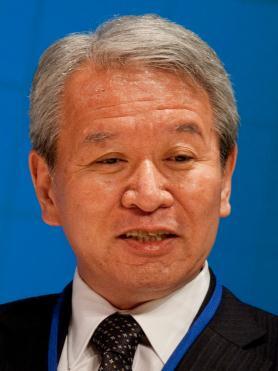
ihiko Tanaka is President of the Japan International Cooperation Agency (JICA). Before assuming the present post, he was Professor of International Politics at the Interfaculty Initiative in Information Studies and at the Institute for Advanced Studies on Asia, the University of Tokyo. Most recently he was Vice President of the University of Tokyo (2011-2012), Executive Vice President of the University of Tokyo (2009-2011), and Director of the Division of International Affairs of the University of Tokyo (2008-2010).

He obtained his B.A. in International Relations at the University of Tokyo in 1977 and his Ph.D. in Political Science at Massachusetts Institute of Technology in 1981.

Mr. Tanaka’s specialties include theories of international politics, contemporary international relations in East Asia, and Japan’s foreign policy. He has numerous books and articles in Japanese and English including the New Middle Ages: The World System in the 21st Century (Tokyo: The International House of Japan, 2002).

He received the Medal with Purple Ribbon for his academic achievements in 2012.


Akihiko Tanaka President Speaker President, Japan International Cooperation Agency
Seminars
Subscribe to International Development