Trade
-

Prime Minister Abe's economic policy, called Abenomics, places policies to open up Japan as a key component.  The government argues that reducing the barriers for international trade and capital flows will revitalize the Japanese economy and restore the growth in Japan.  At the core of the opening up policy are efforts to establish free trade agreements (FTAs) with major trading partners.  Japan joined the negotiation for TPP (Trans-Pacific Partnership), which includes the U.S., Japan's second largest trading partner, in July this year.  Japan has also started negotiation for RCEP (Regional Comprehensive Economic Partnership), which includes China, Japan's largest trading partner.  Will these efforts really succeed in making the Japanese economy more open?  Do they lead to the recovery of Japan from two decades of stagnation?  Experts from both sides of the Pacific discuss these issues.


Participants:

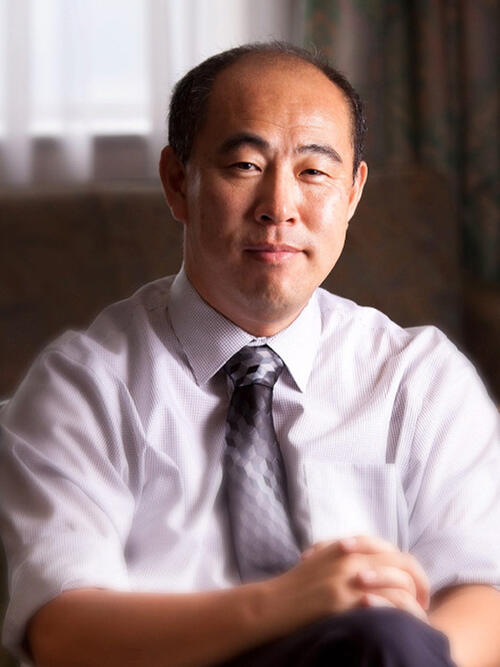
Glen S.

Image
Fukushima is Senior Fellow at the Center for American Progress, a prominent public policy think tank headquartered in Washington, D.C.  From 1990 to 2012, Mr. Fukushima was based in Tokyo as a senior executive with one European and four American multinational corporations: Vice President, AT&T Japan Ltd.; President, Arthur D. Little Japan; President & CEO, Cadence Design Systems Japan; President & CEO, NCR Japan; and President & CEO, Airbus Japan.  Before embarking on his business career in 1990, he was based in Washington, D.C. as Director for Japanese Affairs (1985-1988) and Deputy Assistant United States Trade Representative for Japan and China (1988-1990) at the Office of the United States Trade Representative (USTR), Executive Office of the President.  Mr. Fukushima served two terms as President of the American Chamber of Commerce in Japan, 1998-1999, and Vice President, 1993-1997.  A native of California, Mr. Fukushima was educated at Deep Springs College, Stanford University, Harvard University Graduate School of Arts and Sciences, Harvard Business School, and Harvard Law School. At Harvard, he was awarded a National Science Foundation Fellowship. He has studied and worked in Japan for over 25 years, including at Keio University, a daily newspaper, an international law firm, and as a Fulbright Fellow and a Japan Foundation Fellow at the Faculty of Law, University of Tokyo.


Image
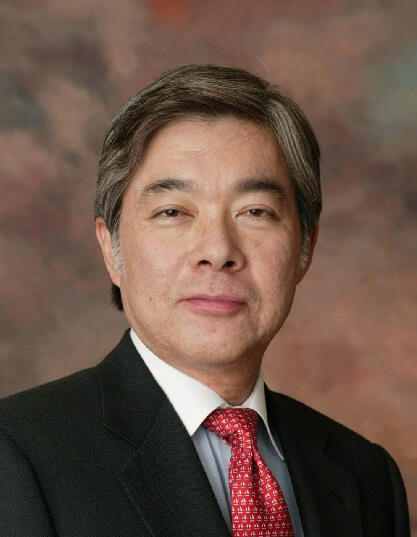
Hideichi Okada joins the Walter H. Shorenstein Asia-Pacific Research Center (Shorenstein APARC) from September, 2013 until March, 2014 as Sasakawa Peace Fellow with the Japan Studies Program (JSP).  His research interests encompass energy policies and trade policies in the context of possible cooperation between Japan and the U.S. During his time at Shorenstein APARC, Okada will be working to launch New Dialogue Program for future cooperation on various areas between Japan and the U.S., and other Asia Pacific countries.  Okada served as Vice Minister for International Affairs, Ministry of Economy, Trade and Industry (METI) from 2010 to 2012, where he promoted international trade and investment, and expanded industrial cooperation with various countries. He also served as Director General of Trade Policy Bureau (2008-2010) and Director General of Commerce and Information Policy Bureau of METI (2007-2008). He worked for Prime Minister Junichiro Koizumi as his executive assistant, where he dealt with policies on economy, industry, energy, science and technology, and environment, and with public relations (2001-2006). He was a professor at GRIPS (2006-2007) and a visiting scholar at Harvard Law School and IR/PS, University of California, San Diego in 2007.  Okada was born in Tokyo in 1951. He received LL.M. degree from Harvard Law School (1981) and graduated from the University of Tokyo with a LL.B. (1976). Currently, he is Senior Advisor, NTT Data Institute of Management and Consulting.


Image
Phillip Lipscy is a center fellow at the Freeman Spogli Institute for International Studies and an assistant professor of political science at Stanford University. His fields of research include Japanese politics, U.S.-Japan relations, international and comparative political economy, international security, and regional cooperation in East and Southeast Asia.  Lipscy is an expert on bargaining over unbalanced representation in international organizations such as the United Nations Security Council, International Monetary Fund, and World Bank. His existing work addresses a wide range of topics such as the use of secrecy in international policy making, the effect of domestic politics on trade, and Japanese responses to the Asian Financial Crisis. His most recent research examines the political and economic factors that facilitate energy-efficient policymaking.  Lipscy obtained his PhD in political science at Harvard University. He received his MA in international policy studies and BA in economics and political science at Stanford University.  Lipscy has been affiliated with the Reischauer Institute of Japanese Studies and Weatherhead Center for International Affairs at Harvard University, the Institute for Global and International Studies at George Washington University, the RAND Corporation, and the Institute for International Policy Studies in Tokyo.


Image
Takeo Hoshi is the Henri and Tomoye Takahashi Senior Fellow at the Walter H. Shorenstein Asia-Pacific Research Center at Stanford University, and professor of finance (by courtesy), Stanford Graduate School of Business. Prior to joining S/APARC, he was Pacific Economic Cooperation Professor in International Economic Relations at the Graduate School of International Relations and Pacific Studies (IR/PS) at the University of California, San Diego (UCSD). Hoshi also serves on the Board of Directors at Union BanCal Corporation. He is also a research associate at the National Bureau of Economic Research (NBER) and at the Tokyo Center for Economic Research (TCER). His main research interests include the study of the financial aspects of the Japanese economy, especially corporate finance, banking, and monetary policy. He received numerous awards for his publications including Corporate Financing and Governance in Japan: The Road to the Future (MIT Press, 2001), co-authored with Anil Kashyap (Graduate School of Business, University of Chicago), and his other publications include, “Japanese Government Debt and Sustainability of Fiscal Policy” (with Takero Doi and Tatsuyoshi Okimoto), Journal of the Japanese and International Economies,2011; “Corporate Restructuring in Japan during the Lost Decade” (with Satoshi Koibuchi and Ulrike Schaede), Japan’s Bubble, Deflation, and Long-term Stagnation, MIT Press, 2011 (Koichi Hamada, Anil K Kashyap, and David E. Weinstein, eds.) He has been the editor-in-chief of the Journal of the Japanese and International Economies since 1999. Hoshi received his BA in social sciences from the University of Tokyo in 1983, and a PhD in economics from the Massachusetts Institute of Technology in 1988.

Philippines Conference Room

Glen S. Fukushima Senior Fellow, Center for American Progress; Former President, American Chamber of Commerce in Japan and Former Deputy Assistant U.S. Trade Representative for Japan and China Panelist

Shorenstein APARC
Encina Hall E317
616 Serra Street
Stanford, CA 94305-6055

(650) 725-2375 (650) 213-6374 (650) 723-6530
0
Sasakawa Peace Fellow
OKADA,_Hideichi_1_3x4.jpg

Hideichi Okada joins the Walter H. Shorenstein Asia-Pacific Research Center (Shorenstein APARC) from September, 2013 until March, 2014 as Sasakawa Peace Fellow with the Japan Studies Program (JSP).

His research interests encompass energy policies and trade policies in the context of possible cooperation between Japan and the U.S. During his time at Shorenstein APARC, Okada will be working to launch New Dialogue Program for future cooperation on various areas between Japan and the U.S., and other Asia Pacific countries.

Okada served as Vice Minister for International Affairs, Ministry of Economy, Trade and Industry (METI) from 2010 to 2012, where he promoted international trade and investment, and expanded industrial cooperation with various countries. He also served as Director General of Trade Policy Bureau (2008-2010) and Director General of Commerce and Information Policy Bureau of METI (2007-2008). He worked for Prime Minister Junichiro Koizumi as his executive assistant, where he dealt with policies on economy, industry, energy, science and technology, and environment, and with public relations (2001-2006). He was a professor at GRIPS (2006-2007) and a visiting scholar at Harvard Law School and IR/PS, University of California, San Diego in 2007.

Okada was born in Tokyo in 1951. He received LL.M. degree from Harvard Law School (1981) and graduated from the University of Tokyo with a LL.B. (1976). Currently, he is Senior Adviser, NTT Data Institute of Management and Consulting.

Hideichi Okada The Sasakawa Peace Fellow, Shorenstein APARC Panelist Stanford University
0
Former Thomas Rohlen Center Fellow at the Freeman Spogli Institute for International Studies
Former Assistant Professor of Political Science
phillip_lipscy_2018.jpg PhD

Phillip Y. Lipscy was the Thomas Rohlen Center Fellow at the Freeman Spogli Institute for International Studies and Assistant Professor of Political Science at Stanford University until August 2019. His fields of research include international and comparative political economy, international security, and the politics of East Asia, particularly Japan.

Lipscy’s book from Cambridge University Press, Renegotiating the World Order: Institutional Change in International Relations, examines how countries seek greater international influence by reforming or creating international organizations. His research addresses a wide range of substantive topics such as international cooperation, the politics of energy, the politics of financial crises, the use of secrecy in international policy making, and the effect of domestic politics on trade. He has also published extensively on Japanese politics and foreign policy.

Lipscy obtained his PhD in political science at Harvard University. He received his MA in international policy studies and BA in economics and political science at Stanford University. Lipscy has been affiliated with the Reischauer Institute of Japanese Studies and Weatherhead Center for International Affairs at Harvard University, the Institute of Social Science at the University of Tokyo, the Institute for Global and International Studies at George Washington University, the RAND Corporation, and the Institute for International Policy Studies.

For additional information such as C.V., publications, and working papers, please visit Phillip Lipscy's homepage.


Phillip Lipscy The Thomas Rohlen Center Fellow, FSI and Assistant Professor, Department of Political Science Panelist Stanford University
0
Former Henri H. and Tomoye Takahashi Senior Fellow in Japanese Studies at the Freeman Spogli Institute for International Studies
Former Professor, by courtesy, of Finance at the Graduate School of Business
takeo_hoshi_2018.jpg PhD

Takeo Hoshi was Henri and Tomoye Takahashi Senior Fellow at the Freeman Spogli Institute for International Studies (FSI), Professor of Finance (by courtesy) at the Graduate School of Business, and Director of the Japan Program at the Shorenstein Asia-Pacific Research Center (APARC), all at Stanford University. He served in these roles until August 2019.

Before he joined Stanford in 2012, he was Pacific Economic Cooperation Professor in International Economic Relations at the Graduate School of International Relations and Pacific Studies (IR/PS) at University of California, San Diego (UCSD), where he conducted research and taught since 1988.

Hoshi is also Visiting Scholar at Federal Reserve Bank of San Francisco, Research Associate at the National Bureau of Economic Research (NBER) and at the Tokyo Center for Economic Research (TCER), and Senior Fellow at the Asian Bureau of Finance and Economic Research (ABFER). His main research interest includes corporate finance, banking, monetary policy and the Japanese economy.

He received 2015 Japanese Bankers Academic Research Promotion Foundation Award, 2011 Reischauer International Education Award of Japan Society of San Diego and Tijuana, 2006 Enjoji Jiro Memorial Prize of Nihon Keizai Shimbun-sha, and 2005 Japan Economic Association-Nakahara Prize.  His book titled Corporate Financing and Governance in Japan: The Road to the Future (MIT Press, 2001) co-authored with Anil Kashyap (Booth School of Business, University of Chicago) received the Nikkei Award for the Best Economics Books in 2002.  Other publications include “Will the U.S. and Europe Avoid a Lost Decade?  Lessons from Japan’s Post Crisis Experience” (Joint with Anil K Kashyap), IMF Economic Review, 2015, “Japan’s Financial Regulatory Responses to the Global Financial Crisis” (Joint with Kimie Harada, Masami Imai, Satoshi Koibuchi, and Ayako Yasuda), Journal of Financial Economic Policy, 2015, “Defying Gravity: Can Japanese sovereign debt continue to increase without a crisis?” (Joint with Takatoshi Ito) Economic Policy, 2014, “Will the U.S. Bank Recapitalization Succeed? Eight Lessons from Japan” (with Anil Kashyap), Journal of Financial Economics, 2010, and “Zombie Lending and Depressed Restructuring in Japan” (Joint with Ricardo Caballero and Anil Kashyap), American Economic Review, December 2008.

Hoshi received his B.A. in Social Sciences from the University of Tokyo in 1983, and a Ph.D. in Economics from the Massachusetts Institute of Technology in 1988.

Former Director of the Japan Program at the Shorenstein Asia-Pacific Research Center
CV
Takeo Hoshi Henri H. and Tomoye Takahashi Senior Fellow in Japanese Studies at FSI; Professor, by courtesy, of Finance, Graduate School of Business and Director, Japan Studies Program, Shorenstein APARC Moderator Stanford University
Panel Discussions

Shorenstein APARC
Encina Hall E317
616 Serra Street
Stanford, CA 94305-6055

(650) 725-2375 (650) 213-6374 (650) 723-6530
0
Sasakawa Peace Fellow
OKADA,_Hideichi_1_3x4.jpg

Hideichi Okada joins the Walter H. Shorenstein Asia-Pacific Research Center (Shorenstein APARC) from September, 2013 until March, 2014 as Sasakawa Peace Fellow with the Japan Studies Program (JSP).

His research interests encompass energy policies and trade policies in the context of possible cooperation between Japan and the U.S. During his time at Shorenstein APARC, Okada will be working to launch New Dialogue Program for future cooperation on various areas between Japan and the U.S., and other Asia Pacific countries.

Okada served as Vice Minister for International Affairs, Ministry of Economy, Trade and Industry (METI) from 2010 to 2012, where he promoted international trade and investment, and expanded industrial cooperation with various countries. He also served as Director General of Trade Policy Bureau (2008-2010) and Director General of Commerce and Information Policy Bureau of METI (2007-2008). He worked for Prime Minister Junichiro Koizumi as his executive assistant, where he dealt with policies on economy, industry, energy, science and technology, and environment, and with public relations (2001-2006). He was a professor at GRIPS (2006-2007) and a visiting scholar at Harvard Law School and IR/PS, University of California, San Diego in 2007.

Okada was born in Tokyo in 1951. He received LL.M. degree from Harvard Law School (1981) and graduated from the University of Tokyo with a LL.B. (1976). Currently, he is Senior Adviser, NTT Data Institute of Management and Consulting.

-

Motoshige Itoh, Professor, Graduate School of Economics, University of Tokyo. He has served as President of the National Institute for Research Advancement since February 2006, and held the post of Dean at the Gradual School of Economics from 2007 to 2009. He was professor of the Graduate School of Economics and the Faculty of Economics since 1993, and Assistant Professor in Economics since 1982. He has served in various government committees, including the Ministry of International Trade and Industry, Ministry of Finance, Economic Planning Agency, Fair Trade Commission, and others and was a member of Economic Strategy Council in 1998-1999. He has been an advisor to the Statistical Division at the Bank of Japan, and a visiting scholar at various institutions, including the Department of Economics at Harvard University, the Australia-Japan Research Centre, Australian National University, and Research Institute at the Bank of Japan. He has published numerous books and papers on Japan’s economy and finance. He received his BA from Tokyo University and PhD from University of Rochester, both in Economics.

Hideaki Miyajima, Director, Waseda Institute for Advanced Study(WIAS), Professor of Japanese Economy, Graduate School of Commerce, Waseda University. He teaches Japanese Economy, and Corporate Governance in Japan.  He stayed at Reischauer Institute of Japanese Studies, Harvard University as a visiting scholar for 1992-94 and 2004-05. He was asked to consult by several institutions such as the World Bank, Hawaii University, Hebrew University, and Korean Development Institute. He was also appointed to numerous positions: Faculty Fellow, Research Institute of Economy, Trade & Industry, a Special Research Fellow of Policy Research Institute (Ministry of Finance), Research Fellow of EHESS (Paris), and an Adjunct Professor of Chung-Ang University (Seoul). He wrote several books and numerous papers including: Corporate Governance in Japan, Oxford University Press, 2007 (co-edited), Changes and Continuity in Japan, Curzon Press, 2002 (co-edited), Policies for Competitiveness, Oxford University Press, 1999 (co-edited), He received his Ph.D in Economics from the University of Tokyo.

Takeo Hoshi, Henri and Tomoye Takahashi Senior Fellow at the Walter H. Shorenstein Asia-Pacific Research Center at Stanford University, and professor of finance (by courtesy), Stanford Graduate School of Business. Prior to joining S/APARC, he was Pacific Economic Cooperation Professor in International Economic Relations at the Graduate School of International Relations and Pacific Studies (IR/PS) at the University of California, San Diego (UCSD). Hoshi also serves on the Board of Directors at Union BanCal Corporation. He is also a research associate at the National Bureau of Economic Research (NBER) and at the Tokyo Center for Economic Research (TCER). His main research interests include the study of the financial aspects of the Japanese economy, especially corporate finance, banking, and monetary policy. He received numerous awards for his publications including Corporate Financing and Governance in Japan: The Road to the Future (MIT Press, 2001), co-authored with Anil Kashyap (Graduate School of Business, University of Chicago), and his other publications include, “Japanese Government Debt and Sustainability of Fiscal Policy” (with Takero Doi and Tatsuyoshi Okimoto), Journal of the Japanese and International Economies,2011; “Corporate Restructuring in Japan during the Lost Decade” (with Satoshi Koibuchi and Ulrike Schaede), Japan’s Bubble, Deflation, and Long-term Stagnation, MIT Press, 2011 (Koichi Hamada, Anil K Kashyap, and David E. Weinstein, eds.) He has been the editor-in-chief of the Journal of the Japanese and International Economies since 1999. Hoshi received his BA in social sciences from the University of Tokyo in 1983, and a PhD in economics from the Massachusetts Institute of Technology in 1988.
Philippines Conference Room

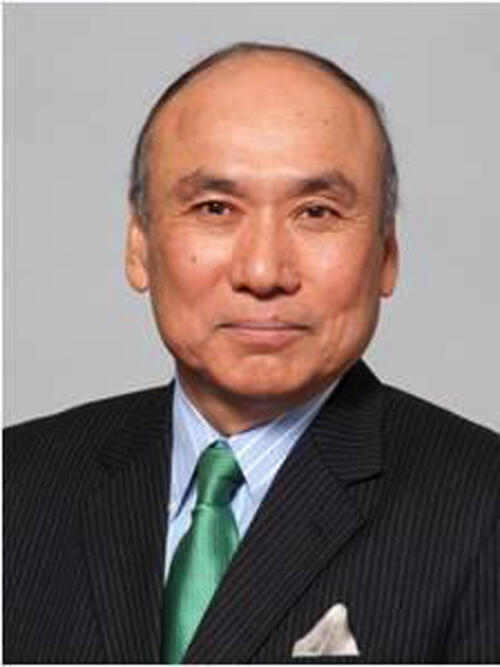
Motoshige Itoh Professor, Graduate School of Economics Panelist University of Tokyo
Hideaki Miyajima Director, Waseda Institute for Advanced Study(WIAS), Professor of Japanese Economy, Graduate School of Commerce, Waseda University Panelist
0
Former Henri H. and Tomoye Takahashi Senior Fellow in Japanese Studies at the Freeman Spogli Institute for International Studies
Former Professor, by courtesy, of Finance at the Graduate School of Business
takeo_hoshi_2018.jpg PhD

Takeo Hoshi was Henri and Tomoye Takahashi Senior Fellow at the Freeman Spogli Institute for International Studies (FSI), Professor of Finance (by courtesy) at the Graduate School of Business, and Director of the Japan Program at the Shorenstein Asia-Pacific Research Center (APARC), all at Stanford University. He served in these roles until August 2019.

Before he joined Stanford in 2012, he was Pacific Economic Cooperation Professor in International Economic Relations at the Graduate School of International Relations and Pacific Studies (IR/PS) at University of California, San Diego (UCSD), where he conducted research and taught since 1988.

Hoshi is also Visiting Scholar at Federal Reserve Bank of San Francisco, Research Associate at the National Bureau of Economic Research (NBER) and at the Tokyo Center for Economic Research (TCER), and Senior Fellow at the Asian Bureau of Finance and Economic Research (ABFER). His main research interest includes corporate finance, banking, monetary policy and the Japanese economy.

He received 2015 Japanese Bankers Academic Research Promotion Foundation Award, 2011 Reischauer International Education Award of Japan Society of San Diego and Tijuana, 2006 Enjoji Jiro Memorial Prize of Nihon Keizai Shimbun-sha, and 2005 Japan Economic Association-Nakahara Prize.  His book titled Corporate Financing and Governance in Japan: The Road to the Future (MIT Press, 2001) co-authored with Anil Kashyap (Booth School of Business, University of Chicago) received the Nikkei Award for the Best Economics Books in 2002.  Other publications include “Will the U.S. and Europe Avoid a Lost Decade?  Lessons from Japan’s Post Crisis Experience” (Joint with Anil K Kashyap), IMF Economic Review, 2015, “Japan’s Financial Regulatory Responses to the Global Financial Crisis” (Joint with Kimie Harada, Masami Imai, Satoshi Koibuchi, and Ayako Yasuda), Journal of Financial Economic Policy, 2015, “Defying Gravity: Can Japanese sovereign debt continue to increase without a crisis?” (Joint with Takatoshi Ito) Economic Policy, 2014, “Will the U.S. Bank Recapitalization Succeed? Eight Lessons from Japan” (with Anil Kashyap), Journal of Financial Economics, 2010, and “Zombie Lending and Depressed Restructuring in Japan” (Joint with Ricardo Caballero and Anil Kashyap), American Economic Review, December 2008.

Hoshi received his B.A. in Social Sciences from the University of Tokyo in 1983, and a Ph.D. in Economics from the Massachusetts Institute of Technology in 1988.
Former Director of the Japan Program at the Shorenstein Asia-Pacific Research Center
CV
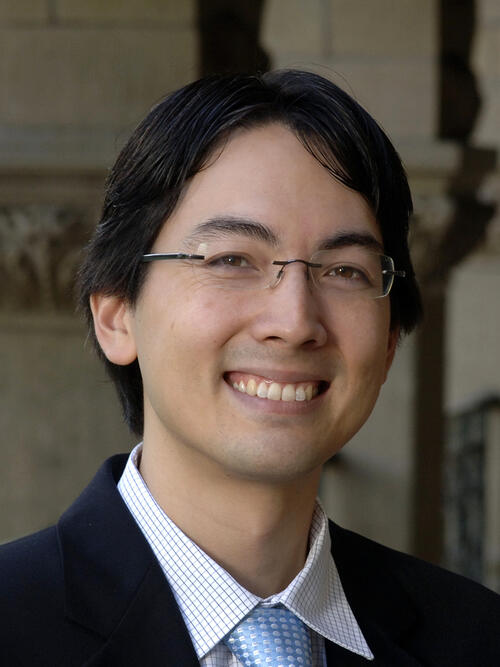
Takeo Hoshi Henri H. and Tomoye Takahashi Senior Fellow at the Walter H. Shorenstein Asia-Pacific Research Center Panelist Stanford University
Panel Discussions
News Type
News
Date
Paragraphs
China's recent trade dispute with the United States and ongoing territorial tensions with Japan have made headlines. Phillip Lipscy weighs in on the bigger issues behind current events.
Hero Image
ContainerShip LOGO
A container ship passes under the Golden Gate Bridge, Oct. 2010. China and the United States have recently filed trade complaints against one another.
Flickr user pmarkham
All News button
1
Paragraphs

This report discusses desirable policy directions and options in the aftermath of the Great Tohoku Earthquake. It argues that the importance of Japan’s productivity growth has not been invalidated by the disaster, and suggests that Japan should consider restoration and reconstruction from the earthquake as a great opportunity to reposition its policies.

It identifies concrete steps Japan can take to jump start growth in three broad themes: regulatory reforms (reducing the costs of doing business, stopping protection for zombie firms, deregulation especially in non-manufacturing sectors and growth enhancing special zones); opening-up of the Japanese economy (trade liberalization, reduction of agricultural subsidies and new immigration policy); and macroeconomic policy reforms (fiscal consolidation and monetary expansion to end deflation).


All Publications button
1
Publication Type
Policy Briefs
Publication Date
Journal Publisher
National Institute for Research Advancement
Authors
Takeo Hoshi
-

Prior to March 11, 2011, many observers had all but written Japan's economy off; after all, it was said, Japan produced only 10 percent of global manufacturing output. Four days later, the world realized that a good portion of that 10 percent sits at a critical upstream spot in the global supply chain, in many products that we not only like (such as the iPad) but also need (e.g., fine chemicals for lithium-ion batteries, silicon wafers, or microcontrollers). In some cases, more than half of global output in critical input materials was located in the Tohoku region. Remarkably, by May 2011, most of the factories not located in the radiation zone had repaired the earthquake damage and resumed operations. 

This presentation explores Japan's role in producing components and materials that are critical in global manufacturing, and then zooms in to analyze the speedy efforts at reconstruction by Japanese business after the Tohoku disaster. It argues that Japan is unlikely to relinquish its leading role in supplying critical components due to this shock, precisely because these "New Japan" companies are competitive, nimble, and fast.

Ulrike Schaede studies Japan’s corporate strategy, business organization, management, financial markets, and regulation. Her book Choose and Focus: Japanese Business Strategies for the 21st Century (Cornell UP, 2008) argues that Japan’s business organization has undergone a strategic inflection so fundamental that our knowledge of Japanese business practices from the 1980s and 1990s is no longer adequate. Her current research looks at “New Japan” companies that have assumed global supply chain leadership in materials and components. She also works on projects regarding corporate restructuring, changing human resource practices, and entrepreneurship in Japan.

Schaede holds an MA from Bonn University, and a PhD from the Philipps-Universtät in Marburg, Germany. She is trilingual and has spent a total of more than eight years of research and study in Japan. She has been a visiting scholar at the research institutes of the Bank of Japan, Japan's Ministry of Finance, and the Ministry of Economy, Trade and Industry, and at the Development Bank of Japan. Before joining the University of California, San Diego in 1994, Schaede held academic positions in Germany (Philipps-Universtät Marburg) and Japan (Hitotsubashi University, Tokyo), and she was a visiting professor at the business schools of UC Berkeley and Harvard.

Philippines Conference Room

Ulrike Schaede Professor of Japanese Business Speaker University of California, San Diego
Seminars
Paragraphs

Cloud computing is rapidly emerging as the new information technology platform. It is, however, much more than simply a new set of technologies and business models. Cloud computing is transforming how consumers, companies, and governments store information, how they process that information, and how they utilize computing power. It can be an engine of innovation, a platform for entrepreneurship, and driver of corporate efficiency. While an increasingly commonly term, confusion remains over what exactly constitutes cloud computing, how the markets are unfolding, and what forces will drive their evolution and diffusion. This paper provides an overview and conceptual tools for business leaders, policymakers, and non-specialist scholars to identify, distill, and easily understand the core aspects of how cloud computing service markets are developing, and how an array of policy issues will influence how this new computing platform unfolds across the world.

All Publications button
1
Publication Type
Journal Articles
Publication Date
Journal Publisher
Journal of Industry, Competition, and Trade
Authors
Kenji E. Kushida
Paragraphs

While globally successful Japanese industries were able to use their domestic market as a springboard into international markets, Japan’s telecommunications sector became decoupled from global markets, trapping Japanese ICT firms in the domestic market. This persistent pattern of leading without followers was not simply the result of misguided technological choices, ill-informed corporate strategies, or insular government standard-setting processes. Rather, the dynamics of competition, shaped and reshaped by political dynamics and regulatory structures, decoupled it from global markets. These dynamics created a “Galapagos effect,” in which winning in an isolated domestic market led to losing in global markets. Major regulatory shifts transformed the dynamics of competition since the late 1990s, decreasing the isolation of Japan’s telecommunications sector, but some factors pulling it along a proprietary trajectory persist. This paper highlights the dilemma of how to develop beyond a follower status, but avoid becoming a leader without followers.

All Publications button
1
Publication Type
Journal Articles
Publication Date
Journal Publisher
Journal of Industry, Competition, and Trade
Authors
Kenji E. Kushida
Subscribe to Trade