
Japan’s Global Content Industries: Innovations and Reinventions in Film, Animation, and Traditional Culture
Japan’s Global Content Industries: Innovations and Reinventions in Film, Animation, and Traditional Culture
Thursday, February 19, 20269:00 AM - 5:30 PM (Pacific)
Bechtel Conference Center
Encina Hall, 1st Floor
616 Jane Stanford Way
Stanford, CA 94305
Parking
Click here for instructions on purchasing visitor parking. The closest visitor parking to Encina Hall can be found at the following:
- Track House Lot (ParkMobile Parking Zone 7295)
- Memorial Lot (ParkMobile Parking Zone 7213)
- Littlefield Lot (ParkMobile Parking Zone 7282)
- Knight Management Center Garage (ParkMobile Parking Zone 7207)

Join the Japan Program of the Shorenstein Asia-Pacific Research Center (APARC) at Stanford University for a full-day, in-person conference on the sources of creation and innovation in the globally renowned content industries of Japan.
Building on the success of last year’s conference, we hear from the creative minds around live-action and animated films of Japan that have garnered international accolades in recent years, and the traditional cultural industries that continue to reinvent themselves after decades and even centuries since their foundation. The growing attention to Japanese culture and the increasing number of tourists visiting Japan enhanced the appeal of these cultural products, leading to global successes of Japanese films, music, food, clothes, and more. What are the reasons for the immense appeal of Japanese content creations, and what drives Japanese creators and innovators to produce and distribute them?
The morning sessions highlight Japanese film and animation, featuring creators and producers who share insights into creative processes, production decisions, and global distribution. The afternoon sessions turn to traditional culture and heritage-based industries, bringing together leaders from long-standing companies to explore how inherited values, craftsmanship, and organizational philosophies are carried forward with constant reinterpretation to adapt to the contemporary and international contexts.
Held at Stanford—where scholarship meets innovation—the conference reflects APARC Japan Program’s mission to foster U.S.-Japan dialogue and connect academic insight with real-world cultural and creative transformation. Whether you are a film enthusiast, a cultural practitioner, or a future creator, join us for engaging discussions about the drivers of Japanese creativity and its continuing evolution.
Note: This event will be photographed and videotaped, and by entering this venue, you consent to Stanford University and approved media using your image and likeness. Any photography and videography may not be available for future viewing at a later date.
Media Advisory and Press Contact
Journalists interested in covering the conference should contact Shorenstein APARC’s Communications Manager, Michael Breger, at mbreger@stanford.edu by February 17 at 5 p.m. PT to register and receive accreditation. At the venue, they will be required to present a press credential from an established news organization. Freelance reporters should email a letter from the news organization for which they work to Michael Breger by the February 17 deadline.
Parking Information
Click here for instructions on purchasing visitor parking. The closest visitor parking to Encina Hall can be found at the following:
- Track House Lot (ParkMobile Parking Zone 7295)
- Memorial Lot (ParkMobile Parking Zone 7213)
- Littlefield Lot (ParkMobile Parking Zone 7282)
- Knight Management Center Garage (ParkMobile Parking Zone 7207)
For general inquiries, contact aparc-communications@stanford.edu.
8:15-9 a.m.
Check-in
9-9:10 a.m.
Welcome remarks
Kiyoteru Tsutsui
Director, Shorenstein APARC Japan Program, Stanford University
Panel 1- Creativity and Global Expansion of Japanese Film and Anime
9:10-9:50 a.m.
Presentation by Yosuke Kodaka
President, Aniplex of America Inc.
9:50-10:30 a.m.
Presentation by Chieko Murata
Corporate Executive, Myriagon Studio
10:30-10:50 a.m.
Coffee break
10:50 a.m.-11:30 a.m.
Fireside Chat with Go Shiina
Composer, Arranger, and Lyricist
Moderator: Yasushi Maruyama, Visiting Scholar, Shorenstein APARC, Stanford University
11:30 a.m.-12:30 p.m.
Panel discussion with Yosuke Kodaka, Chieko Murata, and Go Shiina
Moderator: Ichiya Nakamura, President, iUniversity
12:30-2 p.m.
Lunch break
Panel 2- Japanese Traditional Culture, Innovation, and Global Expansion
2-2:10 p.m.
Afternoon Opening Remarks by Banjo Yamauchi
Founder & CEO, Yamauchi-No.10 Family Office
2:10-2:50 p.m.
Presentation by Mitsuharu Kurokawa
President, TORAYA Confectionery Co.Ltd.
2:50-3:30 p.m.
Presentation by Takahiro Yagi
Kaikadō 6th Generation Craftsperson
3:30-3:50 p.m.
Coffee break
3:50-4:30 p.m.
Presentation by Masataka Hosoo
President, HOSOO Co., Ltd.
4:30-5:20 p.m.
Panel discussion with Mitsuharu Kurokawa, Takahiro Yagi, and Masataka Hosoo
Moderator: Banjo Yamauchi, Founder & CEO, Yamauchi-No.10 Family Office
5:20-5:30 p.m.
Closing remarks
Kiyoteru Tsutsui
Director, Shorenstein APARC Japan Program, Stanford University

Yosuke Kodaka began his career at Aniplex Inc. in 2005, working in international licensing and distribution of anime.Over the years, he has helped bring Japanese animation to audiences across the globe.
From 2010 to 2014, he played a key role in launching Aniplex of America and building its foundation in the U.S. market.In 2017, he moved to Shanghai to establish the company’s China office, expanding its presence in Asia. Since 2021, he has been based in Los Angeles again, leading Aniplex of America.
With nearly 20 years of experience in the anime industry, he enjoys sharing insights on the global anime business, international collaboration, and the future of content creation—especially with students interested in media, storytelling, and cross-cultural innovation.

Chieko Murata graduated from Doshisha University with a major in Journalism, then studied film production at California State University. Upon returning to Japan after working at the Sundance Institute supporting emerging filmmakers, she joined NHK, where she worked on productions such as Zero Year: Afghanistan (winner of the Golden Globe Award for Best Foreign Language Film) and Our Rainbow-colored World (Camera d'Or at the Cannes Film Festival). She entered the Japanese live-action film industry with Boy Meets Pusan (2007, directed by Masaharu Take) and later worked at CJ Entertainment and 20th Century Fox before joining Sony Pictures, where she produced titles such as 50 First Kisses (2018, directed by Yuichi Fukuda). She received the Fujimoto Special Award for Kingdom (2019, directed by Shinsuke Sato).
Since 2019, Ms. Murata has produced live-action works at Aniplex. In 2024, with the establishment of MYRIAGON STUDIO, she transferred to the new company and was appointed Executive Officer of the Production Division. She developed and produced the feature film Kokuhō (National Treasure, 2025, directed by Lee Sang-il).

Go Shiina (born Masaru Shiina) is an acclaimed Japanese composer, arranger, and lyricist recognized for his dynamic and genre-spanning music in anime, video games, and live performance. Originally from Yashio City in Saitama Prefecture, Shiina established his own music company, GOKEN Co., Ltd., in 2020, headquartered in Tokyo
Shiina’s anime scoring career includes notable works such as Kyousougiga, Juni Taisen: Zodiac War, and Tokyo Fish Attack. He is widely known internationally for co-composing the global hit Demon Slayer: Kimetsu no Yaiba alongside Yuki Kajiura, further cementing his reputation for emotionally resonant and highly cinematic soundtracks.
His portfolio also spans titles like God Eater, Magical Sisters Yoyo & Nene, Operation Han-Gyaku-Sei Million Arthur, and The Vexations of a Shut-In Vampire Princess
In the gaming sphere, Shiina has contributed to major franchises including Tekken, Ace Combat, CODE VEIN, Arknights, Uma Musume Pretty Derby, and numerous Tales series titles, notably Tales of Legendia, Tales of Zestiria, and Tales of the Rays. His arranging work has also appeared on televised music programs, including NHK’s Kōhaku Uta Gassen.
With a career defined by stylistic range, memorable melodies, and sophisticated orchestration, Go Shiina continues to be one of Japan’s most distinctive contemporary composers across visual media.

Ichiya Nakamura is a leading figure in Japan’s digital innovation, cultural policy, and creative industries ecosystem. He currently serves as a Project Researcher at Kyoto University and holds advisory roles with institutions including RIKEN and the Japan eSports Union. Beyond academia and research, he is widely recognized for chairing key Japanese government committees on intellectual property and pop culture, and for serving as president of influential consortiums such as the CiP Association, the Digital Signage Consortium, and CIRIEC.
Professor Nakamura’s career bridges academia, policy, technology, and culture. He was a Professor at Keio University from 2006 to 2020, Executive Director of the Stanford Japan Center between 2002 and 2006, and a Visiting Professor at the MIT Media Lab from 1998 to 2002. Before entering academia, he spent more than a decade as a policy maker at the Ministry of Posts and Telecommunications, shaping Japan’s early telecommunications and digital policies. Earlier in his career, he also worked in the creative sector as the director of the alternative rock band Shonen Knife.
He is the author of numerous books and articles exploring digital society, culture, and strategy, including New Edition, Super Free Society (2021), Super Free Society (2019), Contents and National Strategy (2013), and Ichiya Nakamura’s New Generation IT Business Evolution (2011), among others.
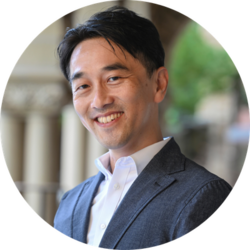
Yasushi Maruyama is a Visiting Scholar at Stanford University’s Asia-Pacific Research Center (APARC) and a Partner at Egon Zehnder, a leading global leadership advisory firm. With over two decades advising global corporations on CEO succession, executive development, and governance — including previous roles at McKinsey in Japan and Germany — Yasushi combines deep insights from academia and practice. As former head of Egon Zehnder Japan and a member of its Global Executive Committee, he has coached over 100 senior executives through transformative leadership journeys. His research focuses on corporate governance and cross-cultural leadership, particularly within Japan’s evolving economic landscape. A lifelong enthusiast of games, manga, and anime, Yasushi is passionate about bridging Japan’s vibrant creative culture with Silicon Valley innovation. He is honored to serve as Co-organizer and Moderator of this conference.

Mitsuharu Kurokawa is President of Toraya Confectionery Co., Ltd. After graduating from Babson College in the U.S. in 2008, he joined Toraya. Following a period working at the Paris branch, he underwent training at another company from 2011 to 2012, serving overseas as an employee of a trading firm. Upon returning to Toraya, he was appointed Vice President in 2018. He spearheaded projects such as the renovation of the Akasaka store and the opening of Maison KEI, developed in collaboration with Michelin three-star chef Kei Kobayashi, before assuming his current position in June 2020.
Founded in the early 16th century in Kyoto, Toraya is a premier maker of wagashi (traditional Japanese confections). The company became a purveyor to the Imperial Court during the reign of Emperor Goyozei (1586–1611). Toraya established a foothold in Tokyo in 1869, following the transfer of the national capital after the Meiji Restoration. At present, Toraya operates three factories and approximately 80 stores throughout Japan, in addition to its boutique in Paris.
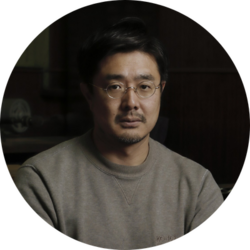
Takahiro Yagi is a Japanese artisan and the sixth-generation head (Representative Director and President) of Kaikado, the historic Kyoto metalworking company best known for handcrafted tea canisters called chazutsu (tea caddies).
Kaikadō was established in 1875 shortly after Japan opened its doors to the rest of the world. In the Edo era, canisters made from tin were commonly used as storage for tea, as were jars made from china or earthenware. Kaikadō's founder, Seisuke, first designed a tin Chazutsu (tea caddy) and made it into a commercially available item. His aim was to provide a well-designed, functional tea caddy capable of storing the type of tea leaves commonly sold by dealers. In a time before the invention of the refrigerator, air tightness was key to maintaining the flavour and quality of freshly picked leaves for a period of one year and Kaikado’s tea caddies were a blessing in disguise to tea dealers. With a manufacturing process that involves anywhere between 130 to 140 steps, these hand-made tea caddies have virtually remained true to the original designs of Kaikadō's founding generation with the die and mold used in the early years of the company still in use today. The current successor, Takahiro, has developed a two-tiered tea caddy, initiated the first ever collaborations with tea brands and has started marketing his caddies abroad.
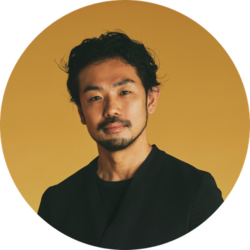
Masataka Hosoo is the 12th generation leader of his family’s namesake textile mill, which serves clients such as Louis Vuitton, Dior, Chanel and The Ritz Carlton. In 2023, he struck a deal with LVMH Métiers d'Art to help preserve the Japanese mill’s ancient know-how, keeping it relevant for luxury brands with shifting priorities and facing growing complexity in global supply chains.
Founded in Kyoto in 1688, Hosoo’s history can be traced back to the city’s silk industry of the sixth century. Today it is still known for its intricate kimono fabrics, centuries-old Nishijin-ori weaving techniques, and excellence in silk fabric production. Under Masataka’s leadership, the business has invested in innovative looms and software-powered processes to support its focus on handicrafts and designs — a delicate balance that has helped Hosoo thrive in an increasingly challenging marketplace.
Masataka pursued a career in music and worked in jewellery manufacturing before joining Hosoo in 2008. In 2012, he founded the “Go On” project to unite Kyoto-based successors of traditional craft businesses and promote them on the global stage. He was named in Nikkei Business’ list of Japan’s 100 Most Influential People of 2014 and Forbes Japan 100 list in 2021, the same year he published his book, “Challenging the World with Japanese Aesthetics.”

Banjo Yamauchi is the fifth generation of the Yamauchi family, founders of Nintendo. In 2020, he established and currently leads the Yamauchi No.10 Family Office (YFO), followed by the creation of the Yamauchi Foundation in 2021. He also serves on the Board of Directors of Yamauchi KK, a family company founded in 1933 as the Nintendo Cooperative. Beyond his family enterprises, Banjo plays diverse roles across industries: he is a Director of the Artificial Life Institute, an international research organization for artificial life; a Director of Hikoju-Makie, a collective of artisans preserving and advancing the Japanese lacquerware tradition; and an External Director of K2 Pictures, a film production company.
YFO is recognized as a pioneer among active family offices in Japan. In the field of investment, YFO pursues engagement investments in Japanese listed companies—both independently and through its investment arm, Taiyo Pacific Partners, a Seattle-based activist fund with more than 20 years of experience in Japanese equity investments. In 2021, YFO acquired 100% ownership of Taiyo. Recent highlights include leading the management buyout of Roland DG, a major industrial printer manufacturer, to take the company private (September 2024), and driving the merger of Toyo Construction with the Taisei Corporation group as its largest shareholder (August 2025).
The Yamauchi Foundation, headquartered in Kyoto, seeks to transform Nintendo’s birthplace into a global hub for distinctive and talented creators. The foundation also collaborates with the Boston Commune, centered at Harvard University, to shape a global agenda for 2030 and beyond - grounded in Japanese and Eastern philosophy.

Kiyoteru Tsutsui is the Henri H. and Tomoye Takahashi Professor, Professor of Sociology, Senior Fellow at the Freeman Spogli Institute for International Studies, and Director of the Walter H. Shorenstein Asia-Pacific Research Center, where he is also Director of the Japan Program and Co-Director of the Southeast Asia Program. Tsutsui’s research interests lie in political/comparative sociology, social movements, globalization, human rights, and Japanese society. His most recent publication, Human Rights and the State: The Power of Ideas and the Realities of International Politics (Iwanami Shinsho, 2022), was awarded the 2022 Ishibashi Tanzan Award and the 44th Suntory Prize for Arts and Sciences.