
Japan's Economic Security and the Semiconductor Industry: The Validity of the Revitalization Strategy
Japan's Economic Security and the Semiconductor Industry: The Validity of the Revitalization Strategy
Wednesday, March 4, 20262:00 PM - 3:30 PM (Pacific)
Philippines Conference Room
Encina Hall, Third Floor, Central, C330
616 Jane Stanford Way, Stanford, CA 94305
Encina Hall, Third Floor, Central, C330
616 Jane Stanford Way, Stanford, CA 94305

In this talk, Prof. Akabane presents research that examines the background behind the recent emphasis on economic security, the history of Japan's semiconductor industry, and the validity of Japan's ongoing semiconductor industry revitalization strategy.
Economic security gained prominence globally starting in the late 2010s as the U.S.-China economic rivalry became apparent, leading to related legislative developments. Furthermore, the semiconductor shortage that emerged in 2020 impacted production and social activities globally, leading to semiconductors being positioned as strategic materials. Under the banner of economic security, nations are now working to strengthen their semiconductor industry supply chains.
Japan's semiconductor industry held a high market share in the Dynamic Random Access Memory (DRAM) sector during the 1980s. However, it lost competitiveness in the 1990s due to a misjudgment of market trends and changes in the external environment, such as the Japan-U.S. trade friction and yen appreciation. Its logic integrated circuit (IC) micro-processing technology stalled at 40nm in the 2010s. Against this backdrop, the semiconductor shortage that emerged in 2020 caused the Japanese government to recognize the need to revitalize its semiconductor industry, leading to the launch of two major projects currently underway: TSMC Kumamoto and Rapidus.
A comparative analysis, however, reveals strikingly different outcomes for supply chain resilience – a core component of economic security. TSMC Kumamoto strengthened linkages with Japan's equipment, materials, automotive, and electronics sectors, raising expectations that it would bolster Japan's domestic supply chain. Rapidus, by contrast, signals Japan's entry into the global supply chain for advanced logic ICs – a domain it had previously not participated in – rather than primarily reinforcing domestic resilience.
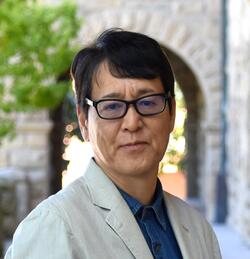
Jun Akabane joins the Walter H. Shorenstein Asia-Pacific Research Center (APARC) as a visiting scholar beginning spring 2025 through winter 2026. He currently serves as Professor at Chuo University in the Department of Economics. While at APARC, he will be conducting research analyzing business strategies in the era of economic security from the perspective of global value chains, environmental and human rights issues, with a particular focus on companies in the U.S. and Asia.