Governance

FSI's research on the origins, character and consequences of government institutions spans continents and academic disciplines. The institute’s senior fellows and their colleagues across Stanford examine the principles of public administration and implementation. Their work focuses on how maternal health care is delivered in rural China, how public action can create wealth and eliminate poverty, and why U.S. immigration reform keeps stalling. 

FSI’s work includes comparative studies of how institutions help resolve policy and societal issues. Scholars aim to clearly define and make sense of the rule of law, examining how it is invoked and applied around the world. 

FSI researchers also investigate government services – trying to understand and measure how they work, whom they serve and how good they are. They assess energy services aimed at helping the poorest people around the world and explore public opinion on torture policies. The Children in Crisis project addresses how child health interventions interact with political reform. Specific research on governance, organizations and security capitalizes on FSI's longstanding interests and looks at how governance and organizational issues affect a nation’s ability to address security and international cooperation.

Authors
Callista Wells
News Type
News
Date
Paragraphs

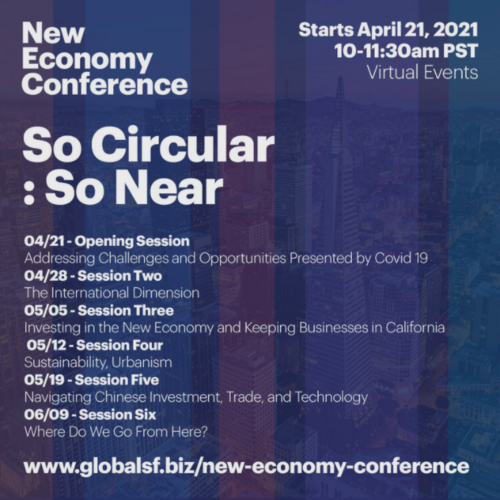
In collaboration with Global:SF and the State of California Governor’s Office of Business and Economic Development, the China Program at Shorenstein APARC presented session five of the New Economy Conference, "Navigating Chinese Investment, Trade, and Technology," on May 19. The program featured distinguished speakers Ambassador Craig Allen, President of the US-China Business Council; David K. Cheng, Chair and Managing Partner of China & Asia Pacific Practice at Nixon Peabody LLPJames Green, Senior Research Fellow at the Initiative for U.S.-China Dialogue on Global Issues at Georgetown University; and Anja Manuel, Co-Founder and Principal of Rice, Hadley, Gates & Manuel LLC. The session was opened by Darlene Chiu Bryant, Executive Director of GlobalSF, and moderated by Professor Jean Oi, William Haas Professor of Chinese Politics and director of the APARC China Program.

U.S.-China economic relations have grown increasingly fraught and competitive. Even amidst intensifying tensions, however, our two major economies remain intertwined. While keeping alert to national security concerns, the economic strength of the United States will depend on brokering a productive competition with China, the world’s fastest growing economy. Precipitous decoupling of trade, investment, and human talent flows between the two nations will inflict unnecessary harm to U.S. economic interests--and those of California.  

Chinese trade and investments into California have grown exponentially over the last decade. But they have come under increasing pressure following geopolitical and economic tensions between the two nations, particularly in the science and technology sectors. Ambassador Craig Allen, David Cheng, James Green, and Anja Manuel explored the role of Chinese economic activity in California in the context of the greater US-Chinese relationship. Watch now: 

Read More

Paper boats with Chinese and American flags
News

Partner, Competitor, and Challenger: Thoughts on the Future of America’s China Strategy

Ryan Hass, Michael H. Armacost Chair in Foreign Policy Studies at the Brookings Institution, discusses the future of US-China relations. Can we find room for cooperation in this contentious relationship?
Partner, Competitor, and Challenger: Thoughts on the Future of America’s China Strategy
Kurt Campbell and Laura Rosenberger speaking at the 2021 Oksenberg Conference
News

White House Top Asia Policy Officials Discuss U.S. China Strategy at APARC’s Oksenberg Conference

National Security Council’s Coordinator for Indo-Pacific Affairs Kurt Campbell and Senior Director for China and Taiwan Laura Rosenberger describe the shifting U.S. strategic focus on Asia and the Biden administration’s approach to engaging an assertive China.
White House Top Asia Policy Officials Discuss U.S. China Strategy at APARC’s Oksenberg Conference
American and Chinese flags
News

U.S.-China Relations in the Biden Era

Dr. Thomas Wright examines the recent history of US-China relations and what that might mean for the new administration.
U.S.-China Relations in the Biden Era
Hero Image
Blue image with event title, time, and date
All News button
1
Subtitle

Ambassador Craig Allen, David Cheng, James Green, and Anja Manuel explore the role of Chinese economic activity in California in the context of the greater US-Chinese relationship.

Authors
News Type
Q&As
Date
Paragraphs

Vietnam and China are frequently referred to as 'authoritarian regimes,' but in history, political practice, and social governance these two countries are starkly different. This is particularly true of how each government responds to social pressure and civil unrest. Nhu Truong, one of APARC's 2020-21 Shorenstein Postdoctoral Fellows, is researching the root causes of these differences, what they reveal about the specific contexts of each nation's political trajectory, and how they can inform academic discussions of authoritarianism.

Nhu Truong’s dissertation explains how and why the two most similar communist, authoritarian regimes of China and Vietnam differ in their responsiveness to mounting unrest caused by government land seizures. Despite their many similarities, Vietnam has exhibited greater institutionalized responsiveness, whereas China has been relatively more reactive. While at APARC, Nhu has been refining 16 months of fieldwork into a book manuscript. Following her tenure as a Shorenstein Fellow at APARC, she will join the Council for Southeast Asian Studies and the Council for East Asian Studies at Yale University as a postdoctoral associate and has accepted a position as an assistant professor at Denison University starting in 2022.

Nhu sat down to talk more about her research and how the ongoing pandemic has heightened the need to better understand the ways in which different governments implement policy and address social issues. She also shares how she's stayed grounded and positive during an unusual year of change and being a long-distance fellow.

1. Can you give us an overview of your research and the topics you’re investigating?

My research addresses the following question: Why are some authoritarian regimes more responsive to social unrest than others? While it might seem counterintuitive to think of authoritarian regimes in this light, repression and responsiveness often occur in tandem under authoritarian rule. Centered on a comparison between Vietnam and China, I document the steps that each has taken to address social discontent fueled by pervasive government seizures of rural land. In response to societal input between 2003 and 2017, Vietnam enacted comprehensive and programmatic reforms to reduce the permissible scope for government land expropriation whereas those enacted by China were relatively marginal and piecemeal. At the subnational level, this difference has had important implications for land rights and the security of villagers in both countries. In summary, despite their many similarities, the manner and degree of their responsiveness have varied. My research then traces the historical origins that undergird the political development and institutional character of Vietnam and China’s divergent responsiveness to social unrest. 

2. How did you first become interested in these topics?

My interest in the repressive-responsive character of authoritarian regimes stems from my preoccupation with questions of political legitimacy, societal resistance, and institutional dynamics in authoritarian contexts. One particular experience that stoked my interest was my visit to Wukan, Guangdong in 2016. Wukan was once hailed as an emblematic case of grassroots democracy and accommodation by the Chinese state, when villagers’ outcries against the local government’s seizure of their land resulted in the re-election of the village committee in 2012. Yet, when I visited in 2016, villagers expressed that nothing had changed, and that “everything that could be done has already been done.” This experience led me to question what responsiveness means in authoritarian contexts.

3. During the last year, the world has changed significantly because of the pandemic and fluctuating politics in many nations. Have these changing global situations given you any new insights into your research?

The pandemic has underscored the need for a nuanced and contextual understanding of democracies and non-democracies. For instance, the variation in state responses to COVID-19 suggests that there is no clear correlation between responsiveness or the effectiveness of government responses to COVID-19 and regime types. Consider Vietnam’s proactive approach and success at containing the pandemic as opposed to the US. Other recent developments such as the crackdowns on pro-democracy protests in Thailand and mass protests against the recent military coup in Myanmar showcase how quickly state responsiveness to social demands can erode, even in multi-party states.

4. What has your experience as one of our Shorenstein Fellows been like during this unusual period of time when we haven’t physically been together at APARC?

My fellowship has been remote, and I have therefore needed to be much more proactive to stay as engaged as possible. I have consulted with my mentor often over Zoom, and reached out to other scholars for their feedback and advice on my research. I have also especially appreciated the chance to participate in the China Social Science Workshop, where I've shared my work and learned from other presenters. Other postdoctoral fellows at APARC and I have also gotten together virtually to exchange stories and to share our experiences from this unusual year.  

5. What are some of the things you've done during this past year to give yourself a break from work and have some fun?

Due to the pandemic, I have been living back home to Austin, Texas, since March of last year. The last time that I was home for this long must have been after I graduated from college. So, for the first time in a long time, I've planted tomatoes, eggplants, and sunflowers in our garden, and I've really enjoyed watching them bloom and ripen. With everything growing, it feels like I've spent most of my break in our backyard defending our flowers, fruits, and vegetables from squirrels and bunnies! But luckily I also have our two dogs, Wishie and Sushi, to help me!

6. As the state of the pandemic changes and things in academia and our communities, what are some things you are looking forward to both professionally and personally?

I'm certainly looking forward to having conferences in person again! I'm also still not sure when it will be possible and safe for me to visit Asia again, especially Vietnam and China, but I have missed these places. I'm also learning Khmer this summer, and I'm excited to eventually visit Cambodia to pursue my research there.

Read More

[Left] Postdoc Spotlight, Jeffrey Weng, Shorenstein Postdoctoral Fellow in Contemporary Asia, [Right] Jeffrey Weng
Q&As

Postdoc Spotlight: Jeffrey Weng on Language and Society

Shorenstein Postdoctoral Fellow in Contemporary Asia Jeffrey Weng shares insights from his research into how language and society shape one another, particularly how the historical use of Mandarin affects contemporary Chinese society and linguistics.
Postdoc Spotlight: Jeffrey Weng on Language and Society
Hero Image
Postdoc Spotlight on Nhu Truong, 2020-21 Shorenstein Fellow
All News button
1
Subtitle

2020-21 Shorenstein Postdoctoral Fellow Nhu Truong, who studies how authoritarian regimes like China and Vietnam respond to social pressure, explains why understanding differences in governance is crucial in an era of fluctuating politics and pandemic.

Authors
Callista Wells
News Type
News
Date
Paragraphs

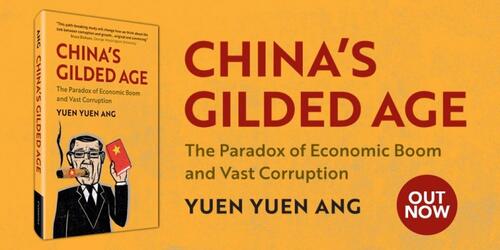
On May 5, 2021, the APARC China Program hosted Professor Yuen Yuen Ang, Associate Professor of Political Science at the University of Michigan for her program, "The Role of Corruption in China's Speedy, Risky Boom." Based on her recently published book, China's Gilded Age, Ang explored the impact of corruption on China's economy and how it compares to other countries around the world, including the United States during the late 1800s. Professor Jean Oi, William Haas Professor of Chinese Politics and director of the APARC China Program, moderated the event.

While corrupt countries are usually poor, China appears to be an exception. President Xi Jinping acknowledges that corruption in the country has reached crisis proportions. If this is true, Ang asks, why has China nevertheless sustained 40 years of economic growth and deep transformation?

In fact, Ang argues, China is not as anomalous as it seems; its experience is strikingly similar to America’s Gilded Age during the 19th century. Ang unbundles corruption into four different types that each harms the economy in a different way. Similar to America’s Gilded Age, reform-era China has steadily evolved toward a particular type of corruption: access money (elite exchanges of power and wealth). Simultaneously, beginning in the 2000s, the central government effectively curbed directly growth-damaging types of corruption such as embezzlement and bureaucratic extortion. Access money fueled commerce by rewarding politicians for aggressively promoting growth and connected capitalists for building more and taking on more risky ventures. But such corruption also produced systemic risks, distortions, and inequality—problems that define China's Gilded Age under Xi's leadership. As a result, China today is a high-growth but risky and imbalanced economy.

Despite popular perceptions that China and the United States are two polar opposites, Ang argues, contemporary China and 19th century America share more similarities than we normally think. Their divergent political systems, however, drove contrasting responses to the excesses of capitalism. Watch now:

Read More

National Emblem of the People's Republic of China on the Great Hall of the People
News

What’s ‘Communist’ about the Communist Party of China?

Is the Chinese Communist Party really communist at all? Expert Jude Blanchette, Freeman Chair in China Studies at the Center for Strategic and International Studies, weighs in.
What’s ‘Communist’ about the Communist Party of China?
Paper boats with Chinese and American flags
News

Partner, Competitor, and Challenger: Thoughts on the Future of America’s China Strategy

Ryan Hass, Michael H. Armacost Chair in Foreign Policy Studies at the Brookings Institution, discusses the future of US-China relations. Can we find room for cooperation in this contentious relationship?
Partner, Competitor, and Challenger: Thoughts on the Future of America’s China Strategy
United States Capitol Building from an angle
News

When Beijing Goes to Washington: Autocratic Lobbying Influence in Democracies

Professor Erin Baggot Carter tells us how autocratic lobbying affects political outcomes and media coverage in democracies.
When Beijing Goes to Washington: Autocratic Lobbying Influence in Democracies
Hero Image
Cover of "China's Gilded Age" by Yuen Yuen Ang
All News button
1
Subtitle

How has corruption simultaneously driven China’s economic boom and financial risks? Professor Yuen Yuen Ang explains its role in producing a high-growth but also high-risk economy.

-

Please note that the event end time has changed to 1 PM (PT) due to a last-minute schedule conflict for our speakers.


This is a virtual event. Please click here to register and generate a link to the talk. 
The link will be unique to you; please save it and do not share it with others.


Kurt Campbell, Deputy Assistant to the President and Coordinator for Indo-Pacific Affairs, United States National Security Council (NSC); and Laura Rosenberger, Special Assistant to the President and Senior Director for China and Taiwan, NSC, will discuss President Biden’s China strategy, how it might differ from that of the Trump administration, and how the US can best pursue its values and interests amidst China’s rise in the Indo-Pacific. 

The Oksenberg Conference, held annually honors the legacy of the late Professor Michel Oksenberg (1938–2001) who was a senior fellow at Shorenstein APARC and the Freeman Spogli Institute for International Studies. Professor Oksenberg also served as a key member of the National Security Council when the United States normalized relations with China, and consistently urged that the United States engage with Asia in a more considered manner. In tribute, the Oksenberg Lecture recognizes distinguished individuals who have helped to advance understanding between the United States and the nations of the Asia-Pacific.


Speakers 
 

Image
Portrait of Kurt Campbell
Kurt M. Campbell serves as Deputy Assistant to the President and Coordinator for Indo-Pacific Affairs on the United States National Security Council. He was previously Chairman and CEO of The Asia Group, LLC, a strategic advisory and capital management group. From 2009 to 2013, he served as the Assistant Secretary of State for East Asian and Pacific Affairs, where he is widely credited as being a key architect of the “pivot to Asia.” For advancing a comprehensive US strategy that took him to every corner of the Asia-Pacific region, Secretary Hillary Clinton awarded him the Secretary of State’s Distinguished Service Award (2013) — the nation’s highest diplomatic honor. Campbell was formerly the CEO and Co-Founder of the Center for a New American Security and concurrently served as the Director of the Aspen Strategy Group and Chairman of the Editorial Board of the Washington Quarterly. He is the author or editor of ten books including Difficult Transitions: Why Presidents Fail in Foreign Policy at the Outset of Power and Hard Power: The New Politics of National Security. He received his BA from UC San Diego and his Doctorate in International Relations from Brasenose College at Oxford University.
 

Image
Portrait of Laura Rosenberger
Laura Rosenberger serves as Special Assistant to the President and Senior Director for China and Taiwan on the United States National Security Council (NSC). Rosenberger was most recently the director of the Alliance for Securing Democracy and a senior fellow at The German Marshall Fund (GMF) of the United States. Before she joined GMF, she was foreign policy advisor for Hillary for America, where she coordinated development of the campaign’s national security policies, messaging, and strategy. Prior to that, she served in a range of positions at the State Department and the NSC. As chief of staff to Deputy Secretary of State Anthony Blinken and later as then-Deputy National Security Advisor Blinken’s senior advisor, she counseled on the full range of national security policy. In her role at the NSC, she also managed the interagency Deputies Committee, the U.S. government’s senior-level interagency decision-making forum on our country’s most pressing national security issues. Rosenberger also has extensive background in the Asia-Pacific region, particularly Northeast Asia. She served as NSC director for China and Korea, managing and coordinating U.S. policy on China and the Korean Peninsula, and in a variety of positions focused on the Asia-Pacific region at the Department of State, including managing U.S.–China relations and addressing North Korea’s nuclear programs. She also served as special assistant to Under Secretary of State for Political Affairs Bill Burns, advising him on Asia-Pacific affairs and on nonproliferation and arms control issues. Rosenberger first joined the State Department as a presidential management fellow.
 

Portrait of Michael McFaulMichael McFaul is Director at the Freeman Spogli Institute for International Studies, the Ken Olivier and Angela Nomellini Professor of International Studies in the Department of Political Science, and the Peter and Helen Bing Senior Fellow at the Hoover Institution. He joined the Stanford faculty in 1995. McFaul also is an International Affairs Analyst for NBC News and a columnist for The Washington Post. He served for five years in the Obama administration, first as Special Assistant to the President and Senior Director for Russian and Eurasian Affairs at the National Security Council at the White House (2009-2012), and then as U.S. Ambassador to the Russian Federation (2012-2014). He has authored several books, most recently the New York Times bestseller From Cold War to Hot Peace: An American Ambassador in Putin’s Russia. Earlier books include Advancing Democracy Abroad: Why We Should, How We Can; Transitions To Democracy: A Comparative Perspective (eds. with Kathryn Stoner); Power and Purpose: American Policy toward Russia after the Cold War (with James Goldgeier); and Russia’s Unfinished Revolution: Political Change from Gorbachev to Putin.

Via Zoom. Register at: https://bit.ly/3vWF2Wa

Kurt M. Campbell <br><i>Deputy Assistant to the President and Coordinator for Indo-Pacific Affairs, National Security Council</i><br><br>
Laura Rosenberger <br><i>Special Assistant to the President and Senior Director for China and Taiwan, National Security Council</i><br><br>
Michael McFaul, moderator <br><i>Director, Freeman Spogli Institute for International Studies; Ken Olivier and Angela Nomellini Professor of International Studies, Department of Political Science, Stanford University</i><br><br>
Conferences
Authors
Callista Wells
News Type
News
Date
Paragraphs

On April 21, 2021, the APARC China Program hosted Professor Erin Baggott Carter, Assistant Professor in the Department of Political Science and International Relations, University of Southern California, and Visiting Scholar at the Stanford Center on Democracy, Development and the Rule of Law. Her program, "When Beijing Goes to Washington: Autocratic Lobbying Influence in Democracies," explored how lobbying from China and China-based companies can affect policy in the United States. Professor Jean Oi, William Haas Professor of Chinese Politics and director of the APARC China Program, moderated the event.

Professor Baggot Carter based her talk on a dataset drawn from the public records of the US Foreign Agents Registration Act, which includes over 10,000 lobbying activities undertaken by the Chinese government between 2005 and 2019. According to Baggot Carter, the evidence suggests that Chinese government lobbying makes legislators at least twice as likely to sponsor legislation that is favorable to Chinese interests. Moreover, US media outlets that participated in Chinese-government sponsored trips subsequently covered China as less threatening. Coverage pivoted away from US-China military rivalry and the CCP’s persecution of religious minorities and toward US-China economic cooperation. These results suggest that autocratic lobbying poses an important challenge to democratic integrity. Watch now: 

Read More

National Emblem of the People's Republic of China on the Great Hall of the People
News

What’s ‘Communist’ about the Communist Party of China?

Is the Chinese Communist Party really communist at all? Expert Jude Blanchette, Freeman Chair in China Studies at the Center for Strategic and International Studies, weighs in.
What’s ‘Communist’ about the Communist Party of China?
Paper boats with Chinese and American flags
News

Partner, Competitor, and Challenger: Thoughts on the Future of America’s China Strategy

Ryan Hass, Michael H. Armacost Chair in Foreign Policy Studies at the Brookings Institution, discusses the future of US-China relations. Can we find room for cooperation in this contentious relationship?
Partner, Competitor, and Challenger: Thoughts on the Future of America’s China Strategy
American and Chinese flags
News

U.S.-China Relations in the Biden Era

Dr. Thomas Wright examines the recent history of US-China relations and what that might mean for the new administration.
U.S.-China Relations in the Biden Era
Hero Image
United States Capitol Building from an angle Photo by Harold Mendoza on Unsplash
All News button
1
Subtitle

Professor Erin Baggot Carter tells us how autocratic lobbying affects political outcomes and media coverage in democracies.

-

Please note the event time has been changed to 10:30AM (PT) to 12:00PM (PT).


This is a virtual event. Please click here to register for the talk. 


This event is presented in partnership with Global:SF and the State of California Governor’s Office of Business and Economic Development.
 

U.S.-China economic relations have grown increasingly fraught and competitive.  Even amidst intensifying tensions, however, our two major economies remain intertwined.  While keeping alert to national security concerns, the economic strength of the United States will depend on brokering a productive competition with China, the world’s fastest growing economy.  Precipitous decoupling of trade, investment, and human talent flows between the two nations will inflict unnecessary harm to U.S. economic interests -- and those of California.  

Chinese trade and investments into California have grown exponentially over the last decade.  But they have come under increasing pressure following geopolitical and economic tensions between the two nations, particularly in the science and technology sectors.  This session will explore the role of Chinese economic activity in California in the context of the greater US-Chinese relationship. 


Portrait of Ambassador Craig AllenCraig Allen began his tenure in Washington, DC, as the sixth President of the United States-China Business Council, a private, nonpartisan, nonprofit organization representing over 200 American companies doing business with China. Ambassador Allen began his government career in 1985 at the Department of Commerce’s International Trade Administration (ITA) where, from 1986 to 1988, he worked as an international economist in ITA’s China Office. In 1988, Allen transferred to the American Institute in Taiwan, where he served as Director of the American Trade Center in Taipei. He returned to the Department of Commerce for a three-year posting at the US Embassy in Beijing as Commercial Attaché in 1992. In 1995, Allen was assigned to the US Embassy in Tokyo where he was promoted to Deputy Senior Commercial Officer in 1998. Allen became a member of the Senior Foreign Service in 1999. Starting from 2000, he served a two-year tour at the National Center for APEC in Seattle where he worked on the APEC Summits in Brunei, China, and Mexico. In 2002, Allen first served as the Senior Commercial Officer in Beijing where he was later promoted to the Minister Counselor rank of the Senior Foreign Service. After a four-year tour in South Africa, Ambassador Allen became Deputy Assistant Secretary for Asia at the US Department of Commerce’s International Trade Administration. He later became Deputy Assistant Secretary for China. Ambassador Allen was sworn in as the United States ambassador to Brunei Darussalam on December 19, 2014 where he served until he transitioned to take up his position as President of the US-China Business Council.
 

Image
Portrait of David Cheng
David Cheng is the chair and managing partner of Nixon Peabody’s China and Asia-Pacific practice. He is qualified in both the United States and Hong Kong. He focuses on cross-border transactions, litigations and investigations, advising on issues ranging from acquisitions, capital financing (initial public offering), intellectual property protection and disputes to fraud, FCPA and SEC investigations. He has a client portfolio from all over the world, including the United States, Middle East, Europe, Japan, Singapore, Taiwan, mainland China and Hong Kong.
 

james greenJames Green has worked for over two decades on U.S.-Asia relations. For five years, Green was the Minister Counselor for Trade Affairs at the U.S. Embassy in Beijing (2013-2018).  As the senior official in China from the Office of the United States Trade Representative (USTR), Green was deeply involved in all aspects of trade negotiations, trade enforcement, and in reducing market access barriers for American entities.  In prior government service, Green worked on the Secretary of State’s Policy Planning Staff and at the State Department’s China Desk on bilateral affairs. He also served as the China Director of the White House’s National Security Council.  In the private sector, Green was a senior vice president at the global strategy firm founded by former Secretary of State Madeleine Albright and was the founding government relations manager at the American Chamber of Commerce in Shanghai, Asia’s largest AmCham.  Currently, Green is a Senior Research Fellow at Georgetown University's Initiative for U.S.-China Dialogue on Global Issues and hosts a U.S.-China Dialogue Podcast.  He was most recently named as APARC's inaugural China Policy Fellow
 

Image
Portrait of Anja Manuel
Anja Manuel is Co-Founder and Principal, along with former Secretary of State Condoleezza Rice, former National Security Advisor Stephen Hadley and former Secretary of Defense Robert Gates, in Rice, Hadley, Gates & Manuel LLC, a strategic consulting firm that helps US companies navigate international markets. She currently serves on two corporate boards: Overseas Shipping Group, Inc., a NYSE listed energy transportation company, and Ripple Labs Inc., a leading blockchain payments company. Manuel also serves on several advisory boards, including Former Governor Brown’s California Export Council. From 2005-2007, she served as an official at the U.S. Department of State, responsible for South Asia Policy. She is a frequent commentator on foreign policy and technology policy, for TV and radio (NBC/MSNBC, Fox Business, BBC, Bloomberg, Charlie Rose, NPR, etc.) and writes for publications ranging from the New York Times, to the Financial Times, Fortune, The Atlantic, and Newsweek, among others. She is the author of the critically acclaimed This Brave New World: India, China and the United States, published by Simon and Schuster in 2016. A graduate of Harvard Law School and Stanford University, Manuel now also lectures and is a Research Affiliate at Stanford University. She is the Director of the Aspen Strategy Group and Aspen Security Forum -- the premier bipartisan forum on foreign policy in the U.S. -- and is a member of the Council on Foreign Relations.


This Session is part of a larger conference series titled “The New Economy Conference – California’s Place in the New Global Economy”.   The New Economy Conference will broadcast public programs from April 21-May 25 on a weekly basis, designed to inform and identify the impact of COVID-19 on the economic competitiveness and resilience of the State of California.  Topics addressed will include Challenges and Opportunities Post-COVID in California (4/21); the International Dimension (4/28), Investing in the New Economy and Keeping Businesses in California (5/5); Sustainability and Urbanism (5/12); Navigating Chinese Investment, Trade and Technology (5/19); and Where do We Go from Here? (6/09).


Via Zoom Webinar. Register at: https://www.globalsf.biz/session-5-nec 

Amb. Craig Allen <br><i>President of US-China Business Council</i><br><br>
David K. Cheng <br><i>Chair and Managing Partner of China & Asia Pacific Practice, Nixon Peabody LLP</i><br><br>
James Green <br><i>Senior Research Fellow, Initiative for U.S.-China Dialogue on Global Issues, Georgetown University</i><br><br>
Anja Manuel <br><i>Co-Founder and Principal, Rice, Hadley, Gates & Manuel LLC</i><br><br>
Seminars
Authors
Callista Wells
News Type
News
Date
Paragraphs

The China Program at Shorenstein APARC had the pleasure of hosting Ryan Hass, Michael H. Armacost Chair in Foreign Policy Studies at the Brookings Institution for the program "Partner, Competitor, and Challenger: Thoughts on the Future of America’s China Strategy." Hass explored cooperation and competition between the United States and China before engaging in a lively Q&A session with the audience. Professor Jean Oi, William Haas Professor of Chinese Politics and director of the APARC China Program, moderated the event.

Presently, China is at once a major and increasingly hostile competitor to the U.S., a formidable challenger to U.S. regional and global leadership, and an important partner on a range of transnational challenges. An important and pressing question for many is whether or not it will be possible for both sides to coexist amidst intensifying competition. In his talk, Ryan Hass explored this question by delving into the present and future of US-China relations, as well as the discourse that shapes and is shaped by that relationship. He also discussed the likelihood of conflict between the two countries, particularly surrounding Taiwan, suggesting that it might not be as likely as many of us fear. Listen now: 

Read More

National Emblem of the People's Republic of China on the Great Hall of the People
News

What’s ‘Communist’ about the Communist Party of China?

Is the Chinese Communist Party really communist at all? Expert Jude Blanchette, Freeman Chair in China Studies at the Center for Strategic and International Studies, weighs in.
What’s ‘Communist’ about the Communist Party of China?
Banner of Hau L. Lee
News

The Pandemic, U.S.-China Tensions and Redesigning the Global Supply Chain

The Pandemic, U.S.-China Tensions and Redesigning the Global Supply Chain
American and Chinese flags
News

U.S.-China Relations in the Biden Era

Dr. Thomas Wright examines the recent history of US-China relations and what that might mean for the new administration.
U.S.-China Relations in the Biden Era
Hero Image
Paper boats with Chinese and American flags pengpeng on Getty Images
All News button
1
Subtitle

Ryan Hass, Michael H. Armacost Chair in Foreign Policy Studies at the Brookings Institution, discusses the future of US-China relations. Can we find room for cooperation in this contentious relationship?

-

This is a virtual event. Please click here to register and generate a link to the talk. 
The link will be unique to you; please save it and do not share with others.


Corrupt countries are usually poor, yet China is an exception. President Xi Jinping acknowledges that corruption in the country has reached crisis proportions. If this is true, why has China nevertheless sustained 40 years of economic growth and deep transformation?

In this talk, Professor Yuen Yuen Ang will analyze how different types of corruption exert different effects on the economy.  Reminiscent of America’s Gilded Age during the 19th century, reform-era China has steadily evolved toward a particular type of corruption: access money (elite exchanges of power and wealth).  Starting in the 2000s, the central government effectively curbed directly growth-damaging types of corruption such as embezzlement and bureaucratic extortion. But access money fueled commerce by rewarding politicians for aggressively promoting growth and connected capitalists for taking on increasingly risky ventures. Such corruption has also produced systemic risks, distortions, and inequality, however—problems that define China's Gilded Age under Xi Jinping’s leadership. As a result, China today is a high-growth but risky and imbalanced economy. 

Despite popular perceptions that China and the United States are two polar opposites, therefore, contemporary China and 19th century America share some striking commonalities.


Image
Portrait of Yuen Yuen Ang
Yuen Yuen Ang is a PhD graduate of Stanford University, where she studied comparative political economy with a focus on China. She is the inaugural recipient of the Theda Skocpol Prize, awarded by the American Political Science Association for “impactful empirical, theoretical and/or methodological contributions to the study of comparative politics.” She was also named an Andrew Carnegie Fellow for “high-caliber scholarship that applies fresh perspectives to the most pressing issues of our times.” Her first, award-winning book, How China Escaped the Poverty Trap (2016), is acclaimed as “game changing” and “field shifting.” It received the Peter Katzenstein Prize in Political Economy, the Viviana Zelizer Prize in Economic Sociology, and was named “Best of Books 2017″ by Foreign Affairs. The sequel to this book, China’s Gilded Age: the Paradox of Economic Boom & Vast Corruption, is released in 2020. It was featured in The DiplomatThe Economist, and The Wire China. She is an associate professor in political science at the University of Michigan and previously a faculty member at Columbia University SIPA.

Image
Cover of "China's Gilded Age" by Yuen Yuen Ang


Image
American and Chinese flags
This event is part of the 2021 Winter/Spring Colloquia series, Biden’s America, Xi’s China: What’s Now & What’s Next?, sponsored by APARC's China Program.


Via Zoom Webinar. Register at: https://bit.ly/3cEtX5f

Yuen Yuen Ang Associate Professor of Political Science, University of Michigan
Seminars
-

This is a virtual event. Please click here to register and generate a link to the talk. 
The link will be unique to you; please save it and do not share with others.


Presented by the Stanford China Program and the Stanford Center at Peking University.

Tuesday, April 27 
6:00 pm – 7:15 pm (PST) 
Wednesday, April 28 
9:00 am – 10:15 am (China) 

A large amount of ink has been spilled in the last few years--and even more so since COVID-19--in the U.S. regarding American perceptions of the P.R.C.  Relatively little, however, has been conveyed regarding how China might view the U.S. today.  In this talk, we bring together two eminent professors, Professor Jia Qingguo and Professor Wang Dong, from the School of International Studies, Peking University, to examine how policymakers, professionals, and average citizens in China might perceive the United States and what that might imply for the U.S.-China bilateral relationship.  Dr. Thomas Fingar, Shorenstein APARC Fellow, will moderate the conversation.

This event is part of Shorenstein APARC's spring webinar series.


Image
Portrait of Thomas Fingar
Thomas Fingar is a Shorenstein APARC Fellow in the Freeman Spogli Institute for International Studies at Stanford University. He was the inaugural Oksenberg-Rohlen Distinguished Fellow from 2010 through 2015 and the Payne Distinguished Lecturer at Stanford in 2009. From 2005 through 2008, he served as the first deputy director of national intelligence for analysis and, concurrently, as chairman of the National Intelligence Council. Fingar served previously as assistant secretary of the State Department’s Bureau of Intelligence and Research (2000-01 and 2004-05), principal deputy assistant secretary (2001-03), deputy assistant secretary for analysis (1994-2000), director of the Office of Analysis for East Asia and the Pacific (1989-94), and chief of the China Division (1986-89). Between 1975 and 1986 he held a number of positions at Stanford University, including senior research associate in the Center for International Security and Arms Control. Fingar's most recent books are Fateful Decisions: Choices that will Shape China’s Future, co-edited with Jean Oi (Stanford, 2020), and From Mandate to Blueprint: Lessons from Intelligence Reform (Stanford University Press, 2021).
 

Image
Portrait of Jia Qingguo
Jia Qingguo acquired his PhD at the Department of Government, Cornell University. He has been a member of the Standing Committee of the 11th, 12th and 13th National Committees of the Chinese People’s Political Consultative Conference (CPPCC), and was elected in March 2013 as a member of the Committee of Foreign Affairs of the 13th CPPCC. He is a professor and doctoral supervisor, and the former Dean of the School of International Studies at Peking University. He is a member of the Standing Committee of the Central Committee of the China Democratic League and the Director of its Education Committee. He is the Vice Chairman of the Beijing Municipal Committee, Director of the Research Center for International Economic Strategy of China, a member of the Academic Evaluation Committee of the China Foundation for International and Strategic Studies, a member of the Academic Committee of Quarterly Journal of International Politics of Tsinghua University, as well as an adjunct professor at Nankai University and Tongji University. Jia is also a senior researcher of the Hong Kong and Macao Research Institute under the Development Research Center of the State Council. His research mainly focuses on international politics, China-U.S. relations, China’s diplomacy, Cross-Strait relations, China’s rise, and the adjustment of China’s diplomacy. His major publications include: China’s Diplomacy in the 21st Century; Unrealized Reconciliation: China-U.S. Relations in the Early Cold War; and Intractable Cooperation: Sino-U.S. Relations After the Cold War.
 

Image
Portrait of Wang Dong
Wang Dong obtained his PhD in Politics at the University of California, Los Angeles (UCLA). He is now a full professor and doctoral supervisor at the School of International Studies, Executive Director of the Institute for Global Cooperation and Understanding, Vice President of the Office of Humanities and Social Sciences, and Deputy Secretary-General of the American Studies Center (National and Regional Research Base of the Ministry of Education) of Peking University. In addition, he is also the Secretary-General of the Academic Committee of the Pangoal Institution, member of the Steering Committee of the East Asia Security Forum of Western Returned Scholars Association, a member of the Advisory Committee of the Global Times and The Carter Center “Forum for Young Chinese and American Scholars” and a researcher of the Peace in East Asia Program of the Department of Peace and Conflict Research at Uppsala University, Sweden. Wang has led major programs of the National Social Science Fund of China, undertaken major projects of the Ministry of Education, Ministry of Foreign Affairs, and Ministry of Science and Technology, and been funded by the National Social Science Fund of China many times. He was shortlisted for “Munich Young Leader” in 2016 and Beijing “Outstanding Young Scientist” in 2018. He is interested in research on international relations theory, the Cold War, US diplomacy, China-US relations, etc.

Via Zoom Webinar. Register at: https://bit.ly/3rAcwXC

Thomas Fingar <br>Shorenstein APARC Fellow, Stanford University<br><br>
Jia Qingguo (贾庆国) <br>Former Dean and Professor, School of International Studies, Peking University<br><br>
Wang Dong (王栋) <br>Professor, School of International Studies, Peking University; Executive Director, Institute for Global Cooperation and Understanding (iGCU), Peking University<br><br>
Seminars
Authors
Callista Wells
News Type
News
Date
Paragraphs

The China Program at Shorenstein APARC had the privilege of hosting Jude Blanchette, the Freeman Chair in China Studies at the Center for Strategic and International Studies (CSIS). The program, entitled "What’s ‘Communist’ about the Communist Party of China?," explored the goals and ideology of the Chinese Communist Party (CCP), as well as what they might mean for the future of China in the global community. Professor Jean Oi, William Haas Professor of Chinese Politics and director of the APARC China Program, moderated the event.

After the death of Mao Zedong in 1976, the goals of the CCP became less clear. As the country began to adopt market reforms in the 1980s and 1990s, CCP theorists were forced into contortions providing ideological justifications for policies that appeared overtly capitalist. Deng Xiaoping’s concept of “Socialism with Chinese characteristics” came to be seen as a theoretical fig leaf rather than a description of an egalitarian economic system, and by the 2000s, a consensus emerged that the CCP had completely abandoned any pretense of pursuing the Marxist vision it purported to hold. With the rise of Xi Jinping, however, the Party talks with renewed vigor about Marxism-Leninism and the goal of achieving actual, existing socialism. Has the CCP re-discovered communism?  In his talk, Blanchette discussed the abandoned and existing legacies of Mao Zedong, Marxism-Leninism, and the CCP’s vision of socialism. Watch now: 

Read More

Min Ye speaking
News

Domestic or International? The Belt and Road Initiative Is More Internally Focused Than We Think, Says Expert Min Ye

Domestic or International? The Belt and Road Initiative Is More Internally Focused Than We Think, Says Expert Min Ye
Banner of Hau L. Lee
News

The Pandemic, U.S.-China Tensions and Redesigning the Global Supply Chain

The Pandemic, U.S.-China Tensions and Redesigning the Global Supply Chain
American and Chinese flags
News

U.S.-China Relations in the Biden Era

Dr. Thomas Wright examines the recent history of US-China relations and what that might mean for the new administration.
U.S.-China Relations in the Biden Era
Hero Image
National Emblem of the People's Republic of China on the Great Hall of the People
All News button
1
Subtitle

Is the Chinese Communist Party really communist at all? Expert Jude Blanchette, Freeman Chair in China Studies at the Center for Strategic and International Studies, weighs in.

Subscribe to Governance