FSI's research on the origins, character and consequences of government institutions spans continents and academic disciplines. The institute’s senior fellows and their colleagues across Stanford examine the principles of public administration and implementation. Their work focuses on how maternal health care is delivered in rural China, how public action can create wealth and eliminate poverty, and why U.S. immigration reform keeps stalling.
FSI’s work includes comparative studies of how institutions help resolve policy and societal issues. Scholars aim to clearly define and make sense of the rule of law, examining how it is invoked and applied around the world.
FSI researchers also investigate government services – trying to understand and measure how they work, whom they serve and how good they are. They assess energy services aimed at helping the poorest people around the world and explore public opinion on torture policies. The Children in Crisis project addresses how child health interventions interact with political reform. Specific research on governance, organizations and security capitalizes on FSI's longstanding interests and looks at how governance and organizational issues affect a nation’s ability to address security and international cooperation.
Reflections on Journalism Across Asia
Emerging technologies, stemming from the heart of Silicon Valley and extending to Asia and beyond, have pushed the bounds of how stories are told by journalists and the way in which readers interact with them. The Shorenstein Journalism Award, an annual prize given by the Shorenstein Asia-Pacific Research Center (APARC), celebrates 15 years of recognizing distinguished journalists for their innovative and responsible journalism amid social and technological change.
The prize began with “the idea of a media award for a person who has the most significant impact on the relationship with Asia-Pacific nations in the United States,” according to Walter H. Shorenstein, who spoke about his twin interests of Asia and the press in a 2010 oral history project interview and was the benefactor after whom the center is named.
Shorenstein APARC and Harvard’s Shorenstein Center on Media, Politics and Public Policy jointly presented the award for six years. Shorenstein APARC has continued the initiative, and each year, brings the award winner to Stanford to talk with the broader campus community, and since 2011, has alternated between a recipient from the West, who has mainly addressed an American audience, and a recipient from Asia.
The prize seeks to inspire the next generation of U.S. journalists focused on Asia, as well as Asian journalists, who pave the way for press freedom in their countries.
Award winners have explored a multitude of topics over the years, from human rights in North Korea to the rise of democracy in Indonesia and from the U.S.-Japan alliance to gender equality in India. And this year adds an additional view on China; veteran journalist Ian Johnson will address religion and value systems in a panel discussion on May 1 with Xueguang Zhou, Stanford professor of sociology, and Orville Schell, director of the Asia Society's Center on U.S.-China Relations, moderated by Daniel C. Sneider, Shorenstein APARC associate director for research.
To mark the award’s tenure, Shorenstein APARC asked award alumni to answer the question, “What do you think the future holds for journalism in/about Asia?” Their responses are below.
Barbara Crossette is the U.N. correspondent for The Nation and a columnist for India Abroad. She received the Shorenstein Journalism Award in 2010.
Journalism in Asia has had a long history of covering revolutions and wars. However, peace has reigned over Asia for near on 40 years. Yet, the peace and stability in Asia looks increasingly precarious. Asia too is not immune to populist nationalism. In this climate, Asia could yet again become the battleground for dislocation, revolution and war. Journalism, on top of reacting to potential crises, will be critical for proactively finding ways to prevent and defuse crises in the region.
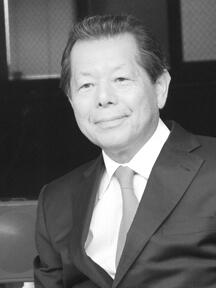
Yoichi Funabashi is the chairman of the Rebuild Japan Initiative Foundation. He received the Shorenstein Journalism Award in 2015.
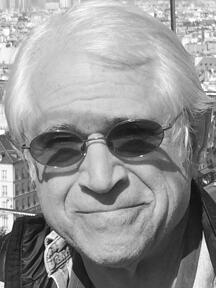
Ian Buruma is a writer and the Paul W. Williams Professor of Democracy, Human Rights, and Journalism at Bard College. He received the Shorenstein Journalism Award in 2008.
Seth Mydans is a contributing writer for the New York Times. He received the Shorenstein Journalism Award in 2009.
Barbara Demick is the Los Angeles Times’ bureau chief in New York and was formerly bureau chief in Beijing and in Seoul. She is the author of Nothing to Envy: Ordinary Lives in North Korea and Logavina Street: Life and death in a Sarajevo Neighborhood. She received the Shorenstein Journalism Award in 2012.
Aung Zaw is the founder and editor-in-chief of The Irrawaddy. He received the Shorenstein Journalism Award in 2013.
Jacob Schlesinger is a senior Washington correspondent for the Wall Street Journal. He received the Shorenstein Journalism Award in 2014.
Orville Schell is the Arthur Ross Director of the Center on U.S.-China Relations at the Asia Society in New York, and former dean of the School of Journalism at the University of California, Berkeley. He received the Shorenstein Journalism Award in 2003.
John Pomfret was a foreign correspondent with the Washington Post for many years. He is the author of The Beautiful Country and the Middle Kingdom: America and China from 1776 to the Present. He received the Shorenstein Journalism Award in 2007.
China faces its future of urbanization
A new book published by the Shorenstein Asia-Pacific Research Center (APARC) explores the future of China’s urbanization. Addressing the complex challenges facing Chinese cities will require updated institutions and unparalleled innovation, researchers say.
[[{"fid":"225386","view_mode":"crop_870xauto","fields":{"format":"crop_870xauto","field_file_image_description[und][0][value]":"","field_file_image_alt_text[und][0][value]":false,"field_file_image_title_text[und][0][value]":false,"field_credit[und][0][value]":"","field_caption[und][0][value]":"","thumbnails":"crop_870xauto"},"type":"media","field_deltas":{"1":{"format":"crop_870xauto","field_file_image_description[und][0][value]":"","field_file_image_alt_text[und][0][value]":false,"field_file_image_title_text[und][0][value]":false,"field_credit[und][0][value]":"","field_caption[und][0][value]":"","thumbnails":"crop_870xauto"}},"link_text":null,"attributes":{"style":"margin-left: 15px; padding: 5px; font-size: 13.008px; float: right; width: 350px; height: 525px;","class":"media-element file-crop-870xauto","data-delta":"1"}}]]
Karen Eggleston, FSI senior fellow and director of the Asia Health Policy Program, speaks on a panel about demographic change and health at the conference, "Challenges in Process of Urbanization: China in Comparative Perspective," Stanford Center at Peking University, May 2014.
What do you hope the book will achieve?
What do “people-centered” solutions to urbanization challenges in China include?
Eggleston: “People-centered” is the term used in China’s official urbanization plan, the New National Urbanization Plan, published in 2014. We defined the term “people-centered” to include what makes life in urban areas attractive. “People-centered” urbanization emphasizes well-being and the factors that lead to a good livelihood, including access to public goods. For example, from a health perspective, cities around the world were historically less healthy locations to live in during the industrial revolution, before basic knowledge of how to control infectious disease with clean water and other population health measures. Now, cities can be healthier places to live in compared to rural areas. The Chinese government has a successful record of building basic infrastructure, but faces many challenges in harnessing the requisite resources to innovate and truly achieve people-centered development.
"In trying to reach a public goal like low-income housing, the Chinese government is trying to set up an incentive system so that the goal can be reached not just with taxpayer money but also by bringing in the private sector to build housing in a way that includes affordable units and doesn’t lead to segregation."
— Karen Eggleston; FSI senior fellow, Asia Health Policy Program director
Jean Oi, FSI senior fellow and director of the China Program, (Center), and Xueguang Zhou, FSI senior fellow and professor of sociology, (Left of Center), take a tour of housing developments during fieldwork with the National Development and Reform Commission in August 2012. Oi is speaking with one of the village leaders about a "new rural community" concept developed in a housing development in Chengdu, where this photo was taken.
Another chapter in the book references pollution. Beijing has faced unprecedented levels of air pollution lately. Does it coincide with urbanization?
"Economic growth is intimately tied to the process of China’s urbanization. Growth of cities has been driven by the ambitions of local officials who want to see their municipalities expand. But the question remains over how they’re going to finance rising needs for and costs of public goods."
— Jean C. Oi; Stanford professor of political science, China Program director
Seasoned journalist analyzes US-China relations under Trump
Shorenstein APARC selects two postdoctoral fellows for 2017-18 academic year
The Shorenstein Asia-Pacific Research Center (APARC), in pursuit of training the next generation of scholars on contemporary Asia, has selected two postdoctoral fellows for the 2017-18 academic year. The fellows will begin their year of academic study and research at Stanford this fall.
Shorenstein APARC has for more than a decade sponsored numerous junior scholars who come to the university to work closely with Stanford faculty, develop their dissertations for publication, participate in workshops and seminars, and present their research to the broader community.
The 2017-18 cohort includes two Shorenstein Postdoctoral Fellows; they carry a broad range of interests from labor migration policy in China to regional institutions in East Asia. Their bios and research plans are listed below:
President Trump's Asia Inbox
Scholars at Stanford's Shorenstein Asia-Pacific Research Center in the Freeman Spogli Institute for International Studies assess the strategic situation in East Asia to be unsettled, unstable, and drifting in ways unfavorable for American interests. These developments are worrisome to countries in the region, most of which want the United States to reduce uncertainty about American intentions by taking early and effective steps to clarify and solidify U.S. engagement. In the absence of such steps, they will seek to reduce uncertainty and protect their own interests in ways that reduce U.S. influence and ability to shape regional institutions. This 23-page report entitled “President Trump’s Asia Inbox” suggests specific steps to achieve American economic and security interests.
President Trump's Asia Inbox
Scholars at Stanford's Shorenstein Asia-Pacific Research Center in the Freeman Spogli Institute for International Studies assess the strategic situation in East Asia to be unsettled, unstable, and drifting in ways unfavorable for American interests. These developments are worrisome to countries in the region, most of which want the United States to reduce uncertainty about American intentions by taking early and effective steps to clarify and solidify U.S. engagement. In the absence of such steps, they will seek to reduce uncertainty and protect their own interests in ways that reduce U.S. influence and ability to shape regional institutions. The recommendations summarized below, and elaborated in a 23-page report entitled “President Trump’s Asia Inbox,” suggest specific steps to achieve American economic and security interests.
» Full Report with Preface from Director Gi-Wook Shin and Introduction by Amb. Michael H. Armacost
Key Recommendations.
Trade and Economic Relations
The dynamic economies of East Asian countries are increasingly integrated and interdependent. The United States is an important market and source of investment and technology, but this is no longer sufficient to ensure that future arrangements and rules will protect American interests. The region is moving toward more formal, rule-based arrangements and the United States must be an active shaper of those institutions.
Most in the region want the United States to play a leading role in the establishment and enforcement of free and fair international economic transactions, and want the rules and mechanisms governing trade to be multilateral ones. If we do not play such a role, China, and possibly others, will seek arrangements that disadvantage American firms.
- The replacement for the Trans-Pacific Partnership (TPP) should build on what was achieved in those negotiations, especially those that would assure market access for U.S. firms and protect intellectual property rights, enforce labor standards, and ensure environmental protection. A single multilateral agreement would be best, but much could be achieved through interlocking and consistent bilateral agreements.
- The administration should adopt policy measures to increase employability and create jobs for the Americans who have been disadvantaged by globalization.
Defense and Security
China’s military buildup and North Korea’s growing arsenal of missiles and nuclear weapons have fueled concerns about U.S. will and ability to honor its security commitments in the region. No one wants a regional arms race or tit-for-tat moves that increase the danger of accidental conflict or escalation, but many believe concrete steps are needed to check perceptions that the United States is becoming less willing to maintain the peace and stability that undergirds regional prosperity.
- While reaffirming the need for a forward presence in the region, reconfigure it along the lines of an “active denial” strategy. “Active denial” means maintaining a forward presence in East Asia that is designed to deny an opponent the benefits of military aggression, especially the prospect of a quick victory. The first component of such a strategy is a resilient force posture, which can be achieved by exploiting the size and depth of the region to distribute units in more locations. The second component is an emphasis on planning to conduct military operations against an adversary’s offensive strike or maneuver forces, not targets deep inside an adversary’s homeland territory and not by carrying out preemptive strikes.
- Strengthen U.S. military capabilities by developing and fielding stealthier air and maritime platforms, increase submarine and anti-submarine assets, and provide forward deployed forces with better active defenses, such as rail guns and lasers. At the same time, the United States should assist those neighbors of the PRC who feel threatened by Chinese assertiveness to develop asymmetric coercive capabilities that can put at risk forward-deployed PLA forces. The United States can use elements of such assistance programs as points of negotiating leverage in our attempts to limit militarization on both sides.
- Continue to promote U.S.-China military relations, emphasizing accident avoidance and crisis management, sustained dialogues on national strategies and doctrines, and cooperative endeavors, such as training exercises and combined operations, where and when feasible and mutually beneficial.
China
People in the region worry about China’s actions and intentions but they worry more about the prospect of confrontation and conflict between the United States and the People’s Republic. They look to the United States as a counterbalance to China but fear that Washington will overreact or underreact to actions by Beijing, or take provocative actions that jeopardize their own interests. The U.S. should:
- Respond to Chinese actions inimical to American interests in ways that protect our interests, achieve U.S. goals shared by others in the region, and avoid both the reality and the appearance of being “anti-China.”
- Reaffirm American commitments to allies and partners including China and Taiwan.
- Tighten enforcement of import restrictions on products produced by firms that have stolen intellectual property from U.S. companies.
Korean Peninsula
North Korea is threatening an ICBM test in 2017, possibly in the next few weeks or months. There is a political vacuum in South Korea, and Seoul is being pressured and punished by Beijing to reverse its decision to accept the deployment of a U.S. THAAD missile defense in South Korea. Under these circumstances, these are our priority recommendations for the administration
- It should work to dissuade North Korea from an ICBM test. Publicly, the new administration should reaffirm that the U.S. would use military means against an ICBM that appeared to threaten the U.S. or one of our allies. Regular spring ROK-U.S. joint military exercises should be held, but calibrated and conducted to avoid giving Pyongyang extra pretext for a test. The Trump administration should appoint a senior envoy empowered to go to Pyongyang to convey openness to renewed diplomacy, while at the same time being clear about the consequences of an ICBM test. China will share this goal, and the new Trump administration should establish a dialogue with China on North Korea based on this shared interest rather than linked to other issues in the U.S.-China relationship, such as bilateral trade. The Trump administration should not negotiate the THAAD issue with Beijing but rather stick to the principle that this is a Seoul-Washington issue.
- The U.S.-ROK relationship will need early and special attention in 2017. Secretary of Defense Mattis’ early visit to the ROK was a wise move. With names already announced for Beijing and Tokyo, a new American ambassador for Seoul should be nominated soon. Despite the political leadership vacuum in Seoul, the Trump administration should strive for the closest possible diplomatic, political, and military coordination on North Korea with our South Korean allies. Trade and burden-sharing issues should not be front-burner issues during South Korea’s political transition. U.S. neutrality in the South Korean election, along with demonstrated respect for South Korea’s democracy, will be carefully monitored, and is essential, as is strengthening U.S. contacts and outreach across the political spectrum in South Korea.
Japan
The Abe administration is the most stable government Japan has had for many years. The prime minister wants to work with Washington, is prepared to deepen defense cooperation with the United States and others in the region, and is eager to lock in the commitments and arrangements negotiated in the TPP. There is a real opportunity to secure access for U.S. firms greater than achieved by any previous administration.
- Build upon arrangements negotiated in TPP to secure a U.S.-Japan free-trade agreement (FTA) that increases access for U.S. firms and locks in economic reforms initiated by the Abe government.
- Propose annual head of state level trilateral cooperation summits with Japan and South Korea and seek greater trilateral cooperation, particularly in the area of security cooperation. Caution Tokyo against steps backward on historical reconciliation.
Southeast Asia and the South China Sea
Southeast Asia is most vulnerable to and concerned about China’s actions and intentions. Countries in the region want the United States to counterbalance and constrain China but worry equally that the United States is unreliable and unequal to the challenge of protecting their interests while preserving American interests vis-à-vis China. Unless given a better option, they will lean toward China for economic and security reasons.
- The United States should anchor U.S. policy on the South China Sea (SCS) to an explicit commitment that no single country—not the US, not China, nor anyone else—should seek or enjoy a monopoly of ownership and control over that body of water. To underscore that commitment, the United States should execute freedom of navigation operations (FONOPs) in waters between and around the Spratly islands. These and other operations in the SCS should be conducted in conformity with the authoritative ruling on the status of its waters and land features issued in 2016 by the arbitral court convened for that purpose under the UN Convention on the Law of the Sea.
- The United States should also try, in concert with its allies and partners, to bring the SCS under international protection and management by a combination of claimant and user states, including the United States and China, based on international law. The Southeast Asia Maritime Security Initiative should be enlarged and upgraded to serve this purpose. If China declines to join, a chair at the table should remain empty should Beijing change its mind.
The U.S. should remain engaged with the process of regional and trans-Pacific institution building, including but not limited to the Association of Southeast Asian Nations (ASEAN) annual meetings, the East Asian Summit, and the Asia Pacific Economic Cooperation (APEC) forum, which will be hosted by Vietnam in 2017.
Full Report with Preface from Gi-Wook Shin and Introduction by Amb. Michael H. Armacost.
The policy recommendations published above are a summary included in the beginning of a 23-page report entitled “President Trump’s Asia Inbox.” You may view the full report here.
About the Contributors
Michael H. Armacost is a Shorenstein APARC Fellow and former U.S. ambassador to Japan and the Philippines.
Karl Eikenberry is the Oksenberg-Rohlen Fellow at Shorenstein APARC; director of the U.S.-Asia Security Initiative; former U.S. ambassador to Afghanistan, and Lieutenant General (Ret.), U.S. Army.
Donald K. Emmerson is a senior fellow emeritus at FSI; director of the Southeast Asia Program at Shorenstein APARC; and affiliated with FSI’s Abbasi Program in Islamic Studies.
Thomas Fingar is a Shorenstein APARC Fellow and has served as former first deputy director of national intelligence for analysis and chairman of the National Intelligence Council, among other positions.
Takeo Hoshi is the Henri H. and Tomoye Takahashi Senior Fellow in Japanese Studies and director of the Japan Program.
Gi-Wook Shin is the director of the Walter H. Shorenstein Asia-Pacific Research Center; senior fellow at the Freeman Spogli Institute for International Studies; director of the Korea Program; and the Tong Yang, Korea Foundation, and Korea Stanford Alumni Chair of Korean Studies, all at Stanford.
Daniel C. Sneider is the associate director for research at Shorenstein APARC, co-director of the Divided Memories and Reconciliation project and a former foreign correspondent.
Kathleen Stephens is the William J. Perry Fellow in the Korea Program at Shorenstein APARC and former U.S. ambassador to the Republic of Korea.
Information for Press.
The contributors are open to comment, interview and provide background information on the contents of the report, “President Trump’s Asia Inbox.” To inquire about availability, please contact Lisa Griswold, Shorenstein APARC Communications and Outreach Coordinator, at lisagris@stanford.edu or (650) 736-0656.
Related Press Coverage
Stanford report offers policy insights for the Trump administration, Caixin Media (in Chinese), Feb. 13, 2017
"Trump, do not bring up KORUS FTA and US forces cost-sharing until S. Korea's next presidential election," Yonhap News and various other outlets (in Korean), Feb. 13, 2017
China looks to US to resolve N. Korea nuclear issue, The Straits Times (in English), Feb. 15, 2017
Stanford experts offer policy proposals, insights on US-Asia relations, Stanford News Service (in English), Feb. 15, 2017
Unsettled, unstable and drifting: Today's US-East Asia relationship, Medium (in English), Feb. 16, 2017
Why Japan will also be "convenient" for the Trump administration, Tokyo Business Today (in Japanese), Feb. 18, 2017
Study: Managing China relationship most consequential to US, China Daily USA (in English), Feb. 21, 2017
How the Trump administration should address China, Tokyo Business Today (in Japanese), Feb. 23, 2017
Fears of Trump giving China free reign in Asia misplaced, Asia Times (in English), Feb. 24, 2017
The U.S. and China in the Era of Donald Trump
WE HAVE REACHED VENUE CAPACITY AND ARE NO LONGER ACCEPTING RSVPS
PLEASE NOTE VENUE CHANGE TO ENCINA HALL,
BECHTEL CONFERENCE CENTER, 1ST FLOOR
The election of Donald Trump has introduced a big question mark into America’s relations with China. Will the new president start a trade war with the world’s second biggest economy? Will Trump attempt to refashion America’s relations with Taiwan and thus infuriate Beijing? Will Trump’s vow to build more U.S. naval vessels place the United States and China on a path to conflict in the South China Sea? How will Trump handle the prospects of a North Korea armed with nuclear weapons and an intercontinental ballistic missile with which to deliver them? As for China, how will it react to this new administration, which espouses a decidedly different view of China than the one that predominated in Washington over the past several decades? Will China adopt the role of “responsible [global] stakeholder” in contrast to Trump’s “America first” ideology? Or will China join the United States in a race to the bottom, precipitating further ideological, economic and geostrategic competition that pulls the world down with it?
A book signing will follow. Copies of Mr. John Pomfret’s book will be available for purchase
This event is co-sponsored by Shorenstein APARC's China Program and the Center for East Asian Studies
China, Trump, and Trade
Trade has been a key instrument behind China’s rapid economic growth. Taking advantage of rapidly increasing global and regional production networks, China has become the major trading partner of virtually every other country within East Asia. Equally important, China’s trade strategy has married China’s combination of high savings levels plus low cost exports with America’s low savings rates and high consumption levels. As well, China has been a major funder of U.S. debt levels. To date the result has been a win-win for both countries. The election of Donald Trump threatens to upend China’s trade strategy, most fundamentally by branding China a currency manipulator and by threatening to impose massive tariffs on U.S. imports from China. Trump has also pulled out of the Trans-Pacific Partnership (TPP) despite six years of complex negotiations and in defiance of the wishes of its other eleven member states. All are convinced of the importance of TPP as a bridge linking the Asia-Pacific and as a counterbalance to Chinese economic influence in East Asia. Professor Pempel will examine these complex interrelations with particular attention to the broad role hitherto played by economic cooperation in reducing security tensions within East Asia and across the Asia-Pacific.
T.J. Pempel (Ph.D., Columbia) is Jack M. Forcey Professor of Political Science in U.C. Berkeley's Department of Political Science which he joined in July 2001. Just prior to coming to Berkeley, he was at the University of Washington in Seattle where he was the Boeing Professor of International Studies in the Jackson School of International Studies and an adjunct professor in Political Science. Professor Pempel's research and teaching focus on comparative politics, political economy, contemporary Japan, and Asian regional ties. His recent books include Remapping East Asia: The Construction of a Region; Regime Shift: Comparative Dynamics of the Japanese Political Economy (both by Cornell University Press); Security Cooperation in Northeast Asia and The Economic-Security Nexus in Northeast Asia (both by Routledge). In 2015, he co-edited a book entitled Two Crises; Different Outcomes (Cornell University Press) which analyzes the negative Asian experience in the 1997-98 crisis and the positive outcome in 2008-09. In addition, he has published over one hundred twenty scholarly articles and chapters in books. Professor Pempel is on the editorial boards of a dozen professional journals, and serves on various committees of the American Political Science Association, the Association for Asian Studies, and the International Studies Association Council. He is a presidentially-appointed Commissioner on the Japan-U.S. Friendship Commission and is active in the Northeast Asian Cooperation Dialogue. His current research involves Asian adjustments to the rise in global finance and the decline in security bipolarity.
This event is co-sponsored by the Shorenstein APARC's China Program and The Forum for American/Chinese Exchange at Stanford (FACES).
This event is part of the winter colloquia series entitled "China: Going Global" sponsored by Shorenstein APARC's China Program.
[[{"fid":"224946","view_mode":"crop_870xauto","fields":{"format":"crop_870xauto","field_file_image_description[und][0][value]":"","field_file_image_alt_text[und][0][value]":false,"field_file_image_title_text[und][0][value]":false,"field_credit[und][0][value]":"Economist.com","field_caption[und][0][value]":"","field_related_image_aspect[und][0][value]":"","thumbnails":"crop_870xauto"},"type":"media","field_deltas":{"1":{"format":"crop_870xauto","field_file_image_description[und][0][value]":"","field_file_image_alt_text[und][0][value]":false,"field_file_image_title_text[und][0][value]":false,"field_credit[und][0][value]":"Economist.com","field_caption[und][0][value]":"","field_related_image_aspect[und][0][value]":"","thumbnails":"crop_870xauto"}},"link_text":null,"attributes":{"width":"870","style":"margin-left: 0px; margin-right: 15px; padding: 5px; float: left; width: 350px; height: 194px;","class":"media-element file-crop-870xauto","data-delta":"1"}}]]China: Going Global
Beijing’s new Silk Road initiative links old trade corridors from Asia to Africa and Europe. Many perceive that President Xi Jinping’s “One Belt, One Road” initiative as well as China’s many other trade, investment and finance projects transcend their economic calculus and reflect Beijing’s geopolitical ambitions to reposition China’s standing on the global stage. The China Program brings leading experts to explore the drivers and motivators of China’s international initiatives, their reach and scope as well as the implications of China’s increasing activism on the world stage.
China: Going Global
Beijing’s new Silk Road initiative links old trade corridors from Asia to Africa and Europe. Many perceive that President Xi Jinping’s “One Belt, One Road” initiative as well as its many other trade, investment and finance projects transcend their economic calculus and reflect Beijing’s geopolitical ambitions to reposition China’s standing on the global stage. The China Program brings leading experts to explore the drivers and motivators of China’s international initiatives, their reach and scope as well as the implications of China’s increasing activism on the world stage.