The PRC at 70: Past, Present -- and Future?
IMPORTANT EVENT UPDATE:

The China Program is part of the Walter H. Shorenstein Asia-Pacific Research Center
 FSI researchers consider international development from a variety of angles. They analyze ideas such as how public action and good governance are cornerstones of economic prosperity in Mexico and how investments in high school education will improve China’s economy.
They are looking at novel technological interventions to improve rural livelihoods, like the development implications of solar power-generated crop growing in Northern Benin.
FSI academics also assess which political processes yield better access to public services, particularly in developing countries. With a focus on health care, researchers have studied the political incentives to embrace UNICEF’s child survival efforts and how a well-run anti-alcohol policy in Russia affected mortality rates.
FSI’s work on international development also includes training the next generation of leaders through pre- and post-doctoral fellowships as well as the Draper Hills Summer Fellows Program.
IMPORTANT EVENT UPDATE:
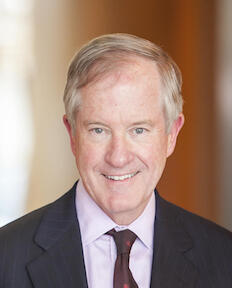
Nicholas R. Lardy is the Anthony M. Solomon Senior Fellow at the Peterson Institute for International Economics. He joined the Institute in March 2003 from the Brookings Institution, where he was a senior fellow from 1995 until 2003. Before Brookings, he served at the University of Washington, where he was the director of the Henry M. Jackson School of International Studies from 1991 to 1995. From 1997 through the spring of 2000, he was also the Frederick Frank Adjunct Professor of International Trade and Finance at the Yale University School of Management. He is an expert on the Chinese economy. Lardy's most recent books are The State Strikes Back: The End of Economic Reform in China? (2019), Markets over Mao: The Rise of Private Business in China (2014), Sustaining China's Economic Growth after the Global Financial Crisis (2012), The Future of China's Exchange Rate Policy (2009), and China's Rise: Challenges and Opportunities (2008).

This event is part of the 2020 Winter/Spring Colloquia series, The PRC at 70: The Past, Present – and Future?, sponsored by APARC's China Program.
IMPORTANT EVENT UPDATE:
In keeping with Stanford University's March 3 message to the campus community on COVID-19 and current recommendations of the CDC, the Asia-Pacific Research Center is electing to make this event available through live stream only. We appreciate your understanding and cooperation as we do our best to keep our community healthy and well.
Please join the live stream via Zoom by clicking here at the scheduled time, 4:30 PM, on March 4 to view Adam Segal's talk.
Analysts on both sides of the Pacific have described an escalating “technology cold war” between Beijing and Washington. Chinese hackers attack American technology companies and Beijing is reportedly planning on the removal of foreign software and hardware from government offices. Washington is blocking Chinese investments, using punitive measures against Huawei and Chinese surveillance companies, and scrutinizing research collaboration with Chinese universities as well as scientists and students. Both sides believe they are in and have to win a race to dominate 5G, AI, quantum, and other emerging technologies. What are the weapons of the tech cold war, and are the US and China doomed to ever more competition, or can they find common ground for cooperation? What does increasing competition between China and the United States mean for the rest of the world?


On October 1st, with a massive National Day parade down Chang’an Avenue in Beijing, the People’s Republic of China celebrated the 70th anniversary of its establishment in 1949. Like a split-screen T.V., however, on the other side of the border in Hong Kong, black-clad protesters wearing gas masks and goggles undertook one of the most violent protests in Hong Kong SAR since the 1997 handover.
With those contrasting images still fresh on everyone’s minds, FSI, Shorenstein APARC, Stanford China Program, and the Center for East Asian Studies jointly sponsored a conference on October 2nd titled “Hong Kong: A City in Turmoil” to an overflow audience. Jean Oi, Director of the Stanford China Program who moderated the program opened the conference by quoting Stanford President Marc Tessier-Lavigne and Provost Persis Drell who, in a campus-wide message, had recently encouraged the university community to not shy away from difficult conversations. “We have an extraordinary opportunity [at Stanford],” she quoted from their email, “to learn from each other, to have our thinking challenged, to sharpen our arguments and to develop better ideas from a thoughtful debate.” Even while explicitly aware, therefore, that differing opinions rage on both sides of the debate regarding Hong Kong’s protests, but trusting that “there are thoughtful people on both sides of the debate,” she continued, “we have decided to organize this special event.”
The former Chief Secretary for Administration of the Hong Kong Government (1993-2001) Anson Chan gave the keynote speech followed by a panel discussion featuring Harry Harding, University Professor and Professor of Public Policy, University of Virginia; David M. Lampton, Oksenberg-Rohlen Fellow, FSI, Stanford University; and Ming Sing, Associate Professor, The Hong Kong University of Science and Technology.
 The Honorable Anson Chan speaks at Hong Kong: A City in Turmoil conference.
The Honorable Anson Chan gives the keynote speech at the "Hong Kong: A City in Turmoil" conference.
Keynote Speech
In her keynote, Anson Chan first recalled the handover ceremony in 1997, which she attended as Hong Kong SAR’s Chief Secretary, bridging the transition from British sovereignty to Chinese sovereignty. Chan spoke of her dawning realization at the time that the transition of sovereignty “would call Hong Kong people to forge a new identity” that “reconciled our community both with its past and future.” She noted “that many Hong Kong people, particularly the young, have indeed forged a new identity, but not as loyal, submissive Chinese patriots that Beijing had hoped for.” The central government had “singularly failed to win hearts and minds,” Chan added, especially of its young people. Hong Kong is, indeed, now at a crossroads and, she admitted, is a “city in turmoil.”
In Chan’s recollection, the central government exercised its power with “great restraint” following the handover. At first, the SAR government, too, was vigilant in protecting Hong Kong’s high degree of autonomy. Gradually, however, the city’s autonomy and civil liberties, she asserted, suffered increasing erosion. In particular, “[o]ver the past fifteen years, things changed drastically.” Describing the series of events that have caused Hong Kong’s residents increasing alarm -- including the forced abduction of Hong Kong-based booksellers; disappearance of a mainland Chinese billionaire from a luxury hotel in Hong Kong; Legislative Council members’ oath-taking controversy; the resulting disqualification of six legislative members; and the political screening of pro-democracy electoral candidates, etc. -- she further noted that the “snail’s pace of progress” in implementing full universal suffrage for the election of the Chief Executive and all members of the legislature promised in the Basic Law also brought on mounting popular frustration and despair.
“Was this progressive erosion of Hong Kong’s autonomy inevitable?” Chan asked. “I don’t think so,” she answered. Since 1997, Hong Kong SAR’s successive Chief Executives, she countered, have progressively failed to reassure the Hong Kong people that, first and foremost, they will do their utmost to uphold “one country, two systems,” and to defend Hong Kong’s autonomy. In an unsparing critique, she noted, they have instead increasingly come across as “mouthpieces of the central government, toeing the Beijing line.” Chan also suggested that “some years back, Beijing began to both lose confidence in the judgment and competence of the Hong Kong administration and to fear that growing sense of people’s identity as ‘Hong Kongers’ rather than Chinese citizens could pose a threat to the long-term, successful integration of Hong Kong into the motherland.” This growing distrust, then, proved catalytic to increasing tensions and difficulties in Hong Kong-PRC relations.
Characterizing 2003 as the first watershed moment when large public demonstrations – Hong Kong people’s “first taste of people power” -- forced the SAR government to withdraw its proposed bill under Hong Kong Basic Law Article 23, Chan recounted the failure of the constitutional reform consultation process in 2013-2014, the decision of the Standing Committee of the National People’s Congress on August 31, 2014 to set institutional limits on universal suffrage, and the resulting 2014 Occupy Movement, which later morphed into the Umbrella Movement. These popular movements failed to yield genuine universal suffrage, however, and this failure, Chan stated, “left wounds that went unhealed and festered quietly.”
The million-strong protests on June 9th and 16th to register popular opposition to Hong Kong SAR government’s introduction of its extradition bill “broke all records,” Chan noted. Recounting the five demands of the current protesters, Chan voiced support for the establishment of an independent commission with “carefully crafted terms of reference” that could objectively examine the handling of the current unrests. Such a commission could go a long way towards pacifying the protesters, she suggested, and “[s]top the violence, at least for the time being.” She also urged the reopening of broad-based consultation on political reforms, lain dormant since the collapse of the Umbrella Movement in 2014; and to even consider a measure of amnesty to exonerate a subset of both the protesters and the police. Recognizing how problematic such a recommendation might be in the face of spiraling violence and vandalism, she noted, “we are in an unprecedented crisis, and for society to heal, unprecedented measures such as an amnesty applying to certain actions by the protesters and the police force may well prove to be necessary.”
Calling herself an “unrepentant optimist” even against formidable odds, Chan highlighted how Hong Kong has come through many challenges before and after the handover. She sought to emphasize how “[t]he majority [of Hong Kong people] are not anti-China and accepts that Hong Kong is a part of China.” However, she continued, “they are also proud of their Hong Kong identity and fiercely protective of the rights and freedoms they enjoy and which are guaranteed by the Joint Declaration and the Basic Law.” Condemning the violence committed by both the police and the protesters, Chan ended her speech with the following words.
So, on this seventieth anniversary of the founding of the People’s Republic of China, we in Hong Kong recognize the huge progress that our country has made in a breathtakingly short time, lifting hundreds of millions out of poverty, improving living standards and achieving economic growth and social advancement that are the envy of the world. We are proud of the unique contribution that Hong Kong has made to our nation’s spectacular achievements and modernization. But we are distressed that the central government feels it necessary to be increasingly repressive towards its Hong Kong subjects. I urge the Beijing leadership to act with greater confidence and to trust us more completely with stewardship of our own future by allowing us to elect our own leaders. In these troubled times, we ask Beijing respectfully to listen with greater understanding to the voices of Hong Kong’s upcoming generations, to recognize and respond to their fears and aspirations and, above all, to harness their talent, their energy and commitment for the benefit of the city we all love and for the benefit of our nation as a whole.
Panel Commentary
Harry Harding, University Professor and Professor of Public Policy, University of Virginia, next spoke from the panel. He applauded the clear and concise rendering that Chan provided of how Hong Kong arrived at the current crisis but noted that his was “a more pessimistic forecast” of Hong Kong’s future. With “one country, two systems” due to expire in 2047, he surmised that Beijing will further whittle away at Hong Kong’s key institutions, such as the judiciary, the press, and universities, and, perhaps, even the freedom of expression of its business community. With respect to Taiwan, Harding noted the increasing urgency in President Xi Jinping’s call for Taiwan to be reunified with the motherland. Yet, Harding noted, the developments in Hong Kong have made “one country, two systems” increasingly unpalatable to even those traditionally favorably disposed towards Beijing. For the U.S., the recent protests have enabled Hong Kong to take center stage with legislative action around the Hong Kong Human Rights and Democracy Act, the PROTECT Hong Kong Act, and debates surrounding the Hong Kong Policy Act. The recent unrest has also contributed to declining favorability ratings for the PRC from all sectors of the United States, he noted.
 Harry Harding, one of the panelists at the conference, gives his thoughts on the situation in Hong Kong.
Harry Harding, one of the panelists for the conference, gives his thoughts on the situation in Hong Kong.
Ming Sing, Associate Professor, The Hong Kong University of Science and Technology, first delineated the increasing levers of political and economic controls imposed by the PRC government upon Hong Kong SAR since 2003; and the corresponding rise in intensity of political protests in Hong Kong. He then provided a fine-grained analysis of the different phases of the 2019 protests, which began as a peaceful mobilization of public resistance, then grew in violence and counter-violence. He further presented a number of surveys that showed how the majority of the protesters are, indeed, well-educated and young with many of the frontline protesters being university and secondary students. Despite media reports that have suggested that economic discontent lies at the heart of protesters’ grievances, Sing presented survey data that the demonstrators’ grievances are, in fact, mainly political, including Hong Kong’s lack of universal suffrage and central government intervention, among others. Such data, he concluded, further highlights the gaping distrust between Hong Kong’s youth and the central government.
 Ming Sing speaks during the Hong Kong: A City in Turmoil conference.
Ming Sing explains the information presented in his slides.
David M. Lampton Oksenberg-Rohlen Fellow, FSI, Stanford University, characterized himself as “hopeful but worried” about the situation in Hong Kong. Raising five observations in particular, Lampton noted the first worrying sign: i.e., neither the outside world nor the SAR have a “road map to the future” with the PRC. Neither the Basic Law nor the Joint Declaration of 1984 can now serve as such a “roadmap,” Lampton asserted, and without a “shared vision,” he stated, “[i]t’s hard to be optimistic.” Secondly, in this “leaderless” protest movement, Lampton asked whether anyone can authoritatively negotiate with and enforce upon its followers any agreement reached with Beijing, should any transpire, so that it can lead to an effective resolution. Thirdly, as evidenced by the PRC’s mass display of “muscular nationalism” on October 1st, Lampton questioned whether Xi Jinping has any incentives to accommodate Hong Kong protesters’ demands, especially when Beijing’s leadership may have its own worries about domestic stability in the PRC. Fourth, with constitutional crises engulfing both the U.S. and Great Britain, Lampton noted, Western democracies are also hampered from effectively and responsibly addressing the situation in Hong Kong. And lastly, Lampton acknowledged how, in the policy vacuum left by the Trump White House with respect to Hong Kong, U.S. Congress was speeding towards adopting punitive legislation against the PRC. But Lampton again expressed doubts as to whether sanctions and threats are effective tools to extract concessions from the PRC government under Xi Jinping.
 David M. Lampton shares his viewpoint with the other panelists.
David M. Lampton shares his viewpoint with the other panelists.

The Honorable Anson Chan gives summarizing remarks to close out the "Hong Kong: A City in Turmoil" conference.
Watch the conference proceedings on our YouTube channel:

Interpreting U.S.-China Trade War: Background, Negotiations and Consequences
Since March 2018, the US–China trade conflict has escalated from a tariff war to a technology war, and a strategic competition between the two giants. The direction of the trade war and China–US relations will reshape the world order of the future. In this talk, Professor Wang Yong will explore questions like: What major goals does the US have in the trade war against China? How should one evaluate the influence of domestic structural changes in the two countries on the trade conflict? Will a possible deal stop the spiraling of strategic competition between the two major powers? By answering these questions, Professor Wang will analyze the political and economic forces driving this current US–China trade war and the factors affecting the negotiations. Major arguments include that trade frictions have deep roots in the restructuring of domestic politics taking place in the two countries; while extreme thoughts define US–China relationship from the perspectives of ideology and strategic rivalry, economic interdependence and shared stakes set the ground for negotiation and possible compromise between the two countries. Rebuilding political trust will be the key to dealing with strategic rivalry and avoiding a new cold war between China and the US.

Professor Wang Yong is director of the Center for International Political Economy and professor at the School of International Studies, both at Peking University. He is also professor at the Party School of the Ministry of Foreign Affairs of China and president-appointed professor for the Hong Kong Special Administrative Region Senior Civil Servants Training Program on Chinese Affairs at Peking University and a member of the Ministry of Commerce Economic Diplomacy Expert Working Group. Professor Wang was formerly a consultant of the Asia Development Bank, Visiting Chevalier Chair Professor at the Institute of Asian Research at the University of British Columbia and a member of the World Economic Forum Global Agenda Council on Global Trade and Foreign Direct Investment.
Professor Wang received his B.A. and M.A. in law and international politics and Ph.D. in law from Peking University. He joined the faculty of the School of International Studies at Peking University in 1990. He studied at the Hopkins-Nanjing Center (an educational collaboration between the School of Advanced International Studies of Johns Hopkins University and Nanjing University) and was also a visiting scholar at the University of California San Diego and a joint visiting fellow at the Pacific Council on International Policy and the University of Southern California.
His major authored books include International Political Economy in China: The Global Conversation (co-edited with Greg Chin and Margaret Pearson, Routledge, 2015), Political Economy of International Trade (China Market Press, 2008) and Political Economy of China-U.S. Trade Relations (China Market Press, 2007), which was awarded the first prize for Excellent Social Sciences Works by the Beijing Municipal Government and the Beijing Confederation of Social Scientists in 2008.
Philippines Conference Room
616 Jane Stanford Way
Encina Hall, Central, 3rd Floor
Stanford, CA 94305
Yunxiao Xu joined the Walter H. Shorenstein Asia-Pacific Research Center (Shorenstein APARC) for the 2019-2020 academic year as visiting scholar from Peking University, where she serves as Associate Professor at the School of Economics. Her research focuses on public finance and governmental budgeting. She obtained her Ph.D. in Economics from Peking University in 2002.
David M. Lampton gave a talk titled “Chinese Power and Rail Connectivity in Southeast Asia” before the Stanford China Program audience on February 6th. He addressed three issues in particular: the scope of his research project, conducted in partnership with two co-authors based in Singapore and Malaysia; the long genesis of this railroad construction idea from Southeast Asia to China; and, third, the overarching question of whether China can effectively implement the gargantuan feat – technologically, financially, and politically. The high-and conventional-speed rail project will span seven Southeast Asian countries, plus China, Lampton highlighted. This project is not only geographically forbidding, but the political terrain, and its socio-economic variety, is an even greater challenge. Lampton’s talk comprised part of Stanford China Program’s 2019 Colloquia Series, “A New Cold War?: Sharp Power, Strategic Competition, and the Future of U.S.-China Relations.”
Lampton began by clarifying that the vision of rail connectivity through Southeast Asia into China is not the brainchild of either China’s leadership or Xi Jinping. This idea has a long history, he stated, beginning with the British and the French in the 19th century when they were occupying Burma and Indochina, respectively; and even during World War II when Japan further entertained building railroads from the Korean Peninsula to Singapore to advance their military ambitions. In contemporary times, ASEAN had articulated a plan in 1995 to develop a rail line from Singapore to Kunming city, P.R.C. In 2010, ASEAN again put forth a master connectivity plan for 2025 where railroad development comprised a prominent part. Only in the aftermath of these many plans and proposals did Xi Jinping, in 2013, officially announce China’s Belt and Road Initiative (BRI), an infrastructure initiative with a scope far greater than simply Southeast Asia. The idea of infrastructural connectivity in the region, in other words, has a long history that predates China entering the picture as a major actor. Only recently has China amassed the technological capacity and financial wherewithal to realize this enormous project, with economic, diplomatic, and strategic military implications.
Next he described the key role that Beijing’s industrial policy has played in the rapid development of China’s high-speed rail. From a nonexistent industry in 2001, China has built a sector that is now an international powerhouse in high-speed rail technology. As of 2014, China boasted four trunk lines, North and South; and four trunk lines, East and West, crisscrossing the P.R.C. China’s industrial policy has clearly delivered striking results (as well as some setbacks) not only with respect to high-speed rail but also in other industries. In light of this, Lampton opined that China is not likely to yield to U.S. demands for major structural reforms in onoing trade talks with China.
Lampton described the progress in high-speed and conventional-speed rail construction with partners in Southeast Asia (ASEAN) that the Chinese have made, with Laos and Thailand furthest along in implementation. Nonetheless, Beijing also has met with significant resistance due to the complicated political situation in various regions. Lampton described, for example, the drawn-out financial negotiations between Singapore and Malaysia with respect to the rail line connecting Singapore to Kuala Lumpur; and the jockeying among various heads of Malaysia’s federation of local states. The election of Mr. Mahathir in 2018 also put an at least temporary halt to the construction and planning of two rail projects for many reasons, including the corruption of the preceding regime of Najib in Kuala Lumpur. Although Lampton expressed overall confidence that the rail lines will get built to Kuala Lumpur and Bangkok, for example, in the not-too-distant future, the political complexities of the region and China’s ability to successfully navigate them are still open questions.
He also described the competing world views regarding infrastructure construction and economic development. There are powerful constituents in China – now backed by Xi Jinping himself – who believe that infrastructure development drives growth: i.e., “if you want to get rich, build a road.” By contrast, the U.S. and entities such as the World Bank are more cautious, seeing all the negative social and environment extenalities such massive projects create. They also want to see greater assurances of projected returns from these infrastructure projects before devoting resources. Having said this, both multilateral financial and development institutions, and the United States Government, are gradually adopting a more supportive posture on large infrastructure projects, in part not wishing to abandon the commercial and strategic battlegrounds of the future to the PRC.
Lastly, Lampton debunked the notion that the BRI is a unified, top-down “plan.” Rather, he described it as Beijing’s “umbrella policy” that “creates a predisposition [among Chinese entities] to build infrastructure.” It incentivizes “entrepreneurial SOEs, provinces, localities, overseas Chinese . . . to push their pet projects . . . onto . . . the national largesse.” This being the case, Lampton described the BRI as a dynamic, chaotic and, sometimes, even a rapacious process for the transit countries. Yunnan Province, for example, started a rail line even before the central government had approved it; and Guangdong Province began developing its own special economic zone and port construction in Malacca all without central approval. As Lampton stated, the “BRI isn’t just about Xi Jinping and Beijing . . . . [I]t’s about local initative, and how Beijing can or cannot control or . . . under what circumstances, it chooses to control [its local actors].”
The recording and transcript are available below.

On May 4, 2018, Asian Infrastructure Investment Bank (AIIB) President Jin Liqun delivered a talk titled “The AIIB After Two Years” to a Stanford audience of faculty, students, and community members. The event was sponsored by the China Program at the Shorenstein Asia-Pacific Research Center.
President Jin addressed the challenges of establishing the AIIB and shed light on the organization’s future goals. Following prepared remarks, President Jin conversed with moderator Thomas Fingar, before opening the floor to questions from the audience.
A recording of the event is now available online .
Read a full account of the event in The Stanford Daily News.
Read a transcript of President Jin's speech is available below.

"Xi Jinping now owns the idea [of the One Belt One Road Initiative]....It has now been written into China’s constitution; its identified with him… If it works, he gets credit; if it doesn't get work out, he’s on the end of the branch, all by himself." - Tom Fingar
On March 13, 2018, APARC Distinguished Fellow Tom Fingar sat down with moderator Markos Kounalakis of the Hoover Instritution for a World Affairs Council sponsored talk.
Fingar spoke before an audience on China's One Belt One Road Initiative, the bariers to its sucess, what it could mean for China, as well as what it could mean for the countries included in China's vision.
The conversation is now avalable online.


