Security

FSI scholars produce research aimed at creating a safer world and examing the consequences of security policies on institutions and society. They look at longstanding issues including nuclear nonproliferation and the conflicts between countries like North and South Korea. But their research also examines new and emerging areas that transcend traditional borders – the drug war in Mexico and expanding terrorism networks. FSI researchers look at the changing methods of warfare with a focus on biosecurity and nuclear risk. They tackle cybersecurity with an eye toward privacy concerns and explore the implications of new actors like hackers.

Along with the changing face of conflict, terrorism and crime, FSI researchers study food security. They tackle the global problems of hunger, poverty and environmental degradation by generating knowledge and policy-relevant solutions. 

Paragraphs

Image
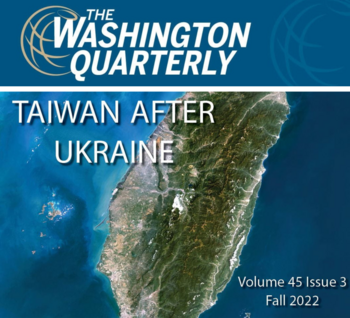
Aerial view of Taiwan and text "The Washington Quarterly, Vol 45 Issue 3, Fall 2022"
Compared to alliances like Japan and Australia, which seek to counter potential Chinese aggression, the role of South Korea is often secondary. Particularly with President Yoon’s new government in place, what can South Korea do to support U.S.-led efforts to compete with China, and what are the major hurdles in attaining deeper bilateral cooperation to enhance deterrence over Taiwan? 

To answer this question, the authors build upon traditional concepts of balancing to create a more granular, operationally relevant set of strategies for South Korea. They argue that, while it is politically infeasible for South Korea to fight side-by-side with US forces against China in a Taiwan scenario or to attempt to build its military sufficiently to deter the People’s Republic of China (PRC) from aggression against Taipei, these classic external and internal balancing strategies are not South Korea’s only options.

In this article, they provide background on South Korea’s approach to the Taiwan issue to date; evaluate South Korea’s strategic importance and what it can theoretically bring to the table; and explore how China and North Korea may respond to increased South Korean cooperation with the US, along with the potential obstacles this cooperation could create. Lastly, they recommend ways to leverage the US–South Korean alliance to enhance deterrence against China with respect to Taiwan.

All Publications button
1
Publication Type
Journal Articles
Publication Date
Journal Publisher
The Washington Quarterly
Authors
Oriana Skylar Mastro
Number
3
Paragraphs

Arzan Tarapore is the co-editor of the Asia Policy roundtable 'Minilateral Deterrence in the Indo-Pacific' and the co-author of its introductory essay, "Minilaterals and Deterrence: A Critical New Nexus." Oriana Skylar Mastro is the author of the first essay in the roundtable, "Deterrence in the Indo-Pacific." Excerpts from both essays are included below.


Excerpt from "Minilaterals and Deterrence: A Critical New Nexus," by Arzan Tarapore and Brendan Taylor:

As countries around the Indo-Pacific strive to manage the challenges of China’s growing power and assertiveness, they have emphasized two concepts. First, they have increasingly embraced “minilateral” groupings—small, issue-based, informal, and uninstitutionalized partnerships — as a way of coordinating international policy action.

Second, the United States and its allies, such as Australia and Japan, have renewed their commitment to deterrence to maintain regional stability. Rather than relying on institutions to deepen regional integration, which was their preferred option after the end of the Cold War, they are designing defense policies to dissuade potential adversaries, especially China, from revisionist behavior.

The Cold War produced a distinguished body of scholarship addressing the concept of deterrence.3 There is also a burgeoning literature on minilateral security cooperation in the Indo-Pacific.4 Yet little, if any, work has thus far addressed the potential convergence between these two increasingly dominant trends in the region’s security politics. By bringing together six leading security experts to explore the nexus between deterrence and minilateralism, this roundtable constitutes a first attempt to fill this gap. 


Excerpt from "Deterrence in the Indo-Pacific," by Oriana Skylar Mastro:

As China’s military might and tendency toward regional aggression grow, the United States and its allies are increasingly concerned with deterrence. Their strategies seek to prevent Beijing from disrupting the rules-based order in the Indo-Pacific by, for example, invading Taiwan or conducting gray-zone operations in the South China Sea.

Yet deterring China with minilateral groupings of states is more complex and difficult than traditional deterrence theory might suggest. This essay lays out some of the unique characteristics of the China challenge before considering how minilaterals can best enhance deterrence in these circumstances. 

All Publications button
1
Publication Type
Journal Articles
Publication Date
Subtitle

An Asia Policy roundtable co-edited by Arzan Tarapore, including an essay by Oriana Skylar Mastro.

Journal Publisher
Asia Policy
Authors
Oriana Skylar Mastro
Number
4
Authors
News Type
News
Date
Paragraphs

Over the past decade, as China’s might and assertiveness have grown, countries around the Indo-Pacific have increasingly embraced informal partnerships, or minilateral groupings, to deepen international policy action and defense coordination. Two prominent examples of the minilateral model are the Quad, which comprises Australia, India, Japan, and the United States, and AUKUS, which includes Australia, the United Kingdom, and the United States. However, deterring China with minilateral groupings is more complex than traditional deterrence theory might suggest. Can minilateral groupings deter coercion and aggression in the Indo-Pacific, and if so, under what conditions? 

A collection of essays in a new Asia Policy roundtable tackles this question. Shorenstein APARC South Asia Research Scholar Arzan Tarapore is a co-editor of the roundtable. Center Fellow Oriana Skylar Mastro is the author of the first essay in the collection.


Sign up for APARC newsletters to receive our scholars' updates.

The roundtable brings together six leading security experts to explore the nexus between deterrence and minilateralism in Indo-Pacific security politics. The motivation for this endeavor, Tarpore and co-editor Brendan Taylor of the Australian National University explain in the roundtable introductory essay, is to fill the gap in the existing literature, which has largely not addressed the possible convergence between these two increasingly dominant trends in the region.

The roundtable opens with Mastro's essay, in which she identifies the unique characteristics of the China challenge and considers how minilateral groupings can best enhance deterrence in these circumstances. First, she explains why minilaterals, such as the Quad, could address some of the challenges of “deterrence by punishment.” This traditional form of deterrence employs the threat of severe penalties — ranging from economic sanctions to nuclear retaliation — to prevent attacks by an adversary. Here, Mastro says, “economic or political costs may have greater deterrent value against Beijing than military costs, thus creating an opportunity for the Quad.”

Next is the category of “deterrence by denial,” which includes strategies that prevent or limit aggressive actions of an adversary by creating the perception that they will not succeed. Such denial-based strategies are more effective than punishment-based ones in circumstances where China could blunt U.S. attempts at punishment or choose to incur the costs. But the United States, Mastro says, “does not have the regional force posture to deny China its objectives.” 

Mastro then considers a third, less analyzed category, “deterrence by resilience,” where the goal is to encourage the perception that disruptive events such as military operations will not be effective in attaining the adversary’s objectives. Here, “resiliency is about signaling to China that the benefits of a particular action are less than China believes them to be.” By building resiliency, smaller countries can push back against Chinese coercion to abide by China's interests. Countries in minilateral groupings should therefore prioritize this form of deterrence as they consider ways to cooperate, Mastro concludes.

Read More

Chinese President Xi Jinping is applauded by senior members of the government and delegates.
Commentary

In China, Xi Jinping Is Getting an Unprecedented Third Term. What Should the World Expect?

Xi's plans are long term and unlikely to shift, but he can now be more aggressive than before in their pursuit.
In China, Xi Jinping Is Getting an Unprecedented Third Term. What Should the World Expect?
Emily Feng speaking at the 2022 Shorenstein Journalism Award.
News

Shorenstein Journalism Award Winner Emily Feng Examines the Consequences of China’s Information Void and the Future of China Reporting

The challenges facing foreign correspondents in China are forcing the West to reconfigure its understanding of the country, creating opacity that breeds suspicion and mistrust, says Emily Feng, NPR’s Beijing correspondent and recipient of the 2022 Shorenstein Journalism Award. But China seems to want the appearance of foreign media coverage without getting to the heart of what happens in the country.
Shorenstein Journalism Award Winner Emily Feng Examines the Consequences of China’s Information Void and the Future of China Reporting
Hero Image
U.S. President Joe Biden hosts a Quad Leaders Summit at the White House.
U.S. President Joe Biden hosts a Quad Leaders Summit along with Indian Prime Minister Narendra Modi, Australian Prime Minister Scott Morrison and Japanese Prime Minister Suga Yoshihide in the East Room of the White House on September 24, 2021 in Washington, DC.
Sarahbeth Maney-Pool/ Getty Images
All News button
1
Subtitle

A new Asia Policy roundtable considers whether and how minilateral groupings, such as the Quad and AUKUS, can deter coercion and aggression in the Indo-Pacific. The roundtable co-editor is APARC South Asia Research Scholar Arzan Tarapore, and it opens with an essay by Center Fellow Oriana Skylar Mastro.

Authors
News Type
Commentary
Date
Paragraphs

This commentary was first published by the Los Angeles Times.


The 104-minute speech by Chinese President Xi Jinping at the country’s 20th party congress reveals a leader who believes he is on a historic mission to save China’s self-described socialism in the 21st century.

Xi’s Oct. 16 speech launched the twice-a-decade meeting, which concludes this weekend, where the national Communist Party appoints its leadership and announces China’s policy direction for the coming years. The address reads very much like a sequel to his previous one five years ago. At that time, Xi cryptically said China had entered a “new era” of socialism. This time, he characterized his aim as “building a modern socialist country,” which the state media touted as the highlight of the speech. This statement clarifies his ambition to prove the superiority of socialism by 2049, with an implicit aim to surpass the U.S. by the centennial anniversary of the People’s Republic of China’s founding in 1949.

Xi is driven by the grand “Chinese dream,” the “great rejuvenation of the Chinese nation” that he referenced in his 2017 and 2022 National Congress speeches. He appears to view himself as the sole individual who can achieve this dream in the 21st century, perhaps casting himself as a 21st-century Mao Zedong. His plans — including “common prosperity” and “socialist modernization” — are long term and unlikely to shift even following the recent turmoil caused by COVID-19, China’s harsh lockdowns in response and the resulting economic pains.

These ambitions are the same ones promoted by the Xi administration over the last decade. But by the end of this latest congress, Xi will have cemented an unprecedented third term as president, and he can now be more aggressive than before in their pursuit.


Subscribe to APARC newsletters to receive our experts' commentary and analysis.


It follows then that U.S.-China relations are unlikely to improve in Xi’s next term. He has shown, time and again, that he differs from his predecessors, except Mao, in that he does not shy away from conflict with the United States. Xi has felt comfortable declaring that “the East is rising while the West is declining” and positioning the U.S. as a challenge to overcome, rather than an obstacle to avoid, on the road to the Chinese dream.

On the other hand, China will probably strengthen ties with Russia, North Korea and other like-minded authoritarian nations, just as the U.S. is strengthening alliance networks in the region, including with Japan and South Korea. We are, as Henry Kissinger once said, in the “foothills of a Cold War.”

The Taiwan Strait remains central to how quickly and drastically conflict could escalate. Xi’s latest speech reiterated that China wanted to gain Taiwan peacefully but “will never promise to renounce the use of force, and we reserve the option of taking all measures necessary.” He frames unification not as a choice but as a historical responsibility, which has been placed on his shoulders. Xi’s direct mention of Taiwan unification at the party congress suggests that he will use that issue as a justification for his long-term reign.

One factor that will help determine the actual longevity of Xi’s rule is whether meaningful protests against him will emerge. Xi’s policies and crackdowns against dissent have yielded sporadic protests that made international headlines. In China, however, the threshold for revolution is quite high, creating major barriers to a regime change. A large dose of state-led nationalism and indoctrination convinces people that the U.S. in particular is determined to torpedo China’s quest for modernity, creating an enemy to rally the country around.

China’s economic challenges pose another hurdle for Xi’s long-term agenda. The country’s rigid zero-COVID policy has limited growth, and Xi has displayed a heavy-handed approach toward private businesses, dampening entrepreneurial spirit. If Chinese people come to think of Xi’s anti-market tendency as the underlying problem, it will erode his authority.

To stave off such threats, Xi is likely to continue his iron-fist rule. He has purged enough rivals and earned enough grievances over the years that relaxing his power grip at this juncture will likely invite criticism, if not revenge, toward him. He is eager to turn China into a global power that will awe the West. As Xi put it at the 2017 party congress, China is increasingly taking “center stage in the world.” With Xi still at the helm, we should expect a more aggressive China and increasing turbulence in the regional and global order.

Gi-Wook Shin is the director of the Shorenstein Asia-Pacific Research Center at Stanford University. Seong-Hyon Lee is a senior fellow at the George H. W. Bush Foundation for U.S.-China Relations.

Read More

Emily Feng speaking at the 2022 Shorenstein Journalism Award.
News

Shorenstein Journalism Award Winner Emily Feng Examines the Consequences of China’s Information Void and the Future of China Reporting

The challenges facing foreign correspondents in China are forcing the West to reconfigure its understanding of the country, creating opacity that breeds suspicion and mistrust, says Emily Feng, NPR’s Beijing correspondent and recipient of the 2022 Shorenstein Journalism Award. But China seems to want the appearance of foreign media coverage without getting to the heart of what happens in the country.
Shorenstein Journalism Award Winner Emily Feng Examines the Consequences of China’s Information Void and the Future of China Reporting
Chinese soldier
Commentary

China Hasn’t Reached the Peak of Its Power

Why Beijing can afford to bide Its time
China Hasn’t Reached the Peak of Its Power
Trans-Pacific Sustainability Dialogue flyer.
News

The Ban Ki-moon Foundation and Stanford’s Asia-Pacific Research Center Launch Trans-Pacific Sustainability Dialogue

The Trans-Pacific Sustainability Dialogue convenes social science researchers and scientists from Stanford University and across the Asia-Pacific region, alongside student leaders, policymakers, and practitioners, to generate new research and policy partnerships to accelerate the implementation of the United Nations-adopted Sustainable Development Goals. The inaugural Dialogue will be held in Seoul, Republic of Korea, on October 27 and 28, 2022.
The Ban Ki-moon Foundation and Stanford’s Asia-Pacific Research Center Launch Trans-Pacific Sustainability Dialogue
Hero Image
Chinese President Xi Jinping is applauded by senior members of the government and delegates.
Chinese President Xi Jinping is applauded by senior members of the government and delegates as he walks to the podium before his speech during the Opening Ceremony of the 20th National Congress of the Communist Party of China at The Great Hall of People on October 16, 2022 in Beijing, China.
Kevin Frayer/ Getty Images
All News button
1
Subtitle

Xi's plans are long term and unlikely to shift, but he can now be more aggressive than before in their pursuit.

Authors
News Type
News
Date
Paragraphs

The Walter H. Shorenstein Asia-Pacific Research Center (APARC) is pleased to invite applications for a suite of fellowships in contemporary Asia studies to begin fall quarter 2023.

The Center offers postdoctoral fellowships that promote multidisciplinary research on contemporary Japan and contemporary Asia broadly defined, inaugural postdoctoral fellowships and visiting scholar positions as part of the newly launched Stanford Next Asia Policy Lab, and a fellowship for experts on Southeast Asia. Learn more about each opportunity and its eligibility and specific application requirements:

Postdoctoral Fellowship on Contemporary Japan

Hosted by the Japan Program at APARC, the fellowship supports research on contemporary Japan in a broad range of disciplines including political science, economics, sociology, law, policy studies, and international relations. Appointments are for one year beginning in fall quarter 2023. The application deadline is December 1, 2022.
 

Shorenstein Postdoctoral Fellowship on Contemporary Asia

APARC offers two postdoctoral fellowship positions to junior scholars for research and writing on contemporary Asia. The primary research areas focus on political, economic, or social change in the Asia-Pacific region (including Northeast, Southeast, and South Asia), or international relations and international political economy in the region. Appointments are for one year beginning in fall quarter 2023. The application deadline is December 1, 2022.
 

Read More

Chinese soldier
Commentary

China Hasn’t Reached the Peak of Its Power

Why Beijing can afford to bide Its time
China Hasn’t Reached the Peak of Its Power
Hero Image
Stanford campus archway and text about call for applications for APARC 2023-24 fellowships
All News button
1
Subtitle

The Center offers a suite of fellowships for Asia researchers to begin fall quarter 2023. These include postdoctoral fellowships on contemporary Japan and the Asia-Pacific region, inaugural postdoctoral fellowships and visiting scholar positions with the newly launched Stanford Next Asia Policy Lab, and fellowships for experts on Southeast Asia.

Paragraphs

Image
Cover of the book 'The China Questions 2'
The belief that China presents a challenge, if not an outright threat, to U.S. national security is increasingly prevalent in elite and public discourse. The main points of contention lie in the degree to which China threatens U.S. national security, how exactly China may challenge U.S. national security, and uncertainty about how the answers to these questions may change over time (which is fundamentally a debate about the drivers of Chinese strategy).

In this chapter, included in the volume The China Questions 2: Critical Insights into US-China Relations​ Harvard University Press, 2022), Oriana Sklayar Mastro focuses on the direct and indirect ways the People's Republic of China poses a threat to U.S. national security today.

Two caveats are in order. First, this focused discussion on challenges and threats may distort the degree to which China threatens the United States. On aggregate, the discussion presents a malign influence from the Perspective of U.S. national security. But it could be much worse. China has resolved many of its territorial disputes peacefully. Beijing has relied mainly on economic and political tools to blunt U.S. influence beyond its immediate region. China is an active member of the vast majority of international institutions. Even though faced with a conventionally superior U.S. military, China has yet to change its minimal no-first-use nuclear doctrine.

Second, while Mastro presents information on trends and trajectories, her focus is on today's challenges. These are likely to expand in scope and increase in intensity over the next five to ten years.

All Publications button
1
Publication Type
Book Chapters
Publication Date
Subtitle

A chapter in The China Questions 2: Critical Insights into US-China Relations, edited by Maria Adele Carrai, Jennifer Rudolph, and Michael Szonyi.

Authors
Oriana Skylar Mastro
Book Publisher
Harvard University Press
Authors
Oriana Skylar Mastro
News Type
Commentary
Date
Paragraphs

This commentary originally appeared in The Economist.


In the afternoon of August 4th, the People’s Liberation Army (PLA) kicked off the largest and most sophisticated military exercises it has ever conducted. Over the course of a week, the Chinese launched dozens of missiles and conducted drills near Taiwan with 100 aircraft, ten destroyers and support vessels. Submarines and aircraft carriers also played a role. The display has made the third Taiwan Strait crisis, which occurred between 1995-96, when China conducted four rounds of tests over the course of several months, with barrages of no more than six missiles, look like child’s play.

Part of the rationale for the latest exercise was to signal Beijing’s anger over Nancy Pelosi’s visit to Taiwan. Ms Pelosi, the speaker of the House of Representatives, was the highest-ranking American government official to visit the island since 1997. Back then Newt Gingrich, who was also the House speaker, made the trip. China warned that if Ms Pelosi added Taipei to her itinerary, there would be hell to pay.

The exercise is also a bit of a “coming-out party” for Beijing. In 1996 the third crisis ended when America sent two aircraft-carrier strike groups within 200 miles (322km) of Taiwan. America saw this as a great strategic success, and Chinese leaders were unhappy with its interference in what China considers a domestic affair. The resentment helped to drive China to build the PLA into one of the greatest armed forces in the world.


Subscribe to APARC newsletters to receive our experts' analysis and commentary.


Compared with 1996, China’s forces today are barely recognizable. Back then it had a large army, with roughly 4m people, but that was a sign of its backwardness more than anything else. With obsolete equipment and poor training, China barely had what could be considered an air force and a navy. Its pilots could not fly over water, at night or in rough weather. In 1999 less than 2% of its fighters were fourth generation, just 4% of its attack submarines were classed as modern (nuclear powered, for example) and none of its surface ships was. Its navy was a glorified coastguard with ships that, lacking air-defense systems, had to hug the coastline on any patrol. Its nuclear weapons, solid-fuelled and housed mainly in fixed silos, could have been taken out in one fell swoop by America.

Now China’s armed forces are comparable to America’s in quality and quantity. Most of its platforms are modern (of the latest technology for the relevant domain) and it boasts the largest navy in the world. In some areas, Chinese military capabilities already surpass America’s—in shipbuilding, land-based conventional ballistic and cruise missiles, and integrated air-defense systems. China possesses the world’s third-largest nuclear arsenal in the world, one that is currently undergoing major modernization.

Chinese leaders knew the PLA had to conduct a series of large, realistic exercises to identify issues and hone their capabilities. If China had done so out of the blue, instead of using Ms Pelosi’s visit as a pretext, international opprobrium would have been stronger.

But even with all these improvements, it is unclear whether China could take Taiwan by force. China has not fought a war since 1979, when it made heavy weather of a “punitive” invasion of Vietnam. An amphibious attack, and to a lesser degree a blockade of the type the exercises off Taiwan were simulating, would demand complex joint operations (involving army, air force and navy), which in turn require impeccable logistics and command and control. Xi Jinping, China’s leader, launched a massive organizational reform to improve in these areas, and the PLA undoubtedly has. But the war in Ukraine may have given him heightened anxiety, given that the Russians struggled precisely with logistics and command.

For this reason, we should see the massive exercises off Taiwan less as a signal, and more as a rehearsal for combat. Mr Xi wants progress on the Taiwan issue, and domestically talk in the press is shifting from peaceful reunification to armed reunification. Chinese leaders knew the PLA had to conduct a series of large, realistic exercises to identify issues and hone their capabilities. If China had done so out of the blue, instead of using Ms Pelosi’s visit as a pretext, international opprobrium would have been stronger.

China will seize the opportunity to practice as much as possible. It has announced already that this round of exercises will continue and that another round in the Bohai Gulf/Yellow Sea is next. And it won’t just be large-scale exercises. It is unlikely that Beijing will return to its previous level of operations. Instead, China might attempt to normalize greater Chinese activity around Taiwan. That makes war more probable. Through a series of exercises the PLA, and the party leadership, might gain confidence that China’s forces are ready to take Taiwan sooner than they would otherwise have thought.

Of course, this all depends on how the exercises and operations go. From the outside, this is hard to assess. The missiles landed where they should have in recent days, and there were no accidents. But we don’t know how much and how well different groups are communicating with each other. To prepare for joint operations, air-force units need to operate in close proximity and coordinate with ground troops and amphibious elements. The PLA needs to practice providing supplies, such as prepositioned fuel stocks, and bringing munitions and medical supplies to forward locations such as Fujian, the province directly across the Taiwan Strait.

This is where the real trouble lies. If activities in the vicinity of Taiwan become more routine, not only does this heighten anxiety in Taipei (and probably other regional capitals as well) but it helps to disguise any preparations for a real military campaign. China needs an element of surprise to be able to take Taiwan before America has time to mobilize adequate forces in the region to defend the island. If China’s forces are simulating formations, blockades, attacks, and amphibious landings, it will be harder to decipher when they are preparing for the real thing. Ms Pelosi’s visit has allowed Beijing to move to a new level of military activity unchallenged, which will make it harder for America to defend Taiwan. No signal of America’s commitment to the island can fix that.

Read More

Nancy Pelosi and Tsai Ing-wen
News

Military Capabilities, Not Commitment, at Stake in Taiwan: Oriana Skylar Mastro Examines Fallout From Pelosi's Visit

Political maneuvers like Speaker Pelosi's visit to Taiwan only anger Beijing but ultimately do not address the key issue of whether the United States has the military capabilities needed to protect Taiwan, argues Center Fellow Oriana Skylar Mastro.
Military Capabilities, Not Commitment, at Stake in Taiwan: Oriana Skylar Mastro Examines Fallout From Pelosi's Visit
Honor guards prepare to raise the Taiwan flag in the Chiang Kai-shek Memorial Hall square.
Commentary

Biden Says We’ve Got Taiwan’s Back. But Do We?

Many will applaud Mr. Biden for standing up for democratic Taiwan in the face of Chinese threats. But he could be putting the island in greater danger, and the United States may not be able to come to the rescue.
Biden Says We’ve Got Taiwan’s Back. But Do We?
An Island that lies inside Taiwan's territory is seen with the Chinese city of Xiamen in the background.
Commentary

The Taiwan Temptation

Why Beijing Might Resort to Force
The Taiwan Temptation
Hero Image
A Taiwanese F-5 fighter jet is seen after taking off from Chihhang Air Base on August 06, 2022 in Taitung, Taiwan.
A Taiwanese F-5 fighter jet is seen after taking off from Chihhang Air Base on August 06, 2022 in Taitung, Taiwan. Taiwan remained tense after U.S. Speaker of the House Nancy Pelosi's visit to the island as part of a tour of Asia aimed at reassuring allies in the region. China has been conducting live-fire drills in waters close to those claimed by Taiwan in response.
Annabelle Chih/ Getty Images
All News button
1
Subtitle

Nancy Pelosi’s visit was more pretext than provocation.

Date Label
Authors
News Type
News
Date
Paragraphs

This story was last updated on August 10, 2022.

Amid warnings and condemnations from Chinese leadership, Speaker of the U.S. House of Representatives Nancy Pelosi visited Taiwan on August 2, 2022, becoming the highest-ranking U.S. official to visit the island since 1997. A day after Pelosi's visit, furious China began firing missiles near Taiwan in drills that appear to be a trial run for sealing off the island, and Japan said some missiles landed in its exclusive economic zone. In a series of articles and interviews, Center Fellow Oriana Skylar Mastro examines the implications of Speaker Pelosi's visit, Beijing's response, and what the United States might do to prepare for a Chinese invasion of Taiwan. 

Mastro joined CNN's Fareed Zakaria GPS to discuss what she calls the "unprecedented scale and complexity" of China's military drills near Taiwan. Over the past 20 years, China has invested in building up not only one of the most advanced and sophisticated militaries but also one that can attack and keep out the United States. So now, explains Mastro, beyond the live-fire and missile tests, the Chinese military exercises also included complex air and naval operations designed to demonstrate China's readiness to take Taiwan when it feels ready to do so. Watch:

According to Mastro, when China makes a move on Taiwan there has to be an element of surprise, so they don't want to do it right now when the United States has increased its focus and operations in the region. But we will probably see additional rounds of Chinese military exercises in the future, she predicts, "and the more they get to do it the more confident they become and the more likely we are to see Beijing initiate force against the island." 

A Question of Capability

China's round of military exercises in response to Speaker Pelosi's Taiwan visit was a bit of a “coming-out party” for Beijing, writes Mastro in an invited commentary for The Economist. After years of investments to build up and modernize the People's Liberation Army, China’s armed forces are now comparable to America’s in quality and quantity, Mastro says. But even with all these improvements, it is unclear whether China could take Taiwan by force. Chinese leaders knew the PLA had to conduct a series of large, realistic exercises to identify issues and hone their capabilities, and Pelosi's visit gave them the pretext to do exactly that. "China needs an element of surprise to be able to take Taiwan before America has time to mobilize adequate forces in the region to defend the island," Mastro notes. "If China’s forces are simulating formations, blockades, attacks, and amphibious landings, it will be harder to decipher when they are preparing for the real thing."

In an interview with BBC World News, Mastro argues that the political maneuvering intended to signal U.S. commitment to Taiwan — whether it comes in the form of Speaker Pelosi's visit or President Biden's statements that "the United States must protect Taiwan" — is ultimately unhelpful and does not address the more serious issue at hand, which is whether the United States has the military capabilities needed to defend Taiwan.

Mastro also suggested that Chinese leadership has benefited from Pelosi's visit, using the occasion for their own political purposes and to test some of their military capabilities to take Taiwan by force.

Watch the full discussion:

Subscribe to APARC newsletters to receive our experts' analysis and commentary.


According to Mastro, a noteworthy aspect of Pelosi's visit is that she chose to pursue it despite dissuasion from the Biden administration, signaling to Beijing that the U.S. model is grounded in the separation of powers and that Congress would act independently to pass legislation to supply arms or provide military funding to defend Taiwan.

Chinese Military Projection of Power

In response to Pelosi's visit, China announced military exercises in six regions around Taiwan, pressing its forces closer to the island than ever before. "They’re definitely going to use this as an excuse to do something that helps them prepare for a possible invasion,” Mastro says in a New York Times report. "Under the guise of signaling, they’re trying to basically test their ability to conduct complex maneuvers that are necessary for an amphibious assault on Taiwan.”

Mastro recently outlined the array of weaponry China has amassed for a forceful "unification" with Taiwan, pointing out that China has now the world's largest navy and that its missile force is thought to be capable of targeting ships at sea to neutralize the main U.S. tool of power projection, namely, aircraft carriers, notes a New York Times explainer.

Mastro also joined WBUR's On Point Radio host Meghna Chakrabarti to examine the fallout from China's military exercises around Taiwan, current Chinese military capabilities, and what a modern war over Taiwan would look like. Listen to the full conversation:

Artificial intelligence and machine learning will play a major role in a Taiwan contingency, and these are significant because they change much of China's perceptions of its capabilities, Mastro explains. First, the Chinese are concerned about the capabilities of their personnel, but if they can use AI-enabled systems and take the person out of the loop, then that makes them more confident in their military capabilities. Moreover, the Chinese notion of "war control" is such in which thinking through enables planning and preparing for every possible outcome and contingency in a war. "Algorithmic warfare is exactly what they have in mind. They think, 'If we have the right systems, we can project and ensure victory ahead of time.' So, from my perspective, AI is really significant because of how much more confidence it would give China in its ability to win a war."

When people talk about whether or not China can or cannot invade Taiwan, they’re actually talking about the level of operational cost that China would have to pay to do it. They could do it.
Oriana Skylar Mastro

Under Xi Jinping, the People's Liberation Army has modernized to a point where "armed reunification" with Taiwan seems increasingly plausible. But experts differ in interpreting China's calculus on Taiwan. "When people talk about whether or not China can or cannot [invade Taiwan], they’re actually talking about something different, the level of operational cost — the loss of ships, casualties — that China would have to pay to do it," Mastro tells the New York Times. "They could do it," she added.

Paths to Deterrence

Mastro also appeared in an interview with NBC Bay Area, explaining the context for the flaring U.S.-China tensions as they pertain to Taiwan. "The issue is that the United States promised not to have official ties with the Taiwan government, and the visit by Speaker Pelosi is understood by the Chinese as an official delegation, meaning the United States is violating its promise."

Pelosi's visit is not the first time the United States has sent an official delegation to Taiwan, and the Chinese follow-up military exercises are not the first sign of Chinese retaliation. What has changed this time around, according to Mastro, is Chinese military capabilities. "China now has a formidable force that could take Taiwan, if it felt like it, and I think that is encouraging a much more aggressive posturing on the part of Beijing," she said.

Mastro emphasized that the U.S. strategy of making symbolic statements of commitment to Taiwan is misguided and does not deter Beijing from aggressive action. "China's uncertainty right now is not about U.S. commitment but is, instead, about U.S. capability [...] I'm sure the Chinese are watching [Pelosi's visit], but the lessons they're learning is not that they should back off Taiwan, but instead that they need to strengthen their position to convince the United States not to engage in these kinds of activities in the future."


For more of Mastro's analysis of the fallout from Pelosi's visit and cross-Strait tensions, visit the links below:

What Does China Want from Taiwan? 
Sky News, August 12, 2022

Will the US and China Go to War Over Taiwan 
BBC, August 11, 2022

What Are the Issues Between the U.S., China, and Taiwan? Stanford Scholar Explains 
Stanford News, August 10, 2022

China’s Military Operations Around Taiwan After Pelosi Visit Show Intent to Change Status Quo 
South China Morning Post, August 5, 2022

China ‘Convinced It Needs to Hit Us With Pearl Harbor-style Surprise Attack’ to Win War Over Taiwan, Expert Warns 
The U.S. Sun, August 5, 2022

Stanford Experts Cast Grim Predictions for U.S.-China Relations Following Pelosi’s Taiwan Visit 
The Stanford Daily, August 5, 2022

China’s War Games May Not Lead to All-out Conflict Against Taiwan... Yet 
The Telegraph, August 4, 2022

Chinese Missiles Strike Seas Off Taiwan, and Some Land Near Japan 
New York Times, August 3, 2022

Taiwan Lives Under the Threat of a Modernized and Reinforced Chinese Army 
Les Echos, August 3, 2022

China’s Military Drills Could Be a Prelude to Something Much Worse in Taiwan 
The Telegraph, August 3, 2022

Why Pelosi’s Taiwan Visit Is Raising U.S.-China Tensions 
New York Times, August 2, 2022

Pelosi's Taiwan Visit Triggering Potential Military Showdown 
VOA Chinese, August 2, 2022

China and US on a Collision Course: Tensions Over Taiwan Continue to Rise 
de volkskrant, July 29, 2022 (in Dutch)

For Taiwan, Pelosi Visit is About Us, China Controlling Risk 
CBS Bay Area, July 29, 2022

Xi Jinping's Phone Call with Biden 
BBC Chinese, July 28, 2022

Pelosi’s Rumored Taiwan Trip Sparks Uproar 
The Dispatch, July 27, 2022

Taiwan Holds Drills Amid Pelosi Visit Concern, China Tension 
AP, July 25, 2022

Guam: The Sharpening of the Spear’s Tip 
Foreign Policy Focus, July 20, 2022

Expert Voices: Interview with Oriana Skylar Mastro 
Center for Advanced China Research, July 18, 2022

Headshot of Oriana Skylar Mastro

Oriana Skylar Mastro

Oriana Skylar Mastro is a Center Fellow at FSI and is based at APARC, where her research focuses on Chinese military and security policy, Asia-Pacific security issues, war termination, nuclear dynamics and coercive diplomacy.
Full biography

Read More

Honor guards prepare to raise the Taiwan flag in the Chiang Kai-shek Memorial Hall square.
Commentary

Biden Says We’ve Got Taiwan’s Back. But Do We?

Many will applaud Mr. Biden for standing up for democratic Taiwan in the face of Chinese threats. But he could be putting the island in greater danger, and the United States may not be able to come to the rescue.
Biden Says We’ve Got Taiwan’s Back. But Do We?
Two US Navy members guide an air-cushioned landing craft into a port on a naval base,
Q&As

Assessing U.S. Force Posture in a Taiwan Contingency

Center Fellow Oriana Skylar Mastro talks to the Center For Advanced China Research about the risk of Chinese attacks on U.S. military bases in Asia at the outset of a Taiwan conflict, the likelihood of Japanese or NATO involvement in a war over Taiwan, the downsides of focusing on communicating resolve to defend Taiwan, whether the United States is “outgunned” by China, and more.
Assessing U.S. Force Posture in a Taiwan Contingency
Government building in China
News

Problems with Revisionism: A Conceptual Framework for Assessing Chinese Intentions

Deciphering China’s intentions is a pressing task for U.S. scholars and policymakers, yet there is a lack of consensus about what China plans to accomplish. In a new study that reviews the existing English and Chinese language literature on intentions and revisionism, Center Fellow Oriana Skylar Mastro offers five propositions to allow for a more productive and data-driven approach to understanding Beijing’s intentions.
Problems with Revisionism: A Conceptual Framework for Assessing Chinese Intentions
Hero Image
Nancy Pelosi and Tsai Ing-wen
Speaker of the U.S. House Of Representatives Nancy Pelosi (D-CA), left, poses for photographs with Taiwan's President Tsai Ing-wen, right, at the president's office on August 03, 2022 in Taipei, Taiwan. Photo by Handout/Getty Images
All News button
1
Subtitle

Political maneuvers like Speaker Pelosi's visit to Taiwan only anger Beijing but ultimately do not address the key issue of whether the United States has the military capabilities needed to protect Taiwan, argues Center Fellow Oriana Skylar Mastro.

Date Label
Authors
News Type
News
Date
Paragraphs

Guam, the small island territory in the Pacific Ocean, plays a unique strategic role in the United States’ Indo-Pacific strategy. In a new article, part of a Hudson Institute collection of essays on the challenges and motivations of defending Guam, Center Fellow Oriana Skylar Mastro analyzes the island’s strategic importance to the United States, China’s threats to U.S. forces on the island, and the pathways to deterrence against Chinese encroachment in the region. 

Mastro enumerates a number of reasons behind Guam’s strategic importance. First, “the Chinese missile threat to U.S. regional bases, especially those located in the first island chain, enhances the operational role of those bases sufficiently distant from China to partially mitigate the threat it poses, yet also close enough to be operationally impactful.” Guam’s geostrategic potential is rooted in its proximity to China, and represents “the westernmost location from which the U.S. can project power, manage logistics, and establish command and control.” 

In a Taiwan contingency, Mastro argues that Guam would play an important role as a logistics hub and jumping-off point for combat forces headed toward the Taiwan Strait, with the caveat that U.S. forces could maintain roughly half the sortie rate from Guam as that from Kadena Air Base in Okinawa, Japan. Another reason behind Guam’s strategic utility comes from reliable base access, which is more reliable than in other Asian host countries.

Despite the U.S. force posture and the island’s protective distance from China, Guam remains vulnerable to Chinese intermediate-range ballistic missile attack. According to Mastro, the U.S. has systems on the island to protect against missile threats, such as a THAAD battery, but “U.S. military commanders want much more of a guarantee that the U.S. would be able to continue operations out of Guam even under Chinese missile attack.”

Given China’s ability to threaten U.S. bases on the island, Mastro proposes an “unappreciated and underutilized” pathway to deterrence: deterrence by resiliency. Similar to deterrence by punishment, which seeks to prevent adversary attacks by employing the threat of severe penalties should the adversary do so, deterrence by resiliency is based primarily on shaping adversaries’ perceptions of one’s own capabilities. “However, unlike deterrence by punishment, the goal is not to create fear of retaliation but rather to encourage the perception that disruptive events would have little effect on an adversary.” Mastro uses the term resiliency to refer to a state’s ability to both absorb and deflect costs at a given level of violence.

Once in place and even under attack, planned defenses of Guam would ensure that the US could continue operations there to the degree necessary to, for example, maintain air superiority over the Taiwan Strait.
Oriana Skylar Mastro

Mastro argues that resilience is about signaling to China that “the benefits it would derive from a particular action would actually be less than it believes them to be. Improving defenses can enhance deterrence through this mechanism, but, given its limitations, other avenues—in particular, pursuing viable alternatives and creating redundancy—should also be pursued to ensure that an attack on Guam would not cripple a U.S. war effort.”

Guam, frequently cited as the U.S.’s viable alternative to bases within the first island chain, represents a critical strategic waypoint, but as long as the U.S. is reliant on the island to fight and win a war, “China will ensure that it can effectively target the island, thus making messaging associated with Guam’s defense key.” Mastro proposes that the language about defending Guam must expand to accomodate resilience contingencies for the island’s planned defenses, which, “once in place and even under attack […] would ensure that the US could continue operations there to the degree necessary to, for example, maintain air superiority over the Taiwan Strait.” 

Whether China would accept deterrence by resilience remains to be seen, but policymakers must employ new thinking about Guam’s defense to meet the new security challenges posed by China.

Headshot of Oriana Skylar Mastro

Oriana Skylar Mastro

Oriana Skylar Mastro is a Center Fellow at FSI and is based at APARC, where her research focuses on Chinese military and security policy, Asia-Pacific security issues, war termination, nuclear dynamics and coercive diplomacy.
Full Biography

Read More

Two US Navy members guide an air-cushioned landing craft into a port on a naval base,
Q&As

Assessing U.S. Force Posture in a Taiwan Contingency

Center Fellow Oriana Skylar Mastro talks to the Center For Advanced China Research about the risk of Chinese attacks on U.S. military bases in Asia at the outset of a Taiwan conflict, the likelihood of Japanese or NATO involvement in a war over Taiwan, the downsides of focusing on communicating resolve to defend Taiwan, whether the United States is “outgunned” by China, and more.
Assessing U.S. Force Posture in a Taiwan Contingency
Government building in China
News

Problems with Revisionism: A Conceptual Framework for Assessing Chinese Intentions

Deciphering China’s intentions is a pressing task for U.S. scholars and policymakers, yet there is a lack of consensus about what China plans to accomplish. In a new study that reviews the existing English and Chinese language literature on intentions and revisionism, Center Fellow Oriana Skylar Mastro offers five propositions to allow for a more productive and data-driven approach to understanding Beijing’s intentions.
Problems with Revisionism: A Conceptual Framework for Assessing Chinese Intentions
Honor guards prepare to raise the Taiwan flag in the Chiang Kai-shek Memorial Hall square.
Commentary

Biden Says We’ve Got Taiwan’s Back. But Do We?

Many will applaud Mr. Biden for standing up for democratic Taiwan in the face of Chinese threats. But he could be putting the island in greater danger, and the United States may not be able to come to the rescue.
Biden Says We’ve Got Taiwan’s Back. But Do We?
Hero Image
Guam Navy base
Personnel from U.S. Naval Base Guam’s (NBG) Navy Security Forces simulated an active threat scenario at Romeo Wharf onboard NBG, October 6, 2021. Credit: Joint Region Marianas/U.S. Navy.
All News button
1
Subtitle

Expanding upon classic deterrence strategies, Center Fellow Oriana Skylar Mastro proposes an underutilized path to deterrence in which Guam — a remote U.S. outpost that has become a strategic hub as tensions with China rise — would remain a crucial logistical waypoint, even in the face of potential Chinese missile attack.

Authors
News Type
Q&As
Date
Paragraphs

This interview with Oriana Skylar Mastro was originally published by the Center for Advanced China Research.


A little over a year ago, you pointed out in an article in Foreign Affairs that there is “no quick and easy fix” for the United States to ensure Taiwan’s security. How would you assess the United States’ Taiwan policy in the time since you wrote those words? How much progress has Washington made in improving Taiwan’s security picture and our military posture in the region?

Unfortunately, I don’t think we have made much progress in those particular areas. One of the reasons I wrote that article is that I was trying to make the argument that an assessment of US capabilities right now is largely driving Chinese thinking. They are assessing US capabilities and also their own capabilities to achieve certain military goals much more than they are assessing questions of resolve, as I wrote in that article. Chinese strategists are assuming US military intervention. Unfortunately, the Biden administration seems to still be focused on this communication of resolve aspect, and they spend a lot of their time and effort doing things like signing joint declarations about how Taiwan is important or having Biden make statements that lean much more towards strategic clarity, saying they’re going to defend Taiwan. I don’t think this enhances deterrence because this is not the primary factor that Beijing is currently considering when they’re deciding whether or not to attack Taiwan. It’s really about those capabilities.

Under the Biden administration, there’s more consideration of what Taiwan needs to defend itself, but none of that has actually come to fruition to any significant degree. There’s also more consideration about the need for more funding for things like the Pacific Deterrence Initiative, but not much has actually come to fruition on that either. So I think we’re not in any better position than we were when I wrote that article.

It sounds like you feel that the communicative aspect of deterrence doesn’t matter and that it’s only capabilities that matter, but you have also argued in the New York Times that the United States would be “outgunned” in a Taiwan conflict, which you based on tabletop exercises that you’ve been a part of and other assessments. If the United States is really at a military disadvantage in a Taiwan contingency, are US capabilities really the thing that’s deterring China anymore, or is it simply the geographical challenges in conquering the island, which you also talked about? Is the US military factor not really doing the deterrence job anymore?

I see those as the same thing. I say the United States is “outgunned,” and this is more of a balance of forces type of scenario, but the most important thing to keep in mind is, I’m talking about situations under which China initiates the conflict. So if we’re in that scenario, they’re going to find a time and place that is most favorable to them and least favorable to the United States. There are many ways the war could happen that the United States wins. So it’s not the case that China wins every time, but I guess part of my argument is, China is going to try to not fight those wars that they know that they would lose and instead guide the conflict towards areas of success, and one big aspect of that is moving quickly. So the problem with the amphibious assault is, let’s just say it’s completely uncontested, you’re just talking about a couple of hours of moving ships across a narrow strait, that’s not quite so difficult. The issue is if there’s any contestation. And sure, Taiwan is a component of this, but Taiwan doesn’t really have the military means, even with the geography and difficulty of landing stuff. Taiwan has the means to impose some costs on China for the invasion but not to stop the invasion. The real question is whether or not the United States can bring the massive firepower needed in a timely manner while they're trying to conduct that invasion, and a lot of that has to do with the amount of early warning the United States gets, whether or not we can get better at more quickly deploying our assets, things of that sort. So I think the Chinese calculations about how difficult the invasion is going to be are also predicated on how quickly and with what the United States can respond once it becomes apparent that the invasion is underway.

You also talked in the New York Times article about the difficulty of responding given that we have a limited number of air bases that are within refueling range, and of course our forces are dispersed all over the globe. How dire, for lack of a better word, do you think the situation is for the US military? Is this something that we could fix with more aircraft carriers in the region, or is this something that we can only do over a longer time frame? You have mentioned trying to get more basing rights in regional partners; is this something that we really stand a decent chance of addressing in the near term, or is that something that it would just take longer to do?

It’s very dire, and it’s not even just the number of bases. As a crazy hypothetical example, let’s say that the president says tomorrow, Asia is so important that now I’m dedicating all military forces to Asia. There’s no place we could put them! These airfields, for example, can only generate so many sorties, they can only house so many aircraft. It’s not like all of a sudden you can put all these forces forward deployed in Asia.

I don’t want to say that it’s long-term because these things can happen quite quickly when there’s political will on both sides, but it really is a diplomatic problem, it really is about getting the United States more access and more flexible access to the bases we already have, because there are rules, regulations, and restrictions to what we can have certain places, what types of operations we can do. The South Koreans, for example, we have to consult ahead of time, we have all these sorts of things that slow us down, and so we do need more places from which we can operate, and we need more flexibility with our allies and partners in how we operate when the time comes. That is going to be negotiated and that is going to be paved by diplomats.

So when Secretary Blinken says he wants to lead with diplomacy, I’m all for that, but you have to actually put in that work, and I don’t see that work being put in with key countries in the region.

Given that the Biden administration has already been in office for a year and a half, do you feel that’s something that is likely to be turned around, or do you think we’re going to be stuck in neutral for the foreseeable future?

I think the Biden administration is a bit risk averse. There’s a number of very logical reasons for this. They inherited a mess domestically, just like President Obama before, having to dig our way out of economic troubles and with COVID and all these other issues. I’m not an expert on American domestic politics, but my sense is that you always need support for certain policies, and so where are you going to be pushing things forward? Is it going to be on gun reform, or is it going to be on bases in Palau? And you know that because of the hostility of our politics these days, if things aren’t easy and perfect and everything isn’t going the way it’s supposed to go, the opposing party is going to jump down your neck about it. And so I understand the reluctance, the desire to engage with countries that we already have close relationships with and that we already do things with, the easier route of less resistance, versus potentially seriously reconsidering what our force posture should look like in a Taiwan conflict, because then you’re talking about changing your relationship with countries that are not unproblematic, like Vietnam. So I get why they are reluctant. Even with diplomatic initiatives, if they put together an initiative to try to regulate military uses in outer space or in cyber for the first time, what if it failed, what if no one came along with us? Politically, that wouldn’t look good, so I understand why they’re reluctant to try and fail. But I think just in government more generally, we can’t always predict all aspects of things, and we think doing nothing is better than something. But in this competition, we can try smaller-scale stuff, see how it works out, see what happens, and then hopefully experimentation in military strategy becomes more politically viable.

What happens after a Taiwan conflict? A lot of the discussion about a war over Taiwan is predicated on the idea that it’s a vital US interest, but is there a scenario in which Taiwan gets “reunified” but the United States’ network of alliances in Asia remains intact? Or is it an all-or-nothing deal, like a lot of people assume?

It completely depends on how it happens. Let’s say China moves very quickly and the United States is not able to come to Taiwan’s aid in time. That doesn’t really call into question US capability. For example, we have US forces in Japan, we have the forces necessary to defend Japan that are already there, so that’s a different scenario than the United States, with all of its might, waging major naval battles and major air battles and losing. Then, all of a sudden, I think the alliance system is more likely to fall apart because then it becomes clear to countries in Asia that the United States military no longer has the capability to stand up to the Chinese military, so then we see a lot more bandwagoning. So it kind of depends on what the United States’ role is in the actual conflict, and then a lot of it depends on the political decisions the United States makes after the conflict. One of the things I point out, for example, about the economic ramifications of a conflict or whether or not the United States has access to semiconductors and things like that, is that a lot of that depends on the US. We’re going to sanction, we’re going to prevent ourselves from engaging with the new Taiwan as punishment to China for taking Taiwan, that’s my most likely prediction of how the United States, at least politically and economically, is going to respond. We won’t recognize it, and then we’re going to try to lead some very serious decoupling economic sanctions against Beijing, so one of the ramifications of that war could be very serious economically if all of a sudden now we have two blocs and China and the United States don’t trade at all. Alternatively, it could be very minimal, if Europe and the US are like, “well, we didn’t want that to happen, but now it did, so let’s move on,” and we continue a similar economic relationship with Taiwan and China even in spite of that use of force. So whatever the situation is, it’s worse than if we defend Taiwan and win, that much I know for sure, but then in terms of how bad it would be for the United States and our allies and partners, I think that depends on so many of those factors it’s hard to say with 100% certainty what the situation will be.

Could the fear of losing all that credibility in a direct conflict with China over Taiwan create an incentive not to fight or to accept one of the phased invasions you talked about in the Foreign Affairs piece?

Yeah. I mean, that’s actually one of my biggest fears, that China moves quickly and the United States looks at the situation and says, “well, you could send this, but we know it’s not going to be enough.” So actually I think the worst-case scenario is that the United States sends some sort of token force. This is also why I’m very much against the statements Biden is making about strategic clarity, because I think it means that people in the administration are so focused on the rhetorical aspect of credibility that they might think it’s a good idea to send a token force so you can say that you tried, but it didn't work, and in my mind, that’s the worst of both worlds, because again, it might give people the impression that the United States doesn’t have the capability to defend them anymore, and then also China gets to defeat the United States. So in my mind, if the situation is such that we know we cannot win, I’m sorry to say, but I think it’s better that we don’t do anything versus sending some sort of token force to say, oh, well, you know, at least we tried.

But doesn’t the existence of that issue, the possibility that it would be more in our interest not to fight, reinforce the notion that we should have strategic clarity if we want to deter an attack?

Well, no, because again, China is not moving with the expectation that we will not fight. When they make that decision, they have to take a look at what’s going to happen if the United States counters [them], can they still win, so whether or not we do or we don’t in the end, they’re basing it on that worst-case scenario thinking. Of course, if tomorrow the United States said, we won’t defend Taiwan under any circumstances, that would impact Beijing’s calculus. I guess my point is it’s not about not saying anything at all, it’s just that in the 1990s, it used to be the case that if the United States would intervene, China could never win, and so making those clear statements would have really significantly impacted their decision-making, but that’s no longer the case.

You spoke in both those articles about the possibility of China striking US bases at the outset of a conflict. Would that create a risk of NATO allies and other US partners being drawn into the conflict, and if so, would that even be a factor for China?

So the short answer is no, which is really disturbing. I’m here speaking to you in my civilian capacity, and my views do not represent those of the United States Air Force, the Department of Defense, or the US Government. But I was just on military orders out in NATO – and I’m a China expert, so I’m with all of our NATO partners and allies, but I’m not an expert on NATO, and of course, we start talking about Article V, and I’m very curious about this exact question that you have about mutual defense if the United States or a US European presence is attacked. [Article V] very specifically makes reference to US European forward bases, so I asked explicitly if US forces are attacked in Japan, or attacked in Korea, does Article V cover that? It seems like the specification of European bases means no. They wouldn’t give me a direct answer on that. And so then I emailed some European specialists and NATO specialists at Stanford because I thought maybe they know, and they said, no, it’s very vague, you should keep on harassing them about it. So the bottom line is that Europe wants no part of this. It seems to me that the way that the NATO treaty is written, they’re not obligated to do anything, militarily I mean, and I think they’re probably not, and I’ve never heard or seen any situation in which people are considering European military involvement. So I would say no to Europe.

Now, the situation with Asian allies is a bit different. It completely depends. I mean, I have heard people in Japan, for example, Japanese government officials have told me that attacks on US bases wouldn’t necessarily constitute an attack on Japan enough to trigger the clause that allows them self-defense. But we’ve had that understanding for quite some time, I mean, we even fought a whole war in Vietnam and the Japanese wouldn’t let us use Japanese bases for combat reasons during the Vietnam war. If China attacks the United States, you could also say that that creates a lot of disincentives for countries to allow the United States to engage in military operations from their territory if China has already demonstrated the willingness to use military force against those bases. So China will also go to countries and say, “listen, we won’t do anything to you as long as you don’t allow the Americans to operate,” and then that sort of puts the burden on them to make that decision.

When you were talking about that NATO summit, was it government officials you were talking to who weren’t giving you a straight answer about that?

I was there in uniform, so it was all military members.

Once you have Chinese forces on Taiwan, it’s my view that there’s nothing we can do to get them to leave.
Oriana Skylar Mastro

Subscribe to APARC newsletters to receive our experts' commentary and analysis.


Maybe a more important question related to that – would a preemptive attack on US bases in Asia have a significant impact on the United States’ willingness to fight and try to win a longer, escalated war, a la Pearl Harbor?

So that’s the thing – just like Pearl Harbor, it’s the same calculus. The United States has significant advantages in a protracted war against China. So China’s making the same calculation that the Japanese made, right? That they can win before those advantages come into play, before the United States can reconstitute its forces, before the United States can flow more forces in the region, even if the United States has the will to do that – because even strategic clarity just says you’re willing to fight, but it doesn't tell you anything about the costs we’re willing to absorb to fight. So they’re making a very similar bet, that they’ll get to Taiwan before that happens. Because once you have Chinese forces on Taiwan, it’s my view that there’s nothing we can do to get them to leave.

So you don’t think we have the military capability to get them off the island or to take any part of the island?

No, I mean, this is – it would have to be a brute force strategy, given the difference in resolve at that point. Then I think we’re kind of toast. That’s why I feel like we have to stop them from the landing.

[On an earlier point,] China would be deterred if they felt like a coalition of all European and Asian allies were going to fight against them.

That’s really what I was asking – would the deterrent effect of that outweigh the advantages of them hitting US bases in Japan?

Oh, yeah, absolutely, so you don’t even need everyone, you just need Japan. If Japan was going to fight militarily with the United States, we win. We win that war every time.

Wow, I didn’t know that – like in the tabletops?

I would just say based on my experience of thinking about planning and forces, that with the United States’ ability for allowing to operate our forces from Japan – we have one airbase, and I forget the numbers, but Japan has thirty, forty airbases – all of a sudden, where we can operate from, our sortie rates, or ability to achieve air superiority is significantly advanced. Japan also has, second to China, the most advanced Navy in the region and one of the most advanced in the world, so if they’re projecting power with their navy into the Taiwan Strait, they can hold them off on their own for a period of time. That definitely gives us enough time to flow what we need.

So it sounds like Japan’s involvement is really the key question, almost.

Yeah, but it’s kind of one of these, like, magic unicorns. Also, if we could all of a sudden not require fuel to conduct military operations…

Is it that unlikely, though? Because Japanese officials have been talking more about how important Taiwan is to Japan’s defense since last year.

No, I mean, even when they make those strong statements and then have meetings with Japanese government officials, I asked them about those strong statements, and often I’m like, are you actually going to do something? They say, well, no, we’re still not going to do anything, but we just want to voice our unhappiness or voice our solidarity with the United States. But it’s not like operationally things are really changing in Japan, in my understanding. I’m not an expert in Japanese domestic politics, but it’s my understanding that this is a bit of a gray area of how it would go.

What are your thoughts about China signing a security cooperation agreement with the Solomon Islands? Are Western concerns about the military consequences of that agreement overblown? Does China’s subsequent attempt to secure a multilateral security agreement with ten more Pacific Island countries suggest that it wants military bases throughout the Pacific?

I think it’s too soon to tell. You know, in my own research about Chinese military strategy, I do argue that there are many aspects of the US approach which they have not emulated to date, not because of lack of capability, but because they feel like those approaches are ineffective. And one of those is a global military presence coupled with forward military intervention as a main tool of promoting your interests. A lot of aspects of how they’ve protected overseas interests to date over the past 25 years have been fundamentally different than how the United States does it. And so I was very interested when that agreement was signed about what the actual details of those [other] agreements were. Is China preparing to engage in high-intensity combat operations from these bases, or are they more logistics hubs, or [are they] for surveillance and reconnaissance against the United States? That would still not be great, but it would be a different operating concept of how a base structure would fit into overall military strategy than what it is for the United States. And so I actually think that we shouldn’t be discouraging China from having overseas bases, because we’re at such an advantage. China is at an advantage only a couple hundred miles from its coast – 2, 3, 400 if we’re generous – but if they go any farther, we destroy-- we would knock them out of the park. So if all of a sudden China wants to start contesting us militarily in other parts of the world, I recognize that that’s uncomfortable from the perspective of a lot of other countries who are there, but my perspective as a military planner is that this is the way that we maintain our military position. China is just so far behind in its ability to project power to the degree that the United States does that this would give us a significant advantage and a significant ability to impose costs on them in the short term. So I’m not particularly concerned about it. If China does start building these bases, it means that it’s significantly shifted its thinking on military strategy, and I think towards a direction in which they’re trying to directly compete with the United States, and my research shows that whenever they try to directly compete with us, we win every time. So I’m not as concerned about that as I am about how they can be pretty entrepreneurial about exploiting US weaknesses or gaps and competing with us less directly.

Headshot of Oriana Skylar Mastro

Oriana Skylar Mastro

Oriana Skylar Mastro is a Center Fellow at FSI and is based at APARC, where her research focuses on Chinese military and security policy, Asia-Pacific security issues, war termination, nuclear dynamics and coercive diplomacy.
Full Biography

Read More

Government building in China
News

Problems with Revisionism: A Conceptual Framework for Assessing Chinese Intentions

Deciphering China’s intentions is a pressing task for U.S. scholars and policymakers, yet there is a lack of consensus about what China plans to accomplish. In a new study that reviews the existing English and Chinese language literature on intentions and revisionism, Center Fellow Oriana Skylar Mastro offers five propositions to allow for a more productive and data-driven approach to understanding Beijing’s intentions.
Problems with Revisionism: A Conceptual Framework for Assessing Chinese Intentions
Honor guards prepare to raise the Taiwan flag in the Chiang Kai-shek Memorial Hall square.
Commentary

Biden Says We’ve Got Taiwan’s Back. But Do We?

Many will applaud Mr. Biden for standing up for democratic Taiwan in the face of Chinese threats. But he could be putting the island in greater danger, and the United States may not be able to come to the rescue.
Biden Says We’ve Got Taiwan’s Back. But Do We?
Army Reserve members during practice
Commentary

Ukraine Is a Distraction from Taiwan

Getting bogged down in Europe will impede the U.S.’s ability to compete with China in the Pacific.
Ukraine Is a Distraction from Taiwan
Hero Image
Two US Navy members guide an air-cushioned landing craft into a port on a naval base,
Navy Electronics technician 2nd Class Paul Saldana, left, and Construction Mechanic 2nd Class Adam Long, both with Naval Beach Unit (NBU) 7, conduct ramp marshal duties to guide a landing craft air cushion (LCAC) into port on Naval Base White Beach, Okinawa, Japan, June 1, 2021.
U.S. Marine Corps photo by Sgt. Hailey D. Clay via US Navy Flickr page (CC BY 2.0)
All News button
1
Subtitle

Center Fellow Oriana Skylar Mastro talks to the Center For Advanced China Research about the risk of Chinese attacks on U.S. military bases in Asia at the outset of a Taiwan conflict, the likelihood of Japanese or NATO involvement in a war over Taiwan, the downsides of focusing on communicating resolve to defend Taiwan, whether the United States is “outgunned” by China, and more.

Subscribe to Security