FSI researchers strive to understand how countries relate to one another, and what policies are needed to achieve global stability and prosperity. International relations experts focus on the challenging U.S.-Russian relationship, the alliance between the U.S. and Japan and the limitations of America’s counterinsurgency strategy in Afghanistan.
Foreign aid is also examined by scholars trying to understand whether money earmarked for health improvements reaches those who need it most. And FSI’s Walter H. Shorenstein Asia-Pacific Research Center has published on the need for strong South Korean leadership in dealing with its northern neighbor.
FSI researchers also look at the citizens who drive international relations, studying the effects of migration and how borders shape people’s lives. Meanwhile FSI students are very much involved in this area, working with the United Nations in Ethiopia to rethink refugee communities.
Trade is also a key component of international relations, with FSI approaching the topic from a slew of angles and states. The economy of trade is rife for study, with an APARC event on the implications of more open trade policies in Japan, and FSI researchers making sense of who would benefit from a free trade zone between the European Union and the United States.
What lower US engagement in Northeast Asia could mean
Uncertainty about U.S. intentions in Northeast Asia has increased fear that events could spin out of control in the region due to American disengagement. That engagement cannot be taken for granted, Shorenstein Fellow Thomas Fingar writes on the Stanford University Press blog, and it remains to be seen just how well regional political leaders adjust to the Trump administration’s evolving foreign policy.
The blog post highlights themes from his book Uneasy Partnerships: China’s Engagement with Japan, the Koreas, and Russia in the Era of Reform (Stanford, April 2017).
Uneasy Partnerships: China’s Engagement with Japan, the Koreas, and Russia in the Era of Reform
Uneasy Partnerships presents the analysis and insights of practitioners and scholars who have shaped and examined China's interactions with key Northeast Asian partners. Using the same empirical approach employed in the companion volume, The New Great Game (Stanford University Press, 2016), this new text analyzes the perceptions, priorities, and policies of China and its partners to explain why dyadic relationships evolved as they have during China's "rise."
Synthesizing insights from an array of research, Uneasy Partnerships traces how the relationships that formed between China and its partner states—Japan, the Koreas, and Russia—resulted from the interplay of competing and compatible objectives, as well as from the influence of third-country ties. These findings are used to identify patterns and trends and to develop a framework that can be used to illuminate and explain Beijing's engagement with the rest of the world.
This book is part of the Studies of the Walter H. Shorenstein Asia-Pacific Research Center series at Stanford University Press.
Shorenstein APARC experts offer analysis, insights on Xi-Trump summit
President Trump hosted Chinese President Xi Jinping last week at Mar-a-Lago for their first meeting which set out to address economic, trade and security challenges shared between the two countries. Shorenstein Asia-Pacific Research Center (APARC) experts offered analysis of the summit to various media outlets.
In advance of the summit, Donald K. Emmerson, an FSI senior fellow emeritus and director of the Southeast Asia Program, wrote a commentary piece urging the two leaders to prioritize the territorial disputes in the South China Sea in their discussions. He also suggested they consider the idea of additional “cooperative missions” among China, the United States and other countries in that maritime area.
“A consensus to discuss the idea at that summit may be unreachable,” Emmerson recognized in The Diplomat Magazine. “But merely proposing it should trigger some reactions, pro or con. The airing of the idea would at least incentivize attention to the need for joint activities based on international law and discourage complacency in the face of unilateral coercion in violation of international law.”
Kathleen Stephens, the William J. Perry Fellow in Shorenstein APARC’s Korea Program, spoke to the Boston Herald about U.S. policy toward North Korea and a potential role for China in pressuring North Korea to hold talks about denuclearization. She addressed the purported reports that the National Security Council is considering as options placing nuclear weapons in South Korea and forcibly removing North Korean leader Kim Jong-un from power.
“The two options have been on the long list of possible options for a long time and they have generally been found to have far too many downsides,” Stephens said in the interview.
Writing for Tokyo Business Today, Daniel Sneider, the associate director for research at Shorenstein APARC, offered an assessment of the summit. He argued that two events - the U.S. airstrike on an airbase in Syria following the regime's chemical weapons attack and the leaked reports about tensions between White House staff - shifted the summit agenda and sidelined, at least for now, talk of a trade war between China and the United States.
“Instead of a bang, the Mar-a-Lago summit ended with a whimper,” Sneider wrote in the analysis piece (available in English and Japanese). “On the economy, the summit conversation was remarkably business-as-usual, with President Trump calling for China to ‘level the playing field’ and a vague commitment to speed up the pace of trade talks. When it came to North Korea…the two leaders reiterated long-standing goals of denuclearization but ‘there was no kind of a package arrangement discussed to resolve this.”
Reflections on Journalism Across Asia
Emerging technologies, stemming from the heart of Silicon Valley and extending to Asia and beyond, have pushed the bounds of how stories are told by journalists and the way in which readers interact with them. The Shorenstein Journalism Award, an annual prize given by the Shorenstein Asia-Pacific Research Center (APARC), celebrates 15 years of recognizing distinguished journalists for their innovative and responsible journalism amid social and technological change.
The prize began with “the idea of a media award for a person who has the most significant impact on the relationship with Asia-Pacific nations in the United States,” according to Walter H. Shorenstein, who spoke about his twin interests of Asia and the press in a 2010 oral history project interview and was the benefactor after whom the center is named.
Shorenstein APARC and Harvard’s Shorenstein Center on Media, Politics and Public Policy jointly presented the award for six years. Shorenstein APARC has continued the initiative, and each year, brings the award winner to Stanford to talk with the broader campus community, and since 2011, has alternated between a recipient from the West, who has mainly addressed an American audience, and a recipient from Asia.
The prize seeks to inspire the next generation of U.S. journalists focused on Asia, as well as Asian journalists, who pave the way for press freedom in their countries.
Award winners have explored a multitude of topics over the years, from human rights in North Korea to the rise of democracy in Indonesia and from the U.S.-Japan alliance to gender equality in India. And this year adds an additional view on China; veteran journalist Ian Johnson will address religion and value systems in a panel discussion on May 1 with Xueguang Zhou, Stanford professor of sociology, and Orville Schell, director of the Asia Society's Center on U.S.-China Relations, moderated by Daniel C. Sneider, Shorenstein APARC associate director for research.
To mark the award’s tenure, Shorenstein APARC asked award alumni to answer the question, “What do you think the future holds for journalism in/about Asia?” Their responses are below.
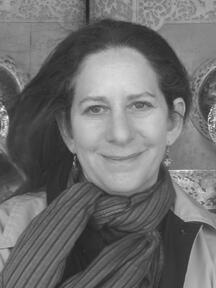
Barbara Crossette is the U.N. correspondent for The Nation and a columnist for India Abroad. She received the Shorenstein Journalism Award in 2010.
Journalism in Asia has had a long history of covering revolutions and wars. However, peace has reigned over Asia for near on 40 years. Yet, the peace and stability in Asia looks increasingly precarious. Asia too is not immune to populist nationalism. In this climate, Asia could yet again become the battleground for dislocation, revolution and war. Journalism, on top of reacting to potential crises, will be critical for proactively finding ways to prevent and defuse crises in the region.
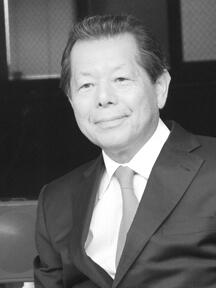
Yoichi Funabashi is the chairman of the Rebuild Japan Initiative Foundation. He received the Shorenstein Journalism Award in 2015.
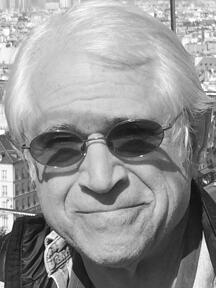
Ian Buruma is a writer and the Paul W. Williams Professor of Democracy, Human Rights, and Journalism at Bard College. He received the Shorenstein Journalism Award in 2008.
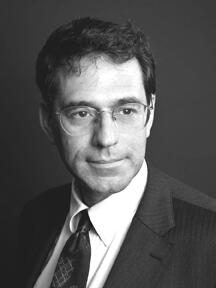
Seth Mydans is a contributing writer for the New York Times. He received the Shorenstein Journalism Award in 2009.
Barbara Demick is the Los Angeles Times’ bureau chief in New York and was formerly bureau chief in Beijing and in Seoul. She is the author of Nothing to Envy: Ordinary Lives in North Korea and Logavina Street: Life and death in a Sarajevo Neighborhood. She received the Shorenstein Journalism Award in 2012.
Aung Zaw is the founder and editor-in-chief of The Irrawaddy. He received the Shorenstein Journalism Award in 2013.
Jacob Schlesinger is a senior Washington correspondent for the Wall Street Journal. He received the Shorenstein Journalism Award in 2014.
Orville Schell is the Arthur Ross Director of the Center on U.S.-China Relations at the Asia Society in New York, and former dean of the School of Journalism at the University of California, Berkeley. He received the Shorenstein Journalism Award in 2003.
John Pomfret was a foreign correspondent with the Washington Post for many years. He is the author of The Beautiful Country and the Middle Kingdom: America and China from 1776 to the Present. He received the Shorenstein Journalism Award in 2007.
ASEAN between China and America: Is It Time to Try Horsing the Cow?
Admirers of the Association of Southeast Asian Nations (ASEAN) are impressed with the fact that it continues to exist and that an outright war has never broken out between its members. Also often praised is the value to the region of promoting cooperation through the consensual process known as the ‘ASEAN Way’. If ASEAN is a talk shop, these observers say, talking is at least better than fighting. ASEAN's increasingly numerous and vocal critics reply that by valuing process more than product, consensus over accomplishment, the organization is failing to respond to urgent real-world challenges in Asia. Not least among such challenges is Chinese expansion in the South China Sea (SCS) and the stated intention of incoming US president Donald Trump to pull his country out of the Trans-Pacific Partnership (TPP). Only four ASEAN members have claims in the SCS and only four are in the TPP, but the sea's and the treaty's futures matter for the rest of the region as well. The fact of Chinese advancement and the risk of American disengagement are endangering the autonomy and relevance of ASEAN, not to mention the repercussions of Sino-American escalation. Already weakened by internal dissensus, the group's ability to negotiate as a group with China on maritime security has been blocked by Beijing's insistence on bilateral talks. Chinese material largesse has coopted Cambodia into vetoing any ASEAN agreement to restrain, moderate, or even question China's designs on the heartwater of Southeast Asia. The ASEAN Way is being used against ASEAN itself. Heightened uncertainty as to America's future role in and commitment to the region further heightens security concern. In its 50th anniversary year, Southeast Asians would do well to think outside the increasingly marginalised, internally divided, and procedurally restricted box that ASEAN has become. Three ideas already in circulation illustrate the kind of creativity that ASEAN will need if it is to sustain its acknowledged historical success in fashioning an independent political and economic identity for Southeast Asia.
Seasoned journalist analyzes US-China relations under Trump
Stanford experts offer policy proposals, insights on US-Asia relations
Stanford scholars are encouraging the new administration to consider steps to alleviate the uncertainty and anxiety felt by countries in East Asia about U.S. intentions toward the region.
President Donald Trump’s anti-China rhetoric during his campaign and his recent withdrawal of the U.S. from the Trans-Pacific Partnership have contributed to the unease in the region, which is drifting in ways that are unfavorable for American interests, they said.
Stanford’s Walter H. Shorenstein Asia-Pacific Research Center (APARC) recently published a 27-page report with recommendations on topics of trade and defense that would improve relations between the U.S. and Asian countries. The report, co-authored by eight Stanford scholars, is aimed to help shape U.S. policies in the region.
“The advent of any new administration provides an opportunity to reassess policy approaches,” wrote Gi-Wook Shin, director of the Shorenstein center. “A new mandate exists, and it is our hope that that mandate will be used wisely by the new administration.”
Trade and defense
The biggest trade concern for experts in the region is President Trump’s decision to withdraw the U.S. from the Trans-Pacific Partnership (TPP) and his intention to focus on bilateral agreements instead of multinational pacts.
The agreement, which bound 12 countries in the region by a set of international trade and investment rules, had problems, Stanford scholars said. For example, some have criticized the treaty for not requiring full compliance with international labor standards for all the participating countries. Also, the rules of origin, which were supposed to give preferential treatment to countries in the TPP, were deemed to be weak by many, allowing goods produced outside the TPP to receive benefits.
But it would not be wise or efficient for the U.S. to start negotiations from scratch in the region because the U.S. withdrawal from the agreement, which was touted as a model for the 21st century, already has hurt its credibility with other Asian countries, said Takeo Hoshi, director of the Japan Program at the Shorenstein Center. In addition, Asian countries view the idea of bilateral agreements as an attempt to force trade deals on them that disproportionately benefit the U.S., he said.
“The TPP was not perfect and many problems remain, but they are not removed by abandoning the TPP,” Hoshi wrote in the report. “Completely abandoning the TPP could hurt not only the U.S. economy but also erode U.S. leadership in Asia.”
Hoshi said the U.S. should rely on aspects of TPP that are consistent with the current U.S. trade policy when creating new bilateral agreements, while maintaining and improving existing free trade agreements with other Asian countries.
Another immediate concern for scholars is the maintenance of security and stability in the region.
“The region is unsettled because of uncertainty about us,” said Thomas Fingar, a Shorenstein APARC fellow. “The U.S. has long served as the guarantor of prosperity and security in the region but Asians are no longer convinced that we have the will or ability to do so. This has real consequences … It’s not simply because they are already beginning to act as if we intend to play a less active or positive role.”
If China’s national power and economy continue to expand, it will become increasingly difficult to maintain stability in the region if the U.S. does not continue to play a constructive role. Possible dangers include escalation of tensions between China and the U.S. or its allies following accidents or tactical encounters near areas over which China claims sovereignty.
In the report, scholars recommend a comprehensive review of security in the region to make sure military plans are in place that prioritize management of a possible collapse of North Korea or a sudden military strike coming from the country. Other priorities should include peaceful resolution of China-Taiwan differences and ensuring military access in the South China Sea and East China Sea, wrote Karl Eikenberry, director of the U.S.-Asia Security Initiative at the Shorenstein Center.
“The United States also should engage in a more long-range, exploratory strategic dialogue, first with allies and partners, and then with Beijing, to identify potential areas of mutual interest that can help prevent the unintended escalation of conflicts and reduce already dangerous levels of misperception and mistrust on both sides,” Eikenberry wrote.
China is key
Maintaining a peaceful, productive relationship with China should be of the utmost importance for the U.S., according to the Stanford scholars.
“Managing America’s multifaceted relationship with China is arguably the most consequential foreign policy challenge facing the new administration,” Fingar said.
Although President Trump’s anti-China rhetoric during his campaign made Asian countries anxious about the future, China has been criticized by many American leaders before. Ten previous U.S. presidents were critical of China during their campaigns, but once they assumed office, their tone changed and they adopted a more pragmatic view of U.S. interests in the area, Fingar wrote.
However, while in the past China’s political moves have been predictable for the most part, now that its economy is slowing, the country is increasingly relying on social control and nationalism to reinforce regime legitimacy. This makes China less predictable, according to Fingar.
But the scholars say that there are several opportunities to approach the relationship with China in a way that is beneficial for the U.S. and the rest of the region.
One such opportunity would be for the U.S. to declare its willingness to join China’s newly created Asian Infrastructure Investment Bank, which was formed in early 2016 to support construction projects in the Asia-Pacific region. This would be an “any outcome we win” opportunity that would showcase the U.S. desire to cooperate with China and help establish the region’s confidence in the U.S., Fingar said.
The new administration should also consider pushing for a quick completion of a Bilateral Investment Treaty with China – something that two previous U.S. administrations were not able to achieve. Creating this agreement would help protect things that are important to the U.S. businesses and reassure the willingness of the U.S. to deepen its relationship with China, according to Fingar.
“In my view, how we’re going to establish or reestablish relations with China is key,” Shin said. “Will there be more tension? That’s really important. This affects not only the U.S., but also our allies in the region.”
Alex Shashkevich is a writer for the Stanford News Service.
Ian Johnson, longtime foreign correspondent, to receive Shorenstein Journalism Award
- Read more about Ian Johnson, longtime foreign correspondent, to receive Shorenstein Journalism Award
Ian Johnson, a veteran journalist with a focus on Chinese society, religion and history, is the 2016 recipient of the Shorenstein Journalism Award. The award, given annually by the Walter H. Shorenstein Asia-Pacific Research Center, is conferred to a journalist who produces outstanding reporting on Asia and has contributed to greater understanding of the complexities of Asia. He will deliver a keynote speech and participate in a panel discussion on May 1, 2017, at Stanford.
“Ian Johnson is one of those rare writers who has not only watched China’s evolution over the long haul, but who is also deeply steeped in the culture and politic of both Europe and the United States as well,” said Orville Schell, the Arthur Ross Director at the Asia Society of New York’s Center on U.S.-China Relations and jury member for the award. “This cross-cultural grounding has imbued his work on China with a humanistic core that, because it is always implicit rather than explicit, is all the more persuasive.”
Ian Buruma, the Paul W. Williams Professor of Democracy, Human Rights, and Journalism at Bard College and jury member for the award, added further praise, “Ian Johnson is one of the finest journalists in the English language. He writes about China with extraordinary insight, deep historical knowledge and a critical spirit tempered by rare human sympathy. His work on China is further enriched by wider interests, such as the problems of Islamist extremism in the West, specifically Germany, where he lives when he is not writing from China.”
The Shorenstein award, now in its 15th year, originally in partnership with the Shorenstein Center on Press, Politics and Public Policy at Harvard, was created to honor American journalists who through their writing have helped Americans better understand Asia. In 2011, the award was broadened to encompass Asian journalists who pave the way for press freedom, and have aided in the growth of mutual understanding across the Pacific. Recent recipients of the award include Yoichi Funabashi, former editor-in-chief of the Asahi Shimbun; Jacob Schlesinger of the Wall Street Journal; and Aung Zaw, founder of the Irrawaddy, a Burmese publication.
Johnson has spent over half of the past 30 years in the Greater China region, first as a student in Beijing from 1984-85, and then in Taipei from 1986-88. He later worked as a newspaper correspondent in China, from 1994-96 with Baltimore's The Sun, and then from 1997-2001 with the Wall Street Journal, covering macroeconomics, China’s social issues and World Trade Organization accession.
Johnson returned to China in 2009, where he now lives and writes for the New York Times and freelances for the New York Review of Books, the New Yorker and National Geographic. He also teaches and leads a fellowship program at the Beijing Center for Chinese Studies.
Johnson has also worked in Germany, serving as the Wall Street Journal’s Germany bureau chief and senior writer. Early on in his career, he covered the fall of the Berlin Wall and German unification, and later returned to head coverage on areas including the introduction of the euro and Islamist terrorism.
Johnson has been twice nominated for the Pulitzer Prize and won in 2001 for his coverage of the Chinese government’s suppression of the Falun Gong spiritual movement and its implications of that campaign for the future. He is also the author of two books, Wild Grass (Pantheon, 2004) which examines China’s civil society and grassroots protest, and A Mosque in Munich (Houghton Mifflin Harcourt, 2010). His next book, The Souls of China: The Return of Religion after Mao (Pantheon, April 2017) explores the resurgence of religion and value systems in China.
Additional details about the panel discussion and the award are listed below.
About the Panel Discussion and Award Ceremony
A keynote speech will be delivered by Shorenstein Journalism Award winner Ian Johnson, followed by a panel discussion with Orville Schell, the Arthur Ross Director at the Asia Society of New York’s Center on U.S.-China Relations, and Xueguang Zhou, professor of sociology at Stanford; moderated by Daniel C. Sneider, associate director for research at Shorenstein APARC.
May 1, 2017, from 12:00 – 1:30 p.m. (PDT)
Bechtel Conference Center, Encina Hall, 616 Serra Street, Stanford, CA 94305
The keynote speech and panel discussion are open to the public. The award ceremony will take place in the evening for a private audience.
To RSVP for the panel discussion, please visit this page.
About the Shorenstein Journalism Award
The Shorenstein Journalism Award honors a journalist not only for excellence in their field of reporting on Asia, but also for their promotion of a free, vibrant media and for the future of relations between Asia and the United States. Originally created to identify American and Western journalists for their work in and on Asia, the award now also recognizes Asian journalists who have contributed significantly to the development of independent media in Asia. The award is presented annually and includes a prize of $10,000.
The award is named after Walter H. Shorenstein, the philanthropist, activist and businessman who endowed two institutions that are focused respectively on Asia and the press - the Walter H. Shorenstein Asia-Pacific Research Center at Stanford and the Joan Shorenstein Center on Press, Politics and Public Policy in the Kennedy School of Government at Harvard.
Past recipients of the award include: Yoichi Funabashi, formerly of the Asahi Shimbun (2015); Jacob Schlesinger of the Wall Street Journal (2014), Aung Zaw of the Irrawaddy (2013), Barbara Demick of the Los Angeles Times (2012), Caixin Media of China (2011), Barbara Crossette of the New York Times (2010), Seth Mydans of the New York Times (2009), Ian Buruma (2008), John Pomfret of the Washington Post (2007), Melinda Liu of Newsweek (2006), Nayan Chanda of the Far Eastern Economic Review (2005), Don Oberdofer of the Washington Post (2004), Orville Schell (2003), and Stanley Karnow (2002).
A jury selects the award winner. The 2016 jury comprised of:
Ian Buruma, the Paul W. Williams Professor of Democracy, Human Rights, and Journalism at Bard College, is a noted Asia expert who frequently contributes to publications including the New York Times, the New York Review of Books and the New Yorker. He is a recipient of the Shorenstein Journalism Award and the international Erasmus Prize (both in 2008).
Nayan Chanda is the director of publications and the editor of YaleGlobal Online Magazine at the Yale Center for the Study of Globalization. For nearly thirty years, Chanda was at the Hong Kong-based magazine, Far Eastern Economic Review. He writes the ‘Bound Together’ column in India’s Business World and is the author of Bound Together: How Traders, Preachers, Adventurers and Warrior Shaped Globalization. Chanda received the Shorenstein Journalism Award in 2005.
Susan Chira is a senior correspondent and editor on gender issues and former deputy executive editor and foreign editor at the New York Times. Chira has extensive experience in Asia, including serving as Japan correspondent for the Times in the 1980s. During her tenure as foreign editor, the Times won the Pulitzer Prize four times for international reporting on Afghanistan, Russia, Africa and China.
Donald K. Emmerson is a well-respected Indonesia scholar and director of Shorenstein APARC’s Southeast Asia Program and a research fellow for the National Asia Research Program. Frequently cited in international media, Emmerson also contributes to leading publications, such as Asia Times and International Business Times.
Orville Schell is the Arthur Ross Director at the Asia Society of New York’s Center on U.S.-China Relations and former jury member for the Pulitzer Prize for international reporting. Schell has written extensively on China and was awarded the 1997 George Peabody Award for producing the groundbreaking documentary The Gate of Heavenly Peace. He received the Shorenstein Journalism Award in 2003.
Daniel C. Sneider is the associate director for research at Shorenstein APARC, writing on Asian security issues, wartime historical memory and U.S policy in Asia. He also frequently contributes to publications such as Foreign Policy, Asia Policy and Slate. Sneider had three decades of experience as a foreign correspondent serving in India, Japan and Russia for the Christian Science Monitor and as the national and foreign editor of the San Jose Mercury News and a syndicated columnist on foreign affairs for Knight-Ridder.
For more information about the award, please visit this page.