Education
Paragraphs
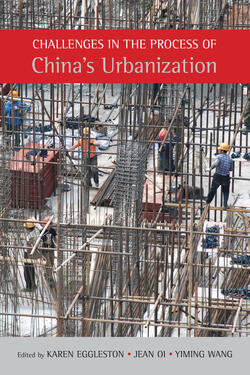
urbanization cover

The same institutions that enabled China’s massive urbanization and spurred its economic growth now require further reform and innovation.

To address the issues facing the next phase of the nation’s transformation, the National New Urbanization Plan (2014–20) set ambitious targets for sustainable, human-centered, and environmentally friendly urbanization. This volume explores the key institutional and governance challenges China will face in reaching those goals. Its policy-focused contributions from leading social scientists in the United States and China explore aspects of urbanization ranging from migration and labor markets to agglomeration economies, land finance, affordable housing, and education policy. Subjects covered in the eleven chapters include:

  • Institutional problems leading to fiscal pressures on local governments and unequal provision of social services to migrant families
  • The history of land financing and threats to its sustainability
  • The difficulty of sorting out property rights in rural China
  • How administrative redistricting has allowed the urbanization of geographical administrative places to outpace the urbanization of populations within those areas
  • How the hukou system may not be the sole, or even primary, mechanism restricting migrants from public goods, such as their childrens’ education
  • Whether the nation’s food security is threatened by its ongoing urbanization
  • The current state of the provision of low-income housing, and future challenges
 
Karen Eggleston is the director of the Asia Health Policy Program at the Shorenstein Asia-Pacific Research Center (Shorenstein APARC). She is a fellow at Stanford's Center for Health Policy/Primary Care and Outcomes Research and a faculty research fellow of the National Bureau of Economic Research.
Jean C. Oi is the William Haas Professor in Chinese Politics in the department of political science and a senior fellow of the Freeman Spogli Institute for International Studies at Stanford University. Oi is the founding director of the China Program at Shorenstein APARC and the Lee Shau Kee Director of the Stanford Center at Peking University.
Wang Yiming is vice president and senior research fellow at the Development Research Center of the State Council, People’s Republic of China. Previously he was with the National Development and Reform Commission (NDRC), where he served for many years as executive vice president of the Academy of Macroeconomics Research and deputy secretary general of the NDRC.
 

Examination copies: Shorenstein APARC books are distributed by Stanford University Press. You can obtain information on obtaining an examination copy at their website.


All Publications button
1
Publication Type
Books
Publication Date
Authors
Karen Eggleston
Jean C. Oi
Book Publisher
Shorenstein APARC
Authors
News Type
News
Date
Paragraphs

Alluding to the famous dictum by China’s late leader, Deng Xiaoping, Min Weifang, the executive president of Chinese Society for Education Development Strategies and professor at Peking University (PKU), China, noted that the “water has become very deep, it is difficult to touch the stones [to cross the river].” Min’s comments came at the end of a conference titled “Building World-Class Universities: An Institutional Perspective,” and they specifically referred to the challenges facing Chinese institutions of higher learning. Yet, the phrase nicely captured the challenges facing institutions of higher education worldwide in remolding institutions, social norms and structures to better adapt to the 21st century. Institutions of higher learning – whether “world-class” or not – need to grasp the demands of a rapidly changing future that is hard to discern. Speakers highlighted the complexities of globalization, market pressures, and a contracting public purse which encumber university governance and produce conflicting goals.

The conference, which was hosted at the Stanford Center at Peking University from Nov. 4-5, was part of the Beijing Forum 2016 and brought together over 30 scholars, university presidents and other thought leaders from 11 countries in Europe, Russia, North America and the Asia-Pacific region. The Forum aimed to focus on the institutional contexts that promote the construction and longevity of world-class universities. The second half of the Forum featured debates about the criteria for and, even, the very definition of “world-class.”

The Forum generated cross-cutting themes among a wide range of experts in attendance. The most prominent themes that emerged included the role of the government; government-university relations; and the tensions between education and knowledge production in universities. The Forum first highlighted the various “world-class university-projects” and elite national university-projects around the globe including in China, Russia, South Korea, Japan and Pakistan. Forum discussions then shifted to focus on questions such as “what is a university?” and “what is world-class”? Various university ranking systems drew skepticism, yet were also recognized as a resource used by donors, governments, alumni and prospective students.

As a policy prescription, a heavy role of the government in university education drew the most fire especially from Chinese colleagues who emphasized China’s need for greater university autonomy from government interference. All could agree, however, upon the important role of the government in tertiary education and, in particular, for building world-class universities, even if striking the proper balance between the role of the government and university administration necessarily differed depending on the national context.

Panelists agreed that contemporary challenges facing top-tier universities are many. They include social and economic pressures that favor “multiversities” over smaller, more cohesive universities; tensions among conflicting stakeholders in “multiversities”; intensification of science, technology, engineering and math (STEM) research; commercialization of knowledge; diminishing focus on undergraduate education; overproduction of doctoral degrees; inequality in access to and quality of higher education; and increasing administrative scale and complexity of university management. Many panelists throughout the conference appeared to concur that accelerated knowledge production, a more direct connection to national development goals, increased specialization and commercialization have produced significant benefits in recent years. But they also acknowledged that these benefits have come with a price – perhaps in the form of excellence in undergraduate teaching.

The gains that Peking University and Tsinghua University, in particular, and Chinese universities, in general, have made were widely acknowledged. Increasing numbers of Asian universities, too, have entered the top-tier in global rankings. Yet, solving 21st century demands – as opposed to just managing them – still appeared difficult as experts and thought leaders grappled with what, if any, institutional models can best meet those demands. Some experts suggested providing students access to different kinds of tertiary education (for example, in the form of community colleges, vocational colleges, liberal arts and research universities, as in the U.S. context). Most experts, if not all, agreed that universities need to shore up their educational missions and ensure balanced support for both the humanities and social sciences as well as the sciences and technical fields. In addition, many experts emphasized the need to address societal imbalances and provide better access to quality higher education to all socioeconomic classes.

Related links:

Forum agenda and list of panelists

Photo gallery

Hero Image
world class universities
At a forum hosted at Stanford Center at Peking University, experts gathered to discuss the institutional contexts of building world-class universities, Beijing, Nov. 2016.
All News button
1
Paragraphs

No nation is free from the charge that it has a less-than-complete view of the past. History is not simply about recording past events—it is often contested, negotiated, and reshaped over time. The debate over the history of World War II in Asia remains surprisingly intense, and Divergent Memories examines the opinions of powerful individuals to pinpoint the sources of conflict: from Japanese colonialism in Korea and atrocities in China to the American decision to use atomic weapons against Japan.

Rather than labeling others' views as "distorted" or ignoring dissenting voices to create a monolithic historical account, Gi-Wook Shin and Daniel Sneider pursue a more fruitful approach: analyzing how historical memory has developed, been formulated, and even been challenged in each country. By identifying key factors responsible for these differences, Divergent Memories provides the tools for readers to both approach their own national histories with reflection and to be more understanding of others.


"A well-written investigation on the legacy of World War II in Asia, greatly contributes to the field of cultural and military history.”Mel Vasquez, H-War

"This book is an important counterweight to prevailing tendencies that promote uncritical nationalism and is thus an invaluable resource for this generation’s Asian and American youth to gain a critical understanding of their national histories...[T]he authors’ non-judgmental approach, coupled with persistence in pursuing the multiple interpretations and experiences of these traumatic events, provoke a reconsideration of our notions of justice, equality, and humanity within our nationalist thinking."—Grace Huang, Journal of American-East Asian Relations, Vol. 26.2


This book is part of the Studies of the Walter H. Shorenstein Asia-Pacific Research Center series at Stanford University Press.

All Publications button
1
Publication Type
Books
Publication Date
Journal Publisher
Stanford University Press
Authors
-

In 2006, the Chinese Government introduced a massive block grant program for rural compulsory education, similar to that of Title I grant in the United States. Central government provided block grants with add-on requirement to provincial governments based on total number of pupils, average per pupil spending in that province, and a cost-sharing plan that favors the economically backward provinces. Provincial governments then distributed the grants along with its own share to county government using a similar formula to cover school operating expenditures, free tuitions, and conditional cash transfers for boarding students.


While there have been plenty research on whether the program has buttressed the financing of rural education or crowded out local financing, little is known about its effects on the enrollment and education attainment of rural children after a decade  (Shi, 2012; Chyi & Zhou, 2014; Lü, 2014). This paper fills this glaring gap by using matched household survey data and county school expenditure data between 2000-2011 that were made available to researchers for the first time.


Our identification strategies are composed of three parts. First, we take advantage of the exogenous variation in the rates of cost-sharing in the two-step allocation process of the block grants to estimate “Intention to Treatment” effects of the whole program. Secondly, we compare counties receiving different proportion of subsidies from central government in a difference-in-difference framework. Thirdly, we use the IV-DID strategy that instruments the county-level education spending with the exogenous variation in the planned allocation of the grants.


Dr. Wei HA is currently Research Professor in Education Policy and Leadership at the Graduate School of Education and a faculty associate at the Institute of Education Economics at Peking University. Prior to joining the Peking University, he worked as policy specialists at UNICEF and UNDP for seven years in the United States and Africa. During his doctoral study at the Harvard University, he also served as a consultant at the World Bank. He has conducted research in a wide-range of fields including education economics, public health, migration, and development economics. His current research focuses on the impact evaluation of key national education policies in China such as the Rural Compulsory Education Finance Reform, and China’s efforts to build “World Class Universities” through the 211 and 985 Projects. He also examines the interaction between education and major social transformations in China such as the massive labor retrenchments at State-Owned Enterprises in the late 1990s and rising housing prices in urban China. Dr. Ha received a dual BA in Economics and Political Science and MA in Education Economics from Peking University and his PhD in Public Policy from Harvard University.


This event is cosponsored by the Rural Education Action Program (REAP).

Does Money Matter? The Effects of Block Grants on Education Enrollment and Attainment in Rural China
Wei HA Education Policy and Leadership at the Graduate School of Education and Institute of Education Economics at Peking University
Seminars
News Type
News
Date
Paragraphs

Karl Eikenberry, a distinguished fellow at Stanford’s Freeman Spogli Institute for International Studies, will serve on the Commission on Language Learning at the American Academy of Arts and Sciences (AAAS). The new commission is part of a national effort to examine the state of American language education.

The commission will work with scholarly and professional organizations to gather research about the benefits of language instruction and to initiate a national conversation about language training and international education.

Eikenberry joins eight other commissioners, including: Martha Abbott, executive director of the American Council on the Teaching of Foreign Languages; Nicholas Dirks, chancellor of the University of California at Berkeley; and Diane Wood, chief judge, of the 7th U.S. Circuit Court of Appeals. The group is led by Paul LeClerc, director of Columbia University’s Global Center in Paris.

Eikenberry, who is also a member of the AAAS Commission on Humanities and Social Sciences, contributed to “The Heart of the Matter,” a 2013 report that aims to advance dialogue on the importance of humanities and social sciences for the future of the United States.

Hero Image
karl eikenberry headline
All News button
1
Authors
News Type
News
Date
Paragraphs

China's Communist Party academies are drawing upon new ideas from formerly taboo places like business schools in the United States and Europe and sending delegations to absorb lessons from around the world, a Stanford scholar writes in a new book.

Once viewed as inflexible, China's party-managed training academies, or "party schools," are using many of the strategies found in China's hybrid, state-run private sector, said Charlotte Lee, associate director of the China Program at Stanford's Walter H. Shorenstein Asia-Pacific Research Center.

"As communist parties fell from power in the 1980s and 1990s, there were many predictions of the Chinese Communist Party's demise," Lee said in an interview.

A perception exists, she said, that the party was too rigid to remain relevant and in power, given huge economic changes in China and throughout a more globalized world. But adapting is one way that it has managed to dominate for so long.

The Chinese Communist Party has now ruled China for more than six decades.

Signs of change 

"It is true that if you were to look at official party organization charts, many parts of the Chinese Communist Party are unchanged from the party's early years in power," Lee said. "Yet it is clear that the party has embraced new ideas and opened up to the world in recent decades."

The party schools are important, Lee explained, because they are a key set of organizations that exert political control over the knowledge, skills and careers of leaders throughout Chinese society.

In her new book, Training the Party: Party Adaptation and Elite Training in Reform-era China, Lee concludes that those seemingly static parts of the party have adjusted and that it is no longer "revolutionary," but has become, in its own words, a "learning party."

Lee's 264-page work draws on field research, datasets and trips to the party-run academies where party recruits and elites are trained.

Through conversations with people at the academy campuses she visited around the country Lee discovered the extent to which the schools, and the party, were changing.

For example, the schools are using as one of their core teaching methods the case method approach pioneered by Harvard Business School, which Lee described as a "force of inspiration" for the students.

As a sign of another change, Lee noted that the schools, once almost shrouded in secrecy from the rest of society, are now renting out their office parks to other organizations as a way to raise revenue.

"They are opening up in more than one way," Lee said, adding that the overall process began in the 1980s and accelerated in 2005 when China established state-of-the-art executive leadership academies that required a more legitimate educational approach. 

Organizational machinery

The success of the Chinese economy and market, as well as the rush for revenue and status by many people and organizations in the country, spurred the academies to change. Lee said the party schools are dynamic and entrepreneurial in the way they seek out new student populations and craft new programs, both educational and political.

"This shows how the party's organizational machinery has been more nimble than some would have predicted," she said.

Yet to be seen is whether the revised party-school approach is enough to turn around the larger Chinese Communist Party or deal with the problem of rampant political corruption in the country.

"There's some evidence of new organizational thinking in the party schools, but it is unclear whether this will help with resolving China's corruption problem or spark genuine democratic reform," Lee said.

While eight other political parties technically exist in China, there is no true opposition to the Chinese Communist Party.

Lee began her book while a political science doctoral student at Stanford.

Looking ahead, she is studying how China's education landscape is evolving and how China is constructing new international organizations, like the Asia Infrastructure Investment Bank, that reflect its long-term global ambitions.

She asks, "To what degree might these organizations challenge or supplement the existing global order and how might the U.S. respond intelligently?"

Clifton Parker is a writer for the Stanford News Service.

Hero Image
flickr ahmadrafiuddin great hall of the people
China's national emblem sits atop the Great Hall of the People in Beijing.
Flickr/Ahmad Rafiuddin
All News button
1
-

By any measure, China’s economy and defense budget are second only to those of the United States. Yet tremendous uncertainties persist concerning China’s military development and national trajectory, and areas with greater information available often conflated misleadingly. Fortunately, larger dynamics elucidate both areas. Particularly since the 1995-96 Taiwan Strait Crisis, China has made rapid progress in aerospace and maritime development, greatly facilitating its military modernization. The weapons and systems that China is developing and deploying fit well with Beijing’s geostrategic priorities. Here, distance matters greatly: after domestic stability and border control, Beijing worries most about its immediate periphery, where its unresolved disputes with neighbors and outstanding claims lie primarily in the maritime direction. Accordingly, while it would vastly prefer pressuring concessions to waging war, China is already capable of threatening potential opponents’ military forces should they intervene in crises over islands and maritime claims in the Yellow, East, and South China Seas and the waterspace and airspace around them. Far from mainland China, by contrast, it remains ill-prepared to protect its own forces from robust attack. Fortunately for Beijing, the non-traditional security focus of its distant operations makes conflict unlikely; remedying their vulnerabilities would be difficult and expensive. Despite these larger patterns, critical unknowns remain concerning China’s economic development, societal priorities, industrial efficiency, and innovation capability. Dr. Erickson will examine these and related issues to probe China’s development trajectory and future place in the international system. 


The views expressed by Dr. Erickson are his alone, and do not represent the policies or estimates of any organization with which he is affiliated.


Dr. Andrew S. Erickson is an Associate Professor in the Strategic Research Department at the U.S. Naval War College and a core founding member of the department’s China Maritime Studies Institute (CMSI). He is an Associate in Research at Harvard University’s John King Fairbank Center for Chinese Studies (2008-). Erickson also serves as an expert contributor to the Wall Street Journal’s China Real Time Report (中国实时报), for which he has authored or coauthored 25 articles. In spring 2013, he deployed in the Pacific as a Regional Security Education Program scholar aboard USS Nimitz (CVN68), Carrier Strike Group 11.

Erickson received his Ph.D. and M.A. in international relations and comparative politics from Princeton University and graduated magna cum laude from Amherst College with a B.A. in history and political science. He has studied Mandarin in the Princeton in Beijing program at Beijing Normal University’s College of Chinese Language and Culture and Japanese language, politics, and economics in the year-long Associated Kyoto Program at Doshisha University.

Erickson’s research, which focuses on Asia-Pacific defense, international relations, technology, and resource issues, has been published widely in English- and Chinese-language edited volumes and in such peer-reviewed journals as China QuarterlyAsian SecurityJournal of Strategic StudiesOrbisAsia Policy (forthcoming January 2014), and China Security; as well as in Foreign Affairs, The National InterestThe American InterestForeign PolicyJoint Force QuarterlyChina International Strategy Review (published in Chinese-language edition, forthcoming in English-language edition January 2014), and International and Strategic Studies Report (Center for International and Strategic Studies, Peking University). Erickson has also published annotated translations of several Chinese articles on maritime strategy. His publications are available at <www.andrewerickson.com> and <www.chinasignpost.com>.

This event is co-sponsored with CEAS and is part of the China under Xi Jinping series.

Philippines Conference Room

Andrew Erickson Associate in Research Speaker John King Fairbank Center for Chinese Studies, Harvard University
Seminars
-

Faculty and students of Peking University have been at the forefront of China’s modern history.  The social impact of the university has been enormous.  Its educational philosophy needs to continually evolve, especially as China has developed in the last few decades at historically unprecedented rates.  President Wang will discuss these changes, how the university copes with new challenges, and how the globalization of Peking University fits into his vision for the future.

Wang Enge was appointed President of Peking University in 2013. He obtained his B.S. and M.S. in theoretical physics from Liaoning University in 1982 and 1985 respectively and received his Ph.D. from Peking University in 1990. He served as Director of the Institute of Physics (CAS) (1999-2007), Founding Director of the International Center for Quantum Structures (2000), Director of the Beijing National Laboratory for Condensed Matter Physics (2004-2009), CAS Deputy Secretary-General (2008-2009), and Executive President of CAS Graduate University (2008-2009).  President Wang is a member of the Chinese Academy of Sciences (CAS) and the Academy of Sciences for the Developing World (TWAS), as well as a fellow of the American Physical Society and the Institute of Physics (UK). He has been a JSPS professor of Tohoku University (Japan), an AvH Scholar of Fritz-Haber Institute der MPG (Germany), a KITP Visiting Professor at the University of California, Santa Barbara (USA), a Visiting Professor at the University of California, Berkeley (USA), a Visiting Professor at the International Centre for Theoretical Physics (Italy), and a GCEP Scholar at Stanford University.

A reception will follow immediately afer this talk

Koret-Taube Conference Center
Gunn–SIEPR Building
366 Galvez Street

WANG Enge President Speaker Peking University
Conferences
Subscribe to Education