Environment

FSI scholars approach their research on the environment from regulatory, economic and societal angles. The Center on Food Security and the Environment weighs the connection between climate change and agriculture; the impact of biofuel expansion on land and food supply; how to increase crop yields without expanding agricultural lands; and the trends in aquaculture. FSE’s research spans the globe – from the potential of smallholder irrigation to reduce hunger and improve development in sub-Saharan Africa to the devastation of drought on Iowa farms. David Lobell, a senior fellow at FSI and a recipient of a MacArthur “genius” grant, has looked at the impacts of increasing wheat and corn crops in Africa, South Asia, Mexico and the United States; and has studied the effects of extreme heat on the world’s staple crops.

-

Asia Health Policy Program (AHPP) 2021-22 Colloquium series "Aligning Incentives for Better Health and More Resilient Health Systems in Asia”

Friday, November 12, 2021, 7:30am - 8:30am (Jakarta time)

Dr. Alatas will discuss her research on promoting vaccination in Indonesia and the impact of the pandemic on Indonesia’s society and economy more generally, including on poverty, human capital, and development.

Image
Vivi Alatas 4X4
Vivi Alatas is an  economist with passion for evidence-based solutions.  She is CEO of Asakreativita, a consulting and Edtech company that she established in 2020. Formerly she was a Lead Economist of the World Bank, where she led a team of seasoned local and international economists in producing several flagship reports for national and global audiences, including ‘Targeting Poor and Vulnerable Households in Indonesia’, ‘Making Poverty Work in Indonesia’ , ‘Indonesia’s Rising Divide’, ‘Indonesia Jobs Report’ and “Aspiring Indonesia – Expanding the Middle Class”. She has presented various of these research findings to the President, Vice President, Ministers and Deputy Ministers. She also has written several journal articles on poverty, inequality and labour issues. Some of the papers were written in collaboration with Nobel Laureates Abhijit Banerjee and Angus Deaton (who was also her advisor at Princeton).

Via Zoom Webinar
Register: https://bit.ly/3FmTUTp

Vivi Alatas CEO, Asakreativita
Seminars

APARC Fall 2021 Webinar Series

The Asia-Pacific region is the world’s most vulnerable region to climate change risks. With its densely populated low-lying territories and high dependence on natural resources and agriculture sectors, Asia is increasingly susceptible to the impacts of rising sea levels and weather extremes. The impacts of climate change encompass multiple socioeconomic systems across the region, from livability and workability to food systems, physical assets, infrastructure services, and natural capital.

-

Asia Health Policy Program (AHPP) 2021-22 Colloquium series "Aligning Incentives for Better Health and More Resilient Health Systems in Asia”

Professor Mobarak will discuss his research on COVID-19 response in Bangladesh and beyond, including masking, vaccine equity, and appropriate pandemic response policies in low and middle income countries.

He will provide an overview of the coauthored MaskNorm study, a randomized-trial of community-level mask promotion in rural Bangladesh during COVID-19 that demonstrates a scalable and effective method to promote mask adoption and reduce symptomatic SARS-CoV-2 infections. He will also discuss efficient last-mile vaccine delivery in low-income countries and related research on the lower epidemiological and welfare value of social distancing in lower-income countries.

Image
Mobarak, Mushfiq
Ahmed Mushfiq Mobarak is a Professor of Economics at Yale University with concurrent appointments in the School of Management and in the Department of Economics.

Mobarak is the founder and faculty director of the Yale Research Initiative on Innovation and Scale (Y-RISE). He holds other appointments at Innovations for Poverty Action, the Jameel Poverty Action Lab (J-PAL) at MIT, the International Growth Centre (IGC) at LSE.

Mobarak has several ongoing research projects in Bangladesh, Brazil, Chile, Kenya, Malawi and Sierra Leone. He conducts field experiments exploring ways to induce people in developing countries to adopt technologies or behaviors that are likely to be welfare improving. He also examines the complexities of scaling up development interventions that are proven effective in such trials. For example, he is scaling and testing strategies to address seasonal poverty using migration subsidies or consumption loans in Bangladesh, Nepal and Indonesia. His research has been published in journals across disciplines, including Econometrica, Science, The Review of Economic Studies, the American Political Science Review, Proceedings of the National Academy of Sciences, and Demography, and covered by the New York Times, The Economist, Science, NPR, BBC, Wall Street Journal, the Times of London, and other media outlets around the world. He received a Carnegie Fellowship in 2017.

Mobarak is collaborating with the government of Bangladesh, NGOs and think-tanks such as BRAC and BIGD, the major Bangladeshi telecom providers, Innovations for Poverty Action, UNDP, other economists, epidemiologists, computer scientists, and public health researchers to devise evidence-based COVID response strategies for Bangladesh and for other developing countries. The approach and results have been covered by BBC, Foreign Policy, New York Times, Washington Post, Vox, and media in India, Pakistan, Bangladesh, Nigeria, Austria, Sweden, Denmark, among others.  The work is supported by the Bill and Melinda Gates Foundation, Givewell.org, the Global Innovation Fund, and Yale Macmillan Center.

Co-sponsored by


Image
South Asia logo
Image
South Asia logo

Via Zoom Webinar
Register: https://bit.ly/3ulFdLi

Ahmed Mushfiq Mobarak Professor of Economics, Yale University
Seminars
-

This event is part of the Asia Health Policy Program's 2021-22 Colloquium series "Aligning Incentives for Better Health and More Resilient Health Systems in Asia”

Three prominent demographers discuss China's demographic change with insights from the seventh national census. Topics include the pace of urbanization, the more balanced sex ratio, increasing educational attainment, population aging, potential impacts of the pandemic, and recently announced changes in family planning and retirement policies.

Image
Wang Feng 2018 - 4X4
Wang Feng is professor of sociology at the University of California, Irvine, and an adjunct professor of sociology and demography at Fudan University in Shanghai, China. He has done extensive research on global social and demographic changes, comparative population and social history, and social inequality, with a focus on China. He is the author of multiple books, and his research articles have been published in venues including Population and Development Review, Demography, Science, The Journal of the Economics of Aging, The Journal of Asian Studies, The China Journal, and International Migration Review. He has served on expert panels for the United Nations, the World Economic Forum, and as a senior fellow and the director of the Brookings-Tsinghua Center for Public Policy. His work and views have appeared in media outlets, including The New York Times, The Washington Post, Financial Times, The Guardian, Economist, NPR, CNN, BBC, and others.

Image
Cai Yong Photo
Cai Yong's research focuses on China's one-child policy and its implications for fertility and social policies. The one-child policy, engineered to control China's population growth by restricting fertility to one child per couple, has been controversial for many reasons, including the policy's questionable demographic and economic assumptions, the ethical concerns regarding direct state intrusion into family matters, and its negative social and demographic impacts. Cai's work has contributed to an emerging consensus on China's fertility change and the impact of the one-child policy. Specifically, his work shows that: China's fertility has dropped to a level well below the replacement; the demographic impact of the one-child policy was modest, much less than the government's claim of 400 million averted births; socioeconomic development played a critical role in driving China's fertility decline; and the socioeconomic impacts of low fertility and population aging are substantial. The consensus on these issues, to which Cai contributed, provided the empirical and scientific foundation that persuaded the Chinese government to end the three-decade-long policy.

Cai continues to monitor China's fertility in the post-one-child era, but with a new focus on international comparisons on sustained low fertility and population aging, both from a micro perspective about individual responses and family dynamics and from a macro perspective about social welfare regimes and public transfers.

Image
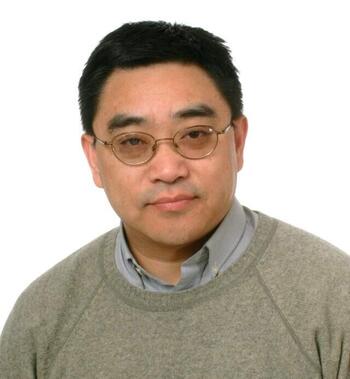
Li Shuzhuo 102121
Li Shuzhuo is currently University Distinguished Professor of Population and Development Policy Studies, Honorary Director of the Institute for Population and Development Studies, School of Public Policy and Administration, Xi’an Jiaotong University, and consulting professor at the Morrison Institute for Population and Resource Studies, Stanford University. He is a member of the Social Sciences Committee of the Ministry of Education of China. His research is focused on population and social development as well as public policies in contemporary China, including population policies and development, gender imbalance and sustainable social development, aging and health, migration and integration.

Via Zoom Webinar
Register: https://bit.ly/3ACP6GF

Wang Feng Professor, School of Social Sciences, University of California, Irvine
Cai Yong Associate Professor, Sociology, University of North Carolina, Chapel Hill
Li Shuzhuo Director and Professor, Institute for Population and Development Studies School of Public Policy and Administration, Xi’an Jiaotong University
Seminars
-

Asia Health Policy Program (AHPP) 2021-22 Colloquium series "Aligning Incentives for Better Health and More Resilient Health Systems in Asia”

Friday, October 29, 2021, 8:30am - 9:30am (Beijing time)

This paper investigates the impact of China’s reform of the system for medical payments from traditional fee-for-service to prospective payment in the form of diagnosis-related group. The paper explores comprehensive aspects of the reform, taking advantage of a large-scale administrative data set from a pilot city in China. It finds that medical expenditure per admission dropped by 7.3 percent, with greater impact on patients who spent a larger amount. To better understand the changes, further decompositions find that the expenditure reduction is fully explained by reduction in the quantity of services instead of using cheaper ones, and by reduction in the use of drugs but not reduction in other types of services, including examination, treatment, and nursing care. In addition, no evidence is found on quality deterioration or behavioral responses, including upcoding and cream skimming. Hospitals maintained their revenue through attracting more patients to contend with cost containment induced by the payment reform.

Image
Julie Shi 4X4
Julie Shi is Associate Professor of Health Economics in the School of Economics and the School of Global Health Development at Peking University. Dr. Shi’s research focuses on the design and impact of health care payment systems, the economics of health insurance coverage, drug regulations, and the trend of medical expenditures. Shi’s work has contributed to the theory and practice of China’s payment system reform. Her research on health insurance includes the impact of insurance on medical utilization. She has conducted academic and policy research on government regulations on prescription drugs. She also works on the trend of expenditures for patients with catastrophic diseases.

Dr. Shi’s undergraduate degree is from Tsinghua university and her PhD is from Boston University, both in economics. Before joining Peking University, she was a post-doctoral fellow at Harvard Medical School. Her work has published on leading academic journals including Journal of Public Economics, Journal of Health Economics, and Health Economics. She received awards for paper of the year in 2014 from the National Institute of Health Care Management (NIHCM) in the United States. She has conducted multiple projects for central and local governments in China for policy recommendation.


Via Zoom Webinar
Register: https://bit.ly/2YXJwkl

Julie Shi Associate Professor of Health Economics in the School of Economics and the School of Global Health Development, Peking University
Seminars
-

Co-sponsored with the Bush China Foundation

Image
Bush China Foundation logo 4X1

This event is part of Shorenstein APARC's spring webinar series "The United States in the Biden Era: Views from Asia."

The coronavirus pandemic has reinforced the importance of investing in population health domestically and globally, and of public-private collaboration in innovation for health goals--from technology for healthy aging to poverty alleviation and addressing other social determinants of health disparities. China, as the first health system to experience the devastation of COVID-19 and to rebound from pandemic control, offers lessons relevant beyond its borders. What can we draw from China's progress on healthcare development and its aims for innovation and public-private collaboration? In this webinar, Chinese practitioners and experts from academia and government will share their views on post-pandemic health policy and draw lessons for cooperation in global health. Scholars who have worked in and studied both the PRC and US health systems will discuss the challenges facing both—from strengthening risk protection and aligning incentives for quality improvement, to promoting goals articulated in the US’ 5th iteration of population health ‘ten-year plans’ (“Healthy People 2030”) and the PRC’s more recent “Healthy China 2030” and broader 14th Five Year Plan. What will it take to implement these ambitious goals? What is the linkage between health and China's foreign policy objectives and its place in the world? PRC experts share their views in this webinar co-hosted by Stanford’s Asia Health Policy Program and the George H. W. Bush Foundation for U.S.-China Relations.

Panelists:

Image
Cao Ying 4X4
Ying Cao is the China country director at Vital Strategies, where she leads the team to strengthen local public health systems through Vital Strategies’ Resolve to Save Lives’ global cardiovascular health initiative, tobacco control program, road safety program and evidence-based communication and policy advocacy. Dr. Cao brings over 15 years of experience in designing, leading, implementing and monitoring projects in the field of health and nutrition. She has extensive experience managing complex programs in China, with a specific focus on government and community-based programs to address unbalanced resource allocations to underprivileged areas.  Prior to joining Vital Strategies, Dr. Cao served as the director of Program Operations in Save the Children in China. Prior to Save the Children, she spent six years working in health and development within the non-profit sector and five years as a senior physician specializing in diagnostic ultrasound at Shanghai Ruijin Hospital.  Dr. Cao holds a master’s degree in public health nutrition from Wageningen University in the Netherlands and a bachelor’s degree in medicine from Shanghai Second Medical University.

Image
Gordon Liu 4X4
Gordon Liu is a leading expert on health and development economics, health policy reform, and pharmaceutical economics in China. He is a key figure in Chinese health care reform efforts and sits on the China State Council Health Reform Advisory Commission. Dr. Liu currently serves as an associate editor for Health Economics and China Economic Quarterly (CEQ) journals and was a coeditor of Value in Health, the official journal of ISPOR, and the editor-in-chief of the China Journal of Pharmaceutical Economics. He is president of the Chinese Society for Pharmacoeconomics and Outcomes Research and served as president of the Chinese Economists Society (CES). Prior to joining Peking University, Dr. Liu was a tenured associate professor at the University of North Carolina at Chapel Hill and an assistant professor at the University of Southern California.

Image
Liang Xiaofeng 4X4
 Dr. Xiaofeng Liang received his medical degree at Shanxi Medical University in 1984 and a Master's degree in Public Health from the College of Public Health of Peking University of Medicine in 1995. From 1996 to 1998, he worked as a visiting scholar at the Department of Psychiatry and Behavioral Sciences, College of Medicine, University of Miami, Florida, USA.  After his return to China, he held the positions of Vice-Director of Epidemic Prevention Station of Gansu Province (1999-2000), Vice-Director of Institute of Epidemiology and Microbiology, CAPM (2000-2001), and the Director of Immunization Program (NIP) of China CDC (2001-2011), and deputy director of China CDC.  He is the winner of the 2013 Wu Jieping-Paul Janson Medicine and Pharmacy award and has been recognized as an outstanding contribution expert of the Ministry of Health China 2011-2012. He received the special allowance subsided by the State Council of China in 2010.  Since 2008, he has been a member of the Global Strategy Advisory Group of Experts (SAGE) on Immunization of the WHO. He served as the Vice Secretary-general of the Chinese Foundation of Hepatitis Prevention (2005). He was a member of the Chinese Committee Advisory of Immunization Practice, the Chinese Association of Community Health and the Branch of Biological Products, and the Chinese Association of Prevention Medicine. He was a member of the National Polio Eradication Certification Committee and a member of the National Measles Elimination Verification Committee.  His research in public health led to advances in immunization and vaccine-preventable disease control in China. As the principal investigator on the Key Programs for Science and Technology Development of China since 2004, his main scientific research has focused on the epidemiology regularity and prevention and control countermeasures of Hepatitis B. His current research is focused on non-communicable disease control and nutrition and tobacco control. He is the author of more than 30 articles in national and international journals, such as The Lancet and, The New England Journal of Medicine.

Via Zoom Webinar.
Register: https://bit.ly/3wed6hA

Ying Cao China country director, Vital Strategies’ Resolve to Save Lives global health initiatives
Gordon Liu Professor, Peking University
Liang Xiaofeng Executive Vice President and Secretary General of the Chinese Preventive Medicine Association
Seminars
-

This event is part of the Asia Health Policy Program (AHPP) 2020-21 Colloquium series "Health, medicine, and longevity: Exploring public and private roles"

We will hear from distinguished speakers on public-private collaborations in accelerating improvements in palliative care in Singapore and parts of South Asia, as well as informal care and technology-enabled self-management of chronic illness among Asian-Americans. Joining us from Singapore is Mr. Laurence Lian, Chairman of the Lien Foundation, sharing evidence about the impact of the Foundation’s work on end of life care, collaborating with the public sector in palliative care training, improving access to pain medication, and other initiatives. Dr. Ranak Trivedi of Stanford will discuss her work to address the stress management needs of patients and their families and to improve culturally concordant care for South Asian women with breast cancer and their caregivers.

Speakers:

Image
Laurence Lien 4X4
Laurence Lien is Co-Chair and CEO of the Asia Philanthropy Circle (APC), a membership-based platform for Asian philanthropists to exchange, learn and collaborate.  Laurence is also the Chairman of Lien Foundation, a family foundation that has become well-regarded for its forward-thinking and radical approach in the fields of education, eldercare and the environment, as well as the Chairman of Lien AID, the foundation humanitarian arm for enabling sustainable access to clean water and sanitation for Asia’s rural poor.

Laurence was the CEO of the National Volunteer & Philanthropy Centre in Singapore from 2008-2014, and was the Chairman of the Community Foundation of Singapore from 2013-2019.  Prior to his work in the non-profit sector, Laurence served in the Singapore Government.  Laurence holds degrees from Oxford University, the National University of Singapore, and Harvard University’s Kennedy School of Government.  He was also a Nominated Member of Parliament in Singapore from 2012-2014. 

Image
Ranak Trivedi 4X4
Dr. Ranak Trivedi is a clinical health psychologist, assistant professor in the Dept. of Psychiatry and Behavioral Sciences, Stanford University and an investigator at the Center for Innovation to Implementation at the VA Palo Alto Health Care System. She completed her PhD in clinical health psychology at Duke University. Her NIH, VA and foundation-funded studies are focused on improving outcomes for Veterans with mental health conditions, and improving the self-management of serious illnesses by enhancing the collaboration and coping of patients and their caregivers. Her studies have provided insights into how caregivers and chronically and seriously patients collaborate around their mutual health, understanding the impact of their interpersonal relationship on chronic illness self-management, and the individual, dyadic, and systems-level barriers that they encounter. These insights have been used to develop two technology-enabled dyadic self-management programs to address the stress management needs of both patients and their framily. Dr. Trivedi is a Sojourns Scholars Leader, and she is using this platform to improving culturally concordant care for South Asian women with breast cancer and their caregivers. Dr. Trivedi was selected for the year long Leadership Institute for Women in Psychology hosted by American Psychological Association in 2020. Dr. Trivedi serves as the Director of Training and Education at the Center for Innovation to Implementation at the VA Palo Alto Health Care System, site PI and Training Director for the Elizabeth Dole National Center of Excellence for Veteran and Caregiver Research, and the Director of Caregiving and Family Systems at the Stanford Center for Asian Health Research and Education (CARE).

Via Zoom Webinar.
Register https: https://bit.ly/3slcunI

Laurence Lien Co-Chair & CEO, Asia Philanthropy Circle
Ranak Trivedi Assistant Professor, Stanford University, and Director of Caregiving and Family Systems, Stanford Center for Asian Health Research and Education
Seminars
-

This event is part of Shorenstein APARC's winter webinar series "Asian Politics and Policy in a Time of Uncertainty."

Is demographics destiny as societies search for sustainable, innovation-led growth? Many analysts worry that population aging slows the socioeconomic engine of innovation. What can the older societies of East Asia do to remain innovative? Will younger South Asia inevitably eclipse East Asia as the South Asian population surges into the working ages, just as surely as India will soon overtake China as the most populous country in the world? In this webinar celebrating the publication of Demographics and Innovation in the Asia-Pacific, social scientists from across the region probe multiple aspects of these critical questions. Chinese economist and entrepreneur James Liang will offer insights regarding demography and innovation in China; economist James Feyrer probes the economics of demography and comparative productivity effects across the Asia-Pacific; sociologist Joon-Shik Park will discuss “Population Cliffs, Crisis of Local Society, and the Politics of Innovation Cities in South Korea”; and political scientist Kenji Kushida will focus on “How Japan’s Aging Demographics Have Affected Pathways of Technological Development.” Karen Eggleston, co-editor and author, will moderate the discussion.

Speakers:

Image
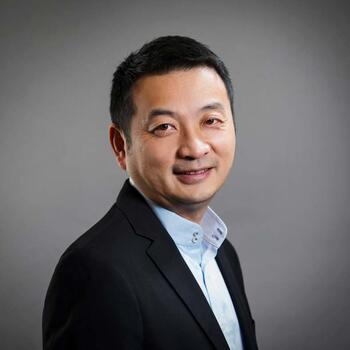
James Liang 4X4
James Liang is one of the Co-founders and Executive Chairman of the Board of Trip.com Group Ltd. He was the Chief Executive Officer from 2000 to 2006 and from 2013 to 2016. Trip.com Group has grown to become one of the world’s largest online travel agencies. Currently, James serves as Co-Chairman of Tongcheng-eLong (HKSE:7080) and on the boards of a number of other Internet companies, including Sina (NASDAQ: SINA), and MakeMyTrip (NASDAQ: MMYT). He is also Research Professor of Economics at Peking University.

In addition to his expertise in the travel industry, James is also a leading scholar of demographics and social studies. He has played an important role in shaping China’s population policies in recent years and in generating public interest in issues such as education and urban planning. As a co-author of the book Too Many People in China?, James analyzed the impact of the one-child policy and the adverse effects of demographic changes on China’s economy. He is also the author of multiple other publications, including The Rise of the Network Society, and his latest book published in 2018, The Demographics of Innovation.

James received his Ph.D. degree from Stanford University and his master’s and bachelor’s degrees from Georgia Institute of Technology.

­­

Image
Feyrer, James 4X4
James Feyrer is an Associate Professor of Economics at Dartmouth College.  He received his Ph.D. from Brown University and his B.S. from Stanford University.  His work is primarily in applied macroeconomics. His work on the impacts of demographics and trade on growth have been influential in policy circles.  In particular his work on the impact of globalization on output has informed the Brexit debate. He has published articles in the Quarterly Journal of Economics, the American Economic Review, the Review of Economics and Statistics, the Journal of the European Economic Association, among other journals.

Image
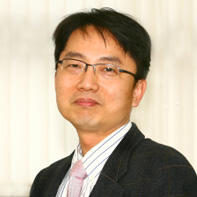
Park Joon Shik 4X4
Joon-Shik Park is Professor in the Department of Sociology at Hallym University, Chuncheon, Korea. He got his Ph.D. degree at Yonsei University in Korea. His research focuses on employment and regional studies. Prof. Park began his academic career as a researcher on labor and employment issues in Korean society. Recently, Prof. Park has been interested in comparing social economy and local regeneration in the context of global social and economic crisis. He recently published several books, articles, and project reports on such issues as the impact of globalization on employment regimes and local societies; social dialogue and integration; creative innovations for sustainable local development. Prof. Park has served as President of the Korean Regional Sociological Association, Dean of the Social Science School at Hallym University. He is now a member of the Presidential Commission on Policy Planning of the Korean Government. He is leading the Inclusive Society Division in the Presidential Commission as the chair person. He is also serving as Vice President of Vision and Cooperation of Hallym University.

Image
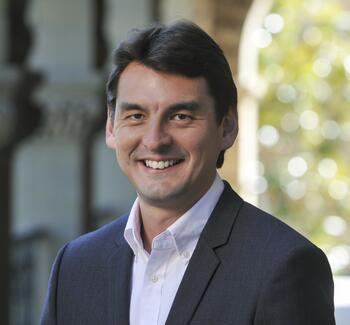
Kenji Kushida 4X4
Kenji E. Kushida is a Research Scholar at the Shorenstein Asia-Pacific Research Center Japan Program at Stanford University. Kushida’s research streams include 1) Information Technology innovation, 2) Silicon Valley’s economic ecosystem, 3) Japan’s political economic transformation since the 1990s, and 4) the Fukushima nuclear disaster. He has published several books and numerous articles in each of these streams, including “The Politics of Commoditization in Global ICT Industries,” “Japan’s Startup Ecosystem,” “Diffusing the cloud: Cloud computing and implications for public policy,” “Leading without followers: how politics and market dynamics trapped innovations in Japan's domestic ‘Galapagos’ telecommunications sector” and others. He holds a PhD in political science from the University of California, Berkeley, an MA in East Asian studies and BAs in economics and East Asian studies, all from Stanford University.

Moderator:

Image
Karen Eggleston 4X4
Karen Eggleston is Senior Fellow at the Freeman Spogli Institute for International Studies (FSI) at Stanford University, and Director of the Stanford Asia Health Policy Program and Deputy Director of the Shorenstein Asia-Pacific Research Center at FSI. She is also a Fellow with the Center for Innovation in Global Health at Stanford University School of Medicine, and a Faculty Research Fellow of the National Bureau of Economic Research (NBER). Eggleston earned her PhD in public policy from Harvard University and has MA degrees in economics and Asian studies from the University of Hawaii and a BA in Asian studies summa cum laude (valedictorian) from Dartmouth College. Eggleston studied in China for two years and was a Fulbright scholar in Korea. Her research focuses on government and market roles in the health sector and Asia health policy, especially in China, India, Japan, and Korea; healthcare productivity; and the economics of the demographic transition. She served on the Strategic Technical Advisory Committee for the Asia Pacific Observatory on Health Systems and Policies, and has been a consultant to the World Bank, the Asian Development Bank, and the WHO regarding health system reforms in the PRC.

Via Zoom Webinar.
Register https://bit.ly/2YD0Rvk

James Liang Research Professor of Economics, Peking University.
James Feyrer Department of Economics, Dartmouth College.
Joon-Shik Park Department of Sociology, Hallym University.
Kenji Kushida Shorenstein APARC, Stanford University.

Shorenstein APARC
Stanford University
Encina Hall E301
Stanford, CA 94305-6055

(650) 723-9072 (650) 723-6530
0
Senior Fellow at the Freeman Spogli Institute for International Studies
Center Fellow at the Center for Health Policy and the Center for Primary Care and Outcomes Research
Faculty Research Fellow of the National Bureau of Economic Research
Faculty Affiliate at the Stanford Center on China's Economy and Institutions
karen-0320_cropprd.jpg PhD

Karen Eggleston is a Senior Fellow at the Freeman Spogli Institute for International Studies (FSI) at Stanford University and Director of the Stanford Asia Health Policy Program at the Shorenstein Asia-Pacific Research Center at FSI. She is also a Fellow with the Center for Innovation in Global Health at Stanford University School of Medicine, and a Faculty Research Fellow of the National Bureau of Economic Research (NBER). Her research focuses on government and market roles in the health sector and Asia health policy, especially in China, India, Japan, and Korea; healthcare productivity; and the economics of the demographic transition.

Eggleston earned her PhD in public policy from Harvard University and has MA degrees in economics and Asian studies from the University of Hawaii and a BA in Asian studies summa cum laude (valedictorian) from Dartmouth College. Eggleston studied in China for two years and was a Fulbright scholar in Korea. She served on the Strategic Technical Advisory Committee for the Asia Pacific Observatory on Health Systems and Policies and has been a consultant to the World Bank, the Asian Development Bank, and the WHO regarding health system reforms in the PRC.

Director of the Asia Health Policy Program, Shorenstein Asia-Pacific Research Center
Stanford Health Policy Associate
Faculty Fellow at the Stanford Center at Peking University, June and August of 2016
CV
Date Label
Shorenstein APARC, Stanford University.
Seminars
-

This event is part of the Asia Health Policy Program (AHPP) 2020-21 Colloquium series "Health, medicine, and longevity: Exploring public and private roles"

Non-state actors contribute to health systems in many ways that are vital for health and well-being, especially for those most vulnerable. We will hear from three distinguished speakers on non-government organizations and public-private collaborations in Asia: Dr. Karki, Executive Director of PHASE Nepal; Mr. Choub, Executive Director of KHANA, Cambodia; and Dr. Huntington of Johnson & Johnson, Singapore, prefaced by video interviews of many others. They will share about the trade-offs in contracting for health services in Asia and beyond, from the conceptual foundations to the daily reality of practitioners, and what COVID-19 has taught about “building back better” in the future.

Speakers:

Image
Jiban Karki 4X4
Dr Jiban Karki is a development professional with a PhD in Public Health, a master’s degree in Rural Development and bachelor’s degrees in Civil Engineering and Business Administration. He has over 20 years of experience in leading development organizations and managing projects in Nepal and over 9 years of experience in academic research in South Asia. He is currently working with the University of Sheffield. He also leads PHASE Nepal, an NGO he founded in 2006 in Nepal which works with multiple partners at the grassroot level in the health, education and livelihoods improvement sector where other organizations rarely go because of the remoteness of the areas.  His research interests range from community led primary health care to provision of Assistive Technology to Person with Disabilities. 


Image
Sok Chamreun Choub 4X4
Mr. Sok Chamreun Choub is the Executive Director of the Khmer HIV/AIDS NGO Alliance (KHANA) in the Kingdom of Cambodia, which focuses on prevention and treatment for HIV/AIDS, Tuberculosis, sexual reproductive health, other non-communicable diseases, as well as promoting human rights and health coverage for vulnerable populations in Cambodia. Chamreun’s professional background is in social science, but he has been devoted to public health work for 27 years in government, the UN and NGOs—more than two decades with KHANA, but also in many other roles. For example, he currently also serves as the Chief of Party for the five-year USAID-funded Community Mobilization Initiative to End TB (COMMIT); the Chair of the Steering Committee of the Health Action Coordinating Committee for the Cooperation Committee for Cambodia; Vice-Chair Civil Society Representative for The Global Fund Country Coordination Committee for Cambodia; Co-Chair of the Activists Coalition on TB for Asia and the Pacific; and the Developing Country NGOs Representative of the Stop TB Partnership Board.  

Image
Dale Huntington 4X4
Dr. Dale Huntington is currently Senior Director, Health Care Systems for Emerging Markets with Johnson and Johnson, based in Singapore where he serves as the primary Global Health Policy lead in Asia and the Pacific. In this role, he is responsible for developing and implementing a strategy to advance Johnson & Johnson’s Enterprise objectives and Government Affairs & Policy platform priorities – with a particular focus on shaping healthcare systems to expand access to quality healthcare in key emerging markets. Prior to joining Johnson and Johnson he was with the WHO, working as the Director of the Asia Pacific Observatory on Health Policy and Systems, based in the WHO Western Pacific Regional Office, Manila, and as a Scientist with the Department of Reproductive Health and Research in Geneva. Before joining WHO he was a Senior Health Specialist at the World Bank – focused on South and East Asia. He holds a Doctorate in Science degree from the Johns Hopkins University School of Hygiene and Public Health, specializing in health services research and evaluation. He has lived and worked in developing countries for over 25 years. He has an extensive publication record and is proficient in French.

Via Zoom Webinar.
Register: https://bit.ly/2KcO6DW

Jiban Karki Executive Director of PHASE Nepal, and Global Challenge Fellow at University of Sheffield
Sok Chamreun Choub Executive Director of KHANA, Phnom Penh, Cambodia
Dale Huntington Senior Director of Health Care Systems for Emerging Markets, Johnson & Johnson, Singapore
Seminars
Subscribe to Environment