Health and Medicine

FSI’s researchers assess health and medicine through the lenses of economics, nutrition and politics. They’re studying and influencing public health policies of local and national governments and the roles that corporations and nongovernmental organizations play in providing health care around the world. Scholars look at how governance affects citizens’ health, how children’s health care access affects the aging process and how to improve children’s health in Guatemala and rural China. They want to know what it will take for people to cook more safely and breathe more easily in developing countries.

FSI professors investigate how lifestyles affect health. What good does gardening do for older Americans? What are the benefits of eating organic food or growing genetically modified rice in China? They study cost-effectiveness by examining programs like those aimed at preventing the spread of tuberculosis in Russian prisons. Policies that impact obesity and undernutrition are examined; as are the public health implications of limiting salt in processed foods and the role of smoking among men who work in Chinese factories. FSI health research looks at sweeping domestic policies like the Affordable Care Act and the role of foreign aid in affecting the price of HIV drugs in Africa.

-

Co-sponsored with the Harvard Kennedy School

This event is part of the Asia Health Policy Program (AHPP) 2020-21 Colloquium series "Health, medicine, and longevity: Exploring public and private roles"

Introduced by Lawrence H. Summers (President Emeritus, Harvard University), Richard Zeckhauser, Jack Donahue and Karen Eggleston discuss their recently published book, The Dragon, the Eagle, and the Private Sector: Public-Private Collaboration in China and the United States with Professor Yijia Jing of Fudan University, China's leading expert on public-private relationships will also participate. The governments of China and the United States - despite profound differences in history, culture, economic structure, and political ideology - both engage the private sector in the pursuit of public value. This book employs the term collaborative governance to describe relationships where neither the public nor private party is fully in control, arguing that such shared discretion is needed to deliver value to citizens. This concept is exemplified across a wide range of policy arenas, such as constructing high speed rail, hosting the Olympics, building human capital, and managing the healthcare system. This book will help decision-makers apply the principles of collaborative governance to effectively serve the public, and will enable China and the United States to learn from each other's experiences. It will empower public decision-makers to more wisely engage the private sector. The book's overarching conclusion is that transparency is the key to the legitimate growth of collaborative governance.

"It has become increasingly clear over the last few years that in tackling a country’s problems, what matters most is the quality of government rather than the quantity. This book provides a key to understanding how to achieve that quality-public-private collaboration, done right. Delving deep into two very different societies, the US and China, the authors provide lessons that illuminate and should inform scholars and policymakers alike." -- Fareed Zakaria

"This important book addresses how the two most important countries, the U.S. and China, address what may be their most important question: How can their public and private sectors cooperate most effectively with each other to create value. This is the rare book that is both analytic and a pleasure to read. It makes a lasting impression. It deserves a very wide readership among all those concerned about the future of the global economy." -- Lawrence H Summers, President Emeritus, Harvard University

"Eggleston, Donahue, and Zeckhauser offer an authoritative and intriguing account of why and how collaborative governance, a key modern instrument that engages public and private actors for comparative advantages in coping with complex public affairs, has been widely and deeply practiced in two vastly different countries, China and the US. An essential reading with profound academic inspirations and rich empirical inquiries." -- Yijia Jing, Fudan University.

Speakers

Image
Lawrence H. Summer 4X4
Lawrence H. Summers is President Emeritus of Harvard University. During the past two decades he has served in a series of senior policy positions, including Vice President of development economics and chief economist of the World Bank, Undersecretary of the Treasury for International Affairs, Director of the National Economic Council for the Obama Administration from 2009 to 2011, and Secretary of the Treasury of the United States, from 1999 to 2001. 


Image
richard_zeckhauser_4x4
Richard J. Zeckhauser is the Frank Ramsey Professor of Political Economy at the Harvard Kennedy School.  


Image
John Donahue 4X4
John D. Donahue is Faculty Chair for the Master’s in Public Policy program at the Harvard Kennedy School.


Image
Karen Eggleston 4X4
Karen Eggleston is Senior Fellow at the Freeman Spogli Institute for International Studies and Director of the Asia Health Policy Program in the Shorenstein Asia-Pacific Research Center at Stanford University.


Image
Yijia Jing 4X4
Yijia Jing is a Chang Jiang Scholar, Seaker Chan Chair Professor in Public Management, Dean of the Institute for Global Public Policy, and Professor of the School of International Relations and Public Affairs, Fudan University. He conducts research on privatization, governance, and collaborative service delivery. He is the founding editor-in-chief of the journal Global Public Policy and Governance.

Lawrence H. Summers President Emeritus of Harvard University
Richard J. Zeckhauser Frank P. Ramsey Professor of Political Economy, Harvard Kennedy School
John D. Donahue Raymond Vernon Senior Lecturer in Public Policy, Harvard Kennedy School

Shorenstein APARC
Stanford University
Encina Hall E301
Stanford, CA 94305-6055

(650) 723-9072 (650) 723-6530
0
Senior Fellow at the Freeman Spogli Institute for International Studies
Center Fellow at the Center for Health Policy and the Center for Primary Care and Outcomes Research
Faculty Research Fellow of the National Bureau of Economic Research
Faculty Affiliate at the Stanford Center on China's Economy and Institutions
karen-0320_cropprd.jpg PhD

Karen Eggleston is a Senior Fellow at the Freeman Spogli Institute for International Studies (FSI) at Stanford University and Director of the Stanford Asia Health Policy Program at the Shorenstein Asia-Pacific Research Center at FSI. She is also a Fellow with the Center for Innovation in Global Health at Stanford University School of Medicine, and a Faculty Research Fellow of the National Bureau of Economic Research (NBER). Her research focuses on government and market roles in the health sector and Asia health policy, especially in China, India, Japan, and Korea; healthcare productivity; and the economics of the demographic transition.

Eggleston earned her PhD in public policy from Harvard University and has MA degrees in economics and Asian studies from the University of Hawaii and a BA in Asian studies summa cum laude (valedictorian) from Dartmouth College. Eggleston studied in China for two years and was a Fulbright scholar in Korea. She served on the Strategic Technical Advisory Committee for the Asia Pacific Observatory on Health Systems and Policies and has been a consultant to the World Bank, the Asian Development Bank, and the WHO regarding health system reforms in the PRC.


Director of the Asia Health Policy Program, Shorenstein Asia-Pacific Research Center
Stanford Health Policy Associate
Faculty Fellow at the Stanford Center at Peking University, June and August of 2016
CV
Date Label
Senior Fellow, the Freeman Spogli Institute for International Studies (FSI), Stanford University
Yijia Jing Dean of the Institute for Global Public Policy, and Professor of the School of International Relations and Public Affairs, Fudan University
Seminars
Paragraphs

In one of the first studies of service sector robotics using establishment-level data, we study the relationship between robots and staffing in Japanese nursing homes. We utilize variation in robot subsidies across prefectures as an instrumental variable to explore the impact of robot adoption on nursing homes’ staffing decisions. We find that robot adoption appears to decrease difficulty in staff retention and to increase employment by augmenting the number of care workers and nurses on flexible employment contracts. Robot adoption is negatively correlated with the monthly wages of regular nurses, consistent with reduced burden of care such as fewer night shifts. Our findings suggest that robots may not be detrimental to labor and may help to remedy challenges posed by rapidly aging populations.

JEL Code: I11, J14, J23, O30,
Key words: Robots, jobs, nursing homes, automation, aging, healthcare

All Publications button
1
Publication Type
Working Papers
Publication Date
Journal Publisher
Asia Health Policy Program working paper # 63
Authors
Karen Eggleston
Paragraphs

Health systems globally face increasing morbidity and mortality from chronic diseases, yet many - especially in low- and middle-income countries - lack strong chronic disease management in primary health care (PHC). We provide evidence on China’s efforts to promote PHC management using unique five-year panel data in a rural county, including health care utilization from medical claims and health outcomes from biomarkers. Utilizing plausibly exogenous variation in management intensity generated by administrative and geographic boundaries, we compare hypertension/diabetes patients in villages within two kilometers distance but managed by different townships. Results show that, compared to patients in townships with median management intensity, patients in high-intensity townships have 4.8% more PHC visits, 5.2% fewer specialist visits, 11.7% fewer inpatient admissions, and 3.6% lower medical spending. They also tend to have better medication adherence and better control of blood pressure. The resource savings from avoided inpatient admissions substantially outweigh the costs of the program.

All Publications button
1
Publication Type
Working Papers
Publication Date
Journal Publisher
Asia Health Policy Program working paper # 62
Authors
Karen Eggleston
-

This event is part of Shorenstein APARC's winter webinar series "Asian Politics and Policy in a Time of Uncertainty."

Is demographics destiny as societies search for sustainable, innovation-led growth? Many analysts worry that population aging slows the socioeconomic engine of innovation. What can the older societies of East Asia do to remain innovative? Will younger South Asia inevitably eclipse East Asia as the South Asian population surges into the working ages, just as surely as India will soon overtake China as the most populous country in the world? In this webinar celebrating the publication of Demographics and Innovation in the Asia-Pacific, social scientists from across the region probe multiple aspects of these critical questions. Chinese economist and entrepreneur James Liang will offer insights regarding demography and innovation in China; economist James Feyrer probes the economics of demography and comparative productivity effects across the Asia-Pacific; sociologist Joon-Shik Park will discuss “Population Cliffs, Crisis of Local Society, and the Politics of Innovation Cities in South Korea”; and political scientist Kenji Kushida will focus on “How Japan’s Aging Demographics Have Affected Pathways of Technological Development.” Karen Eggleston, co-editor and author, will moderate the discussion.

Speakers:

Image
James Liang 4X4
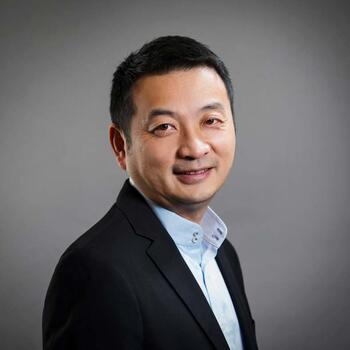
James Liang is one of the Co-founders and Executive Chairman of the Board of Trip.com Group Ltd. He was the Chief Executive Officer from 2000 to 2006 and from 2013 to 2016. Trip.com Group has grown to become one of the world’s largest online travel agencies. Currently, James serves as Co-Chairman of Tongcheng-eLong (HKSE:7080) and on the boards of a number of other Internet companies, including Sina (NASDAQ: SINA), and MakeMyTrip (NASDAQ: MMYT). He is also Research Professor of Economics at Peking University.

In addition to his expertise in the travel industry, James is also a leading scholar of demographics and social studies. He has played an important role in shaping China’s population policies in recent years and in generating public interest in issues such as education and urban planning. As a co-author of the book Too Many People in China?, James analyzed the impact of the one-child policy and the adverse effects of demographic changes on China’s economy. He is also the author of multiple other publications, including The Rise of the Network Society, and his latest book published in 2018, The Demographics of Innovation.

James received his Ph.D. degree from Stanford University and his master’s and bachelor’s degrees from Georgia Institute of Technology.

­­

Image
Feyrer, James 4X4
James Feyrer is an Associate Professor of Economics at Dartmouth College.  He received his Ph.D. from Brown University and his B.S. from Stanford University.  His work is primarily in applied macroeconomics. His work on the impacts of demographics and trade on growth have been influential in policy circles.  In particular his work on the impact of globalization on output has informed the Brexit debate. He has published articles in the Quarterly Journal of Economics, the American Economic Review, the Review of Economics and Statistics, the Journal of the European Economic Association, among other journals.

Image
Park Joon Shik 4X4
Joon-Shik Park is Professor in the Department of Sociology at Hallym University, Chuncheon, Korea. He got his Ph.D. degree at Yonsei University in Korea. His research focuses on employment and regional studies. Prof. Park began his academic career as a researcher on labor and employment issues in Korean society. Recently, Prof. Park has been interested in comparing social economy and local regeneration in the context of global social and economic crisis. He recently published several books, articles, and project reports on such issues as the impact of globalization on employment regimes and local societies; social dialogue and integration; creative innovations for sustainable local development. Prof. Park has served as President of the Korean Regional Sociological Association, Dean of the Social Science School at Hallym University. He is now a member of the Presidential Commission on Policy Planning of the Korean Government. He is leading the Inclusive Society Division in the Presidential Commission as the chair person. He is also serving as Vice President of Vision and Cooperation of Hallym University.

Image
Kenji Kushida 4X4
Kenji E. Kushida is a Research Scholar at the Shorenstein Asia-Pacific Research Center Japan Program at Stanford University. Kushida’s research streams include 1) Information Technology innovation, 2) Silicon Valley’s economic ecosystem, 3) Japan’s political economic transformation since the 1990s, and 4) the Fukushima nuclear disaster. He has published several books and numerous articles in each of these streams, including “The Politics of Commoditization in Global ICT Industries,” “Japan’s Startup Ecosystem,” “Diffusing the cloud: Cloud computing and implications for public policy,” “Leading without followers: how politics and market dynamics trapped innovations in Japan's domestic ‘Galapagos’ telecommunications sector” and others. He holds a PhD in political science from the University of California, Berkeley, an MA in East Asian studies and BAs in economics and East Asian studies, all from Stanford University.

Moderator:

Image
Karen Eggleston 4X4
Karen Eggleston is Senior Fellow at the Freeman Spogli Institute for International Studies (FSI) at Stanford University, and Director of the Stanford Asia Health Policy Program and Deputy Director of the Shorenstein Asia-Pacific Research Center at FSI. She is also a Fellow with the Center for Innovation in Global Health at Stanford University School of Medicine, and a Faculty Research Fellow of the National Bureau of Economic Research (NBER). Eggleston earned her PhD in public policy from Harvard University and has MA degrees in economics and Asian studies from the University of Hawaii and a BA in Asian studies summa cum laude (valedictorian) from Dartmouth College. Eggleston studied in China for two years and was a Fulbright scholar in Korea. Her research focuses on government and market roles in the health sector and Asia health policy, especially in China, India, Japan, and Korea; healthcare productivity; and the economics of the demographic transition. She served on the Strategic Technical Advisory Committee for the Asia Pacific Observatory on Health Systems and Policies, and has been a consultant to the World Bank, the Asian Development Bank, and the WHO regarding health system reforms in the PRC.

Via Zoom Webinar.
Register https://bit.ly/2YD0Rvk

James Liang Research Professor of Economics, Peking University.
James Feyrer Department of Economics, Dartmouth College.
Joon-Shik Park Department of Sociology, Hallym University.
Kenji Kushida Shorenstein APARC, Stanford University.

Shorenstein APARC
Stanford University
Encina Hall E301
Stanford, CA 94305-6055

(650) 723-9072 (650) 723-6530
0
Senior Fellow at the Freeman Spogli Institute for International Studies
Center Fellow at the Center for Health Policy and the Center for Primary Care and Outcomes Research
Faculty Research Fellow of the National Bureau of Economic Research
Faculty Affiliate at the Stanford Center on China's Economy and Institutions
karen-0320_cropprd.jpg PhD

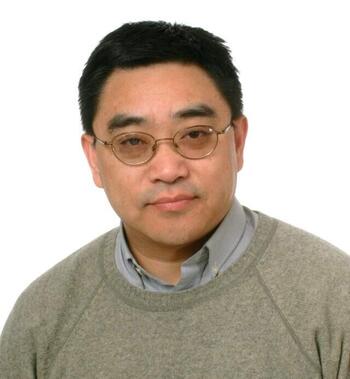
Karen Eggleston is a Senior Fellow at the Freeman Spogli Institute for International Studies (FSI) at Stanford University and Director of the Stanford Asia Health Policy Program at the Shorenstein Asia-Pacific Research Center at FSI. She is also a Fellow with the Center for Innovation in Global Health at Stanford University School of Medicine, and a Faculty Research Fellow of the National Bureau of Economic Research (NBER). Her research focuses on government and market roles in the health sector and Asia health policy, especially in China, India, Japan, and Korea; healthcare productivity; and the economics of the demographic transition.

Eggleston earned her PhD in public policy from Harvard University and has MA degrees in economics and Asian studies from the University of Hawaii and a BA in Asian studies summa cum laude (valedictorian) from Dartmouth College. Eggleston studied in China for two years and was a Fulbright scholar in Korea. She served on the Strategic Technical Advisory Committee for the Asia Pacific Observatory on Health Systems and Policies and has been a consultant to the World Bank, the Asian Development Bank, and the WHO regarding health system reforms in the PRC.
Director of the Asia Health Policy Program, Shorenstein Asia-Pacific Research Center
Stanford Health Policy Associate
Faculty Fellow at the Stanford Center at Peking University, June and August of 2016
CV
Date Label
Shorenstein APARC, Stanford University.
Seminars
Paragraphs

Background. People with chronic conditions are disproportionately prone to be affected by the COVID-19 pandemic but there are limited data documenting this. We aimed to assess the health, psychosocial and economic impacts of the COVID-19 pandemic on people with chronic conditions in India.
Methods. Between July 29, to September 12, 2020, we telephonically surveyed adults (n=2335) with chronic conditions across four sites in India. Data on participants’ demographic, socio-economic status, comorbidities, access to health care, treatment satisfaction, self-care behaviors, employment, and income were collected using pre-tested questionnaires. We performed multivariable logistic regression analysis to examine the correlates of difficulty in accessing medicines and worsening of diabetes or
hypertension symptoms. Further, a diverse sample of 40 participants completed qualitative interviews that focused on eliciting patient’s experiences during the COVID-19 lockdowns and data analysed using thematic analysis.
Findings. 1,734 individuals completed the survey (response rate=74%). The mean (SD) age of respondents was 57·8 years (11·3) and 50% were men. During the COVID-19 lockdowns in India, 83% of participants reported difficulty in accessing healthcare, 17% faced difficulties in accessing medicines, 59% reported loss of income, 38% lost jobs, and 28% reduced fruit and vegetable consumption. In the final-adjusted regression model, rural residence (OR, 95%CI: 4·01,2·90-5·53), having diabetes (2·42, 1·81-3·25) and hypertension (1·70,1·27-2·27), and loss of income (2·30,1·62-3·26) were significantly associated with difficulty in accessing medicines. Further, difficulties in accessing medicines (3·67,2·52-5·35), and job loss (1·90,1·25-2·89) were associated with worsening of diabetes or hypertension symptoms. Qualitative data suggest most participants experienced psychosocial distress due to loss of job or income and had difficulties in accessing in-patient services.
Interpretation. People with chronic conditions, particularly among poor, rural, and marginalized populations, have experienced difficulties in accessing healthcare and been severely affected both socially and financially by the COVID-19 pandemic.
Funding. None.

All Publications button
1
Publication Type
Working Papers
Publication Date
Journal Publisher
Asia Health Policy Program working paper # 61
Authors
Kavita (Singh)
Karen Eggleston
Authors
News Type
News
Date
Paragraphs

The Walter H. Shorenstein Asia-Pacific Research Center (APARC) has broadened its fellowship and funding opportunities to support Stanford students working in the area of contemporary Asia. The Center introduced these expanded offerings in response to the harsh impacts of the COVID-19 pandemic on student’s academic careers and their access to future jobs and valuable work experience, and in recognition of the critical need to make the field of Asian Studies more diverse and inclusive.

APARC’s diversity grant aims to encourage Stanford students from underrepresented minorities (URM) to engage in the study and research of topics related to contemporary Asia and U.S.-Asia relations, including economic, health, foreign policy, social, political, and security issues. The grant, which was first announced in June 2020, is now an ongoing offering. APARC will award a maximum of $10,000 per grant. Current  Stanford undergraduate and graduate students in the URM category from any major or discipline are eligible and encourage to apply.

APARC also invites Stanford Ph.D. candidates specializing in topics related to contemporary Asia to apply for its 2021-22 predoctoral fellowship. Up to three fellowships are available and the application deadline is May 1, 2021.

In addition, APARC continues to offer an expanded array of research assistant internships. The Center is currently seeking highly motivated Stanford undergraduate- and graduate-level students to join our team as paid research assistant interns for the spring and summer quarters of 2021. Applications for spring 2021 research assistant assignments are due on February 22, for summer 2021 assignments on March 8.

Read More

Hero Image
Stanford campus, main quad with cloudy sky
All News button
1
Subtitle

The Center has launched a suite of offerings including a predoctoral fellowship, a diversity grant, and research assistant internships to support Stanford students interested in the area of contemporary Asia.

-

This event is part of the Asia Health Policy Program (AHPP) 2020-21 Colloquium series "Health, medicine, and longevity: Exploring public and private roles"

Non-state actors contribute to health systems in many ways that are vital for health and well-being, especially for those most vulnerable. We will hear from three distinguished speakers on non-government organizations and public-private collaborations in Asia: Dr. Karki, Executive Director of PHASE Nepal; Mr. Choub, Executive Director of KHANA, Cambodia; and Dr. Huntington of Johnson & Johnson, Singapore, prefaced by video interviews of many others. They will share about the trade-offs in contracting for health services in Asia and beyond, from the conceptual foundations to the daily reality of practitioners, and what COVID-19 has taught about “building back better” in the future.

Speakers:

Image
Jiban Karki 4X4
Dr Jiban Karki is a development professional with a PhD in Public Health, a master’s degree in Rural Development and bachelor’s degrees in Civil Engineering and Business Administration. He has over 20 years of experience in leading development organizations and managing projects in Nepal and over 9 years of experience in academic research in South Asia. He is currently working with the University of Sheffield. He also leads PHASE Nepal, an NGO he founded in 2006 in Nepal which works with multiple partners at the grassroot level in the health, education and livelihoods improvement sector where other organizations rarely go because of the remoteness of the areas.  His research interests range from community led primary health care to provision of Assistive Technology to Person with Disabilities. 


Image
Sok Chamreun Choub 4X4
Mr. Sok Chamreun Choub is the Executive Director of the Khmer HIV/AIDS NGO Alliance (KHANA) in the Kingdom of Cambodia, which focuses on prevention and treatment for HIV/AIDS, Tuberculosis, sexual reproductive health, other non-communicable diseases, as well as promoting human rights and health coverage for vulnerable populations in Cambodia. Chamreun’s professional background is in social science, but he has been devoted to public health work for 27 years in government, the UN and NGOs—more than two decades with KHANA, but also in many other roles. For example, he currently also serves as the Chief of Party for the five-year USAID-funded Community Mobilization Initiative to End TB (COMMIT); the Chair of the Steering Committee of the Health Action Coordinating Committee for the Cooperation Committee for Cambodia; Vice-Chair Civil Society Representative for The Global Fund Country Coordination Committee for Cambodia; Co-Chair of the Activists Coalition on TB for Asia and the Pacific; and the Developing Country NGOs Representative of the Stop TB Partnership Board.  

Image
Dale Huntington 4X4
Dr. Dale Huntington is currently Senior Director, Health Care Systems for Emerging Markets with Johnson and Johnson, based in Singapore where he serves as the primary Global Health Policy lead in Asia and the Pacific. In this role, he is responsible for developing and implementing a strategy to advance Johnson & Johnson’s Enterprise objectives and Government Affairs & Policy platform priorities – with a particular focus on shaping healthcare systems to expand access to quality healthcare in key emerging markets. Prior to joining Johnson and Johnson he was with the WHO, working as the Director of the Asia Pacific Observatory on Health Policy and Systems, based in the WHO Western Pacific Regional Office, Manila, and as a Scientist with the Department of Reproductive Health and Research in Geneva. Before joining WHO he was a Senior Health Specialist at the World Bank – focused on South and East Asia. He holds a Doctorate in Science degree from the Johns Hopkins University School of Hygiene and Public Health, specializing in health services research and evaluation. He has lived and worked in developing countries for over 25 years. He has an extensive publication record and is proficient in French.

Via Zoom Webinar.
Register: https://bit.ly/2KcO6DW

Jiban Karki Executive Director of PHASE Nepal, and Global Challenge Fellow at University of Sheffield
Sok Chamreun Choub Executive Director of KHANA, Phnom Penh, Cambodia
Dale Huntington Senior Director of Health Care Systems for Emerging Markets, Johnson & Johnson, Singapore
Seminars
-

This event is part of the Asia Health Policy Program (AHPP) 2020-21 Colloquium series "Health, medicine, and longevity: Exploring public and private roles"

A collaborating network of researchers summarize preliminary results from recent harmonized surveys on the impact of COVID-19 on individuals living with diabetes and hypertension, focusing on their access to medication and other care, loss of household income, (non)adherence to treatment, and worsening of symptoms. Researchers from China, India, Korea, and Thailand discuss empirical results from data gathered in the last few months. Understanding to what extent lapses in medication or other treatment have occurred, and whether telehealth or other options are associated with better outcomes, may enable locally tailored, evidence-based policy responses to help mitigate impacts on future morbidity and mortality.

Speakers
Nikhil Tandon, All India Institute of Medical Sciences
Kavita Singh, Public Health Foundation of India
Lijing Yan, Duke Kunshan University
Jianchao Quan, University of Hongkong
Daejung Kim, Korea Institute for Health and Social Affairs
Piya Hanvoravongchai, Chulalongkorn University
Wasin Laohavinij, Chulalongkorn University

Via Zoom Webinar.
Register: https://bit.ly/2H6oAhV

Nikhil Tandon All India Institute of Medical Sciences
Kavita Singh Public Health Foundation of India
Lijing Yan Duke Kunshan University
Daejung Kim Korea Institute for Health and Social Affairs
Piya Hanvoravongchai Chulalongkorn University
Shorenstein APARCStanford UniversityEncina Hall E301Stanford, CA 94305-6055
0
Visiting Scholar, 2019-20
wasin_laohavinij.jpg Ph.D.

Wasin Laohavinij joined the Walter H. Shorenstein Asia-Pacific Research Center (Shorenstein APARC) as visiting scholar with the Asia Health Policy Program for the fall quarter of 2019 from King Chulalongkorn Memorial Hospital and Chulalongkorn University, where he serves as physician and teaching assistant respectively. His research focuses on diabetes care and health service systems in Thailand.  Dr. Laohavinij received his doctorate of medicine from Chulalongkorn University in 2017.

Chulalongkorn University
Jianchao Quan University of Hong Kong
Seminars
-

This event is part of the Asia Health Policy Program (AHPP) 2020-21 Colloquium series "Health, medicine, and longevity: Exploring public and private roles"

Over the last decade, India has rapidly expanded government health insurance programs that entitle low-income households to free hospital care.  In a major policy shift away from direct public provision of healthcare, these programs contract private hospitals for service delivery. This constitutes a sizeable public subsidy delivered through private agents, but there is relatively little evidence on how private hospitals perform. Using a unique dataset on 6 million insurance claims and 15,000 patient surveys, this talk will present several key insights on the behavior of private hospitals within a large government insurance program. 1) Private hospitals manipulate coding to increase their revenues at the government's expense. 2) They also charge patients out-of-pocket for care that is supposed to be free under program rules. 3) When the government increases hospital reimbursement rates, patient charges decrease substantially. 4) However, hospitals capture approximately half the increased subsidy and this is driven by less competitive markets. The results demonstrate that hospital reimbursement rates are a key policy lever shaping hospital behavior with implications for program outcomes. Improving program performance requires a combination of stronger hospital monitoring and attention to reimbursement rates; focusing on one without the other may reduce the efficiency of public spending or worsen patient welfare. Lastly, market structure, a factor rarely taken into consideration in health policy in India, may play a role in the extent to which public subsidies benefit patients.

https://aparc.fsi.stanford.edu/asiahealthpolicy/news/postdoctoral-spotlight-radhika-jain

Image
Radhika Jain 4X4 022521
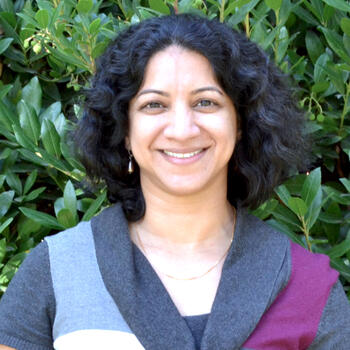
Radhika Jain is the Asia Health Policy Postdoctoral Fellow for 2019-2022 at the Walter H. Shorenstein Asia-Pacific Research Center (Shorenstein APARC).  Her research focuses on health care markets, the effectiveness of public health policy, and gender disparities in health.

She completed her doctorate in the Department of Global Health at Harvard University in 2019.  Her dissertation examined the extent to which government subsidies for health care under insurance are captured by private hospitals instead of being passed through to patients, and whether accountability measures can help patients claim their entitlements. Dr. Jain's research has been supported by grants from the Weiss Family Fund and the Jameel Poverty Action Lab (JPAL). She has worked on impact evaluations of health programs in India and on the implementation of HIV programs across several countries in sub-Saharan Africa. She also held a doctoral fellowship at the Center for Global Development.

At Shorenstein APARC, Radhika is starting new work on understanding the factors that contribute to poor female health outcomes and interventions to increase the effectiveness of public health insurance.

Via Zoom Webinar.
Register: https://bit.ly/37218gJ

Shorenstein APARC Stanford University Encina Hall E301 Stanford, CA 94305-6055
1
Asia Health Policy Postdoctoral Fellow, 2019-2022
radhika_jain.jpg Ph.D.

Radhika Jain was the Asia Health Policy Postdoctoral Fellow for 2019-2022 at the Walter H. Shorenstein Asia-Pacific Research Center (Shorenstein APARC).  Her research focuses on health care markets, the effectiveness of public health policy, and gender disparities in health.

She completed her doctorate in the Department of Global Health at Harvard University in 2019.  Her dissertation examined the extent to which government subsidies for health care under insurance are captured by private hospitals instead of being passed through to patients, and whether accountability measures can help patients claim their entitlements. Dr. Jain's research has been supported by grants from the Weiss Family Fund and the Jameel Poverty Action Lab (JPAL). She has worked on impact evaluations of health programs in India and on the implementation of HIV programs across several countries in sub-Saharan Africa. She also held a doctoral fellowship at the Center for Global Development.

At Shorenstein APARC, Radhika began new work on understanding the factors that contribute to poor female health outcomes and interventions to increase the effectiveness of public health insurance.

2019-2022 Asia Health Policy Postdoctoral Fellow
Seminars
Subscribe to Health and Medicine