Health and Medicine

FSI’s researchers assess health and medicine through the lenses of economics, nutrition and politics. They’re studying and influencing public health policies of local and national governments and the roles that corporations and nongovernmental organizations play in providing health care around the world. Scholars look at how governance affects citizens’ health, how children’s health care access affects the aging process and how to improve children’s health in Guatemala and rural China. They want to know what it will take for people to cook more safely and breathe more easily in developing countries.

FSI professors investigate how lifestyles affect health. What good does gardening do for older Americans? What are the benefits of eating organic food or growing genetically modified rice in China? They study cost-effectiveness by examining programs like those aimed at preventing the spread of tuberculosis in Russian prisons. Policies that impact obesity and undernutrition are examined; as are the public health implications of limiting salt in processed foods and the role of smoking among men who work in Chinese factories. FSI health research looks at sweeping domestic policies like the Affordable Care Act and the role of foreign aid in affecting the price of HIV drugs in Africa.

News Type
News
Date
Paragraphs

The Shorenstein Asia-Pacific Research Center (APARC) at Stanford is now accepting applications for the Shorenstein Postdoctoral Fellowship in Contemporary Asia, an opportunity made available to two junior scholars for research and writing on Asia.

Fellows conduct research on contemporary political, economic or social change in the Asia-Pacific region, and contribute to Shorenstein APARC’s publications, conferences and related activities. To read about this year’s fellows, please click here.

The fellowship is a 10-mo. appointment during the 2017-18 academic year, and carries a salary rate of $52,000 plus $2,000 for research expenses.

For further information and to apply, please click here. The application deadline is Dec. 16, 2016.

Hero Image
27193530153 58630c4828 o
All News button
1
News Type
News
Date
Paragraphs

The Asia Health Policy Program at Stanford’s Shorenstein Asia-Pacific Research Center, in collaboration with scholars from Stanford Health Policy's Center on Demography and Economics of Health and Aging, the Stanford Institute for Economic Policy Research, and the Next World Program, is soliciting papers for the third annual workshop on the economics of ageing titled Financing Longevity: The Economics of Pensions, Health Insurance, Long-term Care and Disability Insurance held at Stanford from April 24-25, 2017, and for a related special issue of the Journal of the Economics of Ageing.

The triumph of longevity can pose a challenge to the fiscal integrity of public and private pension systems and other social support programs disproportionately used by older adults. High-income countries offer lessons – frequently cautionary tales – for low- and middle-income countries about how to design social protection programs to be sustainable in the face of population ageing. Technological change and income inequality interact with population ageing to threaten the sustainability and perceived fairness of conventional financing for many social programs. Promoting longer working lives and savings for retirement are obvious policy priorities; but in many cases the fiscal challenges are even more acute for other social programs, such as insurance systems for medical care, long-term care, and disability. Reform of entitlement programs is also often politically difficult, further highlighting how important it is for developing countries putting in place comprehensive social security systems to take account of the macroeconomic implications of population ageing.

The objective of the workshop is to explore the economics of ageing from the perspective of sustainable financing for longer lives. The workshop will bring together researchers to present recent empirical and theoretical research on the economics of ageing with special (yet not exclusive) foci on the following topics:

  • Public and private roles in savings and retirement security
  • Living and working in an Age of Longevity: Lessons for Finance
  • Defined benefit, defined contribution, and innovations in design of pension programs
  • Intergenerational and equity implications of different financing mechanisms for pensions and social insurance
  • The impact of population aging on health insurance financing
  • Economic incentives of long-term care insurance and disability insurance systems
  • Precautionary savings and social protection system generosity
  • Elderly cognitive function and financial planning
  • Evaluation of policies aimed at increasing health and productivity of older adults
  • Population ageing and financing economic growth
  • Tax policies’ implications for capital deepening and investment in human capital
  • The relationship between population age structure and capital market returns
  • Evidence on policies designed to address disparities – gender, ethnic/racial, inter-regional, urban/rural – in old-age support
  • The political economy of reforming pension systems as well as health, long-term care and disability insurance programs


Submission for the workshop

Interested authors are invited to submit a 1-page abstract by Sept. 30, 2016, to Karen Eggleston at karene@stanford.edu. The authors of accepted abstracts will be notified by Oct. 15, 2016, and completed draft papers will be expected by April 1, 2017.

Economy-class travel and accommodation costs for one author of each accepted paper will be covered by the organizers.

Invited authors are expected to submit their paper to the Journal of the Economics of Ageing. A selection of these papers will (assuming successful completion of the review process) be published in a special issue.


Submission to the special issue

Authors (also those interested who are not attending the workshop) are invited to submit papers for the special issue in the Journal of the Economics of Ageing by Aug. 1, 2017. Submissions should be made online. Please select article type “SI Financing Longevity.”


About the Next World Program

The Next World Program is a joint initiative of Harvard University’s Program on the Global Demography of Aging, the WDA Forum, Stanford’s Asia Health Policy Program, and Fudan University’s Working Group on Comparative Ageing Societies. These institutions organize an annual workshop and a special issue in the Journal of the Economics of Ageing on an important economic theme related to ageing societies.


More information can be found in the PDF below.


Hero Image
Flickr/Vinoth Chandar Flickr/Vinoth Chandar
All News button
1
Paragraphs
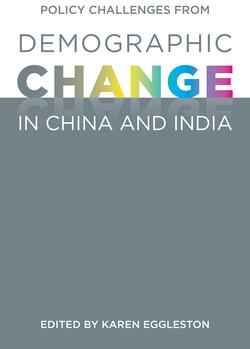
Abstract cover image for book Policy Challenges from Demographic Change in China and India

The world’s two most populous countries face numerous policy challenges from rapid demographic change. Drawing on social science expertise from China, India, and the United States, the contributors examine the social and economic challenges for policies across a range of domains, from China’s changed family planning policies and India’s efforts to address gender imbalance, to both countries’ policies regarding old-age support, human capital investment, poverty alleviation, and broader issues of governance.

Sections focus on:

  • Policy Challenges and Economic Impact
  • Fertility and Sex Imbalance
  • Human Capital and Urbanization
  • Population Aging

Desk or examination copies can be ordered from Stanford University Press.

All Publications button
1
Publication Type
Books
Publication Date
Authors
Karen Eggleston
Book Publisher
Shorenstein APARC
-

This forum will focus on the importance of community health services and primary health care reform in China and discuss the deepening efforts to establish a two-way referral system to help boost access and equality of high-quality medical resources and basic public health services.  At this year’s annual forum, distinguished experts will present research examining China’s emerging hierarchical medical system (including insurance payments, referral arrangements, and chronic and acute disease treatment initiatives). Policymakers, providers, and researchers will introduce China's overall policies towards this new system as well as describe the practice and challenges of primary care delivery and innovative approaches of internet-based and integrated medical care systems.

Presentation English
Download pdf
Xiaofang Han Former Director of Beijing Municipal Development and Reform Commission
Xinbo Liao Inspector of The Health and Family Planning Commission of Guangdong Province
Jifu Zhan Deputy Mayor of Sanming, Fujian province
Su Xu Deputy Director General of Shanghai Health and Family Planning Commission, Director of Shanghai health care reform office
"and other speakers; please see agenda"
Workshops
News Type
News
Date
Paragraphs

Nearly 100 health economists from across the United States signed a pledge urging U.S. presidential candidates to make chronic disease a policy priority. Karen Eggleston, a scholar of comparative healthcare systems and director of Stanford’s Asia Health Policy Program, is one of the signatories. 

The pledge calls upon the candidates to reset the national healthcare agenda to better address chronic disease, which causes seven out of 10 deaths in America and affects the economy through lost productivity and disability.

Read the pledge below.

Hero Image
gettyimages 497595451 Getty Images
All News button
1
News Type
News
Date
Paragraphs

The Walter H. Shorenstein Asia-Pacific Research Center (APARC), in pursuit of training the next generation of scholars on contemporary Asia, has selected three postdoctoral fellows for the 2016-17 academic year. The cohort includes two Shorenstein Postdoctoral Fellows and one Developing Asia Health Policy Fellow; they carry a broad range of interests from hospital reform to the economic consequences of elite politics in Asia.

The fellows will begin their year of academic study and research at Stanford this fall.

Shorenstein APARC has for more than a decade sponsored numerous junior scholars who come to the university to work closely with Stanford faculty, develop their dissertations for publication, participate in workshops and seminars, and present their research to the broader community. In 2007, the Asia Health Policy Program began its fellowship program to specifically support scholars undertaking comparative research on Asia health and healthcare policy.

The 2016-17 fellows’ bios and their research plans are listed below:


Shorenstein Postdoctoral Fellows


Image
aditya dasgupta   photo
Aditya "Adi" Dasgupta is completing his doctorate in the Department of Government at Harvard University. At Stanford, he will work on converting his dissertation on the historical decline of single-party dominance and transformation of distributive politics in India into a book manuscript. More broadly, his research interests include the comparative economic history of democratization and distributive politics in emerging welfare states, which he studies utilizing formal models and natural experiments. He received a Bachelor of Arts from Cambridge University and a Master of Science from Oxford University and has worked at the Public Defender Service in Washington D.C., his hometown.


Image
dong zhang photo2
Dong Zhang is a political scientist whose research interests include political economy of development, with focus on the economic consequences of elite politics, and on the historical origins of long-run economic development. His dissertation examines the political logic of sustaining state capitalism model in weakly institutionalized countries with a primary focus on China. At Stanford, Zhang will develop his dissertation into a book manuscript and pursue other research projects on comparative political economy and authoritarian politics. He will receive his doctorate in political science from Northwestern University in 2016. Zhang holds bachelor’s degrees in public policy and economics, and a master’s degree in public policy from Peking University, Beijing.


Developing Asia Health Policy Postdoctoral Fellow


Image
ngando pic
Ngan Do is strongly interested in health system related issues, especially health financing, human resources for health, and health care service delivery. Do implemented comparison studies at regional level as well as participated in fieldwork in Cambodia, Lao, the Philippines, Korea and Vietnam. At Stanford, she will work on the public hospital reforms in Asia, focusing on dual practice of public hospital physicians and provider payment reforms. Do achieved her doctorate in health policy and management at the College of Medicine, Seoul National University. She earned her master’s degree in public policy at the KDI School of Public Policy and Management in Seoul, and her bachelor’s degree in international relations at the Diplomacy Academy of Vietnam (previously the Institute for International Relations).


Hero Image
160105 3244
All News button
1
-

Universal Health Coverage (UHC) is a well-embraced policy goal in the 21th century, which aims to ensure financial risk protection while assuring access to quality care.  However, up to this date, out-of-pocket (OOP) payment remains the principal means of financing health care throughout much of Asia, which leaves people financially unprotected in the face of illness.  High OOP payment at point of service is likely to either make people become medically impoverished after paying for health care, or force people to forgo treatment needed, which is detrimental to one’s health.   This presentation is based on empirical results derived from EQUITAP  (Equity in Asia-Pacific Health Systems) Project II on catastrophic payment that aims to estimate the magnitude and distribution of OOP payments for health care in 23 countries and territories in the Asia-Pacific Region in 2007.  We also draw comparisons to the results in 2000 as changes arise due to various reforms implemented since 2000.

Image
rachel lu
Jui-fen Rachel Lu, is the Fulbright Visiting Scholar at the Center for East Asian Studies, Stanford University, and Professor in the Graduate Institute of Business and Management and Department of Health Care Management, College of Management, at Chang Gung University in Taiwan, where she teaches comparative health systems, health economics, and health care financing and has served as department chair (2000-2004), Associate Dean (2009-2010) and Dean of the College of Management (2010-2013).  She earned her B.S. from National Taiwan University, and her M.S. and Sc.D. from Harvard University, and she was also a Takemi Fellow at Harvard (2004-2005) and is an Honorary Professor at Hong Kong University (2007-2017). She cofounded the Taiwan Society of Health Economics (TaiSHE) in 2008 and is currently the President of TaiSHE (2014-2017).  Professor Lu also serves as a board director for the International Health Economics Association (iHEA) (2016) and a member of the Arrow Award Committee for iHEA (2014-2016).

Her research interests are in assessing the impact of the NHI program on health care markets and household consumption patterns, and comparative health systems in the Asia-Pacific region with a focus on equity performance.  She is a long-time and active member of the Equitap (Equity in Asia-Pacific Health Systems) research network.  Professor Lu has also been appointed to serve on several advisory boards to the Taiwan Ministry of Health and Welfare and National Health Insurance Administration, Ministry of Science and Technology.

She received the Minister Wang Jin Naw Memorial Award for Best Paper in Health Care Management in 2002 and was the recipient of the IBM Faculty Award in 2009.

Jui-fen Rachel Lu, Sc.D. Fulbright Visiting Scholar, Center for East Asian Studies, Stanford University
Seminars
News Type
News
Date
Paragraphs

Seventeen faculty members and researchers from Stanford’s Freeman Spogli Institute for International Studies were hosted at U.S. Pacific Command (USPACOM) Headquarters in Hawaii for an intensive orientation on Feb. 4-5. The visit aimed to advance collaboration and to offer a deeper understanding of USPACOM’s operations to Stanford scholars who study international security and Asia.

Admiral Harry B. Harris, Jr., Commander of USPACOM, together with his commanders and staff, welcomed the delegation. Harris’s meeting with Stanford faculty is the second in recent months. The USPACOM visit and earlier speech at Stanford Center at Peking University are part of a series of activities driven by the U.S.-Asia Security Initiative. Led by Ambassador Karl Eikenberry, the Initiative seeks to provide constructive interaction between academic and governmental experts on the many and diverse security challenges facing the Asia-Pacific region.

“Engaging deeply in conversations with those who are on the frontlines is incredibly valuable,” said trip participant Coit Blacker, FSI senior fellow and professor of international studies. “This is especially true for academics who focus much of their attention thinking about the prospects for international peace and security but not necessarily considering their direct application on a military-level.”


[[{"fid":"222122","view_mode":"crop_870xauto","fields":{"format":"crop_870xauto","field_file_image_description[und][0][value]":"","field_file_image_alt_text[und][0][value]":"","field_file_image_title_text[und][0][value]":"","field_credit[und][0][value]":"","field_caption[und][0][value]":"","field_related_image_aspect[und][0][value]":"","thumbnails":"crop_870xauto"},"type":"media","attributes":{"width":"870","style":"line-height: 1.538em;","class":"media-element file-crop-870xauto"}}]]

Image
pacom 3

Top: (Left) The Stanford delegation watches a demonstration of a 2-minute drill. / (Right) Karen Eggleston boards a UH-60 Blackhawk helpcopter enroute to the Lightning Academy with her colleagues. Bottom: The delegation takes a group photo on-site.


On the first day, FSI scholars spoke with military officers about the command’s strategies and challenges it faces, such as population aging and sovereignty disputes over the South China Sea. Discussions were followed with a tour of USS Michael Murphy, a guided missile destroyer which routinely conducts operations in the Western Pacific including the South China Sea.

Karen Eggleston, FSI senior fellow and director of the Asia Health Policy Program, was one of the discussants on the USPACOM trip. Her research focuses on health policy in Asia, specifically the effects of demographic change and urbanization.

“As a health economist, the visit yielded for me a behind-the-scenes sense of how members of the military respond to pandemics and humanitarian situations, and of the ongoing dialogue with their counterparts in Asian nations,” Eggleston said. “I think that kind of military-to-military engagement provides an area rich with questions and best practices that could in some ways be shared as a model among other nations.”

Other activities on the first day included a briefing by the U.S. Pacific Fleet command, informal presentations and dialogue between the Stanford participants and the USPACOM staff, and working with senior leaders of the U.S. Pacific Air Forces command.

On the second day, the group visited the U.S. Army’s installation at Schofield Barracks. There, they observed a command post simulation and field exercise including units of the 25th Infantry Division. Graduates from the U.S. Army’s jungle survival training school also shared their impressions of applying lessons in the field. Researchers from the Asia-Pacific Center for Strategic Studies (APCSS) joined the Stanford delegation later in the day. Both sides discussed research outcomes and avenues for future exchanges. The day concluded with an extensive tour of USS Mississippi, a Virginia-class attack submarine. FSI has long engaged military officers through a senior military fellows program. Started in 2009 by the Center for International Security and Cooperation, the program remains active today with five fellows conducting research at Stanford.

Lt. Col. Jose Sumangil, a 2015-16 U.S. Air Force Senior Military Fellow, participated in the Stanford delegation at USPACOM.

“The trip was an excellent opportunity to showcase how the U.S. ‘rebalance to Asia’ strategy is implemented on a day-to-day basis – for example, providing a look into the decision-making process that could occur should a situation arise in the South China Sea,” Sumangil said. “It’s incredibly important to build this kind of understanding among experts studying Asia, and I think we helped do that here.”

USPACOM is one of the largest U.S. military commands with four major service components (U.S. Pacific Fleet, U.S. Pacific Air Forces, U.S. Army Pacific, U.S. Marine Forces); it is tasked with protecting U.S. people and interests, and enhancing stability in the Asia-Pacific Region.

Hero Image
pacom headline
A Stanford delegation of 17 faculty members and researchers visited U.S. Pacific Command (USPACOM) Headquarters in Hawaii, Feb. 4-5, 2016.
All News button
1
Subscribe to Health and Medicine