Health and Medicine

FSI’s researchers assess health and medicine through the lenses of economics, nutrition and politics. They’re studying and influencing public health policies of local and national governments and the roles that corporations and nongovernmental organizations play in providing health care around the world. Scholars look at how governance affects citizens’ health, how children’s health care access affects the aging process and how to improve children’s health in Guatemala and rural China. They want to know what it will take for people to cook more safely and breathe more easily in developing countries.

FSI professors investigate how lifestyles affect health. What good does gardening do for older Americans? What are the benefits of eating organic food or growing genetically modified rice in China? They study cost-effectiveness by examining programs like those aimed at preventing the spread of tuberculosis in Russian prisons. Policies that impact obesity and undernutrition are examined; as are the public health implications of limiting salt in processed foods and the role of smoking among men who work in Chinese factories. FSI health research looks at sweeping domestic policies like the Affordable Care Act and the role of foreign aid in affecting the price of HIV drugs in Africa.

-

The major objectives of this paper are: 1) to investigate how local nutritional availability in early childhood and in adolescence affected health and human capital development; 2) to explore if improved nutrition in adolescence could mitigate the negative effects of early-life exposure to negative health shocks generated by the Korean War; and 3) to understand how increased nutritional supply contributed to the improvement in health in South Korea from 1946 to 1977.

Image
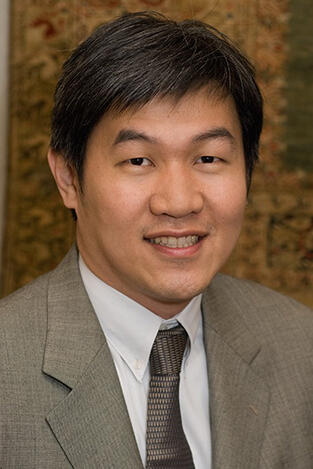
chulhee lee photo4x6
Chulhee Lee is professor of economics at Seoul National University. After receiving his doctoral degree from University of Chicago in 1996, he taught at SUNY Binghamton before he returned to Seoul in 1998. His major research topics are economic status and labor-market behaviors of older persons; and interactions of ecological environment, socioeconomic status, and health over the life course. Lee has been involved with the management of the NIH-funded Early Indicators project since 2001 as project leader and senior investigator, which constructed and analyzed longitudinal data on Union Army soldiers. He has also participated in various projects of creating and studying new data in Korea, such as the Korea Longitudinal Study of Aging (KLOSA), the panel data on the Korean Health Insurance, and the sample of military records in Korea. Lee’s research on the health and retirement of US Civil War soldiers has been published in American Economic Review (1998), Journal of Economic History (1998, 2002, 2005, 2008), Explorations in Economic History (1997, 1998, 2007, 2012), and Social Science History (1999, 2005, 2009, 2015). He has also published paper on retirement of Koreans in Economic Development and Cultural Change (2007) and Journal of Population Ageing (2013). His recent work on the effects of in-utero exposure to the Korean War, recessions, and the 1980 Kwangju uprising appeared in Journal of Health Economics (2014), Social Science and Medicine (2014), Health Economics (2017), and Asian Population Studies (2017).

Chulhee Lee Department of Economics, Seoul National University
Seminars
Paragraphs

Abstract

About 88 percent of India’s total labor force is composed of informal (officially labeled “unorganized”) workers. As many as 388 million such workers lack old age income security by way of a pension system. The Atal Pension Yojana (APY) is the latest contributory, national-level old age pension scheme for unorganized workers, with an entry age of 18–40 years. In other words, all current unorganized workers above the age of 40 are excluded. How could a national pension system viably guarantee equal pension benefits to all current unorganized workers? This paper considers how such a system might work by offering a case study of a non-contributory pension scheme for building and other construction workers in Karnataka State, India. The results indicate that this state-level pension scheme, fully funded by sector-specific receipts, is financially viable and sustainable with high levels of coverage and adequacy. The robustness of these results is shown via sensitivity analyses of discount rates, inflation rates, and growth rates of specific purpose tax collections. Additional analyses outline the scenarios under which pension benefits could be extended to all informal workers in the sector studied.

Keywords: Informal sector workers, pensions, India, Atal Pension Yojana

JEL codes: H55, J18

All Publications button
1
Publication Type
Working Papers
Publication Date
Journal Publisher
Asia Health Policy Program working paper # 47
Authors
-

Co-sponsored by the Asia Health Policy Program and the Southeast Asia Program

Achieving universal health coverage is one of the UN's Social Development Goals. The four countries in the lower Mekong region, Thailand, Vietnam, Laos, and Cambodia, have made good progress on the expansion of health insurance coverage. However, the statistics on how many people are covered and protected could be misleading, especially for vulnerable populations more likely to be left out. Using data from national surveys, a cross-country analysis shows the situation regarding health service access and health care payments among vulnerable populations in the four countries. Conditions and trends in health care utilization, and health payments and their impact on vulnerable populations will be reviewed and linked to policy implications. Pitfalls and successes in a region marked by diversity and unequal opportunity will also be explored.

Image
piya hanvoravongchai 4x6
Dr. Piya Hanvoravongchai teaches health systems and health economics at Chulalongkorn University in Thailand. He is also a co-director of the Equity Initiative in Southeast Asia and a member of the Strategic Technical Advisory Committee of the Asia Pacific Observatory on Health Systems and Policies.

Piya Hanvoravongchai Faculty of Medicine, Chulalongkorn University, Bangkok
Seminars
-

Using previously unexamined nationally representative data from the Philippines, this study employs detailed measures of children’s welfare and addresses biases related to endogeneity of parental migration to examine the wellbeing of left-behind children. The results are robust across several econometric methods (treatment effects, biprobit, PSM, PSM-IV). They suggest that migrants’ children have better educational outcomes and are less likely to work, but are more likely to be physically sick, which cognitive stress theory would attribute to parental migration as a stressor. Still, the positive impacts of parental migration, attributable to income effect, outweigh the negative effects attributable to parental absence. The results also show heterogeneity in the impacts of parental migration conditional on children’s gender.

Image
marjorie
Dr. Marjorie Pajaron is an Assistant Professor at the School of Economics, University of the Philippines. Prior to her appointment, she was a Postdoctoral Fellow at Stanford University’s Walter H. Shorenstein Asia-Pacific Research Center. She also served as a lecturer at the University of Hawai’i at Manoa Department of Economics where she also received her PhD in Economics. Her research lies at the intersection of applied microeconometrics, gender, health, migration, and development economics.

Walter H. Shorenstein
Asia-Pacific Research Center
616 Serra St C333
Stanford University
Stanford, CA 94305-6055

(650) 724-6459 (650) 723-6530
0
Asia Health Policy Postdoctoral Fellow in Developing Asia
PajaronMarjorie_WEB.jpg

Marjorie Pajaron joins the Walter H. Shorenstein Asia-Pacific Research Center during the 2012–13 academic year from the University of Hawai’i at Manoa Department of Economics where she served as a lecturer.

She took part for five years in the National Transfer Accounts project based in Honolulu. Her research focuses on the role of migrant remittances as a risk-coping mechanism, as well as the importance of bargaining power in the intra-household allocation of remittances in the Philippines.

Pajaron received a PhD in economics from the University of Hawai’i at Manoa.

Working Papers:

 “Remittances, Informal Loans, and Assets as Risk-Coping Mechanisms: Evidence from Agricultural Households in Rural Philippines.” October 2012. Revise and Resubmit, Journal of Development Economics.

“The Roles of Gender and Education on the Intra-household Allocations of Remittances of Filipino Migrant Workers.” June 2012.

“Are Motivations to Remit Altruism, Exchange, or Insurance? Evidence from the Philippines.” December 2011.

Assistant Professor at the School of Economics, University of the Philippines
Seminars
News Type
News
Date
Paragraphs

Interventions designed to improve primary care management of diabetes and reduce avoidable hospital admissions show promise for saving healthcare resources without compromising quality of care. These are the findings made by an international research team’s study of four East Asian sites.

With a fourfold increase in global diabetes prevalence over the past thirty-five years (2016 Lancet report), countries are increasingly experiencing the dual health challenges of chronic noncommunicable diseases and aging populations. An estimated 12 percent of global health expenditures in 2015 was for diabetes-related services.

The study, published in the November issue of Health Affairs, examined policy interventions in Japan, Singapore, Hong Kong, and rural and peri-urban Beijing; by increasing access and adherence to effective outpatient management, the interventions potentially improved health outcomes while realizing cost savings from reduced avoidable hospital admissions.

“This article represents the first publication in a series of research collaborations under the Stanford AHPP-led comparative diabetes net value project,” said Karen Eggleston, Asia Health Policy Program Director and one of the article’s authors.  “We are assembling and analyzing rich patient-level datasets, using diabetes as a lens to explore ‘value for money’ in chronic disease management. “

Eggleston also noted that additional research teams have joined since the publication. The authors look forward to contributing evidence for improved health policy in different institutional contexts and for health systems adapting to rapidly aging populations. 

Read the study (may require subscription)

Hero Image
Photo of Stethescope Photo by Hush Naidoo on Unsplash
All News button
1
Paragraphs

Abstract

Objective: Reducing rural-urban disparities in health and health care has been a key policy goal for the Chinese government. With mental health becoming an increasingly significant public health issue in China, empirical evidence of disparities in the use of mental health services can guide steps to reduce them. We conducted this study to inform China’s on-going health-care reform through examining how health insurance might reduce rural-urban disparities in the utilization of mental health inpatient services in China.

Methods: This retrospective study used 10 years (2005–2014) of hospital electronic health records (EHRs) from the Shandong Center for Mental Health (SCMH) and the DaiZhuang Psychiatric Hospital (DZPH), two major psychiatric hospitals in Shandong Province. Health insurance was measured using types of health insurance and the actual reimbursement ratio (RR). Utilization of mental health inpatient services was measured by hospitalization cost, length of stay (LOS), and frequency of hospitalization. We examined rural-urban disparities in the use of mental health services, as well as the role of health insurance in reducing such disparities.

Results: Hospitalization costs, LOS, and frequency of hospitalization were all found to be lower among rural than among urban inpatients. Having health insurance and benefiting from a relatively high RR were found to be significantly associated with a greater utilization of inpatient services, among both urban and rural residents. In addition, an increase in the RR was found to be significantly associated with an increase in the use of mental health services among rural patients.

Conclusion: Consistent with the existing literature, our study suggests that increasing insurance schemes’ reimbursement levels could lead to substantial increases in the use of mental health inpatient services among rural patients, and a reduction in rural-urban disparities in service utilization. In order to promote mental health care and reduce rural-urban disparities in its utilization in China, improving rural health insurance coverage (e.g., reducing the coinsurance rate) would be a powerful policy instrument.

Published, available at: https://link.springer.com/content/pdf/10.1007%2Fs10754-018-9238-z.pdf

All Publications button
1
Publication Type
Working Papers
Publication Date
Journal Publisher
Asia Health Policy Program working paper # 46
Authors
Paragraphs

Abstract
Substance abuse has been an important social and public health problem in Thailand for decades. The National Household Survey on Substance and Alcohol Use in Thailand, which has been conducted six times, shows that substance abuse has steadily increased.
Extrapolated country-wide in recent data, the estimated number of people who have used at least one addictive substance at some time in their lives was 2,964,444 or 5.8% of the total population aged 12 - 65 years. Kratom, Methamphetamine, methamphetamine hydrochloride crystal (ice), and cannabis were the most prevalent substances of abuse.

Historical documentation and policy reports were used in this study. The objectives of this study were to complete a document review, determine the effectiveness of previous measures to control illegal substance abuse in Thailand, and consider options for the future.

Controlling illegal substance abuse in the future and minimizing total harm requires a delicate balance of efforts to reduce the prevalence, quantity, and harmful effects of substances. Drug policy interventions should be continually evaluated for their effectiveness.
The strategies relevant to drug policy, apart from primary prevention, are health services for chronic drug users, reform of criminal sanctions against drug addicts, and legalization of kratom.

Keywords: substance abuse policy, Thailand

All Publications button
1
Publication Type
Working Papers
Publication Date
Journal Publisher
Asia Health Policy Program working paper # 45
Authors
-

The Asia Health Policy Program hosted jointly with the School of Medicine,

Health Research and Policy Department, Division of Epidemiology

Image
venkat

Speaker bio: K.M. Venkat Narayan, MD, MSc, MBA. Is Ruth and O.C. Hubert Chair of Global Health, Director, Emory Global Diabetes Research Center and Professor of Medicine & Epidemiology at Emory University in Atlanta, USA.  He was formerly, chief of the diabetes science branch at the US Centers for Disease Control and Prevention (CDC), and intramural scholar at the US National Institutes of Health (NIH). Noted for substantial, multidisciplinary work in diabetes, he has published more than 430 peer-reviewed papers, including several high-impact studies. Narayan’s work exemplifies his leadership in diabetes public health, and he is a member of the US National Academy of Medicine. His other honors include the American Diabetes Associations’ Kelly West award for outstanding achievement in epidemiology, Danish Diabetes Academy Visiting Professor award, Government of India, Nehru Chair 2016, Emory University’s Mentor of the Year award, and   Marion Creekmore award for Internationalization.

Li Ka Shing Center, LK120

Stanford School of Medicine

K. M. Venkat Narayan, MD, MSc, MBA Director, Emory Global Diabetes Research Center Professor of Medicine and Epidemiology Emory University
Seminars
-

This seminar exploits longitudinal claims data and a cost-sharing subsidy that has exempted copayment and coinsurance of healthcare service for children under the age of 3 in Taiwan.  We conduct a regression discontinuity design by comparing the use of healthcare for children just before and just after their third birthdays. Our results show that lower level of cost sharing increases outpatient visits and discourages patients’ price-shopping behavior. In contrast, the utilization of inpatient care for children is price insensitive. Finally, we find little evidence on the impact of the cost-sharing subsidy on children’s short-run or long-run health.

Image
hsien ming lien
Hsien-Ming Lien is currently a visiting Fellow at the Center for Advanced Study in the Behavioral Sciences (CASBS) and a Fulbright Scholar at Stanford University. He is also the Director of the Taiwan Study Center, and Professor in the Department of Public Finance, National Chen-Chi University and an adjunct Professor in the Department of Economics at National Taiwan University, where he teaches health systems, health economics, and econometrics. He earned his B.S. from National Taiwan University, and Ph. D. from Boston University.

Prof Lien’s research focuses on 1) physicians’ behavior; 2) the impact of the National Health Insurance program on the health care market; and 3) the impact of copayments on health care use. Prof Lien is a recipient of the Minister Wang Jin Naw Memorial Award for Best Paper in Health Care Management presented by the Kimma Chang Foundation in 2002, and the Golden Paper Award presented by the Chuang Yi-Chou Foundation in 2009. Prof. Lien has published papers in Health Services Research, Journal of Health Economics, Economic Inquiry, and other journals.  


Hsien-Ming Lien Visiting Fellow at the Center for Advanced Study in the Behavioral Sciences (CASBS) and a Fulbright Scholar, Stanford University
Seminars
-

I estimate and decompose the welfare benefit of Thailand's universal health care policy, also known as the “30 Baht program”. The total welfare impact of the 30 Baht program is defined as the amount of consumption that an enrollee would need to give up so as to leave her with the same expected utility as without the 30 Baht program. I find that the total welfare benefit is approximately 75 cents per dollar of government spending. The main source of the welfare effect can be attributed to improved consumption smoothing rather than increases in the consumption level. Using the difference in differences method, I find that the effect of the 30 Baht program on income is significantly positive, while the effect on consumption is slightly negative but not significant. This implies that the 30 Baht program has a positive impact on savings and future consumption, rather than current consumption.

Image
natt 4x6
Natt Hongdilokkul joins the Walter H. Shorenstein Asia-Pacific Research Center (APARC) during the 2017-2018 academic year as a postdoctoral scholar in Developing Asia Health policy. His research interests concern the effect of universal health care on household outcomes and welfare using micro-level panel data in Thailand. He received a PhD and an MA in Economics from Simon Fraser University, Canada, and another MA and a BA in Economics from Thammasat University, Thailand.

616 Serra StreetEncina Hall E301Stanford, CA94305-6055
0
natt_hongdilokkul.jpg Ph.D.

Natt Hongdilokkul joins the Walter H. Shorenstein Asia-Pacific Research Center (APARC) during the 2017-2018 academic year as a postdoctoral scholar in Developing Asia Health policy. His research interests concern the effect of universal health care on household outcomes and welfare using micro-level panel data in Thailand. He received a PhD and an MA in Economics from Simon Fraser University, Canada, and another MA and a BA in Economics from Thammasat University, Thailand.

Developing Asia Health Policy Postdoctoral Fellow, 2017-18
Seminars
Subscribe to Health and Medicine