Health and Medicine

FSI’s researchers assess health and medicine through the lenses of economics, nutrition and politics. They’re studying and influencing public health policies of local and national governments and the roles that corporations and nongovernmental organizations play in providing health care around the world. Scholars look at how governance affects citizens’ health, how children’s health care access affects the aging process and how to improve children’s health in Guatemala and rural China. They want to know what it will take for people to cook more safely and breathe more easily in developing countries.

FSI professors investigate how lifestyles affect health. What good does gardening do for older Americans? What are the benefits of eating organic food or growing genetically modified rice in China? They study cost-effectiveness by examining programs like those aimed at preventing the spread of tuberculosis in Russian prisons. Policies that impact obesity and undernutrition are examined; as are the public health implications of limiting salt in processed foods and the role of smoking among men who work in Chinese factories. FSI health research looks at sweeping domestic policies like the Affordable Care Act and the role of foreign aid in affecting the price of HIV drugs in Africa.

-

This event is jointly sponsored by the Asia Health Policy Program and the Japan Program at the Walter H. Shorenstein Asia-Pacific Research Center (APARC).

Using unique individual-level panel data, we investigate whether preventive care triggered by health checkups is worth the cost. We exploit the fact that the health of individuals just below and above a clinical threshold is similar, whereas treatments differ according to the checkup signals they receive. For the general population, although people respond to health signals about diabetes by increasing utilization, we find no evidence that health outcomes improve after the index checkup. However, if we focus on high-risk individuals, physical measures to improve, and cost-per-life saved is comparable to conventional estimates of the value of a statistical life. This suggests that targeting programs to high-risk groups is essential.

Image
iizuka
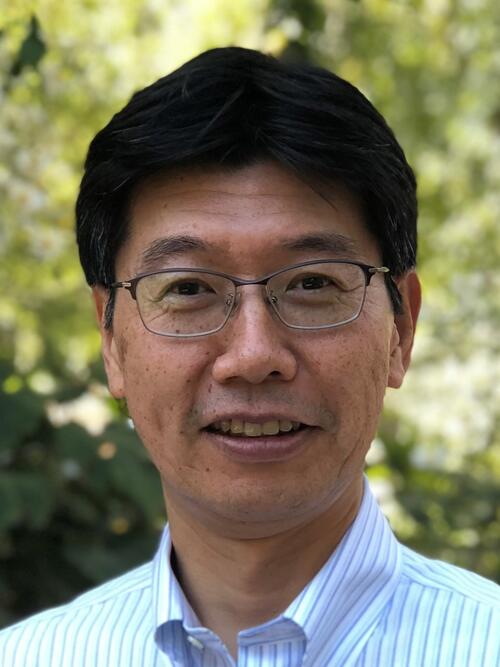
Toshiaki Iizuka is Professor at Graduate School of Economics and Graduate School of Public Policy, the University of Tokyo. His research interests are in the field of health economics and industrial organization. He has written a number of articles on incentive and information in the health care markets, which appeared in leading economics journals, including American Economic Review, RAND Journal of Economics, and Journal of Health Economics. Dr. Iizuka served as Dean of Graduate School of Public Policy, the University of Tokyo, between 2016 and 2018. He also serves as Associate Editor for Journal of Health Economics (2019-), and is a recipient of Abe Fellowship (2018-2019). He holds a PhD in Economics from the University of California, Los Angeles, an MIA from Columbia University, and an ME and BE from the University of Tokyo.


RSVP required by 5PM on Tuesday, October 23, 2018

Philippines Conference Room Encina Hall, 3rd Floor 616 Serra Mall, Stanford, CA 94305
616 Serra StreetEncina Hall E301Stanford, CA94305-6055
0
toshiaki_iizuka.jpg Ph.D.

Toshiaki Iizuka is Professor at Graduate School of Public Policy and Graduate School of Economics, the University of Tokyo. Before joining the University of Tokyo in 2010, he taught at Vanderbilt University (2001-2005), Aoyama Gakuin University (2005-2009), and Keio University (2009-2010). He served as Dean of Graduate School of Public Policy, the University of Tokyo, between 2016 and 2018. He is a recipient of Abe Fellowship (2018-2019). 

His research interests are in the field of health economics and health policy. He has written a number of articles on incentive and information in the health care markets. His research articles have appeared in leading professional journals, including American Economic Review, RAND Journal of Economics, Journal of Health Economics, and Health Affairs, among others. Dr. Iizuka holds a PhD in Economics from the University of California, Los Angeles, an MIA from Columbia University, and an ME and BE from the University of Tokyo.
Visiting Scholar, Asia Health Policy Program at APARC
2018-2019 Visiting Scholar, APARC, Stanford University
Seminars
616 Serra StreetEncina Hall E301Stanford, CA94305-6055
0
toshiaki_iizuka.jpg Ph.D.

Toshiaki Iizuka is Professor at Graduate School of Public Policy and Graduate School of Economics, the University of Tokyo. Before joining the University of Tokyo in 2010, he taught at Vanderbilt University (2001-2005), Aoyama Gakuin University (2005-2009), and Keio University (2009-2010). He served as Dean of Graduate School of Public Policy, the University of Tokyo, between 2016 and 2018. He is a recipient of Abe Fellowship (2018-2019). 

His research interests are in the field of health economics and health policy. He has written a number of articles on incentive and information in the health care markets. His research articles have appeared in leading professional journals, including American Economic Review, RAND Journal of Economics, Journal of Health Economics, and Health Affairs, among others. Dr. Iizuka holds a PhD in Economics from the University of California, Los Angeles, an MIA from Columbia University, and an ME and BE from the University of Tokyo.
Visiting Scholar, Asia Health Policy Program at APARC
-

China and the United States both have public needs that far outstrip the abilities of their governments alone to deliver.  Zeckhauser and Donahue will discuss their book (joint with Karen Eggleston) exploring an important, and perhaps surprising, shared feature of efforts by policymakers in China and the United States to forge prosperous, stable futures for their citizens:  public-private collaboration to accomplish some of each society’s most vital collective purposes. Collaborative governance entails private engagement in public tasks on terms of shared discretion. Zeckhauser and Donahue will discuss the two countries’ collaborative approaches to health policy and elder care, comparing and contrasting with approaches to other activities ranging from education and infrastructure to hosting the Olympics.

Image
zeckhauser richard

Richard Zeckhauser is the Frank P. Ramsey Professor of Political Economy, Kennedy School, Harvard University. He graduated from Harvard College (summa cum laude) and received his Ph.D. there. He is an elected fellow of the Econometric Society, the Institute of Medicine (National Academy of Sciences), and the American Academy of Arts and Sciences. In 2014, he was named a Distinguished Fellow of the American Economic Association. His contributions to decision theory and behavioral economics include the concepts of quality-adjusted life years (QALYs), status quo bias, betrayal aversion, and ignorance (states of the world unknown) as a complement to the categories of risk and uncertainty. Many of his policy investigations explore ways to promote the health of human beings, to help markets work more effectively, and to foster informed and appropriate choices by individuals and government agencies. Zeckhauser has published over 300 articles and several books.

Image
faculty donahue jack ms18 800x800

John D. Donahue is the Raymond Vernon Senior Lecturer in Public Policy, Kennedy School, Harvard University. He is also Faculty Chair of the Master in Public Policy (MPP) Program and the SLATE Curriculum Initiative Co-Chair for Cases and Curriculum. His teaching, writing, and research mostly deal with public sector reform and with the distribution of public responsibilities across levels of government and sectors of the economy, including extensive work with the HKS-HBS joint degree program. He has written or edited twelve books, most recently Collaborative Governance (with Richard J. Zeckhauser, 2011) and Ports in a Storm (with Mark H. Moore, 2012). He served in the first Clinton Administration as an Assistant Secretary and then as Counselor to the Secretary of Labor. Donahue has consulted for business and governmental organizations, including the National Economic Council, the World Bank, and the RAND Corporation, and serves as a trustee or advisor to several nonprofits. A native of Indiana, he holds a BA from Indiana University and an MPP and PhD from Harvard.

Philippines Conference Room Encina Hall, 3rd Floor 616 Serra Mall, Stanford, CA 94305
Richard Zeckhauser Frank Plumpton Ramsey Professor of Political Economy, Kennedy School, Harvard University
John Donahue Raymond Vernon Senior Lecturer in Public Policy, Kennedy School, Harvard University
Seminars
-

The event has reached the maximum capacity of the room. We are no longer accepting RSVPs.

The world is aging rapidly, and China’s older population is growing faster than in any other country. This demographic transition is a defining issue of our time, and it poses unprecedented challenges for China due to increasing demand for health care, long-term care and other social services.

The health system has not yet adapted to the shift in the disease burden and health care needs driven by the aging population. Although the government has introduced three public health insurance programs since 1998, the benefit packages provide limited coverage for outpatient management and care of NCDs and chronic conditions. In addition, there has been a lack of investment in training geriatric medicine professionals and incorporating geriatric principles into clinical practice.

The higher burden of total cost of health and long-term care is inevitable. How do we tackle these challenges? We will need more innovative approaches to develop multi-sector and integrated solutions to issues concerning the aging population. While the system-level efforts, such as social protection system and universal health coverage, continue to be led by the government, Public-Private Partnerships (PPP) will play a catalytic role in adding capacity to ensure the sustainability of such systems through advancement of technology, human resources and innovation. There will be an increasing need for defining the conditions and application of PPPs that are compatible with adjustments to healthcare, pension and retirement policies and  labor and capital markets. More importantly, political and public will is key to successful implementation of PPPs.

This workshop will feature PPP Initiative Ltd.’s recent efforts to develop PPP solutions for the aging population, followed by a discussion with experts from Beijing and participants on how to move from awareness to action in China. 

Agenda

5:00 - 5:30 Keynote speech by Alan M. Trager

5:30 - 5:40 Discussion with two experts from Beijing

Dr. Gordon Liu, PKU Yangtze River Scholar Professor of Economics, Peking University National School of Development (NSD) &  Director, PKU China Center for Health Economic Research (CCHER)

Dr. Linlin Hu, Associate Professor, Executive Chair, Department of Health Policy and Management, School of Public Health, Peking Union Medical College

5:40 - 6:00 Question & Answers moderated by Alan M. Trager


<!-- /* Font Definitions */ @font-face {font-family:Times; panose-1:2 0 5 0 0 0 0 0 0 0; mso-font-charset:0; mso-generic-font-family:auto; mso-font-pitch:variable; mso-font-signature:3 0 0 0 1 0;} @font-face {font-family:"MS 明朝"; mso-font-charset:78; mso-generic-font-family:auto; mso-font-pitch:variable; mso-font-signature:-536870145 1791491579 18 0 131231 0;} @font-face {font-family:"Cambria Math"; panose-1:2 4 5 3 5 4 6 3 2 4; mso-font-charset:0; mso-generic-font-family:auto; mso-font-pitch:variable; mso-font-signature:-536870145 1107305727 0 0 415 0;} @font-face {font-family:Cambria; panose-1:2 4 5 3 5 4 6 3 2 4; mso-font-charset:0; mso-generic-font-family:auto; mso-font-pitch:variable; mso-font-signature:-536870145 1073743103 0 0 415 0;} /* Style Definitions */ p.MsoNormal, li.MsoNormal, div.MsoNormal {mso-style-unhide:no; mso-style-qformat:yes; mso-style-parent:""; margin:0in; margin-bottom:.0001pt; mso-pagination:widow-orphan; font-size:12.0pt; font-family:Cambria; mso-ascii-font-family:Cambria; mso-ascii-theme-font:minor-latin; mso-fareast-font-family:"MS 明朝"; mso-fareast-theme-font:minor-fareast; mso-hansi-font-family:Cambria; mso-hansi-theme-font:minor-latin; mso-bidi-font-family:"Times New Roman"; mso-bidi-theme-font:minor-bidi; mso-fareast-language:JA;} p {mso-style-noshow:yes; mso-style-priority:99; mso-margin-top-alt:auto; margin-right:0in; mso-margin-bottom-alt:auto; margin-left:0in; mso-pagination:widow-orphan; font-size:10.0pt; font-family:Times; mso-fareast-font-family:"MS 明朝"; mso-fareast-theme-font:minor-fareast; mso-bidi-font-family:"Times New Roman";} .MsoChpDefault {mso-style-type:export-only; mso-default-props:yes; font-size:10.0pt; mso-ansi-font-size:10.0pt; mso-bidi-font-size:10.0pt; font-family:Cambria; mso-ascii-font-family:Cambria; mso-ascii-theme-font:minor-latin; mso-fareast-font-family:"MS 明朝"; mso-fareast-theme-font:minor-fareast; mso-hansi-font-family:Cambria; mso-hansi-theme-font:minor-latin; mso-bidi-font-family:"Times New Roman"; mso-bidi-theme-font:minor-bidi; mso-fareast-language:JA;} @page WordSection1 {size:8.5in 11.0in; margin:1.0in 1.25in 1.0in 1.25in; mso-header-margin:.5in; mso-footer-margin:.5in; mso-paper-source:0;} div.WordSection1 {page:WordSection1;} -->  <!-- /* Font Definitions */ @font-face {font-family:Times; panose-1:2 0 5 0 0 0 0 0 0 0; mso-font-charset:0; mso-generic-font-family:auto; mso-font-pitch:variable; mso-font-signature:3 0 0 0 1 0;} @font-face {font-family:"MS 明朝"; mso-font-charset:78; mso-generic-font-family:auto; mso-font-pitch:variable; mso-font-signature:-536870145 1791491579 18 0 131231 0;} @font-face {font-family:"Cambria Math"; panose-1:2 4 5 3 5 4 6 3 2 4; mso-font-charset:0; mso-generic-font-family:auto; mso-font-pitch:variable; mso-font-signature:-536870145 1107305727 0 0 415 0;} @font-face {font-family:Cambria; panose-1:2 4 5 3 5 4 6 3 2 4; mso-font-charset:0; mso-generic-font-family:auto; mso-font-pitch:variable; mso-font-signature:-536870145 1073743103 0 0 415 0;} /* Style Definitions */ p.MsoNormal, li.MsoNormal, div.MsoNormal {mso-style-unhide:no; mso-style-qformat:yes; mso-style-parent:""; margin:0in; margin-bottom:.0001pt; mso-pagination:widow-orphan; font-size:12.0pt; font-family:Cambria; mso-ascii-font-family:Cambria; mso-ascii-theme-font:minor-latin; mso-fareast-font-family:"MS 明朝"; mso-fareast-theme-font:minor-fareast; mso-hansi-font-family:Cambria; mso-hansi-theme-font:minor-latin; mso-bidi-font-family:"Times New Roman"; mso-bidi-theme-font:minor-bidi; mso-fareast-language:JA;} p {mso-style-noshow:yes; mso-style-priority:99; mso-margin-top-alt:auto; margin-right:0in; mso-margin-bottom-alt:auto; margin-left:0in; mso-pagination:widow-orphan; font-size:10.0pt; font-family:Times; mso-fareast-font-family:"MS 明朝"; mso-fareast-theme-font:minor-fareast; mso-bidi-font-family:"Times New Roman";} .MsoChpDefault {mso-style-type:export-only; mso-default-props:yes; font-size:10.0pt; mso-ansi-font-size:10.0pt; mso-bidi-font-size:10.0pt; font-family:Cambria; mso-ascii-font-family:Cambria; mso-ascii-theme-font:minor-latin; mso-fareast-font-family:"MS 明朝"; mso-fareast-theme-font:minor-fareast; mso-hansi-font-family:Cambria; mso-hansi-theme-font:minor-latin; mso-bidi-font-family:"Times New Roman"; mso-bidi-theme-font:minor-bidi; mso-fareast-language:JA;} @page WordSection1 {size:8.5in 11.0in; margin:1.0in 1.25in 1.0in 1.25in; mso-header-margin:.5in; mso-footer-margin:.5in; mso-paper-source:0;} div.WordSection1 {page:WordSection1;} --> 

Image
alantrager

Alan M. Trager is the Founder and President of the PPP Initiative Ltd. (pppinitiative.org), where he leads an institutional collaborative effort using public-private partnerships to address healthcare issues in Asia.  He is also the Principal Researcher of the PPP Healthcare Case Study Program, an independent research project managed by PPP Initiative Ltd., with financial support from Amgen Inc; Technical Expert, WHO Independent High-level Commission on NCDs; and Global Expert, Global Initiative on Health and the Economy, USCC.

Mr. Trager serves as Chief Specialist, International, at the Tsinghua University Center for PPP Research (TUPPP) in Beijing. Trager is the only foreign Chief Specialist at Tsinghua University.  He was a Senior Research Professor and Director, PPP Initiative, John Hopkins SAIS before forming the PPP Initiative.


Presentation
Download pdf

Highly Immersive Classroom

Stanford Graduate School of Business

Knight Management Center 
655 Knight Way, Basement 
Stanford, CA 94305-7298

Alan M. Trager Founder and President of the PPP Initiative Ltd
Workshops
Paragraphs

A favorite icon for cigarette manufacturers across China since the mid-twentieth century has been the panda, with factories from Shanghai to Sichuan using cuddly cliché to market tobacco products. The proliferation of panda-branded cigarettes coincides with profound, yet poorly appreciated, shifts in the worldwide tobacco trade. Over the last fifty years, transnational tobacco companies and their allies have fueled a tripling of the world's annual consumption of cigarettes. At the forefront is the China National Tobacco Corporation, now producing forty percent of cigarettes sold globally. What's enabled the manufacturing of cigarettes in China to flourish since the time of Mao and to prosper even amidst public health condemnation of smoking? 


In Poisonous Pandas, an interdisciplinary group of scholars comes together to tell that story. They offer novel portraits of people within the Chinese polity—government leaders, scientists, tax officials, artists, museum curators, and soldiers—who have experimentally revamped the country's pre-Communist cigarette supply chain and fitfully expanded its political, economic, and cultural influence. These portraits cut against the grain of what contemporary tobacco-control experts typically study, opening a vital new window on tobacco—the single largest cause of preventable death worldwide today.

You can read the Introduction and Chapter 1 online.

About the editors

 
Matthew Kohrman is Associate Professor of Anthropology at Stanford University.
 
Gan Quan is the Director of Tobacco Control of the International Union Against Tuberculosis and Lung Disease.
 
Liu Wennan is Editor for the Institute of Modern History at the Chinese Academy of Social Sciences.


Robert N. Proctor is Professor of the History of Science at Stanford University.
All Publications button
1
Publication Type
Books
Publication Date
Journal Publisher
Stanford University Press
Authors
Number
978-1503602-06-9
News Type
News
Date
Paragraphs

A new SIEPR policy brief examines the growing life expectancy gap between low-income and high-income Americans. Coauthored by Victor R. Fuchs and APARC Deputy Director Karen Eggleston, the brief shows that life expectancy in the U.S. can be increased if health policy shifts towards preventing the leading causes of death for young people. READ MORE>>

Hero Image
unequal steps flickr.cc / Jon Southcoasting
All News button
1
Paragraphs

We analyze the effects of early-life shocks with varying degrees of severity on mortality and human capital outcomes in the Philippines. We exploit variations in typhoon exposure and the introduction of a short-term post-disaster relief policy. Severe
typhoons are associated with increased mortality and adverse long-term outcomes. Before the disaster relief policy, mortality from in utero exposure to severe typhoons was 10 percent, and survivors exhibited similar levels of human capital as the unaffected.
Once implemented, the policy appears to have mitigated the mortality effect of severe typhoons, and survivors have lower human capital in the long term.

Keywords: fetal origins hypothesis, selective mortality, long-term outcomes, Philippines, natural disasters, disaster relief

JEL codes: I12, I15, O15

All Publications button
1
Publication Type
Working Papers
Publication Date
Journal Publisher
Asia Health Policy Program working paper # 50
Authors
Paragraphs

Although many public hospital physicians in Vietnam offer private service on the side, little is known about the magnitude and nature of the phenomenon of so-called dual practice, let alone the dynamics between the public and private health sectors. This study investigates how and to what degree public hospital physicians engage in private practice. It also examines the commitment of dual practitioners to the public sector. The analysis is based on a hospital-based survey of 483 physicians at 10 public hospitals in four provinces of Vietnam. Nearly half of the participants in the study sample reported themselves as dual practitioners. Various types of private practice were mentioned. Private practice at health facilities owned by the private sector was the most prevalent, followed by private practice delivered at health facilities owned by the dual practitioners themselves. Private practice inside public hospitals was also noted. Dual practitioners were likely to be senior and hold management positions inside their public hospitals. Substantial income differences were found between dual practitioners and those physicians practicing in only the public sector. The majority of dual practitioners, however, reported the willingness to give up private practice if certain conditions were met, such as a basic salary increase or non-pecuniary benefits. The main reasons dual practitioners gave for not leaving the public sector included a sense of public responsibility and opportunities to gain a broader professional network and more training. This study reiterates the significant challenges associated with dual practice, including its financial implications and possible effects on health care quality and access. The need for a high-quality workforce committed to the public sector is particularly critical, given the
possibility of universal insurance coverage. Future research should address the need to improve data collection on physicians’ dual practice and incorporate the topic in policy debates on health reform.

Keywords: physician dual practice, public-private mix, Vietnam, human resources for health, hospital reform, health system research, low- and middle-income countries, universal health coverage.

Published: https://academic.oup.com/heapol/article/33/8/898/5078580

All Publications button
1
Publication Type
Working Papers
Publication Date
Journal Publisher
Asia Health Policy Program working paper # 49
Authors
Paragraphs

High costs of precision medicine raise concerns about exacerbating income-related disparities in healthcare utilization and health outcomes. One approach to expanding coverage in Asia has been to cover the precision therapy but require the pharmaceutical firm to cover the costs of the companion diagnostic test. Taiwan’s National Health Insurance (NHI) adopted this approach for lung cancer, colorectal cancer and leukemia, but not for the first target therapy covered by NHI, trastuzumab for the treatment of HER2-positive breast cancer. Analyzing a unique dataset linking medical claims, cancer registry data and proxies for income between 2004 and 2015, we find that lower-income patients are more likely to be diagnosed with later stages of breast cancer, and this pattern renders NHI coverage of anti-HER2 therapy pro-poor even before full coverage of the diagnostic tests.

Moreover, the expansion of NHI coverage—including the FISH diagnostic test and trastuzumab for early-stage breast cancer—strengthened the pro-poor distribution of genetic testing and target treatment, albeit only marginally. The extent of pharmaceutical company coverage of testing and its impact on patient access are topics of our ongoing research, contrasting breast cancer with colorectal cancer.

Keywords: disparities, personalized medicine, income-related inequality, breast cancer, genetic testing, Taiwan, Asia

All Publications button
1
Publication Type
Working Papers
Publication Date
Journal Publisher
Asia Health Policy Program working paper # 48
Authors
Subscribe to Health and Medicine