International Relations

FSI researchers strive to understand how countries relate to one another, and what policies are needed to achieve global stability and prosperity. International relations experts focus on the challenging U.S.-Russian relationship, the alliance between the U.S. and Japan and the limitations of America’s counterinsurgency strategy in Afghanistan.

Foreign aid is also examined by scholars trying to understand whether money earmarked for health improvements reaches those who need it most. And FSI’s Walter H. Shorenstein Asia-Pacific Research Center has published on the need for strong South Korean leadership in dealing with its northern neighbor.

FSI researchers also look at the citizens who drive international relations, studying the effects of migration and how borders shape people’s lives. Meanwhile FSI students are very much involved in this area, working with the United Nations in Ethiopia to rethink refugee communities.

Trade is also a key component of international relations, with FSI approaching the topic from a slew of angles and states. The economy of trade is rife for study, with an APARC event on the implications of more open trade policies in Japan, and FSI researchers making sense of who would benefit from a free trade zone between the European Union and the United States.

News Type
News
Date
Paragraphs

The Walter H. Shorenstein Asia-Pacific Research Center (APARC) at Stanford University is now accepting applications for the Shorenstein Postdoctoral Fellowship in Contemporary Asia, an opportunity made available to two junior scholars for research and writing on Asia.

Fellows conduct research on contemporary political, economic or social change in the Asia-Pacific region, and contribute to Shorenstein APARC’s publications, conferences and related activities. To read about this year’s fellows, please click this link.

The fellowship is a 10-mo. appointment during the 2016-17 academic year, and carries a salary rate of $52,000 plus $2,000 for research expenses.

For further information and to apply, please click this link. The application deadline is Dec. 15, 2015.

Hero Image
Encina Hall arches
All News button
1
News Type
News
Date
Paragraphs

Stanford professor Gi-Wook Shin has been reappointed for another term as the director of Stanford's Walter H. Shorenstein Asia-Pacific Research Center (APARC), from July 1, 2016 through Aug. 31, 2019. The announcement was made yesterday in an email.

“I have been blessed with such a wonderful group of faculty, staff and visitors over the years and am truly grateful for your confidence in me and support of my work,” Shin said. “I look forward to continuing to work with all of you in the coming years.”

Shin has since 2005 served as director of Shorenstein APARC, one of six centers within the Freeman Spogli Institute for International Studies (FSI).

“We are extremely grateful for Gi-Wook’s leadership and are looking forward to his continued dedication to Shorenstein APARC and FSI,” FSI Director Michael McFaul said.

A comparative historical and political sociologist, Shin came to Stanford in 2001 to build a program focused on Korean studies. Under his leadership, Shorenstein APARC and the Korea Program have grown into a premiere forum for scholars, government officials and business leaders to convene on the interdisciplinary study of contemporary Asia.

Shin is a critically acclaimed author/editor of more than a dozen books and numerous articles. His recent works include an examination of how South Korea can leverage brain drain in Global Talent: Skilled Labor as Social Capital in Korea and an analysis of how memories of World War II are interpreted in contemporary Asia and Europe in Confronting Memories of World War II: European and Asian Legacies.

Shin will be on sabbatical leave from Oct. 1, 2015, through June 30, 2016. During that time, Takeo Hoshi will serve as the center’s acting director.

Hoshi is a senior fellow in FSI and a professor, by courtesy, of finance at Stanford’s Graduate School of Business. He also leads the Japan Program at Shorenstein APARC.

Kathleen Stephens will serve as the acting director of the Korea Program in Shin’s absence. Announced earlier this year, Stephens will join the center in September as the William J. Perry Distinguished Fellow in Korean Studies.

Hero Image
giwook shin
Gi-Wook Shin is reappointed as director of the Walter H. Shorenstein Asia-Pacific Research Center.
All News button
1
Authors
News Type
News
Date
Paragraphs

The United Nations has thus far fulfilled its charter to prevent a third world war, but with 60 million refugees, continued bloodshed with unresolved civil conflicts and terrorism spreading like cancer, the world's leading peacekeeping organization must spearhead global action, U.N. Secretary-General Ban Ki-moon said Friday at Stanford on the 70th anniversary of the international organization.

Ban, the U.N.'s eighth secretary-general, did not rest on any laurels during his speech at a public event sponsored by the Walter H. Shorenstein Asia-Pacific Research Center (APARC). "I humbly accept criticism that the U.N. is not doing enough," he said. 

However, the situation could have been worse if not for the United Nations, he continued. "Without peacekeepers, or without the U.N.'s continued humanitarian assistance and advocacy of human rights, I'm afraid to tell you that this world would have been poorer, more dangerous and even bloodier without the United Nations."

Ban's visit to Stanford – his second to the university in less than three years – was part of a trip to the Bay Area to commemorate the signing of the U.N. charter. In 1945, representatives from 50 nations gathered in San Francisco to create the United Nations – an international organization aimed at saving future generations from the "scourge of war."

Today, the United Nations has grown to 193 member nations. Its challenges – from climate change and poverty to civil wars and terrorism – have never been greater, Ban said.

"This is a critical year; 2015 is a year of global action," he said. "The U.N. cannot do it alone. We need strong solidarity among government, business communities and civil societies, from each and every citizen."

The fact that so many young people around the globe are drawn to violent narratives is worrisome, Ban said. "Violent terrorism is spreading like cancer around the world."

The rise in terrorist activities stems from "a failure of leadership," he said. That's why the United Nations needs to develop a comprehensive plan of action to address extremism, he maintained.

The U.N.'s 70th anniversary coincidentally fell on a momentous day of tragedy and celebration around the world. Dozens were killed when terrorists launched horrific attacks across three continents – in France, Tunisia and Kuwait – fueling anger, sadness and fear of more violence.

But in the United States, celebrations rang out in response to a landmark U.S. Supreme Court ruling that legalizes same-sex marriages nationwide.

Ban, who has long advocated for equality and last year pushed the United Nations to recognize same-sex marriages of its staff, drew a round of applause when he heralded the court ruling as "a great step forward for human rights."

The June 26 event was co-sponsored by Shorenstein APARC and the Freeman Spogli Institute for International Studies at Stanford University, with promotional co-sponsors Asia Society, Asia Foundation and the World Affairs Council of Northern California

May Wong is a freelance writer for the Stanford News Service.

Coverage and related multimedia links:

Remarks at Stanford University by Ban Ki-moon (U.N. News Centre, 6/26/15)

Photos of Ban Ki-moon at Stanford University (U.N. Photo, 6/26/15)

At Stanford University, Ban says U.N. ready to build a better future for all (U.N. News Centre, 6/27/2015)

U.N. Secretary-General Ban Ki-moon welcomes growing engagement of India, China (NDTV, 6/27/2015)

U.N. Secretary-General Ban Ki-moon speaks at Stanford, celebrates U.N.'s 70th anniversary (Stanford Daily, 6/29/15)

Hoover archival photographs featured at lecture delivered by U.N. Secretary-General Ban Ki-moon (Hoover Institution, 6/29/2015)

Hero Image
636086
Ban Ki-moon, the eighth secretary-general of the United Nations, urged the audience to see 2015 as a year of global action.
UN/Mark Garten
All News button
1
News Type
News
Date
Paragraphs

Each year the Walter H. Shorenstein Asia-Pacific Research Center offers fellowship opportunities to recent graduates to further their research and engage with scholars at Stanford. Postdoctoral fellows have the opportunity to develop their dissertations for publication, present their research to the Stanford community, and participate in Center activities.

Fellows often go on to pursue teaching positions and advisory roles at top universities and research organizations around the world. Into the future, they remain engaged with the Center and continue to contribute to Shorenstein APARC publications, conferences and related activities.

Shorenstein APARC is pleased to welcome three postdoctoral fellows for the 2015-16 academic year:

Asia Health Policy Fellow

Image
darika profile
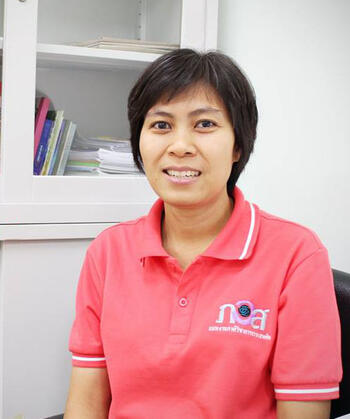
Darika Saingam

Saingam’s research interests are public health, substance abuse, drug policy and Southeast Asia. While at Shorenstein APARC, she will research the evolution of substance-abuse control measures and related policy in Thailand.

Saingam seeks to identify potentially effective policy directions suitable for Thailand, and other developing countries in Southeast and East Asia.

“There are a lot of lessons to be learned from substance abuse policy implementations in other countries…coping and dealing with substance abuse is a complex story and cannot respond successfully with only one strategy.”

Saingam completed her doctorate in epidemiology at the Prince of Songkla University in 2012, and has served as a researcher at the University’s epidemiology unit since, as well as a researcher at the Thailand Substance Abuse Academic Network since 2014.

Shorenstein APARC Postdoctoral Fellows

Image
chang profile
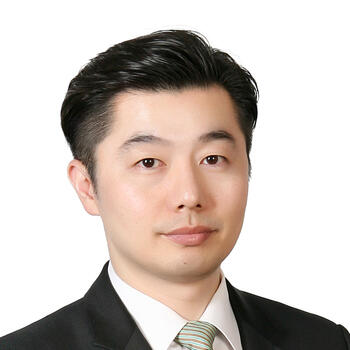
Booseung Chang

Chang’s research interests are comparative policy analysis and political institutions in East Asia, mainly South Korea and Japan. While at Shorenstein APARC, Chang will conduct research on how countries respond differently to the same external challenges, and how institutions are interpreted and applied in different ways.

His dissertation, which he seeks to build upon, is titled “The Sources of Japanese Conduct: Asymmetric Security Dependence, Role Conceptions, and the Reactive Behavior in response to U.S. Demands.” It is a qualitative comparative case study of how key U.S. allies in Asia – namely Japan and South Korea – and major powers in Europe - the United Kingdom and France responded to the U.S.-led Persian Gulf War and the Iraq War.

“East Asia is a treasure island of new theory building because some of the big challenges facing East Asia – finding a new role for Japan, denuclearization of North Korea, unification of the Korean peninsula, democratization of China and reconfiguration of its relations with the world, and development and integration of Southeast Asian countries – are truly new ones…”

Chang completed his doctorate in political science from the Paul H. Nitze School of Advanced International Studies at Johns Hopkins University in 2014.

Image
rnico profile
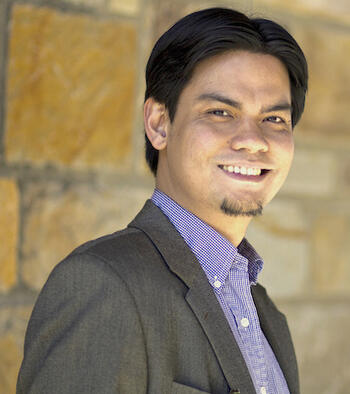
Nico Ravanilla

Ravanilla’s research interests are political economy and governance, comparative politics and Southeast Asia. While at Shorenstein APARC, Ravanilla will research how political selection impacts governance, and evaluate possible routes for incentivizing capable and virtuous citizens to run for public office.

His project titled “Nudging Good Politicians” looks at the case of the Sangguniang Kabataan, a governing body in the Philippines comprised of elected youth leaders. Ravanilla aims to apply his research to develop and scale up programs for politicians, especially those at the onset of their careers, which would include specialized leadership training and merit-based endorsement.

“If we could design a policy that screens-in and incentivizes competent and honest citizens to run for office, would it play a catalytic role in improving the quality of the political class, and ultimately, the quality of government?”

Ravanilla is also a Southeast Asia Research Group (SEAREG) Young Southeast Asia Fellow for 2015-16. He will complete his doctorate in political science and public policy from the University of Michigan in summer 2015.

Hero Image
hoover quad
View of Hoover Tower from Stanford's main quad.
Linda A. Cicero / Stanford News Service
All News button
1
News Type
News
Date
Paragraphs


The Walter H. Shorenstein Asia-Pacific Research Center at Stanford University is pleased to announce its search for two 2015–16 Shorenstein Postdoctoral Fellows in Contemporary Asia. The award will be given to two junior scholars, who have completed their Ph.D. (with degree conferral and approval by August 31, 2015).

The primary focus of the fellowship is to conduct research and writing on contemporary political, economic or social change in the Asia-Pacific region (including Northeast, Southeast and South Asia), or topics related to international relations and international political economy.

The fellowship provides the postdoctoral fellows an opportunity to expand their dissertation, explore new topics and work alongside the Center’s distinguished scholars.

Postdoctoral fellows are required to be in residence at Stanford University for the duration of the appointment, and take part in Center activities throughout the academic year. Fellows are also required to present their research findings in seminars, and participate in the Center’s publication program.

The fellowship is a 10-month appointment with a salary rate of $50,000, plus $3,000 for research expenses. Appointments will begin in the fall quarter of the 2015–16 academic year.

The fellowship is made possible through the generosity of Walter H. Shorenstein, the benefactor for whom the Center is named.

Please access the fellowship posting for complete details and how to apply. The application deadline is December 19, 2014.

Hero Image
Encina Hall arches
All News button
1
News Type
News
Date
Paragraphs

The Shorenstein Asia-Pacific Research Center (APARC) at Stanford University formally changed many of its program names in tandem with the website project led by our parent organization, the Freeman Spogli Institute for International Studies.

In its 31st year, Shorenstein APARC continues to expand its research agenda as the Asia-Pacific region sees dynamic change and greater global significance. The Center has six key programs that support vibrant research, training and outreach goals focused on developing a greater understanding of Asia and improvement of U.S.-Asia relations.

The programs include:

  • Asia Health Policy Program: the Program promotes the comparative understanding of health and health policy in the Asia-Pacific region through research, seminars and collaboration with scholars at Stanford and across Asia.


  • China Program: the Program is a university-wide initiative to facilitate multidisciplinary, social science-oriented on contemporary China, with an emphasis on basic and policy-oriented research.


  • Corporate Affiliates Program: established in 1982, the Program introduces Asia-based fellows to American life and institutions. Shorenstein APARC hosts a class of fellows each year, and allows them to interact daily with scholars and students from Stanford and abroad while conducting research and auditing courses.


  • Japan Program: the Program facilitates multidisciplinary, social science-oriented research on contemporary Japan through both academic scholarship and policy-relevant research.


  • Korea Program: the Program focuses on multidisciplinary, policy-relevant projects on Korean Peninsula-related topics, and supports teaching and fellowships that encourages collaborative research.


  • Southeast Asia Program: the Program explores the histories, cultures and international relations of Southeast Asia’s ten countries and over half a billion people.

Further information about the programs can be found on the Shorenstein APARC website.

All News button
1
Subscribe to International Relations