Society

FSI researchers work to understand continuity and change in societies as they confront their problems and opportunities. This includes the implications of migration and human trafficking. What happens to a society when young girls exit the sex trade? How do groups moving between locations impact societies, economies, self-identity and citizenship? What are the ethnic challenges faced by an increasingly diverse European Union? From a policy perspective, scholars also work to investigate the consequences of security-related measures for society and its values.

The Europe Center reflects much of FSI’s agenda of investigating societies, serving as a forum for experts to research the cultures, religions and people of Europe. The Center sponsors several seminars and lectures, as well as visiting scholars.

Societal research also addresses issues of demography and aging, such as the social and economic challenges of providing health care for an aging population. How do older adults make decisions, and what societal tools need to be in place to ensure the resulting decisions are well-informed? FSI regularly brings in international scholars to look at these issues. They discuss how adults care for their older parents in rural China as well as the economic aspects of aging populations in China and India.

-

Universal Health Coverage (UHC) is a well-embraced policy goal in the 21th century, which aims to ensure financial risk protection while assuring access to quality care.  However, up to this date, out-of-pocket (OOP) payment remains the principal means of financing health care throughout much of Asia, which leaves people financially unprotected in the face of illness.  High OOP payment at point of service is likely to either make people become medically impoverished after paying for health care, or force people to forgo treatment needed, which is detrimental to one’s health.   This presentation is based on empirical results derived from EQUITAP  (Equity in Asia-Pacific Health Systems) Project II on catastrophic payment that aims to estimate the magnitude and distribution of OOP payments for health care in 23 countries and territories in the Asia-Pacific Region in 2007.  We also draw comparisons to the results in 2000 as changes arise due to various reforms implemented since 2000.

Image
rachel lu
Jui-fen Rachel Lu, is the Fulbright Visiting Scholar at the Center for East Asian Studies, Stanford University, and Professor in the Graduate Institute of Business and Management and Department of Health Care Management, College of Management, at Chang Gung University in Taiwan, where she teaches comparative health systems, health economics, and health care financing and has served as department chair (2000-2004), Associate Dean (2009-2010) and Dean of the College of Management (2010-2013).  She earned her B.S. from National Taiwan University, and her M.S. and Sc.D. from Harvard University, and she was also a Takemi Fellow at Harvard (2004-2005) and is an Honorary Professor at Hong Kong University (2007-2017). She cofounded the Taiwan Society of Health Economics (TaiSHE) in 2008 and is currently the President of TaiSHE (2014-2017).  Professor Lu also serves as a board director for the International Health Economics Association (iHEA) (2016) and a member of the Arrow Award Committee for iHEA (2014-2016).

Her research interests are in assessing the impact of the NHI program on health care markets and household consumption patterns, and comparative health systems in the Asia-Pacific region with a focus on equity performance.  She is a long-time and active member of the Equitap (Equity in Asia-Pacific Health Systems) research network.  Professor Lu has also been appointed to serve on several advisory boards to the Taiwan Ministry of Health and Welfare and National Health Insurance Administration, Ministry of Science and Technology.

She received the Minister Wang Jin Naw Memorial Award for Best Paper in Health Care Management in 2002 and was the recipient of the IBM Faculty Award in 2009.

Jui-fen Rachel Lu, Sc.D. Fulbright Visiting Scholar, Center for East Asian Studies, Stanford University
Seminars
-

Background: Substance abuse has been an important social and public health problem in Thailand for decades. The National Household Survey on Substance and Alcohol Use in Thailand, which has been conducted 5 times, shows that substance abuse has steadily increased. Extrapolated country-wide in recent data, the estimated number of people who had ever used at least one addictive substance at some time in their life was 3,531,436 or 7.30% of the total population aged 12-65 years. Krathom, Methamphetamine, Ice, and cannabis were the most prevalent substances of abuse.

Methods: Historical documentation, policy reports, and group discussion with key professionals who work in the substance abuse community were used in this study. The objectives of this study were to complete a document review, determine the effectiveness of previous  Thai illegal substance measures, and consider options for the future.

Findings: Although the Thai government has dedicated human resources and an enormous budget to controlling drug use, substance abuse has become a more severe problem when compared with previous years. There are many organizations trying to create and develop programs, measures, and policies for dealing with substance abuse. These policies usually have had loopholes which resulted in corruption of officers, undercutting the public health value, creating dilemmas for impoverished families experiencing drug abuse, ignoring human rights, and creating a negative attitude among society toward drug users. Barriers to establishing successful drug abuse policies in Thailand include limited access to data and data management, a lack of efficiency and cost-benefit measures and policies, and limited use of evidence-based research.

Conclusion: To address illegal substance abuse in the future, the stakeholders should work to reduce the incidence of new sellers and the prevalence of new users. This would result in diminishing the health impact and criminal aspect of illegal substance use, increase social awareness, and motivate communities to participate in managing this issue. To reach these goals, the policy should concurrently aim at curtailing the supply of illicit drugs and reducing their demand. The strategies relevant to drug policy consist of primary prevention, services for chronic drug users, supply control and regulations, prescription regimes, and the use of criminal sanctions, especially consideration of decriminalization of krathom use.

Image
darika 4x6
Darika Saingam is a researcher from Thailand. Her research works have focused on patterns and consequences of alcohol, tobacco, and illegal substance use. Currently she joins the Walter H. Shorenstein Asia-Pacific Research Center as the Developing Asia Health Policy Postdoctoral Fellow for the 2015-16 year. She completed her doctorate in epidemiology at the Prince of Songkla University in 2012, and has worked as a researcher at the University’s epidemiology unit since, as well as a researcher at the Thailand Substance Abuse Academic Network since 2014.

Darika Saingam 2015-16 Developing Asia Health Policy Postdoctoral Fellow
Seminars
Paragraphs

Myanmar (Burma) is undergoing a complex political and economic transformation, from a long civil war and military regime to a peace process and democratisation. Since 2011, the Myanmar Ministry of Health has started to rehabilitate the fragile health system, setting the goal of achieving universal health coverage by 2030. To achieve this target, Myanmar will have to face substantial challenges; arguably one of the most important difficulties is how to allocate limited health-care resources equitably and effectively.

All Publications button
1
Publication Date
Journal Publisher
The Lancet
Authors
Pham Ngoc Minh
Karen Eggleston
Number
10008
-

The lecture aims to introduce the prevalence of Non-communicable Diseases (NCDs) in Zhejiang Province in China, and also share experience of Control and Prevention of NCDs. The lecture is composed by five parts. Firstly, NCDs surveillance system in Zhejiang will be introduced, including its establishment history and system coverage. Then, epidemiological characteristics of major NCDs (such as diabetes, cancer, stroke, and acute coronary heart disease events) will be presented, as well as NCDs related behavioral risk factors and hospital-based injury surveillance. Next, current work of NCDs prevention and control in Zhejiang Province will be described, including work network, human resources, community management and pilot programs for NCDs. Fourthly, economic cost of diabetes will be illustrated. Finally, countermeasures for NCDs Prevention and Control will be discussed.

Image
photo of min yu 113015 4x6
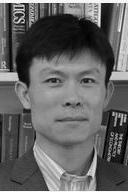
Min Yu is deputy director of Zhejiang Provincial Center for Disease Control and Prevention. He was awarded as New-Century 151 Talents of Zhejiang Province, China. He is a committee member of Epidemiology Branch of Chinese Preventive Medicine Association. He is the leader of key discipline of Non-Communicable Diseases epidemiology (NCDs), and led the establishing of NCDs and behavioral risk factor surveillance system in Zhejiang province.  

Yu got Medical degree in Zhejiang University and Master degree of Public Health in Peking Medical University. Now his research focuses on epidemiology of NCDs, strategy for NCDs control and prevention, and disease burden.

Min Yu Deputy director of Zhejiang Provincial Center for Disease Control and Prevention
Seminars
-
Co-sponsored by the Asia Health Policy Program & the Southeast Asia Program
 
This paper analyzes the effects of an early-life shock in Indonesia on children’s human capital formation and parental responses to these shocks. We exploit the geographical variation of Indonesia’s forest fires during the El Nino phenomenon in 1997, as well as cohort variation in exposure. Children affected by these shocks in utero and in early years have worse health outcomes relative to children not exposed to these shocks. We find that the health effects persist, but other factors mitigate the initial effect on cognitive skills.
 
My main research interest lies at the intersection of development and health economics. I am particularly interested in how social policies affect health outcomes for the poor, early health investments, and health-seeking behavior in limited resource settings, focusing on the evaluation of different strategies that seek to promote health investments and the effects of these interventions. Specifically, I have analyzed the effects of Indonesia’s household conditional cash transfer program on health outcomes, local health care price, and quality of care. I have also analyzed the long-term effects of a large-scale midwifery program in Indonesia. Current projects study the effects of early life shocks on children’s human capital outcomes in Indonesia and the Philippines.
 
Image
triyana margaret crop 113015a 4x6
Margaret Triyana is currently Assistant Professor of Economics at Nanyang Technological University, Singapore. Triyana graduated from the Harris School of Public Policy at the University of Chicago. She was previously the Asia Health Policy Postdoctoral Fellow at the Shorenstein Asia Pacific Research Center in 2013-14.
Margaret Triyana Assistant Professor of Economics, Nanyang Technological University, Singapore
Seminars
-

Professor MENG Qingyue, Dean of the Peking University School of Public Health and Director of the China Center for Health Development Studies at Peking University, will share his deep experience with research and policy advising about health and healthcare in the PRC. In the colloquium, Professor Meng will summarize the achievements of China’s health system reforms as well as the formidable challenges remaining -- strengthening primary care, reforming payment incentives, and multiple other reform priorities.

Professor Meng is lead author of the first-ever comprehensive overview of the PRC health system [http://www.wpro.who.int/asia_pacific_observatory/hits/series/chn/en/], which documents that the PRC has made great strides in raising health status and improving access to medical care, in large part thanks to emphasis on cost- effective public health programs, renewed commitments of government financing, expansion of social health insurance and other forms of financial protection, and investments in the healthcare delivery system. However, challenges remain in the form of large and in some cases growing inequalities in health and healthcare – across regions, urban-rural areas, or involving migrants and other vulnerable groups– as well as in improving the quality of healthcare, reforming public hospitals, and making expenditure growth sustainable through payment reforms and improved strategic purchasing.

Image
meng qing yue
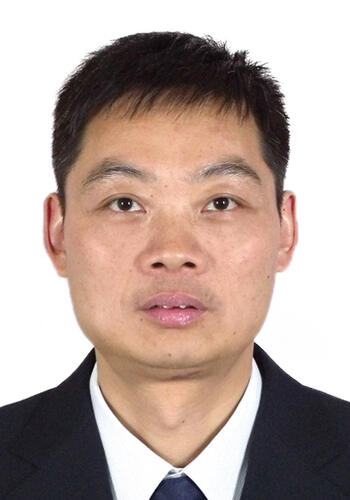
Professor Meng Qingyue (MD, PhD), is Professor in Health Economics and Policy, Dean of Peking University School of Public Health, and Executive Director of Peking University China Center for Health Development Studies.

He obtained his Bachelor degree in medicine from Shandong Medical University (now Shandong University), Masters in public health from Shanghai Medical University (now Fudan University), Masters in economics from University of the Philippines, and PhD in health economics and policy from Karolinska Institutet in Sweden.

Before taking the current position, he was the Dean of Shandong University School of Public Health and Director of Shandong University Center for Health Management and Policy. His research interests include health financing policy and health provider payment systems.

He has led a team doing dozens of research projects supported by both domestic and international funding sources. He has been Member of the Expert Committee on Health Policy and Management to China Ministry of Health over the past decade. He is the Board Member of Health Systems Global elected from the Asia and Pacific Region.


China's health system
Download pdf
Meng Qingyue Professor in Health Economics and Policy, Dean of Peking University School of Public Health, and Executive Director of Peking University China Center for Health Development Studies
Seminars
-

This event has moved from the 4:30pm talk to a noon talk.

Nonprofit organizations are engaged in public sector management as service deliverers, and more recently, as governance partners. Such a role shift of nonprofits can be explained by a couple of spontaneous mechanisms that link service contracting to collaborative governance. The evolving elderly service contracting in Shanghai discloses that contracting may induce power sharing, consolidate mutual trust, reshape community governance networks, and spur nonprofit development. Contracting nonprofits thus may make decisions, enforce regulatory functions, set rules, and influence community governance. An evolutionary perspective provides a new angle on the changing government-nonprofit relations in China.

Image
dr jing yijia4x6
Dr. Yijia Jing is a professor in Public Administration and associate director of foreign affairs at Fudan University. He is the editor-in-chief of Fudan Public Administration Review, and serves as the vice president of International Research Society for Public Management. He is associate editor of Public Administration Review and Co-editor of International Public Management Journal. He is also the founding co-editor of a Palgrave book series---Governing China in the 21 Century.

Yijia Jing Professor in Public Administration and Associate Director of Foreign Affairs, Fudan University
Seminars
Encina Hall E301616 Serra StreetStanford, CA94305-6055
(650) 724-5321 (650) 723-6530
0
darika_saingam.jpg Ph.D.

Darika Saingam joins the Walter H. Shorenstein Asia-Pacific Research Center as the Developing Asia Health Policy Postdoctoral Fellow for the 2015-16 year.  Saingam’s research interests are public health, substance abuse, drug policy and Southeast Asia. While at Shorenstein APARC, she will research the evolution of substance-abuse control measures and related policy in Thailand.  Saingam seeks to identify potentially effective policy directions suitable for Thailand, and other developing countries in Southeast and East Asia.

Saingam completed her doctorate in epidemiology at the Prince of Songkla University in 2012, and has served as a researcher at the University’s epidemiology unit since, as well as a researcher at the Thailand Substance Abuse Academic Network since 2014.

2015-16 Developing Asia Health Policy Postdoctoral Fellow
Subscribe to Society