International Relations

FSI researchers strive to understand how countries relate to one another, and what policies are needed to achieve global stability and prosperity. International relations experts focus on the challenging U.S.-Russian relationship, the alliance between the U.S. and Japan and the limitations of America’s counterinsurgency strategy in Afghanistan.

Foreign aid is also examined by scholars trying to understand whether money earmarked for health improvements reaches those who need it most. And FSI’s Walter H. Shorenstein Asia-Pacific Research Center has published on the need for strong South Korean leadership in dealing with its northern neighbor.

FSI researchers also look at the citizens who drive international relations, studying the effects of migration and how borders shape people’s lives. Meanwhile FSI students are very much involved in this area, working with the United Nations in Ethiopia to rethink refugee communities.

Trade is also a key component of international relations, with FSI approaching the topic from a slew of angles and states. The economy of trade is rife for study, with an APARC event on the implications of more open trade policies in Japan, and FSI researchers making sense of who would benefit from a free trade zone between the European Union and the United States.

News Type
News
Date
Paragraphs

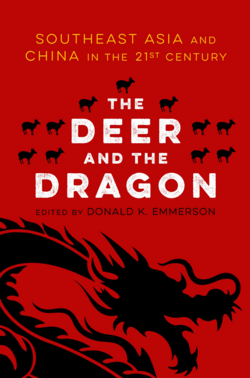
Southeast Asia is geographically and economically dwarfed by China. But that does not mean the region must inevitably bend to the will and ambitions of the PRC. Like the small but nimble mousedeer of local mythology, Southeast Asia may outwit the larger dragon through careful navigation and shrewd negotiation. Can this diverse region rally together, or will differences in culture, history, and society continue to hobble efforts to create a coordinated response to China's influence? The Deer and the Dragon: Southeast Asia and China in the 21st Century, a new edited volume by Donald K. Emmerson, seeks to understand this dynamic and give context on the complexities of Southeast Asian geopolitics both within the region and in a global context.

On October 22, 2020, Emmerson virtually joined the National Committee on U.S.-China Relations and the New York Southeast Asia Network, along with Ann Marie Murphy of Seton Hall, to discuss The Deer and the Dragon and further explore the region's standing in relation to current international affairs. Watch below:

[Subscribe to APARC's newsletters to stay informed about current research and upcoming events.]

An audio recording of the event is also available for listening below:

Read More

Cover of the book 'The Deer and the Dragon' on the background of a Southeast Asia map
News

New Book Analyzes the Dynamics of Inequality Between China and Southeast Asia

In a new volume, Donald Emmerson explores how the ASEAN nations are navigating complex political and policy issues with China during a time when political cohesion within ASEAN is fractured and China is increasingly assertive in its goals.
New Book Analyzes the Dynamics of Inequality Between China and Southeast Asia
Leaders from the ASEAN league gather onstage at the 33rd ASEAN Summit in 2018 in Singapore.
Commentary

Southeast Asia's Approach to China and the Future of the Region

In an interview with The Diplomat, Donald Emmerson discusses how factors like the South China Sea, U.S.-China competition, and how COVID-19 are affecting relations between Southeast Asia, China, and the United States.
Southeast Asia's Approach to China and the Future of the Region
Fiery Cross Reef, Spratly Islands
Commentary

Strategy in the South China Sea

Donald K. Emmerson analyzes China’s tactics in the South China Sea and how the countries of Southeast Asia are reacting to the tensions in the disputed waterway.
Strategy in the South China Sea
Hero Image
A discussion of contemporary Southeast Asian politics with Donald K. Emmerson and Ann Marie Murphy at the National Committee on U.S.-China Relations
Donald Emmerson joins the National Committee on U.S.-China Relations for a discussion of his latest edited volume, "The Deer and the Dragon: Southeast Asia and China in the 21st Century."
All News button
1
Subtitle

Southeast Asia Program Director Donald Emmerson joined the National Committee on U.S.-China Relations for a discussion with Ann Marie Murphy on his new edited volume, "The Deer and the Dragon: Southeast Asia and China in the 21st Century."

-

This event has been rescheduled to October 14, 2020

It is a good time to be interested in Southeast Asia-China relations. In addition to the three new books referenced in this webinar, additional books on the subject are forthcoming from other authors.  The timing is all the more propitious in view of the current animosity between Beijing and Washington as it may implicate Southeast Asia and American policy toward the region, depending in part on who wins the 3 November US election.  These books are both sweeping and granular.  Hiebert’s and Strangio’s country-focused chapters cover all ten members of the Association of Southeast Asian Nations (ASEAN), while Emmerson and his co-authors mix country studies with thematic arguments about China’s relations with its neighbors.

Given China’s clearly superior size and power, is Beijing’s incremental domination of its neighbors foreordained? Strangio says no: “Southeast Asia’s future will not be one of linear and inexorable Chinese advance, but rather one in which past dynamics and contradictions reproduce themselves over time at varying pitches of tension.” Is he right? Hiebert calls for the US “to support the region as it faces a rising and more assertive China”—to “remain an actively engaged partner that shows up, brings some resources, and rewrites the perception that it is often unreliable and missing in action.” Is that good advice?  For Emmerson, “strategic autonomy necessarily begins at home. Outsiders can help or hurt. But nothing can substitute for the creativity of Southeast Asian states in individual and joint pursuit of their own and their region’s security.” Is that true, and even if it is, so what?

The webinar will explore these and other aspects of Sino-Southeast Asian relations.

Image
Murray Hiebert 100520
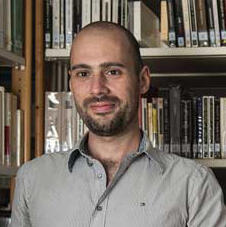
Murray Hiebert, in addition to his position at CSIS, is research director for BowerGroup Asia. Before joining CSIS, he was senior director for Southeast Asia at the U.S. Chamber of Commerce. Earlier, he was a journalist in the China bureau of the Wall Street Journal. Prior to his posting to Beijing, he reported from Washingon on US-Asia relations for the Wall Street Journal Asia and the Far Eastern Economic Review. In the 1990s he worked for the Review while based in Kuala Lumpur and, earlier, in Hanoi, having joined the Review's Bangkok bureau in 1986 to cover developments in Vietnam, Cambodia, and Laos. He is also the author of two books on Vietnam, Chasing the Tigers (1996) and Vietnam Notebook (1993). He has a master’s degree in news media studies from American University.


Image
Sebastian Strangio 100520
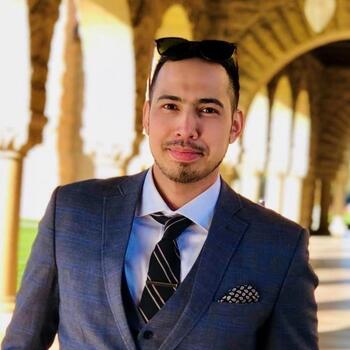
Sebastian Strangio has written from and on Southeast Asia for many publications including Al Jazeera, The Atlantic, The Economist, Forbes, Foreign Policy, and The New York Times. In addition to living and working in Cambodia, where he spent three years with The Phnom Penh Post, he has reported from Indonesia, Laos, Myanmar, Thailand, Vietnam, and China, among other countries. Other previous affiliations include New America’s International Reporting Project; the Future Forum, a policy institute in Phnom Penh; and Chiang Mai University’s Regional Center for Social Science and Sustainable Development. Foreign Affairs named his first book, Hun Sen’s Cambodia, a 2015 Book of the Year. He has a master’s degree in international politics from the University of Melbourne.


Image
don emmerson 2
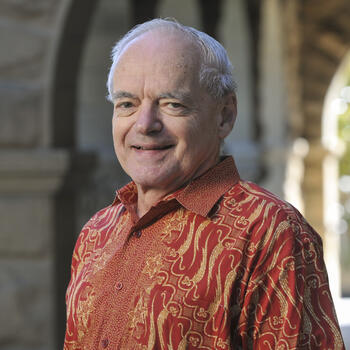
Donald K. Emmerson, in addition to his position in APARC, is a faculty affiliate of Stanford’s Center on Democracy, Development, and the Rule of Law. So far in 2019-2020 he has spoken on Southeast Asian topics to audiences in Bangkok, Hanoi, Kuala Lumpur, New York, Singapore, and Washington, DC.  Recent publications include “‘No Sole Control’ in the South China Sea,” Asia Policy (2019) and ASEAN @ 50, Southeast Asia @ Risk: What Should Be Done? (edited, 2018). Before moving to Stanford in 1999, he taught political science at the University of Wisconsin-Madison.  He has held visiting positions at the Institute for Advanced Studies and the Australian National University, among other institutions.  His doctorate in political science is from Yale University.

Via Zoom Webinar

Register at https://bit.ly/35WOb7o

Murray Hiebert senior associate, Southeast Asia Program, Center for Strategic and International Studies (CSIS), Washington, DC, and author of <i>Under Beijing’s Shadow: Southeast Asia’s China Challenge</i> (2020)
Sebastian Strangio journalist, analyst, Southeast Asia editor of The Diplomat, and author of <i>In the Dragon’s Shadow: Southeast Asia in the Chinese Century</i> (2020)
0
Senior Fellow Emeritus at the Freeman Spogli Institute for International Studies
Affiliated Faculty, CDDRL
Affiliated Scholar, Abbasi Program in Islamic Studies
aparc_dke.jpg PhD

At Stanford, in addition to his work for the Southeast Asia Program and his affiliations with CDDRL and the Abbasi Program in Islamic Studies, Donald Emmerson has taught courses on Southeast Asia in East Asian Studies, International Policy Studies, and Political Science. He is active as an analyst of current policy issues involving Asia. In 2010 the National Bureau of Asian Research and the Woodrow Wilson International Center for Scholars awarded him a two-year Research Associateship given to “top scholars from across the United States” who “have successfully bridged the gap between the academy and policy.”

Emmerson’s research interests include Southeast Asia-China-US relations, the South China Sea, and the future of ASEAN. His publications, authored or edited, span more than a dozen books and monographs and some 200 articles, chapters, and shorter pieces.  Recent writings include The Deer and the Dragon: Southeast Asia and China in the 21st Century (ed., 2020); “‘No Sole Control’ in the South China Sea,” in Asia Policy  (2019); ASEAN @ 50, Southeast Asia @ Risk: What Should Be Done? (ed., 2018); “Singapore and Goliath?,” in Journal of Democracy (2018); “Mapping ASEAN’s Futures,” in Contemporary Southeast Asia (2017); and “ASEAN Between China and America: Is It Time to Try Horsing the Cow?,” in Trans-Regional and –National Studies of Southeast Asia (2017).

Earlier work includes “Sunnylands or Rancho Mirage? ASEAN and the South China Sea,” in YaleGlobal (2016); “The Spectrum of Comparisons: A Discussion,” in Pacific Affairs (2014); “Facts, Minds, and Formats: Scholarship and Political Change in Indonesia” in Indonesian Studies: The State of the Field (2013); “Is Indonesia Rising? It Depends” in Indonesia Rising (2012); “Southeast Asia: Minding the Gap between Democracy and Governance,” in Journal of Democracy (April 2012); “The Problem and Promise of Focality in World Affairs,” in Strategic Review (August 2011); An American Place at an Asian Table? Regionalism and Its Reasons (2011); Asian Regionalism and US Policy: The Case for Creative Adaptation (2010); “The Useful Diversity of ‘Islamism’” and “Islamism: Pros, Cons, and Contexts” in Islamism: Conflicting Perspectives on Political Islam (2009); “Crisis and Consensus: America and ASEAN in a New Global Context” in Refreshing U.S.-Thai Relations (2009); and Hard Choices: Security, Democracy, and Regionalism in Southeast Asia (edited, 2008).

Prior to moving to Stanford in 1999, Emmerson was a professor of political science at the University of Wisconsin-Madison, where he won a campus-wide teaching award. That same year he helped monitor voting in Indonesia and East Timor for the National Democratic Institute and the Carter Center. In the course of his career, he has taken part in numerous policy-related working groups focused on topics related to Southeast Asia; has testified before House and Senate committees on Asian affairs; and been a regular at gatherings such as the Asia Pacific Roundtable (Kuala Lumpur), the Bali Democracy Forum (Nusa Dua), and the Shangri-La Dialogue (Singapore). Places where he has held various visiting fellowships, including the Institute for Advanced Study and the Woodrow Wilson International Center for Scholars. 


Emmerson has a Ph.D. in political science from Yale and a BA in international affairs from Princeton. He is fluent in Indonesian, was fluent in French, and has lectured and written in both languages. He has lesser competence in Dutch, Javanese, and Russian. A former slam poet in English, he enjoys the spoken word and reads occasionally under a nom de plume with the Not Yet Dead Poets Society in Redwood City, CA. He and his wife Carolyn met in high school in Lebanon. They have two children. He was born in Tokyo, the son of U.S. Foreign Service Officer John K. Emmerson, who wrote the Japanese Thread among other books.

Selected Multimedia

Date Label
Moderator/Discussant director, Southeast Asia Program, Shorenstein Asia Pacific Research Center (APARC), Stanford University, and editor/co-author of <em>The Deer and the Dragon: Southeast Asia and China in the 21st Century</em> (2020)
Seminars
Authors
News Type
News
Date
Paragraphs

The Walter H. Shorenstein Asia-Pacific Research Center (APARC) invites applications for three types of postdoctoral fellowship in contemporary Asia studies for the 2021-22 academic year. Appointments for all three fellowship offerings are for one year beginning in fall quarter 2021.

APARC is committed to supporting junior scholars in the field of Asia studies to the greatest extent possible and that has become even more important during COVID-19, as graduate students are especially vulnerable to the adverse impacts of the pandemic, facing the loss of funding opportunities and access to field research.

The Center offers postdoctoral fellowships that promote multidisciplinary research on contemporary Japan, contemporary Korea, and contemporary Asia broadly defined. Learn more about each fellowship and its eligibility and specific application requirements:

Postdoctoral Fellowship on Contemporary Japan

The fellowship supports multidisciplinary research on contemporary Japan in a broad range of disciplines including political science, economics, sociology, law, policy studies, and international relations. The application deadline is January 4, 2021.

Korea Foundation-APARC Korea Program Postdoctoral Fellowship

The fellowship supports rising Korea scholars in the humanities and social sciences. The application deadline is January 20, 2021.

Shorenstein Postdoctoral Fellowship on Contemporary Asia

APARC offers two postdoctoral fellowship positions to junior scholars for research and writing on contemporary Asia. The primary research areas focus on political, economic, or social change in the Asia-Pacific region (including Northeast, Southeast, and South Asia), or international relations and international political economy in the region. The application deadline is January 4, 2021.

Read More

Hero Image
Encina Hall
All News button
1
Subtitle

The Center’s commitment to supporting young Asia scholars remains strong during the COVID-19 crisis.

-

This event is part of Shorenstein APARC’s fall webinar series "Shifting Geopolitics and U.S.-Asia Relations"

REGISTRATION LINK: https://bit.ly/3gPVXlt

Chair/discussant:  Donald K. Emmerson, director, Southeast Asia Program, Shorenstein Asia-Pacific Research Center, Stanford University

Topic:  Analysts of Southeast Asia, struggling to find commonalities that its eleven diverse countries share, have long distinguished the region’s mainland from its maritime portions. Aspects of the contrast include the mainland’s greater proximity to China. A controversial hypothesis follows: that subcontinental Myanmar, Laos, Cambodia, and possibly Thailand (but arguably not Vietnam) are more likely to become peninsular parts of a sphere of influence overseen by China than are the region’s more insular or archipelagic countries—Malaysia, Singapore, Brunei, Indonesia, the Philippines, and Timor-Leste. In support of the mainland versus maritime distinction, historical, cultural, and socioeconomic differences can also be cited. But how much do they really matter? Does the mainland-maritime contrast, for example, enhance or impede the ability of Southeast Asian countries to retain national independence and fashion a common front in defense of the autonomy of their region?  Or is location irrelevant?  And if other factors matter more, which ones, how, and why? The webinar will offer and explore answers to these and related questions.

Image
richard_heydararian_090220
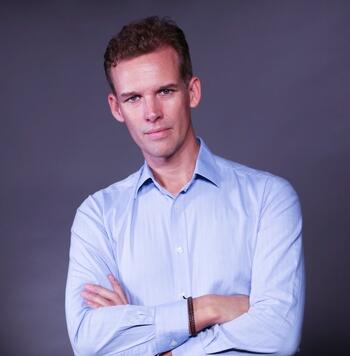
Richard Heydarian is an Asia-based academic and columnist, who most recently was a Visiting Fellow at National Chengchi University, and formerly an Assistant Professor in political science at De La Salle University. As a columnist, he has written for the world’s leading publications, including The New York Times, The Guardian, Foreign Affairs, and is a regular contributor to Aljazeera English, Nikkei Asian Review, South China Morning Post, and the Straits Times. He is the author of, among other books, The Rise of Duterte: A Populist Revolt against Elite Democracy (Palgrave Macmillan, 2017) and The Indo-Pacific: Trump, China, and the New Struggle for Global Mastery (Palgrave Macmillan, 2019). As a policy adviser, he has advised Philippine presidential candidates, presidential cabinet members, senators, and the Armed Forces of the Philippines, and is also a television host in GMA Network in the Philippines.

Image
Ann Marie Murphy 090120
Ann Marie Murphy is Professor at the School of Diplomacy and International Relations, Seton Hall University, Senior Research Scholar at the Weatherhead East Asian Institute, Columbia University, and 2019-2010 ASEAN Research Program Fulbright Scholar.

Dr. Murphy's research interests include international relations and comparative politics in Southeast Asia, U.S. foreign policy toward Asia, and governance of non-traditional security issues.  She is co-author (with Amy Freedman) of Non-Traditional Security Issues in Southeast Asia: the Transnational Dimension, (2018) and co-editor (with Bridget Welsh) of Legacies of Engagement in Southeast Asia (2008). Dr. Murphy’s articles have appeared in journals such as Asian Security, Contemporary Southeast Asia, Orbis, Asia Policy, World Politics Review and PS: Political Science & Politics.  Dr. Murphy is a founding partner of the New York Southeast Asia Network and is currently completing a book on the impact of democracy on Indonesian foreign policy with the generous support of the Smith Richardson Foundation.

Image
Thitinan Pongsudhirak 090120
Thitinan Pongsudhirak is the Director of the Institute of Security and International Studies and Professor at Bangkok’s Chulalongkorn University. He has authored articles, books, book chapters and over 1,000 op-eds in media outlets. His sought-after views have appeared on CNN, BBC, Bloomberg, among others. Thitinan has provided briefings to diplomatic missions, investors, and business conferences on Thai domestic politics and regional geopolitics. In 2015, he was awarded an op-ed prize from the Society of Publishers in Asia. Subsequently, he was appointed ASEAN@50 Fellow by New Zealand’s Minister of Foreign Affairs & Trade; and Australia-ASEAN Fellow by Sydney’s Lowy Institute.  He completed his M.A. at Johns Hopkins School of Advanced International Studies and Ph.D. at the London School of Economics, having lectured internationally and held visiting positions at renowned universities, including Stanford University, while serving on several editorial boards of academic journals. 

Via Zoom Webinar

Register at https://bit.ly/3gPVXlt


Richard Javad Heydarian Independent Scholar, Author, and Columnist for the Philippine Daily Inquirer, Manila
Ann Marie Murphy Professor and Director, Center for Emerging Powers and Transnational Trends, Seton Hall University, New Jersey
Thitinan Pongsudhirak Professor and Director, Institute of Security and International Studies, Chulalongkorn University, Bangkok
Seminars
-

This event is available through livestream only. Please register in advance for the webinar by using the link below.

REGISTRATION LINKhttps://bit.ly/34pAVrb

Inside the Billion Dollar Whale Scandal: 2020 Shorenstein Journalism Award Recipient Tom Wright to Headline Award Panel Discussion

The $7 billion 1Malaysia Development Bhd (1MDB) scandal, one of the largest-ever financial frauds, exposed the depths of corruption in global markets. The story starts in Malaysia, but a raft of institutions from Goldman Sachs to Big Four auditors and Manhattan lawyers enabled the graft. Five years after the story came to light, almost no one has gone to jail. What’s in store for the main players, how can our justice system ensure history does not repeat itself, and how do political actors shape the trajectories of anticorruption efforts in Asia?
 

Tom Wright, winner of the 2020 Shorenstein Journalism Award, addresses these questions and more in his keynote address.

Wright is the coauthor of the New York Times bestseller Billion Dollar Whale, which unravels the story of one of the world's greatest financial scandals involving the multibillion-dollar looting of the Malaysian sovereign wealth fund 1MDB. Wright’s work sparked investigations by law enforcement and regulators in multiple countries and outrage in Malaysia, where the ruling coalition, after 61 years in power, suffered a landslide defeat in a shocking 2018 election.

The keynote will be followed by a guided interview with the award winner led by Meredith Weiss, Professor and Chair of Political Science at the Rockefeller College of Public Affairs and Policy, University at Albany, SUNY.

The event will conclude with an audience Q&A session moderated by Donald K. EmmersonDirector of the Southeast Asia Program at the Walter H. Shorenstein Asia-Pacific Research Center.

Follow us on Twitter and use the hashtag #SJA20 to join the conversation.

Speakers:

Image
Portrait of Tom Wright, winner of 2020 Shorenstein Journalism Award
Tom Wright is an author, journalist, and speaker who over the past twenty-five years has lived and worked mainly in South and Southeast Asia. He is a Pulitzer finalist, a Loeb winner, and co-author of the New York Times bestseller Billion Dollar Whale, about the 1MDB scandal. A theme running through Tom’s work is the blight of corruption in Asia, abetted by Western companies and institutions. He started his career with Reuters in Indonesia in the 1990s at a time when Gen. Suharto’s military dictatorship was crumbling. During the Asian financial crisis of 1997-1998, Tom joined Dow Jones Newswires in Bangkok, later moving to the Wall Street Journal.
 
He has investigated corruption in Indian companies, the failure of the U.S. civilian aid program for Pakistan, and was one of the first journalists to arrive at the scene of the raid in which Navy SEALs killed Osama bin Laden. In 2013, Tom spearheaded the coverage of the Rana Plaza factory disaster in Bangladesh, which killed over 1,000 people, earning the Wall Street Journal a Sigma Delta Chi award from The Society of Professional Journalists. The series exposed how international garment manufacturers turned a blind eye to safety violations in order to reduce costs.
 
As Asia Economics Editor in Hong Kong, Tom managed a number of correspondents in the region, while continuing to report. In 2015, he began investigations into the 1MDB scandal, an almost unbelievable series of events in which bankers at Goldman Sachs helped a young Malaysian financier steal at least $4 billion from Malaysian state fund 1MDB, one of the largest financial frauds of all time. The three-year investigation showed the degree to which Western institutions, from Wall Street banks, law firms, auditors, and even Hollywood film companies, ignore malfeasance in the pursuit of profits.
 

Image
Portrait of Meredith Weiss, Professor and Chair of Political Science in the Rockefeller College of Public Affairs and Policy at the University at Albany, State University of New York
Meredith Weiss is Professor and Chair of Political Science in the Rockefeller College of Public Affairs & Policy at the University at Albany, State University of New York. Her research addresses social mobilization and civil society, the politics of identity and development, parties and elections, institutional reform and (anti)corruption, and subnational governance in Southeast Asia, with particular focus on Malaysia and Singapore. She has conducted fieldwork in those two countries as well as Indonesia, the Philippines, and Timor-Leste, and has held visiting fellowships or professorships in Australia, Japan, Malaysia, the Philippines, Singapore, and the US.

Her books include Protest and Possibilities: Civil Society and Coalitions for Political Change in Malaysia (2006), Student Activism in Malaysia: Crucible, Mirror, Sideshow (2011), The Roots of Resilience: Political Machines and Grassroots Politics in Southeast Asia (2020), and eleven edited or co-edited volumes, most recently, The Political Logics of Anticorruption Efforts in Asia (2019) and Toward a New Malaysia? The 2018 Election and Its Aftermath (2020).  Her articles appear in Asian Studies ReviewAsian SurveyCritical Asian StudiesDemocratizationJournal of Contemporary AsiaJournal of DemocracyTaiwan Journal of Democracy, and elsewhere.

Professor Weiss co-edits the Cambridge University Press Elements book series on Politics and Society in Southeast Asia and is an associate editor for Southeast Asia of the Association for Asian Studies’ (AAS) Journal of Asian Studies. She co-founded the Southeast Asian Politics related group of the American Political Science Association (APSA) and chairs the APSA’s Asia Workshops steering committee, is past chair of the AAS’s Southeast Asia Council, and is on the Southeast Asia Research Group (SEAREG) Council. She received her MA and PhD in Political Science from Yale University and a BA in Political Science, Policy Studies, and English from Rice University.


About the Shorenstein Journalism Award:

The Shorenstein Journalism Award, which carries a cash prize of US $10,000, recognizes outstanding journalists who have spent their careers helping audiences around the world understand the complexities of the Asia-Pacific region, defined broadly to include Northeast, Southeast, South, and Central Asia and Australasia. Award recipients are veteran journalists with a distinguished body of work. News organizations are also eligible for the award.

The award is sponsored and presented by the Walter H. Shorenstein Asia-Pacific Research Center (Shorenstein APARC) at Stanford University. It honors the legacy of the Center’s benefactor, Mr. Walter H. Shorenstein, and his twin passions for promoting excellence in journalism and understanding of Asia. It also symbolizes the Center’s commitment to journalism that persistently and courageously seeks accuracy, deep reporting, and nuanced coverage in an age when attacks are regularly launched on the independent news media, on fact-based truth, and on those who tell it.

An annual tradition, the Shorenstein Journalism Award alternates between recipients whose work has mostly been conveyed through American news media and recipients whose work has mostly been conveyed through news media in one or more parts of the Asia-Pacific region. Included among the latter candidates are journalists who are from the region and work there, and who, in addition to their recognized excellence, may have helped defend and encourage free media in one or more countries in the region.

Learn more at https://aparc.fsi.stanford.edu/events/shorenstein-journalism-award.

Virtual Webinar Via Zoom

Registration Link: https://bit.ly/34pAVrb

Tom Wright <br>Journalist, Author, Speaker</br><br>
Meredith Weiss <br>Professor and Chair of Political Science, University at Albany,SUNY</br>
Seminars
News Type
News
Date
Paragraphs

As the COVID-19 pandemic continues to take massive tolls on lives and livelihoods at home and abroad, students have been thrown into turmoil and are facing uncertainties about funding, graduation, research opportunities, and career choices. At Shorenstein APARC, we are committed to supporting Stanford students as best we can. We are therefore announcing today new quarter-long research assistantships for current undergraduate and graduate students working in the area of contemporary Asia. These opportunities are in addition to our recent internship and fellowship offerings.

Guidelines

Shorenstein APARC is seeking to hire motivated and dedicated undergraduate and graduate students as paid research assistants who will work with assigned APARC faculty members on projects focused on contemporary Asia, studying varied issues related to the politics, economies, populations, security, foreign policies, and international relations of the countries of the Asia-Pacific region.

2020-21 research assistant positions will be offered in the fall, winter, spring, and summer quarters. We expect to hire up to 10 research assistants per quarter.

Application Cycles
Students should submit their applications by the following deadlines:

  • Applications for fall 2020 by September 1, 2020;
  • Applications for winter 2020 by December 1, 2020;
  • Applications for spring 2021 by March 1, 2021.
     

The positions are open to current Stanford students only. Undergraduate- and graduate-level students are eligible to apply.

All positions will be up to 15 hours per week for undergraduate students and up to 20 hours per week for graduate students (minimum of 10 hours per week). The hourly pay rate is $17 for undergraduate students, $25 for graduate students.

Hiring is contingent upon verification of employment eligibility documentation.

The fall-quarter employment start date is September 16, 2020.

Successful candidates may request appointment renewal for a consecutive quarter.

Apply Now

  • Complete the application form and submit it along with these 3 required attachments:
  • Arrange for a letter of recommendation from a faculty to be sent directly to APARC. Please note: the faculty members should email their letters directly to Kristen Lee at kllee@stanford.edu.
     

We will consider only applications that include all supporting documents.

Read More

Hero Image
Encina Courtyard Rod Searcey
All News button
1
Subtitle

To support Stanford students working in the area of contemporary Asia, the Shorenstein Asia-Pacific Center is offering research assistant positions for the fall, winter, and spring quarters of the 2020-21 academic year.

Authors
News Type
News
Date
Paragraphs

Weighing only a few pounds and standing only a foot or two tall, the mousedeer of Southeast Asia are the smallest hoofed mammals in the world. Small and agile, they avoid predators through camouflage and stealth, blending quietly into the forest foliage around them.

These tiny deer also provide the opening metaphor in The Deer and the Dragon: Southeast Asia and China in the 21st Century, the newest book of Donald Emmerson, a senior fellow emeritus at FSI and the director of APARC's Southeast Asia Program. Emmerson uses the imagery of the deer—small but strategic—in contrast with the dragon, a creature of might and strength, to illustrate the power dynamics between the countries of Southeast Asia and China.

[Listen to our conversation with Emmerson about the book and keep reading below. To stay connected with our scholars and their research, sign up for APARC newsletters.]

The ASEAN nations trail the PRC by enormous margins in geographic size, population, and GDP. Though ASEAN overtook the EU to become China’s main trading partner in Q1 of 2020, China’s economic capacity is easily quadruple that of all ASEAN’s member countries combined.  Southeast Asia is also one of the most diverse regions in the world, and these differences have proven a historic and ongoing challenge to ASEAN’s effectiveness as a political body. This has been particularly observable in the fractured responses to China’s increased presence in the South China Sea. But these factors do not mean Southeast Asia must always fall in line with the policy goals of Beijing. Like mousedeer, these smaller nations can draw on other strategies and strengths to push back against encroachments from PRC initiatives.

Agency is not a property of the strong alone. Weaker powers can be proactive, too, however limited and contingent their agency may be.
Donald K. Emmerson
Senior Fellow Emeritus at FSI and Director of the Southeast Asia Program

The fourteen chapters in The Deer and the Dragon aim to provide perspectives on how such strategies can be developed, as well as giving detailed context on the complexities of Southeast Asia-China relations and the impact these dynamics have both for the region and the global community. The contributors offer insights into the tensions between diversity and dependence in ASEAN-China investment and trade, discussions of the very divergent strategies nations such as Singapore and Indonesia have taken in their relations with China, and remarks on the political and developmental disparities nations such as Cambodia and Laos face in trying to balance their autonomy against China's influence and levy influence within ASEAN.

In looking at the broader conclusions of the book, Emmerson writes, "The future of Southeast Asia will greatly and probably decisively depend on what its individual states themselves either do or fail to do, [and] nothing can substitute for the creativity of Southeast Asian states in individual and joint pursuit of their own and their region’s security."

The volume is available through Stanford University Press and  Amazon.

Read More

Leaders from the ASEAN league gather onstage at the 33rd ASEAN Summit in 2018 in Singapore.
Commentary

Southeast Asia's Approach to China and the Future of the Region

In an interview with The Diplomat, Donald Emmerson discusses how factors like the South China Sea, U.S.-China competition, and how COVID-19 are affecting relations between Southeast Asia, China, and the United States.
Southeast Asia's Approach to China and the Future of the Region
Fiery Cross Reef, Spratly Islands
Commentary

Strategy in the South China Sea

Donald K. Emmerson analyzes China’s tactics in the South China Sea and how the countries of Southeast Asia are reacting to the tensions in the disputed waterway.
Strategy in the South China Sea
People queue while wearing face masks
Blogs

COVID-19 in the Philippines – at a Glance

Marjorie Pajaron, assistant professor at the University of the Philippines School of Economics, describes the unfolding of the pandemic in the country and how Filipinos have coped with the evolving situation.
COVID-19 in the Philippines – at a Glance
Hero Image
Cover of the book 'The Deer and the Dragon' on the background of a Southeast Asia map
All News button
1
Subtitle

In a new volume, Donald Emmerson explores how the ASEAN nations are navigating complex political and policy issues with China during a time when political cohesion within ASEAN is fractured and China is increasingly assertive in its goals.

Date Label
1
Oksenberg-Rohlen Fellow
scot_marciel.jpg

Scot Marciel was the Oksenberg-Rohlen Fellow at the Freeman Spogli Institute for International Studies, affiliated with the Walter H. Shorenstein Asia-Pacific Research Center from 2022-2024. Previously, he was a 2020-22 Visiting Scholar and Visiting Practitioner Fellow on Southeast Asia at APARC.  A retired diplomat, Mr. Marciel served as U.S. Ambassador to Myanmar from March 2016 through May 2020, leading a mission of 500 employees during the difficult Rohingya crisis and a challenging time for both Myanmar’s democratic transition and the United States-Myanmar relationship.  Prior to serving in Myanmar, Ambassador Marciel served as Principal Deputy Assistant Secretary for East Asia and the Pacific at the State Department, where he oversaw U.S. relations with Southeast Asia.

From 2010 to 2013, Scot Marciel served as U.S. Ambassador to Indonesia, the world’s fourth most populous country.  He led a mission of some 1000 employees, expanding business ties, launching a new U.S.-Indonesia partnership, and rebuilding U.S.-Indonesian military-military relations.  Prior to that, he served concurrently as the first U.S. Ambassador for ASEAN Affairs and Deputy Assistant Secretary of State for Southeast Asia from 2007 to 2010.

Mr. Marciel is a career diplomat with 35 years of experience in Asia and around the world.  In addition to the assignments noted above, he has served at U.S. missions in Turkey, Hong Kong, Vietnam, Brazil and the Philippines.  At the State Department in Washington, he served as Director of the Office of Maritime Southeast Asia, Director of the Office of Mainland Southeast Asia, and Director of the Office of Southern European Affairs.  He also was Deputy Director of the Office of Monetary Affairs in the Bureau of Economic and Business Affairs.

Mr. Marciel earned an MA from the Fletcher School of Law and Diplomacy, and a BA in International Relations from the University of California at Davis.  He was born and raised in Fremont, California, and is married with two children.

Date Label
Authors
News Type
News
Date
Paragraphs

The Walter H. Shorenstein Asia-Pacific Research Center (APARC) condemns the systemic nature and brutal expression of racism in the United States, and we stand in full support of protestors and civil rights organizations in their calls for social justice, equal access to basic rights, and accountability. Beyond reaffirming our commitment to these values, we recognize the imperative to do better as an institution and the urgent need to take concrete action to build a more inclusive community here at our Stanford home. We have joined our colleagues at the Freeman Spogli Institute for International Studies in developing specific steps towards that goal. But we also want to take initial, immediate action in moving from protest to progress.

That’s why we are announcing today a new diversity grant to support Stanford students from underrepresented minorities with an interest in studying issues related to contemporary Asia. The field of Asian studies suffers from an extreme paucity of students, scholars, and experts who self-identify as Black/African American or as affiliated with other underrepresented minority groups. “The path towards a more diverse and inclusive field isn’t easy or straightforward, but we must get on it,” says APARC Director and FSI Senior Fellow Gi-Wook Shin. “We believe that we can tackle the existing disparity if relevant stakeholders across institutes of higher learning all work together. APARC is looking to start this change at Stanford.”

Lowering Barriers to Diversity in Asian Studies

The purpose of the APARC Diversity Grant is to encourage Stanford students from underrepresented minorities (URM) to engage in study and research of topics related to contemporary Asia and U.S.-Asia relations, including economic, health, foreign policy, social, political, and security issues. We follow the University’s definition of the URM category as encompassing “all U.S. citizens and permanent residents who have self-identified as American Indian/Alaska Native, Black/African American, Hispanic/Latino, Native Hawaiian/Other Pacific Islander.” This grant opportunity is open to current Stanford undergraduate and graduate students in the URM category from any major or discipline. “This is just a small step to start lowering disciplinary, cultural, and funding barriers that hinder broader student participation in Asian studies,” notes Shin.

APARC will award a maximum of $10,000 per grant to support a wide range of research expenses such as travel to/from research sites, academic conferences, and workshops (dependent on COVID-19 restrictions); conference registration fees; professional development training programs; purchase of physical and digital books or other required materials; and access to relevant online resources. APARC will review grant applications for projects taking place in winter/spring 2021 on a rolling basis starting on September 1, 2020. Reviews of the second round of applications, for projects taking place in summer/fall 2021, will begin on April 1, 2021.

Examples of research topics, in addition to those that Asia scholars typically study, could include China’s growing activities in Africa; understanding the evolving relations between Asian Americans and African Americans in the United States; and comparative examinations of issues such as the treatment of minorities in Asia and the United States or policies that promote anti-discriminatory practices in schools, the workplace, and other settings in Asian countries and the United States.

Application Guidelines

  • Complete the application form and submit it along with these three (3) attachments:
    • A statement (no more than three pages) describing the proposed research activity or project;
    • A current CV;
    • An itemized budget request explaining research expense needs.
  • Arrange for a letter of recommendation from a faculty to be sent directly to APARC. Please note: the faculty members should email their letters directly to Kristen Lee at kllee@stanford.edu.

We will consider only applications that include all supporting documents.

Read More

Hero Image
A look at the front of Encina Hall, Stanford
All News button
1
Subtitle

To encourage Stanford students from underrepresented minorities to engage in study and research of topics related to contemporary Asia, the Shorenstein Asia-Pacific Research Center is offering a new Diversity Grant opportunity. Application reviews begin on September 1, 2020.

Paragraphs
Cover of the book 'The Deer and the Dragon: Southeast Asia and China in the 21st Century"

Southeast Asia is arguably the most diverse region in the world. Accordingly, rather than addressing the exact same question, the contributors to this volume have — as experts on Southeast Asia-China relations — explored the matters they see as most important and most deserving of exploration and exposure. After the editor’s introduction, the chapters proceed in pairs. Each pair and a closing chapter cover a distinctive theme in Southeast Asia’s interactions with China.

Featured among the historical and economic contexts needed to understand the interactions are security and development as Chinese goals and how diversified beyond China Southeast Asia’s trading partners are. Southeast Asian and Chinese perceptions of each other are examined using survey research and by asking whether China views the region as its “strategic backyard.” Two actual or intended expansions are analyzed: expanded Chinese sovereignty over the South China Sea and Beijing’s interest in using “overseas Chinese” to expand its influence in the region. The chapters on strategies analyze the very different ways of approaching China preferred by Singapore and Indonesia. Rather than documenting the obvious inequalities of size and power between China on the one hand and Cambodia and Laos on the other, the essays on disparities show how relations with China interact with asymmetries inside these two states. Policy implications of differing distances are drawn in the pieces on how Southeast Asia’s proximity to China affects the prospect of Chinese regional dominance as compared with far-off America’s role and as seen through the lens of Beijing’s far-flung Maritime Silk Road. A final chapter on a seventh theme features a Myanmar analyst’s retrospection on myths and illusions that have arisen to cloud how that country’s relations with China are interpreted, with possible implications for understanding Sino-Southeast Asian dealings with China more broadly.

Learn more about the book and listen to a podcast conversation with Donald K. Emmerson >> 
 

Reviews

"The Deer and the Dragon offers a novel contribution to studies of China–Southeast Asia relations from a diverse set of voices, inviting the authors into an enriching conversation with one another. It also provides a welcome riposte to prevailing depictions of Southeast Asia as either powerless to challenge a rising China or as mere pawns in a great game between Beijing and Washington."
— Hunter Marston, Journal of Asian Security and International Affairs (Vol. 8, Issue 2, July 2021)

"In The Deer and the Dragon, Emmerson, one of the most eminent thinkers on Southeast Asia, has rallied an army of top regional experts to examine the nature, dynamics and implications of the power asymmetries between China and the countries of Southeast Asia.”
— Yun Sun, Contemporary Southeast Asia (vol. 42, no. 3, Dec 2020)


"[T]his rich compilation unearths multiple dimensions of China’s geo-economic and geo-strategic intentions in Southeast Asia, while speaking to the dynamics of power and agency [...] It will be invaluable for scholars of Southeast Asia looking to understand China’s past, future and present interactions with the region."
— Anna Buckley, Security Challenges (Vol. 16, no. 4, Dec. 2020)


"As China’s relations with most of its southern neighbors deteriorate, there is a crying need for a detailed, nuanced study to explain why. The Deer and the Dragon is the book we have been waiting for. Its diverse points of view, depth of research, and sophistication of analysis make the book essential reading."
— Nayan Chanda, Global Asia
 

“The authors of this commendably well-edited book are among the finest experts on China’s relations with Southeast Asia.  The result does justice both to the complex and multifaceted nature of China’s regional influence and to the diversity and increasing self-assertiveness of its southern neighbors, who are far from mere pawns in a game of chess between big powers.”
Richard Heydarian, author of The Indo-Pacific: Trump, China, and the New Struggle for Global Mastery

All Publications button
1
Publication Type
Books
Publication Date
Subtitle

Southeast Asia and China in the 21st Century

Authors
Donald K. Emmerson
Book Publisher
Shorenstein APARC
Subscribe to International Relations