Institutions and Organizations
-

We offer the first large scale, multiple source analysis of the outcome of what may be the most extensive effort to selectively censor human expression ever implemented. To do this, we have devised a system to locate, download, and analyze the content of millions of social media posts originating from nearly 1,400 different social media services all over China before the Chinese government is able to find, evaluate, and censor (i.e., remove from the Internet) the large subset they deem objectionable. Using modern computer-assisted text analytic methods that we adapt and validate in the Chinese language, we compare the substantive content of posts censored to those not censored over time in each of 95 issue areas. Contrary to previous understandings, posts with negative, even vitriolic, criticism of the state, its leaders, and its policies are not more likely to be censored. Instead, we show that the censorship program is aimed at curtailing collective action by silencing comments that represent, reinforce, or spur social mobilization, regardless of content. Censorship is oriented toward attempting to forestall collective activities that are occurring now or may occur in the future -- and, as such, seem to clearly expose government intent, such as examples we offer where sharp increases in censorship presage government action outside the Internet. This is joint work with Jennifer Pan and Molly Roberts.

Gary King is the Albert J. Weatherhead III University Professor at Harvard University -- one of 24 with the title of University Professor, Harvard's most distinguished faculty position. He is based in the Department of Government (in the Faculty of Arts and Sciences) and serves as director of the Institute for Quantitative Social Science. King develops and applies empirical methods in many areas of social science research, focusing on innovations that span the range from statistical theory to practical application.

King received a B.A. from SUNY New Paltz (1980) and a Ph.D. from the University of Wisconsin-Madison (1984). His research has been supported by the National Science Foundation, the Centers for Disease Control and Prevention, the World Health Organization, the National Institute of Aging, the Global Forum for Health Research, and centers, corporations, foundations, and other federal agencies.

Philippines Conference Room

Gary King Albert J. Weatherhead III University Professor Speaker Department of Government, Harvard University
Seminars
Authors
News Type
News
Date
Paragraphs

A revelatory story emerged in China this spring: Bo Xilai, Chongqing’s powerful Communist Party head, was stripped of both his post and party membership and accused of shocking abuses of power, including covering up his wife’s alleged involvement in the death of a shadowy British businessman.

On May 2, the Shorenstein Asia-Pacific Research Center held a special seminar to make sense of what this unusual high-level scandal could mean for the future of China’s current political system, erupting just months ahead of a once-in-a-generation leadership transition.

Minxin Pei, director of the Keck Center for International and Strategic Studies at Claremont McKenna College, said the scandal is a severe test for the Chinese Communist Party (CCP), which balances on a knife’s edge as it prepares to replace the majority of its Politburo members—the highest CCP echelon. The Bo affair has exposed the existence of serious corruption at a very high level of government, calling into question the party’s image and credibility.

“This is the biggest threat to party unity since 1989,” he said.

More potentially damaging still, however, is the negative light it has cast on China’s overall political system. The scandal has revealed weaknesses and loopholes in the power structure, and the government’s poor crisis management skills.

“The Bo Xilai affair is the beginning of the end of the Tiananmen era,” Pei said. “Twenty years from now, historians will make this point.”

Xueguang Zhou, a professor of sociology and Freeman Spogli Institute senior fellow, agreed with Pei’s analysis that Bo’s fall from power has tarnished the party’s image and deeply disrupted the cohesiveness of its upper leadership.He spoke also of the outpouring of criticism on social media sites for the government’s inability to reign in corruption—so much so that censors have not been able to keep up.

“These voices have been so fierce in criticizing the top leadership that it has huge implications for the emergence of China’s civil society,” Zhou said. 

He expressed his concern for the future of local politics after the smoke from the Bo affair has cleared. Although it is widely acknowledged in China that shady political dealings go hand-in-hand with local-level politics, positive innovations in governance also frequently occur at the city and county level.

“I hope that local governments will still have the power to experiment,” he said.

After all is said and done, China’s top leadership is at a major turning point. Only time will tell the full impact of the fall of Bo Xilai, both during this year’s power transition and the evolution of China’s government structure in the coming decades.

Hero Image
ChongqingBridge NEWSFEED
A rain-spattered window and misty bridge in Chongqing, October 2011, one month before the death of British businessman Neil Heywood.
Flickr/International Hydropower Association; http://bit.ly/J8JSoh
All News button
1
-

Abstract:

The Chinese bureaucracy presents a set of anomalies that need to be explained: In the presence of a strong central authority, why do we observe widespread collusive behaviors at the local level? Why are violations and problems uncovered in the inspection processes are left unaddressed? Why is performance evaluation conducted by the higher authorities is subsequently ignored by the local authorities? We develop a theoretical model on authority relationships in the Chinese bureaucracy by conceptualizing the allocation of control rights in goal setting, inspection and incentive provision among the principal, supervisor and agent. Variations in the allocation of control rights give rise to different modes of governance and entail distinct behavioral implications among the parties involved. The proposed model provides a unified framework and a set of analytical concepts to examine different governance structures, varying authority relationships, and behavioral patterns in the Chinese bureaucracy. We illustrate the proposed model in a case study of authority relationships and the ensuing behavioral patterns in the environmental protection arena over a 5-year policy cycle.


About the speaker:

Xueguang Zhou is the Kwoh-Ting Li Professor in Economic Development, a professor of sociology, and a Freeman Spogli Institute for International Studies senior fellow. His main area of research is on institutional changes in contemporary Chinese society, focusing on Chinese organizations and management, social inequality, and state-society relationships. Zhou's research topics are related to the making of markets, village elections, and local government behaviors. His recent publications examine the role of bureaucracy in public goods provision in rural China (Modern China, 2011); interactions among peasants, markets, and capital (China Quarterly, 2011); access to financial resources in Chinese enterprises (Chinese Sociological Review, 2011, with Lulu Li); multiple logics in village elections (Social Sciences in China, 2010, with Ai Yun); and collusion among local governments in policy implementation (Research in the Sociology of Organizations, 2011, with Ai Yun and Lian Hong; and Modern China, 2010) .

Philippines Conference Room

Shorenstein APARC
Stanford University
Encina Hall, E301
Stanford, CA 94305-6055

(650) 725-6392 (650) 723-6530
0
Senior Fellow at the Freeman Spogli Institute for International Studies
Kwoh-Ting Li Professor in Economic Development
Professor of Sociology
Graduate Seminar Professor at the Stanford Center at Peking University, June and July of 2014
Faculty Affiliate at the Stanford Center on China's Economy and Institutions
Xueguang Zhou_0.jpg PhD

Xueguang Zhou is the Kwoh-Ting Li Professor in Economic Development, a professor of sociology, and a Freeman Spogli Institute for International Studies senior fellow. His main area of research is on institutional changes in contemporary Chinese society, focusing on Chinese organizations and management, social inequality, and state-society relationships.

One of Zhou's current research projects is a study of the rise of the bureaucratic state in China. He works with students and colleagues to conduct participatory observations of government behaviors in the areas of environmental regulation enforcement, in policy implementation, in bureaucratic bargaining, and in incentive designs. He also studies patterns of career mobility and personnel flow among different government offices to understand intra-organizational relationships in the Chinese bureaucracy.

Another ongoing project is an ethnographic study of rural governance in China. Zhou adopts a microscopic approach to understand how peasants, village cadres, and local governments encounter and search for solutions to emerging problems and challenges in their everyday lives, and how institutions are created, reinforced, altered, and recombined in response to these problems. Research topics are related to the making of markets, village elections, and local government behaviors.

His recent publications examine the role of bureaucracy in public goods provision in rural China (Modern China, 2011); interactions among peasants, markets, and capital (China Quarterly, 2011); access to financial resources in Chinese enterprises (Chinese Sociological Review, 2011, with Lulu Li); multiple logics in village elections (Social Sciences in China, 2010, with Ai Yun); and collusion among local governments in policy implementation (Research in the Sociology of Organizations, 2011, with Ai Yun and Lian Hong; and Modern China, 2010).

Before joining Stanford in 2006, Zhou taught at Cornell University, Duke University, and Hong Kong University of Science and Technology. He is a guest professor at Peking University, Tsinghua University, and the People's University of China. Zhou received his Ph.D. in sociology from Stanford University in 1991.

CV
Date Label
Xueguang Zhou Kwoh-Ting Li Professor in Economic Development; Professor of Sociology; FSI Senior Fellow Speaker
Francis Fukuyama Olivier Nomellini Senior Fellow Moderator Stanford University
Seminars
Authors
News Type
News
Date
Paragraphs

Newly printed “no smoking” signs went up across China when the government rolled out a nationwide public indoor smoking ban in May 2011. A sticky gray layer of smoke residue now coats many signs, representing the challenges China’s growing tobacco-control movement faces against a multibillion-dollar government-run industry and deeply embedded social practices.

How has the cigarette become so integrated into the fabric of everyday life across the People’s Republic of China (PRC)?

To get to the heart of this question, historians, health policy specialists, sociologists, anthropologists, business scholars, and other experts met Mar. 26 and 27 in Beijing for a conference organized by Stanford’s Asia Health Policy Program. They examined connections intricately woven over the past 60 years between marketing and cigarette gifting, production and consumer demand, government policy and economic profit, and many other dimensions of China’s cigarette culture.

Anthropologist Matthew Kohrman, a specialist on tobacco in China, led the conference, which was held at the new Stanford Center at Peking University. In an interview, he spoke about the history of China’s cigarette industry, cigarettes and society, and the tobacco-control movement.

The early years

Tobacco first entered China through missionary contact in the 1600s, says Kohrman, but it was not until the early 20th century when cigarettes began gaining popularity. The first cigarette advertising was a “confused tapestry” of messages as marketers figured out what spoke to the public. “There were just as many images of neo-Confucian filial piety as there were of cosmopolitan ‘modern women,’” says Kohrman.

Through improved marketing and aggressive factory building, British American Tobacco and Nanyang Brothers, China’s two largest pre-war firms, helped increase the demand for cigarettes. The Sino-Japanese War (1937–1945) disrupted the cigarette supply, but their popularity had taken hold. Some cigarette firms shifted during the war to the relative safety of southwest China, where tobacco production has remained concentrated ever since.

Post-1949

After the founding of the PRC in 1949, the tobacco industry was nationalized and strong relationships between the central government and cigarette manufacturers in the provinces were formed. Cigarettes also began to be viewed as a part of everyday life. “Ration coupons for cigarettes were issued alongside grain, sugar, and bicycle coupons,” says Kohman. “The Maoist regime legitimized cigarettes as the right of every citizen."

During the Deng Xiaoping era (1978–1997), China’s cigarette industry really took off as manufacturers competed with one another for foreign currency to purchase cutting-edge European equipment and newer varieties of tobacco seed stock. Increased production and the return of full-scale advertising fueled greater consumer demand, and manufacturers began producing more and more varieties of cigarette. Vendors displayed glass cases filled with a colorful patchwork of cigarette packs bearing names like Panda, Double Happiness, and Red Pagoda.

The tobacco industry remained under government control as other industries privatized in the 1980s and 1990s. Party-state management of the cigarette became even more centralized in the early 1980s with the creation of the China Tobacco Monopoly Administration and its parallel external counterpart, the China Tobacco Corporation.

Since 1949, provincial protectionism has marked the cigarette market. It is now possible to purchase Beijing cigarettes in Kunming, Chengdu brands in Shanghai, and so on, but to distribute cigarettes in another province, a manufacturer must cut a deal with provincial government officials. Provincial administrations are loath to cut such deals because central government policy dictates that the portion of cigarette sales tax which does not go to the central government always is channeled to the finance bureau of the province of original production. China’s 2001 entry into the World Trade Organization opened the market ever so slightly to international brands like Marlboro and Kent, but domestic brands continue to dominate because of fierce protectionism.

...If it chooses to do so, China is in a position to lead and change the landscape in a very profound way.
-Matthew Kohrman, Professor of Anthropology, Stanford

A new era

In 2003, the World Health Organization established the first global health treaty, the Framework Convention on Tobacco Control (FCTC). Although the United States still has not yet ratified the FCTC, China signed the treaty in 2003 and ratified it in 2005. Kohrman says China’s tobacco industry giants fear competition from international cigarette brands more than they worry about tobacco-control measures related to the FCTC.

Nonetheless, the FCTC ushered in a new era of public health research about tobacco and has helped increase public awareness about the dangers of smoking. New restrictions have been imposed on print and television advertising for cigarettes, and international organizations, such as the Bloomberg Family Foundation, have begun funding anti-tobacco work in China.

A big challenge to tobacco-control campaigns, says Kohrman, is the sheer amount of money that tobacco companies have available for marketing. “In 2010, China’s tobacco industry posted profits in excess of U.S. $90 billion—that’s huge. Tobacco control research and advocacy now annually receive a few million dollars, and much of that is coming through outside funders, which have very specific projects in mind.”

China’s tobacco advertisers have adapted to the new restrictions that prevent them from openly promoting cigarettes in the media. They have instead moved to point-of-sale and soft-marketing tactics, including misinformation campaigns about the “dangers” of quitting smoking. “The actual expenditure on marketing probably hasn’t dropped very much,” says Kohrman.

Cigarettes and society

Strong marketing and the legitimization of cigarettes as a part of everyday life have led to the deep integration of cigarettes into Chinese society. While only 3 to 4 percent of women in China smoke, cigarettes are an important part of male identity and social mobility. The wide range of cigarette brands has led to the growth of high-end varieties favored by businessmen and politicians, with some brands costing as much as $50 a pack. The custom of cigarette gifting has existed in China for decades, and it is difficult for a young man to turn down a package of cigarettes from a senior colleague or supervisor.

There is also the fact that nicotine is highly addictive, and quitting is difficult in an environment where smoking cigarettes is socially sanctioned. Kohrman says, “When you take an incredibly addictive substance like nicotine and throw it into the mix of all of these norms and customs, it creates a pretty toxic brew.”

The future?

Tobacco control presents a formidable challenge in China, one that requires understanding the historical context and complex dimensions of the cigarette industry. “Cigarettes have been insinuated into so many aspects of daily life across China, and the market for this product has now become so closely enmeshed with matters of government finance and operations,” says Kohrman.

What happens in China could have implications for the entire world. “There’s a tobacco-induced human annihilation unfolding right now in almost every country and questions about how society and Big Tobacco are enmeshed, and how cigarette culture and government finance have become mutually supportive are pivotal,” says Kohrman. “Every country except Bhutan has legalized cigarette sales and is subject to many of the same general issues as China—only in China they’re on a much larger scale. But if it chooses to do so, China is in a position to lead and change the landscape in a very profound way.”   

Hero Image
PandaCigarettes NEWSFEED
Premium Chinese cigarette brand Panda for sale in a duty-free shop at Dubai's airport.
Flickr/Bernard Oh
All News button
1
Paragraphs
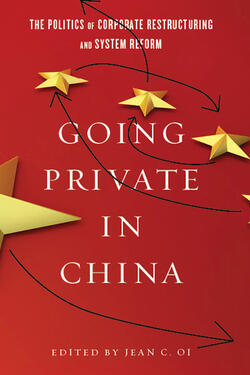
GoingPrivateinNEWSFEED1 0

As the Chinese Communist Party (CCP) set about reforming its centrally planned economy, it faced the thorny policy question of how to reform its state-owned enterprises (SOEs). Should it support a shift from public to private ownership of the means of production? Such a shift would challenge not only the CCP's socialist ideology but also its very legitimacy. Mixing the business of corporate restructuring with the politics of socialism presented nothing short of a policy nightmare.

With policy-relevant acuity, the contributors to this wide-ranging volume address the questions about reform programs that have plagued China—and East Asia more broadly—since the 1990s. While China, Japan, and South Korea have all been criticized for implementing reform too slowly or too selectively, this volume delves into the broader contexts underlying certain institutional decisions. The book seeks to show that seemingly different political economies actually share surprising similarities, and problems. While Going Private in China sheds new light on China's corporate restructuring, it also offers new perspectives on how we think about the process of institutional change.

Desk, examination, or review copies can be requested through Stanford University Press.

All Publications button
1
Publication Type
Books
Publication Date
Subtitle

The Politics of Corporate Restructuring and System Reform

Authors
Jean C. Oi
Book Publisher
Shorenstein APARC
Paragraphs

For the peasants in rural China, the harvest season is the occasion when several different worlds—the business world of large companies, the entrepreneurial world of middlemen, local elites and peasant households—are compressed into the same social space, thereby inducing intensive economic and social interactions and crystallizing social relations among villagers, local elites and markets. Based on ethnographic research on the autumn harvest in a township in northern China, this study sheds light on distinctive modes of market transactions across produces, and diverse interactions between markets and local institutions involving different co-ordination mechanisms, rhythms and social relationships. A more nuanced image of market transactions emerges from these observations, calling for a more refined conceptualization of markets and further research on their implications for institutional changes.

All Publications button
1
Publication Type
Journal Articles
Publication Date
Journal Publisher
The China Quarterly
Authors
Xueguang Zhou
-

**Due to space restrictions, this event has reached capacity and we will no longer be taking RSVPs. Everyone is still welcome to attend but please plan to arrive early as seating is on a first come, first serve basis.**

Under the Hu-Wen leadership, China announced a shift in its development policy from a policy program that mainly emphasizes economic growth to one that pursues a “harmonious society.” The harmonious society program was a response to rapid increases in inequality during the 1990s, and its aim has been to ensure that the benefits from growth are widely shared.    

In recent years have the benefits from growth been widely shared? Has income inequality increased or decreased during the Hu-Wen era?

Drawing on recent findings from the China Household Income Project, a collaborative survey research project monitoring changes in incomes and inequality, Professor Terry Sicular will discuss recent trends in inequality and poverty in China. 

Terry Sicular is professor of economics at the University of Western Ontario. She received her doctorate at Yale and has taught at Stanford and Harvard. She is a specialist on the Chinese economy, speaks Mandarin, and has been studying and travelling to China for more than 30 years. Her recent research examines incomes and inequality in China, as well as related topics such as educational attainment and its intergenerational transmission, and the impact of housing reforms on household income and wealth. She has published widely in scholarly journals and books, and is as a contributor to and co-editor of Inequality and Public Policy, published by Cambridge University Press (2008). She has served as a consultant to international donor organizations, and is a leader in the ongoing, China Household Income Project, a collaborative research project that conducts a nationwide household survey and monitors trends in China’s incomes and inequality.

This event is part of the China's Looming Challenges series

Philippines Conference Room

Terry Sicular Professor Speaker Department of Economics, University of Western Ontario
Seminars
Paragraphs

Focusing on the episodes of the government’s Paved Road to Every Village (PREV) project in an agricultural township in northern China, this article examines two research issues: First, the role of state policies, government bureaucracies, and village cadres in the provision of public goods, especially the unintended consequences that led to huge collective debts and the erosion of the collective basis of governance and second, the role of local institutions and social relations in resource mobilization, problem solving, and response to crises, especially in the aftermath of the PREV project. The episodes provide an occasion to rethink the role of governments in economic development and the lessons learned from, to borrow an expression by James Scott, “seeing like a state.”

All Publications button
1
Publication Type
Journal Articles
Publication Date
Journal Publisher
Modern China
Authors
Xueguang Zhou

This project investigates the sources of stability and conflict in authoritarian regimes, especially regimes that have a unitary national government, apply threats and repression to their own officials, and lack an exit option for bureaucrats to move into careers in a separate private sector. It also seeks to develop theories about political movements in which bureaucrats are viewed as active participants in political processes that can rapidly undermine a government.

Paragraphs

China's protracted regional conflicts of 1967 and 1968 have long been understood as struggles between conservative and radical forces whose opposed interests were so deeply rooted in existing patterns of power and privilege that they defied the imposition of military control. This study of Nanjing, a key provincial capital that experienced prolonged factional conflict, yields a new explanation: the conflicts were prolonged precisely because they could not be characterized as pitting "conservatives" against "radicals," making it difficult for central officials, local military forces, or Mao Zedong to decide how to resolve them. Furthermore, Beijing officials, regional military forces, and local civilian cadres were themselves divided against one another, exacerbating and prolonging local conflicts. In competing for approval from central authorities, local factions adopted opportunistic and rapidly shifting political stances designed to portray their opponents as reactionary conservatives—charges that had no basis in fact.

All Publications button
1
Publication Type
Journal Articles
Publication Date
Journal Publisher
Journal of Asian Studies
Authors
Andrew G. Walder
Subscribe to Institutions and Organizations