Security

FSI scholars produce research aimed at creating a safer world and examing the consequences of security policies on institutions and society. They look at longstanding issues including nuclear nonproliferation and the conflicts between countries like North and South Korea. But their research also examines new and emerging areas that transcend traditional borders – the drug war in Mexico and expanding terrorism networks. FSI researchers look at the changing methods of warfare with a focus on biosecurity and nuclear risk. They tackle cybersecurity with an eye toward privacy concerns and explore the implications of new actors like hackers.

Along with the changing face of conflict, terrorism and crime, FSI researchers study food security. They tackle the global problems of hunger, poverty and environmental degradation by generating knowledge and policy-relevant solutions. 

Paragraphs

The 2018 federal budget proposed by the White House would shrink critical tools—of diplomacy, development work and peacemaking—that can reduce the civil wars abroad that threaten U.S. interests and global stability. Forthcoming research for the American Academy of Arts and Sciences shows that these tools can be effective and cheaper than the military forces upon which we must rely when those wars flare into immediate threats. The international system for mediating and keeping peace in such conflicts must be strengthened and updated—not abandoned.

All Publications button
1
Publication Type
Commentary
Publication Date
Journal Publisher
USA Today
Authors
Authors
News Type
News
Date
Paragraphs

Colonel Patrick Winstead, the 2016-17 FSI senior military fellow at Shorenstein APARC, writes about the second annual orientation at U.S. Pacific Command headquarters

The mission of the Department of Defense (DoD) in the Indo-Asia-Pacific region recently became a bit clearer for 22 faculty and military fellows from Stanford, the Massachusetts Institute of Technology, the Naval Postgraduate School and the Daniel K. Inouye Asia-Pacific Center for Security Studies (APCSS). The U.S.-Asia Security Initiative at the Shorenstein Asia-Pacific Research Center (APARC) in the Freeman Spogli Institute (FSI) organized a group of faculty and fellows for a two-day orientation of United States Pacific Command (USPACOM) and its component military organizations in and around Honolulu, Hawaii, April 13-14, 2017. The purpose of the orientation was to provide researchers with a comprehensive understanding of how America’s armed forces both develop and implement U.S. national security strategy, doctrine and policy throughout Asia.

The trip began with a visit to the headquarters of USPACOM at Camp H.M. Smith. After receiving briefings about USPACOM's mission and operations, the group engaged in roundtable discussions with General Terrence O’Shaughnessy (Commander, U.S. Pacific Air Forces); Major General Kevin B. Schneider (Chief of Staff, USPACOM); Rear Admiral Mark Montgomery (Director for Operations, USPACOM); Major General Steven Rudd (Director for Strategic Planning and Policy, USPACOM); as well as other key joint directors and members of the command staff. The faculty and fellows provided short presentations on the situation in the South China Sea, U.S.-Philippine relations and cyber warfare to an audience of mid-grade military officers and civilian personnel assigned to USPACOM.

In addition to meeting with the leadership of USPACOM, the group was also afforded the opportunity to interact with personnel from the four separate component commands. Deputy Commanding General of U.S. Army Pacific, Major General Charlie Flynn, provided a command briefing at the U.S. Army Pacific headquarters at Fort Shafter. The briefing stimulated a wide-ranging discussion about Army initiatives and activities in support of USPACOM’s mission in the Indo-Asia-Pacific region. At Marine Corps Base Hawaii at Kaneohe Bay, under the guidance of trainers, the visitors took part in a hands-on experience operating Humvee simulators in a virtual-reality convoy setting and firing simulated weapons that Marines typically employ in combat operations. The first day of the trip ended with a working dinner at the historic Nimitz House with the Commander of the U.S. Pacific Fleet, Admiral Scott Swift, where the conversation ranged from Chinese military modernization to evolving U.S. naval doctrine.

Those themes carried into the second day, when the group met for several hours with faculty at APCSS for plenary presentations and multiple breakout sessions to facilitate in-depth dialogue on select topics including the threats posed by nuclear weapons on the Korean Peninsula and in South Asia. The day continued with a tour of the U.S.S Hopper, an Arleigh-Burke class guided missile destroyer, based at Pearl Harbor, Hawaii. Once onboard, the ship’s captain, Lieutenant Commander J.D. Gainey, provided briefings on Hopper’s mission and operational capabilities. In addition, the group spoke with members of the ship’s crew. The experience allowed the faculty and fellows to interact informally with sailors who serve in the Asia-Pacific theatre and to candidly discuss issues of concern. The second day of the orientation ended with a visit to the headquarters of U.S. Pacific Air Forces and a dialogue with O’Shaughnessy and his staff about the unique security challenges of the Indo-Asia-Pacific region, such as tyranny of distance, limited support bases and multiple emerging threats, and how those challenges impact the Air Force and the entire U.S. military’s preparations for contingencies in the region.

Overall, the orientation provided a unique opportunity to engage directly with high-level leaders of USPACOM and to learn first-hand about the challenges faced by those who serve in the armed forces. The orientation also provided a forum to discuss the United States’ national security interests in the region and its efforts to maintain peace and stability in the Indo-Asia-Pacific and to help maintain a rules-based, liberal democratic order.

Related links:

Photo gallery

Hero Image
uspacom trip headline
A group of 22 faculty and military fellows participate in an orientation at U.S. Pacific Command headquarters, Honolulu, Hawaii, April 13-14, 2017, organized and sponsored by the U.S.-Asia Security Initiative.
Courtesy of the U.S.-Asia Security Initiative
All News button
1
Paragraphs
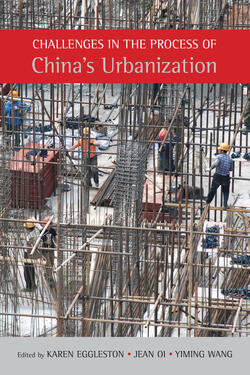
urbanization cover

The same institutions that enabled China’s massive urbanization and spurred its economic growth now require further reform and innovation.

To address the issues facing the next phase of the nation’s transformation, the National New Urbanization Plan (2014–20) set ambitious targets for sustainable, human-centered, and environmentally friendly urbanization. This volume explores the key institutional and governance challenges China will face in reaching those goals. Its policy-focused contributions from leading social scientists in the United States and China explore aspects of urbanization ranging from migration and labor markets to agglomeration economies, land finance, affordable housing, and education policy. Subjects covered in the eleven chapters include:

  • Institutional problems leading to fiscal pressures on local governments and unequal provision of social services to migrant families
  • The history of land financing and threats to its sustainability
  • The difficulty of sorting out property rights in rural China
  • How administrative redistricting has allowed the urbanization of geographical administrative places to outpace the urbanization of populations within those areas
  • How the hukou system may not be the sole, or even primary, mechanism restricting migrants from public goods, such as their childrens’ education
  • Whether the nation’s food security is threatened by its ongoing urbanization
  • The current state of the provision of low-income housing, and future challenges
 
Karen Eggleston is the director of the Asia Health Policy Program at the Shorenstein Asia-Pacific Research Center (Shorenstein APARC). She is a fellow at Stanford's Center for Health Policy/Primary Care and Outcomes Research and a faculty research fellow of the National Bureau of Economic Research.
Jean C. Oi is the William Haas Professor in Chinese Politics in the department of political science and a senior fellow of the Freeman Spogli Institute for International Studies at Stanford University. Oi is the founding director of the China Program at Shorenstein APARC and the Lee Shau Kee Director of the Stanford Center at Peking University.
Wang Yiming is vice president and senior research fellow at the Development Research Center of the State Council, People’s Republic of China. Previously he was with the National Development and Reform Commission (NDRC), where he served for many years as executive vice president of the Academy of Macroeconomics Research and deputy secretary general of the NDRC.
 

Examination copies: Shorenstein APARC books are distributed by Stanford University Press. You can obtain information on obtaining an examination copy at their website.


All Publications button
1
Publication Type
Books
Publication Date
Authors
Karen Eggleston
Jean C. Oi
Book Publisher
Shorenstein APARC
News Type
Commentary
Date
Paragraphs

Uncertainty about U.S. intentions in Northeast Asia has increased fear that events could spin out of control in the region due to American disengagement. That engagement cannot be taken for granted, Shorenstein Fellow Thomas Fingar writes on the Stanford University Press blog, and it remains to be seen just how well regional political leaders adjust to the Trump administration’s evolving foreign policy.

The blog post highlights themes from his book Uneasy Partnerships: China’s Engagement with Japan, the Koreas, and Russia in the Era of Reform (Stanford, April 2017).

Hero Image
tillerson beijing
U.S. Secretary of State Rex Tillerson meets with Chinese Foreign Minister Wang Yi during a bilateral meeting in Beijing, China, on March 18, 2017.
Flickr/U.S. Department of State
All News button
1
Paragraphs

Uneasy Partnerships presents the analysis and insights of practitioners and scholars who have shaped and examined China's interactions with key Northeast Asian partners. Using the same empirical approach employed in the companion volume, The New Great Game (Stanford University Press, 2016), this new text analyzes the perceptions, priorities, and policies of China and its partners to explain why dyadic relationships evolved as they have during China's "rise."

Synthesizing insights from an array of research, Uneasy Partnerships traces how the relationships that formed between China and its partner states—Japan, the Koreas, and Russia—resulted from the interplay of competing and compatible objectives, as well as from the influence of third-country ties. These findings are used to identify patterns and trends and to develop a framework that can be used to illuminate and explain Beijing's engagement with the rest of the world.

This book is part of the Studies of the Walter H. Shorenstein Asia-Pacific Research Center series at Stanford University Press.

All Publications button
1
Publication Type
Books
Publication Date
Journal Publisher
Stanford University Press
Authors
Thomas Fingar
News Type
Commentary
Date
Paragraphs

President Trump hosted Chinese President Xi Jinping last week at Mar-a-Lago for their first meeting which set out to address economic, trade and security challenges shared between the two countries. Shorenstein Asia-Pacific Research Center (APARC) experts offered analysis of the summit to various media outlets.

In advance of the summit, Donald K. Emmerson, an FSI senior fellow emeritus and director of the Southeast Asia Program, wrote a commentary piece urging the two leaders to prioritize the territorial disputes in the South China Sea in their discussions. He also suggested they consider the idea of additional “cooperative missions” among China, the United States and other countries in that maritime area.

“A consensus to discuss the idea at that summit may be unreachable,” Emmerson recognized in The Diplomat Magazine. “But merely proposing it should trigger some reactions, pro or con. The airing of the idea would at least incentivize attention to the need for joint activities based on international law and discourage complacency in the face of unilateral coercion in violation of international law.”

Kathleen Stephens, the William J. Perry Fellow in Shorenstein APARC’s Korea Program, spoke to the Boston Herald about U.S. policy toward North Korea and a potential role for China in pressuring North Korea to hold talks about denuclearization. She addressed the purported reports that the National Security Council is considering as options placing nuclear weapons in South Korea and forcibly removing North Korean leader Kim Jong-un from power.

“The two options have been on the long list of possible options for a long time and they have generally been found to have far too many downsides,” Stephens said in the interview.

Writing for Tokyo Business TodayDaniel Sneider, the associate director for research at Shorenstein APARC, offered an assessment of the summit. He argued that two events - the U.S. airstrike on an airbase in Syria following the regime's chemical weapons attack and the leaked reports about tensions between White House staff - shifted the summit agenda and sidelined, at least for now, talk of a trade war between China and the United States.

“Instead of a bang, the Mar-a-Lago summit ended with a whimper,” Sneider wrote in the analysis piece (available in English and Japanese). “On the economy, the summit conversation was remarkably business-as-usual, with President Trump calling for China to ‘level the playing field’ and a vague commitment to speed up the pace of trade talks. When it came to North Korea…the two leaders reiterated long-standing goals of denuclearization but ‘there was no kind of a package arrangement discussed to resolve this.”

Hero Image
xi tillerson
U.S. Secretary of State Rex Tillerson talks with Chinese President Xi Jinping upon his arrival on April 6, 2017, to West Palm Beach, Florida.
Getty Images/Joe Raedle
All News button
1
News Type
News
Date
Paragraphs

A new book published by the Shorenstein Asia-Pacific Research Center (APARC) explores the future of China’s urbanization. Addressing the complex challenges facing Chinese cities will require updated institutions and unparalleled innovation, researchers say.

China’s growth in cities has been unprecedented over the past decade, and the urbanization policies the government put in place, while achieving notable successes, continue to face systemic obstacles that challenge the effectiveness of central and local governments. How the government will resolve the complex sets of conflicting interests will considerably shape Chinese society and politics for decades.
 
That is the premise of a new book co-edited by Karen Eggleston, senior fellow in Stanford’s Freeman Spogli Institute for International Studies; Jean C. Oi, the William Haas Professor in Chinese Politics; and Yiming Wang, deputy director general and senior research fellow at the State Council Development and Research Center.
 
In the book Challenges in the Process of China’s Urbanization, eleven chapters authored by 21 authors feature urbanization challenges ranging from property rights and affordable housing to food security and the environment.

[[{"fid":"225386","view_mode":"crop_870xauto","fields":{"format":"crop_870xauto","field_file_image_description[und][0][value]":"","field_file_image_alt_text[und][0][value]":false,"field_file_image_title_text[und][0][value]":false,"field_credit[und][0][value]":"","field_caption[und][0][value]":"","thumbnails":"crop_870xauto"},"type":"media","field_deltas":{"1":{"format":"crop_870xauto","field_file_image_description[und][0][value]":"","field_file_image_alt_text[und][0][value]":false,"field_file_image_title_text[und][0][value]":false,"field_credit[und][0][value]":"","field_caption[und][0][value]":"","thumbnails":"crop_870xauto"}},"link_text":null,"attributes":{"style":"margin-left: 15px; padding: 5px; font-size: 13.008px; float: right; width: 350px; height: 525px;","class":"media-element file-crop-870xauto","data-delta":"1"}}]]

“Urbanization is not merely a process of financial engineering or rational decision-making, but a complicated ‘dance’ of power and politics,” the editors write in the introductory chapter.
 
The book is one of two publications that emerged from a conference in May 2014 at the Stanford Center at Peking University, that was part of a joint five-year research initiative between the Shorenstein Asia-Pacific Research Center and the National Development and Reform Commission (NDRC) – a government agency in China that formulates and implements strategies of national economic and social development.  
 
Wang, who was the deputy chief of staff at the NDRC and executive director of its Institute of Macroeconomic Research, facilitated ongoing scholarly exchanges, including workshops and conferences as well as joint fieldwork in China. At one point, the NDRC came to the Bay Area to interview local government officials about urbanization and affordable housing policies.  
 
Eggleston and Oi responded to a few questions about the book.
 
What patterns are shaping urbanization in China?
Oi: A primary pattern shaping China’s urbanization is the movement of people from rural areas to megacities – Beijing, Shanghai and elsewhere.  There also is movement from poorer to richer areas within the countryside. Rural to urban migration has been taking place in China since the 1970s, but the difference now is that the government is encouraging it. The Chinese government has an officially sanctioned program that is advocating migration. A second pattern shaping China’s urbanization is administrative redistricting. Redistricting is a government-led process that changes the administrative makeup of a municipality. For example, areas originally designated as ‘rural’ can be redistricted to qualify as ‘urban.’ Additionally, smaller cities can become larger by absorbing surrounding areas. Counties can also be combined into districts.
 
Why are cities and counties pursuing redistricting?
Oi: One of the main factors driving redistricting in China is the perks and power that are linked to the size of an administrative unit. Government officials in charge of smaller cities or counties have incentives to become larger. The larger the municipality, the more power and resources the municipality has. Smaller cities that become larger cities gain resources; yet on the other hand, counties that become part of a district lose certain local-level rights. Municipalities are essentially competing with each other. The book dives into the incentive structures at play and other political economy issues embedded in the urbanization process.
 
What kind of disciplinary approaches are undertaken in the book?
Eggleston: One of the book’s strengths is its array of disciplinary approaches. Drawn primarily from the social sciences, the book includes theoretical and empirical analyses of evidence gathered from case studies and fieldwork. 
 
Oi: The book is a true collaboration of scholars from the United States and China. About half of the chapter authors are officials from the National Development and Reform Commission (NDRC), including our co-editor, Yiming Wang, who was NDRC deputy-secretary when we did the work for the volume. Each chapter attempts to offer a balanced perspective of the policy implications of China’s urbanization experience at both national and local levels.

Image
urbanization embed image 1

Karen Eggleston, FSI senior fellow and director of the Asia Health Policy Program, speaks on a panel about demographic change and health at the conference, "Challenges in Process of Urbanization: China in Comparative Perspective," Stanford Center at Peking University, May 2014.


What do you hope the book will achieve?

Oi: The book offers an analysis of the intricacies of and potential solutions to problems related to the process of China’s urbanization. We hope the book taken as a whole gives a sense of the magnitude of these problems, why there are no easy solutions, as well as what will be needed to address them going forward.  Some of the solutions are not just about money. 
 
Eggleston: The book aims to sketch an interesting picture of the varied aspects of China’s urbanization. Each chapter looks at a select issue, for example, land financing, spatial growth and housing security, and sets it in the broader context of urbanization. We purposely decided not to cover everything that falls under the banner of urbanization. Most of the topics could very well be made into a whole book alone. We hope the book will enliven conversation amongst scholars, policy influencers and China and urbanization enthusiasts.
 

What do “people-centered” solutions to urbanization challenges in China include?

Eggleston: “People-centered” is the term used in China’s official urbanization plan, the New National Urbanization Plan, published in 2014. We defined the term “people-centered” to include what makes life in urban areas attractive. “People-centered” urbanization emphasizes well-being and the factors that lead to a good livelihood, including access to public goods. For example, from a health perspective, cities around the world were historically less healthy locations to live in during the industrial revolution, before basic knowledge of how to control infectious disease with clean water and other population health measures. Now, cities can be healthier places to live in compared to rural areas. The Chinese government has a successful record of building basic infrastructure, but faces many challenges in harnessing the requisite resources to innovate and truly achieve people-centered development.


"In trying to reach a public goal like low-income housing, the Chinese government is trying to set up an incentive system so that the goal can be reached not just with taxpayer money but also by bringing in the private sector to build housing in a way that includes affordable units and doesn’t lead to segregation."  

     — Karen Eggleston; FSI senior fellow, Asia Health Policy Program director

 
An issue highlighted in the book is China’s household registration system. Why is it an issue and what is being done to address it?
Oi: Because China’s urbanization has been so rapid, institutions have not yet fully caught-up. There is a disjuncture between the institutions that exist and those that are actually necessary. One pressing example is the household registration system. Citizens who live in rural areas have a different kind of residency status than citizens in urban areas. Everyone has rights, but rights differ depending on where primary residence was originally listed. A Chinese citizen is only able to enjoy all of his or her rights where he or she is registered. So migrants tend to lose out as soon as they move away from their home locality. However, the central government has started to make changes to this system. For example, children of migrants now have access to public services such as primary education. Some localities have begun to implement a points-based system wherein families accumulate points over time and, after reaching a certain level, become eligible for citizenship in that place of residence.
 
Can you describe the state of housing in Chinese cities?
Eggleston: Affordable housing is a key issue of urbanization across the world, not just in China. So, the glass is half-full or half-empty depending on how you look at it. China has been remarkably successful in avoiding the development of large urban slums common in lower income countries with rapid urbanization. That said, problems associated with housing are not going to go away quickly. The macro nature of China’s population amplifies the problem, and coincides with a dramatic increase in housing prices. Continued government investment in affordable housing will help address scarcity, and could help tackle interrelated problems such as assisted living for the elderly population in China.
 
Oi: The central government began to offer affordable housing in 2007 with the intention of providing housing for the neediest portion of the population. In theory, it works, but in reality, it has faults. Supply and demand sometimes isn’t in sync. For example, quotas were used as a way to decide the location of its affordable housing, but some cities found that housing units remain unused. The local government builds a number of affordable housing units but then discovers no one wants them because commercial housing is less expensive or factories provide dormitory space. Part of this mismatch in supply and demand is rooted in the issue of resident permits. In most cases, the neediest portion of the population is typically migrants but they are not eligible for affordable housing in the cities where there is most need for low cost housing such as Beijing or Shanghai. As a result, migrants often live in inadequate housing in city centers – small, windowless spaces with many people living together in one room. 
 
One of the chapters in the book focuses on food security. As Chinese migrants continue to move from rural to urban areas, are fears of declining food security founded?
Eggleston: Food security is an important issue. In the book, one chapter written by 9 co-authors applies rigorous methods to understand whether urbanization threatens food security in China. They found that fear of declining food security is mostly overblown. Continued government investment in agricultural production such as irrigation systems can help address those fears, and help enable sustainable food production.

Image
urbanization embed image 2

Jean Oi, FSI senior fellow and director of the China Program, (Center), and Xueguang Zhou, FSI senior fellow and professor of sociology, (Left of Center), take a tour of housing developments during fieldwork with the National Development and Reform Commission in August 2012. Oi is speaking with one of the village leaders about a "new rural community" concept developed in a housing development in Chengdu, where this photo was taken.


Another chapter in the book references pollution. Beijing has faced unprecedented levels of air pollution lately. Does it coincide with urbanization?

Eggleston: Although issues of pollution and “green growth” merit separate book-length treatment and are not central to this book, pollution illustrates the broader issue of concentrations of industry and people living in one area. Everyone has to share public space. Both a migrant and someone working at the top levels of government in Beijing breathe the same air. Things that are less visible like water quality are avoidable by some of the population, but air pollution is not, and therefore, quickly reveals how hard it is for the government to efficiently fix a problem. Policies to mitigate pollution often take awhile to have an effect, and in the mean time, people begin to doubt government accountability. Local governments have made strides within the past few years in revising evaluation structures so that officials are incentivized to react to public problems like air pollution. Historically, an official’s performance was based largely if not solely on GDP growth of his or her municipality, but it has since expanded to include other factors such as health insurance enrollment.
 
Infrastructure spending has been a driver of China’s economic growth. Has China’s rush to build quickly come at the expense of safety?
Oi: Economic growth is intimately tied to the process of China’s urbanization. Growth of cities has been driven by the ambitions of local officials who want to see their municipalities expand. But the question remains over how they’re going to finance rising needs for and costs of public goods. Each municipality receives funding from the central government and it’s based on the quantity of citizens – a number that excludes migrants. Any migrant is then – administratively speaking – a burden on the system. Municipalities have to determine how they’re going to fund public goods. This is where fiscal politics comes in. China’s fiscal system is really the most important institution in need of reform. Each chapter of the book touches upon the issue of public funding in some way.
 
Eggleston: China is generally known for its investment in infrastructure projects, but the goal of rapid growth can seemingly clash with a concern for safety. One of the main themes of the book is to think carefully about the incentives that govern the process. I think that theme certainly rings true with regard to infrastructure and safety. Put simply: if officials and contractors do not have incentive to prioritize safety, then safety problems are going to arise. The Chinese government efforts to develop and improve specific regulatory structures should continue, as several authors point out in different chapters of the book.


"Economic growth is intimately tied to the process of China’s urbanization. Growth of cities has been driven by the ambitions of local officials who want to see their municipalities expand. But the question remains over how they’re going to finance rising needs for and costs of public goods."  

     — Jean C. Oi; Stanford professor of political science, China Program director

 
How can a balance be struck between public and private sector led projects that address urbanization challenges?
Oi: The Chinese government is increasingly looking to establish public-private partnerships as a way to deal with urbanization challenges. Affordable housing is one area that could experiment further with the public-private model. Instead of going to local governments, the central government is now talking directly with housing developers. They say to the developers “we’ll give you permission to develop a housing estate, but within that housing estate, you’re going to have to set aside ‘X’ number of units for affordable housing.” Depending on the city, this approach has had mixed effects. Some high-end housing developers don’t want to include affordable housing because the price per unit could drop as a result.
 
Eggleston: It’s critical to think about public-private partnerships in the context of urbanization-related policy goals. I think we’re bound to see them grow. The government has an opportunity to harness the innovation of the private sector through such partnerships.
Hero Image
beijing urbanization
A man pushes his bicycle past a construction site in the Central Business District in Beijing, China.
China Photos/Stringer
All News button
1
Authors
News Type
News
Date
Paragraphs

Stanford scholars are encouraging the new administration to consider steps to alleviate the uncertainty and anxiety felt by countries in East Asia about U.S. intentions toward the region.

President Donald Trump’s anti-China rhetoric during his campaign and his recent withdrawal of the U.S. from the Trans-Pacific Partnership have contributed to the unease in the region, which is drifting in ways that are unfavorable for American interests, they said.

Stanford’s Walter H. Shorenstein Asia-Pacific Research Center (APARC) recently published a 27-page report with recommendations on topics of trade and defense that would improve relations between the U.S. and Asian countries. The report, co-authored by eight Stanford scholars, is aimed to help shape U.S. policies in the region.

“The advent of any new administration provides an opportunity to reassess policy approaches,” wrote Gi-Wook Shin, director of the Shorenstein center. “A new mandate exists, and it is our hope that that mandate will be used wisely by the new administration.”

Trade and defense

The biggest trade concern for experts in the region is President Trump’s decision to withdraw the U.S. from the Trans-Pacific Partnership (TPP) and his intention to focus on bilateral agreements instead of multinational pacts.

The agreement, which bound 12 countries in the region by a set of international trade and investment rules, had problems, Stanford scholars said. For example, some have criticized the treaty for not requiring full compliance with international labor standards for all the participating countries. Also, the rules of origin, which were supposed to give preferential treatment to countries in the TPP, were deemed to be weak by many, allowing goods produced outside the TPP to receive benefits.

But it would not be wise or efficient for the U.S. to start negotiations from scratch in the region because the U.S. withdrawal from the agreement, which was touted as a model for the 21st century, already has hurt its credibility with other Asian countries, said Takeo Hoshi, director of the Japan Program at the Shorenstein Center. In addition, Asian countries view the idea of bilateral agreements as an attempt to force trade deals on them that disproportionately benefit the U.S., he said.

“The TPP was not perfect and many problems remain, but they are not removed by abandoning the TPP,” Hoshi wrote in the report. “Completely abandoning the TPP could hurt not only the U.S. economy but also erode U.S. leadership in Asia.”

Hoshi said the U.S. should rely on aspects of TPP that are consistent with the current U.S. trade policy when creating new bilateral agreements, while maintaining and improving existing free trade agreements with other Asian countries.

Another immediate concern for scholars is the maintenance of security and stability in the region.

“The region is unsettled because of uncertainty about us,” said Thomas Fingar, a Shorenstein APARC fellow. “The U.S. has long served as the guarantor of prosperity and security in the region but Asians are no longer convinced that we have the will or ability to do so. This has real consequences … It’s not simply because they are already beginning to act as if we intend to play a less active or positive role.”

If China’s national power and economy continue to expand, it will become increasingly difficult to maintain stability in the region if the U.S. does not continue to play a constructive role. Possible dangers include escalation of tensions between China and the U.S. or its allies following accidents or tactical encounters near areas over which China claims sovereignty.

In the report, scholars recommend a comprehensive review of security in the region to make sure military plans are in place that prioritize management of a possible collapse of North Korea or a sudden military strike coming from the country. Other priorities should include peaceful resolution of China-Taiwan differences and ensuring military access in the South China Sea and East China Sea, wrote Karl Eikenberry, director of the U.S.-Asia Security Initiative at the Shorenstein Center.

“The United States also should engage in a more long-range, exploratory strategic dialogue, first with allies and partners, and then with Beijing, to identify potential areas of mutual interest that can help prevent the unintended escalation of conflicts and reduce already dangerous levels of misperception and mistrust on both sides,” Eikenberry wrote.

China is key

Maintaining a peaceful, productive relationship with China should be of the utmost importance for the U.S., according to the Stanford scholars.

“Managing America’s multifaceted relationship with China is arguably the most consequential foreign policy challenge facing the new administration,” Fingar said.

Although President Trump’s anti-China rhetoric during his campaign made Asian countries anxious about the future, China has been criticized by many American leaders before. Ten previous U.S. presidents were critical of China during their campaigns, but once they assumed office, their tone changed and they adopted a more pragmatic view of U.S. interests in the area, Fingar wrote.

However, while in the past China’s political moves have been predictable for the most part, now that its economy is slowing, the country is increasingly relying on social control and nationalism to reinforce regime legitimacy. This makes China less predictable, according to Fingar.

But the scholars say that there are several opportunities to approach the relationship with China in a way that is beneficial for the U.S. and the rest of the region.

One such opportunity would be for the U.S. to declare its willingness to join China’s newly created Asian Infrastructure Investment Bank, which was formed in early 2016 to support construction projects in the Asia-Pacific region. This would be an “any outcome we win” opportunity that would showcase the U.S. desire to cooperate with China and help establish the region’s confidence in the U.S., Fingar said.

The new administration should also consider pushing for a quick completion of a Bilateral Investment Treaty with China – something that two previous U.S. administrations were not able to achieve. Creating this agreement would help protect things that are important to the U.S. businesses and reassure the willingness of the U.S. to deepen its relationship with China, according to Fingar.

“In my view, how we’re going to establish or reestablish relations with China is key,” Shin said. “Will there be more tension? That’s really important. This affects not only the U.S., but also our allies in the region.”

Alex Shashkevich is a writer for the Stanford News Service.

Hero Image
gettyimages southchinasea
Navy officers wait dockside as a Chinese Navy warship, escorting the arrival of the USS Curtis Wilbur, arrives at Qingdao port.
Getty Images - AFP/Frederic J. Brown
All News button
1
Authors
News Type
News
Date
Paragraphs

Ian Johnson, a veteran journalist with a focus on Chinese society, religion and history, is the 2016 recipient of the Shorenstein Journalism Award. The award, given annually by the Walter H. Shorenstein Asia-Pacific Research Center, is conferred to a journalist who produces outstanding reporting on Asia and has contributed to greater understanding of the complexities of Asia. He will deliver a keynote speech and participate in a panel discussion on May 1, 2017, at Stanford.

“Ian Johnson is one of those rare writers who has not only watched China’s evolution over the long haul, but who is also deeply steeped in the culture and politic of both Europe and the United States as well,” said Orville Schell, the Arthur Ross Director at the Asia Society of New York’s Center on U.S.-China Relations and jury member for the award. “This cross-cultural grounding has imbued his work on China with a humanistic core that, because it is always implicit rather than explicit, is all the more persuasive.”

Ian Buruma, the Paul W. Williams Professor of Democracy, Human Rights, and Journalism at Bard College and jury member for the award, added further praise, “Ian Johnson is one of the finest journalists in the English language. He writes about China with extraordinary insight, deep historical knowledge and a critical spirit tempered by rare human sympathy. His work on China is further enriched by wider interests, such as the problems of Islamist extremism in the West, specifically Germany, where he lives when he is not writing from China.”

The Shorenstein award, now in its 15th year, originally in partnership with the Shorenstein Center on Press, Politics and Public Policy at Harvard, was created to honor American journalists who through their writing have helped Americans better understand Asia. In 2011, the award was broadened to encompass Asian journalists who pave the way for press freedom, and have aided in the growth of mutual understanding across the Pacific. Recent recipients of the award include Yoichi Funabashi, former editor-in-chief of the Asahi Shimbun; Jacob Schlesinger of the Wall Street Journal; and Aung Zaw, founder of the Irrawaddy, a Burmese publication.

Johnson has spent over half of the past 30 years in the Greater China region, first as a student in Beijing from 1984-85, and then in Taipei from 1986-88. He later worked as a newspaper correspondent in China, from 1994-96 with Baltimore's The Sun, and then from 1997-2001 with the Wall Street Journal, covering macroeconomics, China’s social issues and World Trade Organization accession.

Johnson returned to China in 2009, where he now lives and writes for the New York Times and freelances for the New York Review of Books, the New Yorker and National Geographic. He also teaches and leads a fellowship program at the Beijing Center for Chinese Studies.

Johnson has also worked in Germany, serving as the Wall Street Journal’s Germany bureau chief and senior writer. Early on in his career, he covered the fall of the Berlin Wall and German unification, and later returned to head coverage on areas including the introduction of the euro and Islamist terrorism.

Johnson has been twice nominated for the Pulitzer Prize and won in 2001 for his coverage of the Chinese government’s suppression of the Falun Gong spiritual movement and its implications of that campaign for the future. He is also the author of two books, Wild Grass (Pantheon, 2004) which examines China’s civil society and grassroots protest, and A Mosque in Munich (Houghton Mifflin Harcourt, 2010). His next book, The Souls of China: The Return of Religion after Mao (Pantheon, April 2017) explores the resurgence of religion and value systems in China.

Additional details about the panel discussion and the award are listed below.


About the Panel Discussion and Award Ceremony

A keynote speech will be delivered by Shorenstein Journalism Award winner Ian Johnson, followed by a panel discussion with Orville Schell, the Arthur Ross Director at the Asia Society of New York’s Center on U.S.-China Relations, and Xueguang Zhou, professor of sociology at Stanford; moderated by Daniel C. Sneider, associate director for research at Shorenstein APARC.

May 1, 2017, from 12:00 – 1:30 p.m. (PDT)

Bechtel Conference Center, Encina Hall, 616 Serra Street, Stanford, CA 94305

The keynote speech and panel discussion are open to the public. The award ceremony will take place in the evening for a private audience.

To RSVP for the panel discussion, please visit this page.


About the Shorenstein Journalism Award

The Shorenstein Journalism Award honors a journalist not only for excellence in their field of reporting on Asia, but also for their promotion of a free, vibrant media and for the future of relations between Asia and the United States. Originally created to identify American and Western journalists for their work in and on Asia, the award now also recognizes Asian journalists who have contributed significantly to the development of independent media in Asia. The award is presented annually and includes a prize of $10,000.

The award is named after Walter H. Shorenstein, the philanthropist, activist and businessman who endowed two institutions that are focused respectively on Asia and the press - the Walter H. Shorenstein Asia-Pacific Research Center at Stanford and the Joan Shorenstein Center on Press, Politics and Public Policy in the Kennedy School of Government at Harvard.

Past recipients of the award include: Yoichi Funabashi, formerly of the Asahi Shimbun (2015); Jacob Schlesinger of the Wall Street Journal (2014), Aung Zaw of the Irrawaddy (2013), Barbara Demick of the Los Angeles Times (2012), Caixin Media of China (2011), Barbara Crossette of the New York Times (2010), Seth Mydans of the New York Times (2009), Ian Buruma (2008), John Pomfret of the Washington Post (2007), Melinda Liu of Newsweek (2006), Nayan Chanda of the Far Eastern Economic Review (2005), Don Oberdofer of the Washington Post (2004), Orville Schell (2003), and Stanley Karnow (2002).

A jury selects the award winner. The 2016 jury comprised of:

Ian Buruma, the Paul W. Williams Professor of Democracy, Human Rights, and Journalism at Bard College, is a noted Asia expert who frequently contributes to publications including the New York Times, the New York Review of Books and the New Yorker. He is a recipient of the Shorenstein Journalism Award and the international Erasmus Prize (both in 2008).

Nayan Chanda is the director of publications and the editor of YaleGlobal Online Magazine at the Yale Center for the Study of Globalization. For nearly thirty years, Chanda was at the Hong Kong-based magazine, Far Eastern Economic Review. He writes the ‘Bound Together’ column in India’s Business World and is the author of Bound Together: How Traders, Preachers, Adventurers and Warrior Shaped Globalization. Chanda received the Shorenstein Journalism Award in 2005.

Susan Chira is a senior correspondent and editor on gender issues and former deputy executive editor and foreign editor at the New York Times. Chira has extensive experience in Asia, including serving as Japan correspondent for the Times in the 1980s. During her tenure as foreign editor, the Times won the Pulitzer Prize four times for international reporting on Afghanistan, Russia, Africa and China.

Donald K. Emmerson is a well-respected Indonesia scholar and director of Shorenstein APARC’s Southeast Asia Program and a research fellow for the National Asia Research Program. Frequently cited in international media, Emmerson also contributes to leading publications, such as Asia Times and International Business Times.

Orville Schell is the Arthur Ross Director at the Asia Society of New York’s Center on U.S.-China Relations and former jury member for the Pulitzer Prize for international reporting. Schell has written extensively on China and was awarded the 1997 George Peabody Award for producing the groundbreaking documentary The Gate of Heavenly Peace. He received the Shorenstein Journalism Award in 2003.

Daniel C. Sneider is the associate director for research at Shorenstein APARC, writing on Asian security issues, wartime historical memory and U.S policy in Asia. He also frequently contributes to publications such as Foreign Policy, Asia Policy and Slate. Sneider had three decades of experience as a foreign correspondent serving in India, Japan and Russia for the Christian Science Monitor and as the national and foreign editor of the San Jose Mercury News and a syndicated columnist on foreign affairs for Knight-Ridder.

For more information about the award, please visit this page.

Hero Image
ij 2 Courtesy of Ian Johnson
All News button
1
Subscribe to Security