International Relations

FSI researchers strive to understand how countries relate to one another, and what policies are needed to achieve global stability and prosperity. International relations experts focus on the challenging U.S.-Russian relationship, the alliance between the U.S. and Japan and the limitations of America’s counterinsurgency strategy in Afghanistan.

Foreign aid is also examined by scholars trying to understand whether money earmarked for health improvements reaches those who need it most. And FSI’s Walter H. Shorenstein Asia-Pacific Research Center has published on the need for strong South Korean leadership in dealing with its northern neighbor.

FSI researchers also look at the citizens who drive international relations, studying the effects of migration and how borders shape people’s lives. Meanwhile FSI students are very much involved in this area, working with the United Nations in Ethiopia to rethink refugee communities.

Trade is also a key component of international relations, with FSI approaching the topic from a slew of angles and states. The economy of trade is rife for study, with an APARC event on the implications of more open trade policies in Japan, and FSI researchers making sense of who would benefit from a free trade zone between the European Union and the United States.

The United States just experienced a historic election, electing Joseph R. Biden as its 46th president. At the same time, Xi Jinping continues to solidify his control over the Communist Party of China. With escalating tensions between the two countries, many wonder: How will the US presidential election affect the relationship between these two major powers?

-

This is a virtual event. Please click here to register and generate a link to the talk. 
The link will be unique to you; please save it and do not share with others.

The disruption of the 2020 pandemic, coupled with significant economic tensions between China and the US, have resulted in global companies rethinking their supply chains.  Many have called for drastic changes - reshoring, near-shoring, regionalization of vertical supply chains, increasing redundancies, or diversification of Chinese manufacturing to Southeast Asia, South Asia, Africa or Latin America, etc.  Empirical data, however, reveal that many are taking a more cautious approach.  Leading companies are continuing to develop innovative ways to redesign their supply chains that still preserve China as their key supply source.  This talk will share some of these innovative ways that, in the end, may provide better long term values.


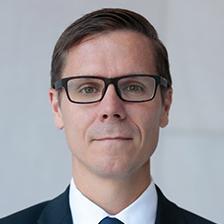
Portrait of Hau L. LeeHau L. Lee is the Thoma Professor of Operations, Information and Technology at the Graduate School of Business at Stanford University.  He was the founding faculty director of the Stanford Institute for Innovation in Developing Economies (SEED), and is the current Co-Director of the Stanford Value Chain Innovations Initiative.  Professor Lee’s expertise is on global supply chain management and value chain innovations.  He has published widely in top journals on supply chain management.  He was inducted to the US National Academy of Engineering, and elected a Fellow of MSOM, POMS; and INFORMS.   He was the previous Editor-in-Chief of Management Science.  In 2006-7, he was the President of the Production and Operations Management Society.  His article, “The Triple-A Supply Chain,” was the Second Place Winner of the McKinsey Award for the Best Paper in 2004 in the Harvard Business Review.  In 2004, his co-authored paper in 1997, “Information Distortion in a Supply Chain: The Bullwhip Effect,” was voted as one of the ten most influential papers in the history of Management Science.  His co-authored paper, “The Impact of Logistics Performance on Trade,” won the Wickham Skinner Best Paper Award by the Production and Operations Management Society in 2014. In 2003, he received the Harold Lardner Prize for International Distinction in Operations Research, Canadian Operations Research Society.  Professor Lee obtained his B.Soc.Sc. degree in Economics and Statistics from the University of Hong Kong, his M.Sc. degree in Operational Research from the London School of Economics, and his M.S. and Ph.D. degrees in Operations Research from the Wharton School of the University of Pennsylvania.  He was awarded an Honorary Doctor of Engineering degree by the Hong Kong University of Science and Technology, and an Honorary Doctorate from the Erasmus University of Rotterdam.


Image
American and Chinese flags
This event is part of the 2021 Winter/Spring Colloquia series, Biden’s America, Xi’s China: What’s Now & What’s Next?, sponsored by APARC's China Program.


Via Zoom Webinar. Register at: https://bit.ly/35bMWQx

Hau L. Lee Thoma Professor of Operations, Information and Technology, Stanford Graduate School of Business
Seminars
-

"America is back, ready to lead the world, not retreat from it,” declared President-elect Joe Biden as he unveiled his foreign policy team on November 24. Now, however, with the pillars of America’s international mission — multilateralism, alliances, and democracy – significantly frayed after four years of Trumpism, and amidst pressing global challenges from the COVID-19 pandemic to shifting geopolitics and climate change, the Biden administration faces numerous hard choices. The Asia-Pacific region in particular will remain a source of major challenges as the power competition with China looms large over the U.S. foreign policy agenda. In this online panel discussion, APARC experts will examine the challenges and opportunities for U.S. engagement and leadership in Asia, assess Asian nations’ expectations from the incoming administration, and provide recommendations to achieve American economic and security interests. APARC Director Gi-Wook Shin will moderate the conversation.

Panelists 

Image
Photo of Don Emmerson
Donald K. Emmerson, Director of APARC’s Southeast Asia Program 

At Stanford, in addition to his work for the Southeast Asia Program and his affiliations with CDDRL and the Abbasi Program in Islamic Studies, Donald Emmerson has taught courses on Southeast Asia in East Asian Studies, International Policy Studies, and Political Science. He is active as an analyst of current policy issues involving Asia. In 2010 the National Bureau of Asian Research and the Woodrow Wilson International Center for Scholars awarded him a two-year Research Associateship given to “top scholars from across the United States” who “have successfully bridged the gap between the academy and policy.”

Image
Photo of Tom Fingar
Thomas Fingar, Center Fellow, APARC 

Thomas Fingar is a Shorenstein APARC Fellow in the Freeman Spogli Institute for International Studies at Stanford University. He was the inaugural Oksenberg-Rohlen Distinguished Fellow from 2010 through 2015 and the Payne Distinguished Lecturer at Stanford in 2009.


Image
Photo of Oriana Mastro
Oriana Skylar Mastro, FSI Center Fellow at APARC 

Oriana Skylar Mastro is a Center Fellow at Stanford University’s Freeman Spogli Institute for International Studies (FSI). Within FSI, she works primarily in the Shorenstein Asia-Pacific Research Center (APARC) and the Center for International Security and Cooperation (CISAC) as well. She is also a fellow in Foreign and Defense Policy Studies at the American Enterprise Institute and an inaugural Wilson Center China Fellow.


Image
Photo of Kiyoteru Tsutsui
Kiyoteru Tsutsui, Director of APARC’s Japan Program 
Kiyoteru Tsutsui is the Henri H. and Tomoye Takahashi Professor and Senior Fellow in Japanese Studies at Shorenstein APARC, the Director of the Japan Program at APARC, a senior fellow of the Freeman Spogli Institute for International Studies, and Professor of Sociology, all at Stanford University.


Moderator

Image
Photo of Gi-Wook Shin
Gi-Wook Shin, Director of APARC and the Korea Program

Gi-Wook Shin is the director of the Walter H. Shorenstein Asia-Pacific Research Center; the William J. Perry Professor of Contemporary Korea; the founding director of the Korea Program; a senior fellow of the Freeman Spogli Institute for International Studies; and a professor of sociology, all at Stanford University. As a historical-comparative and political sociologist, his research has concentrated on social movements, nationalism, development, and international relations.

Via Zoom Webinar
Register:  https://bit.ly/39MlT1n


Donald K. Emmerson Director of APARC's Southeast Asia Program
Thomas Fingar Center Fellow, APARC
Oriana Skylar Mastro FSI Center Fellow at APARC
Gi-Wook Shin Director of APARC and the Korea Program
Kiyoteru Tsutsui Director of APARC's Japan Program
Panel Discussions
Authors
News Type
News
Date
Paragraphs

While much of the world has been occupied with the COVID-19 pandemic, the Chinese People’s Liberation Army (PLA) has been active in promoting China’s claims in the South China Sea. Is it justified to argue that China is taking advantage of the global pandemic to make military gains?

In a new essay published in the Winter 2020 issue of the China Leadership Monitor, FSI Center Fellow at APARC Oriana Skylar Mastro sheds light on this question. Leveraging Chinese-language sources in addition to her own operational knowledge from over a decade of military experience, Mastro evaluates the PLA activities in the South China Sea over the eight-month period since March 2020. She includes in her analysis PLA statements, military exercises and operations, and deployment of relevant platforms and weapons in the region. Her conclusion is that the PLA has not significantly increased its operational role in the South China Sea but rather its signaling role. “Specifically, the Chinese military seems to be purposefully using, and perhaps even exaggerating, its capabilities and activities to enhance deterrence against the United States,” she argues.

Deployments of Weapons Systems and Military Exercises

After compiling a comprehensive picture of Chinese military activities in the South China Sea that includes both deployments of systems to the Paracels and Spratlys Islands and military exercises in the area, Mastro examines what these activities reveal about the PLA’s role in China’s South China Sea strategy.

PLA deployments in the area suggest it is trying to discourage the United States from countering its attempts to increase control over the South China Sea, she says. “China has been linking its deployments to U.S. activities for signaling purposes […] With new basing on the South China Sea islands and longer-range and more capable aircraft, China now has the option to move these platforms as a way to demonstrate to the United States its capability and resolve.” Over the past eight months, China has also conducted more robust military exercises to prepare for South China Sea contingencies. “But military readiness and preparedness are not the only reasons the PLA conducts exercises, notes Mastro. Instead, she argues that the PLA role has evolved beyond the operational to become a leader in a signaling strategy to bolster Chinese deterrence vis-à-vis the United States.

Chinese Discourse  

One of the strongest indicators that the Chinese military is attempting to leverage its role to signal capability to the United States is how the Chinese official media are capturing the ongoing competition. Having reviewed approximately 80 publications on the South China Sea, Mastro finds that the Chinese media are being used to amplify how capable the PLA has become in conducting complex operations in the South China Sea and to highlight that it is blameless for the current tensions in the region.

Mastro concludes that the PLA has taken a more active role in China’s South China Sea strategy, but not necessarily a more aggressive one. It is the need to enhance deterrence vis-à-vis the United States that has become a priority. “The PLA has become the main vehicle through which China is attempting to convince the United States to moderate its own South China Sea approach.” This sensitivity, and in some cases paranoia, about U.S. strategy, she claims, “suggests we are likely to hear tough talk and ostentatious military activity for some months to come.”

Read More

Battleships patrolling in the open ocean.
Commentary

Beijing’s Line on the South China Sea: “Nothing to See Here”

China’s official denials of growing military capability in the region look a lot like gaslighting.
Beijing’s Line on the South China Sea: “Nothing to See Here”
NPR's audio streaming logo next to a portrait of Oriana Skylar Mastro.
Commentary

Update on Taiwan and China's Troubled Relationship: Oriana Skylar Mastro on NPR

"The current threat is that the CCP is running out of patience, and their military is becoming more and more capable. So for the first time in its history, there's the option of taking Taiwan by force," Mastro tells NPR's Weekend Edition host Scott Simon.
Update on Taiwan and China's Troubled Relationship: Oriana Skylar Mastro on NPR
Hero Image
A warship sailing in the South China Sea and a photo of three soldiers standing guard in front of a Chinese traditional building
All News button
1
Subtitle

Analysis by FSI Center Fellow Oriana Skylar Mastro reveals that the Chinese military has taken a more active role in China’s South China Sea strategy, but not necessarily a more aggressive one.

Paragraphs

During the past eight months of the global COVID pandemic, the Chinese People’s Liberation Army (PLA) has been active in promoting China’s claims in the South China Sea.  This essay evaluates PLA statements, military exercises and operations, and deployment of relevant platforms and weapons in the South China Sea during this period. I leverage Chinese-language sources in addition to my own operational knowledge from over a decade of military experience to provide greater context for these activities. I argue that the greatest change in the PLA’s role in the South China Sea has not been operational. Instead, the most interesting development has been the fact that the PLA has taken on a more significant signaling role. Specifically, the Chinese military seems to be purposefully using, and perhaps even exaggerating, its capabilities and activities to enhance deterrence against the United States. This may be seen as necessary as the US increases its own efforts to push back on China’s militarization of the South China Sea. In other words, the PLA has taken a more active role in China’s South China Sea strategy, but not necessarily a more aggressive one.

All Publications button
1
Publication Type
Journal Articles
Publication Date
Journal Publisher
China Leadership Monitor
Authors
Oriana Skylar Mastro
Number
Issue 66
Authors
Oriana Skylar Mastro
News Type
Commentary
Date
Paragraphs

This analysis by Oriana Skylar Mastro originally appeared in The Interpreter, by the Lowy Institute.


China’s strategy in responding to concerns about its intentions in the South China Sea is to claim that none of the activities, statements or behaviours that concern other countries are actually happening.

China claims it has not militarised the South China Sea, but that the United States “is the real pusher of militarisation” in these waters. Its leaders often argue that China is a peace-loving country only interested in defending itself. As the China’s General Wei Fenghe stated at the Shangri-La Dialogue in 2018, “China has never provoked a war or conflict, nor has it ever invaded another country or taken an inch of land from others. In the future, no matter how strong it becomes, China shall never threaten anyone.”

China has similarly brushed off concerns of other claimants, such as Vietnam, about its intensifying military exercises in the South China Sea and largely ignored Australia’s assertion at the United Nations that China’s claims have no legal backing.

So apparently it is all one big misunderstanding.

On 24 November, former Chinese ambassador Fu Ying criticised the United States in a New York Times op-ed for raising multiple issues that in her mind do not exist. Thus, the way to resolve the growing bilateral tensions is for the two countries “to have candid talks to better understand each other’s intentions and cultivate trust”.

So, in the Chinese communist spirit of 实事求是, or “seeking truth from facts”, I have charted the military capabilities China has deployed to the South China Sea, which are displayed with references on the map below. The Paracel Islands and the Spratly Islands are under dispute; Hainan Island is a recognised part of China, but I include it because the military capabilities in situ have implications for Chinese military options in the South China Sea writ large.

Read More

NPR's audio streaming logo next to a portrait of Oriana Skylar Mastro.
Commentary

Update on Taiwan and China's Troubled Relationship: Oriana Skylar Mastro on NPR

"The current threat is that the CCP is running out of patience, and their military is becoming more and more capable. So for the first time in its history, there's the option of taking Taiwan by force," Mastro tells NPR's Weekend Edition host Scott Simon.
Update on Taiwan and China's Troubled Relationship: Oriana Skylar Mastro on NPR
Hero Image
Battleships patrolling in the open ocean.
Battleships patrol in the open ocean.
Getty Images
All News button
1
Subtitle

China’s official denials of growing military capability in the region look a lot like gaslighting.

Authors
News Type
News
Date
Paragraphs

On November 10th, the APARC China Program convened an expert panel focused on the Decision of the fifth plenary session of the 19th Central Committee of the Chinese Communist Party, which took place on October 26-29.  The Fifth Plenum Decision outlines not only China’s 14th Five Year Plan (2021-2025), but also Beijing’s economic blueprint through 2035 and the “goal of fully building a modern socialist country."  The CCP leadership recently articulated its “dual circulation” policy – viz., a drastic reduction in China’s dependence on U.S. technologies and increased reliance on domestic consumption while maintaining exports and attracting foreign direct investments.  At this critical juncture when the coronavirus pandemic has shrunk global trade and tensions between the U.S. and China continue to intensify, panel members were asked to examine what the Fifth Plenum Decision might signify.  Does it mark a significant shift in Beijing’s strategic economic orientation?  What are the short- and long-term implications of the Decision for China’s economic development strategy, U.S.-China relations, as well as the world’s economic and technology ecosystems?  

Guests heard from experts James Green, Damien Ma, and Xiaomeng Lu.  James Green, Senior Research Fellow at Georgeton University's Initiative for U.S.-China Dialogue on Global Issues, has worked for over two decades on U.S.-Asia relations.  He has held several positions in government, including Minister Counselor for Trade Affairs at the U.S. Embassy in Beijing and China Director of the White House’s National Security Council.  Damien Ma is the Director and co-founder of MacroPolo, the Think Tank of the Paulson Institute, which focuses on China's economics, technology, and politics.  He is also adjunct faculty at the Kellogg School of Management at Northwestern University.  Finally, Xiaomeng Lu is a senior analyst in Eurasia Group's geo-technology practice.  She focuses on many of the most important issues related to China right now, including cybersecurity, data protection, artificial intelligence, internet governance, 5G, and trade.  The panel concluded with a discussion of audience questions. Watch:

Read More

Concept of U,S.-China technology competition: brain-shaped boxing gloves covered in U.S. and China flags facing against each other on a background of a motherboard
News

Caught in the Crossfire: The Future Of U.S.-China Science Collaboration and Its Impact on University Education

Caught in the Crossfire: The Future Of U.S.-China Science Collaboration and Its Impact on University Education
Min Ye speaking
News

Domestic or International? The Belt and Road Initiative Is More Internally Focused Than We Think, Says Expert Min Ye

Domestic or International? The Belt and Road Initiative Is More Internally Focused Than We Think, Says Expert Min Ye
Photograph of the UN building in Geneva, Switzerland
News

Rebuilding International Institutions Will be Tough but Necessary, Say Stanford Experts Thomas Fingar and Stephen Stedman

Fingar and Stedman spoke as part of the APARC program “Rebuilding International Institutions,” which examined the future of international institutions such as the United Nations (UN), World Trade Organization (WTO), and World Health Organization (WHO) in our evolving global political landscape.
Rebuilding International Institutions Will be Tough but Necessary, Say Stanford Experts Thomas Fingar and Stephen Stedman
Hero Image
Photo of the Forbidden City entrance with Mao Zedong's portrait Markus Winkler on Unsplash
All News button
1
Authors
Callista Wells
News Type
News
Date
Paragraphs

The China Program at Shorenstein APARC had the pleasure of hosting Professor Min Ye of Boston University’s Pardee School of Global Studies on October 14, 2020. Her program, moderated by China Program Director Jean Oi, focused on the much-discussed but poorly-understood Belt and Road Initiative (BRI), announced in 2013 by President Xi Jinping. While it is not widely known exactly what the BRI is or what Beijing hopes it will accomplish, it has been described as something of a modern silk road, connecting China to dozens of other countries through trade and extensive infrastructure projects. Based on research conducted for her recently published book, The Belt Road and Beyond: State-Mobilized Globalization in China: 1998-2018, Professor Ye enlightened the audience on a surprisingly critical element of this global program: the domestic component.

While Ye began her research with the assumption that many hold about the BRI—that it is primarily a global, internationally-focused initiative—as she continued her research, she found that many, if not most, BRI projects are either entirely domestic or have strong ties to domestic programs. To this end, she posed three questions during her program: Why did Chinese leadership launch the BRI in 2013? How did the Chinese state and businesses implement the BRI? and, What are the internal and external outcomes of the BRI?

To answer these questions, Ye explained the theoretical frameworks she used to understand both the BRI and China's "state-mobilized globalization." Firstly, Ye's "Chinese-State Framework" breaks the Chinese governmental system into three parts: Party Leadership, State Bureaucracy, and Subnational Actors. Each of these elements affect the others, as well as policy surrounding the BRI. However, this division also creates fragmentation in authority and ideology. Secondly, her “State-Mobilized Globalization” framework explains the process surrounding Chinese national strategy. Ye posits that national strategies are generally prompted by crises faced at lower levels of government, particularly when a lack of efficiency or communication is causing “state paralysis.” Once the strategy is announced in order to coordinate efforts and solve the crisis, it enters a feedback loop in which plans are adjusted and changed according to ground-level conditions. These frameworks informed the empirical studies used to answer Ye’s research questions.

The drivers of the BRI, argues Ye, were threefold: strategic, diplomatic, and economic. It was believed by interested parties within China that such an international initiative could ease tensions related to the United States and maritime Asia, as well as generally improve diplomatic relations for the country. China’s industries were also facing problems related to overcapacity, and economic and financial groups wished to use their excess capital to invest abroad. Actors from several different levels in China, including national agencies, local governments, and private entrepreneurs, were involved in executing BRI projects intended to alleviate these tensions. Different cities saw different sides of this implementation: Chongqing, one of China’s largest cities, is heavily dominated by state capital, with its main BRI actors being State-Owned Enterprises (SOEs). Wenzhou, a port city in Zhejiang province, is by contrast dominated by private entrepreneurs.

With diverse implementation comes diverse outcomes. Ye argues that some BRI projects have been helpful in reforming cities’ structural economy, while others have helped upgrade industry. The BRI has managed to alleviate some of the tensions listed above, but at the same time, it has created its own problems. While there has been a massive internal mobilization effort for BRI projects, there exists a disconnect between the domestic situation and demands for transparency from outside actors.

Ye concluded her talk by tying her research to current developments related to COVID-19. While one might imagine that a global pandemic would be a significant inhibitor to an international trade and infrastructure project, Ye finds just the opposite. Because the BRI is, in fact, quite domestically focused, many BRI projects are continuing at a rapid pace, albeit with digital adjustments. Some projects, such as the New Infrastructure Plan, were actually fast-tracked in the wake of the pandemic outbreak. Ye predicts that as COVID-19 restrictions ease and the world returns to “normal,” these domestic and digital elements will be combined with the BRI’s original projects.

An audio recording of this program is available at the link below, and a video recording is available upon request. Please contact Callista Wells, China Program Coordinator at cvwells@stanford.edu with any inquiries.

Read More

Concept of U,S.-China technology competition: brain-shaped boxing gloves covered in U.S. and China flags facing against each other on a background of a motherboard
News

Caught in the Crossfire: The Future Of U.S.-China Science Collaboration and Its Impact on University Education

Caught in the Crossfire: The Future Of U.S.-China Science Collaboration and Its Impact on University Education
Photograph of the UN building in Geneva, Switzerland
News

Rebuilding International Institutions Will be Tough but Necessary, Say Stanford Experts Thomas Fingar and Stephen Stedman

Fingar and Stedman spoke as part of the APARC program “Rebuilding International Institutions,” which examined the future of international institutions such as the United Nations (UN), World Trade Organization (WTO), and World Health Organization (WHO) in our evolving global political landscape.
Rebuilding International Institutions Will be Tough but Necessary, Say Stanford Experts Thomas Fingar and Stephen Stedman
Cover of the book Fateful Decisions: Choices That Will Shape China's Future
News

Thomas Fingar and Jean Oi Analyze the Choices and Challenges Facing China’s Leaders

Fingar and Oi joined the National Committee on U.S.-China Relations to discuss their edited volume, ‘Fateful Decisions: Choices that Will Shape China’s Future.’
Thomas Fingar and Jean Oi Analyze the Choices and Challenges Facing China’s Leaders
Hero Image
Min Ye speaking
All News button
1
Authors
News Type
News
Date
Paragraphs

On October 28th, the APARC China Program hosted a panel of experts for the panel "Caught in the Crossfire: Strategic Competition, U.S.-China Science Collaboration, and U.S. Universities." Reports of Chinese espionage, IP theft and military-civil fusion strategy have all fueled concerns regarding U.S. universities’ open research ecosystem, especially in STEM. Many of the concerns focus not only on research integrity but also on potential adverse consequences to U.S. military and economic security. The October 28th panel discussed open access to U.S. universities, security risks involved, as well as the potential adverse consequences of limiting international access in science and technology (S&T) research.  

The discussion began with Professor Susan Shirk, Chair of the 21st Century China Center at UC San Diego, who gave the audience an overview of current China science and technology policy and its relationship with US-China competition and universities. Shirk was followed by Arthur Bienenstock, co-chair of the American Academy of Arts and Sciences’ Committee on International Scientific Partnerships and Professor of Photon Science, Emeritus at Stanford. Bienenstock provided important perspective from the STEM side of this debate, arguing that collaboration with China--and other foreign countries--is vital and should be encouraged. Elsa B. Kania, Adjunct Senior Fellow at the Center for a New American Security's Technology and National Security Program, gave a different perspective, explaining China's "civil-military fusion" and why many in the United States consider it a threat. Finally, Tim Stearns, the Frank Lee and Carol Hall Professor in the Department of Biology, brought things back home to Stanford. As the Senior Associate Vice Provost of Research, Stearns was able to give a unique insight into university administration and how Stanford is approaching these challenges. The panel concluded with a discussion between the panelists of audience questions. Watch:

Read More

Photograph of the UN building in Geneva, Switzerland
News

Rebuilding International Institutions Will be Tough but Necessary, Say Stanford Experts Thomas Fingar and Stephen Stedman

Fingar and Stedman spoke as part of the APARC program “Rebuilding International Institutions,” which examined the future of international institutions such as the United Nations (UN), World Trade Organization (WTO), and World Health Organization (WHO) in our evolving global political landscape.
Rebuilding International Institutions Will be Tough but Necessary, Say Stanford Experts Thomas Fingar and Stephen Stedman
Cover of the book Fateful Decisions: Choices That Will Shape China's Future
News

Thomas Fingar and Jean Oi Analyze the Choices and Challenges Facing China’s Leaders

Fingar and Oi joined the National Committee on U.S.-China Relations to discuss their edited volume, ‘Fateful Decisions: Choices that Will Shape China’s Future.’
Thomas Fingar and Jean Oi Analyze the Choices and Challenges Facing China’s Leaders
A professional looks at their phone while wearing a mask in a busy downtown area.
News

Restarting Business in China After COVID-19: New Article in 'The Diplomat' Highlights Results from China Program Survey

The survey reveals mixed progress in reopening different sectors of China's economy, but also shows that many business leaders in China are planning for some level of decoupling as access to global technology and supply chains remains uncertain.
Restarting Business in China After COVID-19: New Article in 'The Diplomat' Highlights Results from China Program Survey
Hero Image
Concept of U,S.-China technology competition: brain-shaped boxing gloves covered in U.S. and China flags facing against each other on a background of a motherboard Just Super/ Getty Images
All News button
1
Date Label
Subscribe to International Relations