Public Health
News Type
News
Date
Paragraphs

The Asia Health Policy Program at Stanford’s Shorenstein Asia-Pacific Research Center, in collaboration with scholars from Stanford Health Policy's Center on Demography and Economics of Health and Aging, the Stanford Institute for Economic Policy Research, and the Next World Program, is soliciting papers for the third annual workshop on the economics of ageing titled Financing Longevity: The Economics of Pensions, Health Insurance, Long-term Care and Disability Insurance held at Stanford from April 24-25, 2017, and for a related special issue of the Journal of the Economics of Ageing.

The triumph of longevity can pose a challenge to the fiscal integrity of public and private pension systems and other social support programs disproportionately used by older adults. High-income countries offer lessons – frequently cautionary tales – for low- and middle-income countries about how to design social protection programs to be sustainable in the face of population ageing. Technological change and income inequality interact with population ageing to threaten the sustainability and perceived fairness of conventional financing for many social programs. Promoting longer working lives and savings for retirement are obvious policy priorities; but in many cases the fiscal challenges are even more acute for other social programs, such as insurance systems for medical care, long-term care, and disability. Reform of entitlement programs is also often politically difficult, further highlighting how important it is for developing countries putting in place comprehensive social security systems to take account of the macroeconomic implications of population ageing.

The objective of the workshop is to explore the economics of ageing from the perspective of sustainable financing for longer lives. The workshop will bring together researchers to present recent empirical and theoretical research on the economics of ageing with special (yet not exclusive) foci on the following topics:

  • Public and private roles in savings and retirement security
  • Living and working in an Age of Longevity: Lessons for Finance
  • Defined benefit, defined contribution, and innovations in design of pension programs
  • Intergenerational and equity implications of different financing mechanisms for pensions and social insurance
  • The impact of population aging on health insurance financing
  • Economic incentives of long-term care insurance and disability insurance systems
  • Precautionary savings and social protection system generosity
  • Elderly cognitive function and financial planning
  • Evaluation of policies aimed at increasing health and productivity of older adults
  • Population ageing and financing economic growth
  • Tax policies’ implications for capital deepening and investment in human capital
  • The relationship between population age structure and capital market returns
  • Evidence on policies designed to address disparities – gender, ethnic/racial, inter-regional, urban/rural – in old-age support
  • The political economy of reforming pension systems as well as health, long-term care and disability insurance programs


Submission for the workshop

Interested authors are invited to submit a 1-page abstract by Sept. 30, 2016, to Karen Eggleston at karene@stanford.edu. The authors of accepted abstracts will be notified by Oct. 15, 2016, and completed draft papers will be expected by April 1, 2017.

Economy-class travel and accommodation costs for one author of each accepted paper will be covered by the organizers.

Invited authors are expected to submit their paper to the Journal of the Economics of Ageing. A selection of these papers will (assuming successful completion of the review process) be published in a special issue.


Submission to the special issue

Authors (also those interested who are not attending the workshop) are invited to submit papers for the special issue in the Journal of the Economics of Ageing by Aug. 1, 2017. Submissions should be made online. Please select article type “SI Financing Longevity.”


About the Next World Program

The Next World Program is a joint initiative of Harvard University’s Program on the Global Demography of Aging, the WDA Forum, Stanford’s Asia Health Policy Program, and Fudan University’s Working Group on Comparative Ageing Societies. These institutions organize an annual workshop and a special issue in the Journal of the Economics of Ageing on an important economic theme related to ageing societies.


More information can be found in the PDF below.


Hero Image
Flickr/Vinoth Chandar Flickr/Vinoth Chandar
All News button
1
Paragraphs
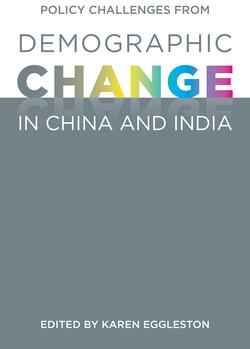
Abstract cover image for book Policy Challenges from Demographic Change in China and India

The world’s two most populous countries face numerous policy challenges from rapid demographic change. Drawing on social science expertise from China, India, and the United States, the contributors examine the social and economic challenges for policies across a range of domains, from China’s changed family planning policies and India’s efforts to address gender imbalance, to both countries’ policies regarding old-age support, human capital investment, poverty alleviation, and broader issues of governance.

Sections focus on:

  • Policy Challenges and Economic Impact
  • Fertility and Sex Imbalance
  • Human Capital and Urbanization
  • Population Aging

Desk or examination copies can be ordered from Stanford University Press.

All Publications button
1
Publication Type
Books
Publication Date
Authors
Karen Eggleston
Book Publisher
Shorenstein APARC
News Type
News
Date
Paragraphs

More than fifty experts met in Xi’an, China, for an international academic conference on demographic change and social development last week. Several scholars from the Freeman Spogli Institute for International Studies (FSI) spoke at the conference, including Karen Eggleston, Marcus Feldman, Jean Oi and Scott Rozelle.

The conference marked the 120th anniversary of Xi’an Jiaotong University’s founding and more than three decades of collaboration with Stanford scholars. Researchers at Xi’an Jiaotong University’s Institute for Population and Development Studies collaborate on policy-relevant research and educational activities with Stanford faculty at FSI as well as the Morrison Institute and Woods Institute.

For more information on FSI’s work in the areas of global health and medicine, please visit this page and the Asia Health Policy Program website.

Image
xian group

Hero Image
xian summit logo
All News button
1
Authors
News Type
Q&As
Date
Paragraphs

In a Q&A, Stanford postdoctoral fellow Darika Saingam explains why Thailand's battle against drugs continues and what is needed to introduce good policy that works to prevent illegal drug trade and supports recovering addicts.

Despite Thailand’s decade-long crackdown on drugs, demand for illegal substances has risen. A green leaf drug known as ‘kratom’ is a symbol of this rise as young people eagerly adopt the drug for entertainment and join an older generation of laborers who chewed it to survive long hours of work in the fields—and are now heavily addicted. Curtailing substance abuse and its consequences takes good public policy and solutions must be area-specific and evidence-based, according to a Stanford postdoctoral fellow.

Darika Saingam, the 2015-16 Developing Asia Health Policy Postdoctoral Fellow, has conducted two cross-sectional surveys and more than 1,000 interviews with drug users, recovered addicts, and local public officials in an effort to better understand the evolution of substance abuse in southern Thailand.

At Stanford, she is preparing two papers that offer policy options suitable for Thailand and other developing countries in Southeast Asia. Saingam spoke with the Shorenstein Asia-Pacific Research Center (APARC) where she will give a public talk on May 17. The interview text below was edited for brevity.

For decades, Thailand has been an epicenter of drugs. Can you describe the extent of the problem today?

According to a 2014 report, 1.2 million people were involved in illegal drug activities across Thailand. The total number of drug cases saw a 41 percent increase from 2013 to 2014. New groups of drug traffickers are mobilizing while existing groups are still active. Drug users who are young become drug dealers as they get older. The number of drug users below 15 years of age has increased dramatically.

According to your research, what drives Thais toward illegal drug use and the trafficking business?

Adults in Thailand use drugs to relieve stress and counteract the effects of work. Adolescents use them for entertainment. Historically, farmers and laborers from rural areas of Thailand would use opium for pain relief. More recently, a consumable tablet known as yaba has become popular along with crystal methamphetamine and marijuana. Young people are increasingly using yaba and kratom.

Thailand is still a developing country, but it is industrializing quickly. Social and cultural norms have been shifting and people want an improved quality of life. A lot of young people are unemployed and lack social support and are therefore more likely to turn to drug trafficking for economic opportunity. The economic recession and political strife in countries bordering Thailand have exacerbated the situation.


Image
drug policy 1a
    
Image
drug policy 2

Photos (left to right): A man holds up a kratom leaf. / Saingam examines kratom leaves as part of her research to understand illegal cultivation practices.


What is kratom and why is it popular?

For nearly a century, the native people of Thailand have chewed kratom. It is a leaf that grows on trees resembling a coffee plant. Historically, kratom was used to reduce strain following physical labor, to be able to work harder and longer, and to better tolerate heat and sunlight. Kratom is also embedded in Thai culture and given as a spiritual offering in religious ceremonies. My field research in the southern province of Nakhon Si Thammarat has shown that these motivations are still true today.

Within the past seven years, kratom use has skyrocketed and people are using it in increasingly harmful ways. Chewing kratom is not immediately harmful to health, but combining it with other substances is. This is the recent trend. Users have created new ways to consume it such as in a drink known as a ‘4x100.’ It contains boiled kratom leaves, cough syrup and soft drinks. Additional methamphetamines and benzodiazepines are sometimes added to that mixture.

What strategies must be employed to control substance abuse?

The first step is to realize that the patterns of substance abuse are specific to each location therefore solving the problem must also be. Drug usage is also dynamic. Placing hard control measures on one substance often provokes the emergence of another in its place therefore a holistic approach is important.

Thailand should employ multiple strategies toward effective prevention and control of substance abuse. These strategies include examining the problem and creating policies from an economic perspective (supply and demand), an institutional perspective (national and international drug control cooperation), and a social perspective (structural supports for recovered addicts and mobilization of public participation).


What is the Thai government doing to address the drug problem, and what could they be doing better?

Politicians in Thailand must do a better job at representing the people. Government health workers are often gathering information, assessing needs, and reporting findings to politicians, but these needs are not being accurately addressed. An example of this is politicians ordering to cut down kratom trees – a public display that does not get at the root cause of the problem. The reality is that drug users will quickly find substitutes. According to my study, of the regular users that stopped using kratom, more than 50 percent turned to alcohol instead and did so on a daily basis. This is merely a shift from one substance to another.

On the upside, a crop substitution program created under King Bhumibol Adulyadej offers a successful working model. The program works to replace opium poppy farming with cash crop production. It began in 1969 and is cited for helping an estimated 100,000 people convert their drug crop production to sustainable agricultural activities. Crops cultivated can be sold for profit in nearby towns. The program has also introduced a wide variety of crops and discouraged the slash-and-burn technique of clearing land. It is win-win because it stymies drug trade and provides economic opportunity while also being ecologically sound. This type of program should continue to be scaled up.

Can this model be co-opted elsewhere? What lessons from other countries could inform Thailand’s approach?

Yes, the model could plausibly be implemented in other areas in Thailand and in other Southeast Asian nations.

I think a judicial mechanism such as the kind seen in France could benefit the rural areas in Thailand. The French government has established centers across the country that act as branches of the court that try delinquency cases of minor to moderate severity, and also recommend support services for drug users. Members of the magistrate and civil society actors manage center operations thus placing some responsibility back onto the local community.

I believe an opportunity also exists for Thailand to legalize kratom. Legalization would show a respect for the cultural tradition of chewing kratom leaves and allow the government to suggest safer ways of using it. Bolivia has created a successful model of this through its legalization of coca leaves. Coca in its distilled form is cocaine, but left as a leaf, it is not a narcotic. Indigenous peoples are allowed to chew coca leaves. The government policy is being credited for a decrease in cocaine production as well.

Hero Image
drug policy headline
Stanford postdoctoral fellow Darika Saingam conducts interviews and collects data in southern Thailand.
All photos courtesy of Darika Saingam
All News button
1
News Type
News
Date
Paragraphs

Nearly 100 health economists from across the United States signed a pledge urging U.S. presidential candidates to make chronic disease a policy priority. Karen Eggleston, a scholar of comparative healthcare systems and director of Stanford’s Asia Health Policy Program, is one of the signatories. 

The pledge calls upon the candidates to reset the national healthcare agenda to better address chronic disease, which causes seven out of 10 deaths in America and affects the economy through lost productivity and disability.

Read the pledge below.

Hero Image
gettyimages 497595451 Getty Images
All News button
1
Paragraphs

In this article, I consider what a casual observer can see of a notorious product’s primary place of fabrication. Few products have been criticized in recent years more than cigarettes. Meanwhile, around the world, the factories manufacturing cigarettes rarely come under scrutiny. What have been the optics helping these key links in the cigarette supply chain to be overlooked? What has prompted such optics to be adopted and to what effect? I address these questions using a comparative approach and drawing upon new mapping techniques, fieldwork, and social theory. I argue that a corporate impulse to hide from public health measures, including those of tobacco control, is not the only force to be reckoned with here. Cigarette factory legibility has been coproduced by multiple processes inherent to many forms of manufacturing. Cigarette makers, moreover, do not always run from global tobacco control. Nor have they been avoiding all other manifestations of biopolitics. Rather, in various ways, cigarette makers have been embracing biopolitical logics, conditioning them, and even using them to manage factory legibility. Suggestive of maneuvers outlined by Butler (2009) and Povinelli (2011) such as “norms of recognizability” and “arts of disguise,” cigarette factory concealment foregrounds the role of infrastructural obfuscation in the making of what Berlant (2007) calls “slow death.” Special focus on manufacturing in China illustrates important variations in the public optics of cigarette factories. The terms cloak and veil connote these variations. Whereas tactics currently obscuring cigarette manufacturing facilities generally skew toward an aesthetic of the opaque cloak in much of the world, there are norms of recognizability and arts of disguise applied to many factories across China that are more akin to a diaphanous, playful veil. I conclude with a discussion of how this article’s focus on factory legibility gestures toward novel forms of intervention for advocates working at tackling tobacco today, offering them an alternative political imaginary in what is one of the world’s most important areas of public policy making.

All Publications button
1
Publication Type
Journal Articles
Publication Date
Journal Publisher
Anthropological Quarterly
Authors
Number
4
News Type
News
Date
Paragraphs

The Walter H. Shorenstein Asia-Pacific Research Center (APARC), in pursuit of training the next generation of scholars on contemporary Asia, has selected three postdoctoral fellows for the 2016-17 academic year. The cohort includes two Shorenstein Postdoctoral Fellows and one Developing Asia Health Policy Fellow; they carry a broad range of interests from hospital reform to the economic consequences of elite politics in Asia.

The fellows will begin their year of academic study and research at Stanford this fall.

Shorenstein APARC has for more than a decade sponsored numerous junior scholars who come to the university to work closely with Stanford faculty, develop their dissertations for publication, participate in workshops and seminars, and present their research to the broader community. In 2007, the Asia Health Policy Program began its fellowship program to specifically support scholars undertaking comparative research on Asia health and healthcare policy.

The 2016-17 fellows’ bios and their research plans are listed below:


Shorenstein Postdoctoral Fellows


Image
aditya dasgupta   photo
Aditya "Adi" Dasgupta is completing his doctorate in the Department of Government at Harvard University. At Stanford, he will work on converting his dissertation on the historical decline of single-party dominance and transformation of distributive politics in India into a book manuscript. More broadly, his research interests include the comparative economic history of democratization and distributive politics in emerging welfare states, which he studies utilizing formal models and natural experiments. He received a Bachelor of Arts from Cambridge University and a Master of Science from Oxford University and has worked at the Public Defender Service in Washington D.C., his hometown.


Image
dong zhang photo2
Dong Zhang is a political scientist whose research interests include political economy of development, with focus on the economic consequences of elite politics, and on the historical origins of long-run economic development. His dissertation examines the political logic of sustaining state capitalism model in weakly institutionalized countries with a primary focus on China. At Stanford, Zhang will develop his dissertation into a book manuscript and pursue other research projects on comparative political economy and authoritarian politics. He will receive his doctorate in political science from Northwestern University in 2016. Zhang holds bachelor’s degrees in public policy and economics, and a master’s degree in public policy from Peking University, Beijing.


Developing Asia Health Policy Postdoctoral Fellow


Image
ngando pic
Ngan Do is strongly interested in health system related issues, especially health financing, human resources for health, and health care service delivery. Do implemented comparison studies at regional level as well as participated in fieldwork in Cambodia, Lao, the Philippines, Korea and Vietnam. At Stanford, she will work on the public hospital reforms in Asia, focusing on dual practice of public hospital physicians and provider payment reforms. Do achieved her doctorate in health policy and management at the College of Medicine, Seoul National University. She earned her master’s degree in public policy at the KDI School of Public Policy and Management in Seoul, and her bachelor’s degree in international relations at the Diplomacy Academy of Vietnam (previously the Institute for International Relations).


Hero Image
160105 3244
All News button
1
Authors
News Type
News
Date
Paragraphs
Myanmar’s historic election last year brought an end to more than 50 years of military rule, ushering in the National League for Democracy party led by Aung San Suu Kyi. A new administration brings with it an opportunity to rehabilitate the country’s fragile health system, experts wrote in the Lancet.
 
In the editorial, Stanford health economist Karen Eggleston and co-authors Thant Sun Htoo, Ngoc Minh Pham and Phyu Phyu Thin Zaw call for innovative leadership in Myanmar’s public healthcare system, which is currently facing substantial challenges and inequalities. Creating policies that equitably allocate health resources should be a key goal of the administration that has set out to achieve universal health coverage by 2030. This would not only work to raise public health but also build much-needed trust between the population and government, they said.
 
Pham and Zaw are both former visiting fellows of the Asia Health Policy Program, who spent the 2014-15 academic year working on research activities at the Walter H. Shorenstein Asia-Pacific Research Center. Last July, Zaw wrote an op-ed in The Diplomat highlighting a doctor-led campaign against the “militarization” of the Ministry of Health called the “Black Ribbon Movement.” The movement is comprised of doctors and healthcare staff who are protesting the appointment of military staff to top health administration positions.
 
The Lancet's focus on healthcare in Myanmar coincided with the global commemoration of Universal Health Coverage Day, an annual day that urges greater action toward ensuring equal access to essential health services worldwide: http://universalhealthcoverageday.org/.

The Stanford Program on International and Cross-Cultural Education also interviewed Zaw while at Stanford. In this video released on March 10, Zaw highlights the changes Myanmar has already undertaken to reform its healthcare sytem and the challenges the country still faces.


Hero Image
rtr34r42
Myanmar pro-democracy leader Aung San Suu Kyi attends a parliamentary meeting at the Lower House of Parliament in Naypyitaw, July 9, 2012.
Reuters/Soe Zeya Tun
All News button
1
Subscribe to Public Health