
Leading by Unwritten Rules: Rural Educators in Myanmar’s Crisis
Leading by Unwritten Rules: Rural Educators in Myanmar’s Crisis
Wednesday, November 4, 202612:00 PM - 1:30 PM (Pacific)
Philippines Conference Room (C330)
Encina Hall, 3rd Floor
616 Jane Stanford Way, Stanford, CA 94305

Social welfare provision offers a lens through which to understand how governments, religious institutions, civil society organisations and local communities respond to people’s needs. In Myanmar, these relationships have long shaped access to education, particularly in rural and underserved areas. Prolonged armed conflict and political instability have added pressure to these arrangements, raising questions about how essential services continue when institutional support becomes uncertain.
Drawing on life-history interviews with educators across four Montessori initiatives, this talk examines how educational provision is sustained through civil society networks, women’s religious congregations and their relationships with existing schools. Montessori, an internationally introduced philosophy centred on children’s independence and self-directed learning, provides a lens for examining how educators reconcile their professional beliefs with the institutional rules, legal requirements and resources that shape their work.
The findings show that keeping an organisation running involves ongoing negotiation between educators’ philosophies, institutional expectations and the formal and informal rules of everyday practice. Educators may retain, adapt and transmit specialist knowledge after organisational support declines. These processes are shaped by how authority, professional recognition and access to resources are distributed. The talk argues that understanding continuity in non-state welfare requires attention not only to whether organisations remain open, but also to who holds authority, whose knowledge is recognised and who carries the work of leading through disruption.
Speaker
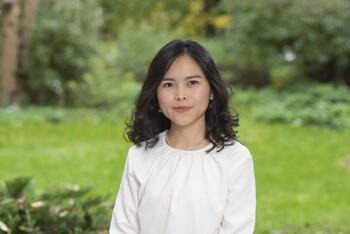
Maw Maw Khaing is a DPhil researcher from Myanmar in Education at the University of Oxford. She is a recipient of the Wai Seng Senior Scholarship at St Antony’s College and the Senesh Fellowship from the International Peace Research Association (IPRA) Foundation.
Her doctoral research focuses on education continuity and education leadership in continuity amidst prolonged crisis. She works across comparative and international education, teacher leadership in crisis, and the movement of educational ideas across borders. In her work, she also investigates how internationally introduced pedagogical approaches adapt within local educational settings and how educators negotiate the cultural, institutional, and material conditions that enable or constrain their practice.
Alongside her research, she is a practitioner who founded a network of schools in Myanmar that promotes bilingual education and project-based learning. She holds a Master of Education from Harvard University.