
Science, Statecraft, and National Resilience: Rethinking Governance in the Philippines
Science, Statecraft, and National Resilience: Rethinking Governance in the Philippines
Tuesday, November 10, 20264:00 PM - 5:30 PM (Pacific)
Philippines Conference Room (C330)
Encina Hall, 3rd Floor
616 Jane Stanford Way, Stanford, CA 94305

According to the World Risk Report 2026, the Philippines remained the world's most disaster-prone country among 193 United Nations member states. This is evident in the recent severe, frequent flooding that threatened lives, infrastructure, and economic stability. Climate change, rapid urban growth, deforestation, and poor planning have worsened flooding in the Philippines. To address this, the Philippines must adopt a proactive approach to disaster resilience, grounded in science-backed plans and decisions.
This presentation explores how scientific innovation and strategic policy intersect in the work of the University of the Philippines Resilience Institute (UPRI) and the Nationwide Operational Assessment of Hazards (NOAH) Center. By institutionalizing open data, high-resolution hazard mapping, and advanced predictive technologies, UPRI-NOAH bridges the gap between science and actionable policymaking. Dr. Lagmay highlights leading efforts to help government agencies and local communities integrate climate intelligence into governance frameworks and land-use planning. He demonstrates how positioning science as a pillar of statecraft can foster enduring national resilience by cultivating an adaptive society equipped to withstand environmental threats and safeguard the nation's future beyond the floodwaters.
This seminar is co-hosted by the Southeast Asia Program at Shorenstein APARC, the Center for Sustainability in Southeast Asia at the Doerr School of Sustainability's Precourt Institute for Energy, and the Center for Human Rights and International Justice at Stanford Global Studies. Refreshments are sponsored by the Stanford Urban Resiliency Initiative.
Speaker
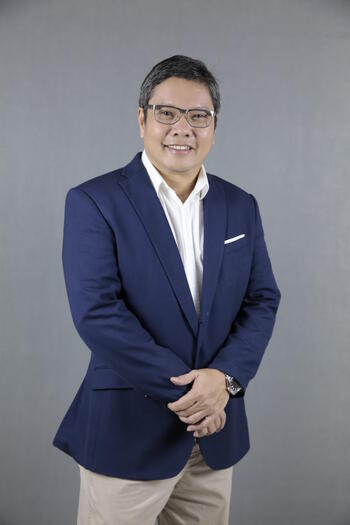
Dr. Alfredo Mahar Francisco A. Lagmay is a leading Filipino scientist in disaster risk reduction and climate resilience. An Academician of the National Academy of Science and Technology (NAST), UP Scientist III, and Professor at the National Institute of Geological Sciences, University of the Philippines, he leads two of the country’s flagship resilience institutions: the UP Nationwide Operational Assessment of Hazards (NOAH) Center and the UP Resilience Institute. Through these institutions, he has advanced real-time hazard monitoring, probabilistic risk assessment, open data systems, and science-based decision support for national and local governments.
His contributions to science and public service have earned national and international recognition, including the Plinius Medal of the European Geosciences Union (2015), the DOST Outstanding Research Award (2008), the PRC Outstanding Professional of the Year Award (2013), the Outstanding Filipino (TOFIL) Award (2013), the Start Network Changemaker Award (2020), the Office of Civil Defense Dangal ng Bantayog ng Katatagan Hall of Fame Award (2024), the UP Diliman Centennial Professorial Chair (2025), Tatler Asia’s Most Influential Philippines (2024, 2025), and the 2025 Tatler Impact Award for Innovation.
He earned his Bachelor’s and Master’s degrees in Geology from the University of the Philippines and completed his Ph.D. in Earth Sciences at the University of Cambridge.